The Phoenician pilot who carried the Tyrian envoys back to their city could see, even from a distance, that the king of Macedon had not moved.
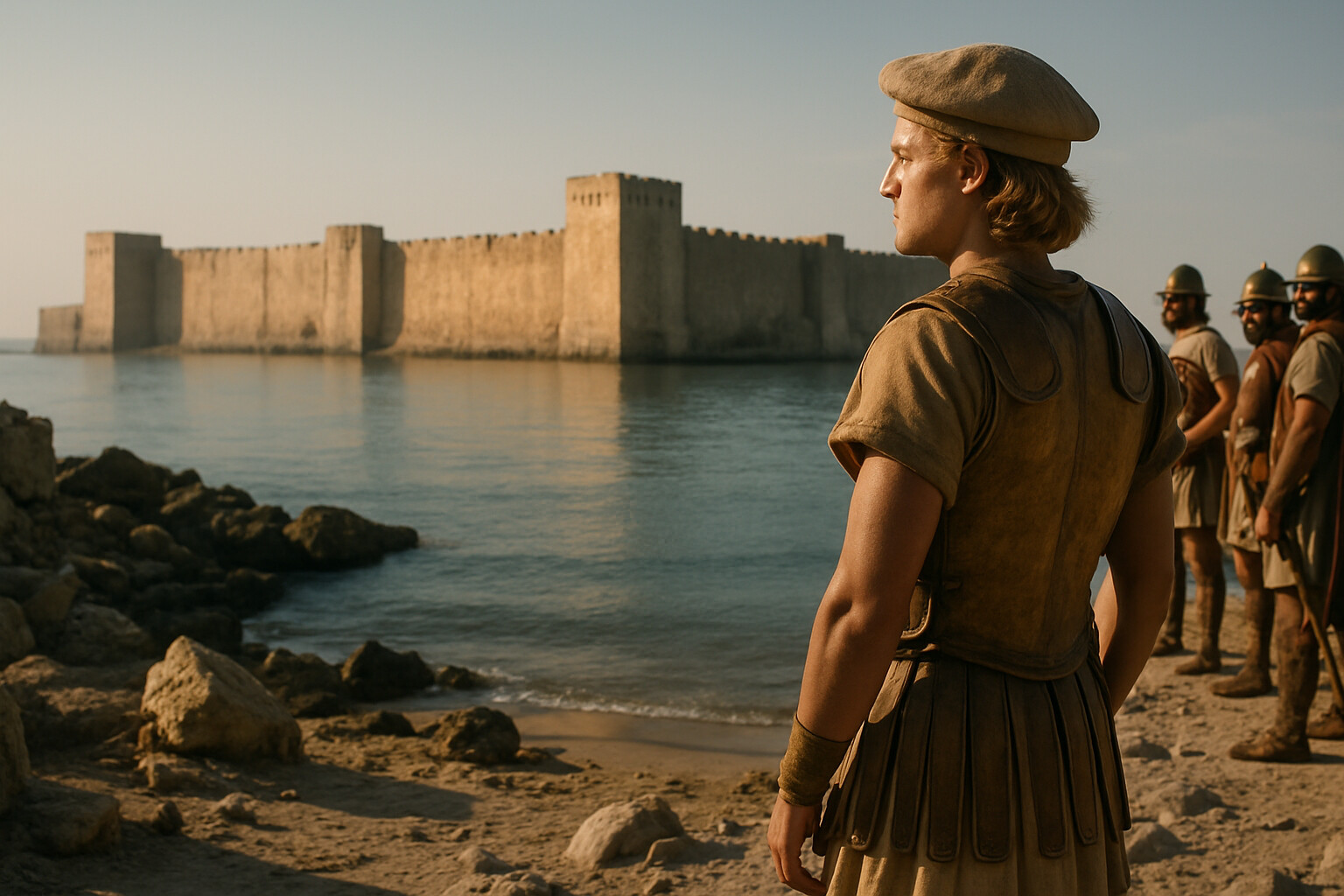
Alexander stood on the shoreline at Ushu—the old mainland quarter of Tyre, a place the Tyrians themselves had largely abandoned—and watched the island city sit less than a kilometer offshore, its walls rising directly from the sea. The answer from inside those walls had been polite, technically. The Tyrians would not oppose Alexander's campaign against Persia. They would remain neutral. But they would not allow him to enter their city and sacrifice in the temple of their god Melqart, which Alexander had explicitly requested. The island city of Tyre, ancient and wealthy and ringed by walls that reached twenty meters in some places, was declining his request.
It was January of 332 BC. Alexander was twenty-three years old. He had spent less than two years campaigning out of Macedon. He had already destroyed the Persian field armies at the Granicus River and at Issus, and the Persian king Darius III had fled both fields.
What he chose to do next would occupy him for seven months, consume extraordinary resources, require feats of engineering with no close parallel in the ancient world, and ultimately end with the destruction of one of the most powerful trading cities in the Mediterranean. The Siege of Tyre was not simply a battle. It was a statement—one written in rubble and seawater and the timbers of captured warships—about what the Macedonian war machine would accept from a city that refused to submit.
---
To understand why Tyre mattered, you have to understand what it was.
Tyre was not a frontier outpost or a secondary city. It was one of the oldest and wealthiest Phoenician cities in the Mediterranean world, a metropolis whose merchant fleets had established colonies across North Africa, Spain, and the western sea for centuries. Carthage—which would itself become one of Rome's most formidable enemies—was a Tyrian colonial foundation. The city's trade networks ran from the Levantine coast to the edges of the known world. Its craftsmen produced Tyrian purple, a dye derived from sea snails and valued at extraordinary cost, that adorned the robes of kings and high priests across the ancient world.
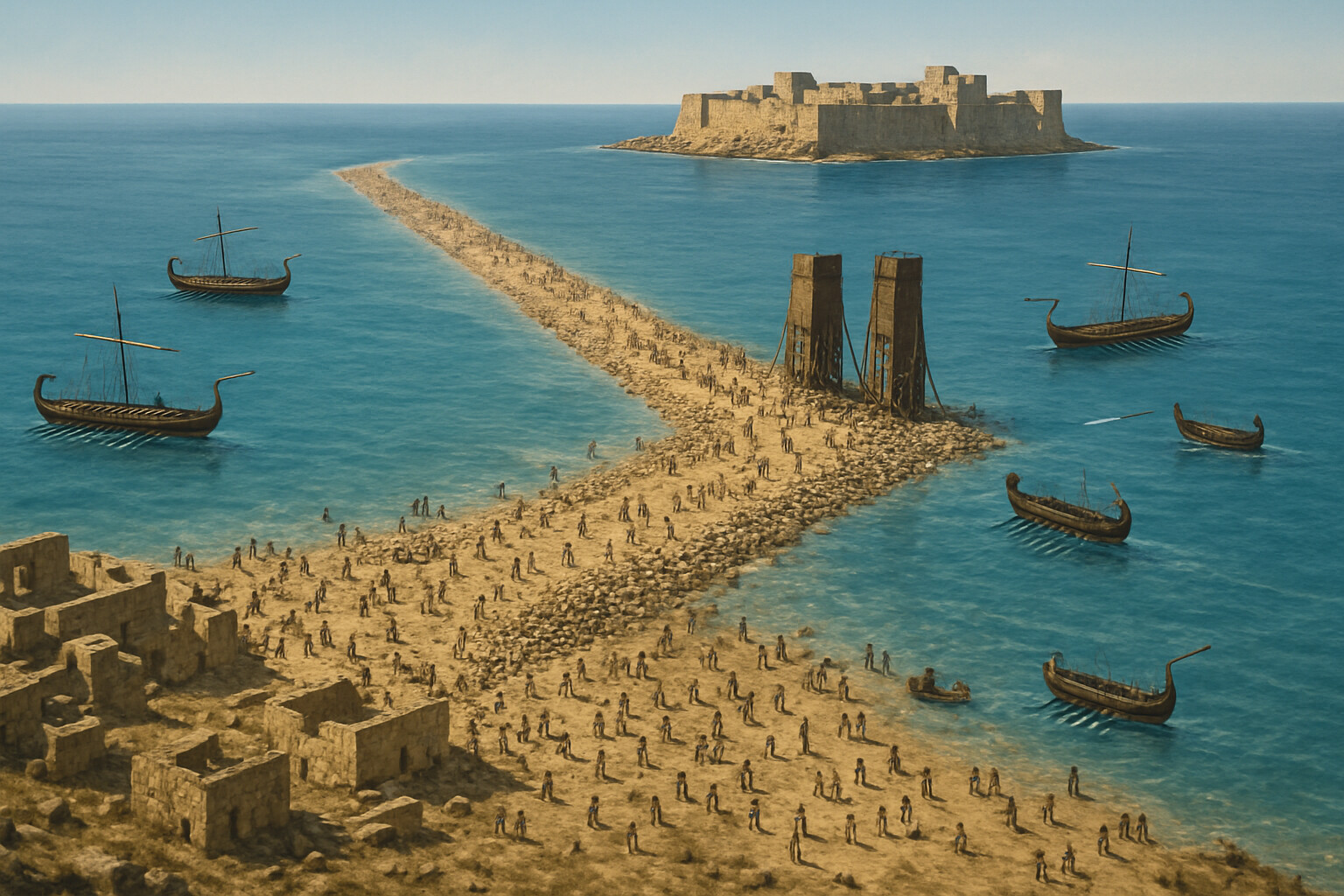
The city had two parts. The original settlement, called Ushu or Old Tyre, sat on the mainland coast. But the main city—the fortified commercial heart that mattered in 332 BC—had long since shifted to an offshore island, separated from the coast by a channel that ancient sources describe as roughly two stadia wide. Modern scholarly estimates and geological analysis place the actual width somewhere between approximately 500 and 900 meters, with the northern approach shallower than the southern. The island was roughly 750 meters from north to south and perhaps 400 meters across. Its walls were formidable. Diodorus Siculus describes the seaward walls as reaching twenty meters in height—a figure that should be treated as an approximation, but the defensive principle was not approximate: walls that rose directly from the sea presented no approach for conventional siege engines. You could not roll a ram to their base. You could not undermine them. The sea was the defense.
Tyre had survived sieges before on exactly this basis. The Assyrian king Shalmaneser V had besieged the island city for five years without reducing it. Nebuchadnezzar II of Babylon had spent thirteen years against Tyre—a campaign that, by most scholarly readings of the evidence, ended in negotiated terms rather than conquest. The Tyrians knew what they were doing when they refused Alexander. They were betting that an island fortress with a strong Phoenician fleet and stockpiled supplies could outlast a land army that had no significant naval arm of its own.
It was a reasonable bet. It was wrong.
---
Alexander's response to the Tyrian refusal was immediate and, given who he was, logical. He called his officers together and made his case for the siege. Arrian's Anabasis of Alexander—our most detailed and generally most reliable ancient source for the campaign, written in the second century AD but drawing heavily on the near-contemporary accounts of Ptolemy and Aristobulus, both of whom accompanied Alexander—records the strategic argument clearly: leaving Tyre unsubdued behind his advancing army, with a Persian fleet still potentially operating in the Mediterranean, was a serious vulnerability. Tyre's fleet could threaten his supply lines and his communications with Macedon. The city had to be taken or neutralized.
The engineering solution Alexander proposed was almost absurd in its ambition: build a causeway—what the Greeks called a mole, or choma—from the mainland shore across the sea channel to the island's walls. Fill the strait with rubble, stone, timber, and earth until the gap ceased to exist. Then roll siege equipment across and break the walls.
The labor force was considerable. Alexander's army included not only the Macedonian infantry and cavalry but also allied Greek troops, various Persian subject peoples, and—critically—the population of the mainland settlement at Ushu, which Alexander pressed into service. The ruins of Old Tyre provided the primary building material: stones from the demolished mainland city were dragged and dumped into the channel in massive quantities. Timber from the Lebanon mountain forests was cut and brought down to create a framework and piling structure. The causeway was designed to be roughly sixty meters wide—broad enough to support siege equipment and allow substantial troop movement side by side.
Work began. The initial phase moved quickly. The channel close to the mainland shore was shallow, and the rubble dumped into the shallows rose above the waterline without enormous difficulty. The causeway grew. Teams of workers—soldiers, laborers, engineers—moved material in a continuous operation. As it advanced several hundred meters, something was visible from the island walls: this was actually working.
The Tyrians responded.
---
The Tyrian military response to the causeway was sophisticated and multi-layered, and it very nearly broke the project.
First, they attacked the work parties directly. Tyrian warships—galleys, primarily—circled the growing causeway and harassed the workers with arrows, javelins, and stones from shipborne catapults. The workers on the causeway had no cover and no answer to ships that could approach from multiple angles and withdraw before a ground force could respond. Casualties among the labor force mounted.
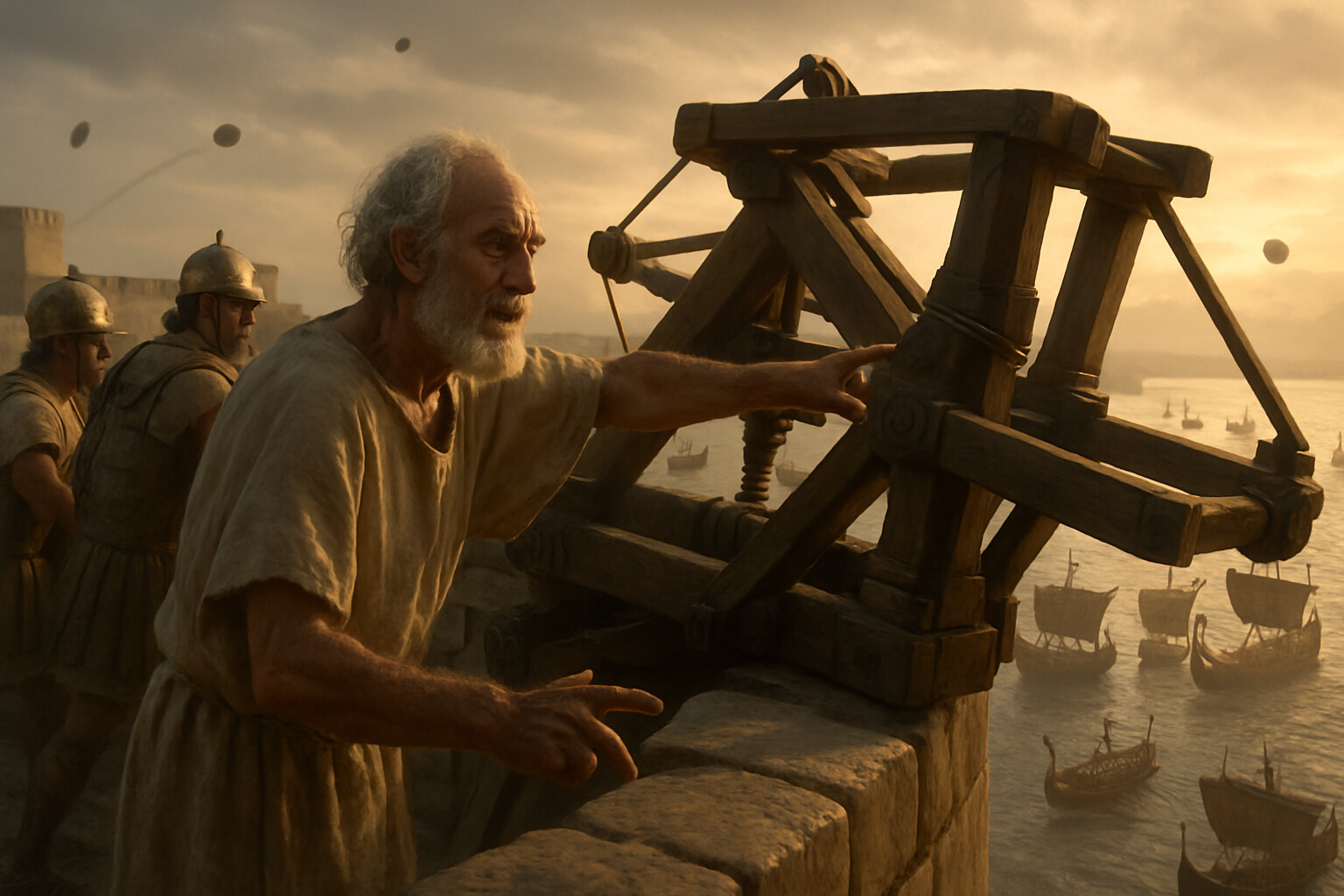
Alexander ordered two large wooden towers built at the seaward end of the causeway to provide elevated firing positions and some protection for the workers below. The towers were fitted with torsion-powered catapults and bolt-throwers and screened with hides that offered some protection against fire arrows. For a time, this created enough deterrence to slow the Tyrian harassment.
Then the Tyrians deployed one of the most carefully engineered countermeasures in the siege record of the ancient world.
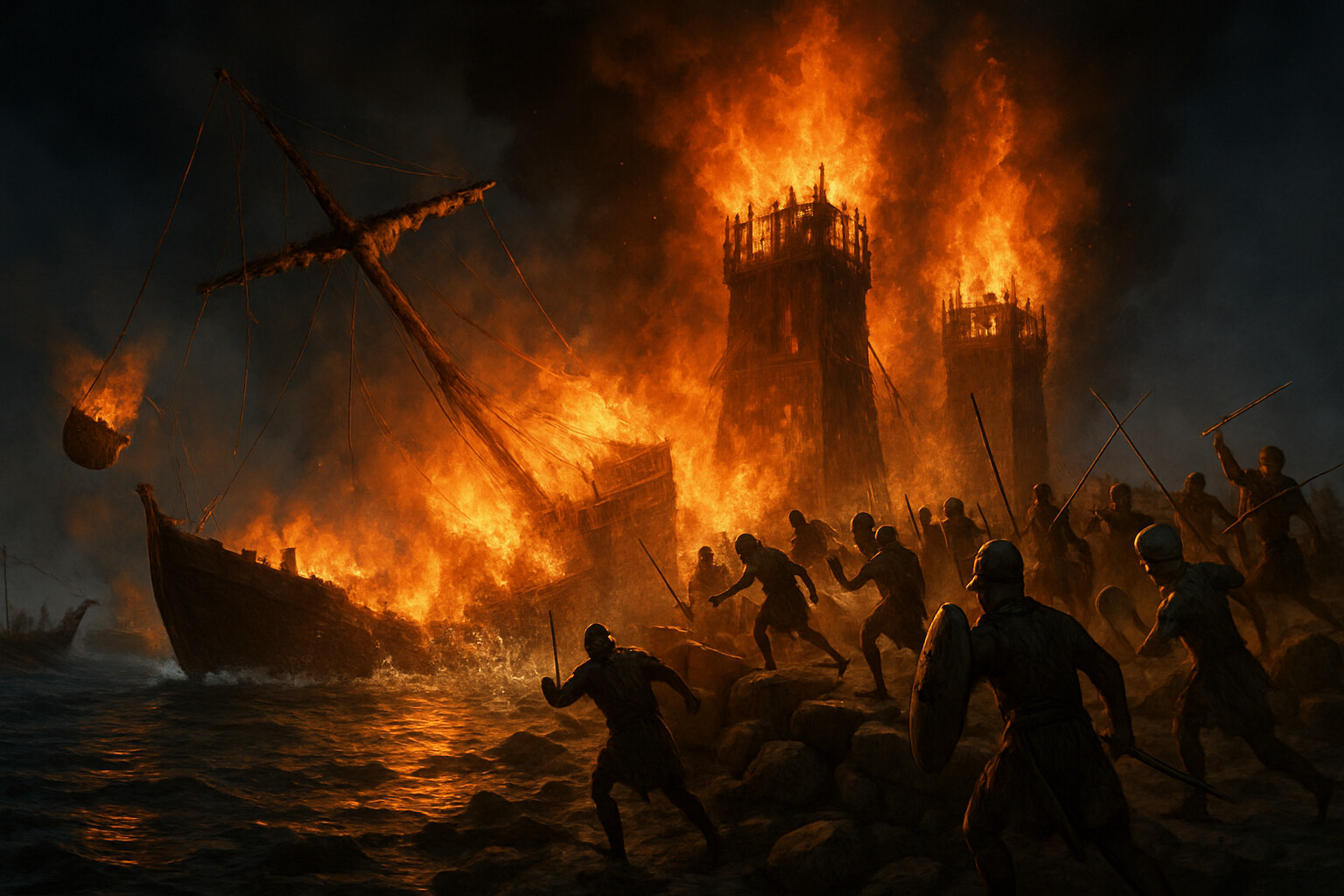
The vessel they prepared was a large horse transport—a wide-beamed ship capable of carrying substantial weight. The Tyrians loaded the hull with combustible material: dry timber, pitch, sulfur, and other incendiaries. They weighted the stern so that the bow would ride high in the water, creating a favorable angle for riding up onto the causeway and delivering the maximum spread of burning material. They rigged the mast with cauldrons of additional combustibles arranged to spill and spread fire when the mast fell. According to both Arrian and Diodorus, they towed this ship into position using a flotilla of galleys, lit it, and drove it—under the momentum imparted by the towing vessels and by any available wind—directly into the end of the causeway.
The result was catastrophic for the Macedonian position. The fire ship struck the causeway end and the two wooden towers caught immediately. Tyrian war galleys followed close behind, landing soldiers on the causeway to destroy whatever the fire had not reached. Both towers burned. The siege equipment at the causeway's end was lost. The causeway itself remained—stone and rubble are not easily burned—but the entire superstructure of the forward position was gone.
Alexander ordered the causeway rebuilt and widened, and he ordered new towers constructed. But the Tyrian demonstration had proved something important: without naval superiority, he could not protect the causeway's end, and without protecting the end, he could not advance. The causeway could grow indefinitely, but the moment it approached the island walls, the Tyrians could burn or assault whatever he placed on it.
He needed a fleet.
---
This is the moment the siege transformed from a construction project into a strategic problem of the first order.
Alexander's Macedonian army had no significant standing fleet. He had briefly employed Greek allied ships but had dismissed many of them earlier in the campaign as too expensive and potentially unreliable, calculating that controlling Persian land territory was more important than maintaining a sea presence. That calculation now looked expensive.
What Alexander did instead was begin collecting the Phoenician and Cypriot fleets that had been serving Persia.
This required diplomacy conducted under the pressure of an active siege. But as Alexander's land campaign continued to roll forward and as news of Persian defeats spread, the political calculus shifted for Phoenician and Cypriot city-states that had been contributing ships to the Persian cause. The cities of Byblos and Aradus—fellow Phoenician ports—came over, bringing their fleets with them. The kings of Cyprus, assessing the momentum of Alexander's campaign, also defected from the Persian alliance and brought a Cypriot fleet estimated in the ancient sources at approximately 120 ships. By the time Alexander had assembled his naval forces, Arrian puts the total at approximately 220 ships; Diodorus gives somewhat different figures, and the precise count is not recoverable with certainty. The strategic point is clear: Alexander had assembled overwhelming numerical superiority.
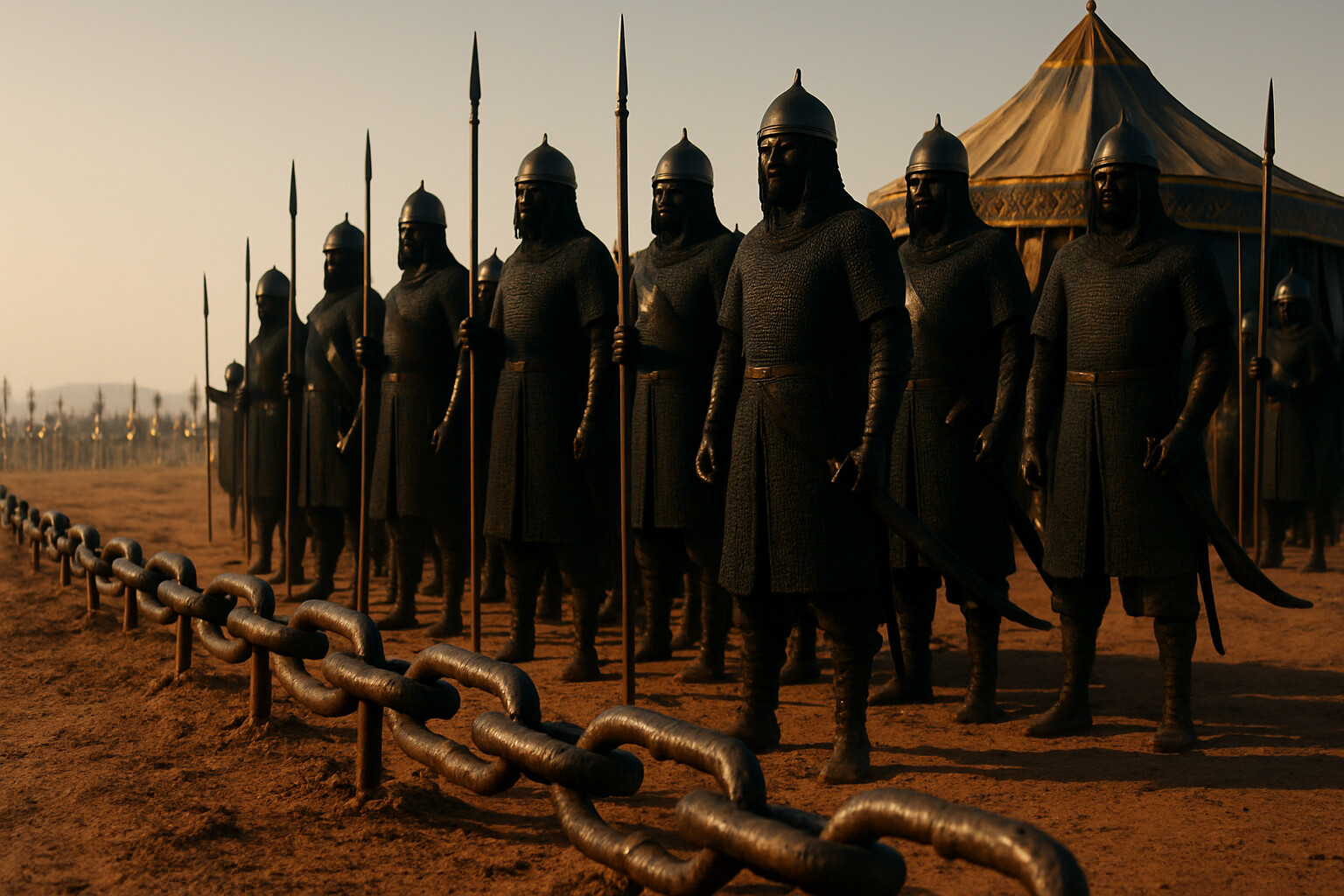
With this fleet he was able to do what he could not before: contest control of the waters around Tyre. The Tyrian fleet—capable and experienced, but now outnumbered—attempted a major sortie at one point during the siege, sending warships out in an attempt to catch the Cypriot squadron by surprise during the midday rest period. The sortie achieved initial surprise and sank or damaged several Cypriot ships, including a Macedonian command vessel. But Alexander himself was returning to the harbor with the Phoenician squadron at that moment, and the Tyrian galleys—seeing the rest of the fleet bearing down on them—retreated behind their harbor chains. After that, the Tyrians kept their fleet behind the chain booms closing their two harbors and largely abandoned open-water operations.
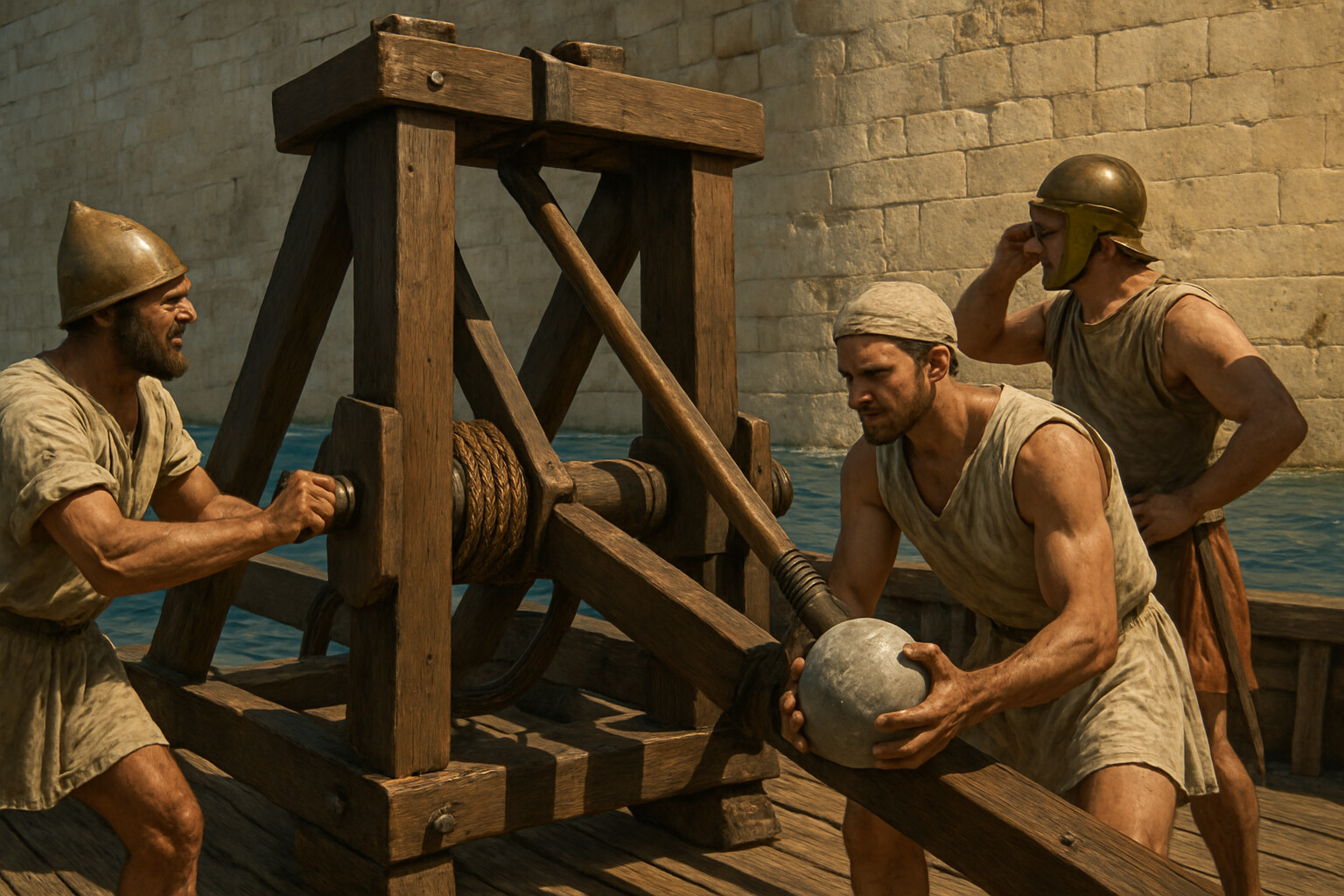
Naval superiority allowed Alexander to position warships on both sides of the island, maintain the security of the causeway against attack from the water, and position floating siege platforms—battering engines mounted on paired ships lashed together—against the island's walls directly from the sea.
---
The causeway continued to grow.
It is worth pausing on the scale of this effort. The channel between Old Tyre and the island was, according to ancient sources, approximately two stadia in the shallower northern approach—roughly 360 to 600 meters, depending on which estimate and which measurement standard one applies. Modern scholarship and geological analysis of the site generally support a channel width in the range of 500 to 900 meters for the era, with the northern approach shallower than the southern. The completed causeway was, by most scholarly estimates, between 600 and 900 meters in length and approximately 60 meters wide. These figures should be understood as approximations.
The work took months. The deeper water in the middle and southern parts of the channel made progress brutally slow. Workers dumped rubble continuously into water that was simply swallowing it. As the causeway's end approached deeper water, the Tyrians sent divers to attach ropes and chains to the larger stones and drag them free of the structure—a form of underwater sabotage described by Diodorus that is consistent with known ancient engineering capabilities. This required Alexander to post armored vessels to interfere with the divers, and it caused substantial delays.
At the same time, Tyrian engineers mounted catapults on their walls and on ships positioned in the harbor mouths, and subjected the causeway workers to continuous missile fire. The total casualties sustained by Alexander's forces during the siege are not given in the surviving sources with any useful precision and cannot be reconstructed.
The Tyrian wall directly facing the end of the causeway—the eastern wall—was reinforced and heightened as the causeway advanced. The Tyrians packed the area behind it with additional material and stationed their best soldiers there. They were also, by this point, under a degree of naval pressure from multiple directions, as Alexander used his assembled fleet to conduct probing attacks against the walls from the sea on both the northern and southern sides, looking for weakness.
What Alexander found, after months of this pressure, was that the southern wall had a stretch of masonry less resistant than the rest. Diodorus describes Alexander concentrating his floating siege platforms—ships carrying battering rams and scaling equipment—against this section. The rams were naval rams, essentially bronze-shod timber beams of the type used to damage enemy warships in sea battles, but here deployed against masonry. They had sufficient mass, driven repeatedly against a wall section, to begin cracking and loosening stone courses over time.
The Tyrians countered by lowering weighted sacks to cushion the wall face against ram impact. Macedonian divers went into the water to cut the ropes supporting these cushions. The Tyrians replaced fiber ropes with iron chains. Alexander brought in ship-mounted cranes to try to hook and remove the sandbags by force from above.
This is what ancient siege warfare looked like at its highest level of development: a continuous technical exchange in which each side deployed engineering solutions and the other adapted. The Tyrians were skilled, resourceful, and fighting for their city's existence. They were also, by midsummer of 332 BC, running short of time.
---
The final assault came in late July or early August of 332 BC. Arrian places the fall of Tyre in the month of Hecatombaion, which corresponds approximately to July or August in the Julian calendar; the precise date within that month is not fixed in any surviving source.
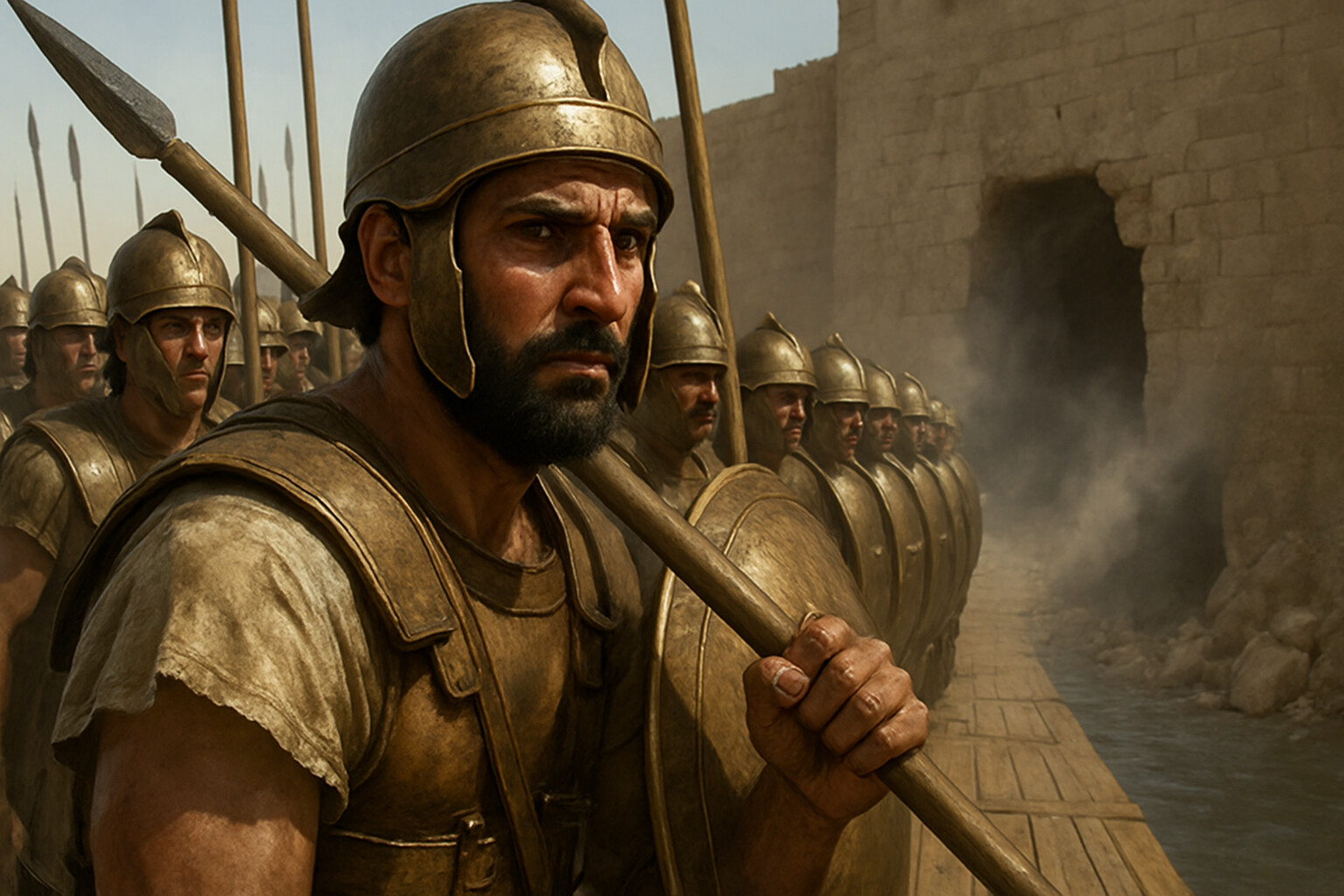
The causeway by this point had reached the island's wall, or close enough that the gap could be bridged. Alexander concentrated his main assault at the section of the southern wall that had been weakened by the shipborne ram attack. The battering ships had opened a breach. Ancient sources suggest it was passable but not wide, and it was defended on the inner face by Tyrian soldiers who had prepared for exactly this moment.
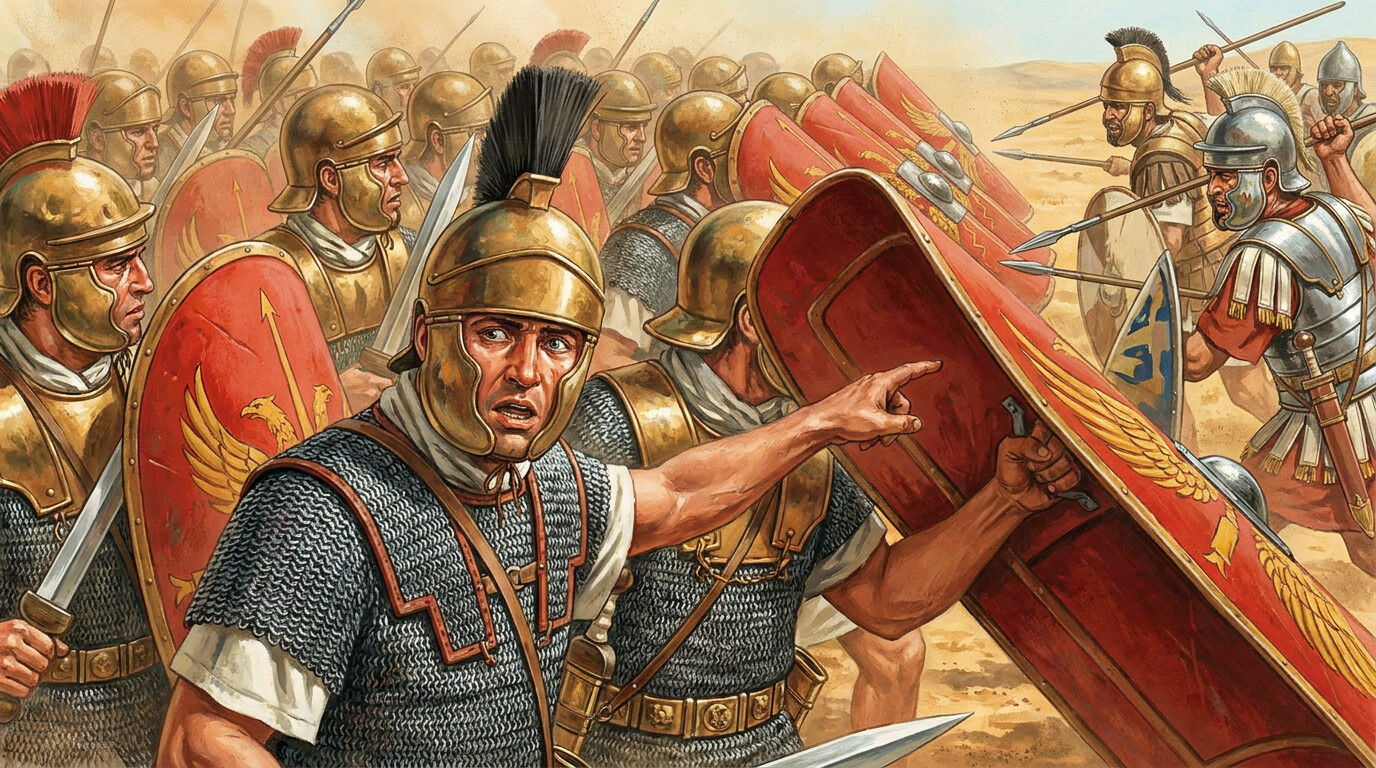
Alexander did not commit the assault force until he had suppressed as much of the Tyrian defensive fire as possible. He positioned warships against both harbor entrances to pin the Tyrian fleet. He ran ship-mounted catapults and bolt-throwers against the walls to drive defenders back from the parapets. Then he brought up the assault ships carrying gangplanks and boarding equipment, and the Macedonian infantry went across.
Arrian specifically records that Alexander crossed with the first assault parties. This is consistent with his behavior throughout the campaign and with Macedonian military culture generally, in which the king was expected to lead from the front in a way that would be extraordinary by later military standards. Alexander's presence in the assault was not ceremonial. Arrian records that his hyaspists—the elite infantry of his guard, the Shield Bearers—crossed with him.
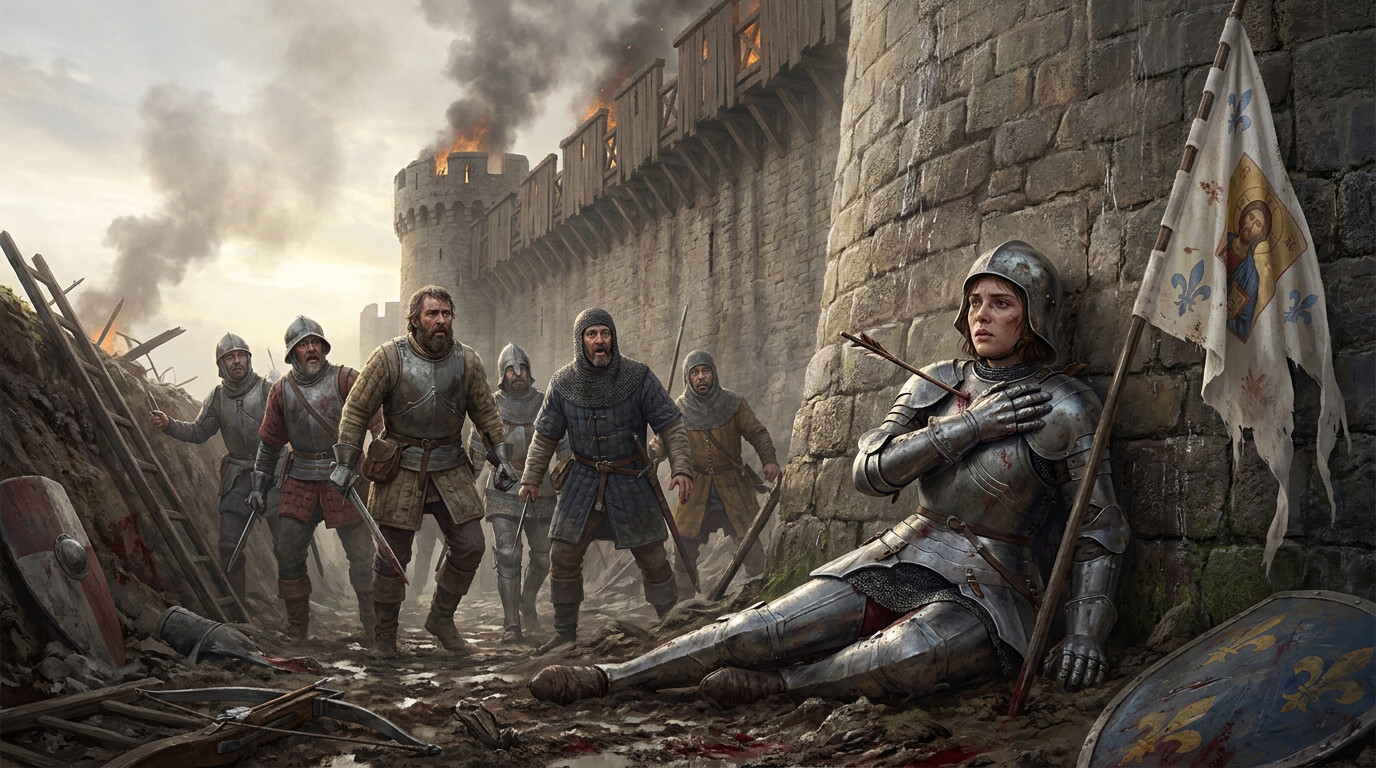
The Tyrian defenders at the breach fought hard. Fighting at a breach was always the most brutal phase of an assault: attackers funneled through a narrow opening against defenders who were concentrated, prepared, and fighting with nothing left to lose. The Macedonians pushed through.
At the same time, Alexander's commanders struck at both harbor entrances. One squadron managed to force the southern harbor entrance and engage the Tyrian fleet within. Another struck the northern harbor. The Tyrians, assaulted simultaneously at the breach and at their harbors, could not concentrate their defense. The coordination of simultaneous pressure from multiple directions—the causeway breach, the two harbor attacks, continuous catapult suppression from the sea—was the decisive element. The Tyrian defense fragmented.
Once Macedonian infantry were inside the walls in force, the battle became a massacre. Arrian and Diodorus both record the subsequent events with a directness that modern readers can find jarring: the Macedonians killed men throughout the city. The figures given in ancient sources—approximately 8,000 Tyrians killed—cannot be independently verified and should be treated as ancient approximations, potentially inflated by the convention of recording round numbers in casualty reports. The figures for survivors are similarly uncertain: Diodorus gives approximately 30,000 taken prisoner and sold into slavery. Arrian's account is consistent in outline. Some Tyrians escaped by sea, reaching Carthage and other Phoenician colonies. Diodorus records that the king of Sidon, commanding part of Alexander's fleet, allowed some Tyrian nobles to escape—reportedly out of Phoenician solidarity. This detail has the texture of authentic tradition but rests on Diodorus alone and cannot be independently corroborated.
Alexander ordered approximately 2,000 Tyrian men of military age crucified along the shoreline—a detail recorded by both Arrian and Diodorus and broadly accepted by modern scholarship as historical, though the number is not independently verifiable. It was a deliberate act of terror directed at any other city contemplating resistance.
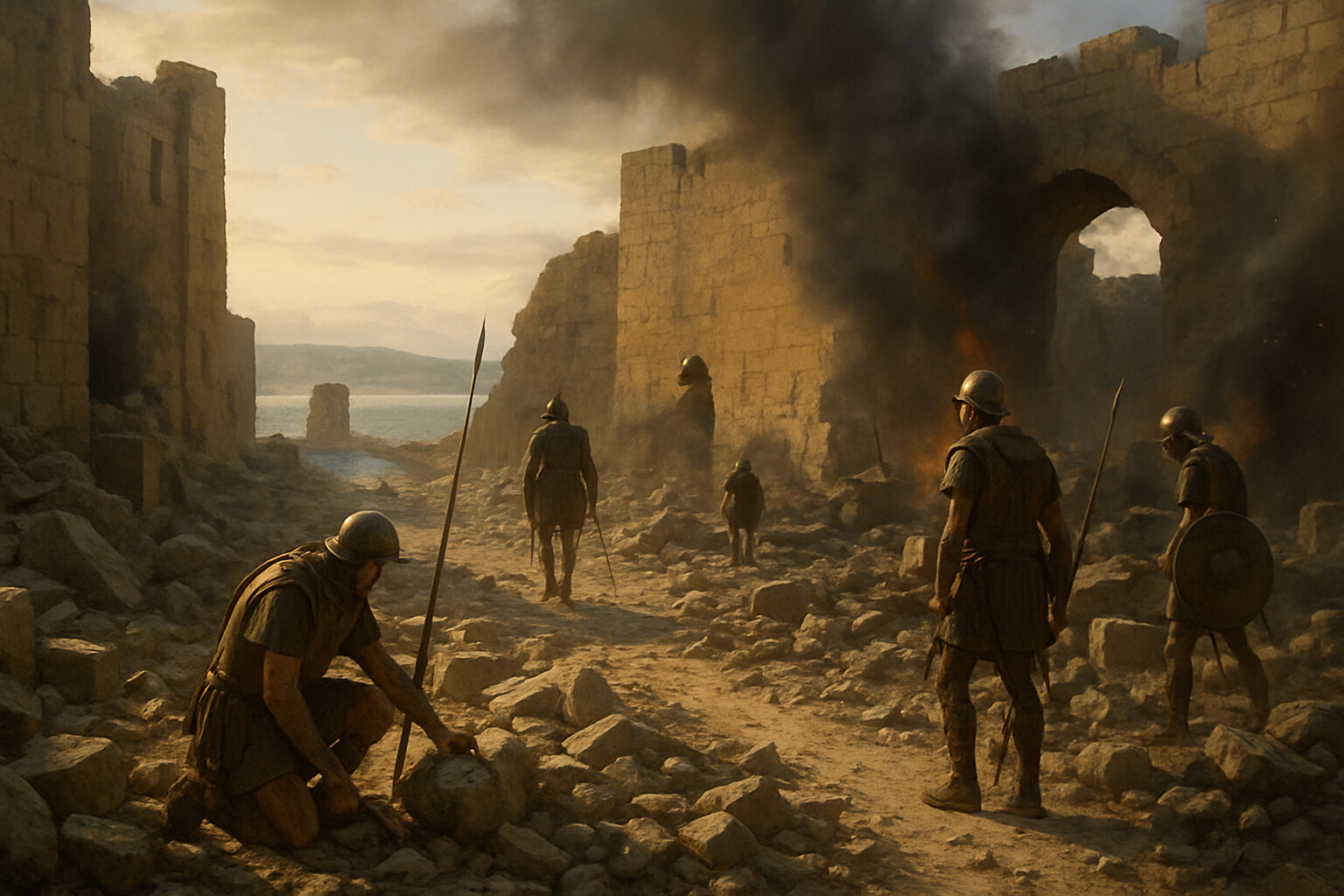
Alexander then entered the temple of Melqart and performed the sacrifice he had originally requested seven months earlier.
---
The physical legacy of the siege outlasted the Roman Empire.
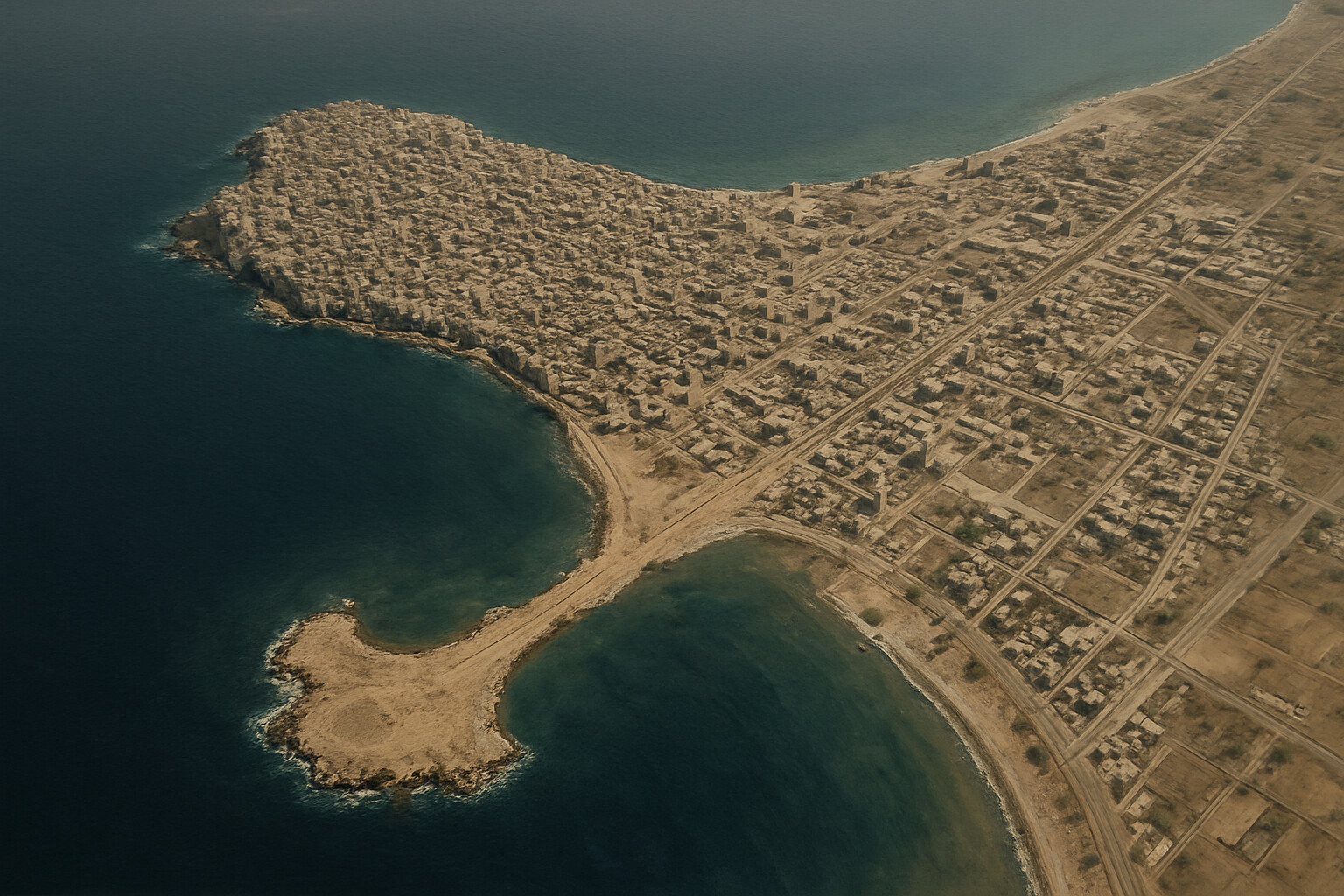
The causeway Alexander built did not disappear when the siege ended. Natural sand accumulation and silting gradually widened it over the centuries, and later builders used it as a foundation for additional construction. By the medieval period, what had been an island was effectively a peninsula. Today, the city of Tyre—modern Sour in Lebanon, a UNESCO World Heritage Site—sits on a peninsula whose basic geography owes its existence to the material Alexander's engineers dumped into the sea in 332 BC. The causeway is now land. The strait is closed.
This is perhaps the most tangible legacy of the siege: a physical alteration of the coastline that has persisted for more than 2,300 years and that any satellite image of the Lebanese coast will reveal.
The strategic consequences were profound. With Tyre destroyed, Alexander controlled the entire eastern Mediterranean coastline. The Persian fleet—a theoretical threat to his supply lines and to Greece itself—had no major base of operations left in the Levant. Persia's ability to project naval power into the Aegean, a serious strategic asset for generations, effectively ended. Egypt, which Alexander reached after the siege, surrendered without significant resistance, completing his encirclement of the eastern Mediterranean.
The siege also established a precedent. When Alexander subsequently appeared before the walls of Gaza—the next city that refused him—and Gaza resisted despite the Tyrian example, Alexander besieged and reduced it as well. The message that Tyre sent to every other city in Alexander's path was received.
---
The sources for the siege are imperfect, as they are for almost everything in Alexander's campaigns.
Arrian's Anabasis, written roughly four centuries after the events, remains the most detailed and analytically careful ancient account, and modern scholars generally treat it as the most reliable starting point, while recognizing that Arrian's sources—Ptolemy and Aristobulus—were not neutral observers. Both men served with Alexander and wrote accounts that were, to varying degrees, favorable to the king and to themselves.
Diodorus Siculus, writing in the first century BC, provides supplementary detail in his Library of History, including material not in Arrian, though his chronology is sometimes confused and his casualty figures are difficult to evaluate.
Quintus Curtius Rufus, writing in the first century AD in Latin, provides additional detail but is generally regarded by modern scholars as less reliable than Arrian as a historical source.
Plutarch's Life of Alexander offers anecdote and character detail but is primarily biographical rather than military-historical in focus.
No Tyrian account survives. We have no record of the siege from inside the walls, no Tyrian commander's perspective, no account of what the civilian population experienced. This is an almost universal problem with ancient siege accounts, and it means that the experience of the city that resisted—the decision-making of the Tyrian leadership, the conditions of the defenders as the months went on, the experience of the final assault from the receiving end—is largely beyond recovery.
Modern archaeological work at the site of ancient Tyre has confirmed the general outline of the causeway's impact on coastal geography, but has not produced material that substantially revises the textual record of the siege itself.
The numbers throughout—troop totals, casualty figures, fleet sizes, causeway dimensions—should be understood as ancient approximations filtered through multiple generations of copying and selective preservation. They are the best evidence we have. They are not precise.
---
What the Siege of Tyre demonstrates, stripped of the mythology that has accumulated around Alexander over two millennia, is something more specific and more interesting than a simple story of will imposed on geography.
It demonstrates what happens when a well-resourced, technically sophisticated military force under unified command applies sustained engineering and combined-arms pressure to a problem that appears to have no solution. The Tyrians were not incompetent. They were experienced. Their fire ship was a sophisticated weapon, carefully engineered rather than improvised. Their divers cutting causeway anchor ropes showed tactical imagination. Their naval sortie nearly succeeded. They fought for seven months against one of the best-organized armies the ancient world had produced. They lost because the resources available to Alexander—the labor pool, the engineering expertise, the eventually acquired naval strength, and the willingness to continue the operation through difficulty and loss—outweighed what Tyre could sustain against an opponent who would not disengage.
The causeway remains. The island is a peninsula. The city that exists there today still carries the name—Sur in Arabic, Sour in Lebanese usage—and the ruins of the Greco-Roman city that succeeded Alexander's conquest are visible along what was once the seafloor of the strait. People walk over the rubble of the causeway without knowing it. The sea that was supposed to protect Tyre became the road through which Tyre was destroyed, and then became the land on which the next city was built.
Alexander had asked to sacrifice in Melqart's temple. He had been told no. Seven months later, he walked through the ruins and performed his sacrifice. Whether the god noticed, history does not record.