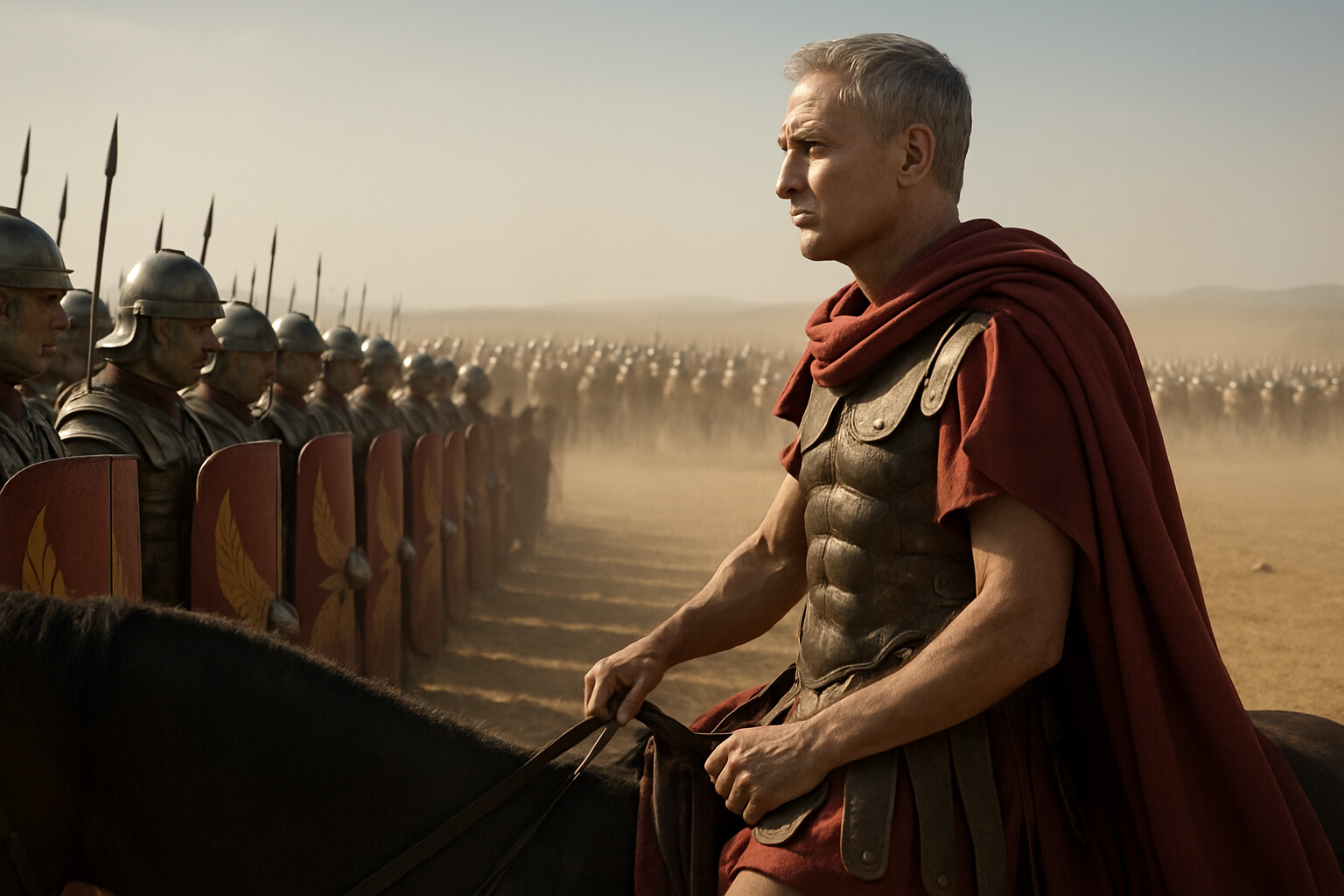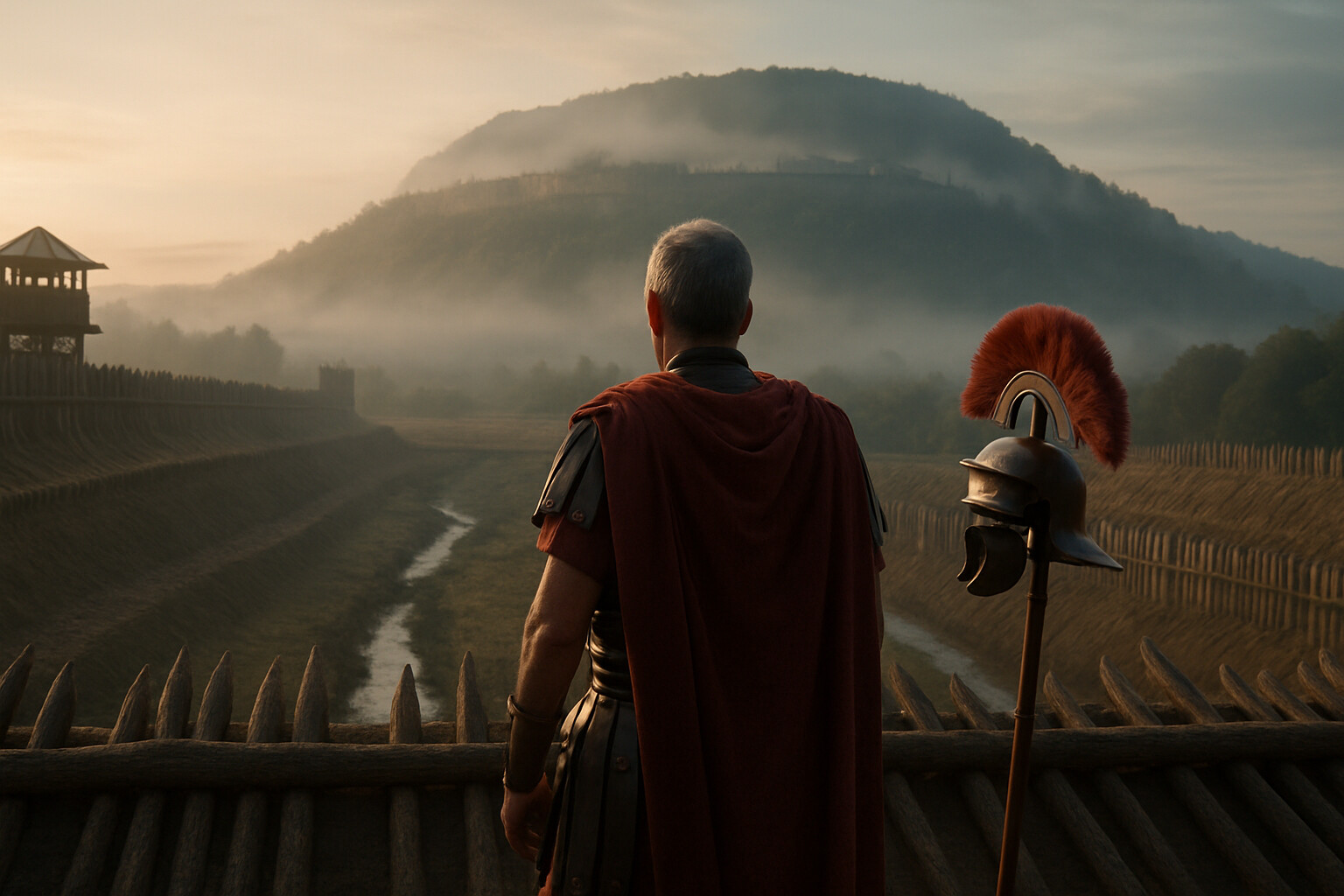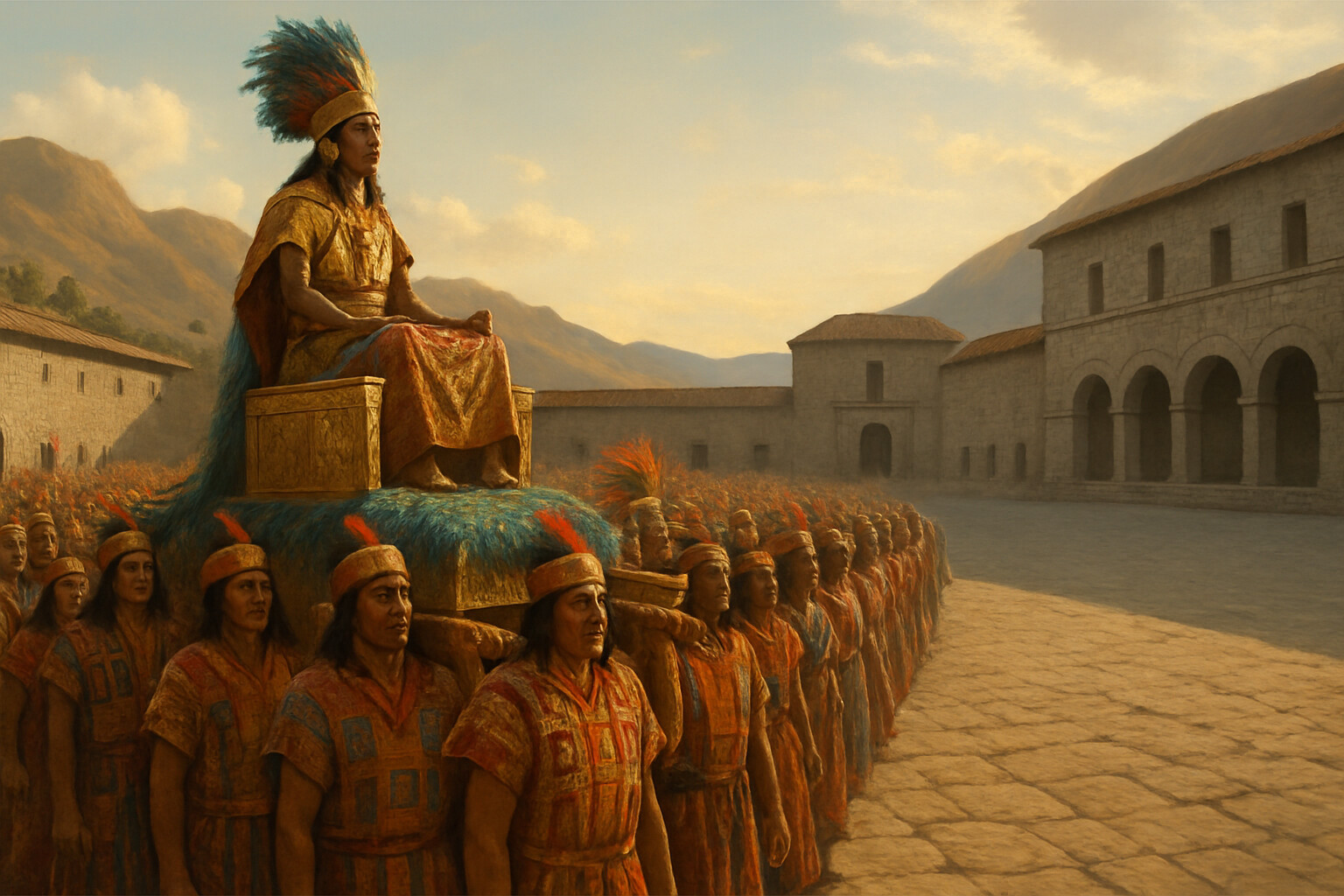
The plaza was almost quiet when the Inca emperor entered it.
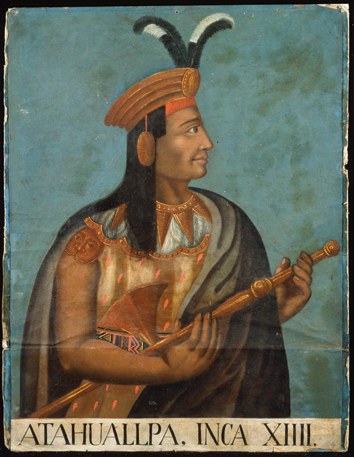
Atahualpa, ruler of Tawantinsuyu — the Four Quarters of the World — came on a litter draped in parrot feathers and hammered gold, carried on the shoulders of his highest nobles. Thousands of attendants and warriors surrounded him in the last light of a November afternoon in 1532. The mountain city of Cajamarca sat at roughly 2,750 meters above sea level in the northern Andes of what is now Peru, and the air was cold and thin and very still. The great open plaza at its center was perhaps 450 meters across. It appeared, from the emperor's vantage point, nearly empty.
It was not empty.
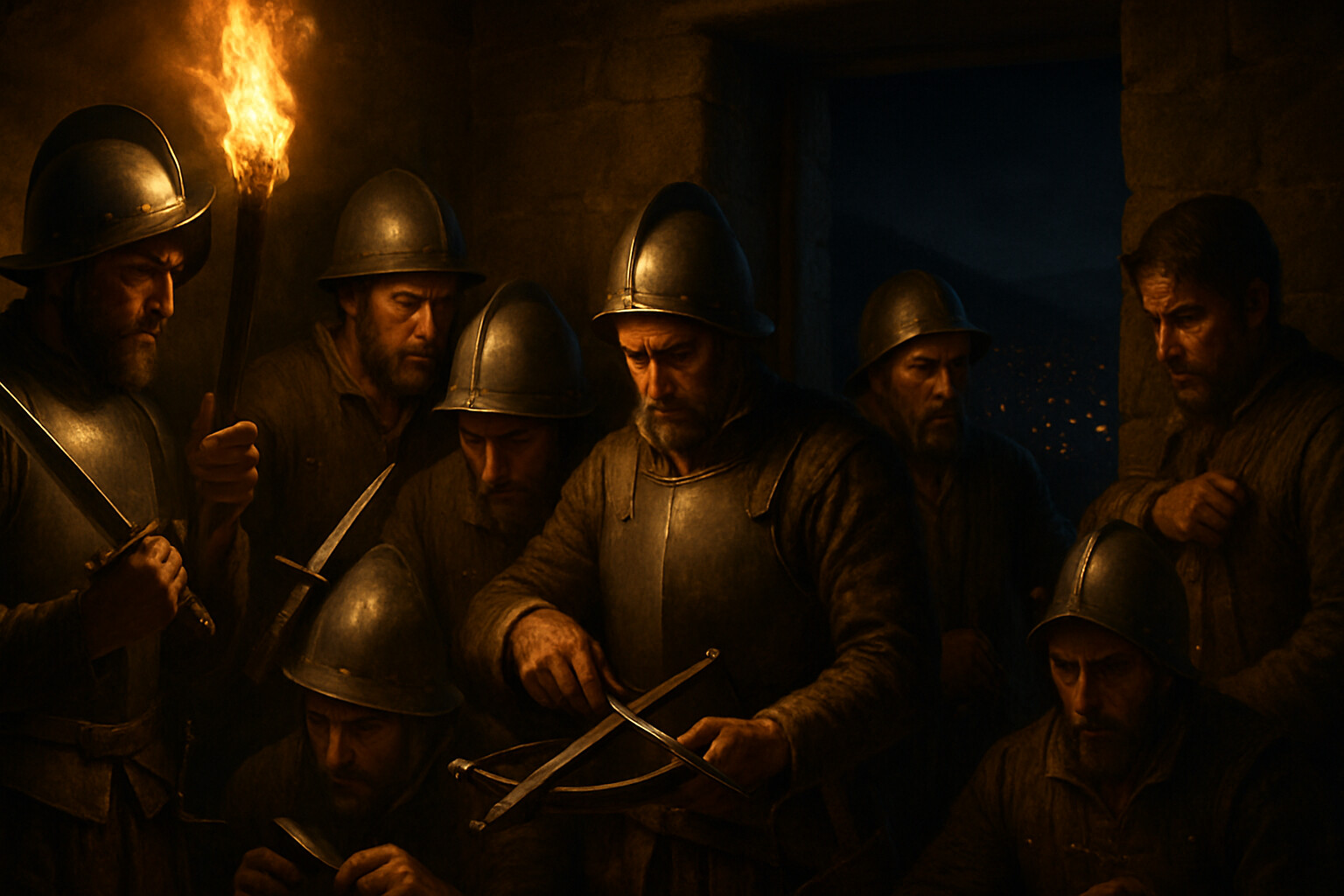
In the buildings along the plaza's walls, pressed into doorways and colonnades, stood 106 Spanish infantry and 62 Spanish horsemen. They had spent the night sharpening swords and checking harness straps and, by every account that survives, in a state of acute fear. Some men reportedly urinated from fear without leaving their positions — a detail that appears in primary accounts and that no later retelling has been able to soften into dignity. They had marched for months through terrain that punished horses and eroded supplies, and now they were deep inside a continent that dwarfed their imagining, facing a sovereign whose armies had just finished a successful civil war and numbered in the many tens of thousands. The Spaniards had no fortress, no escape route, and no relief force within a thousand miles.
They had a plan. And in the span of roughly two hours that afternoon, that plan would produce one of the most audacious documented outcomes in the history of armed conflict.
---
**The Man at the Center**
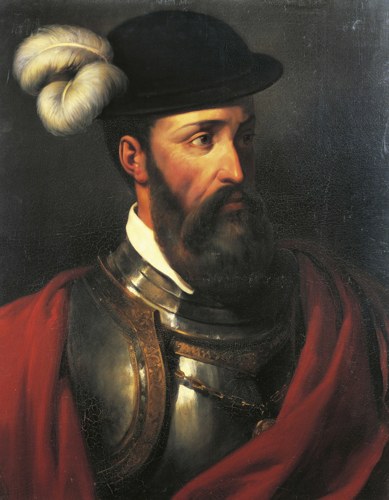
Francisco Pizarro was probably born around 1471 in Trujillo, Extremadura, a dry, hardscrabble region of western Spain that also produced Hernán Cortés. The precise date is not established in the records. He was illegitimate — born of Gonzalo Pizarro, a military officer, and a woman whose name does not appear reliably in the contemporary documents that survive — and he grew up poor and uneducated. He could not write his name. Contemporary accounts describe him as physically imposing, long-limbed, with endurance that outlasted younger men on the trail.
Pizarro first came to the Americas around 1502, part of the wave of Spanish settlers who followed Columbus into the Caribbean. He participated in Vasco Núñez de Balboa's 1513 crossing of the Isthmus of Panama, was among the first Europeans to see the Pacific Ocean from American soil, and spent years accumulating modest wealth and reputation on the frontier of Spanish settlement. He was in his forties — old by the standards of conquest — before he made his first exploratory probe south along the Pacific coast toward the rumored wealth of a southern empire.
Two earlier expeditions, in 1524–25 and 1526–28, reached the northern edge of Inca territory, found evidence of sophisticated civilization — fine textiles, worked gold, well-fed populations — and returned with enough to convince the Spanish crown to authorize a full campaign of conquest. Pizarro traveled to Spain in 1528, secured the governorship of any territories he might conquer from King Charles I (Holy Roman Emperor Charles V), and returned to Panama with a legal framework and a deeply inadequate supply of men and resources.
His third and final expedition departed the isthmus in December 1530. The force was small from the start and diminished steadily: disease, difficult coastal navigation, resupply failures, and skirmishes with local populations all took a toll before the column ever reached the Inca heartland. By the time Pizarro learned through indigenous interpreters of the civil war that had fractured Tawantinsuyu — the conflict between the brothers Atahualpa and Huáscar for control of the empire — his force numbered in the low hundreds. He pressed south anyway.
---
**The Empire They Were Walking Into**
Tawantinsuyu in 1532 was vast by any measure. The empire stretched roughly 4,000 kilometers along the western spine of South America, from modern Ecuador and Colombia in the north to central Chile and northwest Argentina in the south, and administered a population that scholars have estimated at somewhere between six and twelve million people — numbers that remain subject to significant debate. It was governed from Cusco through a system of roads, relay runners, administrative storehouses, and a hierarchy of regional lords bound to the central government by obligation, marriage alliance, and controlled resource distribution.
The Inca road system — the Qhapaq Ñan — was an engineering achievement comparable to Roman roads: stone-paved in many sections, equipped with suspension bridges, and maintained by labor corvée. Messages could travel across the empire faster on foot than most European armies could march. The Inca did not use wheeled vehicles or iron tools, and they had no horse. Their military power rested on massed infantry, logistics that could sustain armies in the field for extended campaigns, and weapons that included the sling, the wooden club, the bronze-headed war axe, the spear, and the bolas.
Atahualpa, the northern claimant who had recently won the civil war against his half-brother Huáscar, was encamped with a substantial army near Cajamarca when Pizarro's scouts first made contact. Historical accounts vary considerably on the size of this force. Pedro de Cieza de León, writing in the 1550s based on extensive Andean travel and interviews, and Francisco de Xerez, who was Pizarro's personal secretary and an eyewitness, both describe an Inca force of many thousands. Modern historians including John Hemming, whose 1970 work *The Conquest of the Incas* remains the standard English-language scholarly synthesis, broadly accept that Atahualpa was accompanied by an army of at minimum several thousand warriors — possibly significantly more. The more hyperbolic primary accounts place the figure between 40,000 and 80,000, and Hemming treats these numbers with appropriate caution. The lower end of serious scholarly estimates still places the force at many times the size of Pizarro's column.
Atahualpa had good reason to be confident. He had just won a brutal civil war. He controlled the most organized military apparatus on the continent. And the strangers who had marched into his territory were, by any rational accounting, an absurdity: a tiny, ragged column of foreign men on large animals, armed with weapons no Andean population had encountered, who had accepted his invitation to meet in a city he controlled, surrounded by his army.
The Inca emperor may have intended to accept the Spaniards' submission, assess their capabilities, and decide their fate at his leisure. That calculation would prove catastrophically wrong.
---
**The Long March to Cajamarca**
Pizarro's force crossed the coastal desert, ascended the western face of the Andes, and arrived at the edge of the Cajamarca valley in early November 1532. The march over the mountains was severe. The Andean passes in that region rise above 3,000 meters, the terrain is deeply cut by ravines and switchbacks, and horses — central to Spanish military power — moved slowly on narrow mountain paths. A competent Inca force could have destroyed the column at multiple points during the ascent.
It did not. The scholarly consensus, articulated most clearly by Hemming and by James Lockhart in his work on the men of Cajamarca, is that Atahualpa allowed the Spaniards to pass unmolested into the valley deliberately. He wanted them in Cajamarca. Whether this reflected confidence in his overwhelming numerical superiority, a desire to study these strangers before deciding their fate, or some combination of political calculation and curiosity is not resolvable from the surviving sources. What is certain is that by November 15, 1532, Pizarro's full force had descended into the Cajamarca valley and occupied the empty city.
Atahualpa was encamped with his army several kilometers from the city center, near thermal hot springs the Inca used for rest and ceremony. Pizarro sent a small embassy — horsemen led by his half-brother Hernando Pizarro and the captain Hernando de Soto — to meet the emperor directly. The accounts of this meeting, preserved primarily by Francisco de Xerez and Pedro Pizarro, a young cousin who was present, describe Atahualpa receiving the Spaniards while seated and largely motionless, maintaining the controlled, formal bearing appropriate to an Inca sovereign. He agreed to visit Cajamarca the following afternoon.
The night of November 15–16 was spent, according to multiple primary accounts, in considerable anxiety. The Spaniards could see the fires of the Inca camp spread across the hillside above the city and could estimate, at least roughly, the scale of the force they faced. Pizarro organized his men into positions within the buildings surrounding the central plaza. The cavalry was divided into groups under his brothers and capable subordinates. The infantry was positioned to move into the plaza on signal. Two small artillery pieces — probably light bronze cannon of the falconet class, based on period context, though the specific designation is not confirmed in all accounts — were positioned to cover the plaza. Pizarro himself would lead from the plaza and make the first move.
The signal to attack would follow a confrontation that the Dominican friar Vicente de Valverde would initiate: presenting Atahualpa with a book and demanding his submission to the Spanish crown and the Catholic Church. When that encounter ended, a cannon shot and a raised cloth would send every man in the buildings into the open.
---
**Weapons and the Physics of the Ambush**
The Spanish military advantage at Cajamarca was not simply a matter of numbers reversed. It was qualitative in specific, decisive ways that the Inca had no immediate means to counter.
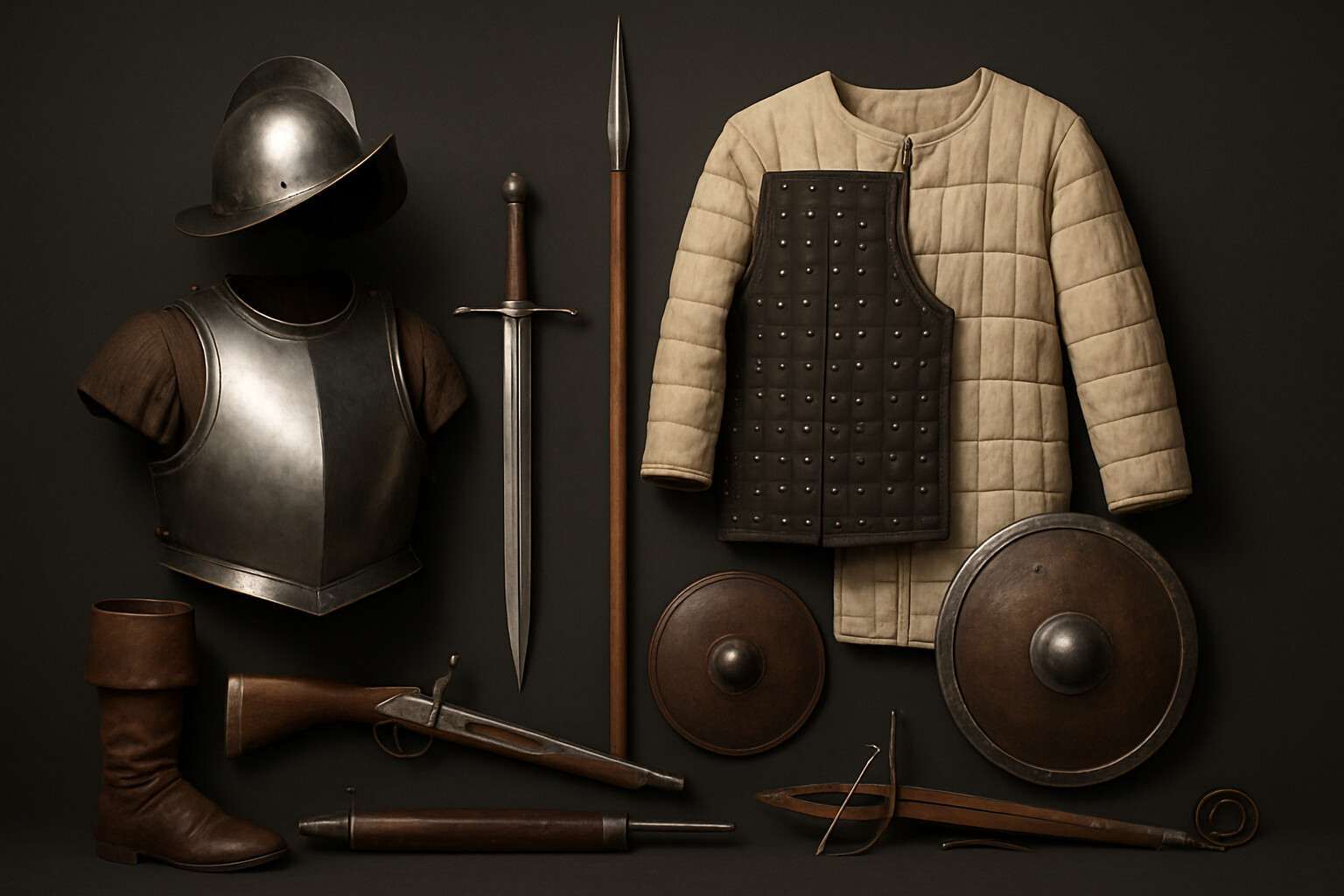
The horse was the central instrument. The Inca world had no large domesticated animals suited to cavalry — the llama is a pack animal, not a war mount — and Andean populations had no generational experience of horses. A trained warhorse, ridden by an armored man with a steel lance, could move at speed across the plaza, strike with lethal force, wheel, and strike again, while largely avoiding the hand weapons of infantry who had no trained response to mounted assault. The psychological shock of horses at first contact is attested in multiple conquest-era sources from across the Americas. Horses were also often protected by cotton or leather barding that reduced their vulnerability to Inca slings and clubs.
Steel swords represented a second decisive asymmetry. The Spanish sword of this period — typically a double-edged cut-and-thrust weapon, with the arming sword giving way to early forms of the rapier — cut through the quilted cotton armor worn by Inca warriors with far more efficiency than Andean weapons could penetrate Spanish metal armor. Spanish armor in 1532 was itself in transition: full plate was giving way to half-armor and brigandine, and experienced conquistadors had adopted multi-layer cotton armor from indigenous practice, which proved effective against stone and bronze weapons while being far more manageable in mountain terrain.
The cannon and the arquebus — the early matchlock firearm present in small numbers, though the precise count at Cajamarca is not established in the primary sources — contributed primarily through noise and shock. Firearms in 1532 were slow to reload, required careful maintenance of the match cord, and were not accurate at long range by later standards. But their sound and smoke, in a confined plaza surrounded by stone walls, would have been overwhelming to people encountering gunpowder weapons for the first time. The two light cannon at Cajamarca likely fired once or twice during the engagement; they were not the primary killing instruments but they were powerful initiators of shock.
The Inca weapons — slings, clubs, bronze-tipped axes, spears, and bolas — were entirely effective against unarmored infantry and had demonstrated this in the recent civil war. Against armored cavalry in a confined space, with no room to maneuver and no prepared defensive position, they could not be brought to bear effectively. Many of the emperor's attendants in the plaza were not carrying weapons in hand at all; they had arrived in ceremonial formation, not combat posture.
The plaza itself mattered. Pizarro chose to meet Atahualpa in an enclosed urban space rather than on open ground. This was not accidental. In open country, the Inca army's numbers could envelop and overwhelm. In the plaza, with stone walls channeling movement, the procession would be compressed and the horsemen could strike before the surrounding army could react and organize.
---
**The Afternoon of November 16**
Atahualpa did not arrive at the time agreed. The Inca procession began forming outside the city and moved toward the plaza in the early afternoon, but the emperor delayed, and the hours stretched. The Spaniards waited in their positions in the darkened rooms off the plaza through the accumulating tension of the wait — a detail preserved in multiple primary accounts. The precise hour when the procession finally entered is not recorded in any source, but the accounts place it in the late afternoon, past midday and possibly further.
When the procession finally entered the plaza, it was already clear that the full Inca army was not coming in with Atahualpa. Many thousands of warriors remained outside the city walls. The emperor entered with a large ceremonial retinue — attendants, honor guards, litter bearers, court officials — in a procession that filled the plaza, but the fighting force that could respond to an attack was partially separated from the emperor by the city walls and streets.
Friar Vicente de Valverde walked out to meet the emperor's litter. The Dominican friar's exact words, and Atahualpa's exact responses, are reported differently in different primary accounts, and none of those accounts can be treated as a verbatim transcript of the exchange. What is consistent across sources is the basic structure of the encounter: Valverde presented a book — described variously as a Bible, a breviary, or a book of prayers — and spoke through interpreters about the authority of the Pope and the King of Spain, demanding that Atahualpa submit. Atahualpa took the book, examined it, and then dropped or threw it to the ground. The sources disagree on whether this was a deliberate act of rejection or an incidental dropping during examination, and the question cannot be resolved from the existing record.
Valverde returned to Pizarro. In most primary accounts, he called out to Pizarro to attack. Pizarro gave the signal.
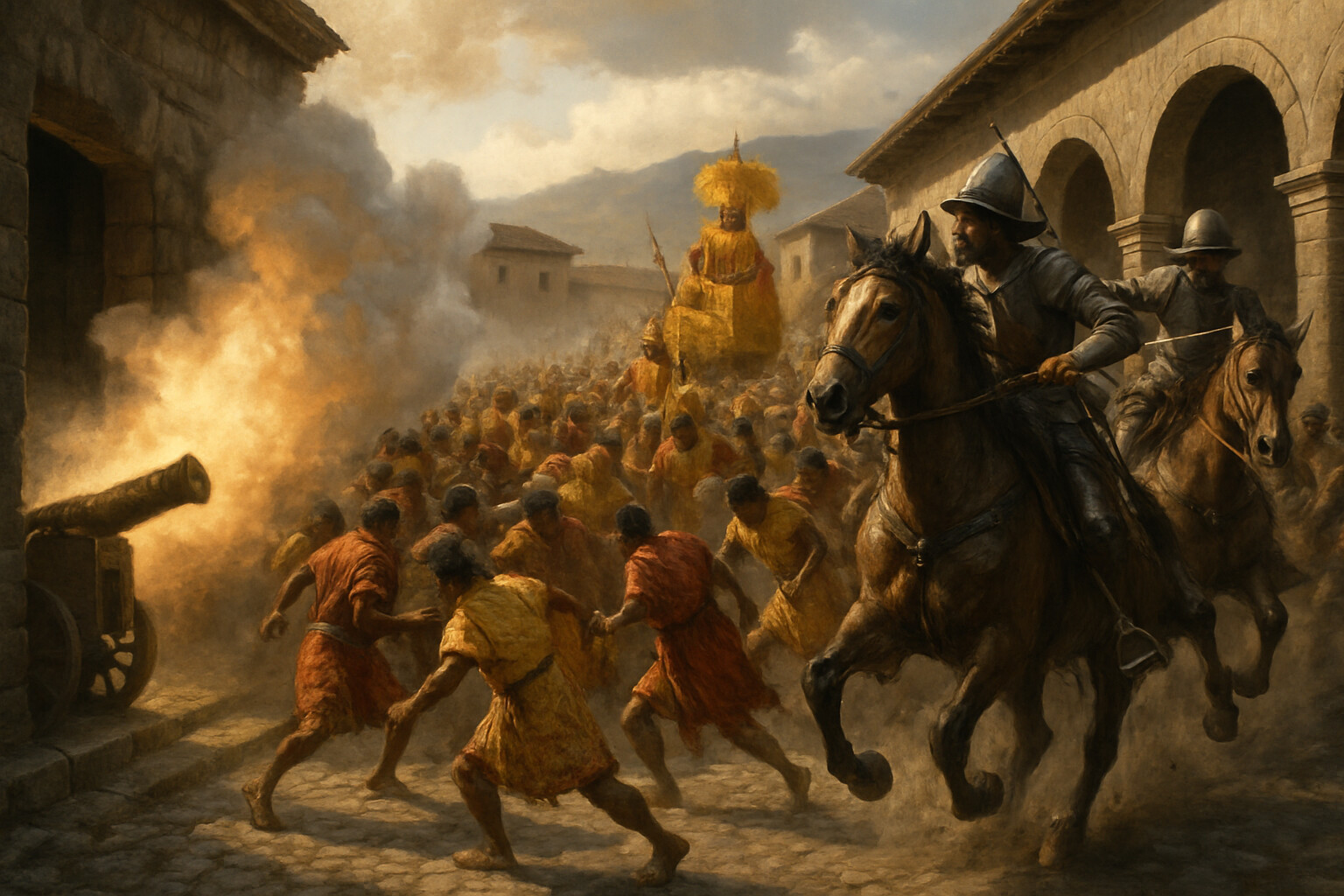
The cannon fired. The cloth signal was raised. The horsemen erupted from the arcaded buildings at a gallop. The infantry poured into the plaza. The noise — cannon, horses, steel weapons, screaming, the battle cry of Santiago — struck the gathered Inca attendants, who had arrived in ceremonial formation without weapons in hand, without warning and without anything in their experience that prepared them for it.
The plaza became a killing ground.
The Inca in the plaza could not run. The press of bodies was too dense, the exits too few, and the walls a barrier in every direction. Accounts from those present describe people crushed against the walls; one section of wall near a gate is described in some sources as collapsing under the pressure of the crowd attempting to escape, though whether this was structural failure or the weight of the crush is not clearly distinguished in the text. The horsemen drove through the procession toward the emperor's litter. The infantry engaged close-in. The fighting, by every account that survives, was extremely one-sided and extremely violent.
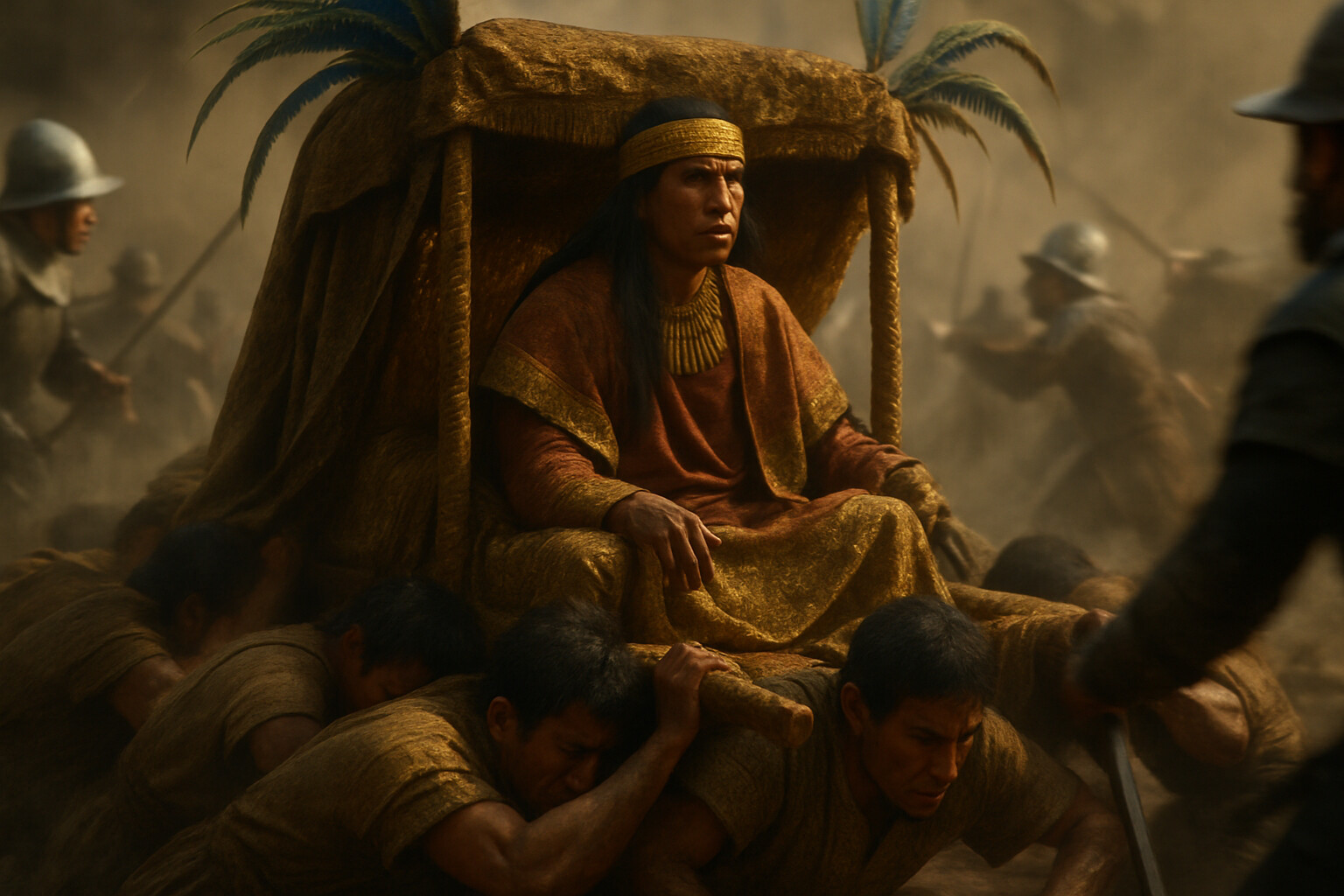
Atahualpa's litter bearers were cut down as his nobles tried to hold the litter steady. His attendants threw themselves beneath the litter to prevent it from touching the ground — an act described in several sources as reflecting the profound prohibition against the emperor's person touching the earth in such circumstances. As each wave of bearers fell, others took their place. The Spanish horsemen and infantry drove through them.
Pizarro himself reached the emperor's litter. Pulling Atahualpa physically from the litter and securing him in the press and chaos was the critical act. In the confusion, Pizarro's hand was cut — the only Spanish wound of the engagement, and it appears in the sources as having been caused by another Spaniard's blade in the crush around the emperor, not by Inca resistance. Atahualpa was taken alive.
With the emperor seized, his army — the tens of thousands outside the city walls — did not assault the city. It froze, fragmented, and then withdrew. The capture of the Sapa Inca, the divine sovereign, was an event outside all Andean political and military planning. There was no protocol for it. The army was paralyzed.
By the time darkness fell on Cajamarca, Atahualpa was a prisoner in the building that had been Pizarro's command post. The dead in the plaza were Inca. No Spaniard had been killed.
---
**The Cost**
The battle's immediate human toll was catastrophically unequal. Francisco de Xerez, the most contemporaneous eyewitness, records a figure of around 2,000 Inca dead in the plaza. Other primary sources offer different numbers. Modern historians treat these figures as estimates made under chaotic conditions by men not conducting any systematic count, and Hemming explicitly cautions against treating them as verified tallies. Whatever the precise number, many of those who died were not soldiers but attendants, servants, litter bearers, and court officials who had arrived at what was intended as a diplomatic audience. They were, by every account, unarmed or minimally armed. The lopsidedness of the toll reflected not only the tactical surprise and Spanish weapons advantages but the specific character of the attack: a military strike against a ceremonial procession.
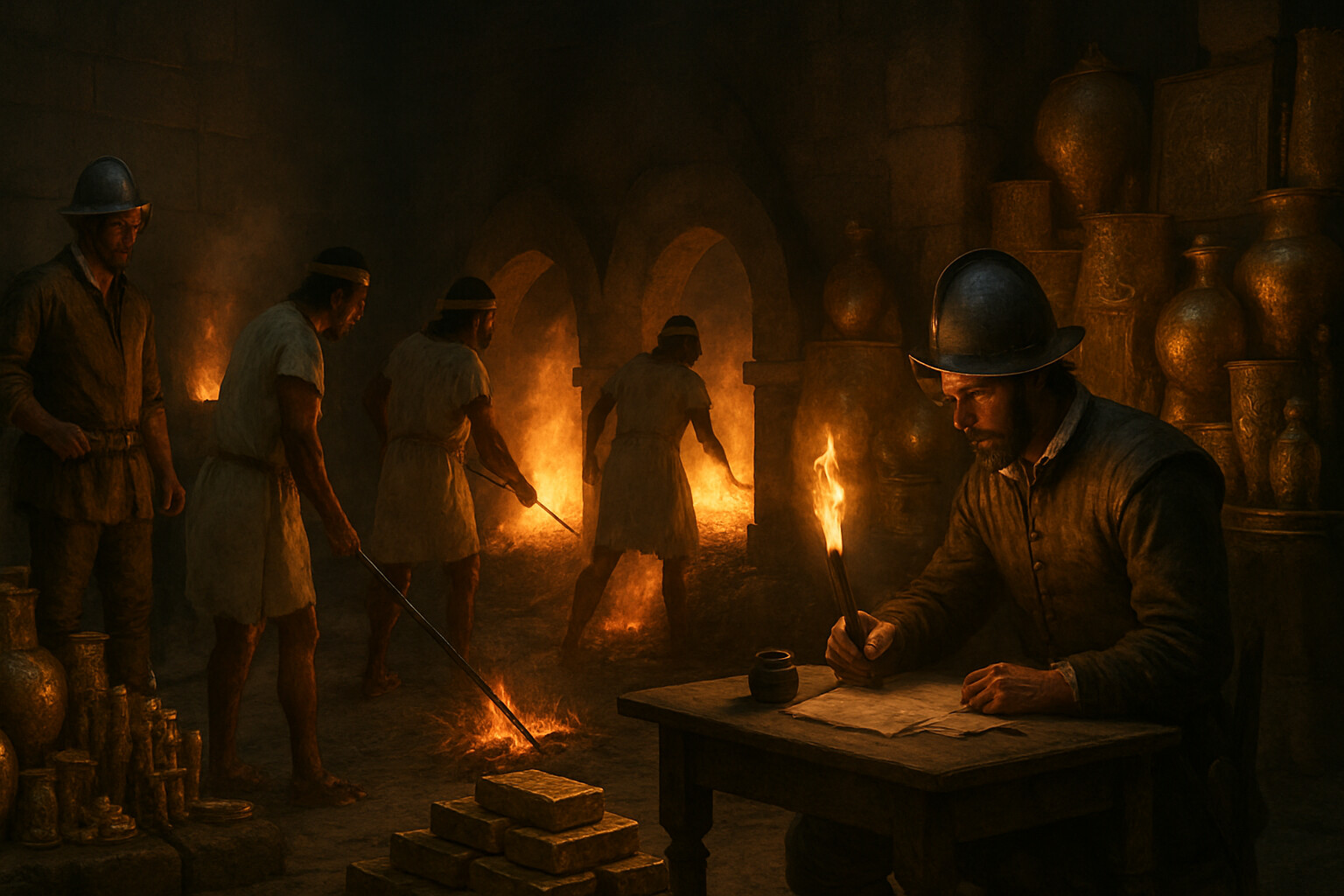
For the Inca empire, the cost extended far beyond the afternoon's dead. Atahualpa was held prisoner for months. He offered — and the Spaniards accepted — a ransom of one room filled once with gold and twice with silver in exchange for his freedom. The ransom was paid. Inca nobles, lords, and temple officials contributed unprecedented quantities of gold and silver objects: sacred vessels, architectural decorations, accumulated tribute, and ritual items that were melted down into ingots by Spanish smelters over the following months. Spanish records of the smelting, preserved by Xerez and others, describe rooms full of worked gold being reduced to ingots for distribution.
The division of the proceeds followed Spanish legal custom: the crown received a fifth — the quinto real — Pizarro and his senior officers received larger shares, and common soldiers received smaller but still substantial individual allotments representing more wealth than most would have seen in a lifetime of ordinary labor.
The ransom was paid. Atahualpa was not freed.
In July 1533, after a rushed trial on charges that remain historically contested — accusations of treason, idolatry, and fratricide, including the alleged killing of his brother Huáscar — Atahualpa was condemned to death. He accepted Christian baptism, reportedly to obtain commutation from burning to garroting, which carried less cosmological weight in Andean terms because the body would not be destroyed. He was executed by garrote on July 26, 1533. He was probably in his late twenties or early thirties.
The execution generated controversy even among the Spaniards present. Hernando de Soto, who had been sent out on patrol and returned to find the trial already concluded and the execution imminent, reportedly protested — though the exact nature and content of his objection varies across accounts and cannot be reconstructed with precision. The charges against Atahualpa were recognized by many observers as legally and procedurally thin. The decision was made and carried out under Pizarro's authority as governor, and historians have argued about his role in it for centuries without resolution.
With Atahualpa dead, the Spanish installed a succession of compliant Inca nobles as puppet rulers, pressed south to Cusco, and within a few years had broken the operational coherence of the imperial government. The Inca noble and military class mounted significant resistance — the great revolt of Manco Inca beginning in 1536 came close to destroying the Spanish presence in Peru — but the political shock of Cajamarca, the death of Atahualpa, and the speed of the Spanish seizure of the institutional centers of power meant that the empire never fully reconstituted its capacity to expel the intruders.
---
**What the Records Show**
The primary sources for Cajamarca are richer than for many sixteenth-century battles, though they are not without significant problems.
Francisco de Xerez was Pizarro's personal secretary and was present in the plaza. His account, published in Spain in 1534 as *Verdadera relación de la conquista del Perú*, was produced quickly and with Pizarro's awareness and likely approval, which shapes its perspective throughout. Pedro Pizarro, a young cousin of Francisco's who was also present, wrote his *Relación del descubrimiento y conquista del Perú* decades later, with all the distortions that memory and retrospection introduce. Hernando Pizarro, Francisco's half-brother, wrote a letter shortly after the events — one of the most contemporaneous documents — that provides useful tactical detail but is also self-interested in its framing. Miguel de Estete, another eyewitness, left an account that supplements Xerez on several points.
The Spanish crown received numerous depositions, petitions, and sworn statements from participants over the following years as men attempted to establish their legal claims to shares of the conquest's rewards. These administrative documents, preserved in Spanish archives, allow historians to cross-check narrative accounts against legal testimony given under oath and for material stakes — a form of triangulation that improves the overall reliability of reconstruction even where individual accounts conflict.
Inca perspectives are harder to recover directly. No written Inca accounts survive from the days immediately following Cajamarca. Later indigenous and mestizo chroniclers — including Felipe Guaman Poma de Ayala, writing around 1615, and the Inca Garcilaso de la Vega, whose *Comentarios Reales* drew on Cusco oral tradition — provide perspectives shaped by decades of colonial experience and cannot be read as unmediated records of 1532. They are nonetheless valuable for what they preserve of Andean memory and interpretation.
John Hemming's *The Conquest of the Incas* (1970) remains the foundational English-language scholarly synthesis. James Lockhart's *The Men of Cajamarca* (1972) provides extraordinarily detailed prosopography — individual biographical profiles — of the 168 men present at Cajamarca, derived from exhaustive work in Spanish archives. Sabine MacCormack, Nathan Wachtel, and others have examined the encounter from the perspectives of Andean social and religious history. Taken together, the historiography gives Cajamarca one of the more extensively documented bodies of scholarly literature for any engagement of this period.
---
**The Numbers: 168 Men**
James Lockhart's archival research established the specific figure of 168 Spaniards present at Cajamarca with a high degree of confidence: 62 horsemen and 106 foot soldiers, plus a small number of auxiliary indigenous allies, servants, and translators whose roles were not equivalent to the Spanish combatants. Lockhart was able to identify the great majority of these 168 individuals by name, origin, occupation before the expedition, and subsequent fate, making Cajamarca one of the most individually documented engagements of the sixteenth century.
The figure matters because it anchors the scale of the asymmetry. One hundred and sixty-eight men against an army that all sources agree was measured in thousands, in a theater thousands of miles from any reinforcement, demands serious engagement with why the outcome was what it was — rather than simply marveling that it occurred.
The answer is not simply courage, though courage was certainly required. It is the specific convergence of several factors: a deliberate plan that used terrain and ceremony to neutralize numerical advantage; weapons and animals that produced shock effects no Andean training had prepared for; the particular vulnerability of a system of government that concentrated all political legitimacy in a single living sovereign; and the specific strategic moment of a recently concluded civil war that had fractured Inca military and political unity.
Remove any one of those factors and the outcome becomes far less certain.
---
**Legacy**
Cajamarca was not the end of the conquest of Peru. It was the beginning of a process that lasted years and cost enormous numbers of lives on both sides, though the disproportion in those losses remained stark throughout. The resistance mounted by Manco Inca and his successors continued in various forms until the Spanish executed the last independent Inca sovereign, Túpac Amaru, in Cusco in 1572 — four decades after the afternoon in the plaza.
Pizarro himself did not survive to see Peru fully pacified. The conquest quickly degenerated into internal Spanish conflict over the division of its wealth and authority. Pizarro was assassinated in Lima in June 1541 by followers of his former partner and rival Diego de Almagro, whose son led the faction that killed him. He died in the administrative capital he had founded. He was probably around seventy years old.
The wealth extracted from Peru — and from the silver mines subsequently opened at Potosí in modern Bolivia — reshaped European economies in ways that historians have measured and debated for two centuries. The flood of American precious metals into Spain contributed to price inflation across Europe, altered trade relationships, and financed both Spanish imperial ambitions and, indirectly, the resistance those ambitions generated. The quinto real on Atahualpa's ransom alone was staggering by the standards of the time.
For the Andean world, the consequences were catastrophic. The immediate violence of conquest was followed by the longer devastation of introduced epidemic disease — smallpox, measles, and influenza against which Andean populations had no prior immunity — forced labor in mines and agricultural enterprises, the systematic dismantling of Inca administrative and religious institutions, and the disruption of the ecological and agricultural knowledge systems that had sustained dense populations at high altitude. The population decline in the central Andes over the century following 1532 was severe; scholarly estimates vary but most are grim.
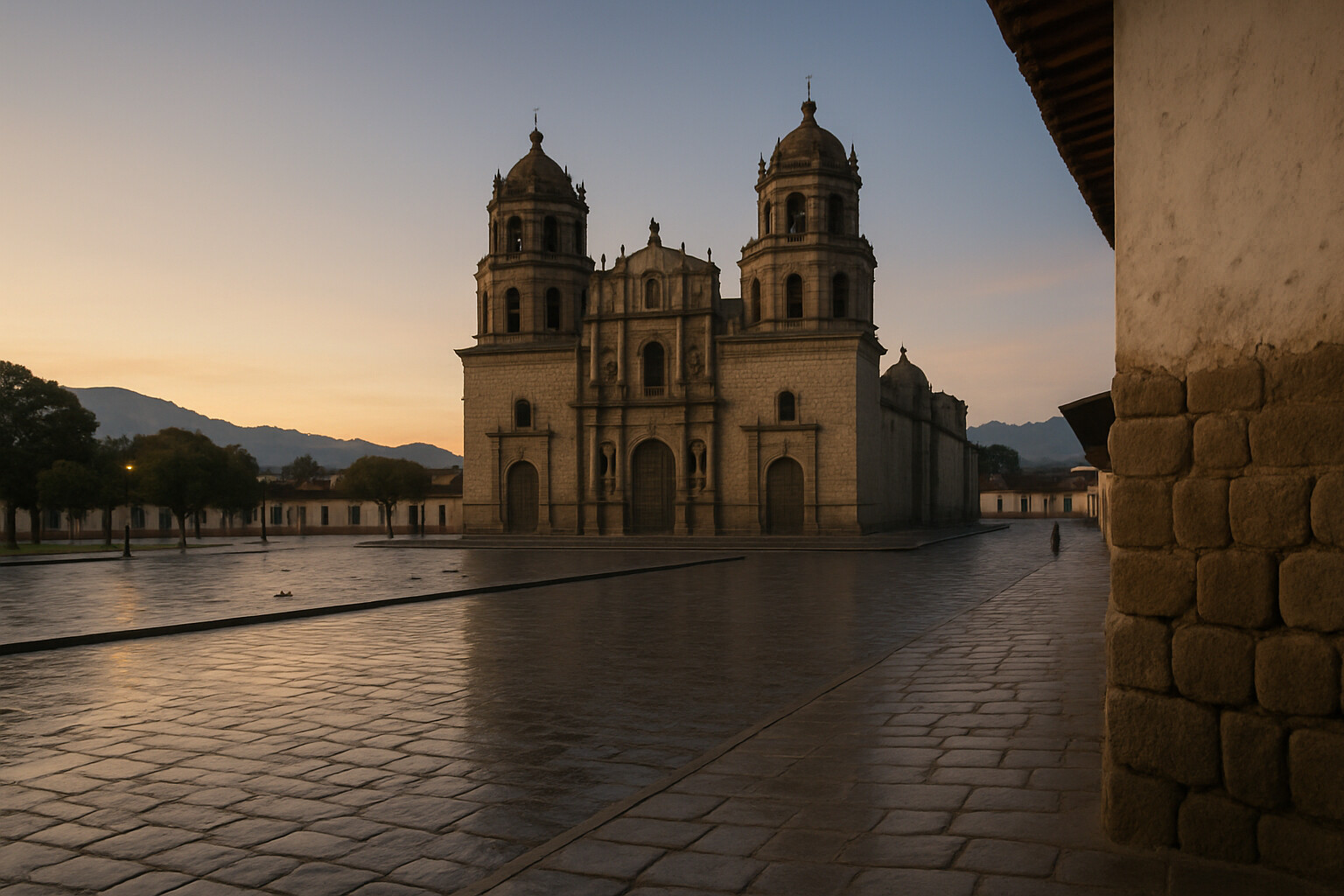
Cajamarca itself remains a city in northern Peru, the regional capital of the Cajamarca Region. The Plaza de Armas, while substantially rebuilt over the colonial and modern periods, preserves the general scale of the space where the ambush occurred. The Cuarto del Rescate — the Room of the Ransom — a structure that local tradition identifies as the building where Atahualpa was held, still stands and is one of the few surviving pre-Columbian structures in the city. Its identification as the actual room of Atahualpa's captivity is traditional, and its authenticity and dating have been the subject of ongoing historical debate.
What happened on November 16, 1532, was not inevitable. It was the product of specific men making specific decisions under specific conditions — on both sides of the plaza. Atahualpa's decision to enter that space in ceremonial rather than military formation reflected a set of political and cosmological assumptions that the Spaniards did not share and could not have been expected to share. Pizarro's decision to spring the trap rather than negotiate or withdraw reflected a calculation that the only viable path forward was the one that looked suicidal on paper.
Both men were wrong about something essential that afternoon. Only one of them had time to learn what it was.