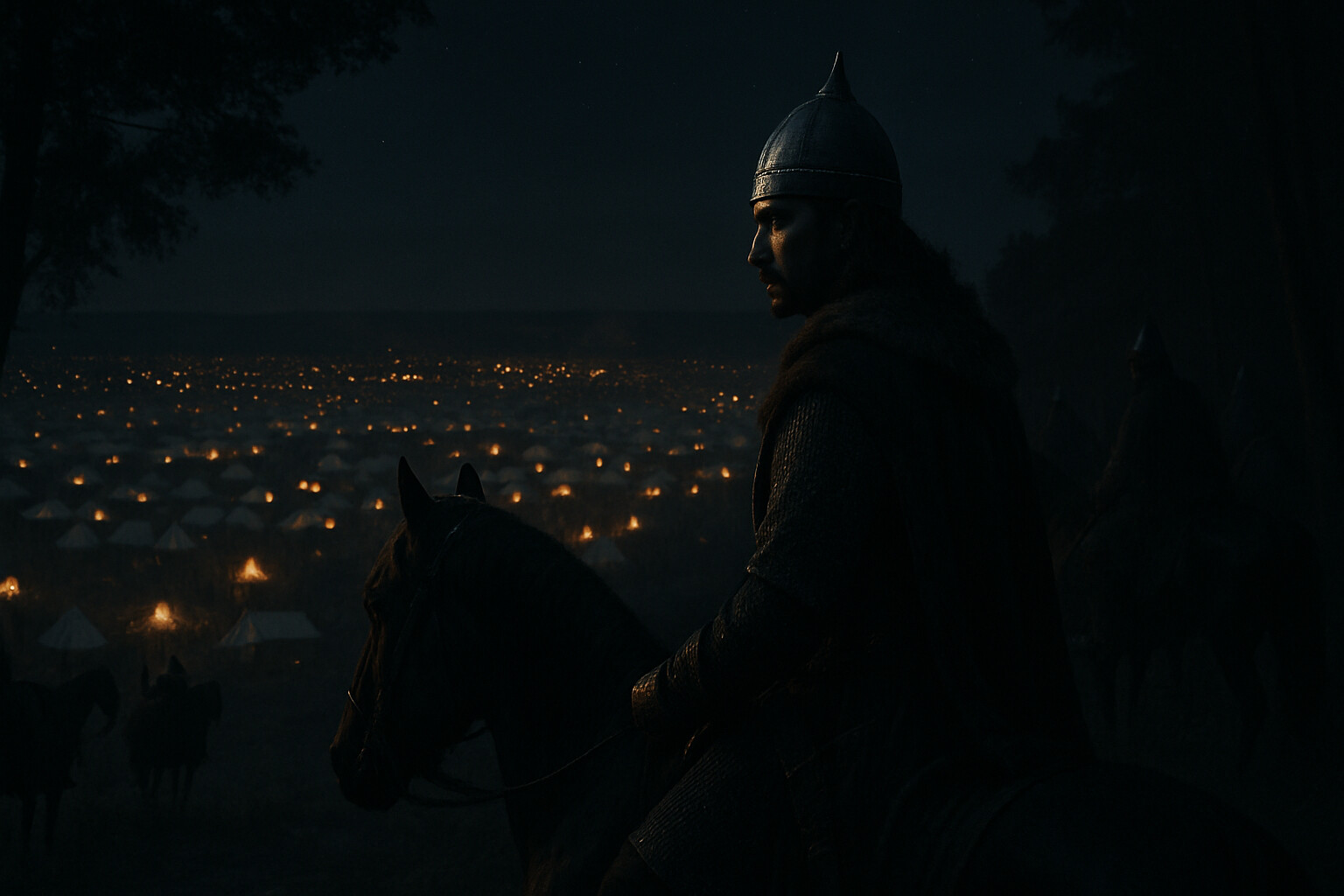
The fires of the Ottoman camp stretched across the plain in their thousands, close enough together that a man standing at the tree line could read the scale of the threat by their glow alone. Somewhere in that encampment, surrounded by tens of thousands of soldiers, was the conqueror of Constantinople. Vlad III, Voivode of Wallachia, studied the camp from the darkness. He had perhaps twelve thousand men at his back, perhaps fewer. The sultan had brought somewhere between sixty thousand and ninety thousand, by the more conservative modern estimates — with some chronicle sources pushing the figure far higher. The numbers did not change the decision. Vlad had already made it.
The night of June 16 to 17, 1462, is one of the most studied and most debated episodes of late-medieval warfare in southeastern Europe. It sits at the intersection of documented campaigning and embellished chronicle, of a man whom contemporaries described with genuine alarm and a posterity that eventually turned him into something else entirely. To understand what happened in that camp, and in the field outside Târgoviște that the Ottomans found days later, it is necessary to begin not with the supernatural but with the political.
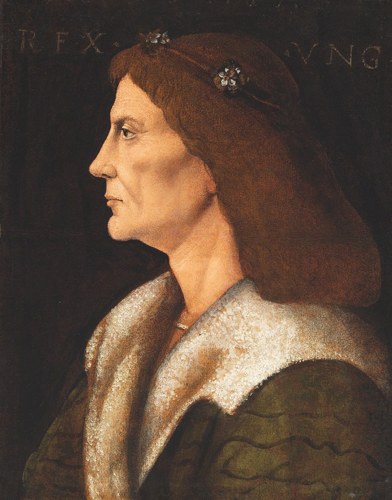
Vlad III was born around 1431, the second son of Vlad II, called Dracul — meaning Dragon, a title derived from his membership in the chivalric Order of the Dragon founded by Holy Roman Emperor Sigismund. Vlad II ruled Wallachia as a vassal caught between the competing pressures of the Ottoman Empire to the south and the Kingdom of Hungary to the north. In 1442 or 1444 — sources differ — Vlad II sent his two younger sons, Vlad and Radu, to the Ottoman court as political hostages, a standard mechanism by which the Porte secured the loyalty of frontier rulers. The boys were not mistreated in any dramatic sense, but they were held, and their continued safety depended on their father's compliance. This period of captivity, which likely lasted several years, gave Vlad an intimate familiarity with Ottoman military culture, administration, and the Turkish and Greek languages. What psychological marks it left are difficult to assess from the surviving record.
In 1447, Vlad II was killed — murdered by Wallachian boyars in collaboration with John Hunyadi of Hungary. Vlad III's older brother Mircea was buried alive by the same faction, according to the sources, though independent verification of the specific method is limited. Vlad III spent the years following his father's death in the shifting political geography of the region, twice briefly holding the Wallachian throne before being expelled, dependent alternately on Hungarian and Ottoman patronage. He returned to the voivodeship for the third and most consequential time in 1456, with Hungarian backing, following the death of John Hunyadi — the very man who had arranged his father's killing. The political ironies of the era were unsparing.
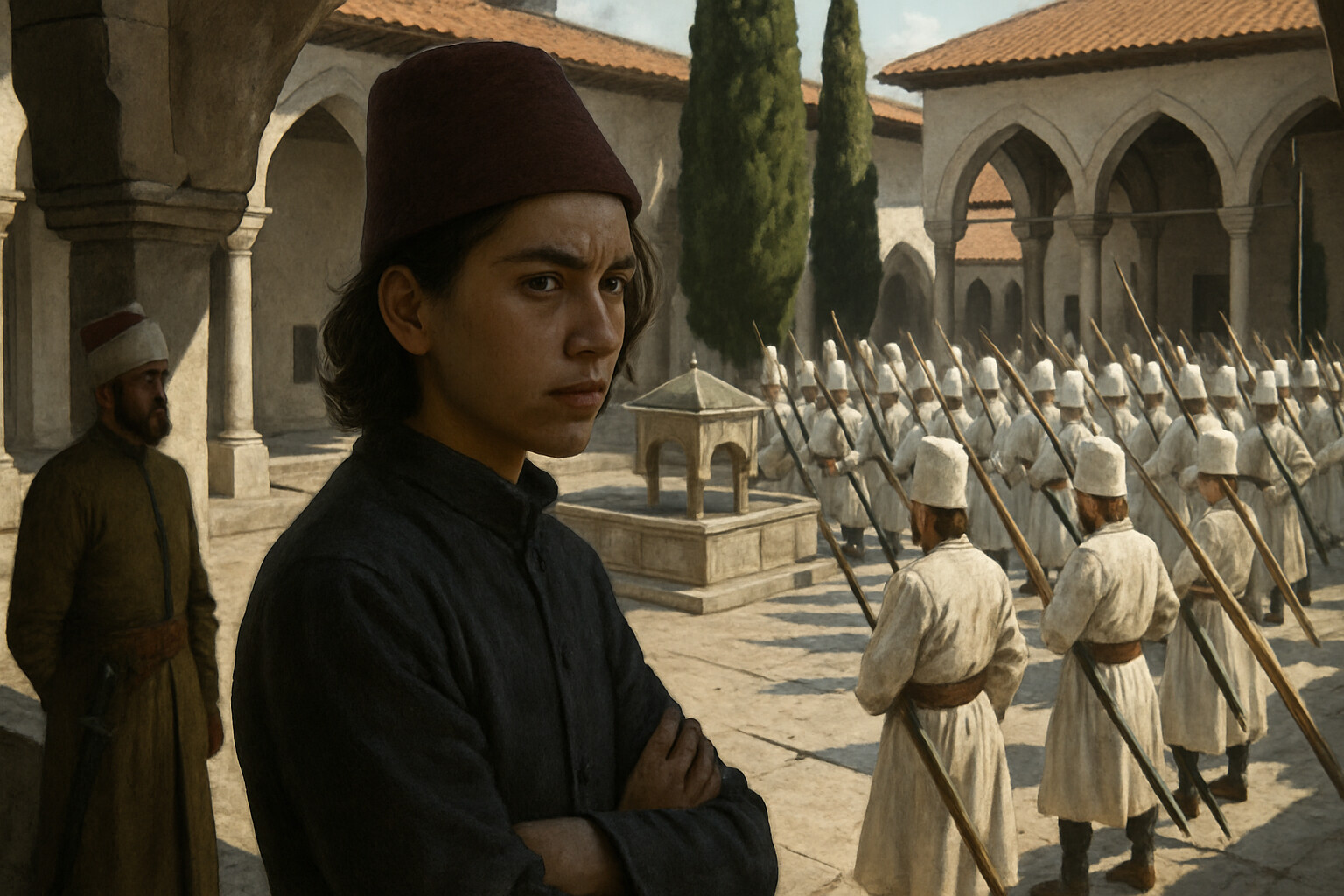
His third reign, which lasted until 1462, was defined by two simultaneous projects: the brutal suppression of the boyar class that had destroyed his family, and the construction of a functioning, centralized Wallachian state capable of resisting external pressure. Both projects involved extreme violence. Vlad impaled opponents — boyars, criminals, Saxon merchants who violated trade agreements, Ottoman envoys who refused to remove their turbans in his presence. The method was not his invention; impalement was a known punishment in the Ottoman world, in Byzantine tradition, and across eastern Europe. But Vlad applied it on a scale and with a systematic quality that made it his signature. Contemporary accounts from Saxons in Transylvania, from papal legates, and from Ottoman chronicles alike describe the impalement of hundreds and in some accounts thousands of individuals during his reign. The specific numbers in these accounts cannot be individually verified, but the convergence of hostile, friendly, and neutral sources on the basic practice is substantial.
The political context for the 1462 campaign begins with money. Wallachia was traditionally obligated to pay a tribute to the Ottoman Porte. Vlad refused. In 1461 and early 1462 he launched raids across the Danube into Bulgarian territories under Ottoman control, killing soldiers and administrators, and sent a letter to the Hungarian king Matthias Corvinus describing the damage in quantified terms — a document that survives, though historians debate its specific figures. He was simultaneously pursuing an anti-Ottoman alliance, corresponding with Venice and with Pope Pius II, positioning Wallachia as the forward edge of a crusading effort that never materialized in the form he required.
Mehmed II — who had taken Constantinople in 1453 and who would spend the rest of his reign systematically absorbing the remnants of the Byzantine world — could not allow Wallachia to become a defiant example on his northern frontier. In the spring of 1462, he gathered an army and moved north. The size of that army is genuinely contested. Ottoman chronicles, Byzantine accounts, and Wallachian tradition give figures ranging from sixty thousand to over one hundred fifty thousand men. Modern historians tend toward the lower end of credible estimates, placing the main force somewhere between sixty thousand and ninety thousand, with additional support elements. Vlad's force numbered somewhere between ten thousand and thirty thousand — the lower figure is more commonly accepted in current scholarship. The disproportion was not a matter of degree but of kind.
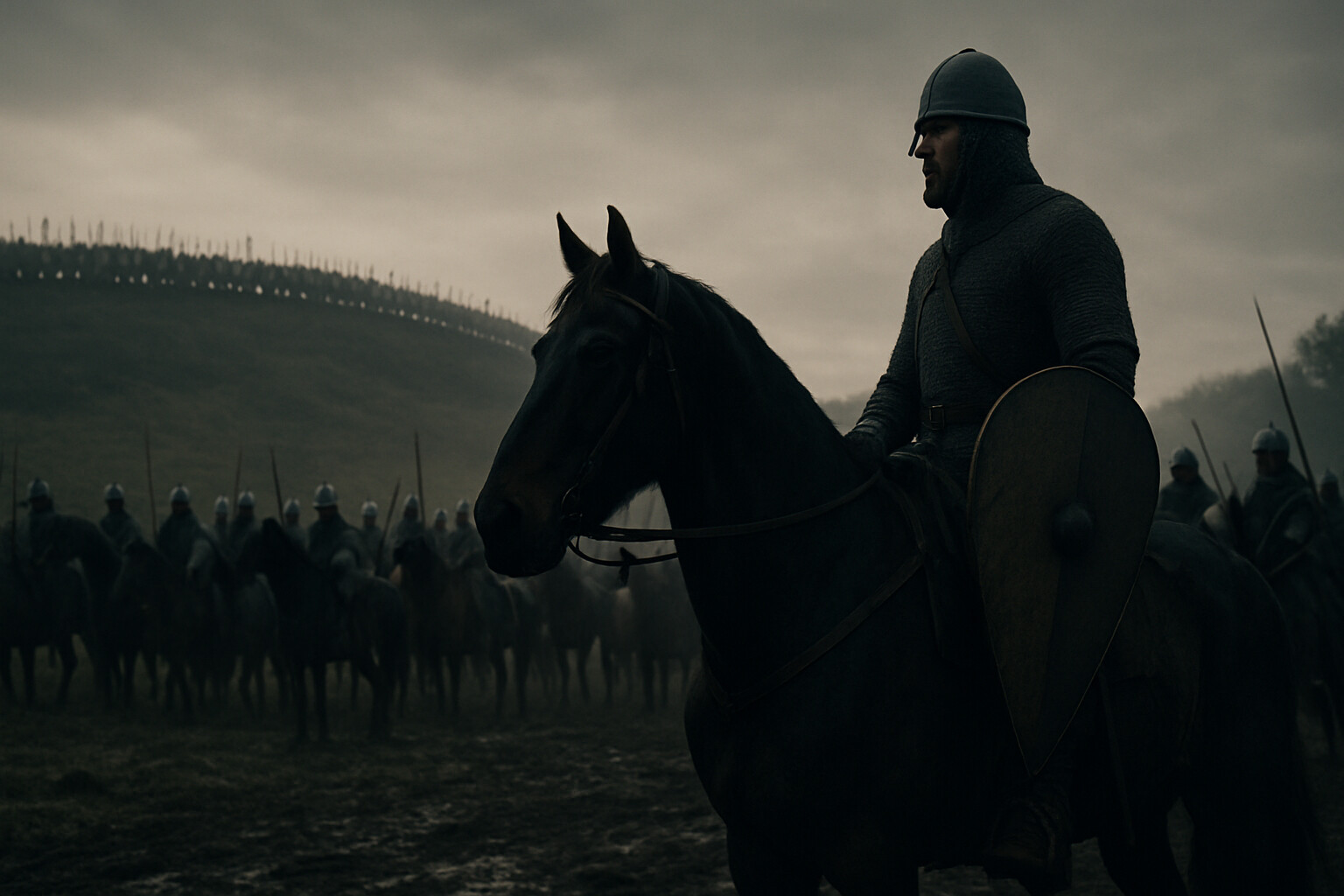
Vlad did not attempt to meet Mehmed in open battle. His strategy was attritional and environmental. He withdrew before the Ottoman advance, burning crops, poisoning wells, driving civilians out of the path of the army. He used cavalry and irregular units to harass Ottoman supply lines and column flanks. Radu the Handsome — Vlad's younger brother, who had remained in Ottoman service after their shared captivity — was by 1462 commanding forces within Mehmed's army and actively recruiting Wallachian boyars away from his brother's cause. The defections were accelerating. This strategy of strategic denial is documented in multiple sources and fits the military geography of Wallachia, which offered little defensible terrain against a large organized army but considerable opportunity for harassment in its forests and river margins.
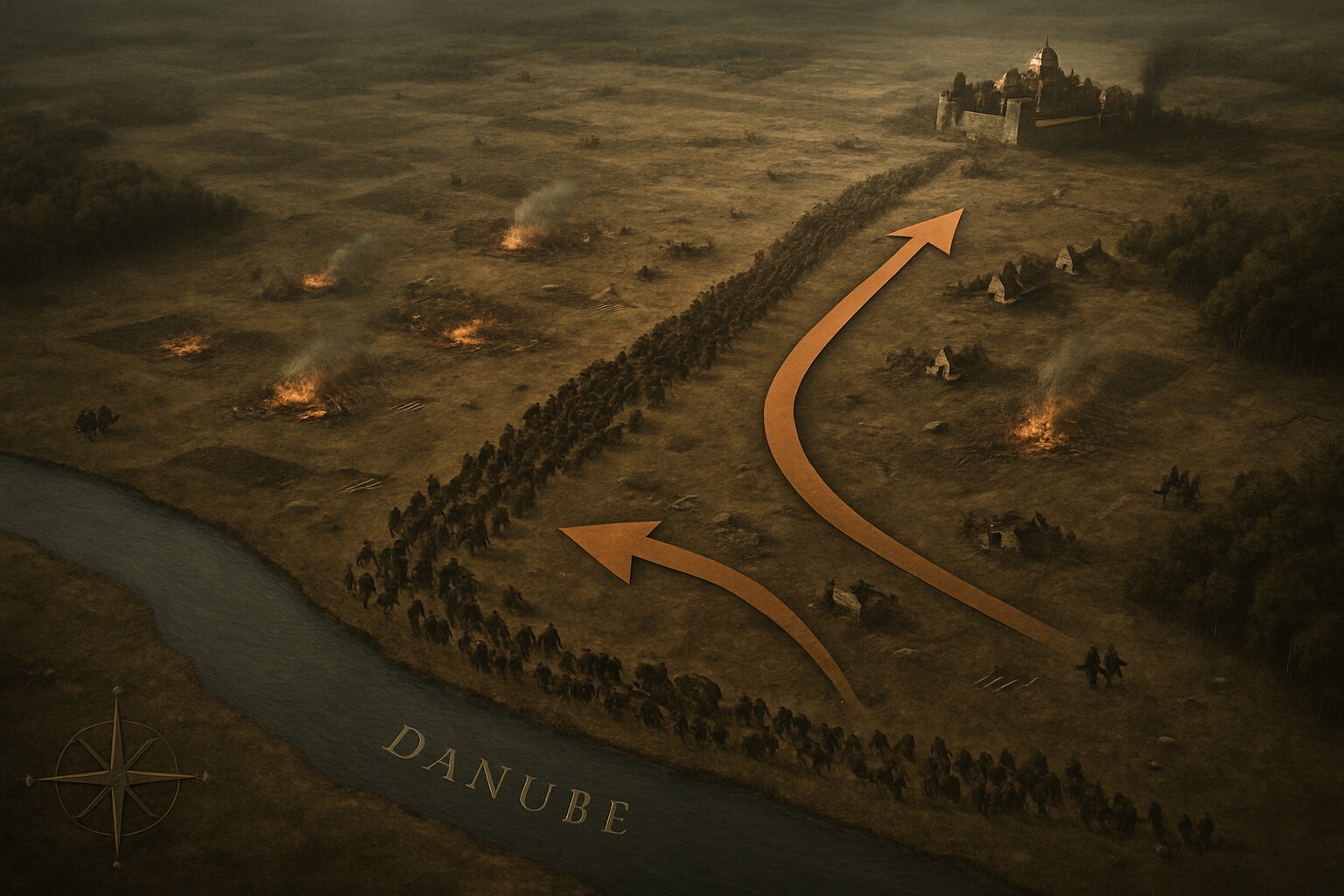
By mid-June, Mehmed's army had crossed the Danube and was pressing toward Târgoviște, the Wallachian capital. Vlad understood that the campaign was approaching a crisis. He could not sustain indefinite attrition against an army that could resupply through Bulgaria. The Hungarians, despite commitments, had not arrived. A decisive moment was required — not a battle Vlad could win by conventional means, but an act that might collapse the sultan's will or disrupt the Ottoman command structure at its source.
What Vlad planned and executed was a night raid — a direct assault on the Ottoman camp with the stated objective of killing Mehmed II himself.
The operation almost certainly required intelligence preparation. Vlad had spent years at the Ottoman court. He knew how Ottoman camps were laid out: the sultan's tent at the center, screened by household troops, with the janissaries — the elite infantry corps — and other units arranged in established patterns around it. He would have had scouts and informants, though the specific details of his pre-raid reconnaissance are not documented in surviving sources and must be treated as reconstruction from known practice rather than documented fact. What is documented is that he assembled a striking force — variously estimated between seven thousand and over twenty thousand men in different sources, with scholarly discussion leaning toward the lower end of that range, likely somewhere in the region of seven thousand to twelve thousand cavalry and mixed infantry — and launched the attack in the deep of a summer night.
The date in most chronicles is the night of June 16 to 17, 1462. The assault went into the camp under cover of darkness, using the confusion that a night attack on a large encampment necessarily produces. Wallachian cavalry drove through the Ottoman outer lines, burning tents and cutting down soldiers in their bedding, creating panic in the perimeter. The accounts of Byzantine historian Laonikos Chalkokondyles and the Polish chronicler Jan Długosz both describe the fighting as intense and chaotic. The Ottomans, despite their numbers, were caught off guard — at least in the initial moments.
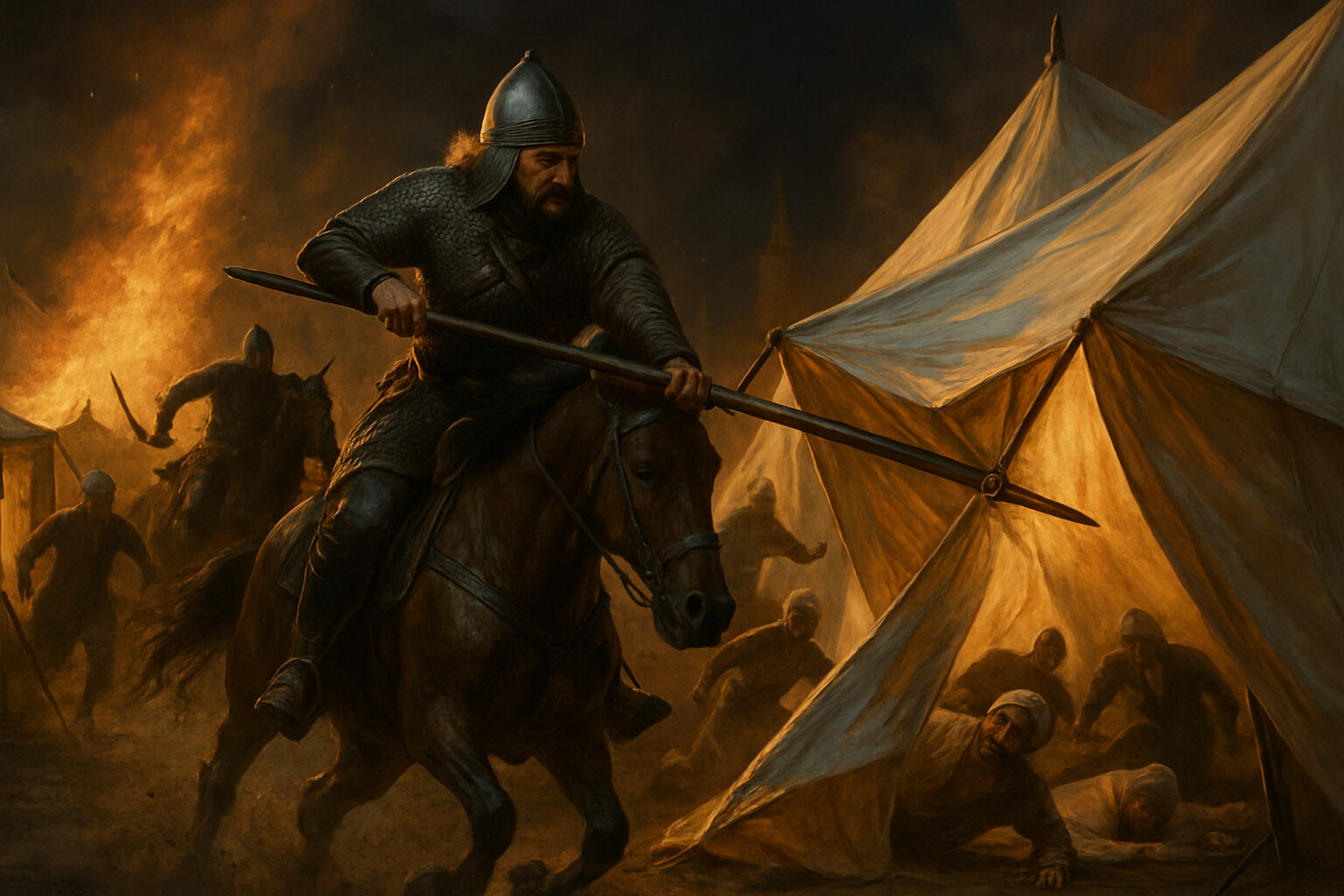
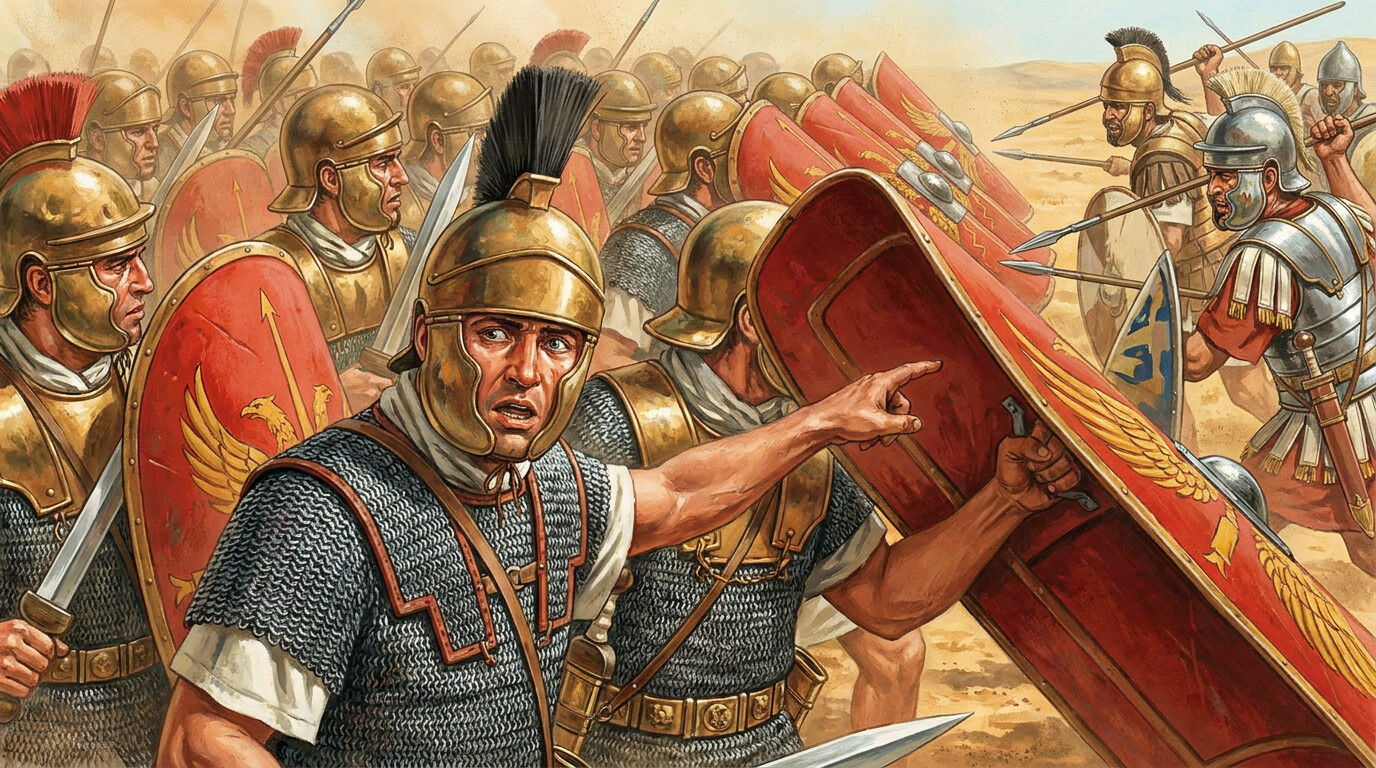
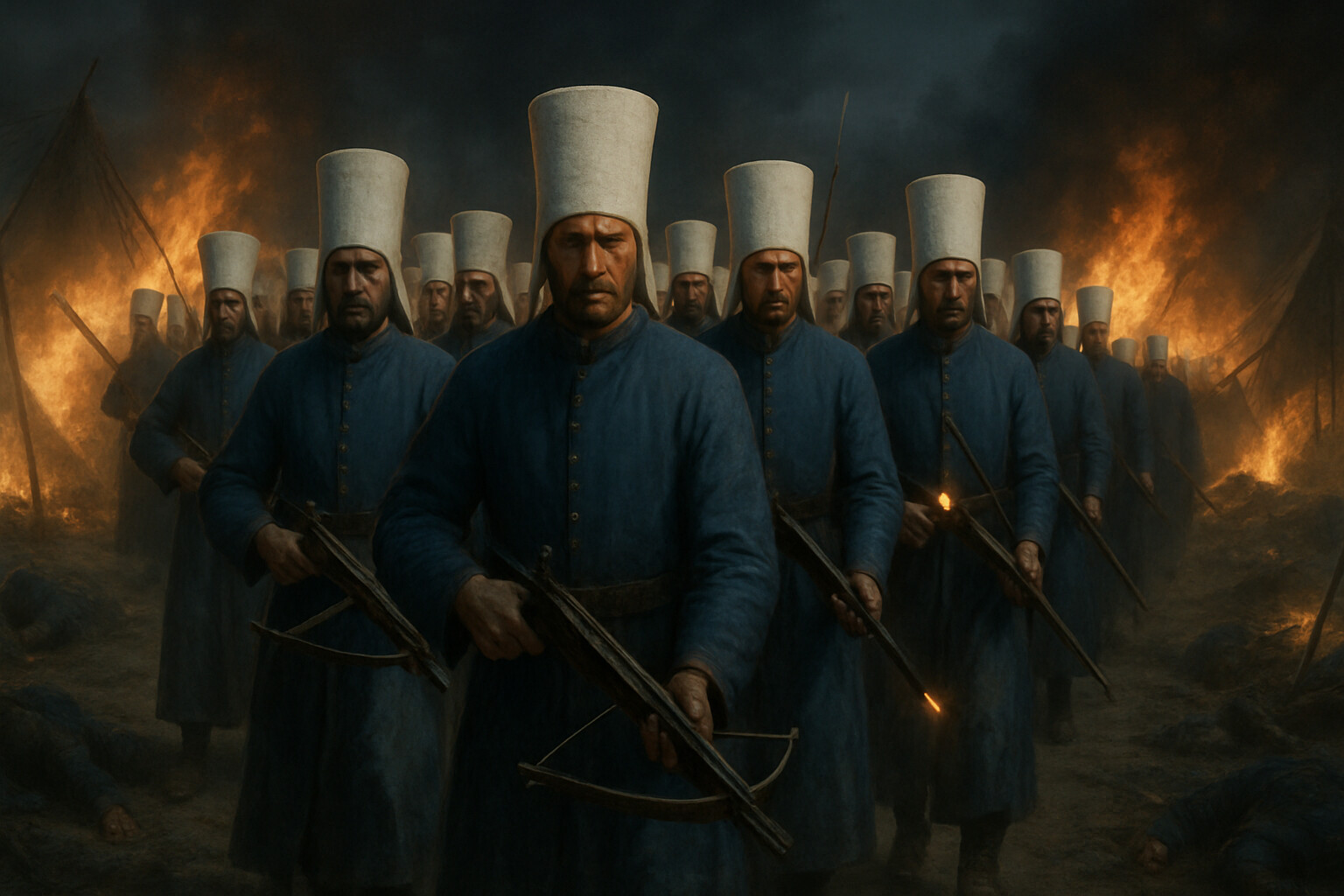
The raid did not kill Mehmed II. This is the documented outcome. The sultan was not in the tent or location that Vlad's force targeted, whether because of a failure of intelligence, Mehmed's own movement as the alarm spread, or the inherent difficulty of maintaining direction inside a burning camp in darkness. Chalkokondyles, whose account in Greek is among the most detailed surviving, states that the Wallachians attacked the tents of the viziers Mahmud Pasha and Isaac Pasha — whether by mistaken targeting or by the confusion of the assault is unclear — and that fierce fighting occurred there before the attackers were repulsed or withdrew. The janissaries, who were not quartered in the vulnerable outer rings of the encampment, formed up and counterattacked. Vlad broke off the assault and withdrew.
The losses on both sides are not reliably recorded. Ottoman sources tend to minimize the damage; Wallachian and Western sources exaggerate it. Chalkokondyles acknowledges both the audacity of the attack and its failure to achieve its primary objective. Vlad's force suffered significant casualties in the withdrawal, though it remained intact enough to continue operating. By any military measure, the night attack failed in its central purpose: Mehmed survived, and the Ottoman army was shaken but not broken.
Why, then, does this raid appear in nearly every account of the campaign as something that clearly registered — even on the Ottoman side?
The answer lies partly in the operational scale of the attempt. No Balkan ruler of this period had moved against the sultan personally in the field. The janissaries were the finest infantry in the region, and Mehmed was surrounded by them. Entering a camp of that size, in darkness, with a force of several thousand, with the explicit objective of killing the head of state — that registered in Ottoman accounts as genuine. Kritoboulos of Imbros, a Byzantine historian writing largely from the Ottoman perspective, describes Mehmed as visibly shaken by how close the threat had come, though how much weight to place on this characterization is debated among historians. What is clear is that the campaign continued toward Târgoviște.
What Mehmed's army found when it approached the Wallachian capital was not a city prepared for siege, nor an army in battle array, nor a garrison ready to negotiate. What it found, by the accounts of multiple sources, was a field of stakes.
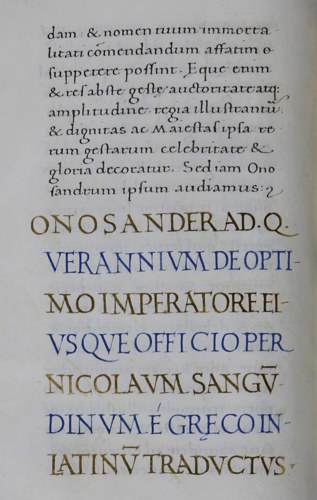
The number given in the most frequently cited accounts is approximately twenty thousand impaled bodies — Ottoman prisoners, soldiers, and others — arranged on stakes of varying height in a field outside Târgoviște, a deliberate display visible from the approach road. The figure of twenty thousand recurs in sources including the account of Venetian diplomat Niccolò Sagundino, who wrote to the doge, and in other contemporary Western documents. The precise number cannot be independently verified, and some historians consider it likely inflated — possibly because later sources drew on a single early report rather than independent observation. What is not seriously disputed is that a large-scale field of impaled corpses was left outside Târgoviște, and that it was intentional.
Chalkokondyles and other sources describe the Ottoman army halting before this sight. Mehmed, according to these accounts, was visibly affected — whether by grief for his men, by calculation of what this adversary was willing to do, or by something more difficult to categorize. A remark attributed to him — to the effect that a man who could do such a thing deserved to rule a greater kingdom — appears in some sources. As a direct quotation, it cannot be authenticated and must be treated as tradition rather than documented record. What can be assessed, as closely as the chronicle evidence allows, is that the visual effect on the army was real and noted by those who recorded the campaign.
The arrangement of the field was reportedly not random. Contemporary accounts, including Chalkokondyles, suggest that stakes were organized by height according to the apparent rank of the impaled, with senior figures on the tallest stakes — a deliberate message about hierarchy and consequence. How precisely this organization was executed in practice is not documented in a way that allows confident reconstruction.
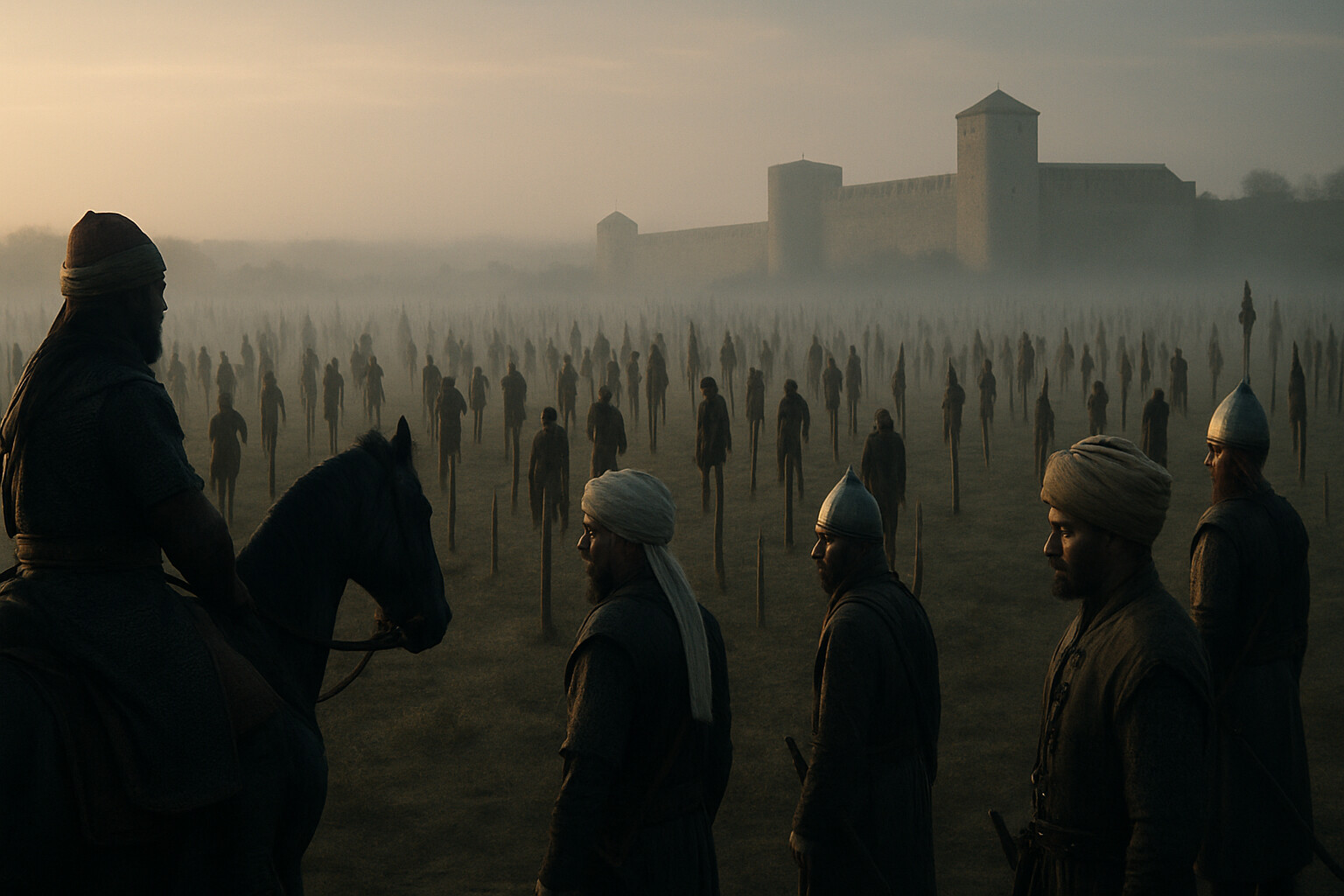
The field at Târgoviște was not simply an atrocity. In its medieval military context, it was a communication. Vlad was making an argument in a language the sultan understood: this is what Wallachia will cost you. The scorched earth, the poisoned wells, the night raid, and the field of stakes were components of a single psychological and material campaign designed to make conquest more expensive than it was worth.
Mehmed did not withdraw immediately. He pressed forward, took Târgoviște — which Vlad had abandoned — and found no treasure and no population worth administering. He moved through Wallachia for some weeks, but the terrain, the summer heat, disease moving through his force, and the continued harassment by Vlad's remaining cavalry made the occupation costly and directionless. At some point in the summer of 1462, Mehmed handed operational command to Radu the Handsome and withdrew the main army south across the Danube. Radu, using Ottoman backing and the defecting Wallachian boyars, continued the campaign against his brother. This is the pivot on which the entire enterprise turned: Mehmed did not stay to administer Wallachia directly. He installed a client and left.
Vlad's position deteriorated through the late summer and autumn of 1462. Radu gathered support. Boyars who had been Vlad's domestic enemies saw their opportunity. Vlad retreated toward Transylvania, seeking help from King Matthias Corvinus of Hungary, who had promised support and whose forces had not arrived during the crisis. When Vlad crossed into Transylvania in late 1462, Matthias had him arrested.
The justification Matthias used was a letter — allegedly proving that Vlad had been in treasonous correspondence with Mehmed — that most modern historians regard as a forgery, likely fabricated to justify imprisoning an inconvenient ally while retaining the crusading funds Matthias had received from Rome without actually fighting. Vlad was held in Hungarian custody for somewhere between twelve and fourteen years, depending on how the sources are read. He was not held as a common prisoner — he retained status and eventually married a Hungarian noblewoman possibly related to the Corvinus family — but he was removed from power and kept there.

Radu the Handsome ruled Wallachia as an Ottoman client until his death in 1475. Vlad was eventually released, and with Hungarian and Moldavian backing reclaimed the Wallachian voivodeship in late 1476. He held it for only weeks. In December 1476, or perhaps January 1477 — the exact date is uncertain — he was killed in battle or in circumstances described differently by different sources: some accounts say combat against an Ottoman-backed force, others say betrayal by his own men. The specific circumstances of his death remain unresolved in the historical record. His head, according to some accounts, was sent to Constantinople, where Mehmed II had it displayed as confirmation that the man who had raided his camp and left a field of stakes was dead. His body was reportedly buried at the monastery of Snagov, though excavations there in the twentieth century produced inconclusive results regarding any remains — and the original archaeological reports from those excavations have not been fully assessed in recent critical scholarship.
The legacy of the 1462 campaign — the night attack specifically — has been assessed across several frames. In the immediate military sense, it failed. Mehmed survived. Wallachia became an Ottoman client state. Vlad died in obscure circumstances fourteen years later without consolidating the independent, crusade-aligned Wallachia he had worked toward.
In the tactical and psychological frame, the assessment is more complicated. The campaign of 1462 is one of the earliest documented examples of what later military theorists would call a strategy of exhaustion applied against a conventionally superior force — using terrain, attrition, deliberate psychological pressure, and targeted operational strikes to raise the cost of occupation beyond what an invader is willing to pay. The field of impaled bodies at Târgoviște is studied not as simple sadism but as a deliberate psychological operation: a commander using the arrangement of dead men to communicate that the mathematics of conquest had been broken.
Mehmed II never returned personally to Wallachia. Whether that outcome should be attributed to the campaign of 1462 or to the broader strategic geometry of his empire — which faced pressing demands in Anatolia, Greece, and toward Italy — is a question historians continue to debate. The answer is probably both.
The Western chronicles of the period, particularly those produced by the Saxon communities of Transylvania that Vlad had attacked in punitive raids, generated the most extreme accounts of his violence — Vlad dining among impaled bodies, Vlad consuming the blood of enemies. These accounts were produced by people with direct political reasons to damage his reputation at the court of Matthias Corvinus, and they were among the first texts distributed after Gutenberg's press made it possible to circulate propaganda at scale. They are not reliable as factual records, but they are historically significant as early modern documents — and they shaped the image of Vlad that traveled west and survived the centuries.
The Romanian national tradition, beginning seriously in the nineteenth century with the construction of a national historical identity, recovered Vlad III as a symbol of resistance — a defender of Wallachian sovereignty against Ottoman domination, a ruler who used terrible means in a terrible time. This recovery has its own political history and should not be taken as more objective than the Saxon pamphlets. What remains when both traditions are set aside is a documented historical figure of significant military and political sophistication, operating under extraordinary pressure, who chose methods that his contemporaries found memorable enough to record in multiple languages and from multiple vantage points.
The night of June 16, 1462, outside a sleeping Ottoman camp, was where that record turned. A man who had been a hostage in Ottoman courts, who spoke Turkish, who knew how the camps were organized and where the guards were posted, and who had concluded that no conventional military force could save his country, led several thousand riders into the darkness and went directly for the sultan. He did not reach him. He burned what he could, cut down what he reached, and withdrew before the janissaries could organize an effective pursuit. Then he left a message at Târgoviște that required no translator.
The message did not save Wallachia. But it entered the record of the era as something that even an army of sixty thousand or more could not simply walk past without stopping to count the stakes.