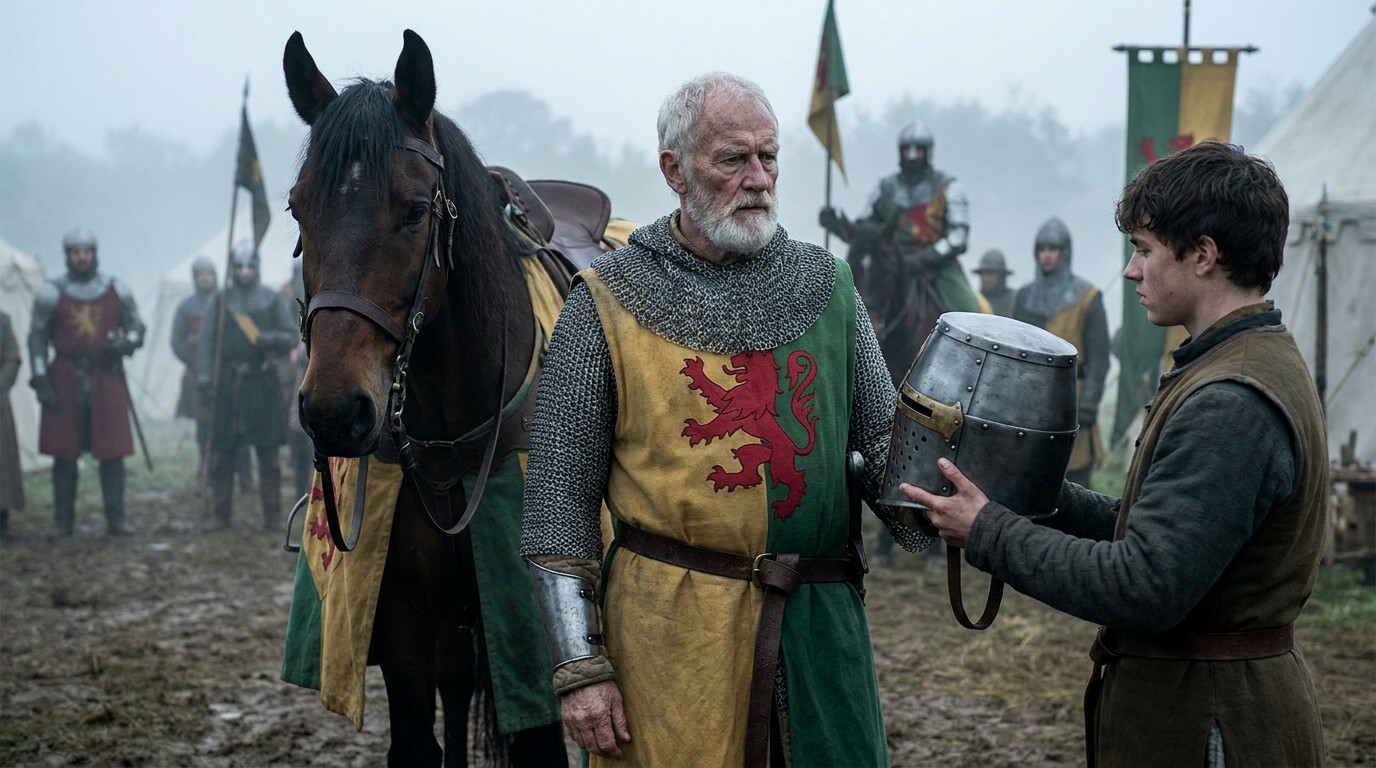
The horse was ready. The old man was not long for the world, and everyone in the English camp knew it. His hair had gone white, his skin thin over the bones of a face that had absorbed fifty years of tournament blows and campaign weather. He had been ill through the winter. Some of those around him likely expected him to remain at the rear — to direct the battle from a distance like the statesman he had become, the Regent of England, guardian of a nine-year-old king. Instead, William Marshal called for his destrier, buckled on his armor, and rode to the front.
It was May 20, 1217. The city of Lincoln was occupied by French troops supporting a rebel baronial coalition that threatened to extinguish the Plantagenet dynasty before the boy-king Henry III could grow old enough to reign. The fate of the English crown — which had passed through more crises in two decades than most dynasties face in a century — rested on the outcome of the next few hours. Marshal had been appointed regent the previous year, partly because no one else commanded sufficient respect from all factions. He had served four English kings. He had survived tournaments, ambushes, sieges, and court intrigues that destroyed younger and sharper men. On that morning in Lincoln, he prepared to do the one thing left available to him: ride into a street fight and personally break the enemy's will to hold.
To understand what Marshal did at Lincoln, and why it matters, you have to begin not with the old man on the horse but with the boy who was nearly hanged.
---
William Marshal was born around 1146 or 1147, the fourth son of John FitzGilbert, a royal marshal — a household official — under King Stephen. His birth order alone was nearly a death sentence in the social mathematics of medieval England. Eldest sons inherited. Younger sons scrambled. The fourth son of a minor royal official had approximately nothing to look forward to.
What history records about Marshal's childhood is mostly grim. In 1152, when William was perhaps five or six years old, his father John was besieged at Newbury Castle by King Stephen. John FitzGilbert had switched allegiances to the Empress Matilda, and Stephen wanted the castle. A negotiation took place in which young William was handed over as a hostage to guarantee a truce. John then violated the truce anyway, apparently calculating that Stephen would not execute a small child.
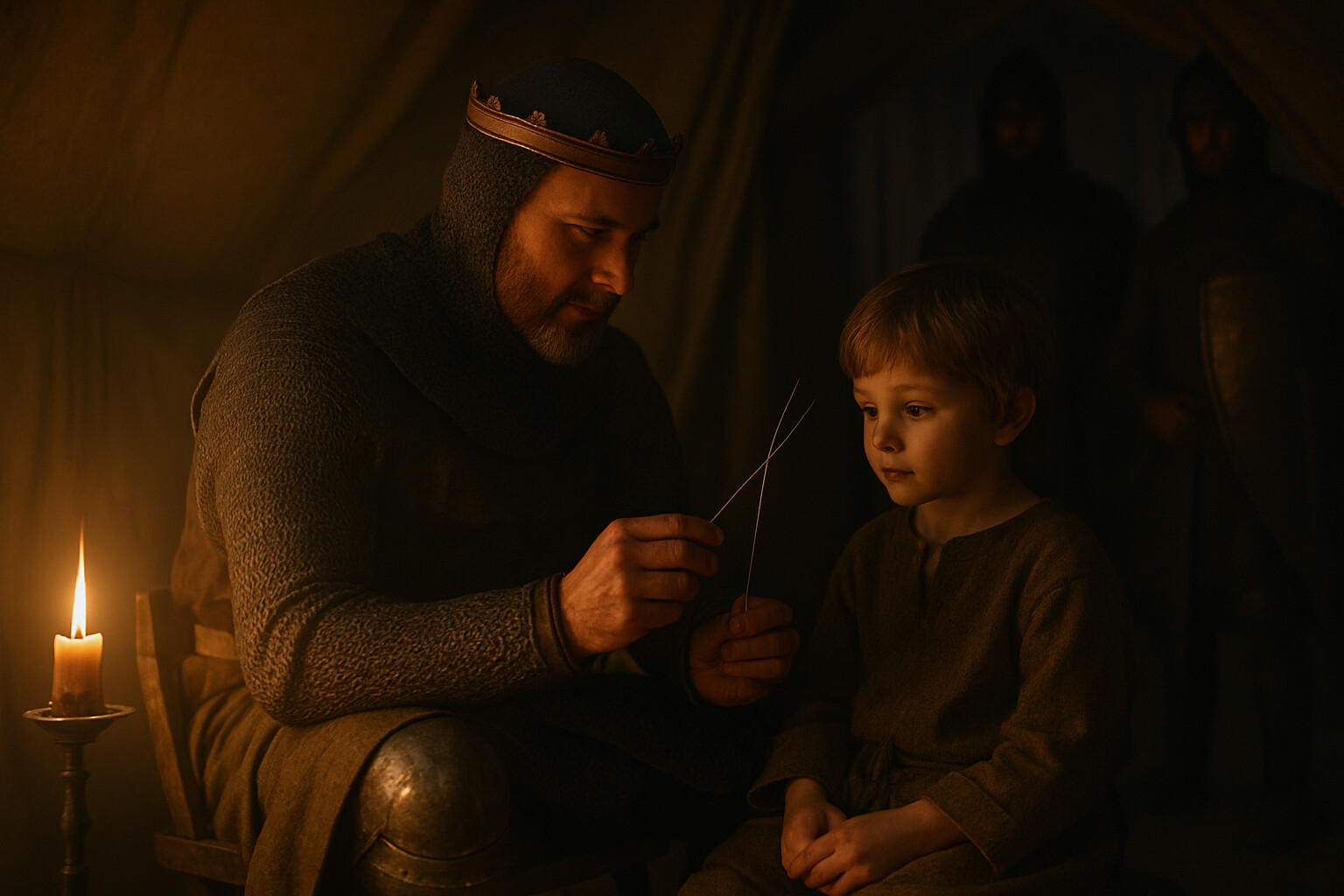
King Stephen came close. According to later accounts recorded in the Histoire de Guillaume le Maréchal — a verse biography composed shortly after Marshal's death in 1219 and considered the principal primary source for his life — Stephen threatened to use a trebuchet to hurl the child over the walls, and an advisor reportedly suggested strangling the boy instead. Stephen, by that account, wavered. He was said to have held the child in his lap and played at knights with him using grass stalks, and he did not execute him.
The Histoire de Guillaume le Maréchal must be handled carefully. It is a commissioned biography, completed around 1226 by a poet known only as John, drawing in large part on testimony from Marshal's former squire John of Earley, who witnessed many of the events described. It is closer to primary testimony than most medieval chronicles, but it is also laudatory and selective. The grass-stalk scene and the trebuchet threat may be accurate, may be embellished for effect, or may be the kind of near-mythic detail that accumulates around exceptional lives. What is independently documented is that William was a royal hostage during the civil war years of Stephen's reign, that he was not harmed, and that he eventually returned to his family when political circumstances shifted.
The civil war of Stephen and Matilda — the Anarchy, as later historians named it — ended in 1153 with the Treaty of Wallingford, which established Matilda's son Henry as Stephen's heir. Stephen died in 1154, and Henry II took the throne. William Marshal was approximately eight years old and still, essentially, nobody.
---
At around twelve or thirteen, William was sent to Normandy to be trained as a knight in the household of William de Tancarville, the Chamberlain of Normandy and a distant relative. This was standard practice for younger sons: the household of a great lord was a finishing school for war, a training ground, and a job market. Perform well, and you might attract patronage. Fail, and you remained a household retainer indefinitely.
Marshal's knighting date is not precisely recorded, but most historians place it in the early 1160s. He entered tournament circuits almost immediately. This is where the record begins to fill in, and where the story starts to become something extraordinary.
Medieval tournaments in the twelfth century were not the choreographed pageants of the later Middle Ages. They were organized battles — melee combats — held across open fields, sometimes encompassing entire towns and the roads between them. Knights rode in formed groups, charged one another, grappled at close range, and attempted to capture opponents rather than kill them. The prize was the captive's horse, armor, and ransom. A successful tournament knight could become wealthy through capture alone. A failed tournament knight lost his horse and gear and might never recover financially.
Marshal was spectacularly successful. The Histoire claims that between 1167 and 1183, Marshal and a partner knight, Roger de Gaugi, captured 103 knights in tournament competition. This figure, like many numbers in medieval chronicle sources, cannot be independently verified, and historians treat it with appropriate skepticism. What the record does support is that Marshal became wealthy, famous, and sought-after through tournament performance, accumulating horses, equipment, and a reputation that spread across England and northern France.
The tournament circuit was also where Marshal learned the essential tactical skill of his era: how to read a massed cavalry engagement. Which riders to target. When to commit and when to hold. How a line of horsemen behaves under pressure — where it will bend, and where it will break. These were not abstract lessons. They were purchased in bone and bruise across three decades of professional combat.
---
In 1170, Queen Eleanor of Aquitaine arranged for Marshal to join the household of her son Henry the Young King, the heir apparent who had been crowned in his father's lifetime as was Angevin custom. This appointment was the turning point of Marshal's career. He was now in royal service, which meant he was in the most dangerous and consequential arena in Christendom.
Marshal served Young Henry for thirteen years. The relationship was close, then complicated, and ultimately defined by a loyalty that Marshal maintained even when it cost him. Young Henry twice accused Marshal of adultery with his wife, Margaret of France. The accusation appears to have been politically motivated and was almost certainly false — the evidence suggests it originated with jealous rivals in the household — but it forced Marshal twice into exile from court. Both times he was eventually recalled, because Young Henry's other knights lacked Marshal's combination of skill, loyalty, and reliability under pressure.
Young Henry died in 1183 without ever becoming king, his father Henry II outliving him. On his deathbed, the young king reportedly gave Marshal his crusading cloak and asked him to take it to the Holy Sepulchre in Jerusalem. Marshal fulfilled this request. He traveled to the Holy Land — the date and duration are not precisely recorded, but most historians place the pilgrimage around 1183 to 1185. He saw Jerusalem before Saladin's conquest in 1187. What he did there militarily, if anything, is not documented with precision. He returned to England, where Henry II took him into royal service.
When Henry II died in 1189, Marshal had already demonstrated his character in a remarkable moment. Richard I — Henry's son and effective rebel against his father in the final campaign — was advancing with his forces. Marshal encountered him in a skirmish. According to the Histoire, he could have killed Richard but instead killed Richard's horse, leaving the prince unharmed. This episode is consistent with Marshal's documented pattern — absolute loyalty to his current lord combined with a careful avoidance of actions that would permanently destroy his future prospects — but it is not corroborated by independent contemporary sources and should be read as plausible tradition rather than confirmed fact. After Henry II's death, Richard I took the throne and rewarded Marshal with the hand of Isabel de Clare, the heiress to the earldom of Pembroke. Marshal was now, in his mid-forties, one of the wealthiest magnates in England.
---
The next three decades moved Marshal from magnate to statesman. He served Richard through the years of the Third Crusade, mostly administering England and Richard's continental holdings while the king was abroad. When Richard died in 1199 and John took the throne — contested, complicated, and immediately in political trouble — Marshal navigated the transition with characteristic care. He recognized John's claim against the rival claim of Arthur of Brittany, and John, whatever his other failings, generally trusted Marshal.
The relationship between Marshal and King John is one of the more genuinely complex threads in early thirteenth-century English history. John was erratic, suspicious, capable of cruelty, and frequently his own worst enemy. Marshal was steady, reliable, and sufficiently trusted by the baronage that he could serve as a bridge between crown and magnates. When the barons revolted and forced John to seal Magna Carta in 1215, Marshal was present at Runnymede. When John died in October 1216 — during a civil war that had brought Louis of France, son of Philip II, into England at the barons' invitation — the great magnates and clerics around the nine-year-old heir Henry chose Marshal as regent.
The choice was striking partly because of Marshal's age. He was approximately seventy years old by most reckonings, remarkable for any medieval man, extraordinary for one who had lived as hard as he had. He was appointed as rector regis et regni — governor of king and kingdom — a title with essentially unlimited authority for the duration of the minority. He accepted it, reportedly with something close to resignation, acknowledging that it was a difficult charge at a difficult time.
---
The military situation Marshal inherited was genuinely dangerous. Louis of France had landed in England in May 1216, invited by the rebel barons who were at war with John. He controlled London. He had taken much of the southeast. A French force also held Lincoln, which had been besieged by loyalist troops under the castellan Nicola de la Haye — a woman who had defended Lincoln Castle against the rebels and French garrison with notable effectiveness. By spring 1217, the strategic picture was this: Louis's forces were split, some besieging Dover Castle in the south, others holding Lincoln and the Midlands. The rebel baronial coalition was fraying — John's death had removed their primary grievance, and the child Henry represented a clean start that many barons found more appealing than continued French occupation.
Marshal's military instinct was to strike at Lincoln while the enemy was divided. He assembled an army at Newark, probably in mid-May 1217. The force included cavalry under his direct command, a body of crossbowmen, and a contingent commanded by the Bishop of Winchester, Peter des Roches — a soldier-churchman who understood military affairs. Estimates of the English royalist force vary in the sources; modern historians working from chronicle accounts suggest somewhere between 400 and 600 cavalry and several hundred infantry and crossbowmen, though precision here is not possible given the available evidence.
The French and rebel force inside Lincoln — commanded by the Count of Perche and the rebel barons supporting Louis — was also estimated in the several hundreds of cavalry, with infantry holding the city streets.
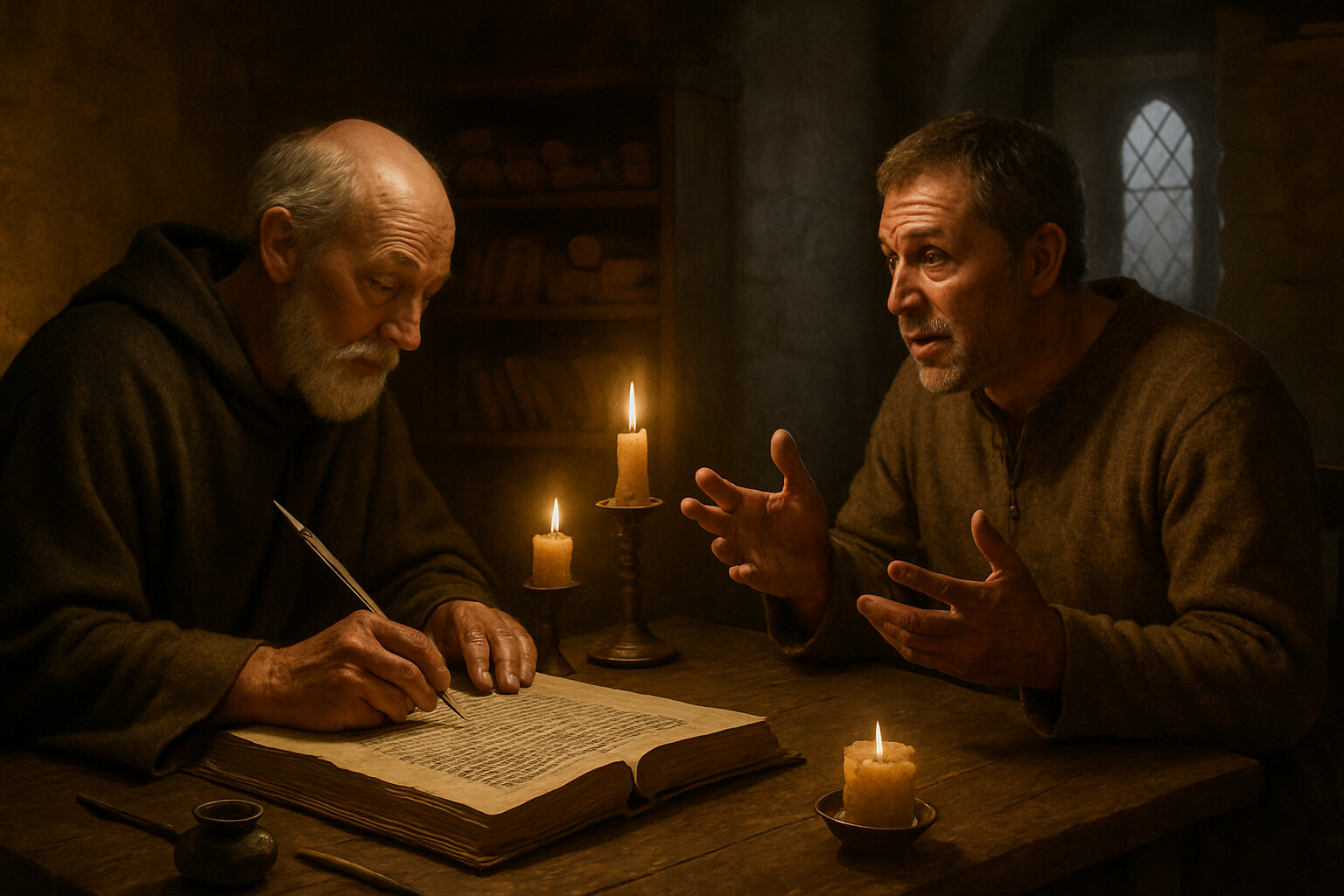
Marshal called a council. The Histoire de Guillaume le Maréchal and Roger of Wendover's Flores Historiarum both record that he addressed his commanders before the battle. The Histoire places formal words in his mouth, but these are the poet's construction — a conventional pre-battle address whose general content may reflect what was said but whose specific language is not a reliable record. The substance, as the sources preserve it, was an appeal to loyalty, to the defense of England, to the righteousness of fighting for a child king against foreign occupation.
What happened next is documented in enough sources, with enough consistency, that the outline is considered reliable by modern historians.
---
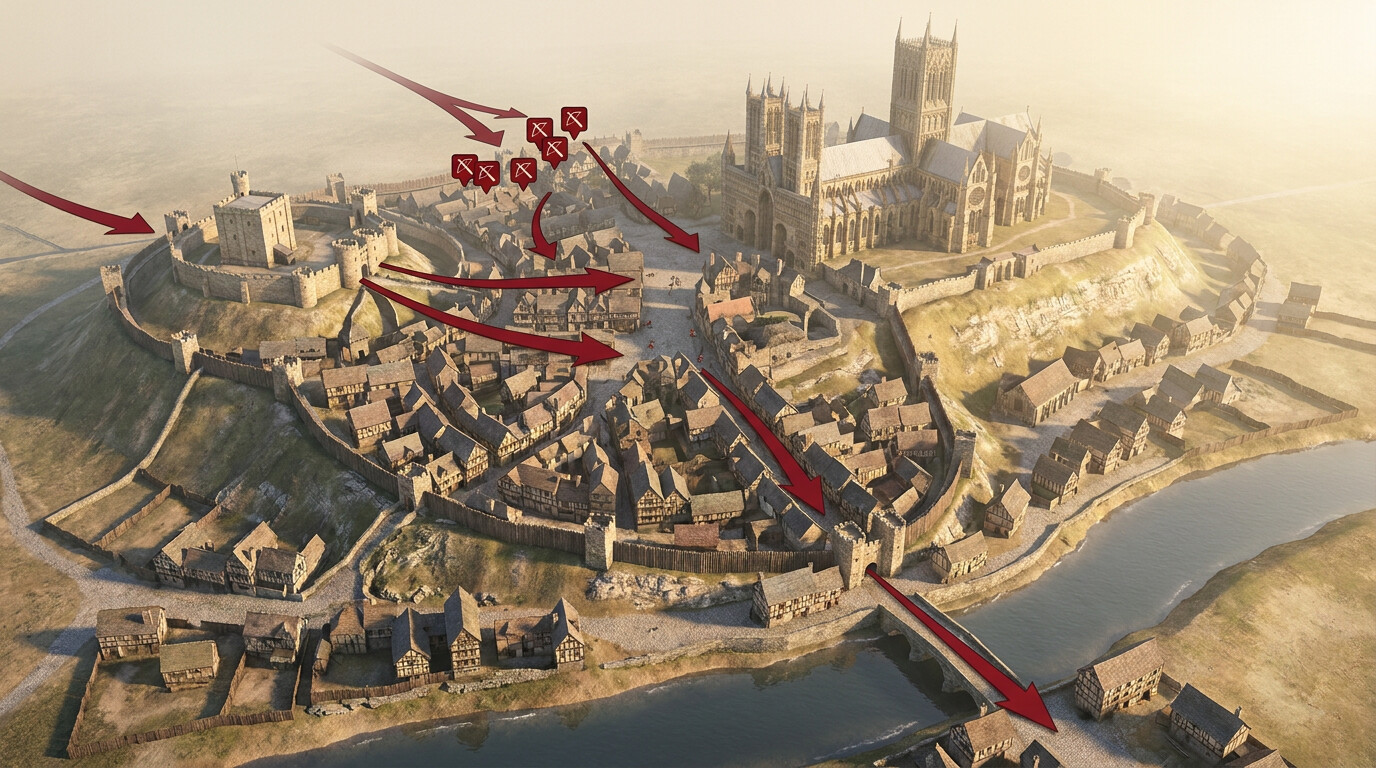
Lincoln in 1217 was a city dominated by its castle on the high ground to the northwest and its cathedral on the crest of the same hill. The city proper spread down the slope toward the River Witham. The French and rebel force held the lower city. Lincoln Castle itself remained in loyalist hands — the remarkable Nicola de la Haye had held it throughout the siege — and this was the key to Marshal's tactical approach.
The English force approached from the west and north. Rather than a direct assault through the city gates — which would have funneled cavalry into a killing ground — the plan involved simultaneous pressures. Crossbowmen under Falkes de Bréauté were positioned to fire into the city through gaps in the walls, including apparently a blocked-up gate that was reopened for the purpose. The castle itself provided a sally point inside the perimeter. And the main cavalry body would force an entry through the north or west gates. The precise sequence and exact breach point are reconstructed from chronicle accounts; they cannot be confirmed in precise documentary detail.
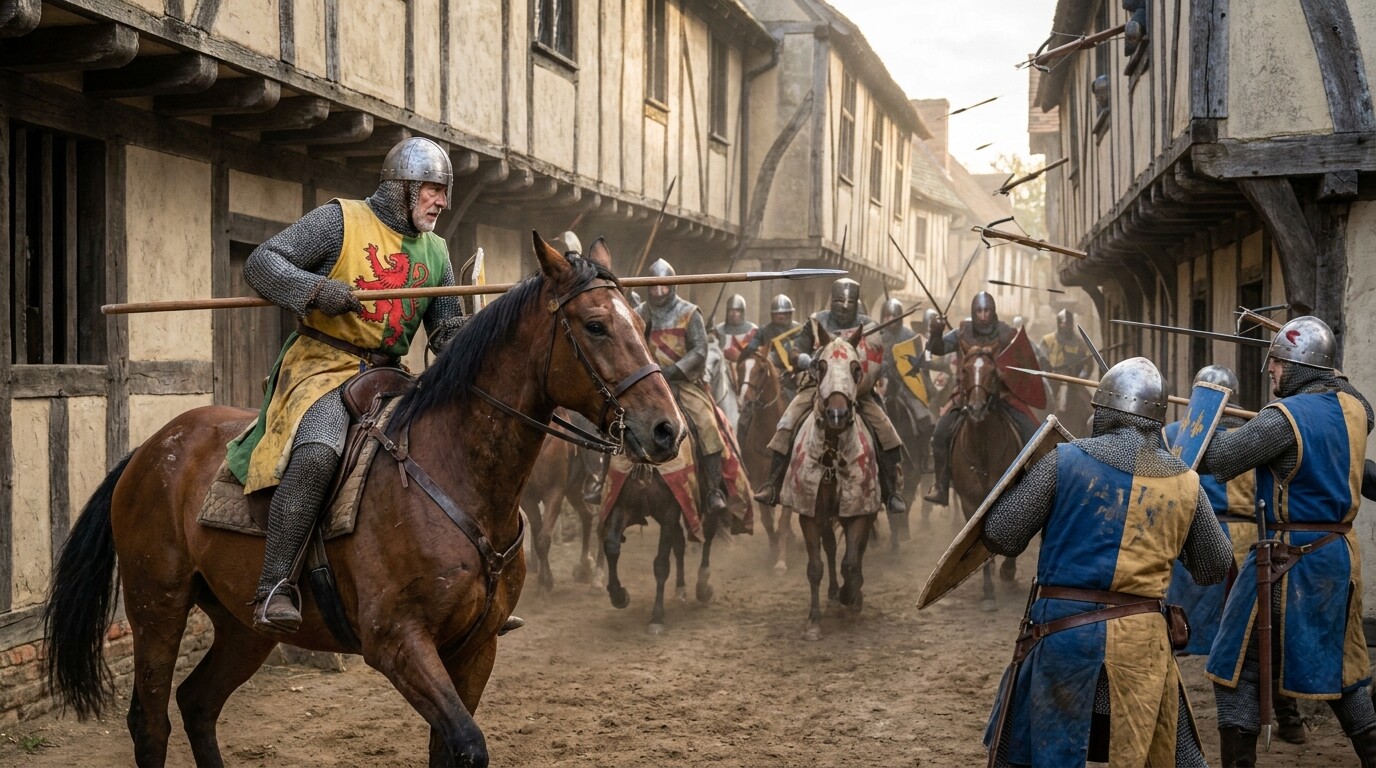
Marshal led the cavalry charge personally. This is stated clearly in the Histoire de Guillaume le Maréchal and is not significantly disputed by any source. The image is arresting: the seventy-year-old regent, in full mail armor, at the head of the mounted charge. The Histoire also records that he had forgotten his helmet in the pre-battle confusion and had to borrow one — a detail that carries the texture of authentic human chaos rather than literary invention, though it cannot be independently confirmed. If accurate, he rode into the fight wearing borrowed protection for his head and face.
The charge broke into the city streets. What followed was not a set-piece cavalry engagement but a street fight — narrow medieval lanes, doorways and alleys, the particular chaos of horsemen maneuvering through confined spaces while infantry and enemy cavalry pressed back. The crossbowmen firing from above and through the wall gaps took a serious toll on French horses and men. The Count of Perche, commanding the French force, was killed in the fighting — run through by a lance thrust through his visor, according to chronicle accounts, including Roger of Wendover. His death shattered French command coherence.
The rebel barons began to flee. The French garrison, losing its commander and its cavalry cohesion, collapsed. A great many prisoners were taken — this was an era in which capturing knights for ransom was both economically rational and strategically sensible, and the chronicles record large numbers of prisoners. The Battle of Lincoln, sometimes called the Fair of Lincoln in near-contemporary sources because of the almost commercial volume of captures and ransoms, was a decisive royalist victory.
Roger of Wendover, writing at St. Albans within years of the battle, records the engagement with considerable detail. He was not present but was close in time and had access to participants. His account broadly confirms the outlines of the Histoire on this battle, lending the major points — Marshal's leadership of the charge, the death of the Count of Perche, the collapse of the French position — reasonable credibility.
---
The Battle of Lincoln did not immediately end the war, but it broke it. Louis, hearing of the defeat, recognized that the military situation was no longer tenable. A second blow followed in August 1217 when an English naval force defeated a French resupply fleet in the Battle of Sandwich — though Marshal was not personally present at Sandwich. The combination of Lincoln and Sandwich forced a negotiation. The Treaty of Lambeth, signed in September 1217, ended Louis's claim to England and his invasion. The Plantagenet dynasty was preserved. Henry III would go on to reign for fifty-six years.
Marshal continued as regent for another two years, overseeing the stabilization of English royal government and the reissuance of Magna Carta. The 1217 reissue — separated now into Magna Carta proper and the Forest Charter — is historically significant because it established the document's permanent legal standing independent of John's coerced signature. Marshal's role in this reissuance places him, unexpectedly, in the genealogy of constitutional government, though the nature and limits of thirteenth-century constitutional thought are their own complicated subject.
By 1219, Marshal was dying. He resigned the regency in the spring of that year. He died on May 14, 1219, at his manor of Caversham in Berkshire. He was buried at the Temple Church in London, where his effigy — the carved stone figure in full armor — still lies. He had asked to be buried there because of his lifelong connection to the Knights Templar, with whom he had associated since his pilgrimage to the Holy Land.
---
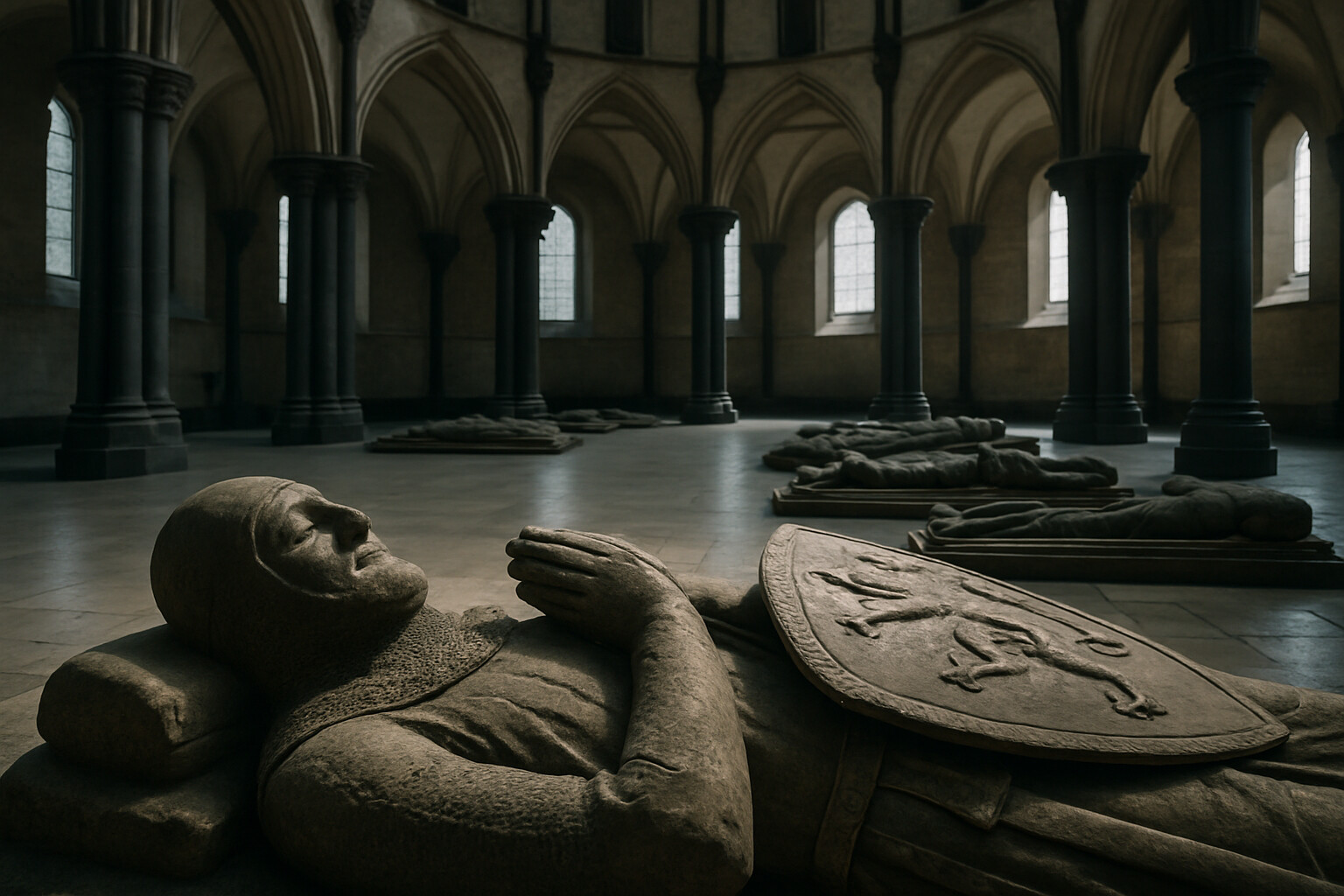
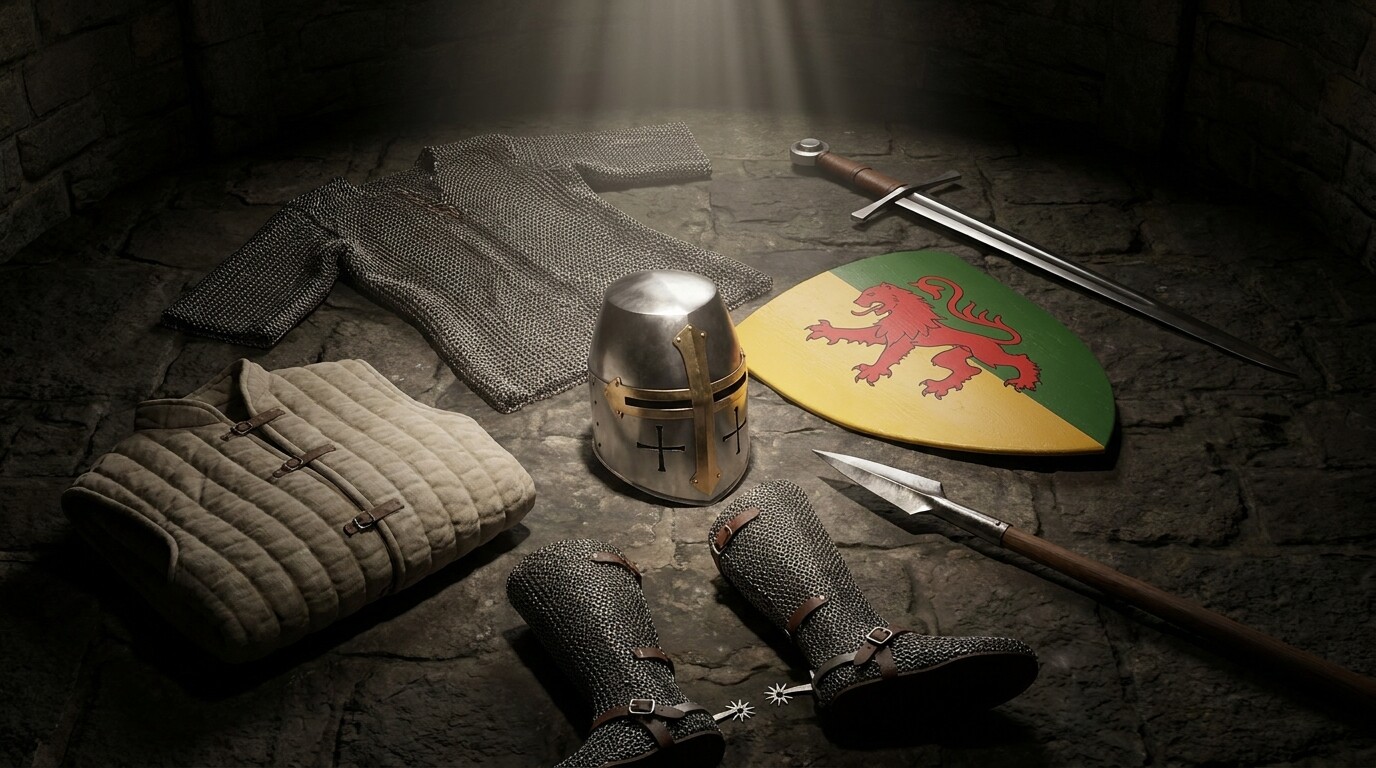
The arms Marshal carried into battle were the tools of his era. His primary weapons were the lance and the sword, which between them defined cavalry combat in the twelfth and thirteenth centuries. By the time of Lincoln, the Norman-era kite shield had evolved toward the heater shield — smaller, triangularly pointed at the bottom, allowing greater mobility on horseback. The lance, charged at full gallop, was the primary shock weapon of the first strike; if the line was broken and close fighting followed, the knight drew his sword.
Marshal's armor at Lincoln would have been a hauberk — a mail coat — probably with a mail coif for the head and neck, over a padded gambeson that absorbed impact. The great helm, a cylindrical iron helmet that fully enclosed the head and face, was in standard use by the early thirteenth century for knights of his rank. No inventory of his personal equipment survives; this reconstruction is based on what is documented as standard kit for a knight of his era and standing. The borrowed-helmet detail in the Histoire is significant in this context: the great helm was the last line of protection against the kind of lance or sword thrust through the face that killed the Count of Perche. If the detail is accurate — and it cannot be independently confirmed — Marshal accepted that risk rather than delay the charge.
The destrier — the war horse — was as much a weapon as the lance. These animals were trained for combat: trained not to flinch from noise, not to refuse to press against other horses and men. They were enormously expensive, which is why tournament capture of an opponent's horse was financially significant. A destrier lost in battle or tournament represented a major economic blow to a knight of ordinary means.
Crossbows, deployed by Falkes de Bréauté's contingent at Lincoln, were the missile-weapon technology of the period. They required less physical training than the longbow — a crossbowman could be made effective in weeks, while a capable archer required years — and could penetrate mail at combat ranges. They were slow to reload, making them vulnerable to cavalry charge in open ground, which is why their deployment from above and through wall apertures at Lincoln was tactically sound. The bolts they fired were short, heavy quarrels, designed to punch through armor rather than achieve range.
---
The question of what William Marshal was, in historical terms, resists easy summary. He was not a reformer. He was not an idealist. The Histoire de Guillaume le Maréchal, the main source for his life, was written to honor and memorialize him, and takes care to present him in the most favorable light. He was a professional soldier and royal servant who accumulated wealth and power through decades of reliable service and physical excellence. His survival across the reigns of five kings — Stephen, Henry II, Richard I, John, and Henry III — in a period when the wrong political bet could mean death or exile, required not just loyalty but an unusually sophisticated political intelligence.
His reputation as the greatest knight of his age was not a later romantic construction — or at least not entirely. It was built in real time, in tournaments and battles, by contemporaries who saw him fight. The scholarship of David Crouch, whose biography William Marshal: Knighthood, War and Chivalry (2002) remains the standard critical study, and the work of Thomas Asbridge among others, engages seriously with the evidence and treats Marshal as a historical figure of genuine consequence whose life is unusually well-documented for its era.
The figure who matters, finally, is not just the old man charging at Lincoln, though that image is extraordinary enough. It is the full arc: the hostage child who survived a king's threat, the landless younger son who made himself necessary to every power in England and France, the man of roughly seventy who rode to the front of a cavalry charge because the kingdom needed it and he was still the one to do it.
At Lincoln, the youngest knight in the charge would have been in his twenties. The man who led them was old enough to be their grandfather. He had been fighting since before any of them were born. He had seen five kings and buried four. He had crossed to Jerusalem and back. He had stood at Runnymede when Magna Carta was sealed, and he would stand for its reissue when the war was won.
He rode forward. The city broke. England held.
He died two years later, in his bed — which, for a man who had lived as William Marshal did, was itself a kind of victory.