HomeStoriesThe EdgeWeaponsBattlesPeopleWarbirdsAbout
‹ All Stories

Ia Drang Valley - November 14-16, 1965

LZ X-Ray

The valley where Vietnam changed shape

The 1st Cavalry Division arrived by helicopter, dropped into a clearing below the Chu Pong Massif, and met North Vietnamese regulars at close range. Ia Drang proved the promise of air mobility and exposed the brutal counter to it.

1-7 CavalryLt. Col. Harold G. Moore's battalion landed at LZ X-Ray on November 14, 1965.
Huey WarUH-1 helicopters inserted troops, brought ammunition, and pulled wounded from a hot landing zone.
Chu PongThe massif gave PAVN forces cover, approach routes, and depth near the Cambodian border.
First ClashIa Drang became the first major U.S. Army battle against PAVN regular forces.

A Clearing Under A Mountain

LZ X-Ray was not a base. It was a small clearing cut into tall grass and jungle below the Chu Pong Massif. Helicopters could land there, but the same terrain that made it remote also let PAVN units approach without being seen until the fight was already close.

The American idea was new and aggressive: move infantry by helicopter, find the enemy, fix him, and use artillery, air support, and mobility to win. Ia Drang tested that system before the Army fully understood what kind of war it had entered.

Ia Drang Valley tactical map showing LZ X-Ray, Plei Me, LZ Falcon, Chu Pong Massif, and Cambodian border
The map problem: Plei Me, the helicopter route to LZ X-Ray, artillery support from LZ Falcon, the Chu Pong Massif, and PAVN pressure from covered approaches.

The Huey Made The Battle Possible

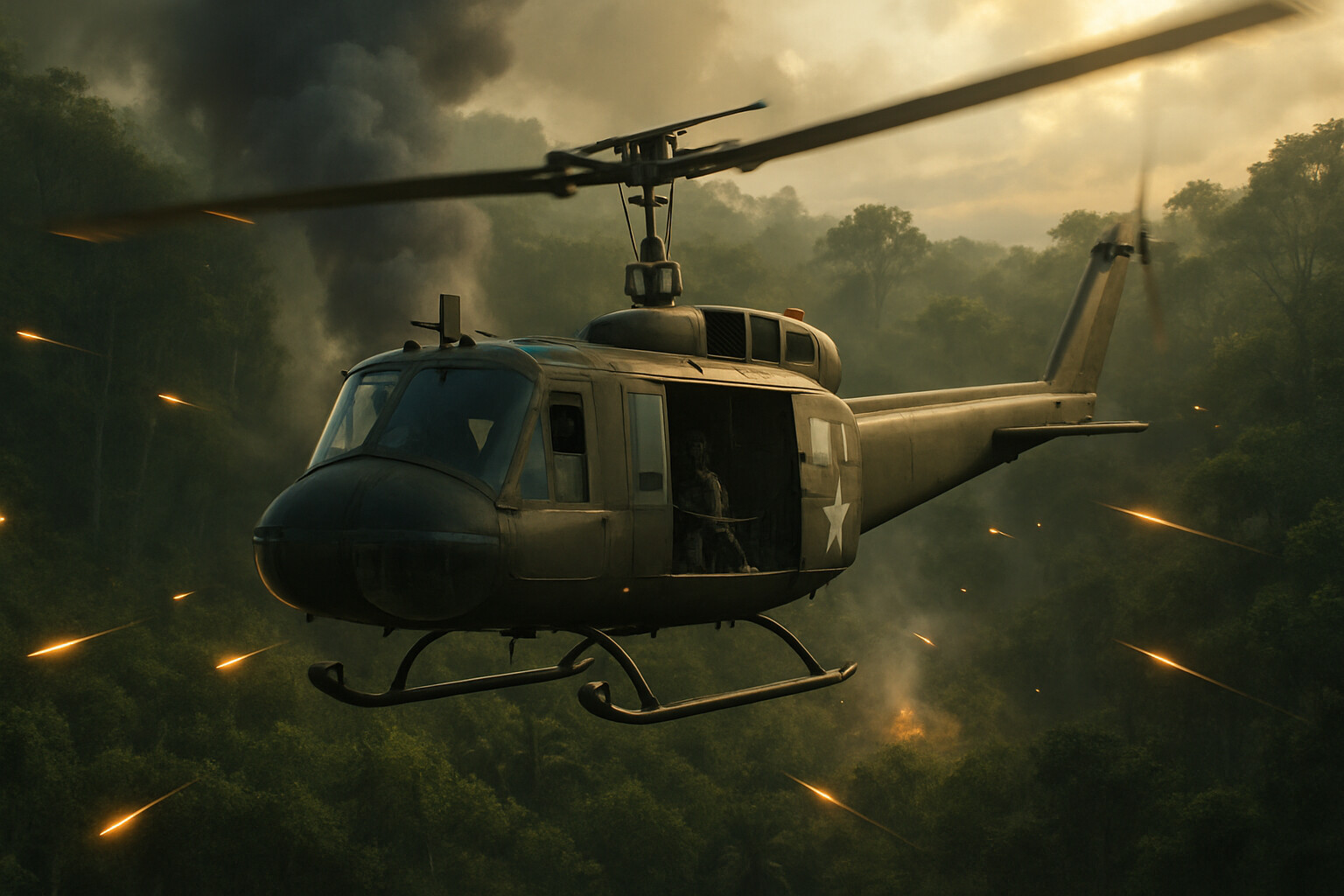
The UH-1 Huey was not just transportation. At Ia Drang it was the moving artery of the fight. Helicopters put the battalion into the valley, carried wounded men out, delivered ammunition and water, and kept the surrounded force connected to support outside the landing zone.

That mobility came with a hard tradeoff. A helicopter had to slow down and commit to the landing. When the LZ was under fire, every approach became a decision between risk in the air and survival on the ground.

UH-1 Huey technical breakdown for air mobility at Ia Drang
Air mobility breakdown: pilots, troop compartment, door gunners, skids, radio link, rotor lift, landing cycle, medevac, and ammunition resupply.

The War Arrives By Helicopter

On November 14, 1965, Lt. Col. Hal Moore's 1st Battalion, 7th Cavalry flew from the Plei Me area into Landing Zone X-Ray. The objective was a search-and-destroy mission near the Chu Pong Massif. The first lifts came in clean enough to build confidence. Then the landing zone started to close around them.

North Vietnamese units were not scattered guerrillas melting away from contact. They were regular soldiers moving from covered terrain, trying to get close enough to blunt American artillery and air power. The closer the fighting became, the harder it was for the U.S. system to use its full strength without hitting its own men.

Moore built a perimeter around the landing zone and fought to keep it coherent. Companies took pressure from different directions. A platoon became isolated. Radio calls, artillery missions, air strikes, and helicopter landings had to be coordinated while the enemy pressed through grass and trees.

Major Bruce Crandall and other helicopter pilots became part of the ground battle's survival. Crandall's aircraft were unarmed troop carriers, but he and Ed Freeman kept going back into X-Ray after routine medical evacuation would not land in a hot zone. They brought ammunition and evacuated wounded men under fire.

The battle at LZ X-Ray lasted three days. Army accounts put the American losses there at 79 infantrymen and one Air Force pilot killed, with about 130 wounded. The next day, a separate fight at LZ Albany showed how quickly movement through the same terrain could turn catastrophic.

Ia Drang did not settle Vietnam. It warned both sides. The United States saw that helicopters, artillery, and close air support could keep a battalion alive in a remote valley. The People's Army of Vietnam saw that closing the distance could reduce the American advantage. The pattern would repeat for years.

Hold The Perimeter, Keep The Lifeline Open

The fight became a contest between distance and closeness. U.S. forces needed enough separation to use artillery, air support, and helicopter movement. PAVN units tried to erase that separation by pressing into the perimeter, tying the Americans down, and making fire support harder to apply.

LZ X-Ray battle breakdown showing perimeter, PAVN pressure, lost platoon, artillery, close air support, casualty point, and Huey landing corridor
LZ X-Ray as a system under stress: perimeter defense, command post, isolated platoon, PAVN pressure, artillery from LZ Falcon, air support, casualty collection, and the helicopter landing corridor.

Names To Build Out Later

Commander

Hal Moore

Commanded 1st Battalion, 7th Cavalry at LZ X-Ray and became the central American ground commander in the story.

1-7 CavCommand

Aviation

Bruce Crandall

Company A, 229th Assault Helicopter Battalion. Led repeated flights into X-Ray with ammunition and took wounded men out.

HueyMedal of Honor

Aviation

Ed Freeman

Flew with Crandall into the hot LZ and later received the Medal of Honor for the same rescue and resupply fight.

MedevacMedal of Honor

Infantry

Walter Marm Jr.

2nd lieutenant in the 7th Cavalry whose actions near Ia Drang earned the Medal of Honor.

InfantryMedal of Honor

Reporter

Joe Galloway

War correspondent at LZ X-Ray who later co-authored the defining account with Moore.

WitnessCorrespondent

PAVN

Nguyen Huu An

North Vietnamese commander associated with the Ia Drang fight, representing the close-assault counter to U.S. firepower.

PAVNChu Pong

Flying Back Into The Hot LZ

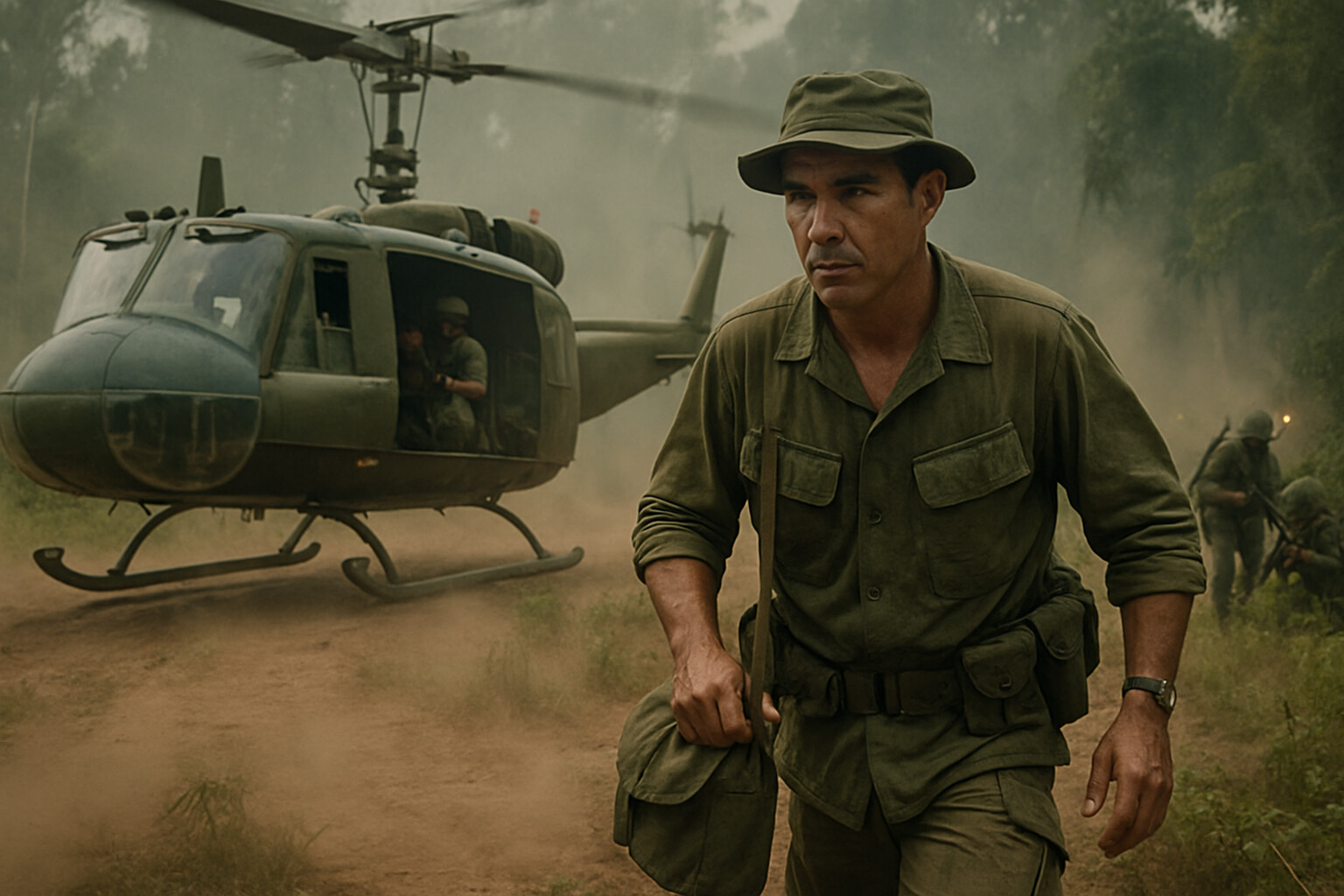
One reason X-Ray did not collapse was that the helicopter line kept moving after the landing zone became dangerous. Crandall and Freeman brought ammunition in and carried wounded men out when delay meant men on the ground would be left without help.

Huey medevac and ammunition run under fire at LZ X-Ray
The lifeline into X-Ray: unarmed Hueys landing in dust, smoke, and elephant grass to evacuate wounded men and keep ammunition moving forward.

The Pattern Of The War Ahead

Helicopters Changed MovementInfantry could appear where roads did not exist, but the landing zone became the vulnerable moment.
Firepower Needed SpaceArtillery and air support were powerful, but close contact reduced their freedom.
Terrain Ruled The FightGrass, trees, ridgelines, and jungle approaches mattered as much as doctrine.
Both Sides LearnedThe U.S. learned air mobility could work. PAVN learned to close distance and absorb punishment.

Reference baseline: U.S. Army Vietnam War commemoration material, Army Medal of Honor material for Bruce Crandall, Congressional Medal of Honor Society Ia Drang recipient list, and U.S. Army Infantry Magazine coverage of LZ X-Ray and LZ Albany.

U.S. Army - Vietnam War historyU.S. Army - Bruce Crandall Medal of HonorCMOHS - Ia Drang Medal of Honor recipientsU.S. Army Infantry Magazine - Ia Drang and LZ Albany