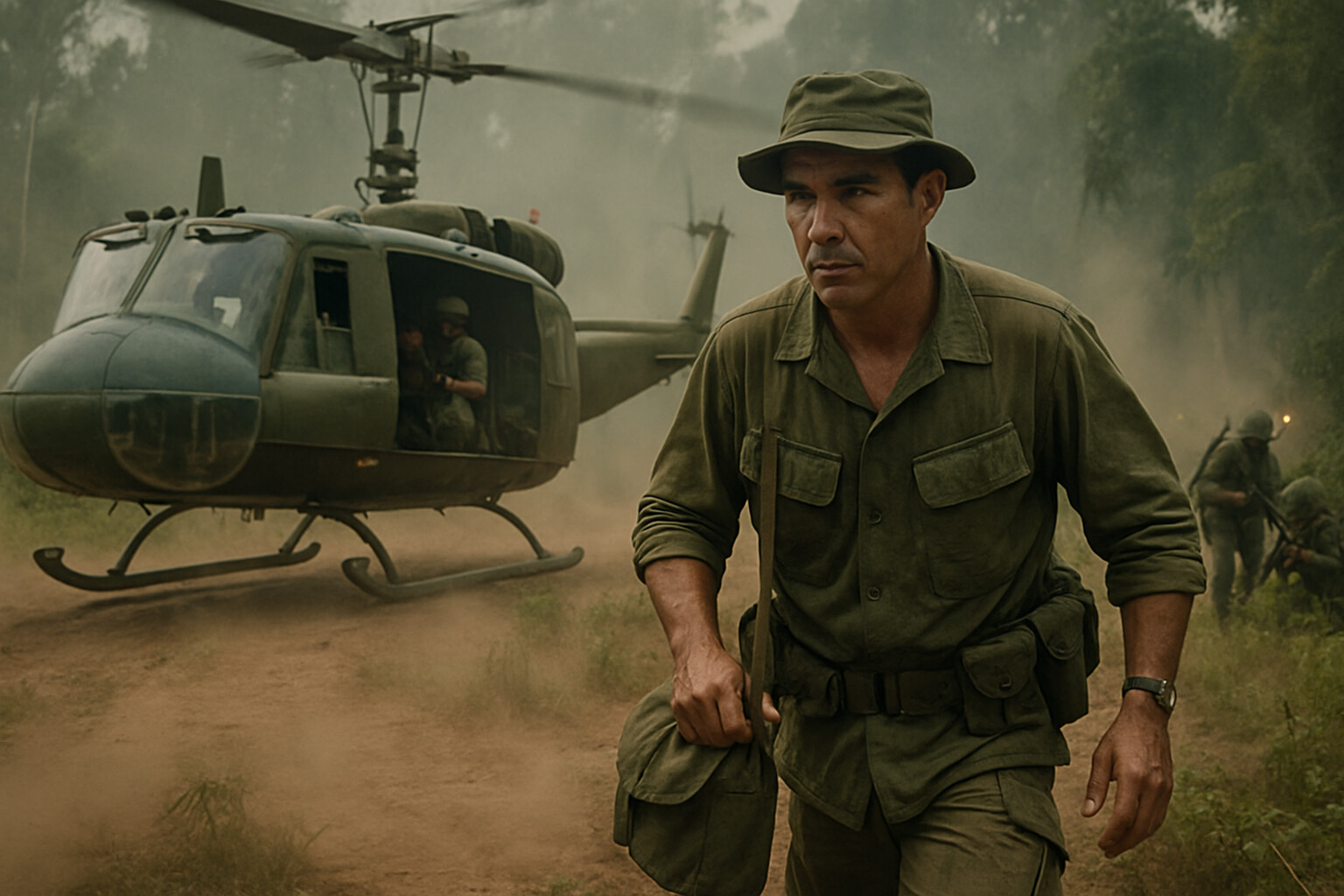
The North Vietnamese bullets snapped through the rotor wash like deadly rain. Captain Ed Freeman pulled back on the collective, lifting his UH-1 Huey out of Landing Zone X-Ray as tracers streaked past the cockpit. Below him, American soldiers crouched behind trees and termite mounds, running low on ammunition and hope. It was November 14, 1965, and the first major battle between U.S. forces and the North Vietnamese Army was reaching its most desperate hour.
Freeman keyed his radio. Standard doctrine said no more flights until the fire died down. But Freeman could see the ammunition boxes scattered around his helicopter's skids, and he knew what those boxes meant to the men below.
Edward Wesley Freeman had not planned on becoming a helicopter pilot. Born in Mississippi in 1927, he had enlisted in the Navy at seventeen and served on a minesweeper during World War II. After the war, he joined the Army and flew transport aircraft before transitioning to helicopters in the late 1950s. By 1965, the soft-spoken captain commanded a flight of UH-1D helicopters in the 229th Assault Helicopter Battalion, part of the newly formed 1st Cavalry Division (Airmobile).
The 1st Cavalry Division represented a revolutionary concept in warfare. Instead of advancing on foot or by truck, these soldiers moved by helicopter across the battlefield. The division's UH-1 "Huey" helicopters could insert troops directly into combat zones, supply them under fire, and evacuate casualties faster than any previous military unit. But the concept had never been tested against a determined enemy until November 1965, when intelligence reports located large North Vietnamese forces in the Ia Drang Valley of South Vietnam.
The Ia Drang Valley stretched across the border region between South Vietnam and Cambodia, a natural corridor for North Vietnamese forces moving supplies and reinforcements south. Dense jungle covered most of the valley floor, broken by occasional clearings that could serve as helicopter landing zones. The North Vietnamese 66th Regiment and elements of the 33rd Regiment had established positions throughout the valley, waiting for the Americans to come.

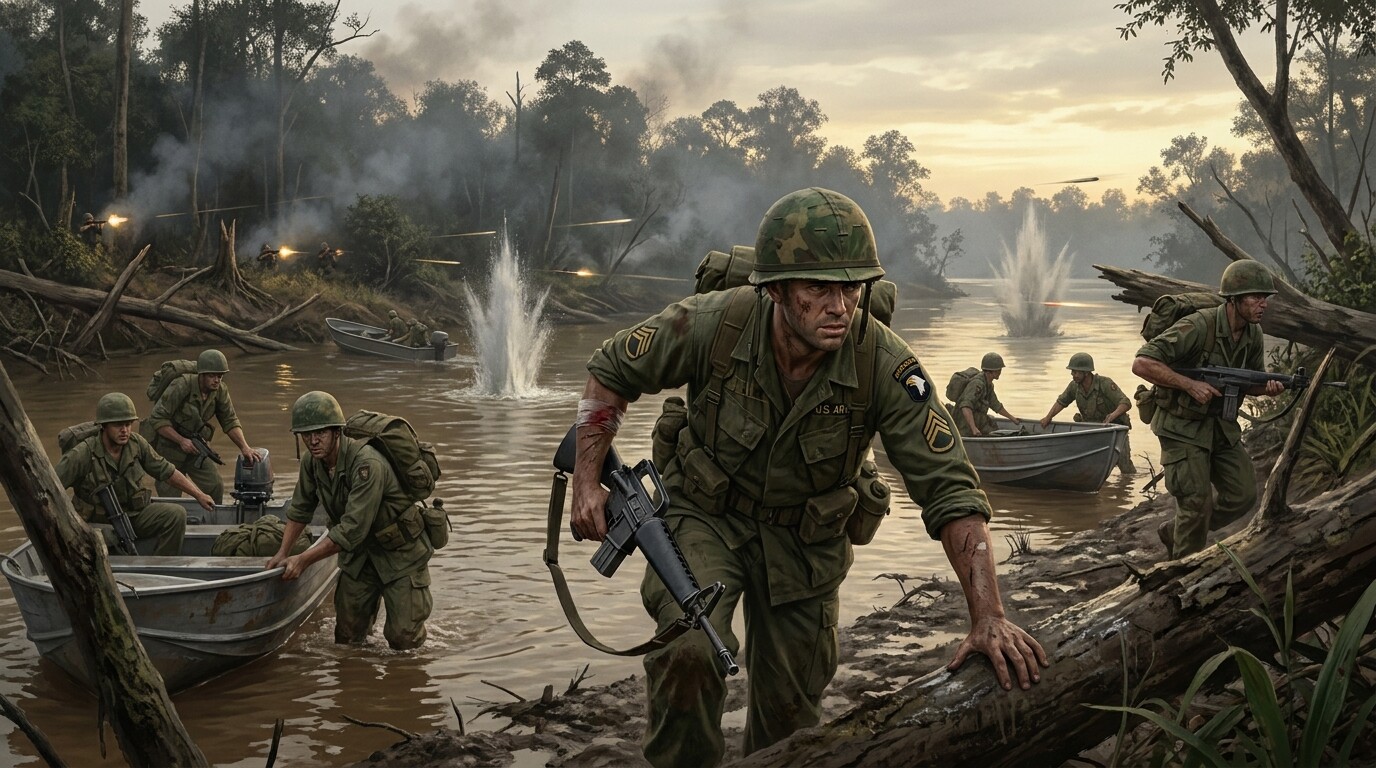
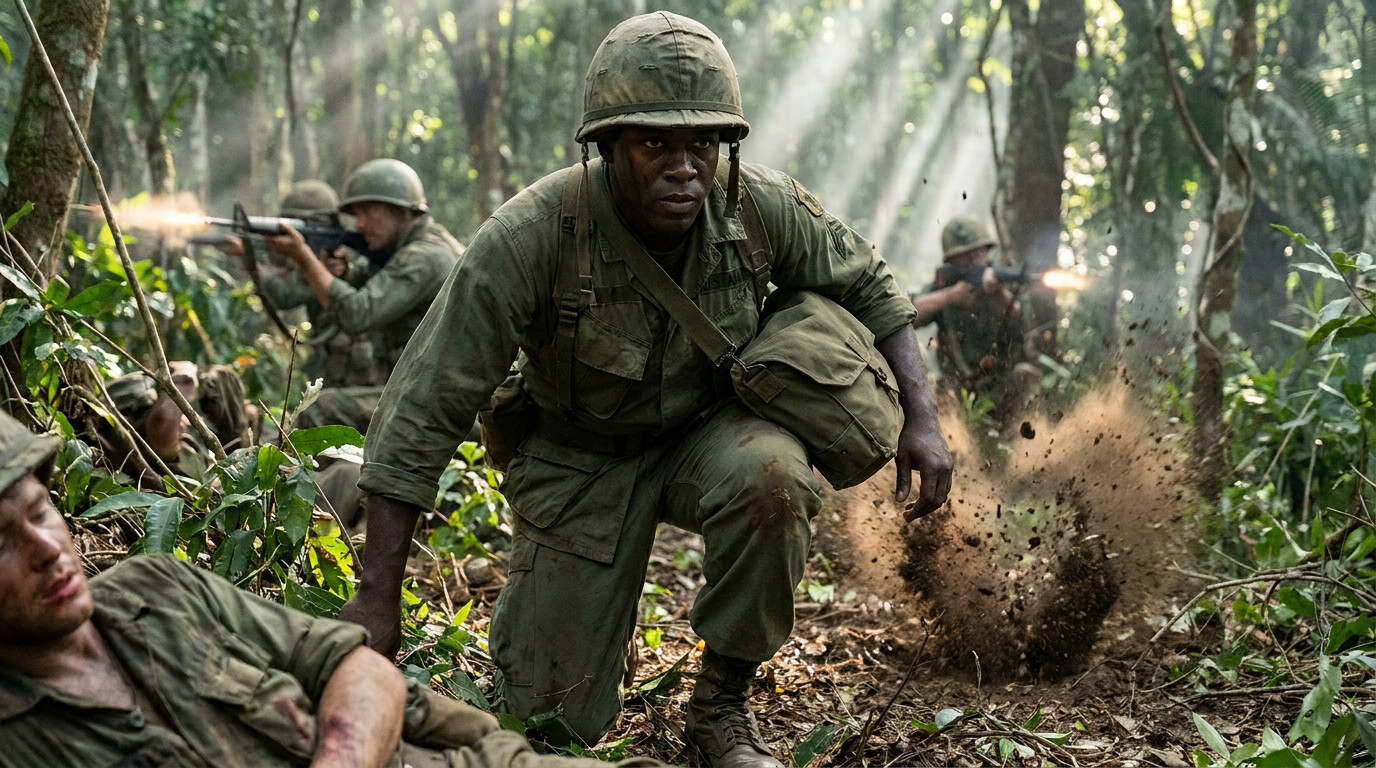
On November 14, 1965, Lieutenant Colonel Harold Moore's 1st Battalion, 7th Cavalry Regiment had been fighting at Landing Zone X-Ray for nearly twenty-four hours. The battalion had air-assaulted into the small clearing the previous morning, expecting to conduct a search-and-destroy mission against scattered enemy forces. Instead, they had walked into a carefully planned ambush by over 2,000 North Vietnamese soldiers.
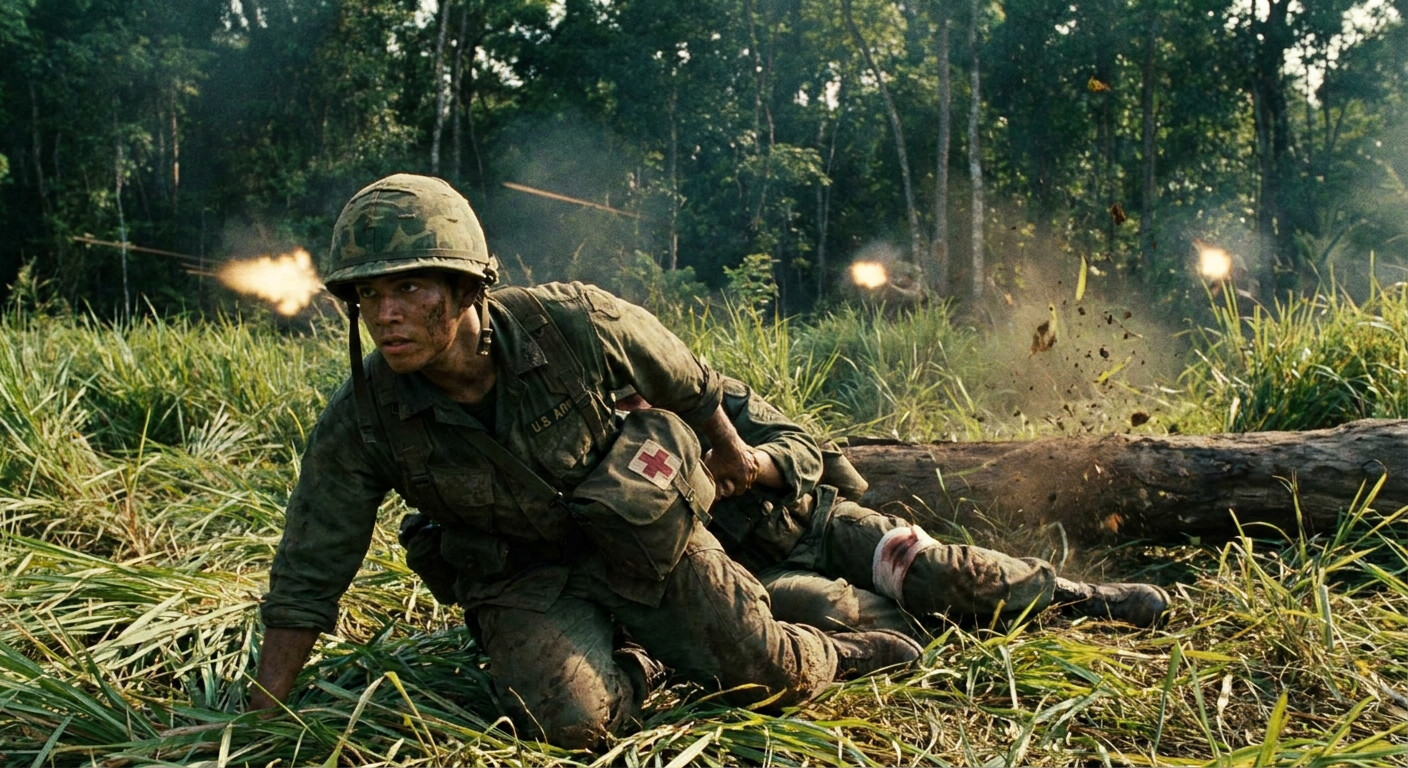
The fighting at X-Ray had been brutal from the first moments. North Vietnamese forces surrounded the landing zone on three sides, firing from concealed positions in the dense jungle. American artillery and air strikes had kept the enemy at bay, but ammunition was running critically low. Several helicopters had already been shot down or damaged attempting to resupply the landing zone.
Freeman's UH-1D helicopter carried the designation that appeared in radio calls but flew supply missions rather than medical evacuation flights that day. The UH-1D, known universally as the "Huey," had become the workhorse of American operations in Vietnam. Powered by a Lycoming T53-L-11 turboshaft engine producing 1,100 shaft horsepower, the helicopter could carry up to 12 passengers or 3,880 pounds of cargo. Its two-blade main rotor system gave the aircraft its distinctive "whop-whop" sound that became synonymous with the Vietnam War.
But the Huey's specifications meant little when flying into a hot landing zone. The helicopter's aluminum fuselage offered no protection against small arms fire, and its single engine made it vulnerable to catastrophic damage. North Vietnamese forces had learned to concentrate their fire on approaching helicopters, knowing that shooting down American aircraft could isolate ground forces and turn tactical victories into strategic defeats.
Freeman understood these risks as he circled back toward X-Ray that afternoon. His crew chief and door gunner checked their M-60 machine guns, ready to return fire during the approach. The helicopter carried cases of M-16 ammunition, M-79 grenade rounds, and medical supplies that the surrounded infantry desperately needed.

The approach to Landing Zone X-Ray required flying low over enemy positions before flaring into the small clearing. North Vietnamese soldiers had positioned themselves in the treelines surrounding the landing zone, creating overlapping fields of fire that could engage helicopters from multiple directions. Smoke from artillery strikes and burning vegetation reduced visibility, while the sound of gunfire made radio communication difficult.
Freeman began his second approach of the day, descending through scattered clouds toward the smoke-marked landing zone. Automatic weapons fire erupted from the treeline as the Huey came into range. Bullets struck the aircraft's fuselage and shattered the crew chief's window, but Freeman held the aircraft steady as it settled into the clearing.
Ground personnel rushed to unload the ammunition while Freeman kept the rotor turning. Every second on the ground increased the risk of a direct hit from enemy mortars or recoilless rifles that could destroy the helicopter entirely. But the soldiers at X-Ray needed every round of ammunition Freeman's aircraft could carry.
As the last ammunition case cleared the cargo bay, wounded soldiers began approaching the helicopter. Freeman had not planned to evacuate casualties on this flight, but seeing the injured men changed his calculations. Medical evacuation helicopters had been unable to reach the landing zone due to heavy fire, leaving wounded soldiers without immediate medical attention.
Freeman directed his crew chief to load the wounded soldiers. Multiple wounded soldiers climbed or were carried aboard the helicopter as enemy fire continued to snap through the air around them. Freeman lifted off with his maximum load, climbing steeply to clear the surrounding jungle.

The flight back to the medical aid station took fifteen minutes, but Freeman was already planning his return. Intelligence reports indicated that North Vietnamese forces were preparing for a major assault on X-Ray that evening. The surrounded infantry would need every rifle, every grenade, every medical bandage Freeman could deliver.
Doctrine called for suspending helicopter operations in such heavily contested landing zones until artillery could suppress enemy fire. But Freeman could see that standard procedures might not save the men at X-Ray. The North Vietnamese forces had demonstrated remarkable discipline under bombardment, quickly returning to their positions after each artillery strike.
Freeman's third flight into X-Ray began later that afternoon. This time, he carried more wounded soldiers out than supplies in, but each evacuation flight meant another opportunity to observe enemy positions and radio intelligence back to artillery spotters. The North Vietnamese fire seemed to intensify with each landing, suggesting that enemy commanders understood the critical importance of stopping American resupply efforts.
On his fourth approach, enemy fire struck the Huey's engine compartment. Freeman felt the aircraft shudder as metal fragments damaged the turbine blades, but the engine continued running. His crew chief reported fuel leaking from bullet holes in the external tanks, but Freeman calculated he had enough fuel for one more round trip.
The wounded soldiers loaded on the fourth flight included several men with severe injuries who would not survive without immediate surgery. Freeman flew the damaged helicopter back to the aid station, knowing that returning to X-Ray would risk the aircraft and crew for increasingly marginal gains. But radio reports from the landing zone indicated that North Vietnamese forces were massing for what appeared to be a final assault.

Freeman made the decision that would define his military career. Despite the damaged aircraft, despite the increasing enemy fire, despite orders from higher headquarters to suspend resupply operations, he would fly one more mission to X-Ray. The ammunition and medical supplies he could deliver might make the difference between the battalion's survival and destruction.
The fifth approach came as the sun began setting over the Ia Drang Valley. Visibility decreased as smoke from the day's fighting combined with evening shadows to obscure enemy positions. Freeman descended toward the landing zone guided by radio beacons and the sound of American weapons fire.
Enemy bullets shattered the helicopter's windscreen as Freeman flared into the landing zone. His copilot was struck by glass fragments but remained at his controls as ground personnel unloaded the last critical supplies. Wounded soldiers filled every available space in the cargo bay, some sitting upright while others lay on stretchers.
Freeman lifted off from X-Ray as darkness fell across the valley. The helicopter's engine ran roughly from battle damage, and fuel gauges showed dangerously low readings. But wounded American soldiers were alive in his cargo bay, flying toward medical treatment that would save their lives.
The night flight back to the medical aid station tested every aspect of Freeman's flying skills. The damaged engine produced irregular power, forcing him to constantly adjust collective and cyclic controls to maintain stable flight. Navigation lights had been shot out during one of the approaches, making the helicopter nearly invisible to other aircraft.

Freeman landed at the medical facility with less than ten minutes of fuel remaining. Medical personnel rushed to unload the wounded soldiers while maintenance crews began assessing the helicopter's extensive battle damage. Bullet holes covered the aircraft's fuselage, the engine required replacement, and multiple systems needed repair.
The battle for Landing Zone X-Ray continued through the night and into the next day, but Freeman's resupply flights had delivered the ammunition and evacuated the wounded soldiers that made the American defense possible. Lieutenant Colonel Moore's battalion held the landing zone against repeated North Vietnamese assaults, inflicting heavy casualties on enemy forces while maintaining their own positions.
Official records from the battle document Freeman's multiple flights into X-Ray, though exact details vary between different accounts. The 1st Cavalry Division's after-action report notes that resupply helicopters "continued operations despite intense enemy fire," while individual soldiers' accounts provide more specific descriptions of Freeman's actions.
Medical records show that wounded soldiers were evacuated during Freeman's multiple flights, though some sources suggest different numbers. The ammunition delivered during his resupply runs included M-16 ammunition, M-79 grenade rounds, and various medical supplies that proved critical during the night's fighting, though exact quantities remain uncertain in the historical record.
Freeman's actions at Ia Drang exemplified the new kind of warfare that helicopters made possible. Previous military operations had required wounded soldiers to be carried to aid stations by ground transportation, often taking hours or days. Freeman's evacuation flights reduced that time to minutes, dramatically improving survival rates for seriously wounded personnel.

The tactical importance of Freeman's resupply missions extended beyond the immediate battle. North Vietnamese commanders had planned to overrun X-Ray by cutting off American supply lines and forcing the surrounded battalion to surrender or retreat. Freeman's determination to continue flying into the landing zone disrupted that strategy and demonstrated that American forces could be resupplied even under the most difficult conditions.
Three decades later, Freeman received the Medal of Honor for his actions at Ia Drang. The citation credited him with "extraordinary heroism" in evacuating wounded soldiers and delivering critical supplies "in the face of intense enemy fire." The delayed recognition reflected the complex nature of documenting individual actions during large-scale battles.
Freeman's Medal of Honor citation reads: "Captain Freeman's remarkable flying ability and extraordinary heroism in the face of the enemy saved the lives of numerous soldiers and contributed immeasurably to the success of the operation." The formal language captures the essential facts while understating the personal courage required to repeatedly fly into a contested landing zone.
The 229th Assault Helicopter Battalion's official history records that multiple helicopters participated in resupply operations at X-Ray, but Freeman's aircraft made more flights into the landing zone than any other crew. His willingness to continue flying despite battle damage and increasing enemy fire became a model for helicopter operations throughout the Vietnam War.
Freeman continued flying helicopters in Vietnam for another year after Ia Drang, participating in numerous air mobility operations across South Vietnam. He retired from the Army in 1967 as a major, returning to civilian life in Idaho where he worked as a pilot for the U.S. Forest Service. His post-military career involved fighting forest fires rather than enemy soldiers, but required many of the same flying skills that served him at X-Ray.
The Battle of Ia Drang established air mobility as a fundamental aspect of modern warfare, but it also demonstrated the human element that made such operations possible. Technical specifications and tactical doctrine meant nothing without pilots willing to fly damaged aircraft into deadly landing zones. Freeman's example inspired a generation of helicopter crews who faced similar situations throughout the Vietnam conflict.
The legacy of Freeman's flights to X-Ray extends beyond Vietnam to modern military operations around the world. Current helicopter pilots study the Battle of Ia Drang as an example of how aircraft can sustain ground forces under the most difficult conditions. The basic principles Freeman demonstrated – accurate flying, crew coordination, and determination under fire – remain relevant to contemporary air mobility operations.
Freeman died in 2008 at age 80, having lived to see his actions at Ia Drang recognized with the nation's highest military decoration. His funeral in Idaho drew Vietnam veterans from across the country, many of whom had served in helicopter units and understood the courage required for his X-Ray missions.
The UH-1 helicopter that Freeman flew into X-Ray represented American industrial capability, but his decision to continue flying represented something that could not be manufactured or mass-produced. In an age of technological warfare, the Battle of Ia Drang demonstrated that human courage remained the decisive factor in military operations. Freeman's flights to X-Ray proved that a single soldier's determination could change the outcome of an entire battle, one flight at a time.