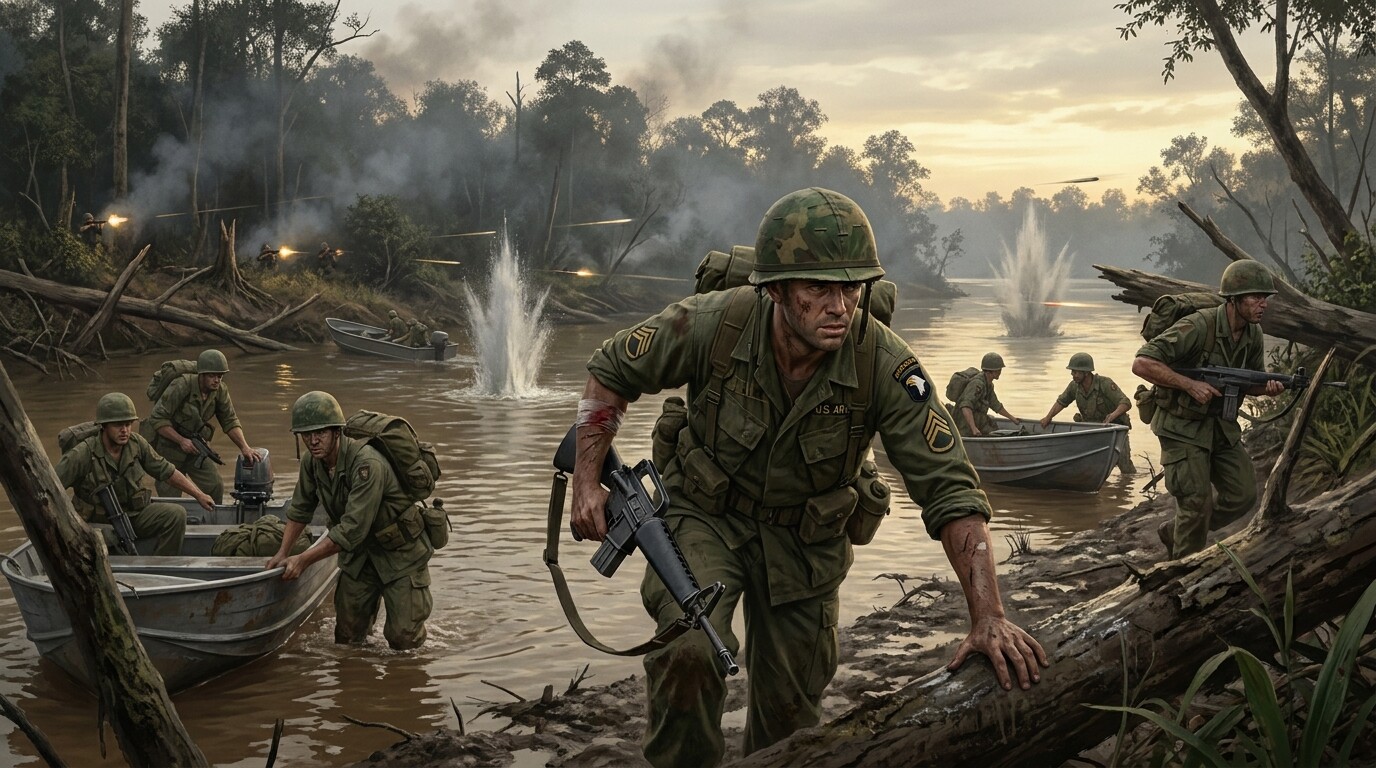
The river was wrong.
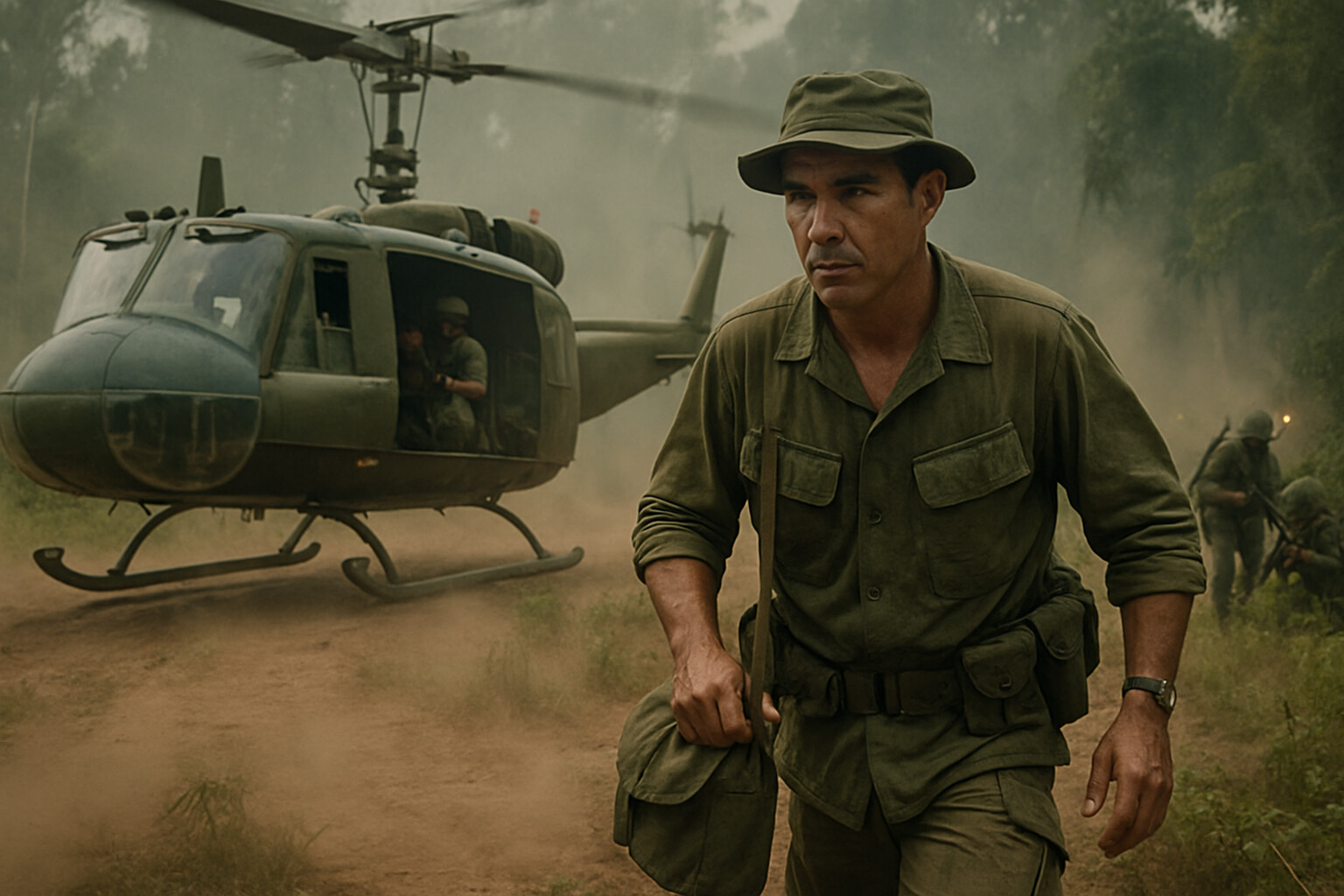
From the lead boat, the far bank looked quiet in the early morning light — the dense green tangle of vegetation, the muddy cut of water between, the flat shimmer of a Vietnamese February. Staff Sergeant Joe Hooper had seen enough of this country by early 1968 to know that quiet could change without announcement. Somewhere ahead, dug into the earth along that bank, were fortified positions that his company was about to cross into.
The order had not changed. They were going across.
---
To understand what happened on February 21, 1968, you have to understand what had already happened to the city of Hue in the three weeks before it.
On the night of January 30–31, 1968, North Vietnamese Army and Viet Cong forces launched simultaneous attacks on more than a hundred cities and towns across South Vietnam. The planners in Hanoi called it the General Offensive and General Uprising — a coordinated military and political blow designed to shatter the South Vietnamese government, trigger a mass popular uprising, and force the United States to reconsider the entire war. The Americans and South Vietnamese called it the Tet Offensive, after the Lunar New Year holiday its first wave interrupted.
Most attacks were beaten back within days. Hue was different.
Hue was Vietnam's third-largest city and its ancient imperial capital — a place of palace walls, pagodas, and university buildings set along the Perfume River. On the morning of January 31, roughly 10,000 NVA and Viet Cong troops flooded into the city, overrunning most of it within hours. What followed was the longest and bloodiest single urban engagement of the entire Vietnam War: a grinding, building-by-building campaign to retake a city the enemy had turned into a fortress and intended to hold.
For the NVA commanders, Hue was not just a tactical objective. It was a symbol. Holding it even for weeks would demonstrate that no part of South Vietnam was secure. In the areas they controlled, NVA and Viet Cong cadres conducted systematic executions of South Vietnamese government officials, police, military officers, and civilians judged hostile to the revolution. When the battle ended, mass graves were found containing the remains of thousands of victims. The full toll of those killings remains a subject of historical documentation and debate, but the scale of the atrocity is not.
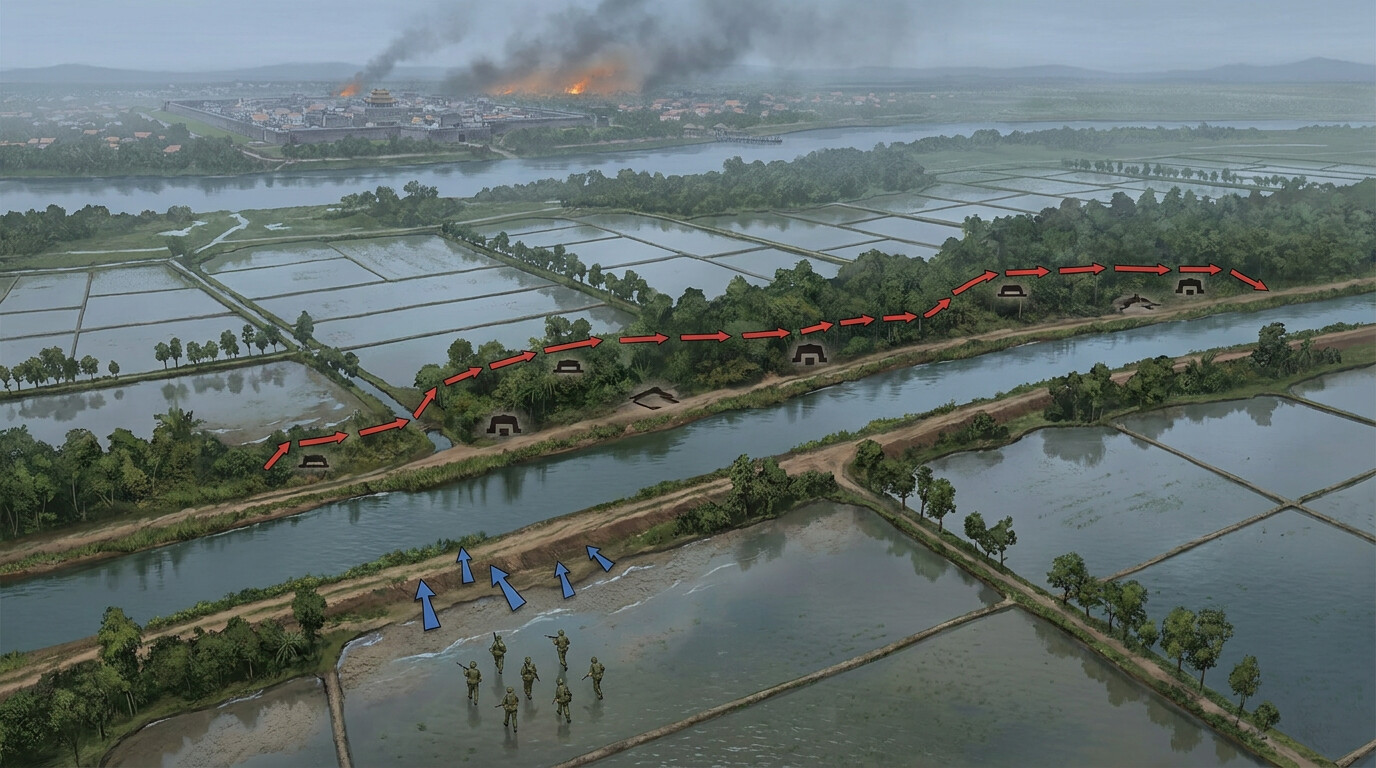
The battle to retake Hue involved U.S. Marines, U.S. Army units, and Army of the Republic of Vietnam forces fighting simultaneously in and around the city. The Marines bore the hardest fighting inside Hue itself, particularly in the Citadel — the walled imperial palace complex on the north bank of the Perfume River — while Army units operated in the surrounding areas, cutting off NVA reinforcement and supply routes and clearing the villages and tree lines along the waterways feeding into the city.
It was in that outer ring of fighting that Company D, 2nd Battalion, 501st Infantry Regiment, 101st Airborne Division found itself on February 21, 1968.
---
The 101st Airborne Division — the Screaming Eagles — had been operating in I Corps, the northernmost military region of South Vietnam, since late 1967. When the Tet Offensive erupted, elements of the division were already positioned in the region and were quickly committed to the effort to relieve Hue and clear the surrounding area. The 2nd Battalion, 501st Infantry was part of that effort.
Delta Company was one of the battalion's rifle companies — the infantry element doing the close work: moving through terrain on foot, crossing waterways, clearing enemy positions by fire and movement and hand grenades and close-quarters determination. In February 1968 the company was operating in the low, wet ground south of Hue, an area of rice paddies, tree lines, and narrow waterways where an enemy with prepared positions held every natural advantage over attackers crossing open ground or exposed water.
Staff Sergeant Joe Ronald Hooper was a squad leader in that company. Born on August 8, 1938, in Piedmont, South Carolina, he had grown up in Washington State. Biographical records indicate he served in the U.S. Navy before transitioning to the Army, though the specific details of that earlier service have not been confirmed against primary documents and are noted here with that caution. By early 1968 he was twenty-nine years old, a staff sergeant with combat experience behind him, leading the kind of men who trust a leader's steadiness under fire more than almost anything else.
What made Hooper notable even within a combat unit was an apparent capacity for sustained forward movement under conditions that would stop most men. His fellow soldiers and officers had already observed it in earlier operations. On February 21, they would see it again — maintained across the full length of a day's fighting.
---
The battle opened at the river crossing.
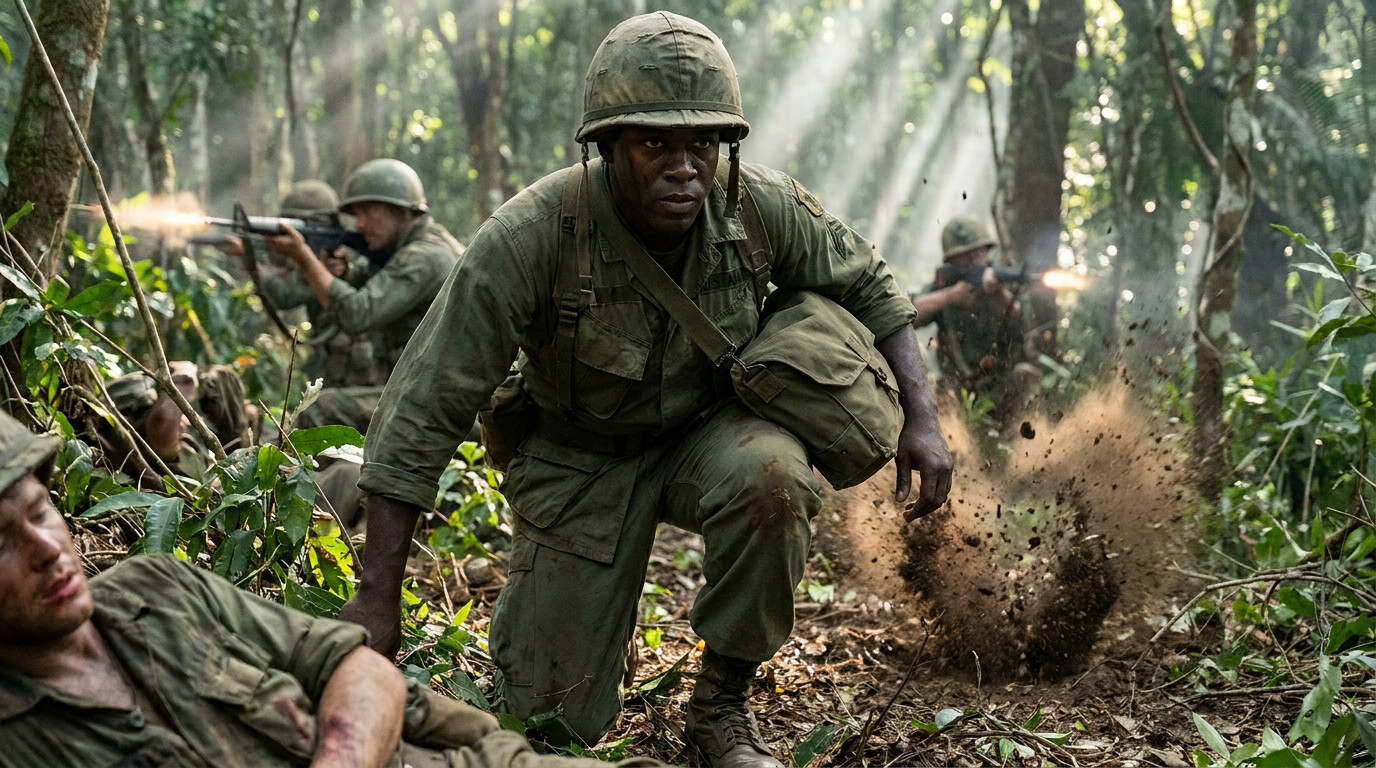
When the lead elements of Delta Company attempted to cross the waterway and move onto the far bank, they drew immediate and heavy fire from enemy bunkers and fighting positions dug into the bank and the tree line beyond. The positions were well-sited: defenders with interlocking fields of fire could engage the crossing force throughout the approach and at the moment of maximum exposure, when soldiers were in the water or just clearing the bank. The crossing force was taking casualties.
Hooper was among the first hit. The Medal of Honor citation documents that he sustained a wound early in the fighting — before the company had fully crossed and cleared the bank. The wound did not stop him. He continued across.
What came next unfolded over the course of the day in a sequence of close-quarters actions that the Medal of Honor citation describes in unusual detail for its length. The terrain along the waterway was broken up by a bunker complex — individual fighting positions, some reinforced with overhead cover, connected by shallow trenches or open ground, defended by NVA soldiers who had prepared their positions for exactly this kind of assault. Taking them required getting close enough to use grenades, getting inside the dead space where a defender's weapon could not depress far enough to engage, and then clearing each position in turn before the next could be approached.
Hooper moved against the bunkers.
Clearing a fortified bunker line under fire is among the most dangerous things an infantry soldier can do. There is no cover in the conventional sense — you are advancing toward the guns, not away from them. Speed and violence of action are the primary protection: move before the defender can track and engage, get the grenade in before he can return it, clear the position before the flanking positions can fix you in the open. Every second of movement is a second of exposure. Every pause gives a defender time to recover and aim.
Hooper went from position to position.

He used his rifle and grenades. The citation documents that he destroyed multiple enemy positions and engaged enemy personnel — the specific figures are enumerated in the official citation text, which should be consulted directly from the Congressional Medal of Honor Society or the U.S. Army Center of Military History. In the sustained close fighting along the riverbank and into the fortified zone beyond, he was wounded again. Then again. Multiple wounds over the course of the day did not cause him to withdraw.
Between assaults on the fighting positions, he turned back to the casualties.
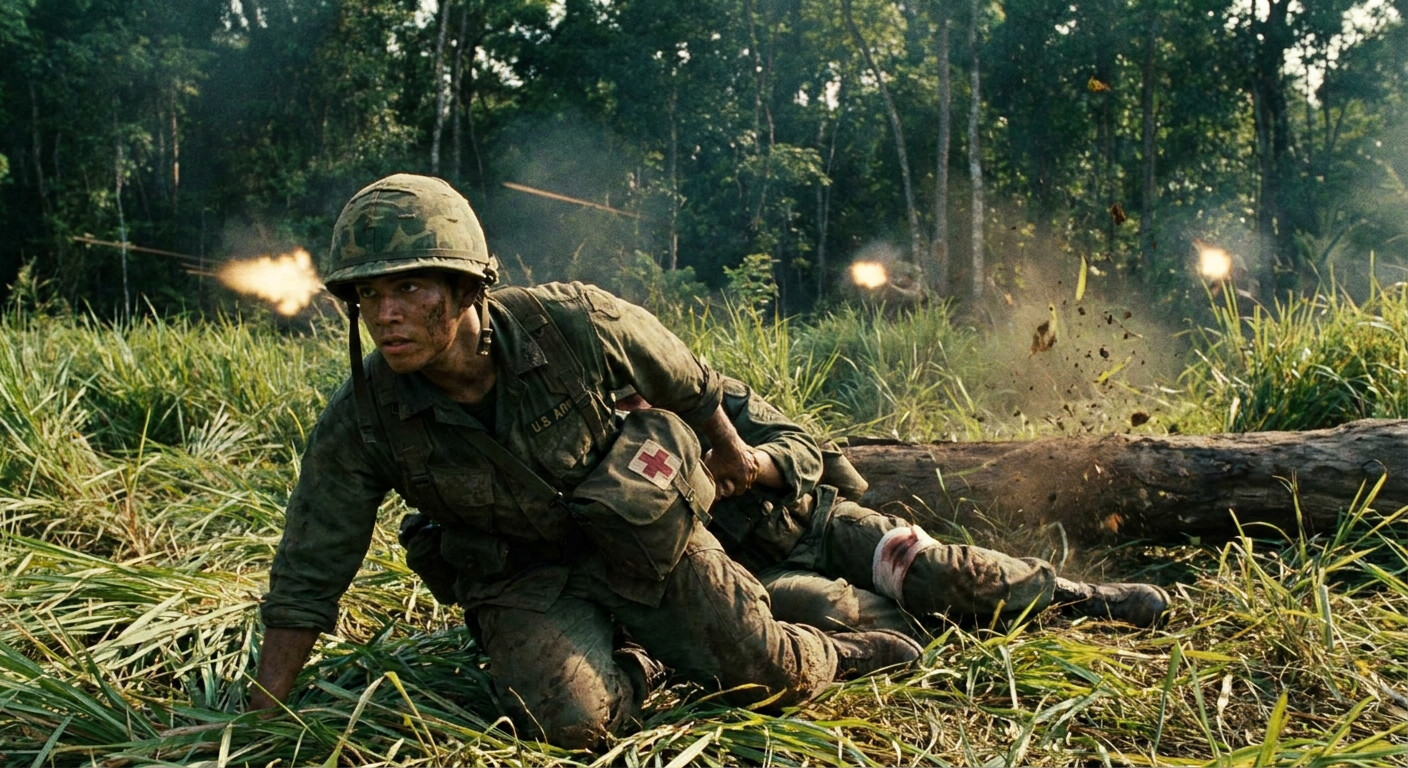
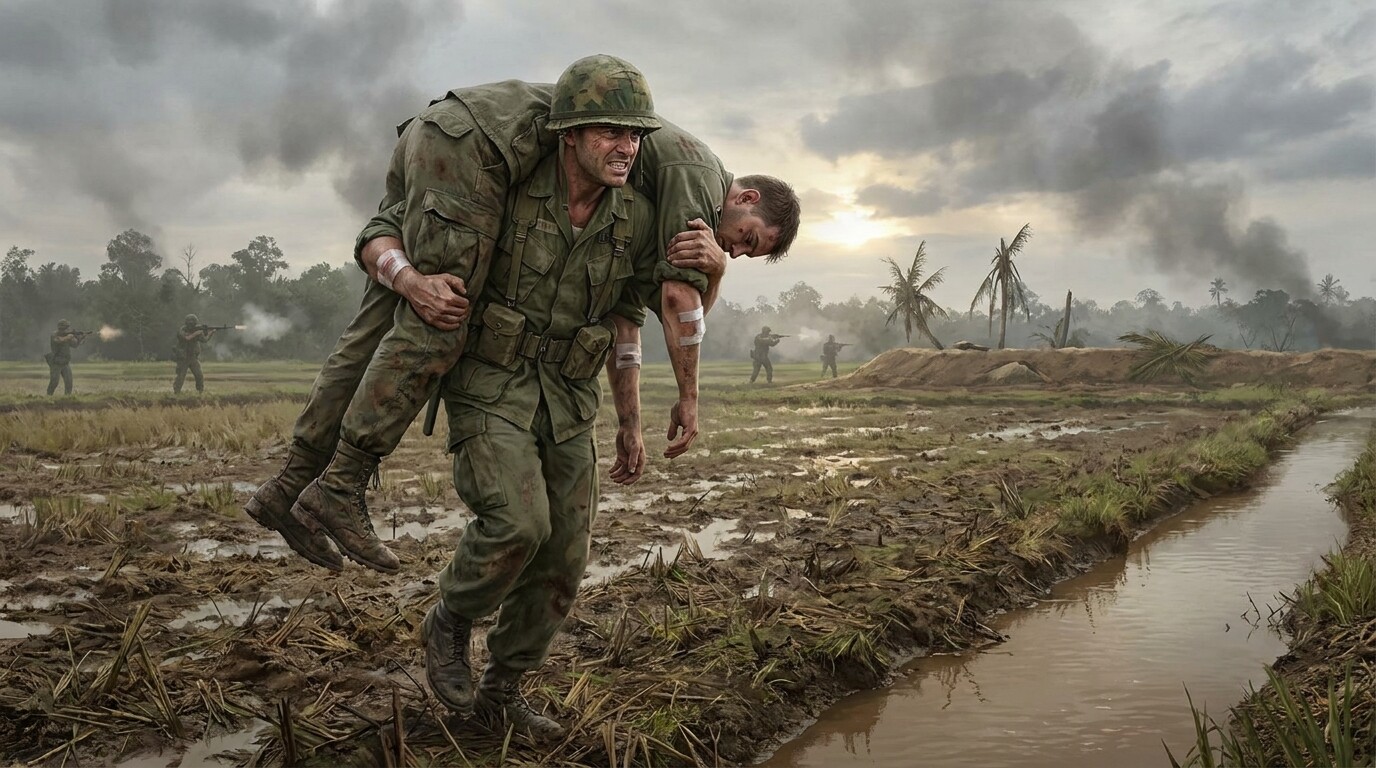
Soldiers who had been hit in the crossing and in the initial firefight were lying in exposed ground near the water or in the open kill zone between positions. Getting them back to cover meant moving across the same ground he had just crossed, lifting or dragging a man who could not move under his own power, and returning through fire. Hooper made those trips. The citation documents him carrying wounded men to safety — not once, but repeatedly, as casualties accumulated through the day.
This is one of the details that distinguishes the February 21 action from a single moment of violent courage. It was not a grenade thrown in one desperate instant. It was hours of sustained forward movement and backward movement — attack, consolidate, pull back to help a wounded man, advance again — carried out while bearing his own wounds and under continuous enemy contact.
At one point in the fighting, Hooper entered the waterway itself, swimming to reach additional objectives or personnel. The exact circumstances are documented in the citation and reflect the fluid, waterborne nature of the terrain and the battle.
The NVA defenders were not simply dug in and waiting. They were fighting back with the weapons they had: small arms, rocket-propelled grenades, machine guns covering the open ground. The firepower that opened on the crossing force at the start of the day was the same firepower still in play through its middle and end. Operating effectively in that environment required not just individual courage but the tactical competence to read a defended position quickly, identify its weak points, and exploit them before the engagement became static and lethal.
Hooper had that competence, and he applied it throughout the day.
By the time the fighting along the waterway and through the fortified complex subsided, Delta Company had cleared its objectives. The price had been paid in the way that infantry always pays — in men down, in blood, in the specific and personal cost that close combat extracts from everyone who survives it as well as from those who do not.
Hooper had been wounded multiple times. He was still present and still leading when it ended.
---
The weapons both sides carried into that fight shaped every minute of it.
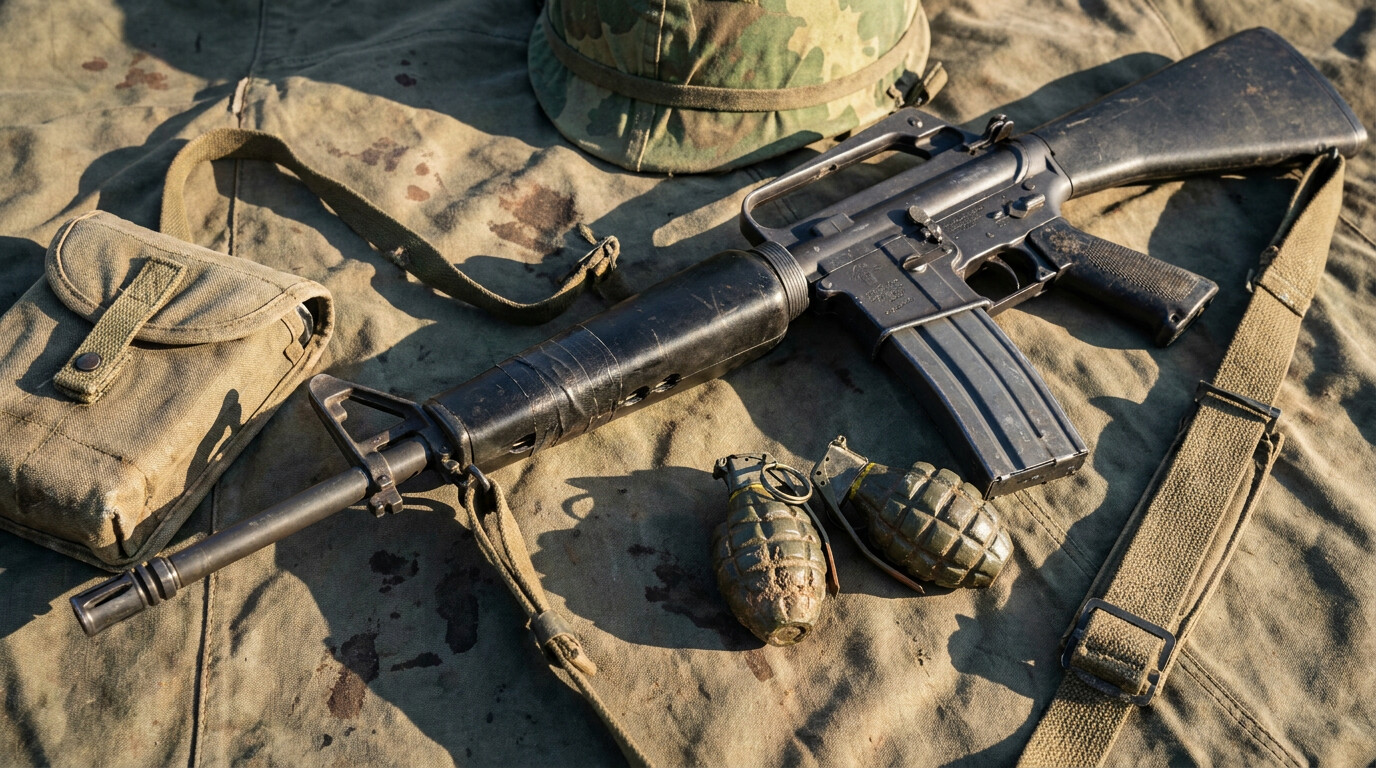
The standard American infantry rifle in Vietnam was the M16A1, a lightweight 5.56mm weapon that had replaced the heavier M14 in most units by 1968. The M16 could fire on full automatic, giving an individual soldier a significant short-range volume of fire, but its reputation in the early years of the war was mixed. Early production versions had suffered from fouling and jamming problems in the jungle environment — problems that contributed directly to soldier deaths in firefights. By early 1968 the Army had addressed the worst of these failures through modifications to the rifle and its ammunition, but soldiers with time in-country understood that constant maintenance was not optional. In a bunker-clearing assault, a rifle that jammed was a potentially fatal failure.
Hooper would also have carried M26 fragmentation grenades — the standard American hand grenade of the war, a roughly one-pound steel body packed with Composition B explosive and a serrated fragmentation coil designed to produce controlled burst on detonation. The effective casualty radius against exposed personnel was roughly fifteen meters, but inside a confined fighting position a grenade produced devastating effect. Getting one into a bunker opening — often a narrow aperture, sometimes partially protected by overhead cover — required getting close enough to have a reliable throwing angle, which in turn required surviving the approach. The M26 was the primary instrument of the bunker-clearing work that defined February 21.
On the other side, NVA soldiers in the prepared positions were almost certainly armed with a mix of Soviet and Chinese-supplied weapons. The AK-47 — and its Chinese-manufactured equivalent, the Type 56 — chambered for the 7.62x39mm intermediate cartridge, was the standard NVA individual weapon by 1968. In virtually every respect relevant to jungle warfare, it was a more reliable weapon than the early M16: it tolerated dirt, moisture, and neglect that would cause the American rifle to malfunction, and it was familiar to NVA soldiers who had trained and fought with it extensively. At the ranges where jungle firefights were actually decided — usually inside a hundred meters, often much closer — its performance was well matched to the ground.
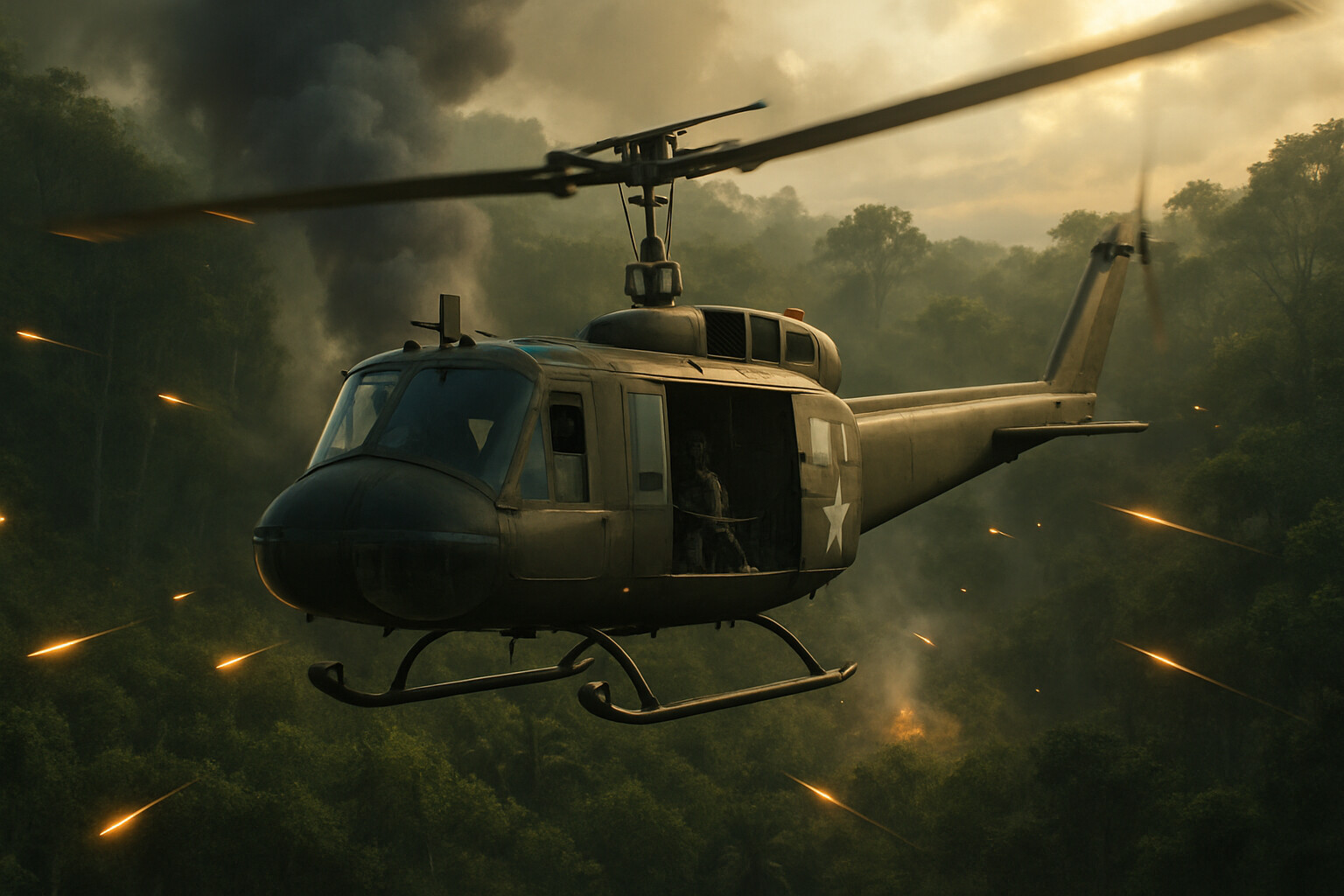
Rocket-propelled grenade launchers — the RPG-2 and RPG-7 — were widespread in NVA units by 1968. Originally designed as anti-armor weapons, they were used extensively in Vietnam against helicopters, light vehicles, and assault forces in the open. An RPG round detonating among soldiers crossing a waterway could produce multiple casualties in a single shot. The distinctive launch signature — a sharp backblast crack followed almost immediately by the warhead's approach — was one of the defining sounds of close-quarters fighting in this war.
Heavy weapons supporting the NVA positions likely included belt-fed light machine guns such as the RPD, a 7.62mm weapon firing the same cartridge as the AK and capable of sustained fire across open ground and natural chokepoints — exactly the approaches that Delta Company had to cross. These are documented as standard NVA equipment for this period and area; their specific presence at this engagement is inferred from the general record rather than confirmed in sources reviewed for this production.

For the Americans, fire support beyond individual weapons included the ability to call artillery and, when conditions permitted, tactical air support and helicopter gunships. Whether such support was employed on February 21, and to what effect, is a detail the available source material does not resolve. Given the proximity of friendly forces to enemy positions and the fluid nature of the close-quarters fighting, external fire support may have been constrained for much of the day.
---
The battle of Hue formally ended in early March 1968, after roughly four weeks of fighting. American and South Vietnamese forces retook the Citadel on February 25 — four days after Hooper's action — when ARVN troops raised the South Vietnamese flag over the last NVA-held section of the imperial palace. Clearing the last pockets of resistance in the surrounding countryside continued for days afterward.
The human cost of the battle was enormous by any measure. Estimates of NVA and Viet Cong killed in and around Hue during the battle run upward of five thousand, though figures vary by source. American and ARVN killed ran into the hundreds on each side. Civilian deaths were in the thousands, from the fighting itself and from the systematic killings carried out by NVA and Viet Cong forces during their occupation of the city.
The physical city was devastated. The ancient imperial buildings, the French colonial architecture, the university, the hospital, the ordinary streets of a functioning city — all had been fought through, shelled, burned, and broken in ways that took decades to partially repair and that left permanent marks on the city's landscape and the memory of its people.
For the soldiers who fought in and around Hue, the battle left its own marks. The 101st Airborne Division's operations in I Corps through the Tet period were among the most intense sustained combat the division saw in Vietnam. The 2nd Battalion, 501st Infantry's operations on and around February 21 were a small piece of a very large and very costly battle.
---
Joe Hooper survived February 21 and survived the war. His service in Vietnam became one of the most decorated combat records of any American soldier in the conflict, accumulating across multiple tours in a range of actions that extended well beyond the single day near Hue.
For the action on February 21, 1968, he was awarded the Medal of Honor, the highest military decoration the United States can bestow. The Medal of Honor citation for Hooper's action that day is a lengthy document by the standards of such citations, enumerating specific actions — the number of enemy positions destroyed, the casualties carried to safety, the number of times he was wounded — that together describe a day of sustained individual combat action his chain of command judged to have gone beyond what could be asked of any soldier. The full verbatim citation is available through the Congressional Medal of Honor Society and the U.S. Army Center of Military History; this narrative does not reproduce it in full and readers should consult those sources directly.
The medal was presented to Hooper by President Richard Nixon. The exact date of that ceremony has not been independently confirmed in sources reviewed for this production and is noted as a research gap.
Within the community of Medal of Honor recipients, Hooper's citation is noted for its unusual length and specificity — details that reflect an effort by the officers who submitted and approved the nomination to document, with precision, what had actually happened along that waterway on February 21. Medal of Honor nominations require extensive documentation, witness statements, and review at multiple levels of command before reaching the Secretary of the Army and the President for approval. The specificity of Hooper's citation suggests a nomination package built on multiple firsthand accounts from soldiers who were present.
Hooper continued to serve in the Army after Vietnam and completed additional tours. The years after the war were difficult, by the accounts that exist of his life in that period — a pattern documented in published biographical sources, though the specific details are not independently confirmed in primary source material reviewed for this production and are noted as requiring further research before detailed public presentation.
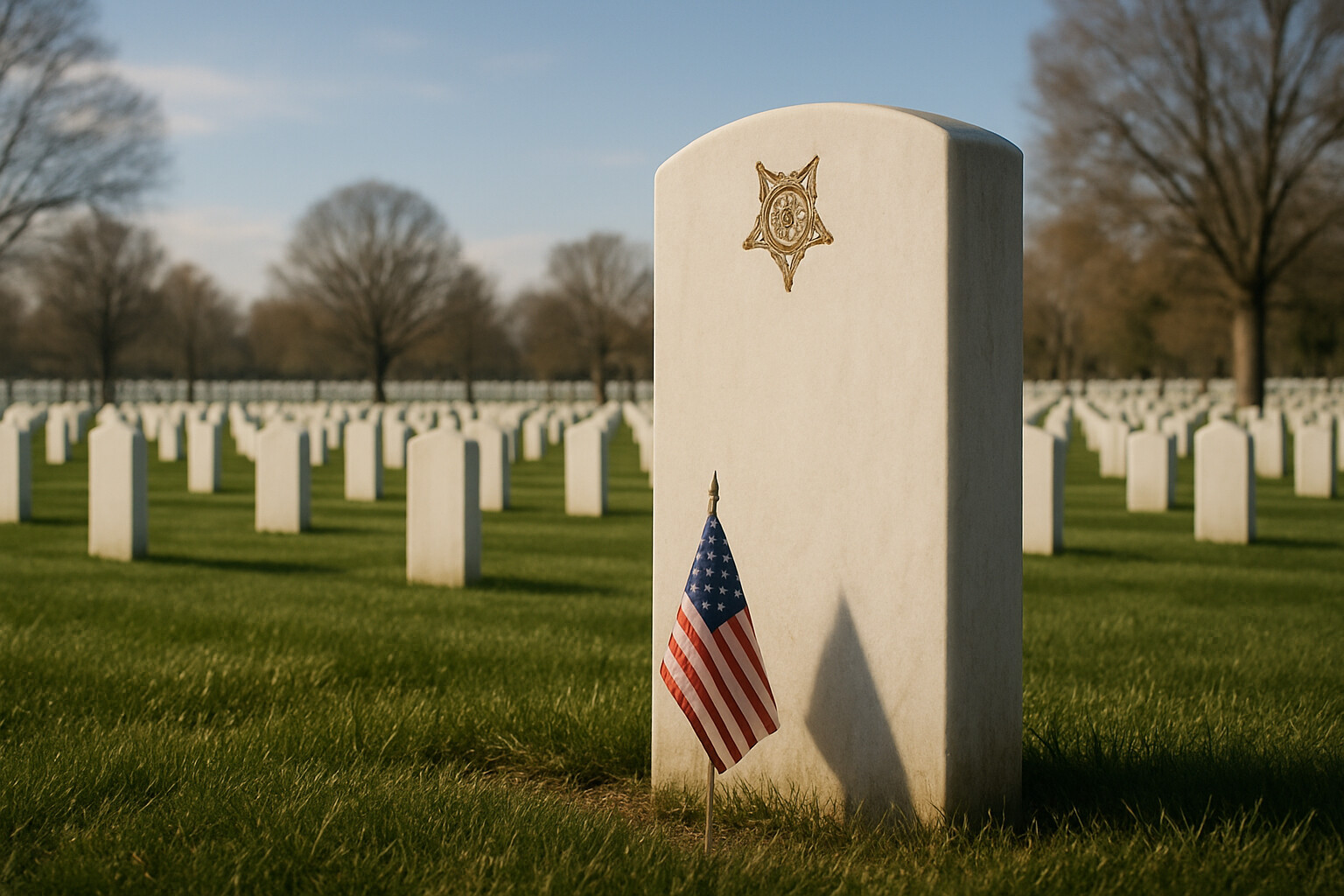
Joe Hooper died on May 6, 1979, in Washington, D.C. He was forty years old. He is buried at Arlington National Cemetery, Section 48.
---
The February 21 action near Hue exists now as a documented record: official citation, Army records, the bones of a nomination package assembled by men who were there. What the record cannot fully transmit is the texture of those hours — the specific weight of crossing a waterway under fire, the particular difficulty of carrying another man's body through ground someone is still shooting at, the physical demand of continuing to move and fight through wounds that would have stopped the majority of men who have ever worn a uniform.
The Medal of Honor is awarded in recognition of the fact that some actions exceed what military service can normally ask of a person. It is awarded rarely, and it is awarded on evidence. The evidence in Hooper's case was assembled by the men who saw what he did.
That is the record. What it describes, across the length of February 21, 1968, along a waterway near the city of Hue, is a man who crossed the river when the river was wrong, and who did not stop crossing until the work was done.
---
A note on sources and reconstruction: The core facts of this narrative — Hooper's unit, rank, the date and location of the action, the Medal of Honor award, and the general nature of his actions — are documented in official military records and the Medal of Honor citation. Tactical details about the terrain, enemy positions, the sequence of events, and the weapons employed are reconstructed from the citation, from published histories of the Battle of Hue, from unit histories of the 101st Airborne Division during the Tet Offensive, and from established documentation of standard weapons and equipment carried by both sides in early 1968. The exact number of enemy positions destroyed and personnel engaged comes from the official nomination package and witness statements; these figures represent the best official accounting rather than independently audited field counts. Specific details about conversations, the inner experience of individual soldiers, and moment-by-moment decisions not recorded in primary source documents are not presented as fact in this narrative. Where the record is clear, the story follows it. Where it is not, this account says so.