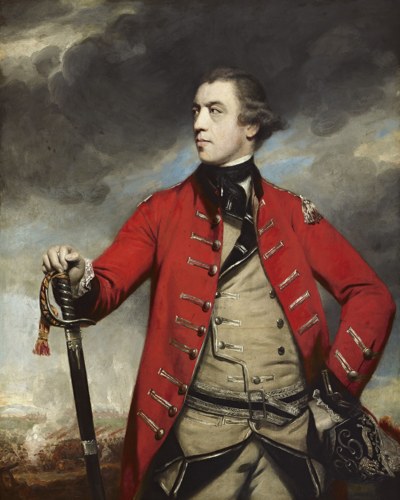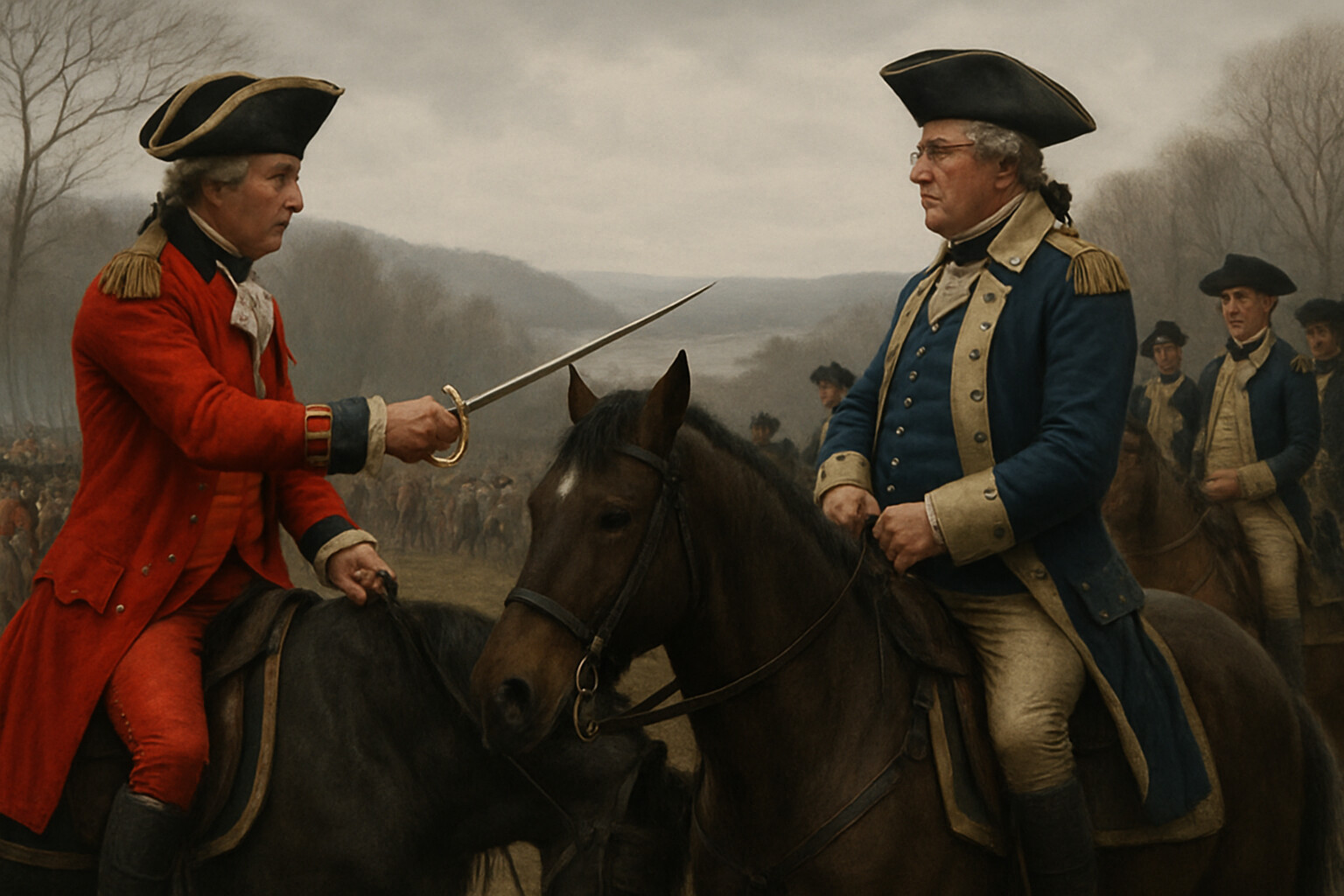
The morning of October 17, 1777 was cold along the Hudson River—the kind of autumn sky, typical of upstate New York in that season, that presses down flat and gray over the hills. On the heights above Saratoga, nearly six thousand British and German soldiers stacked their muskets, furled their colors, and walked out onto an open field to surrender. Their commander, Lieutenant-General John Burgoyne, wore a brilliant scarlet coat. He had dressed for the occasion. So, in a different way, had the American general waiting to receive him.
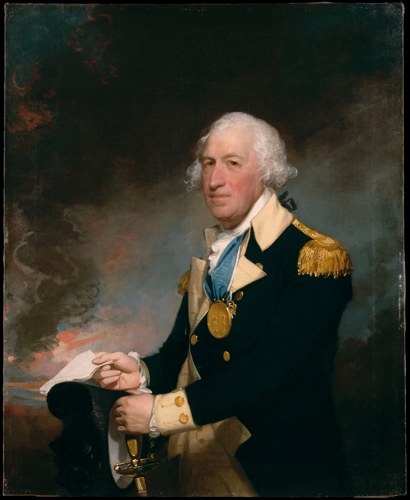
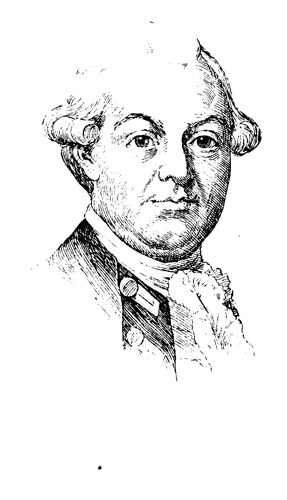
Horatio Gates rode forward to accept the surrender. He was fifty years old, heavyset, wearing spectacles that had already earned him the nickname 'Granny Gates' among soldiers who found his cautious manner amusing—until they saw what that manner had produced. What it had produced was this: the largest capitulation of a British army in the eighteenth century, the collapse of a strategy designed to split the American states in two, and the event that would bring the Kingdom of France openly into the war on the American side. The Revolution, which had spent two years lurching from one near-disaster to the next, had just passed through a door it would not close again.
To understand how that morning arrived, it is necessary to go back to the beginning of the campaign—to a plan that looked sound on a map in London and came apart in the forests of New York.
---
The British strategy for 1777 had a logic that was difficult to argue with in theory. The American rebellion had survived two years largely because the colonies could reinforce each other by land. Cut the continent at the Hudson River—hold New York City in the south, drive a column south from Canada through Lake Champlain and the upper Hudson Valley, meet somewhere in the middle—and New England, the rebellion's political and financial engine, would be severed from the rest. The war, London reasoned, would strangle itself.
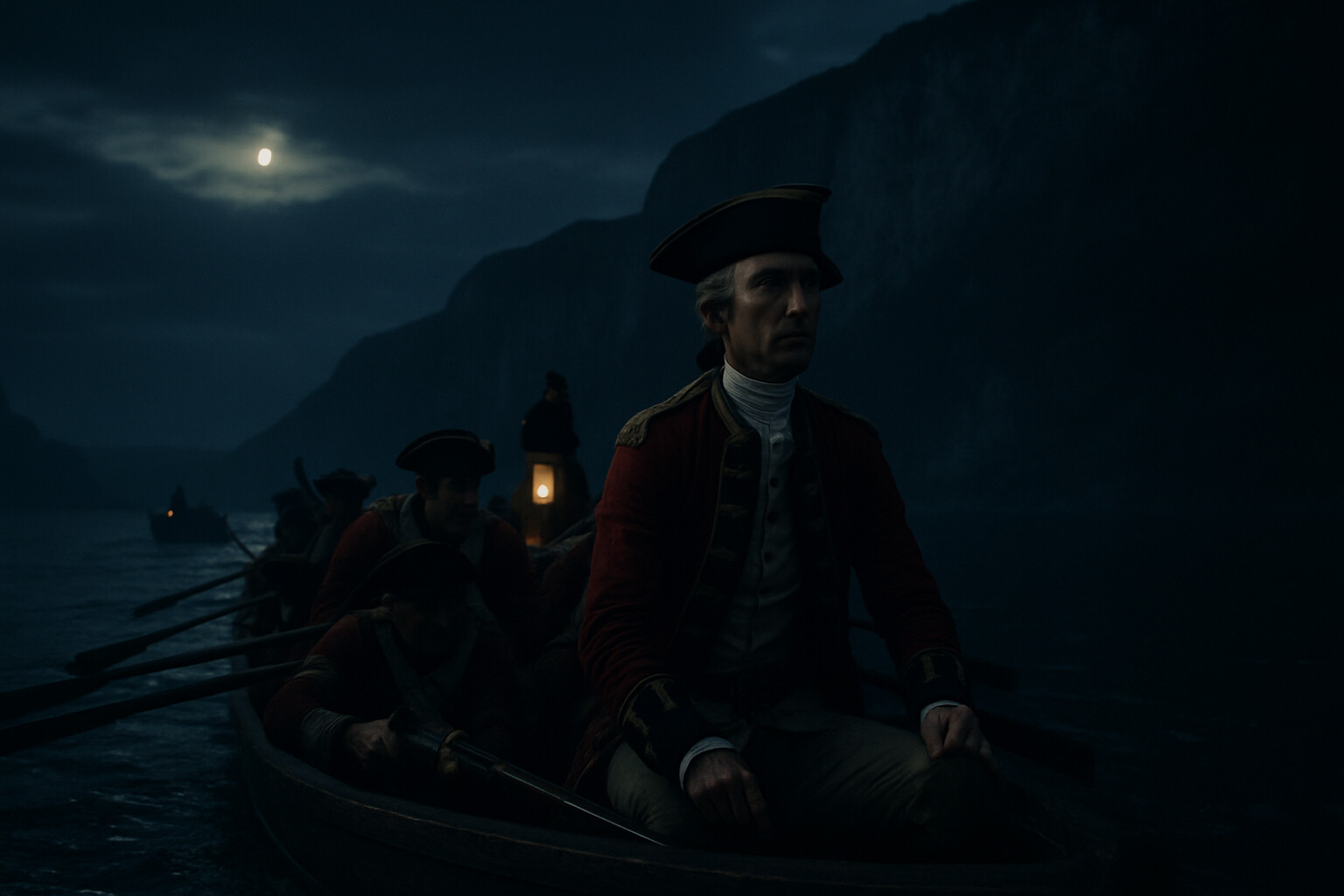
The man chosen to drive the southern column was Lieutenant-General John Burgoyne, a member of Parliament, playwright, and professional soldier who had lobbied personally for the command. He left Canada in June 1777 with roughly eight thousand troops: British regulars, German mercenaries contracted from the principalities of Brunswick and Hesse-Hanau, Loyalist provincials, Canadian militia, and a force of Native American warriors whose alliance Burgoyne would find difficult to control. His artillery train was enormous by the standards of wilderness campaigning—perhaps the largest ever assembled for operations in that terrain. He carried enough heavy guns to reduce European fortifications, which was precisely the wrong tool for what lay ahead.
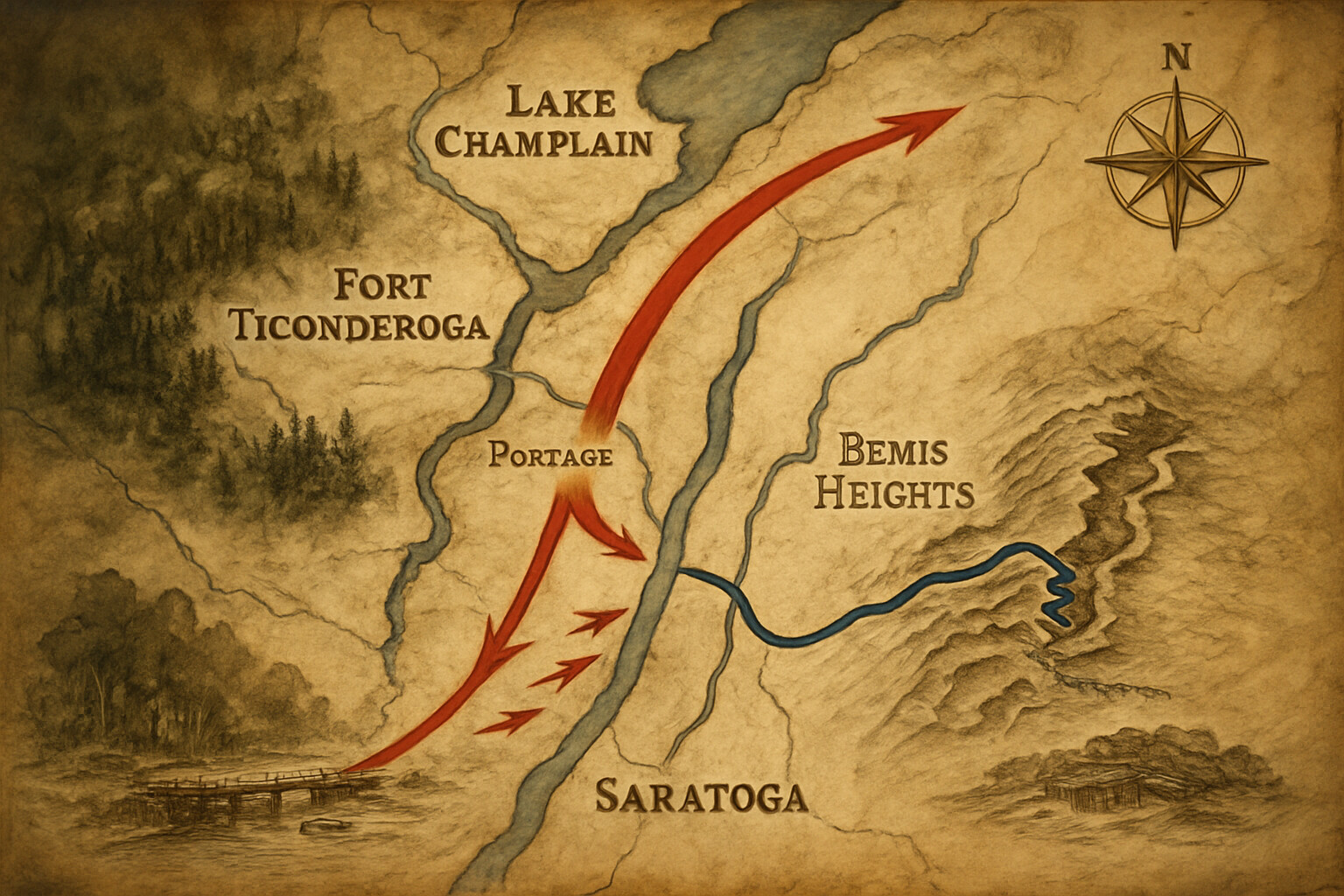
The early stages went well enough to encourage overconfidence. Fort Ticonderoga, the stone fortress at the narrows between Lake Champlain and Lake George, fell on July 5 when British engineers dragged artillery onto a commanding height the American garrison had left undefended. The American commander, Major-General Arthur St. Clair, evacuated under fire and retreated south, ceding a position many Americans had considered impregnable. The news struck the Continental Congress like a blow. General George Washington, fighting his own grinding campaign in Pennsylvania, could spare almost nothing for the north. The defense of the Hudson Valley fell to the Northern Department of the Continental Army, and in August 1777, Congress replaced St. Clair's commander, Philip Schuyler, with Horatio Gates.
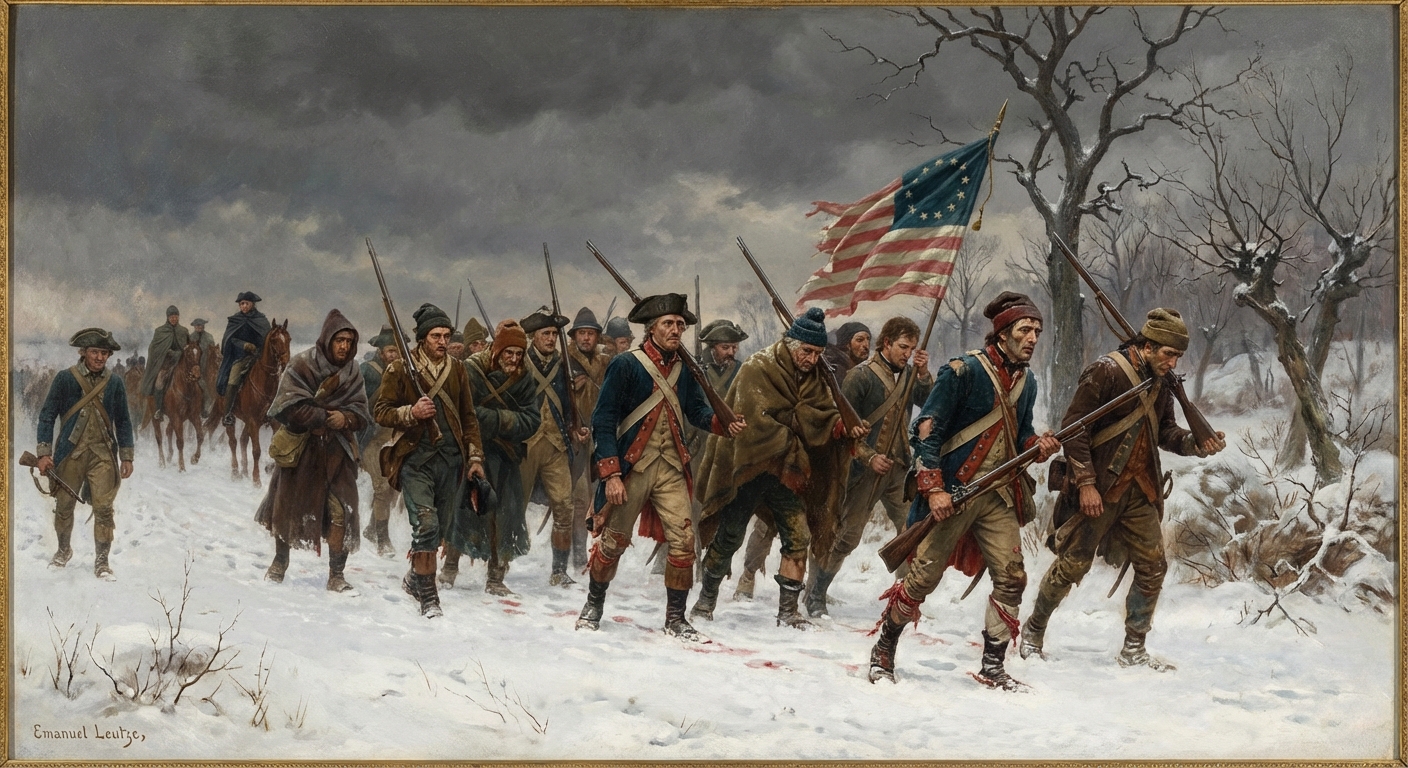
The choice was political as much as military. Gates had allies in Congress; Schuyler had powerful enemies. But Gates also brought genuine competence in organization, logistics, and defensive positioning—precisely what the situation required. He inherited an army that had been retreating for weeks, short of almost everything, and uncertain whether it could stop anything. He also inherited a Polish-born military engineer of extraordinary talent.
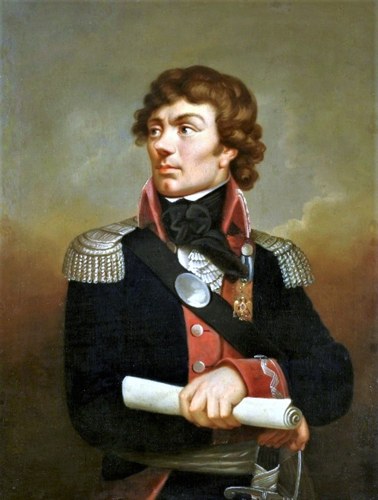
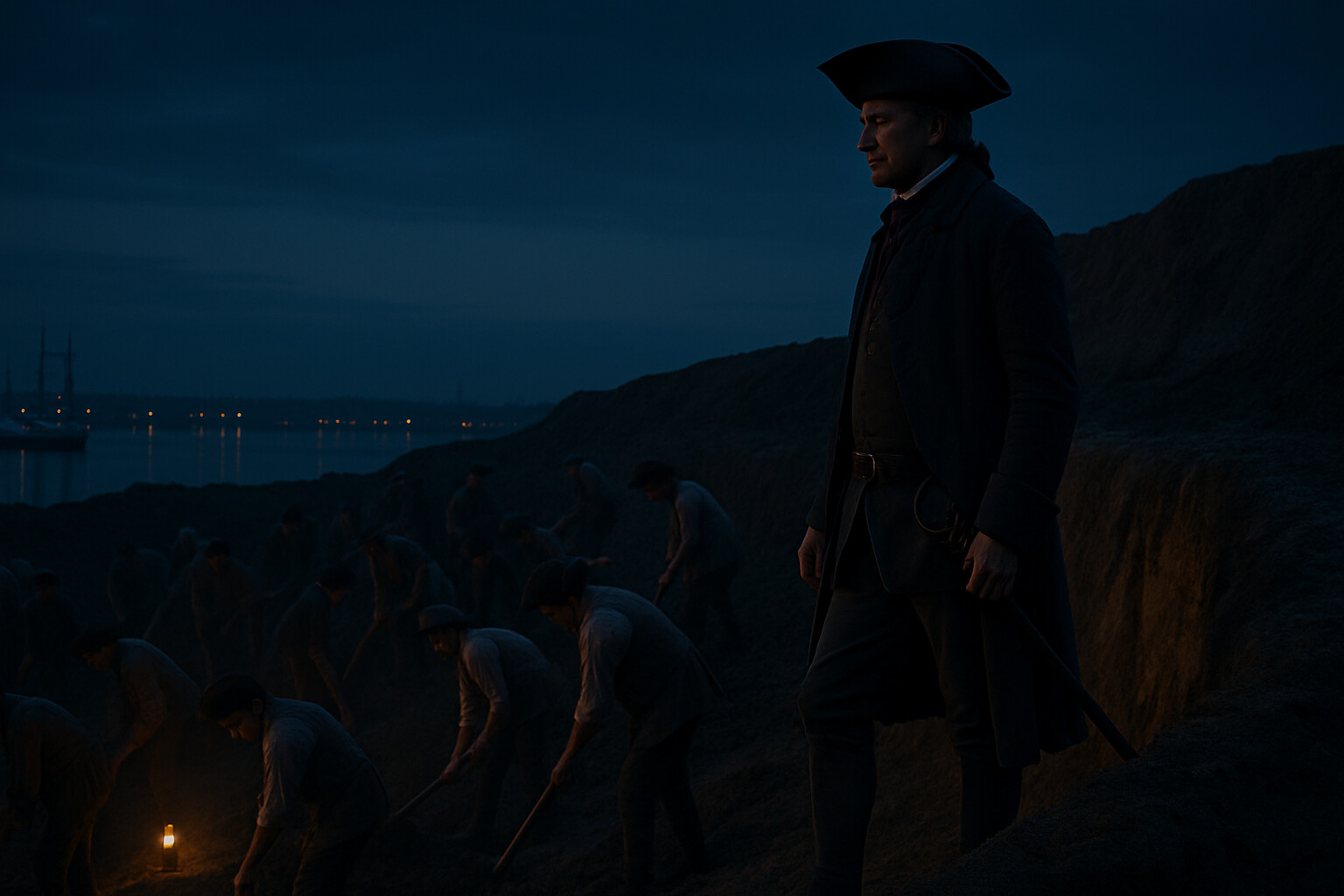
Thaddeus Kosciuszko had arrived in the American service the previous year, an officer trained in French military engineering who brought with him an instinctive reading of terrain that would prove decisive. In late August 1777—the precise timeline of his reconnaissance should be verified against his correspondence or Gates's orders if available—Kosciuszko scouted the ground south of Saratoga and identified a position that changed the campaign: Bemis Heights, a plateau on the west bank of the Hudson, roughly three miles south of Saratoga. The bluffs dropped sharply to the river on the east, compressing the road that ran along the water into a narrow corridor. The ground to the west rose into rolling, forested hills cut by ravines and farm clearings. An army properly placed on those heights could force any southbound column to either assault fortified positions on ground of the defender's choosing or attempt a flanking movement through dense woodland where artillery was nearly useless and supply wagons could not move. Kosciuszko laid out the fieldworks. Gates put the army into them and waited.
Burgoyne's situation, meanwhile, had been deteriorating since July. The further south he marched, the longer his supply line stretched back to Canada—a line already fraying under American militia and ranger activity. He had expected to resupply partly from the countryside and from loyal inhabitants who, London had assured him, would flock to the royal standard. They did not flock. A foraging expedition he sent east toward the Connecticut River settlements in August was destroyed at Bennington, Vermont, on August 16, by a force of New England militia under Brigadier-General John Stark. Burgoyne lost roughly nine hundred men killed, wounded, and captured in a single afternoon—nearly twelve percent of his effective strength—and gained almost nothing. The promised cooperation from Major-General William Howe, commanding British forces in New York City and nominally expected to coordinate with the northern column, never materialized. Howe had taken his army by sea to attack Philadelphia instead. Burgoyne pressed south anyway, committed to a campaign that was already outrunning its own foundation.
By mid-September, he had crossed to the west bank of the Hudson above Saratoga, looking south toward Gates's position on Bemis Heights. His intelligence about the American lines was poor. The ground ahead was heavily wooded and broken. He knew he had to move.
---
September 19, 1777: the Battle of Freeman's Farm.
Burgoyne advanced in three columns. His intention was to probe the American left flank—the open western ground—while his right column kept close to the river road and his center drove through the cleared fields around a farm owned by a man named John Freeman. The morning was bright and cool. Leaves were beginning to turn.
On the American side, Gates's instinct was to remain in the prepared works and let the British come to him. His subordinate, Brigadier-General Benedict Arnold, pressed for going out to meet the enemy in the woods—where Burgoyne's numbers, artillery, and formations would count for less, and where American riflemen and light infantry could do maximum damage. The dispute between the two men was sharp and would grow sharper in the weeks ahead. On September 19, Gates allowed a compromise: American forces would advance into the woods north of the camp to contest the ground, but not abandon the defensive position entirely.
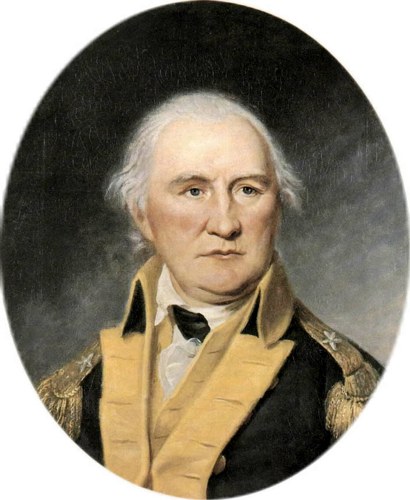
The man who led that advance was Colonel Daniel Morgan, and the unit he commanded was one of the most effective light infantry formations the Continental Army would produce during the entire war.
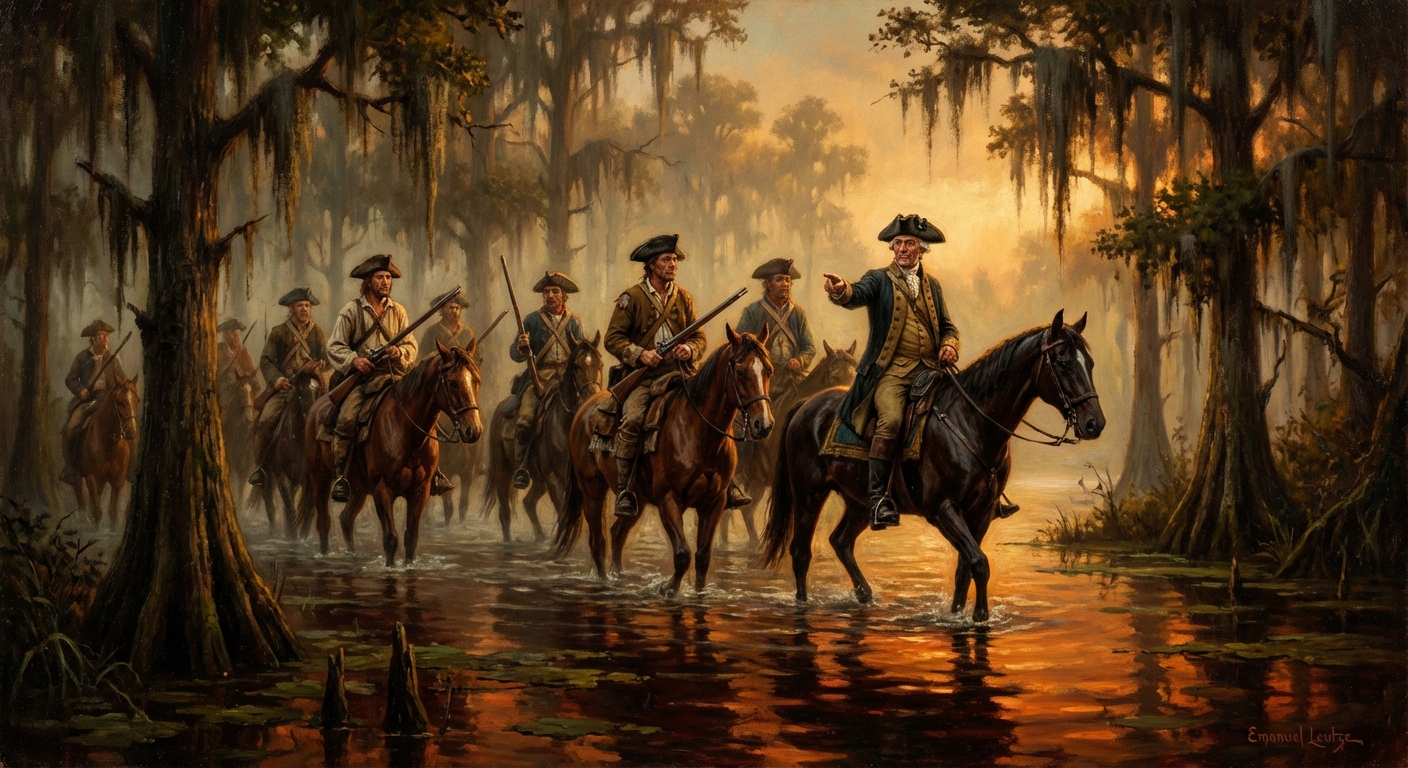
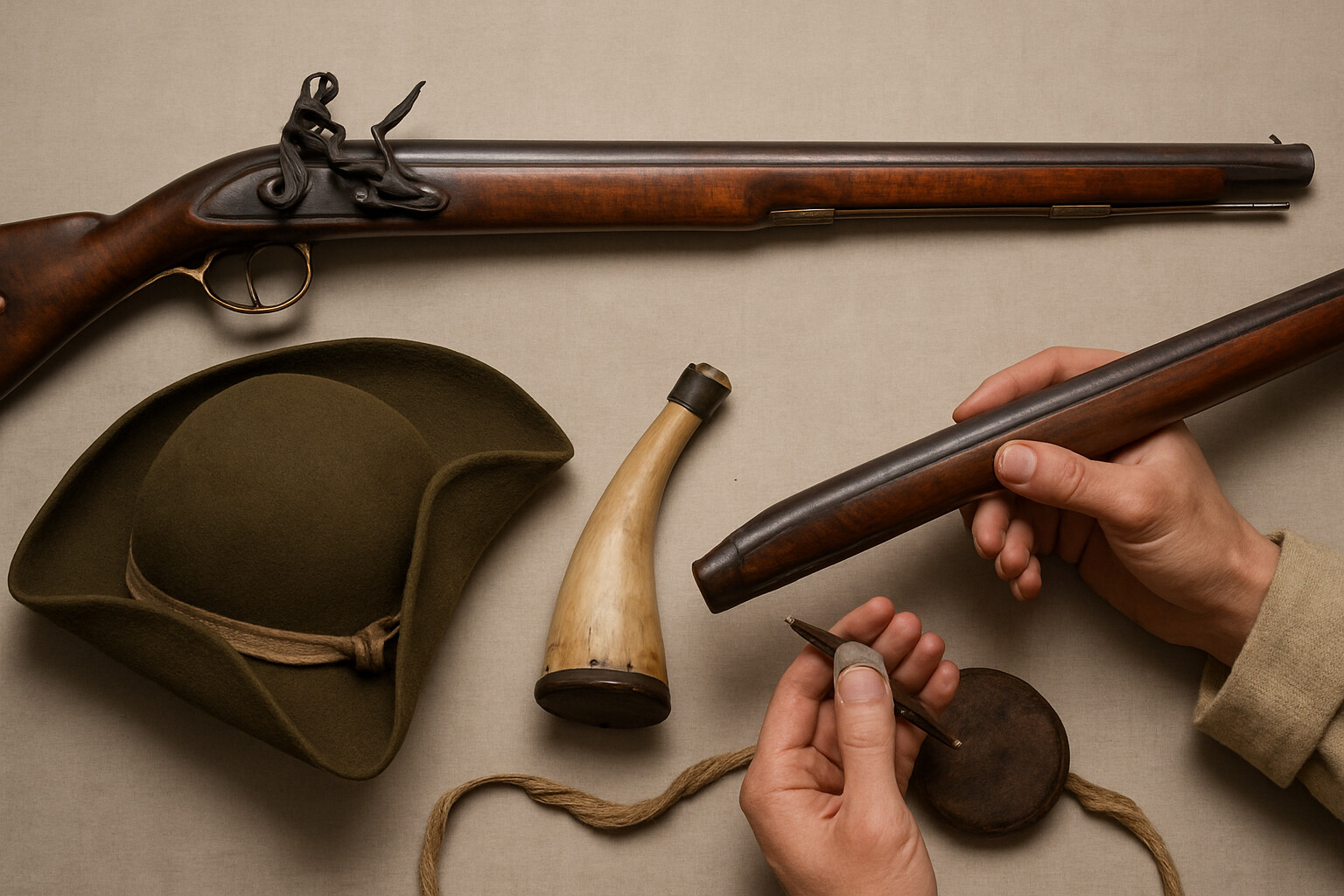
Morgan's Rifle Corps—sometimes called the Corps of Rangers—had been assembled on Washington's orders specifically for the northern campaign. Morgan, a Virginia frontiersman, was a natural combat commander with an instinctive understanding of irregular tactics. His roughly six hundred riflemen carried the Pennsylvania long rifle: a weapon capable of placing a ball accurately at ranges that left British officers exposed at distances they were not accustomed to treating as dangerous. Where a British soldier armed with the Short Land Pattern musket—the Brown Bess—might expect to hit a man-sized target reliably at perhaps sixty to eighty yards, a skilled rifleman with the Pennsylvania long rifle could achieve the same at two hundred yards or more under good conditions. Morgan's men used that range advantage with disciplined effect, targeting officers and artillery crews—the human systems that made British tactical formations function.
The battle that developed in the fields and tree lines around Freeman's Farm on September 19 was vicious, confused, and inconclusive in terms of ground held, but it was tactically significant in ways that mattered. American riflemen and Continental infantry pressed the British center hard through the afternoon, at several points nearly breaking it. British artillery—six-pounder field pieces firing canister and roundshot into the American formations—held the center farm clearing at heavy cost to both sides. British reinforcements from the German right column, sent across by Burgoyne, stabilized the line as light failed. The Americans withdrew to their works. Burgoyne held the field.
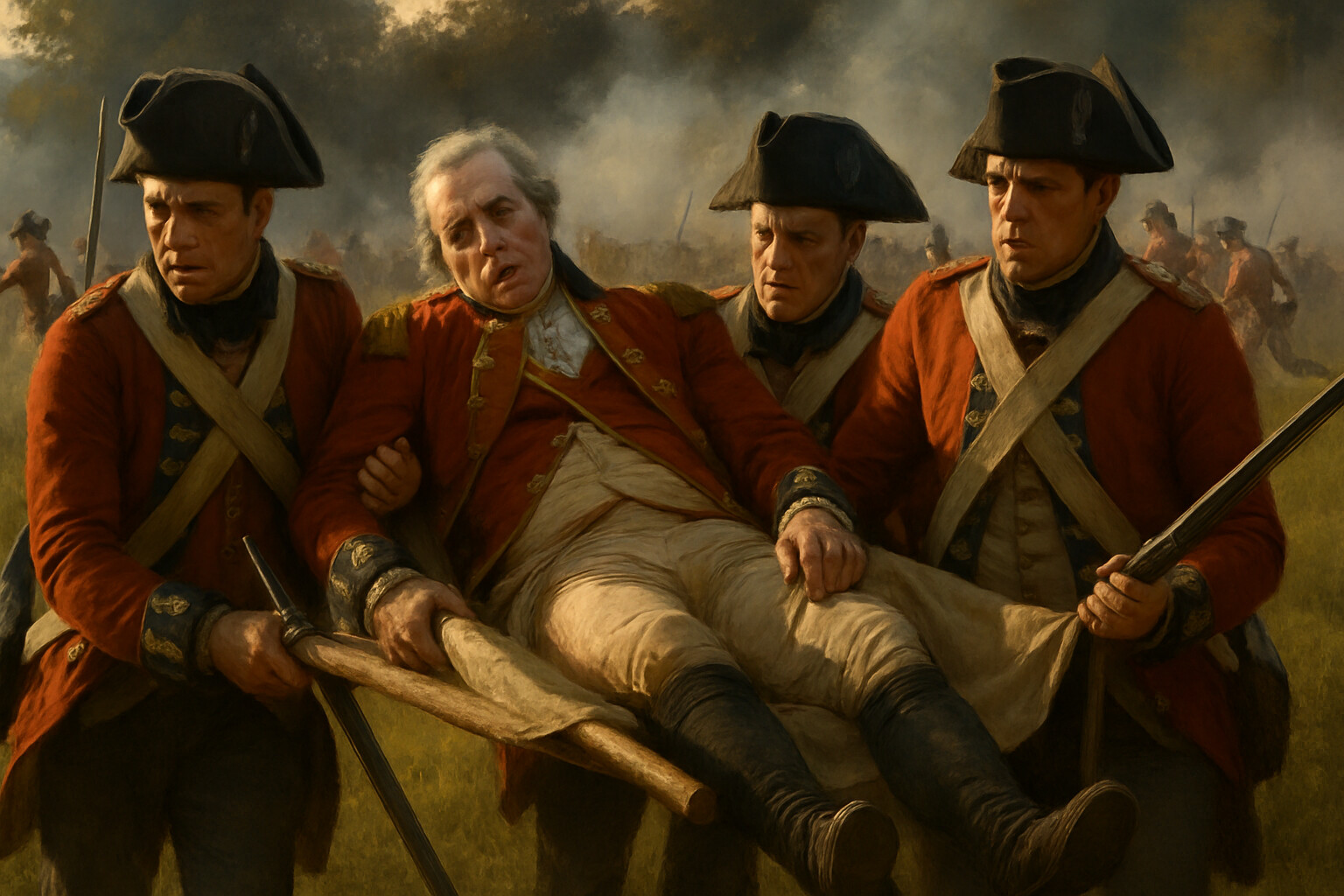
The British lost between five and six hundred men killed and wounded at Freeman's Farm—a severe butcher's bill for a single afternoon's engagement that gained perhaps half a mile of ground. American casualties were somewhat lighter, with estimates ranging from approximately two hundred eighty to three hundred fifty killed and wounded; neither figure has been established with certainty from surviving records, and the secondary sources vary. What is certain is that Burgoyne could not sustain that exchange rate. Gates could replace his losses from militia and Continental reinforcements still arriving. Burgoyne could not.
For the next eighteen days, Burgoyne waited. He sent dispatches south to New York City asking for relief—a force moving up the Hudson might compel Gates to divide his army or fall back. A British column under Major-General Henry Clinton did eventually move north from the city in early October, capturing American forts in the Hudson Highlands. But Clinton came too late and advanced too slowly to affect what was already unraveling. Burgoyne, watching his provisions dwindle and his Native American and Loyalist auxiliaries melt away into the forest, made his decision. He would attack.
---
October 7, 1777: the Battle of Bemis Heights.
Burgoyne sent approximately fifteen hundred of his best troops—British light infantry, grenadiers, and German regulars under Brigadier-General Simon Fraser and Major-General Friedrich von Riedesel—to probe the American left flank again. They advanced into a cleared wheat field about three-quarters of a mile west of the river road and halted, apparently uncertain of what came next. It was approximately two in the afternoon.
Gates ordered an attack from his headquarters at the Neilson farmhouse. Morgan's riflemen swept around the British right. General Enoch Poor's brigade hit the British left—the grenadier battalions—frontally and in the flank. The British position, stretched thin across open ground with wooded ravines on three sides, began to collapse almost immediately.
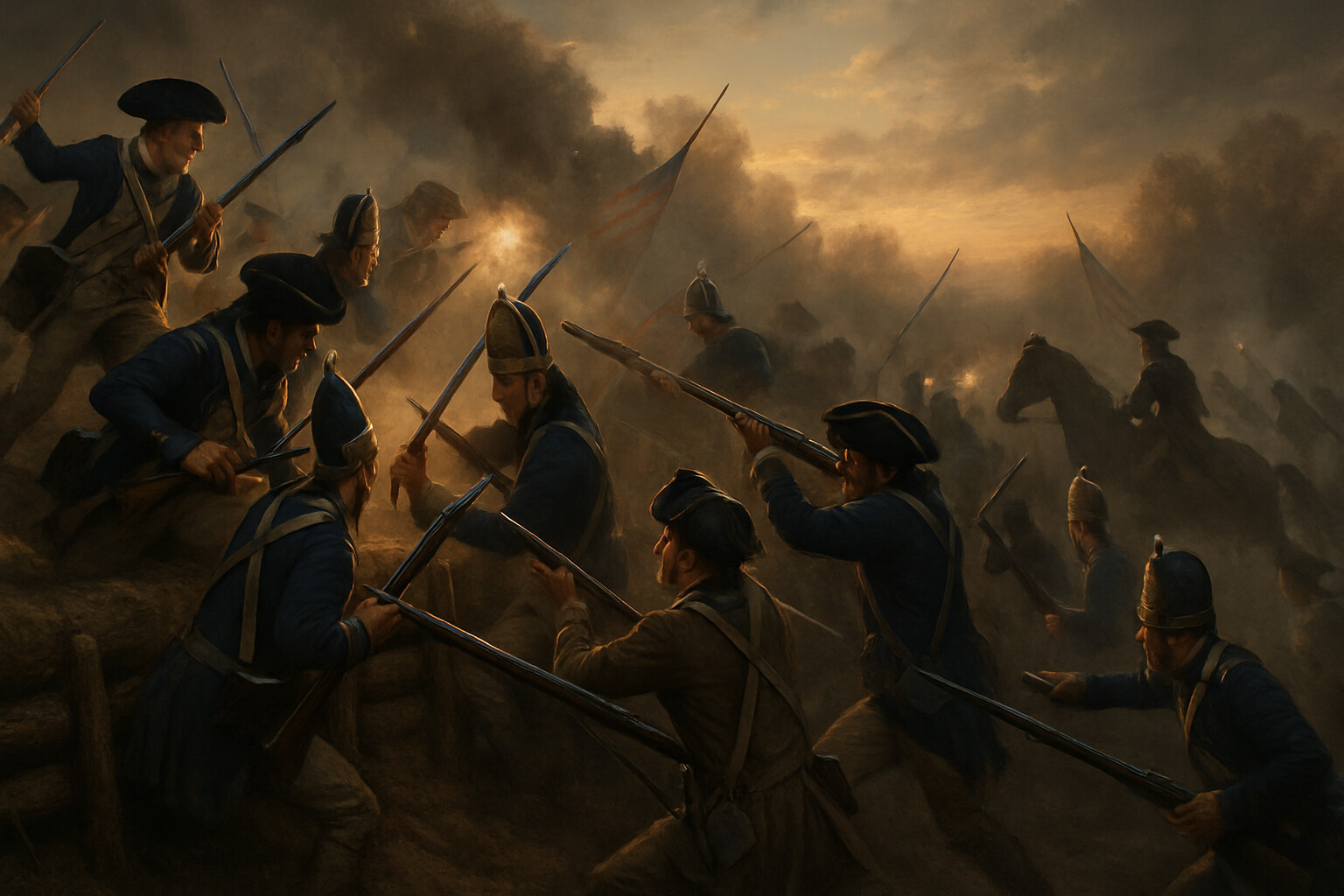
Brigadier-General Simon Fraser was mounted in the open, attempting to rally his troops. His presence was visibly steadying a wavering line. According to later accounts and pension testimony—material that is plausible tradition rather than confirmed by a contemporary primary document—Morgan directed his best marksmen toward the mounted officer. The attribution cannot be fully verified from records written in 1777, and this detail should be treated accordingly. What is established: Fraser was struck by a rifle ball and carried from the field. He died the following morning. His loss broke what remained of British cohesion on the right.
The fight that followed was fast, violent, and decisive. The British fell back toward their fortified camp at the Balcarres Redoubt. The German troops on the right flank, holding a position called the Breymann Redoubt, were hit from multiple directions. And here the story reaches its most contested and dramatic passage.
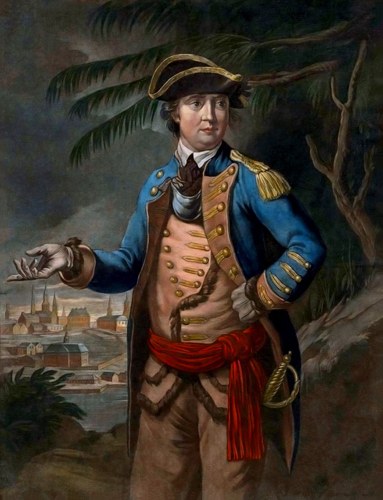
Benedict Arnold had been relieved of his command. His running dispute with Gates had finally erupted into an open breach, and Gates had stripped him of any formal role in the army. Arnold had no authority over any troops on October 7. By multiple accounts, he had been drinking. He rode onto the battlefield anyway.
What happened next is documented in outline by multiple witnesses but disputed in its details and weight. Arnold rode along the American lines, rallied troops, led or participated in charges, and eventually appeared at the assault on the Breymann Redoubt with a force that included Morgan's riflemen and Continental infantry. Precisely how much command authority he exercised versus opportunistic participation is a question historians have not resolved, and accounts differ in emphasis. The redoubt fell. German Colonel Heinrich von Breymann was killed in the fighting—shot, according to some accounts, by his own men as he tried to prevent them from fleeing, though the circumstances of his death are disputed in the sources and not definitively established. Arnold's horse was shot from under him and fell, pinning Arnold's leg and breaking it. The wound ended his participation in the battle.
The American line had broken through both British flanks. Burgoyne retreated north toward Saratoga, leaving behind his camp, his baggage, his wounded, and a campaign that was finished.
The ten days between October 7 and October 17 were an endgame. Burgoyne pulled his surviving force—now roughly five thousand effective troops—north to Saratoga, where they were quickly surrounded by an American army that had grown to perhaps twelve thousand men as militia from across New England and New York continued to arrive. The British dug in. They had perhaps a week's food. Clinton's relief column was still more than a hundred miles away and moving too slowly to matter. Burgoyne opened negotiations.
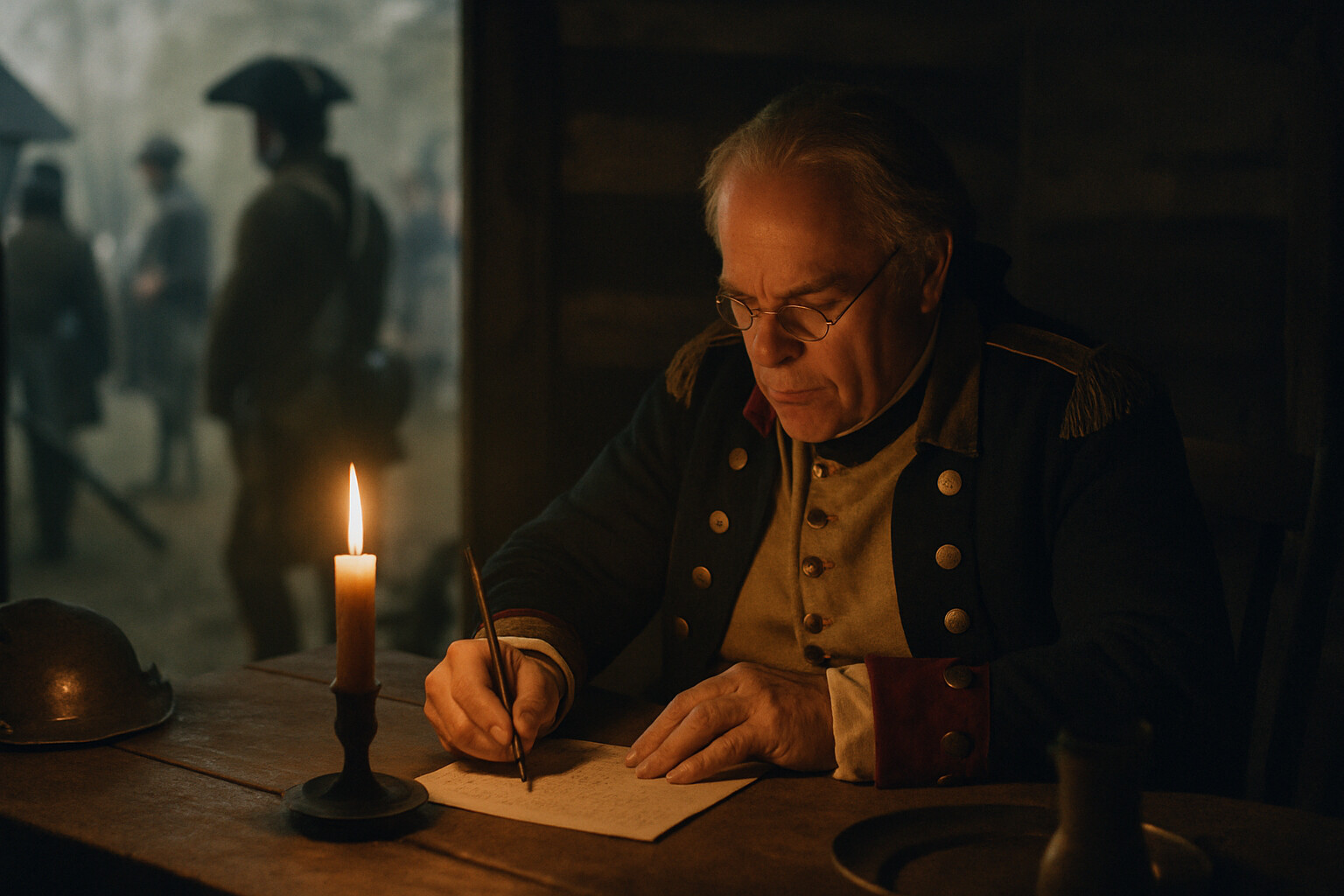
The resulting agreement was called the Convention of Saratoga—not a formal capitulation but a negotiated instrument under which Burgoyne's army would surrender their arms, march to Boston, and be transported to England on the condition they not serve again in North America. Congress ultimately declined to honor those terms. The diplomatic and strategic situation had shifted, and there were sound reasons not to release nearly six thousand trained soldiers back to Britain even for service elsewhere. But the surrender itself was complete and unambiguous. On October 17, 1777, on the ground above the Hudson River, a British army laid down its weapons.
Five thousand seven hundred and ninety-one officers and men surrendered. Burgoyne handed his sword to Gates.
---
The accounting of what the campaign cost each side is not simple, and surviving records have enough gaps to require caution. At Freeman's Farm, British losses were in the range of five to six hundred; American losses were approximately two hundred eighty to three hundred fifty killed and wounded, though these figures vary across secondary sources. At Bemis Heights, British and German losses were estimated at around six hundred killed, wounded, and captured in the immediate engagement, with total campaign losses from disease, desertion, battle, and earlier actions running considerably higher. American casualties on October 7 were lighter—perhaps one hundred fifty to two hundred killed and wounded, a figure that reflects both the advantage of attacking a depleted, overstretched force and the speed with which the British position collapsed. All figures should be understood as approximations.
The human cost on the British and German side had been accumulating for months before October 7. The Bennington expedition alone had cost Burgoyne close to a tenth of his army. By the time he reached Saratoga, he was commanding a force exhausted by weeks of movement through difficult terrain, short of food, short of ammunition, and acutely aware that no relief was coming.
The wounded had names. Fraser, the British general, dictated final messages from his deathbed and asked to be buried in a redoubt on the heights—a wish his officers honored under American fire the following night. Arnold's shattered leg was incompletely set and improperly healed, leaving him with a limb shorter than the other for the rest of his life—a physical reminder of the battle that would precede, by only three years, his defection to the British and the treason that would define his historical memory. The ordinary soldiers on both sides—the grenadiers shot down in the wheat field, the Continental infantrymen who fell in the tree lines around Freeman's Farm, the German musketeers who died in the redoubts—left less legible traces. Casualty returns survive for some units and not others. Many of the dead were buried in mass graves, later unmarked.
---
Gates wrote his official report to Congress after the surrender, framing the campaign in terms of the larger strategic picture. He was right to do so. The military result was extraordinary—an entire British field army destroyed—but the political consequence was the thing that made Saratoga the pivot point of the Revolution.
The French government had been watching the American war with intense interest since 1775. France and Britain had fought four major colonial wars in the previous century. French agents had been supplying the Continental Army covertly since early 1776—the network of support running through the merchant firm Rodrigue Hortalez et Cie, organized by the playwright Beaumarchais, had kept American armies in muskets, artillery, and clothing when the Continental Congress could not. But open French entry into the war required a demonstration that the Americans could fight and win against British regulars in a sustained campaign. Saratoga was that demonstration.
News of the surrender reached Paris in early December 1777. The French foreign minister, the Comte de Vergennes, who had been pressing for open intervention for months, now had the argument he needed. On February 6, 1778, France and the United States signed two treaties: a commercial agreement and a Treaty of Alliance—the first formal military alliance in American history. French recognition transformed the war from a colonial rebellion into a global conflict. British strategic attention fractured across North America, the Caribbean, India, and the English Channel. The dynamics that would eventually produce Yorktown—French naval power, French troops, coordinated strategy—were set in motion on a field above the Hudson River in October 1777.
Gates's reputation would not survive the war untouched. In August 1780, commanding American forces in the south, he was routed at the Battle of Camden, South Carolina, by British forces under Lord Cornwallis in one of the most complete American defeats of the war. His conduct at Camden—he was well to the rear on horseback when his army was destroyed—was widely criticized, and he was relieved of command. A court of inquiry was requested and eventually dropped as the war wound down. He never held another field command. After the war he freed the people he had enslaved, moved to New York, and served one term in the state legislature before his death in 1806.
Benedict Arnold's wound from Bemis Heights, the broken leg pinned under a fallen horse, was the last clean chapter of a complicated life. His role in the assault on the Breymann Redoubt was widely acknowledged even by those who disliked him. Then, in 1780, his negotiation to betray West Point to the British was discovered. He defected to British lines, received a British brigadier's commission, and spent the rest of his life in British service and exile. He died in 1801. The monument at Saratoga commemorating his role in the battle pointedly omits his name. It shows only a boot—a reference to his shattered leg—and an inscription noting the rank he held on that field. It is a peculiar and historically self-conscious artifact: a memorial to an action without an actor.
Daniel Morgan returned from Saratoga to continued service and eventual independent command, directing perhaps the most precisely executed small-scale engagement in American military history at the Battle of Cowpens in January 1781. Thaddeus Kosciuszko remained with the Continental Army, designed the fortifications at West Point, and after the Revolution returned to Europe, where he led a national uprising in Poland and became one of the most celebrated military figures of the late eighteenth century. John Stark, whose militia victory at Bennington had weakened Burgoyne before either Freeman's Farm or Bemis Heights, was eventually awarded a Major-General's commission. He lived to ninety-four.
Burgoyne returned to England under parole, faced parliamentary inquiry, and never held another active command. He returned to Parliament and to playwriting—his 1786 comedy The Heiress was a London success. He died in 1792. His campaign became a standard case study in strategic overextension: a plan that assumed friendly populations, reliable supply, prompt cooperation from other commanders, and an enemy unable to adapt. None of those assumptions held.
The battlefield survives. Saratoga National Historical Park preserves most of the ground where the fighting occurred: the Freeman farm clearing, the ravines, the earthworks, the Neilson farmhouse where Gates had his headquarters, the ridgeline where the British camps stood. The ground is quieter than it was in 1777 but not entirely changed. The Hudson still runs below the bluffs. In autumn, the leaves turn the same colors they turned when Burgoyne looked south and made his last decision to attack.
The records that anchor this account are extensive by the standards of eighteenth-century warfare: British regimental returns, American brigade reports, Gates's correspondence with Congress, Burgoyne's own narrative published in 1780—A State of the Expedition from Canada, which is a self-defense as much as a history and must be read as such—pension records filed by surviving soldiers, and the work of subsequent historians who have cross-checked and challenged the primary documents across two and a half centuries. Casualty figures remain approximate. The precise sequence of events during the assault on the Breymann Redoubt is disputed in several details. The question of how much credit belongs to Gates's deliberate defensive strategy versus Arnold's aggressive battlefield action has generated historical argument since October 1777 and shows no sign of resolution. Both things were probably true: Gates built the trap, and Arnold helped spring it.
What is not disputed is the outcome. An army was destroyed. A strategy failed. A war was transformed. The gray autumn morning on the heights above the Hudson River was one of the decisive mornings of the eighteenth century, and the men who stood on it—American and British and German, officer and private, alive and dead—shaped a world they did not fully understand they were shaping.
That is usually how it works.