HomeStoriesThe EdgeWeaponsBattlesPeopleWarbirdsAbout
Declaration signers gathered by candlelight
← Stories

Philadelphia - July 1776

Treason in Ink

The men who signed their death warrant

The Declaration was not just a founding document. It was evidence. Fifty-six men put their names beneath an accusation against a king and pledged lives, fortunes, and sacred honor in public.

Updated: Price They Paid story graphics added
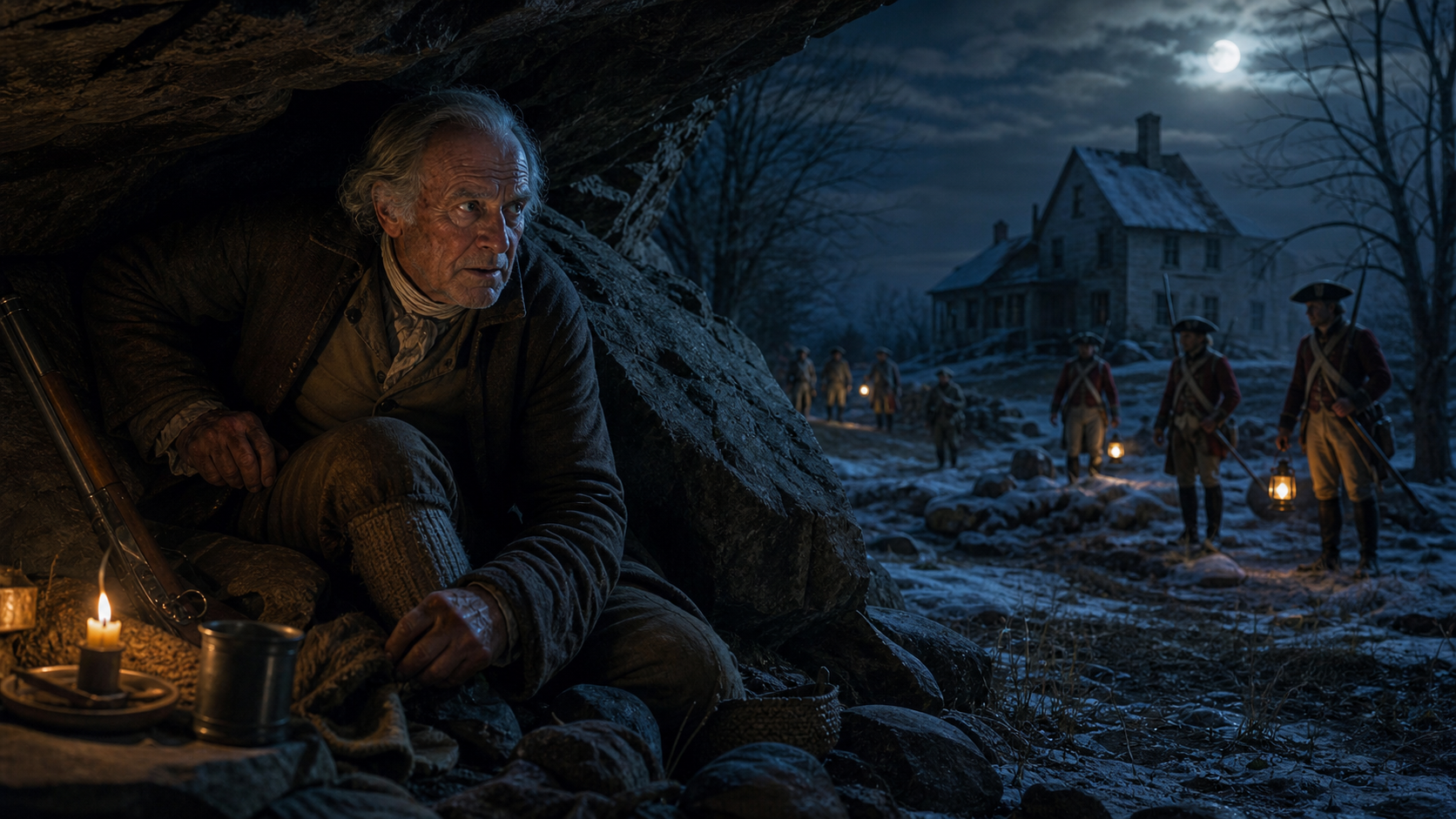
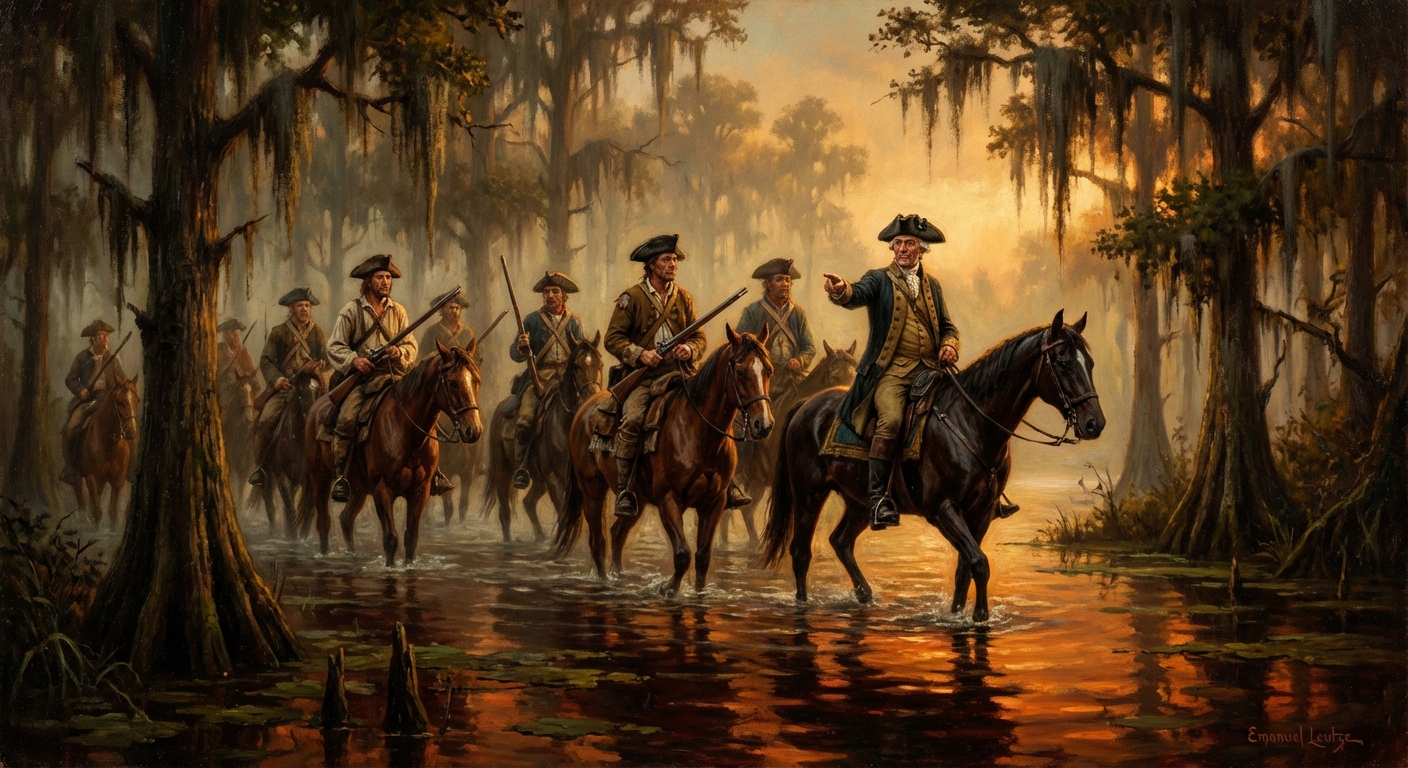
John Hart hiding in the New Jersey wilderness while British patrols search nearby Start with John Hart: forced from home

The Price They Paid

When the War Reached Their Homes

John Hart hiding in the New Jersey wilderness while British patrols search nearby
John Hart. The careful record says British pressure forced Hart from home and into the wilderness; local tradition remembers woods, rock shelters, and a signer hiding in his own country. Open the full profile.
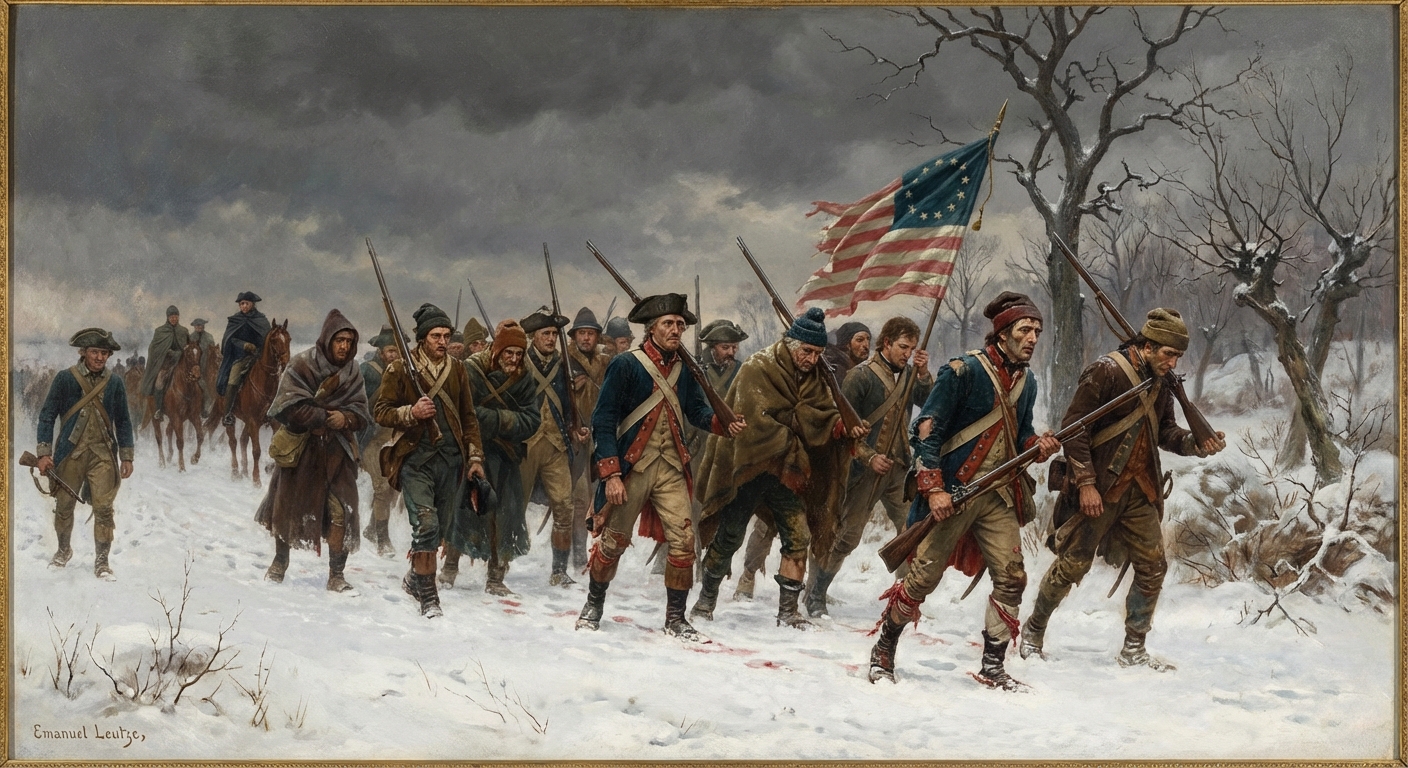
Francis Lewis estate raided on Long Island
Francis Lewis. His Long Island property was ruined in the war, and Elizabeth Lewis was imprisoned by British forces.
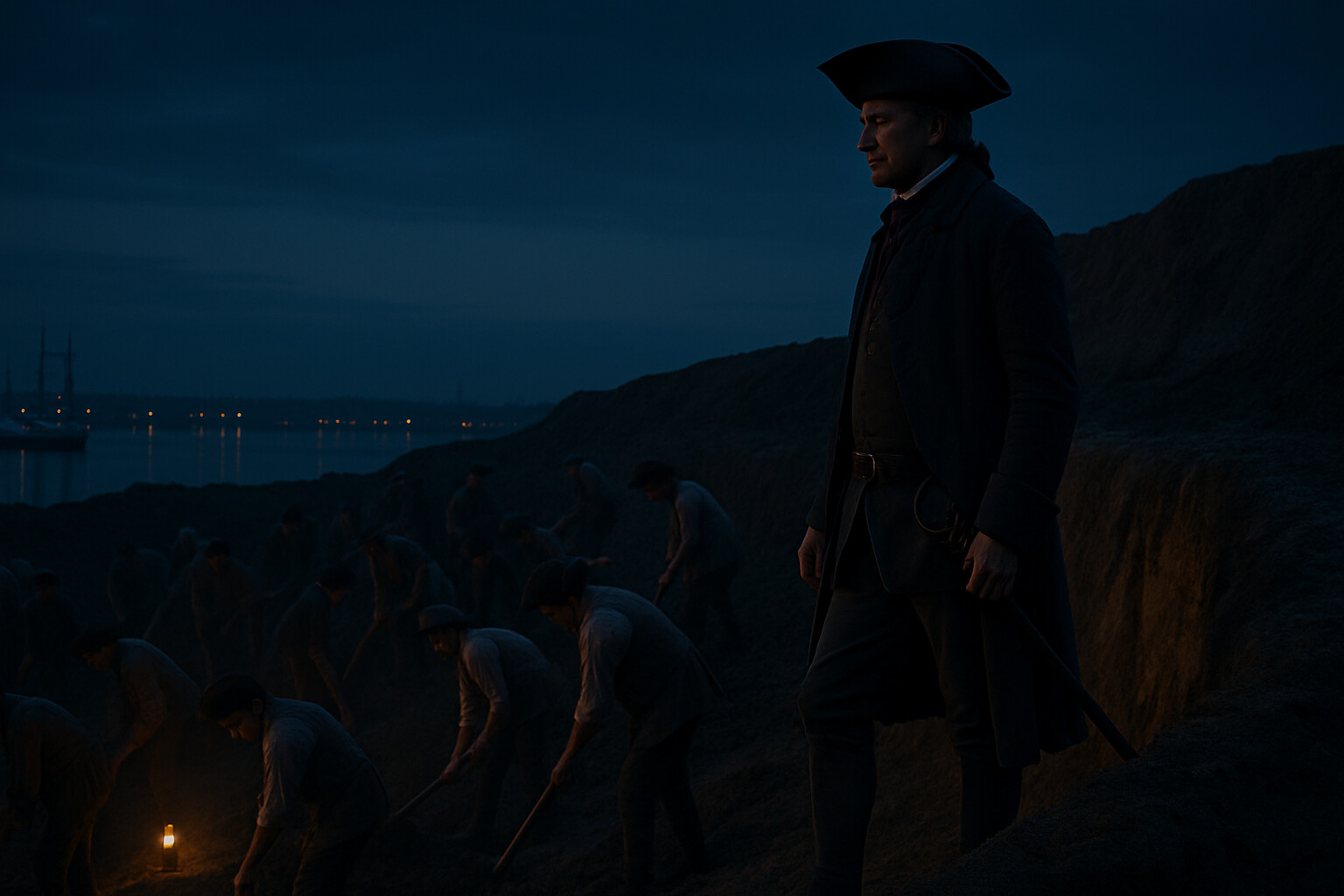
Thomas Nelson Jr. and artillery at Yorktown
Thomas Nelson Jr. At Yorktown the danger reached his own house. NPS treats the famous shelling story as family tradition, but the house still bears cannon damage.
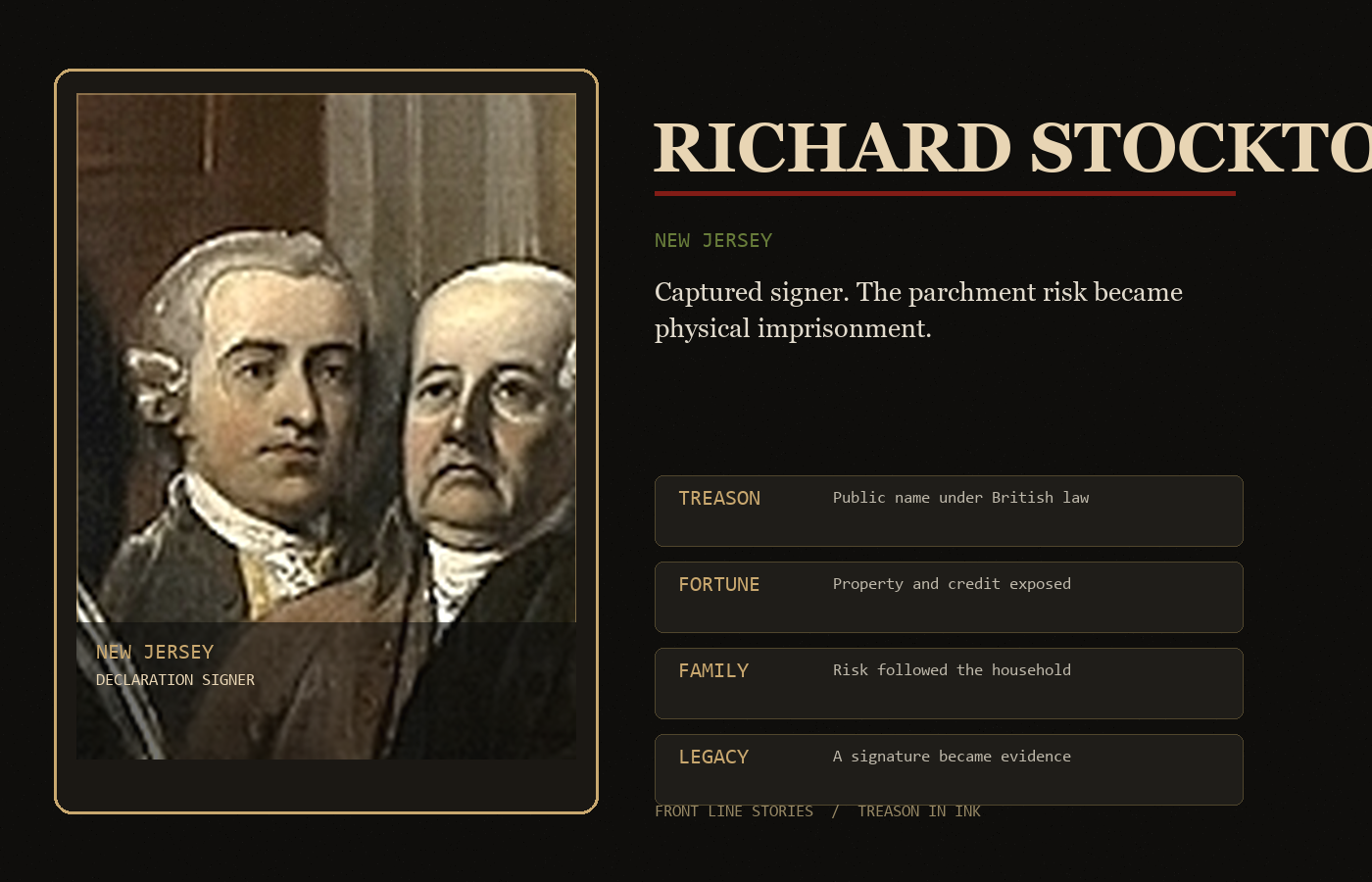
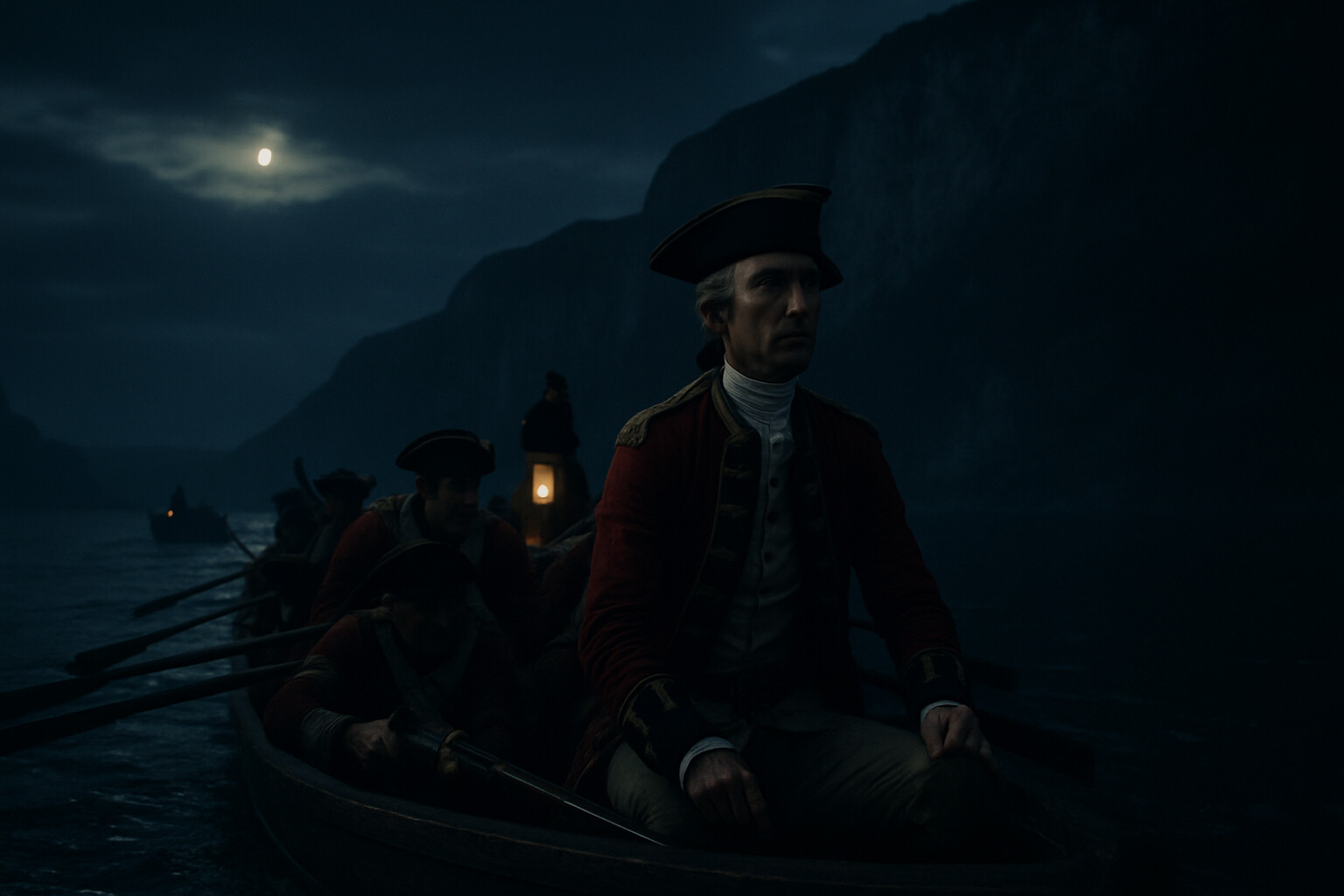
Richard Stockton imprisoned by British forces
Richard Stockton. Captured and imprisoned after signing, Stockton became the clearest example of a paper act turning into physical punishment.
Lyman Hall fleeing Georgia as property is confiscated
Lyman Hall. Georgia historical markers record that British forces confiscated his property and that his family took refuge in the North until 1782.

Why this was frontline

The line was not a trench. It was a signature.

Most frontlines are marked by rivers, roads, ridges, and guns. This one was marked by ink. The signers were not anonymous rebels. They were merchants, lawyers, planters, physicians, ministers, and public officials who made themselves identifiable to the British Crown.

If the Revolution failed, the signatures could become a list for prosecution. The penalty for treason could mean death. Even short of that, homes could be raided, families threatened, property confiscated, and reputations destroyed.

Graphic 01
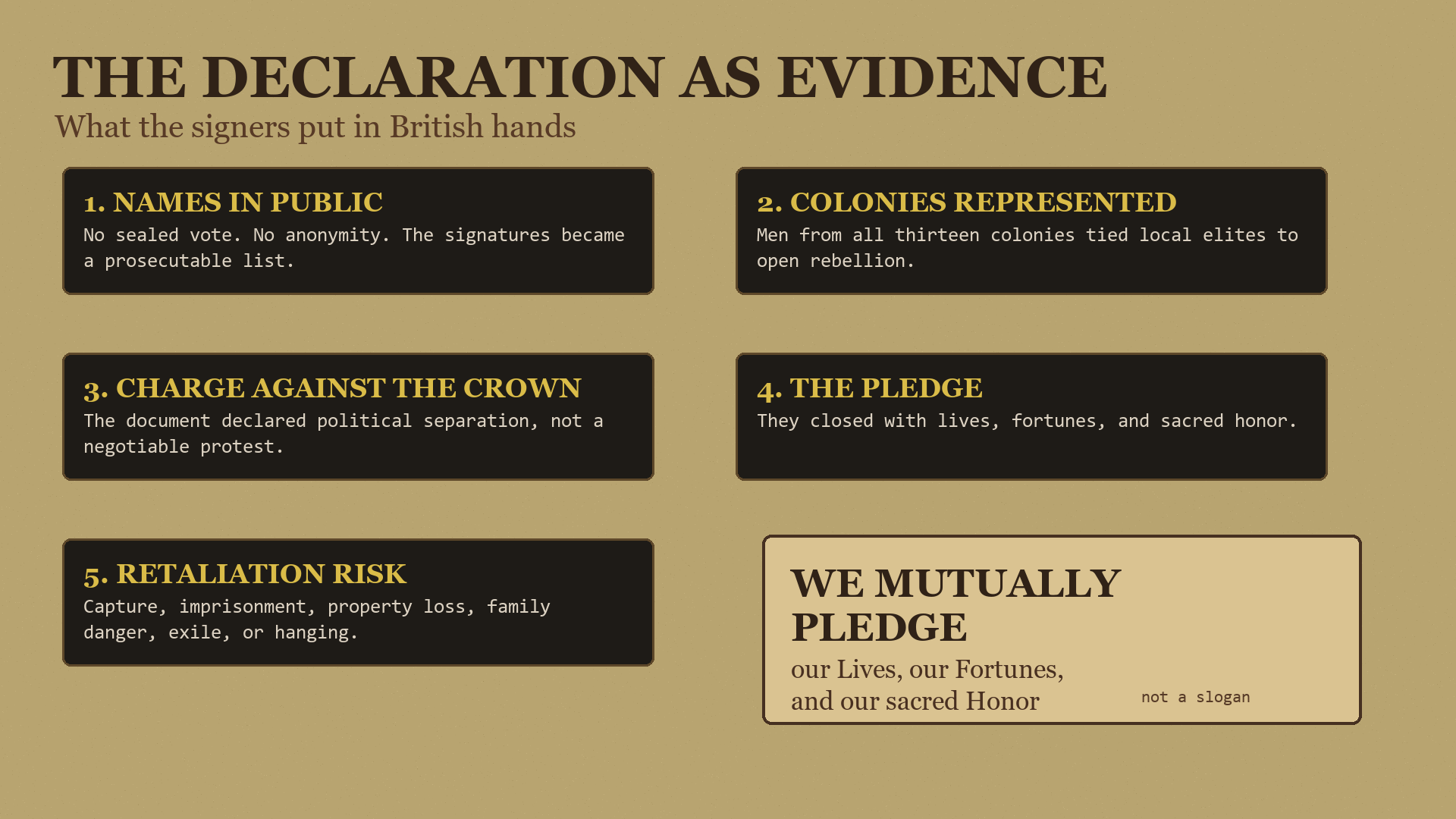
The Declaration as Evidence

Technical breakdown of the Declaration as evidence
Not symbolic only. The document named the grievance, named the political break, and named the men who stood behind it.
TreasonThe legal danger was direct: armed rebellion against the Crown, signed in public.
PropertyMany signers had estates, warehouses, ships, trade, and credit exposed to retaliation.
CaptureSome signers were captured, imprisoned, wounded, or forced from home during the war.
Political deathIf independence failed, elite status would not protect them. It would identify them.

Graphic 02

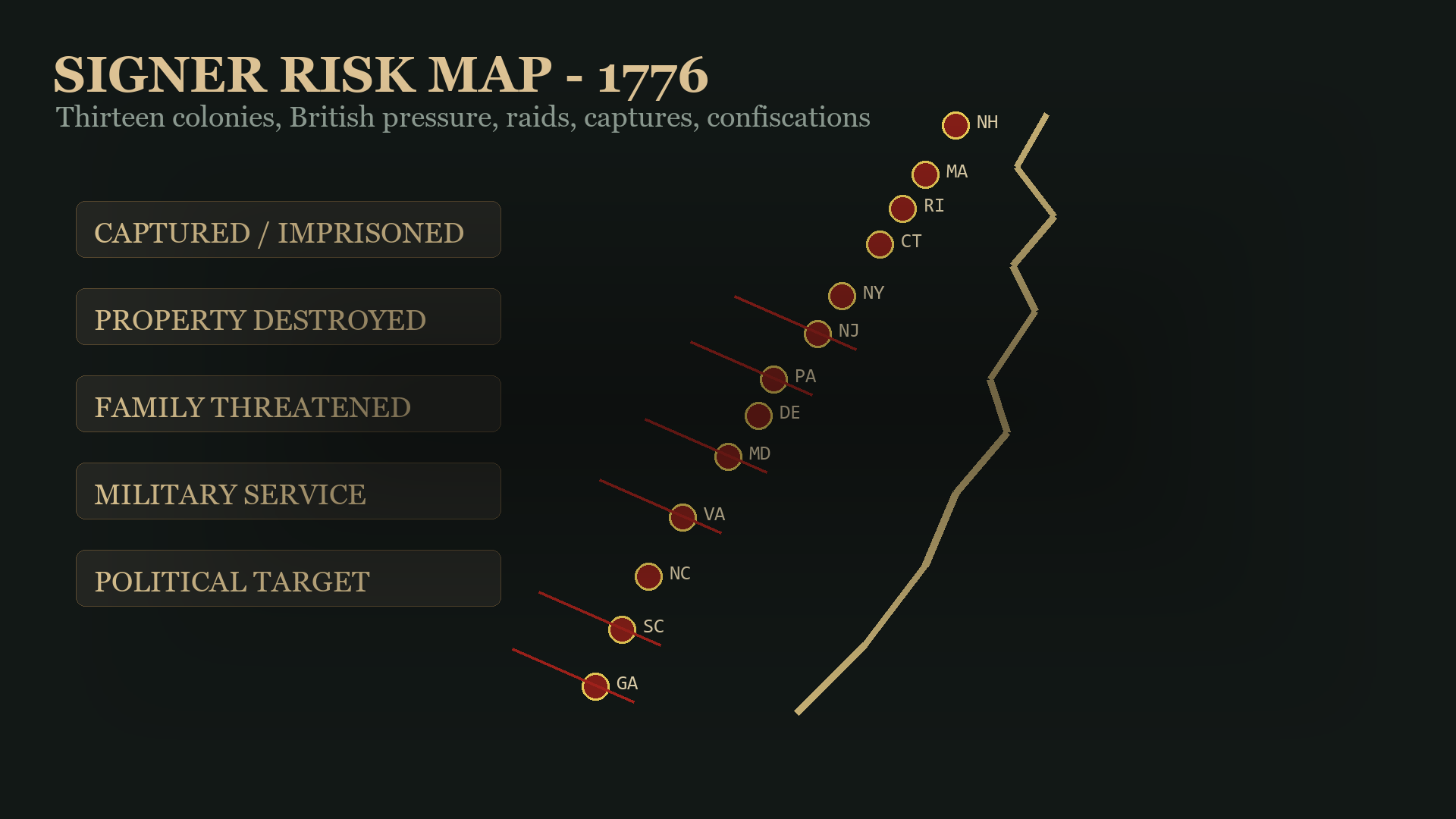
Risk Map of the Thirteen Colonies

Risk map of the thirteen colonies and Declaration signers
Risk was uneven, but real. A signer in occupied New York faced a different threat from a signer in the interior South, but every name tied local power to rebellion.

Built Signer Profiles

Open These First

Graphic 03

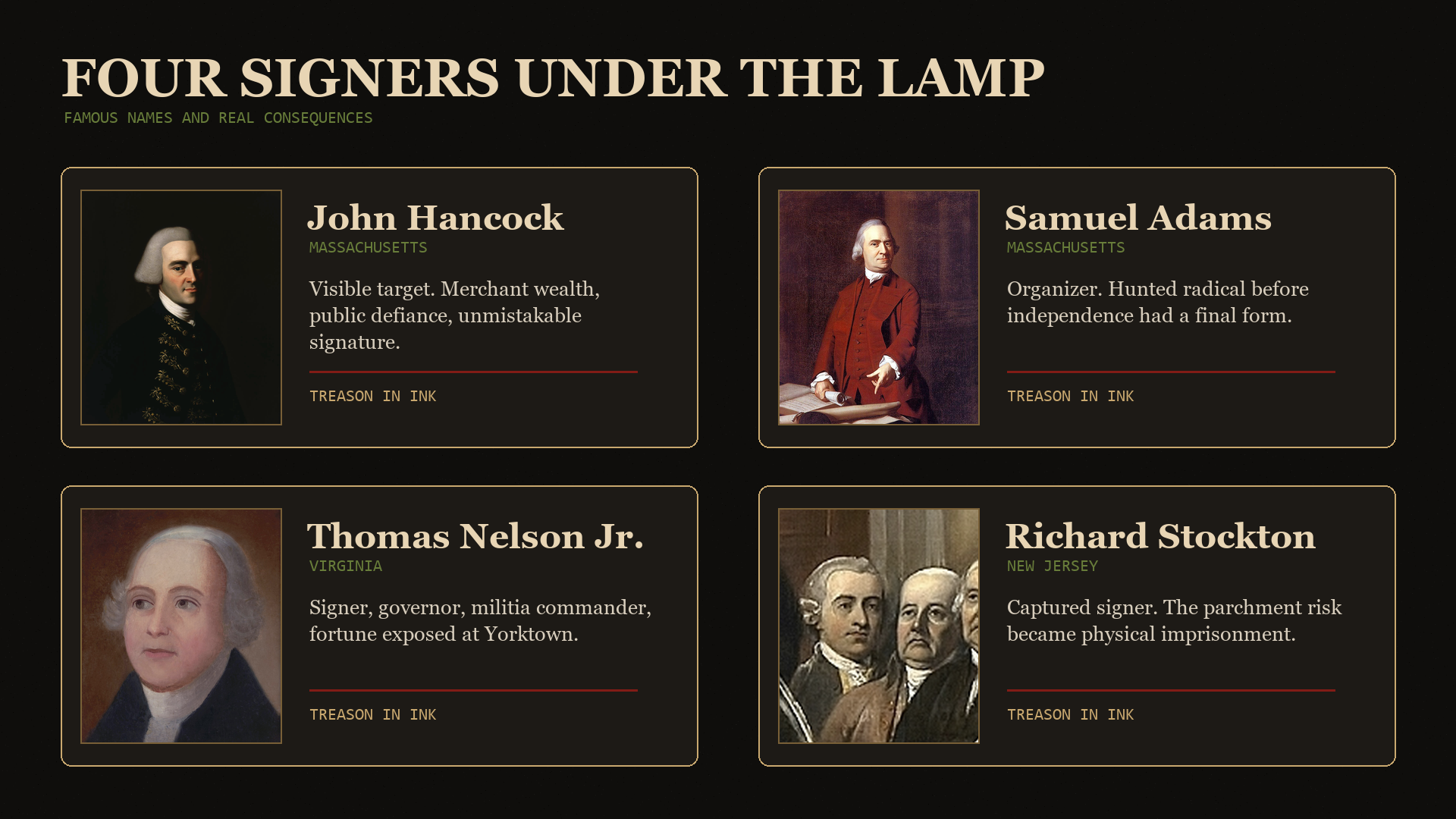
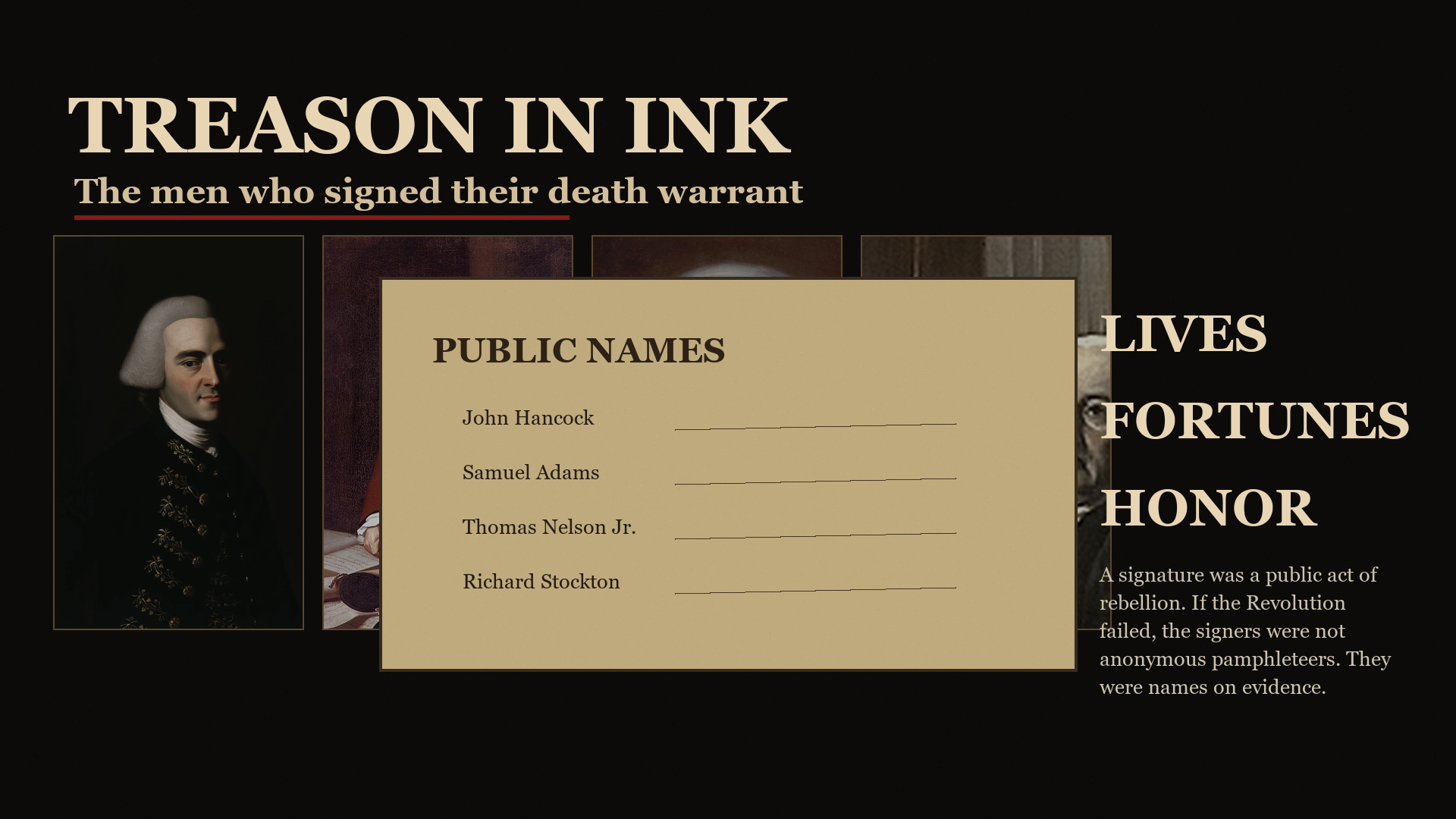
Four Signers Under the Lamp

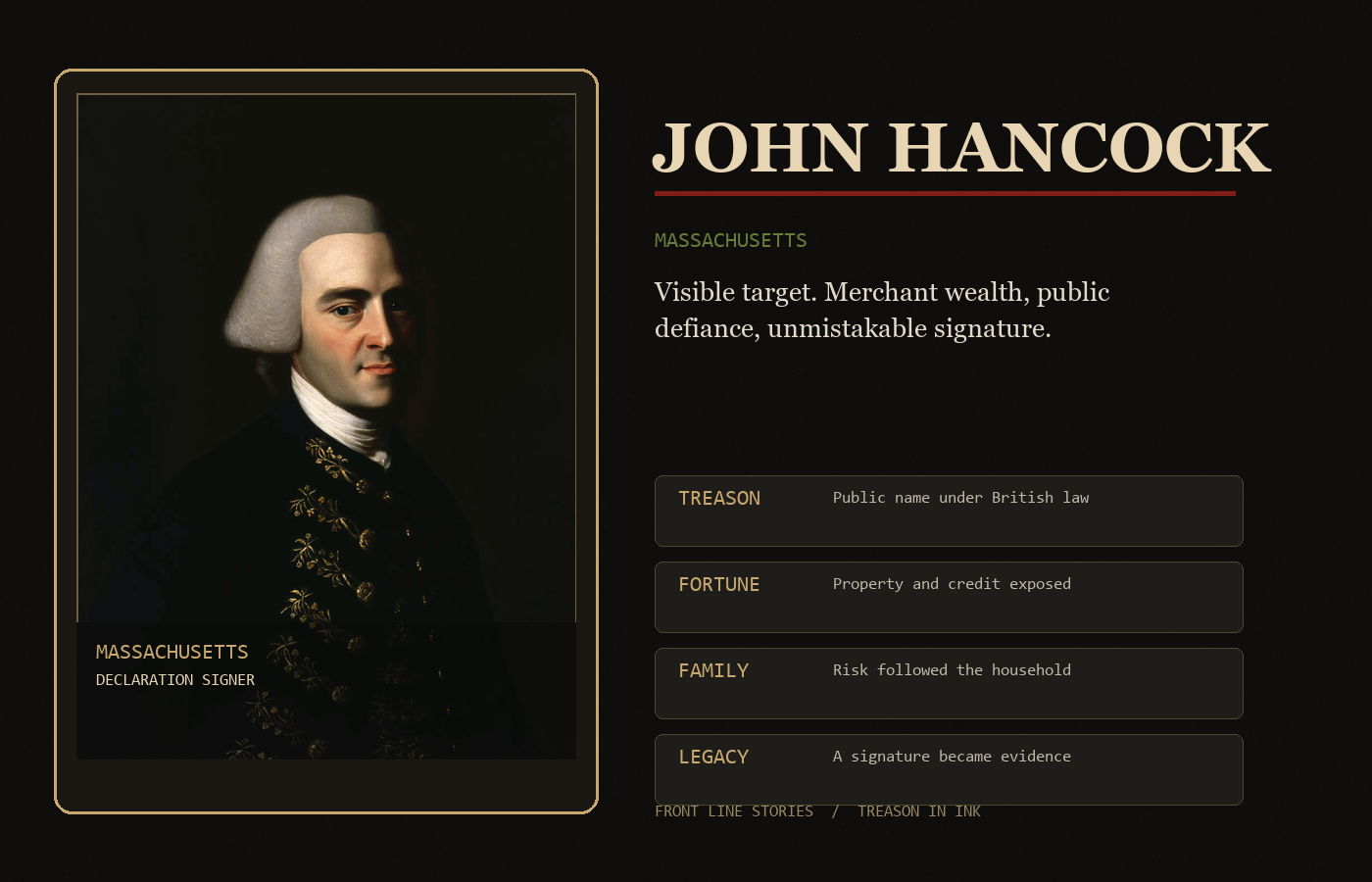
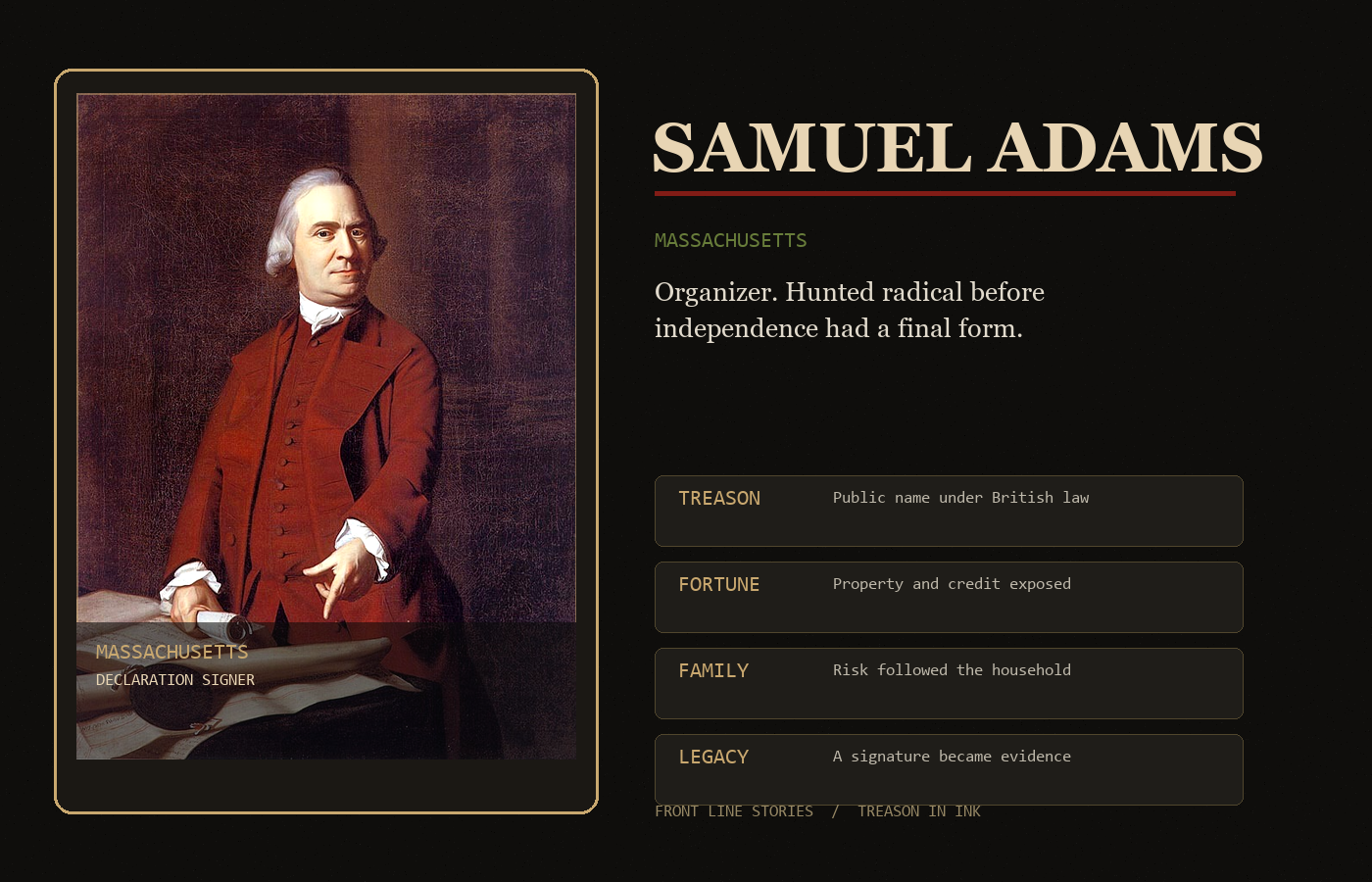
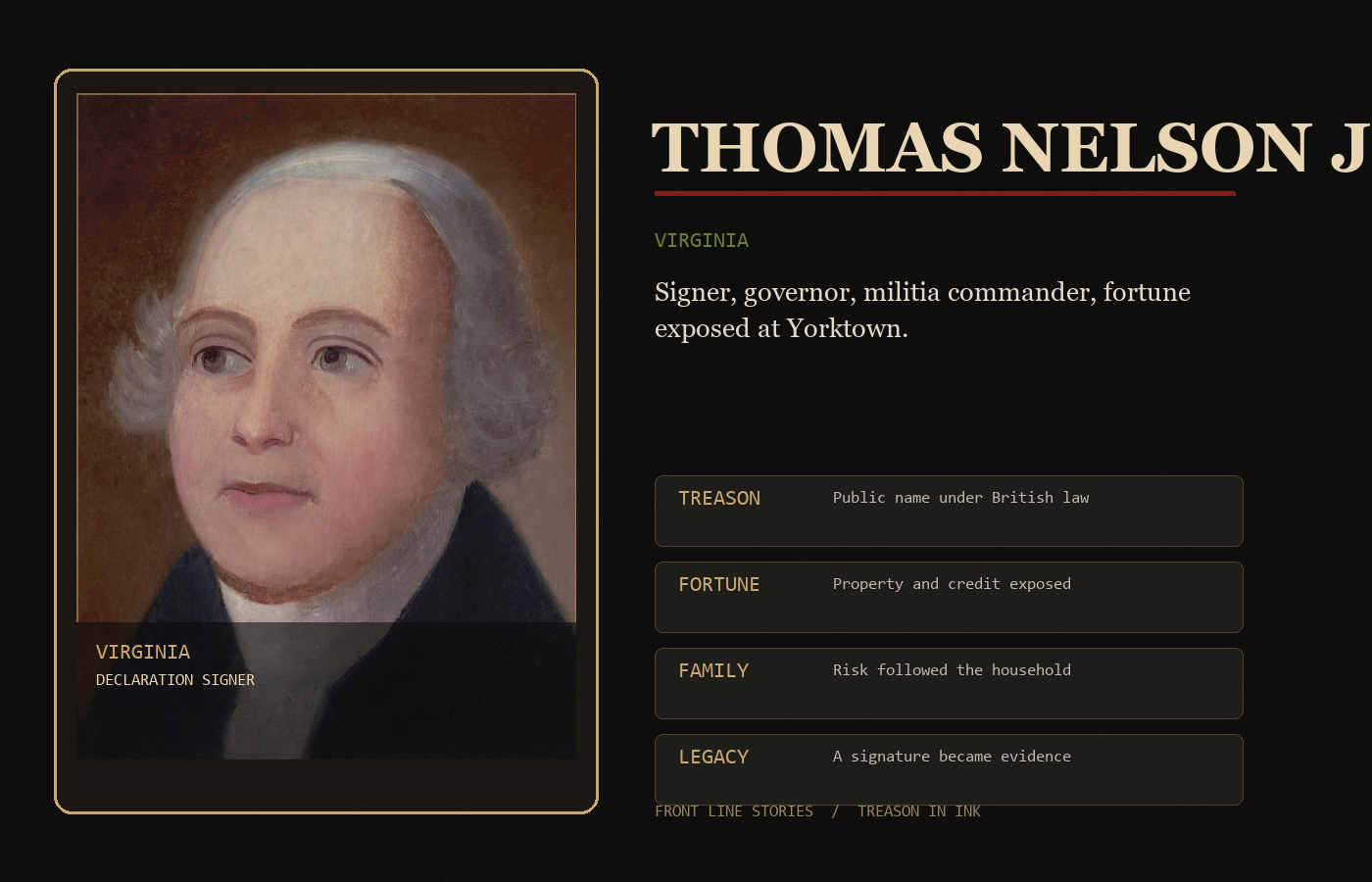
Composite of Hancock Adams Nelson and Stockton
Famous and forgotten together. The point is not that every signer suffered equally. It is that the act exposed all of them.

Signer Hub

All 56 Signers to Build Out

Roadmap

The hub lives here.

This section is the buildout map for every signer of the Declaration. The gold badges are live profile pages; the gray badges are the next profile candidates, grouped by colony so the whole project stays visible.

5 live / 56 totalHancock, Samuel Adams, Thomas Nelson Jr., Stockton, and Hart are built. The remaining names stay on the board until each gets a dedicated page or a deeper story card.

New Hampshire 3 signers

Josiah BartlettPhysician, governor, first New Hampshire vote for independence.
Build
William WhippleMerchant and militia general; led troops in the Saratoga campaign.
Build
Matthew ThorntonPhysician and late-signing New Hampshire delegate.
Build

Rhode Island 2 signers

Stephen HopkinsElder statesman; signed despite a shaking hand.
Build
William EllerySaw Newport and family property suffer under occupation.
Build

Connecticut 4 signers

Roger ShermanOnly founder to sign the Continental Association, Declaration, Articles, and Constitution.
Build
Samuel HuntingtonLawyer, Congress president, and future governor.
Build
William WilliamsMerchant and militia-connected public official.
Build
Oliver WolcottMilitia general and Connecticut governor.
Build

New York 4 signers

William FloydLong Island estate occupied and damaged during the war.
Build
Philip LivingstonMerchant and member of a powerful New York family.
Build
Francis LewisHome destroyed; wife Elizabeth imprisoned by British forces.
Build
Lewis MorrisMorrisania estate damaged; family property exposed in occupied New York.
Build

Pennsylvania 9 signers

Robert MorrisFinancier whose credit helped keep the war alive.
Build
Benjamin RushPhysician, reformer, and wartime medical voice.
Build
Benjamin FranklinDiplomat, printer, scientist, and international face of independence.
Build
John MortonHelped swing Pennsylvania toward independence.
Build
George ClymerMerchant and revolutionary finance figure.
Build
James SmithLawyer, militia officer, and Pennsylvania delegate.
Build
George TaylorIronmaster whose industry tied directly to wartime production.
Build
James WilsonLawyer, constitutional thinker, and later Supreme Court justice.
Build
George RossLawyer and uncle of Betsy Ross by marriage.
Build

Delaware 3 signers

Caesar RodneyRode through illness and storm to break Delaware's deadlock.
Build
George ReadCautious independence vote, then committed public servant.
Build
Thomas McKeanJurist, militia officer, and signer who kept serving under threat.
Build

Maryland 4 signers

Samuel ChaseFiery lawyer and later Supreme Court justice.
Build
William PacaLawyer, governor, and Maryland independence advocate.
Build
Thomas StoneLawyer whose private family cost gives the pledge weight.
Build
Charles Carroll of CarrolltonWealthy Catholic planter who signed with full identity visible.
Build

Virginia 7 signers

George WytheLegal mentor to Jefferson and a leading Virginia jurist.
Build
Richard Henry LeeMoved the resolution that the colonies were free and independent states.
Build
Thomas JeffersonPrincipal drafter of the Declaration.
Build
Benjamin HarrisonPlanter, speaker, and wartime Virginia political leader.
Build
Thomas Nelson Jr.Governor and militia commander whose fortune went into the fight.
Live
Francis Lightfoot LeePlanter, delegate, and brother of Richard Henry Lee.
Build
Carter BraxtonMerchant-planter whose wealth was battered by war losses.
Build

North Carolina 3 signers

William HooperLawyer whose home region became dangerous ground.
Build
Joseph HewesMerchant and naval organizer for the Revolution.
Build
John PennLawyer and congressional delegate under Southern pressure.
Build

South Carolina 4 signers

Edward RutledgeYoung lawyer, later governor, and prisoner after Charleston fell.
Build
Thomas Heyward Jr.Judge and militia officer captured after the fall of Charleston.
Build
Thomas Lynch Jr.Young signer whose postwar disappearance became part of the legend.
Build
Arthur MiddletonPlanter-politician captured when Charleston fell.
Build

Georgia 3 signers

Button GwinnettSigner, faction fighter, and fatal duel figure.
Build
Lyman HallProperty confiscated; family took refuge outside Georgia.
Build
George WaltonWounded and captured during the British attack on Savannah.
Build

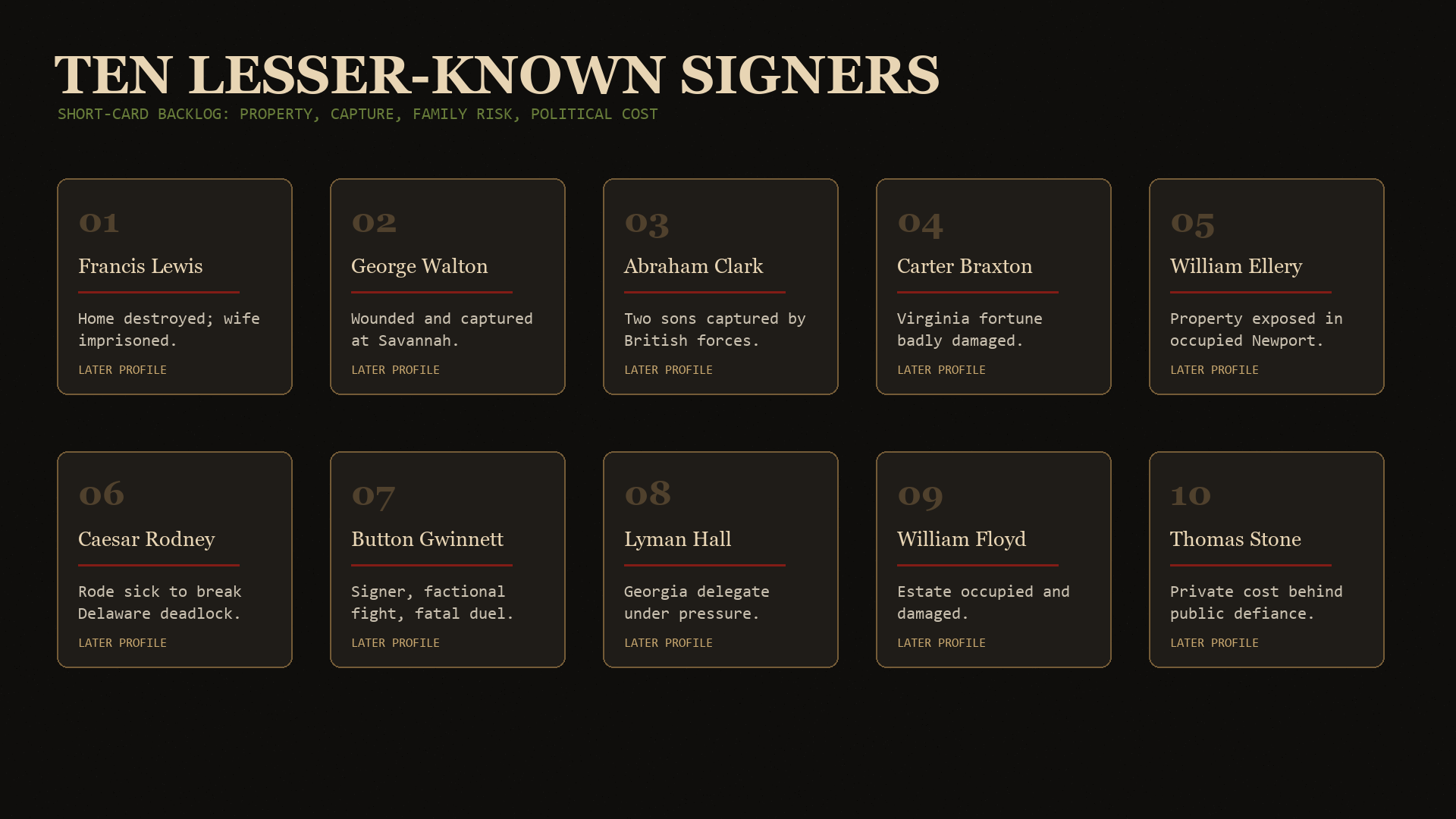
The Unknown Ten

Short Stories for Later Buildout

Gallery of ten lesser-known Declaration signers
Not all need full pages on day one. These cards give the hub depth now and create a clean backlog for later profile builds.
Francis LewisHis Long Island home was destroyed; his wife was imprisoned by British forces.
George WaltonWounded and captured during the British attack on Savannah.
Abraham ClarkTwo sons were captured; family risk became part of his story.
Carter BraxtonA wealthy Virginia planter and merchant whose fortune suffered badly during the war.
William ElleryWatched his Rhode Island home and property suffer in wartime occupation.
Caesar RodneyIll and exhausted, he rode to Philadelphia to cast Delaware's decisive vote.
Button GwinnettGeorgia signer, military-political conflict, and a fatal duel.
Lyman HallPhysician, minister, and Georgia delegate in a colony under severe British pressure.
William FloydHis estate was occupied and damaged during the war.
Thomas StoneMaryland lawyer whose family story adds private cost to public defiance.

Sources and next paths

Reference baseline: National Archives material on the Declaration, National Park Service signer and Revolutionary War resources, U.S. history archives, and signer biographical summaries. The John Hart cave/rock-shelter story is treated as tradition; the page uses the better-supported wording that he hid in the wilderness after British forces overran the area. Portrait/source imagery uses public-domain Wikimedia Commons files for Hancock, Samuel Adams, Thomas Nelson Jr., and John Trumbull's Declaration detail for Stockton. This page is built as a hub; the profile pages link back here and to the main Stories index.

National Archives - DeclarationNPS - Act of TreasonNPS - Nelson HouseGeorgia Historical Society - Lyman Hallushistory.org - John HartStories main