← Signers hub

Virginia - signer - governor - militia commander

Thomas Nelson Jr.

The signer who paid in cannon smoke

Nelson did not leave his Declaration risk on parchment. He carried it into Virginia government, public credit, militia command, family property, and the siege lines at Yorktown.

Declaration signer profile - expanded July 4 build

Opening scene

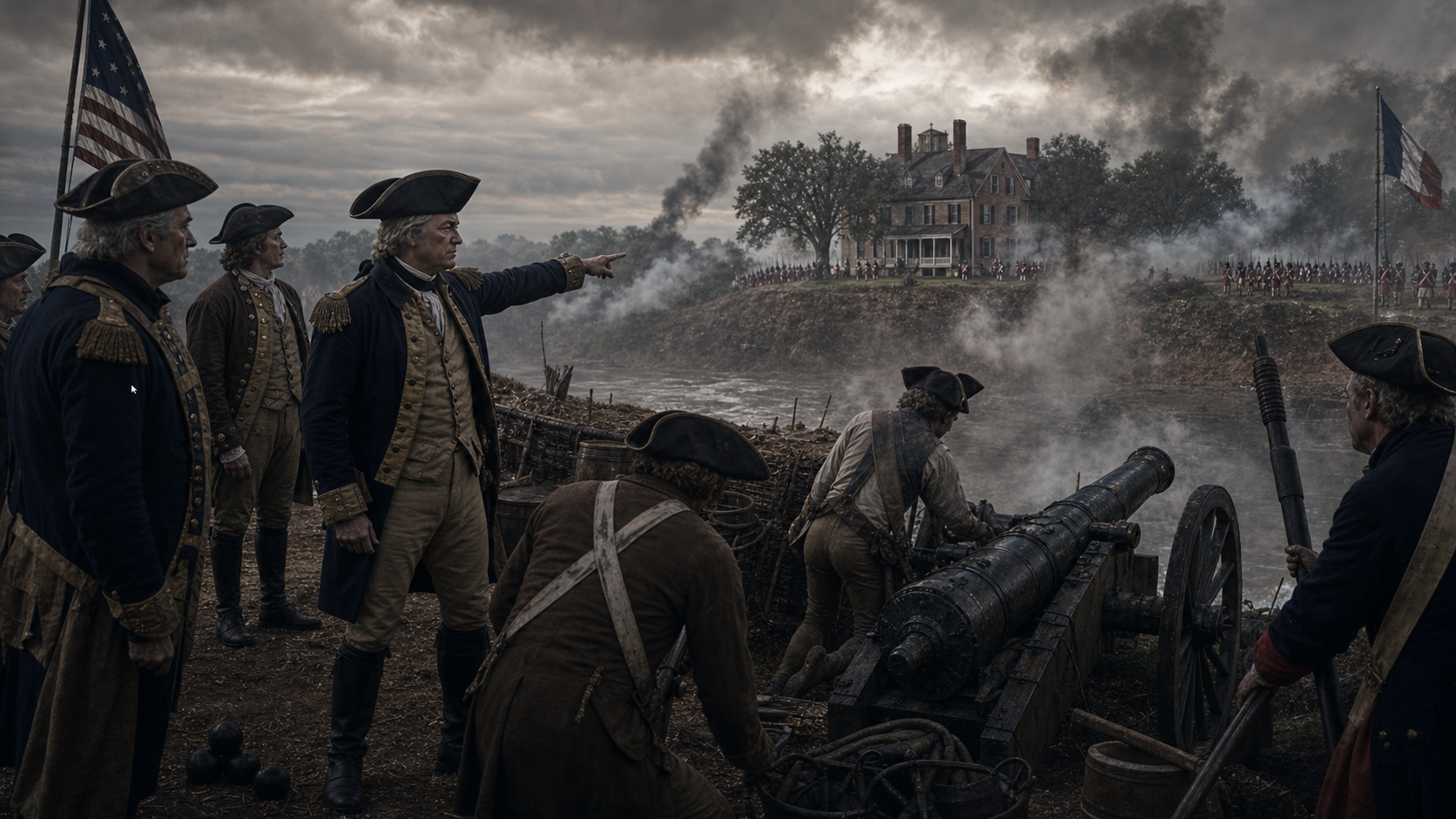
The best-known Nelson story puts him at Yorktown, watching artillery fire toward a house tied to his own family. The details have been told and retold, but the meaning is what matters: for Nelson, independence was not an abstract paper risk. It reached into property, debt, command, health, and home.

He signed the Declaration as a Virginia delegate. Later he served as governor while invasion, shortages, militia demands, and the decisive campaign in Virginia pushed political risk into battlefield responsibility.

Nelson is one of the strongest answers to the question behind the signer series: what did these men actually risk?

Chapter 01

Virginia Wealth Becomes War Debt

Nelson came from one of Virginia's leading families. That status made him influential, but it also made his commitment expensive. The Revolution needed not only speeches and signatures. It needed supplies, credit, armed men, and officials willing to keep working when the machinery of government was under strain.

As the war dragged on, Nelson's public role grew heavier. He was not merely agreeing with independence from a safe distance. He helped carry the financial and administrative burden of a state fighting for survival.

A rich signer could lose more than reputation. He could turn private credit into public risk.
Thomas Nelson Jr. pledging personal credit and resources for Virginia's war effort
Fortune on the table. Nelson's sacrifice was not only battlefield drama. The war reached ledgers, notes, estate papers, and public credit.

Chapter 02

Yorktown Made the Cost Visible

In 1781, the war's decisive campaign came to Nelson's own ground. Yorktown was not a distant theater. It was his community, his state, and his family world. Tradition holds that Nelson urged fire on his own house when British officers were using it. National Park Service material treats the story carefully, noting family tradition and evidence of cannon damage at the house.

That careful framing actually makes the story stronger. We do not need a cartoon version where Nelson personally performs every dramatic act. The documented reality is enough: his home ground became a siege zone, his public duty collided with private property, and Yorktown turned the signer's cost into smoke, masonry, and debt.

Thomas Nelson Jr. at Yorktown with artillery aimed toward the Nelson house
Public cause, private cost. Yorktown gives Nelson's signer story its battlefield edge: the revolution came home.

Chapter 03

The Declaration Followed Him Into Office

Signing the Declaration did not end Nelson's work. It began a harder phase. As governor, he faced invasion, military coordination, supply problems, and the pressure of keeping Virginia in the fight while British forces moved through the state.

That is why Nelson belongs beside the more famous founders. He shows what the signature demanded after the signing: governing through danger, spending political capital, and accepting the destruction that follows when war reaches your own streets.

Risk ledger

Why Nelson Was on the Frontline

PropertyYorktown brought the war to family ground and physical structures tied to his life.
CreditPersonal resources and financial standing were pulled into public service.
OfficeAs governor, he carried state responsibility while the war came into Virginia.
CommandMilitia responsibilities connected him directly to the Yorktown campaign.
HealthThe strain of public service and war damaged his health.
MemoryHis story makes the Declaration's pledge of fortunes unusually concrete.

Timeline

From Signature to Siege Line

1738Born at Yorktown, Virginia.
1776Signs the Declaration of Independence for Virginia.
1781Serves as Virginia governor during a critical campaign year.
1781Yorktown brings the war to Nelson's home ground and family property.
1789Dies after a postwar life marked by damaged finances and health.

Careful history

What We Should Not Overclaim

The Yorktown house story should be presented as a powerful family tradition supported by the broader fact that the Nelson House shows cannon damage and that British officers used the house. The page does not need to exaggerate. Nelson's documented public service, financial burden, and Yorktown connection are already strong.

Source basis

References Used

Built from National Archives signer facts, National Park Service Yorktown/Nelson House material, and public biographical references on Nelson's wartime service.