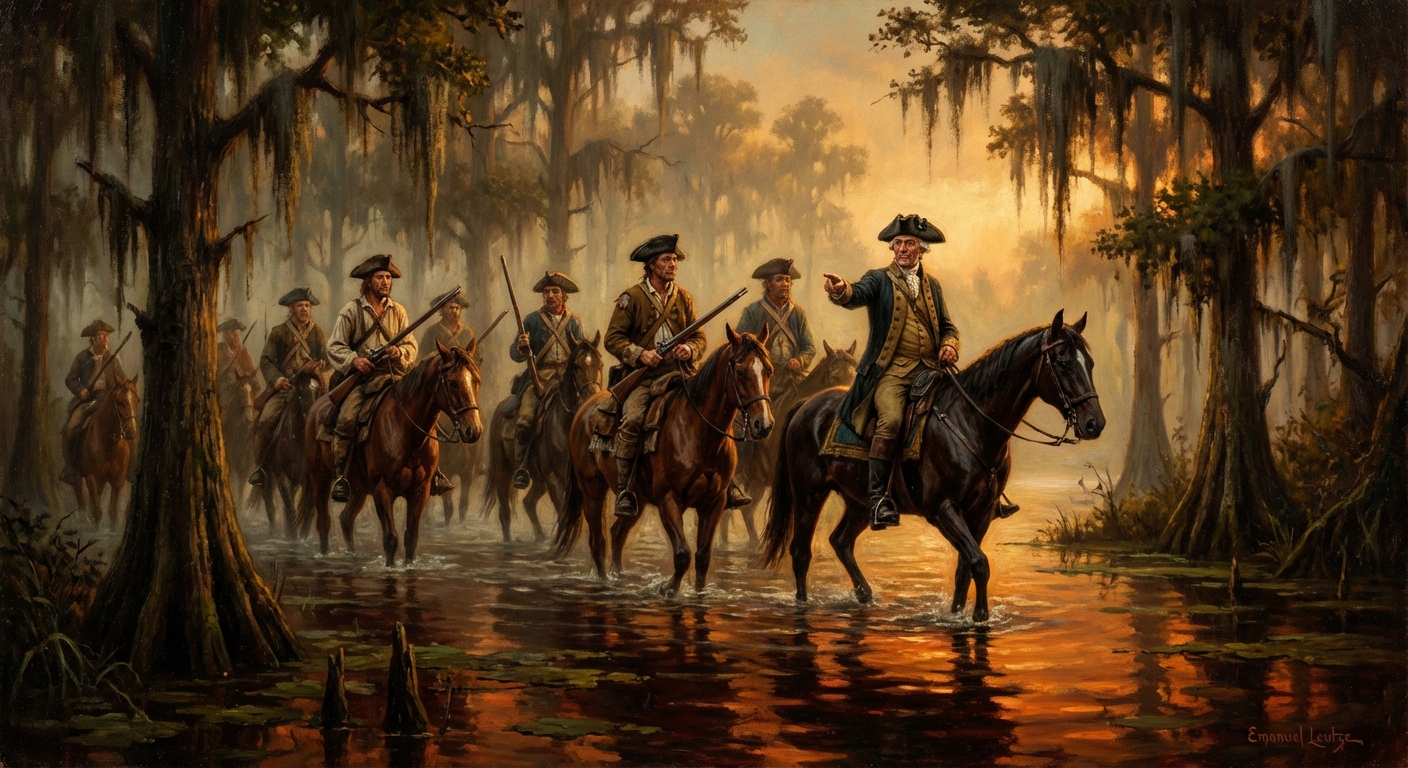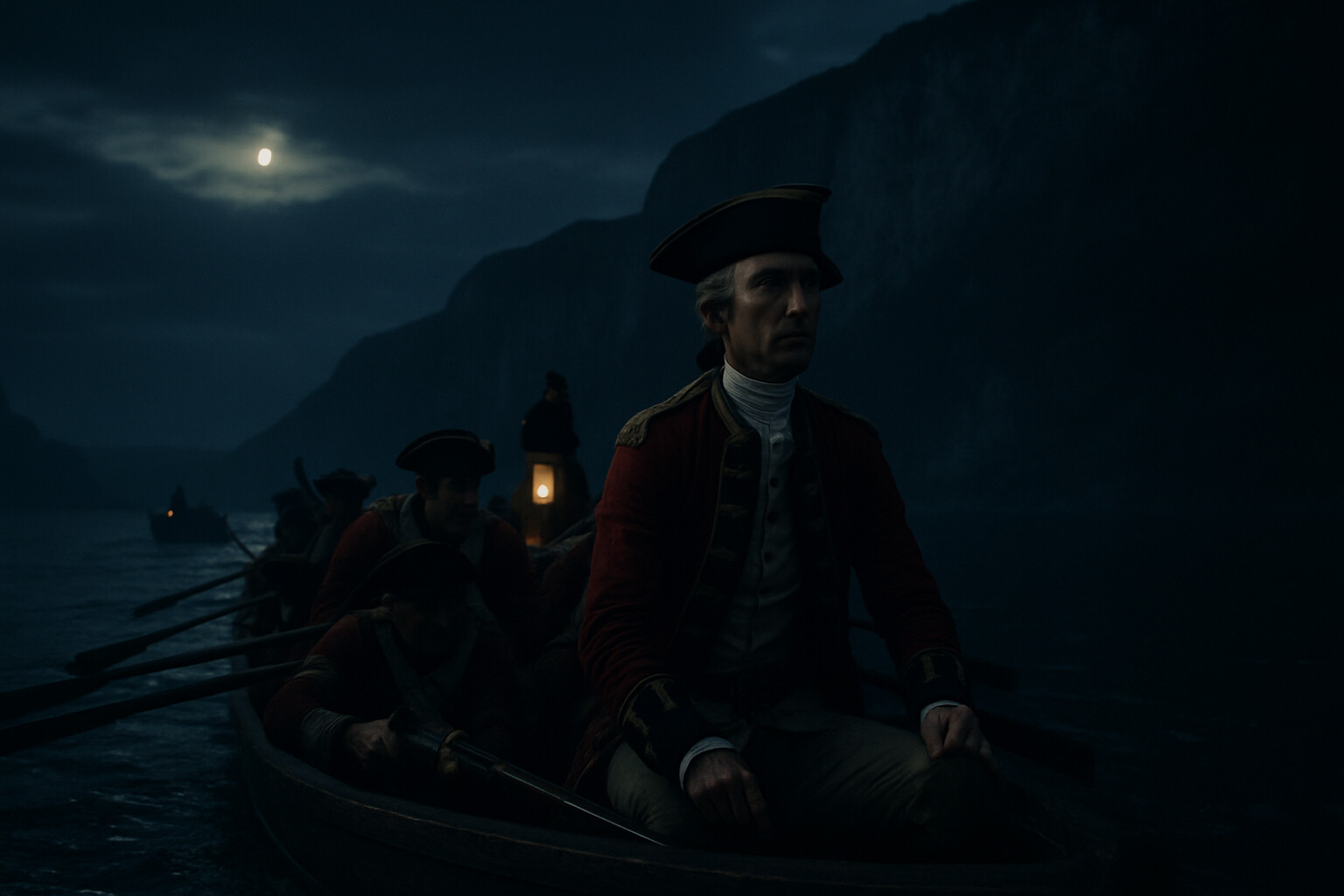
The river was cold and dark, and the boats moved without lanterns.
Somewhere ahead, the north bank of the St. Lawrence rose nearly three hundred feet above the water in sheer limestone bluffs and tangled brush. Quebec sat on top of them—the most fortified city in North America, defended by an army that had spent months preparing for exactly this kind of assault. What the French garrison had not fully prepared for was someone attempting what they considered impossible: scaling the cliffs at night with a full assault force.
It was September 13, 1759. James Wolfe was thirty-two years old, and he was failing by degrees. He had been sick through much of the summer campaign—so ill at one point that he could not rise from his bed and had written a grim letter to his mother that, by later accounts, read as though he did not expect to survive the season. His body was working against him even as the campaign reached its pivot. What he had before him now, on the black water of the St. Lawrence, was perhaps his last practical chance to redeem a campaign that had stalled for months.
The stakes were not merely personal. They were continental.
---
**The War That Remade a Continent**
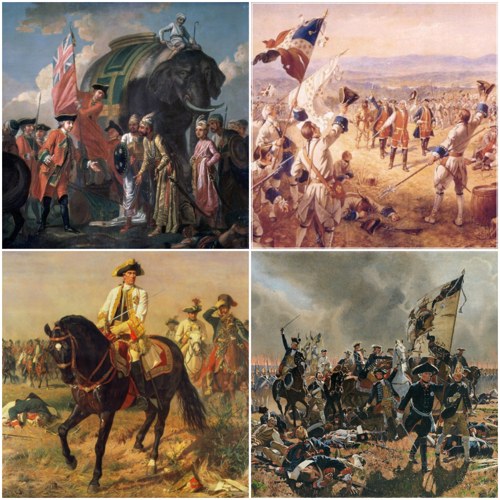
The Seven Years' War—what the colonists in America called the French and Indian War—was in 1759 already a global conflict stretching from the forests of Pennsylvania to the plains of India. But in North America, it turned on a single geographic hinge: the city of Quebec.
Quebec was the capital of New France. It sat on a massive promontory where the St. Lawrence narrowed, commanding river traffic and the supply lines that fed the entire French colony inland. Take Quebec, and New France was cut off from reinforcement and resupply. The colony would wither. England's North American empire, contested for a generation, would expand to fill the continent.
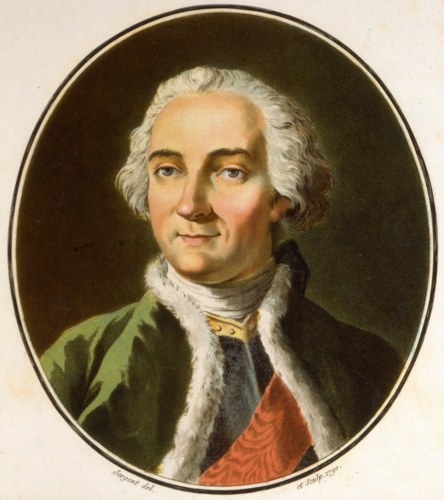
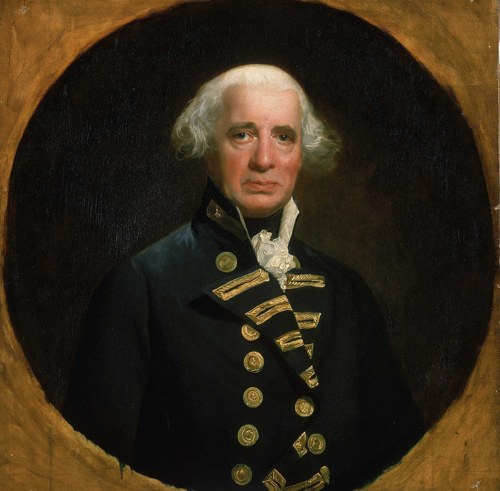
The British high command understood this, and in the spring of 1759, they sent a naval and land force up the St. Lawrence unlike anything the river had seen. Vice-Admiral Charles Saunders commanded a fleet of roughly two hundred vessels—a logistical achievement of the first order, navigating a notoriously treacherous waterway. The army Saunders carried belonged to Wolfe: approximately 8,500 soldiers when the campaign opened, drawn from regular British regiments.
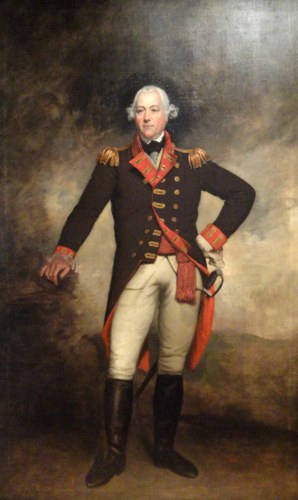
James Wolfe had been given the command at an age that raised eyebrows in London. He had distinguished himself at the Battle of Dettingen in 1743, at the suppression of the Jacobite rising at Culloden in 1746, and most recently at the capture of Fortress Louisbourg in 1758—a siege operation that had gone well and brought him to the attention of William Pitt, the British minister who was, more than any other individual, driving British strategic ambition in this war. Wolfe was aggressive, methodical when it served him, and willing to press circumstances to the edge. He was also volatile, sometimes harsh with his subordinates, and in 1759, physically fragile. Historians have suggested he suffered from kidney disease, tuberculosis, or both, though no contemporary diagnosis survives in confirmed form. He pressed forward anyway.
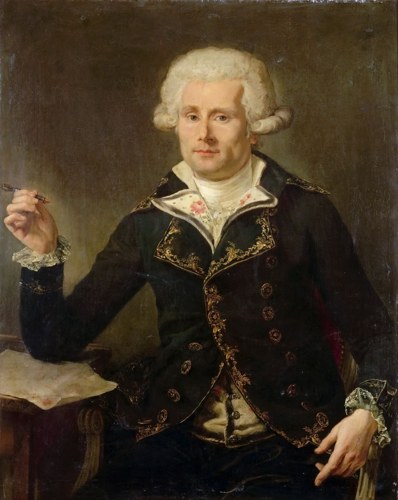
The commander waiting for him at Quebec was the Marquis de Montcalm—Louis-Joseph de Montcalm-Gozon—a professional soldier of considerable experience who had been fighting in North America since 1756. Montcalm had won several significant engagements: Oswego, Fort William Henry, and Carillon (Ticonderoga), where he had repulsed a British assault with far fewer men than the attackers brought. He was respected, somewhat at odds with the colonial administration of New France, and deeply realistic about the odds facing his colony by 1759. He knew reinforcements from France were unlikely. He knew supplies were short. He chose to defend what he had.
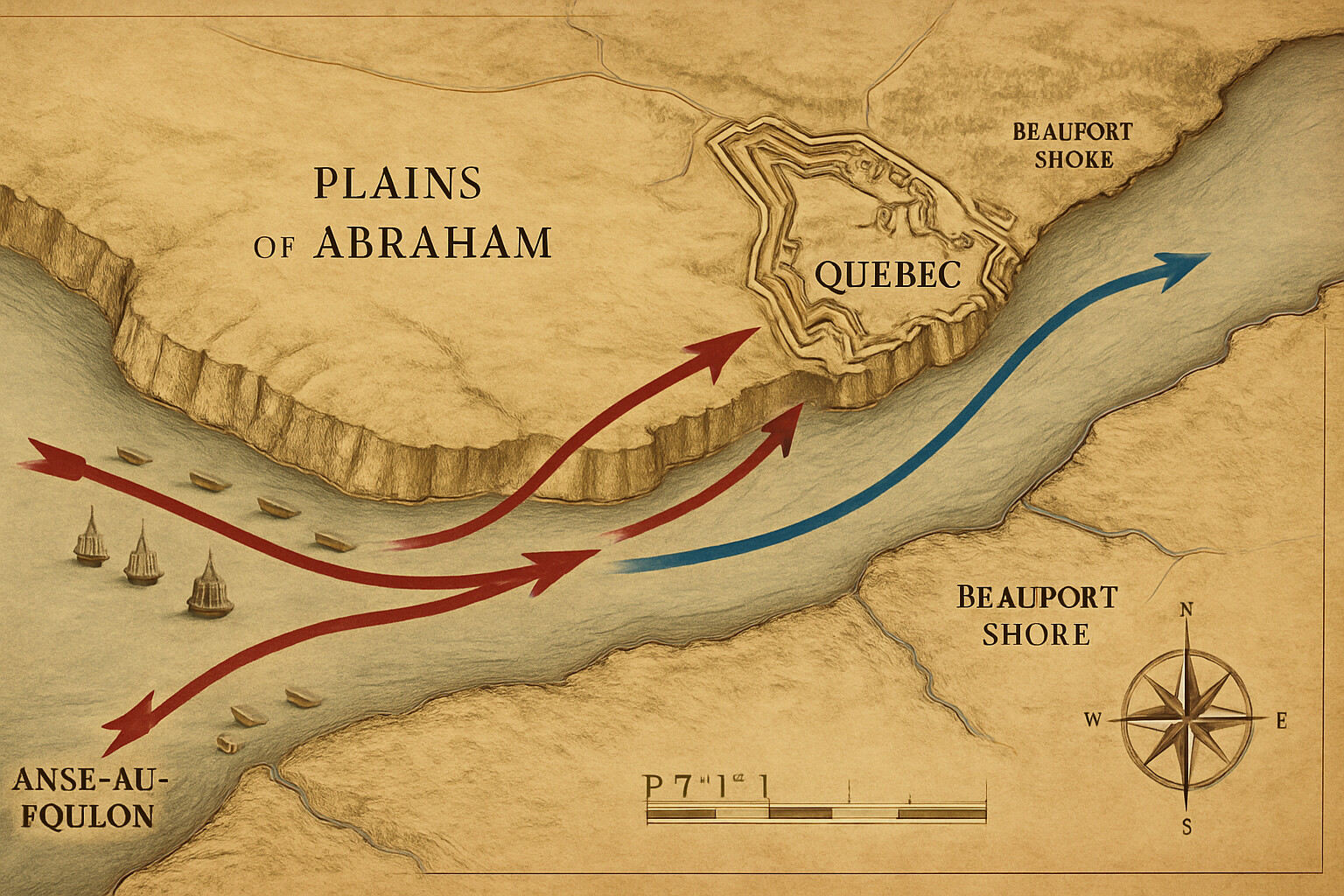
The French defensive position at Quebec was formidable. The city sat on the Cape Diamond promontory. The Lower Town lay at river level; the Upper Town on the bluffs was protected by stone walls, batteries, and the natural obstacle of the cliffs themselves. Montcalm stationed his main force to the east of the city, where the most natural approach existed, and extended outposts and militia down the river. The Beauport shore—the flats east of the city—was the most fortified stretch of ground Montcalm held.
Wolfe tested it. He tested it repeatedly through the summer, and the summer became a grim education in what prepared defenses could do.
---
**A Summer of Failure**
The British bombardment of Quebec began in earnest in July. Artillery on the south bank and on ships in the river hammered the city. The Lower Town burned. Civilian suffering was real and documented. But burning a city is not the same as taking it, and Wolfe needed to bring his army to grips with Montcalm's soldiers in a position where British regulars, trained to fight in line, could operate.
The attempt at Beauport on July 31—sometimes called the Battle of Beauport—was a costly failure. A landing attempt against the fortified shore was repulsed with sharp casualties among the light infantry and grenadiers who led the assault. The attackers came under heavy fire before they could consolidate on the beach. Wolfe watched it go wrong and could not correct it. He wrote to his superior, Field Marshal Lord Ligonier, with unusual candor that the campaign was not going as hoped.
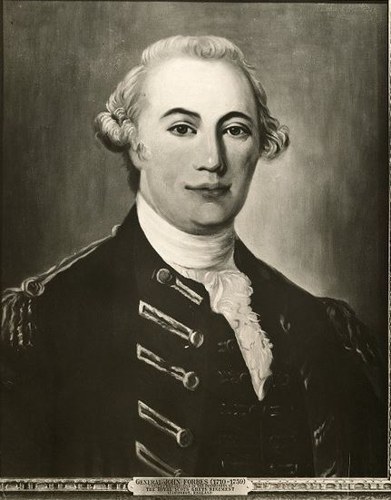
By August, Wolfe was bedridden with illness. His three brigadiers—Monckton, Townshend, and Murray—were managing operations in his absence. When he recovered enough to work again, he found himself in an uncomfortable dynamic with officers who had their own views of what should be done. The brigadiers sent Wolfe a memorandum suggesting that the main effort should shift: rather than attacking the Beauport shore again, the army should look upstream, west of Quebec, where a crossing above the city might cut Montcalm's supply line and force him out of his defensive position.
The record shows Wolfe had been considering this option himself. By early September, he had identified a path. The cove at Anse-au-Foulon—called Wolfe's Cove in later memory—had a narrow path ascending the cliffs, partially improved, accessible to infantry in the dark if the sentries were deceived or overwhelmed. French militia had been using it as a supply route. Intelligence, including information from deserters and reconnaissance, gave Wolfe reason to believe a small guard was posted at the top.
The risk was enormous. If the French discovered the landing early, they could roll rocks and musketry down onto men climbing a narrow path in single file. If the cliff proved unscalable, the army would be destroyed piecemeal at the water's edge. If the French moved fast enough once the alarm was raised, they could strike the British force before it could form line.
Wolfe accepted the risk. He set the operation for the night of September 12–13.
---
**The Equipment of Decision**
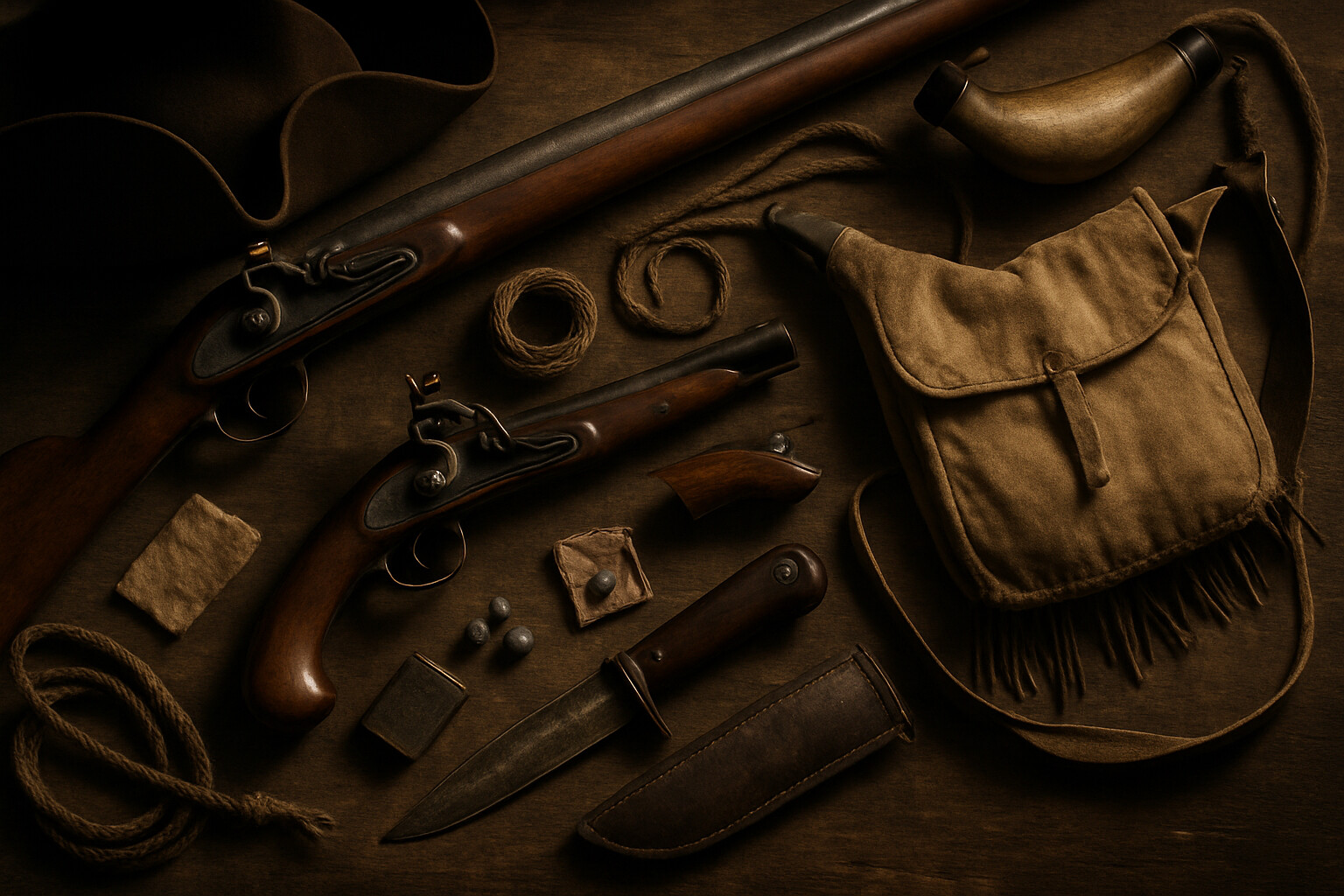
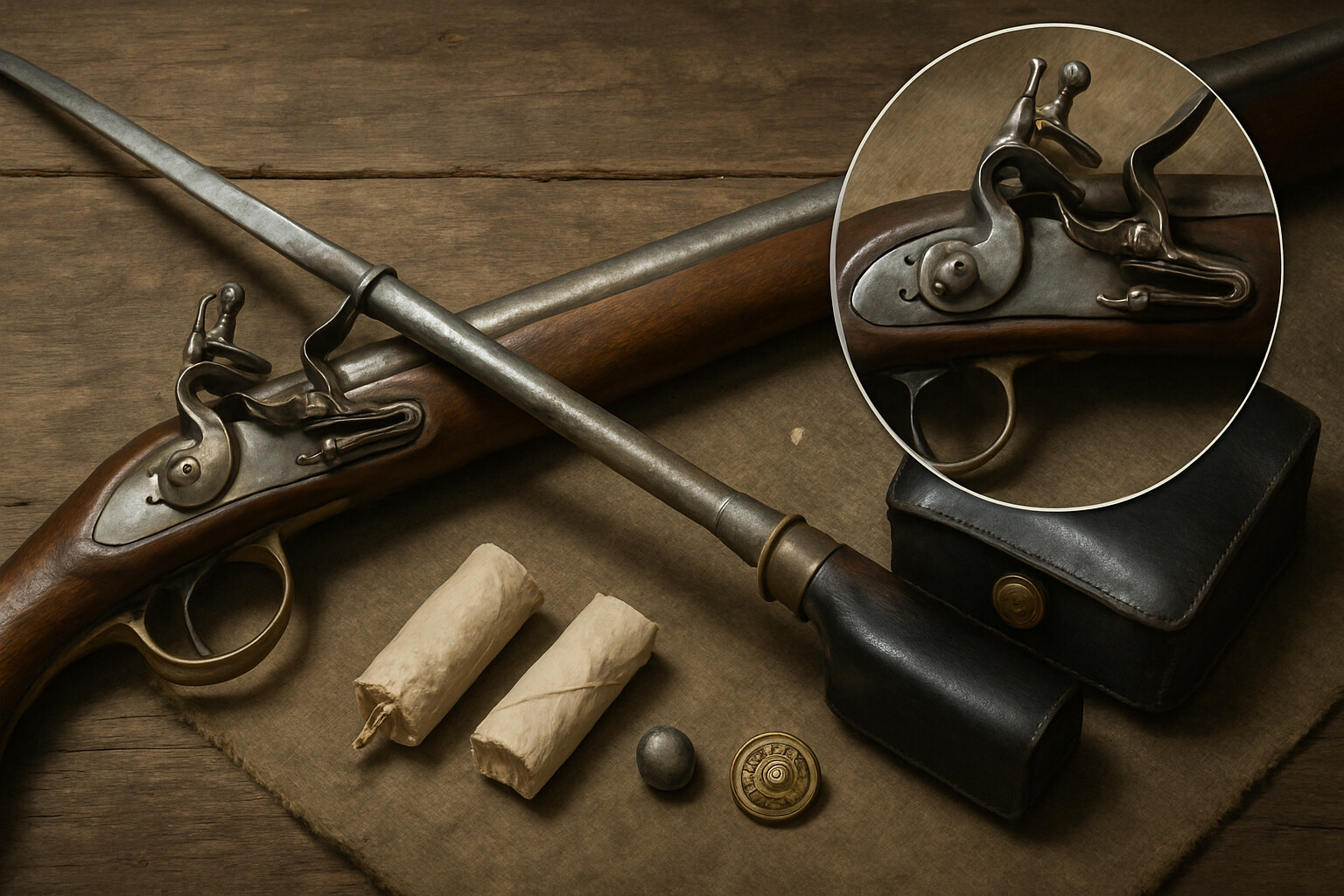
The soldiers who climbed those cliffs were British regulars—or as close to prime fighting form as a summer of campaigning, short rations, and sickness had left them. They carried the standard arm of the British infantryman of the period: the Long Land Pattern musket, known widely as the Brown Bess.
The Brown Bess was a flintlock smoothbore musket firing a lead ball approximately .75 caliber in diameter—a round of serious stopping power at close range. The weapon was not precise at distance. Against a dispersed target at two hundred yards, even a trained soldier had no expectation of hitting a specific man. The Brown Bess was designed for volley fire: ranks of infantry standing in line, discharging together, sending a wall of lead into the enemy formation at close range. At fifty to eighty yards, a disciplined British volley was devastating. At thirty yards, it was lethal.
This is why the training Wolfe's men had received mattered as much as the weapon itself. British regulars were drilled extensively in loading under pressure and in holding their fire. The tactical doctrine of the period, shaped by European warfare, called for the advance, the halt, the volley, and then the charge with the bayonet. A regiment that held its fire until the enemy was close, delivered a full volley, and then pressed forward with fixed bayonets was a regiment that generally won.
The bayonet itself—a seventeen-inch triangular blade socket-mounted to the musket—was not merely a secondary weapon. In the 1750s, the bayonet charge was the decisive tactical act. Musket volleys disrupted and shocked; the bayonet charge broke the enemy's will and routed the formation. A broken, running formation was more dangerous than a standing one: men caught in the open could be cut down or captured.
Wolfe's force also included light infantry—units specifically adapted to North American warfare over the course of the conflict. These soldiers operated in open order, used terrain, and could engage in the kind of skirmishing that European line infantry was not designed for. Light infantry, along with Highlanders from Fraser's Highlanders (the 78th Foot), made up elements of the assault force. The Highlanders carried broadswords as secondary arms in addition to muskets, and their presence at the battle is documented in multiple accounts.
The French army under Montcalm included his troupes de terre—regular French regiments from France—as well as the troupes de la marine, the colonial regular troops of New France, and militia drawn from the colonial population. The French regulars were equipped and trained along similar lines to the British: flintlock smoothbores, bayonets, linear tactics. The militia were more variable. Some were skilled bush fighters; others were farmers with minimal military training. On an open field, Montcalm knew the contest between his regulars and Wolfe's would be close. He also knew that mixing militia into regular lines carried risks.
Artillery played a role throughout the campaign, if not decisively at the Plains of Abraham itself. British siege artillery and naval guns had done enormous work during the summer. French batteries at the city had engaged the British fleet repeatedly. The artillery of the period—iron and brass cannon firing roundshot, canister, and explosive shell—was the dominant killer in siege operations and at ranges beyond musketry. The battle on September 13, however, was decided by infantry at close range, not by cannon.
---
**The Crossing and the Climb**
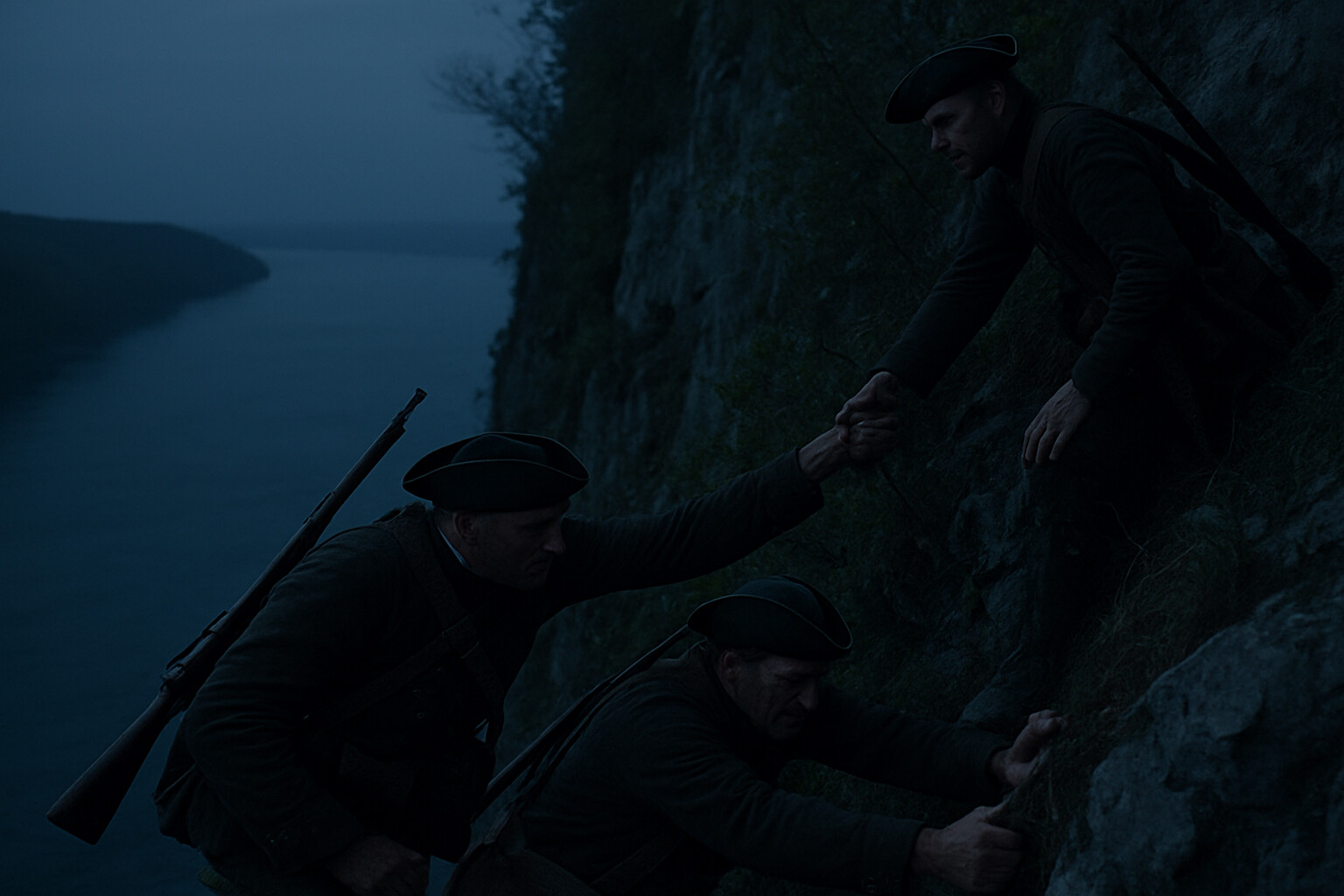
On the night of September 12–13, the British force assembled in the darkness. The operation required silence, coordination, and the river's cooperation. The current and the tide had to be navigated correctly; the timing of the boats had to put the first wave ashore before dawn made the cliffs visible to French sentries.
A French supply convoy had been expected on the river that night. Multiple near-contemporary accounts record that when French sentries on the bank challenged the passing boats, a French-speaking officer in the British formation answered that they were the expected supply convoy. Whether the exchange unfolded exactly as tradition records it cannot be verified from original contemporary documentation, but the basic account appears in several sources written close to the event. The boats passed.
The first troops ashore were light infantry, who scrambled up the path and the adjacent cliff face to silence or scatter the small French guard at the top. Accounts differ on the exact numbers guarding Anse-au-Foulon; estimates range from a single picket to something larger. The weight of the scholarship holds that the guard was insufficient and was overcome before it could raise a coherent alarm. This was the hinge on which everything turned. If those first men up had been stopped or significantly delayed, the operation would have failed.
But they were not stopped.
By dawn, Wolfe had approximately 4,500 soldiers on the heights west of Quebec, formed in line of battle across a plateau called the Plains of Abraham—named, according to local tradition, for a pilot or farmer named Abraham Martin who had owned land there in the previous century, though this is accepted rather than definitively documented. The plateau was open farmland, cleared fields interrupted by scattered brush and rough terrain on the flanks. The St. Lawrence lay to the south. The city walls were to the east. The cliffs fell away to the north toward the St. Charles River valley. Wolfe placed his line across the plateau, facing the city.
Montcalm, when the alarm finally reached him, faced a catastrophic decision with very little time to make it.
---
**Montcalm's Decision**
The French commander had several options. He could wait inside the walls of Quebec and let Wolfe besiege him, hoping for relief or resupply. He could wait for reinforcements from the French camp at Beauport and strike later, with more force. Or he could come out immediately and fight.
The scholarship on why Montcalm chose to attack immediately rather than delay has been extensive and occasionally contentious. Some historians argue he had little real choice: the British position, if consolidated, would cut the city's supply lines and make a siege inevitable—and the city's supplies were already thin. Others suggest Montcalm moved too quickly, before he had assembled all his available forces, and that a few more hours might have brought him advantages he discarded by attacking at once.
What is established is that by mid-morning, Montcalm led his force out from the walls and formed line of battle on the plateau, facing the British line across several hundred yards of open ground. His force numbered, by most estimates, somewhere around 4,500 men as well—though the composition was mixed, including regulars, colonial troops, and militia, and they were not all in position at the same moment. A separate French force under the Chevalier de Bougainville was several miles to the west and never arrived in time to affect the battle.
The two armies looked at each other across the plateau. The French advanced.
---
**The Fifteen Minutes**
The battle that followed was short and decisive in its main action—accounts vary, but most estimates put the open-field fighting at roughly fifteen minutes, a figure derived from multiple period accounts and widely cited in the scholarship, though it cannot be timed with precision—and it was shaped almost entirely by fire discipline.
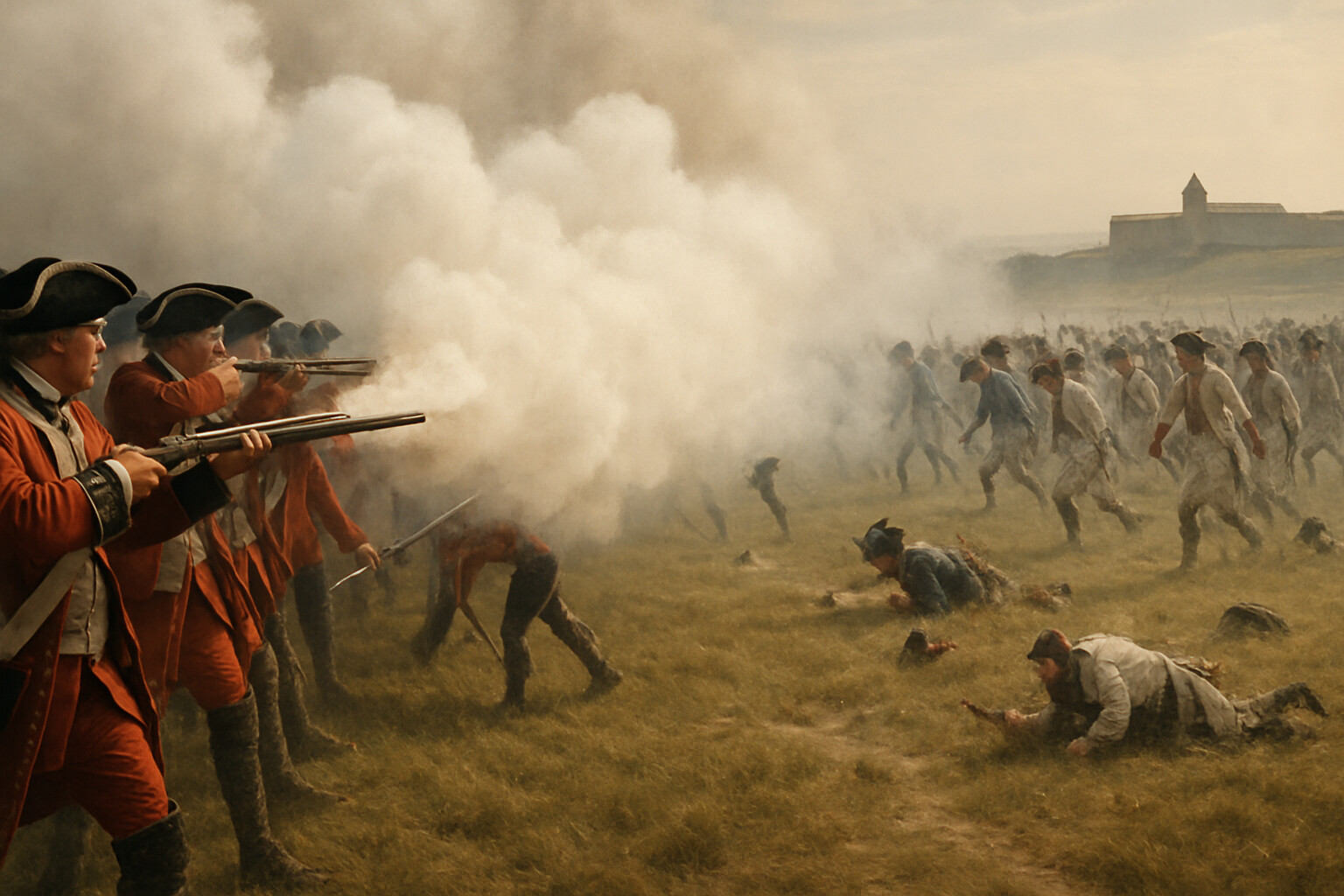
The French line advanced, firing as it came. This was not irregular in itself: it was the standard European practice of advancing with rolling fire to keep pressure on the defender. But the French line was irregular in its execution. Militia contingents dropped to the ground to reload—a habit from bush fighting—while the regular soldiers remained standing. This broke the coherence of the French volleys and opened gaps in the line. The tactical analysis of these mechanics is reconstructed from period accounts and battlefield logic; the accounts agree the French line fragmented, though they vary in precise detail.
Wolfe's line held its fire.
The accounts agree on this point, and it is one of the most-cited tactical facts of the battle. The British regiments stood in their two-deep line under the incoming French fire and did not discharge. Officers and sergeants held the ranks. Men were hit and fell; the line dressed around them. The French came closer.
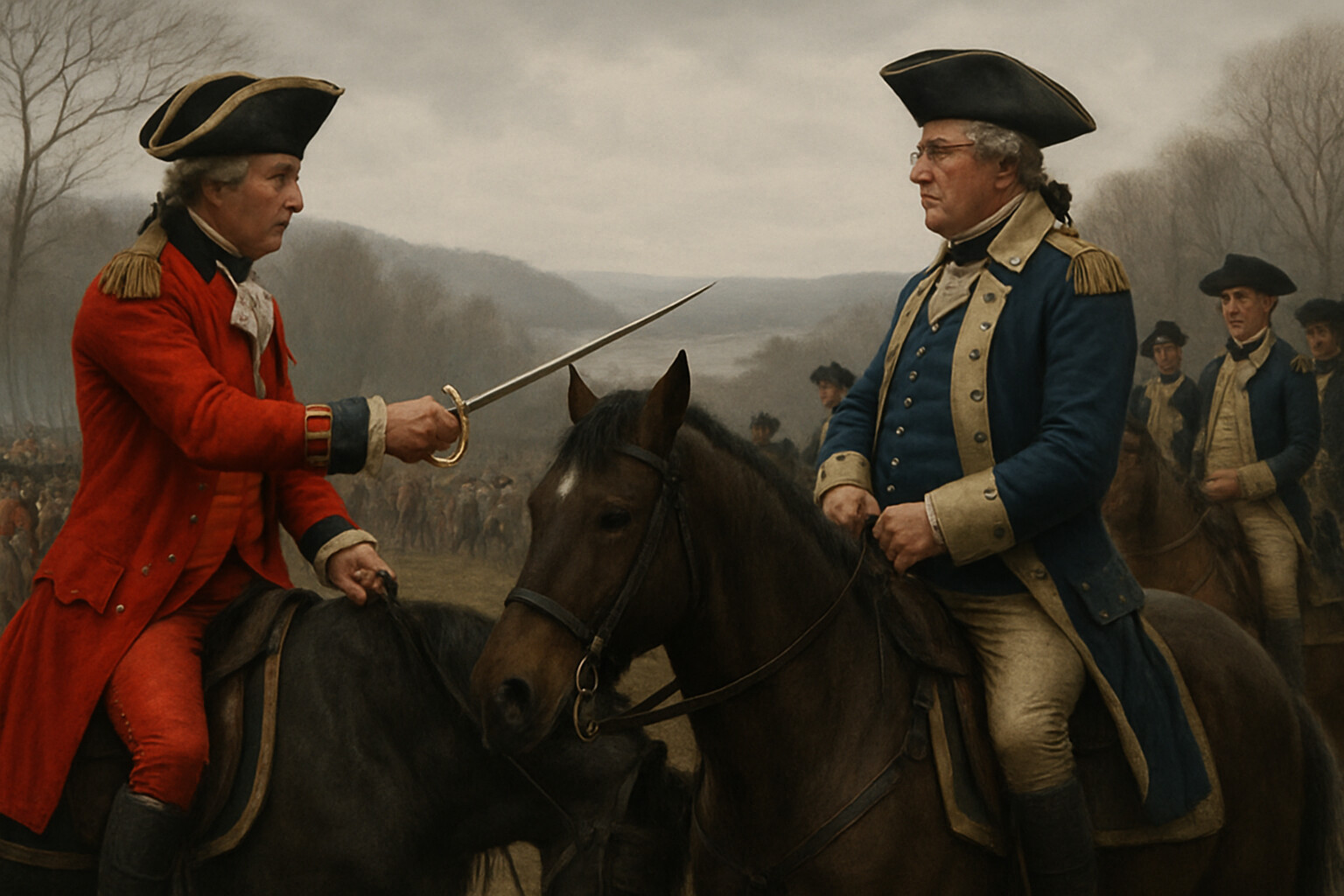
At approximately forty yards—accounts range from roughly thirty to sixty yards, and no single figure can be confirmed from the primary record—the British line fired. A near-simultaneous volley from the entire British front discharged at close range into an advancing formation that had already disrupted itself. The effect was severe. The French line broke. Before the smoke cleared, British regiments went forward with the bayonet.
The French ran. The pursuit was aggressive. Fraser's Highlanders—the 78th Foot, many of them Gaelic-speaking men recruited from the Scottish Highlands after Culloden, now fighting for the Crown that had broken their clans—ran down the routing French soldiers with broadswords and bayonets. The violence of the pursuit was noted in multiple accounts.
On the flanks, the fighting was less clean. French and Canadian irregulars in the woods and rough ground to the north harassed the British advance and caused casualties even as the center collapsed. The battle was a British tactical victory, but not a bloodless one.
---
**The Cost: Two Commanders**
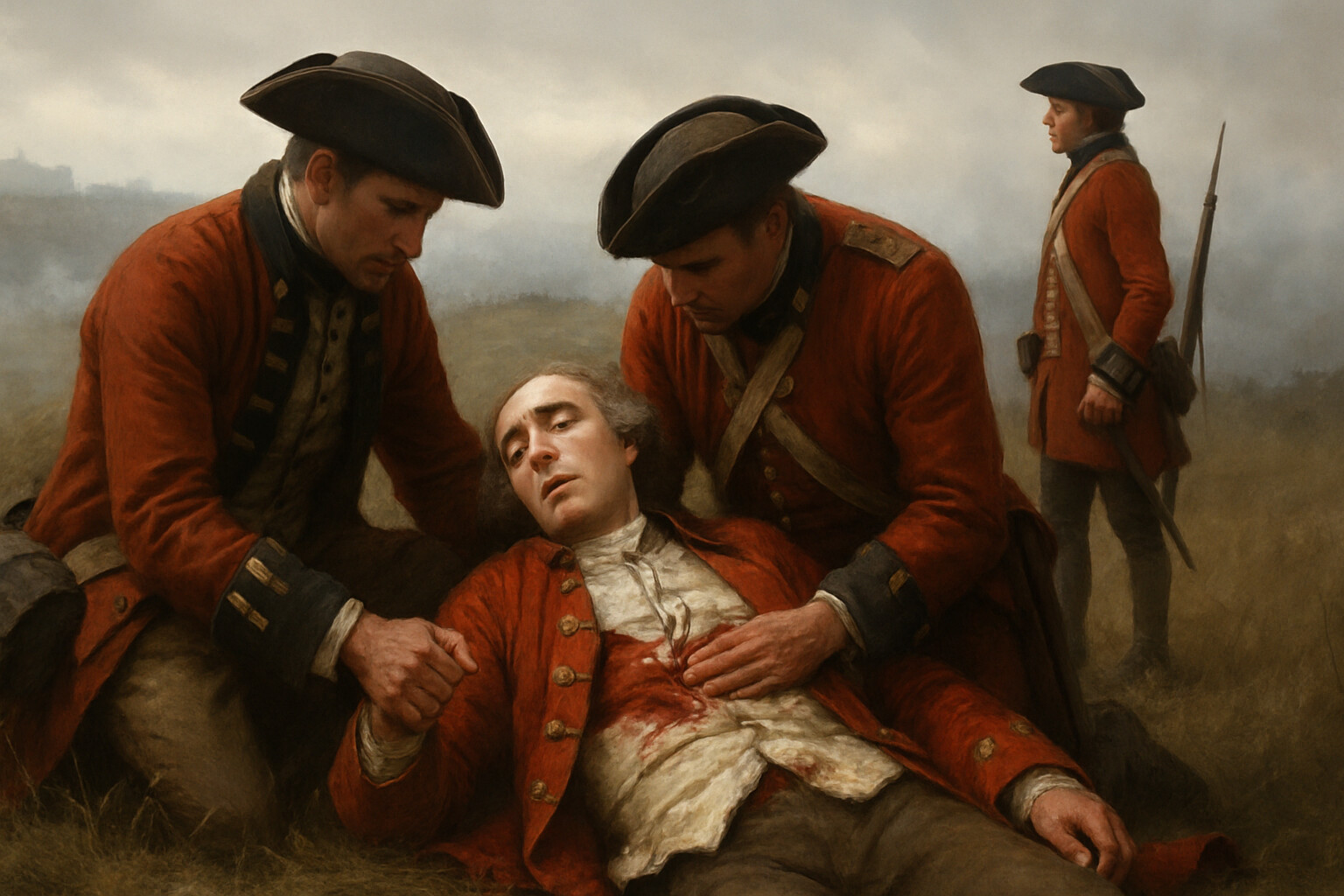
Wolfe was hit during the battle. The timing and circumstances of his wounding appear in multiple near-contemporary accounts, though the details vary and the precise sequence has not been resolved. He was struck more than once—once in the wrist during the fighting, and then again, fatally, in the chest or upper body. The wound that killed him was severe enough that he collapsed and was attended by soldiers on the field.
The accounts of his final moments have been shaped by subsequent tradition, painting, and the needs of a society that wanted a dying hero. Benjamin West's famous 1770 painting created an image that became iconic and mythologized the scene almost immediately—it is a work of commemorative art, not documentary record. The historical record confirms that Wolfe was mortally wounded and died on the battlefield, and that he was aware, by most accounts, that the French line had broken. The specific words attributed to him in various tellings—including the famous exchange about the French running—should be treated as tradition: recorded in accounts written after the fact and shaped by what subsequent generations needed the story to mean. They cannot be verified as verbatim record.
Montcalm was also mortally wounded during or just after the battle. He was struck by a musket ball and was carried into Quebec, where he died early the following morning, September 14. The sentiment attributed to him upon learning he was dying—that he was glad he would not live to see Quebec surrender—comes from post-battle accounts and cannot be verified as direct quotation.
Two professional soldiers, products of two of Europe's great military traditions, were gone within hours of each other. The battle that killed both men lasted a fraction of the time they had spent preparing for it.
British casualties at the Plains of Abraham are generally cited at approximately 58 killed and around 600 wounded, though these figures vary somewhat across sources. French losses were heavier, particularly given the rout and pursuit, with estimates generally ranging higher.
---
**The Surrender and What Followed**
Quebec surrendered to the British on September 18, 1759—five days after the battle. The Chevalier de Ramezay, commanding the garrison, had been left with a city that was battered, undersupplied, and now without its commanding general. Bougainville's force, intact to the west, was insufficient to reverse the situation. The terms of surrender were, by the standards of eighteenth-century European warfare, formally negotiated and honored.
The war in North America was not over. French forces under the Chevalier de Lévis returned the following spring and defeated the British at the Battle of Sainte-Foy in April 1760—a sharp reminder that military outcomes are not permanent until consolidated. The British held Quebec's walls, however, and when the Royal Navy arrived on the river in May 1760, the question of relief from France was answered definitively: there would be none. French forces in North America surrendered at Montreal in September 1760.
The formal end came with the Treaty of Paris of 1763, by which France ceded most of its North American possessions to Britain and Spain. New France became British North America. The colony that became Quebec remained culturally, linguistically, and legally French in many respects—the Quebec Act of 1774 recognized French civil law and Catholic religious practice—but as a political entity, it passed out of French imperial control.
The battle on the Plains of Abraham was the decisive engagement, not the final one. But the shape of what followed was determined in those fifteen minutes on the plateau.
---
**The Record, the Myth, and the Careful Line**
The Battle of the Plains of Abraham is among the best-documented engagements of the eighteenth century, and also among the most mythologized. Contemporary accounts, official correspondence, journals from soldiers on both sides, and the voluminous records of the Royal Navy provide an unusually rich primary source base. Francis Parkman's nineteenth-century histories, though shaped by the assumptions of his era, drew on primary sources that remain valuable. Twentieth and twenty-first century historians including C.P. Stacey, D. Peter MacLeod, and Fred Anderson have applied more rigorous critical standards to the record.
What that scholarship confirms: the night landing at Anse-au-Foulon was Wolfe's operation; it succeeded through a combination of intelligence, timing, and a small French guard that failed to raise an effective alarm; the battle itself was decided by British fire discipline against a French advance that fragmented on its own irregularities; and both Wolfe and Montcalm were mortally wounded.
What that scholarship treats with appropriate care: the specific last words attributed to either commander, the precise sequence of Wolfe's wounding, the exact number of French sentries at the cove, and the details of the reported deception of the French guards on the river. These are not invented, but they come from accounts written at varying removes from the event, shaped by the conventions of the era and by what subsequent generations needed the story to mean.
The story does not require embellishment. An army moved silently on a dark river and climbed a cliff that its enemy believed impassable. It formed line on an open plateau in the early morning. It absorbed incoming fire and held. It delivered a single volley that broke an army. The men who made that happen were British regulars, Scottish Highlanders, American light infantry, and a young general who was already sick and who pressed forward anyway. The men who faced them were French regulars, colonial soldiers, and Canadian militia defending a place they had been holding for months against odds that were, in the end, too long.
Both commanders left the field dying. Neither lived to hear the terms of surrender.
What they left behind was the beginning of what became Canada—not as either of them would have recognized or defined it, but shaped at its foundation by what happened on this plateau, by this river, on a morning in September 1759.
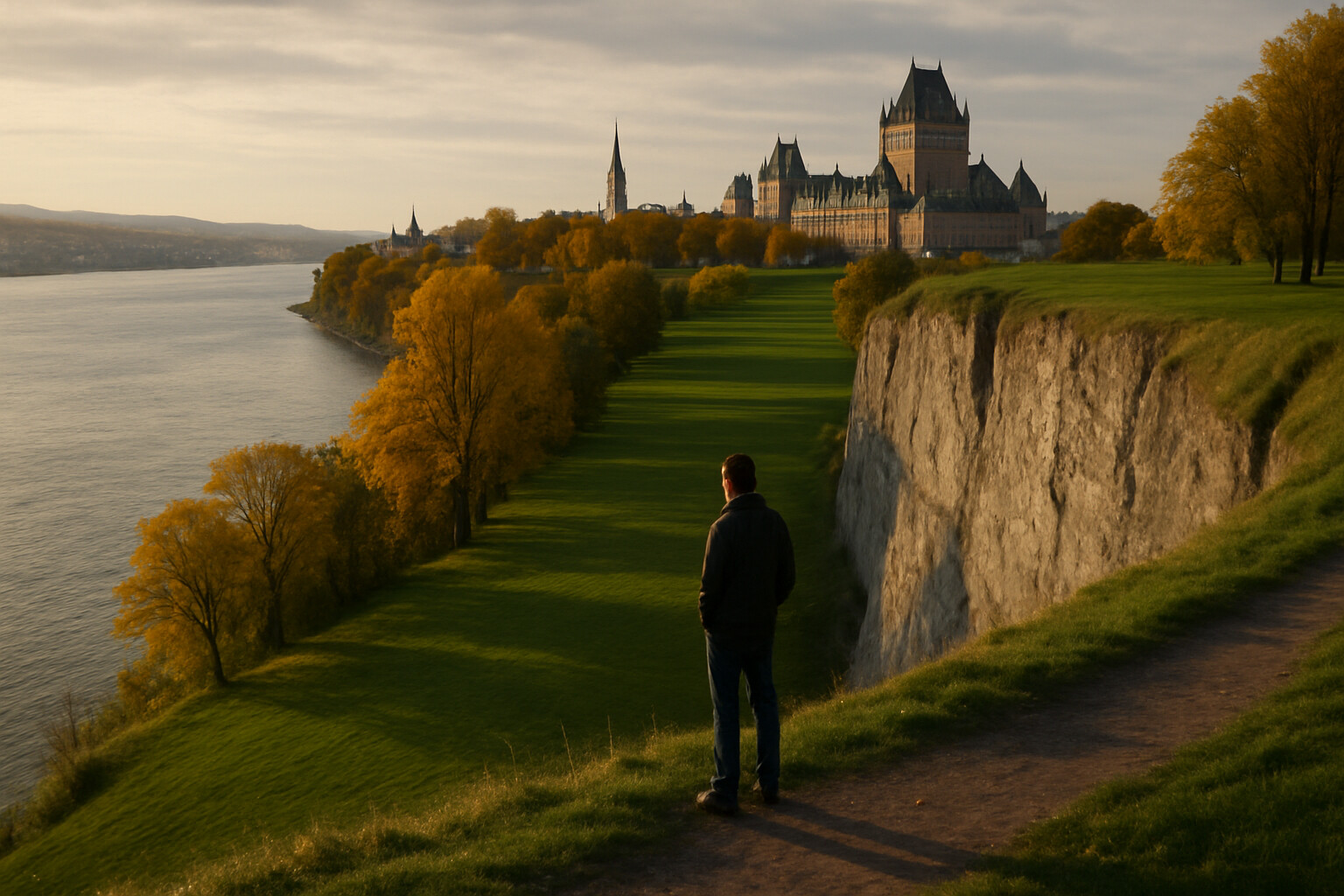
The Plains of Abraham are a public park in Quebec City today. The cliffs are still there. The river still moves below them. The distance from the water to the top of the path at Anse-au-Foulon is roughly the height that Wolfe's men climbed in darkness, in silence, with no certainty of what waited at the top. The ground is worth standing on, if you have the opportunity. It measures the event in a way no text fully can.