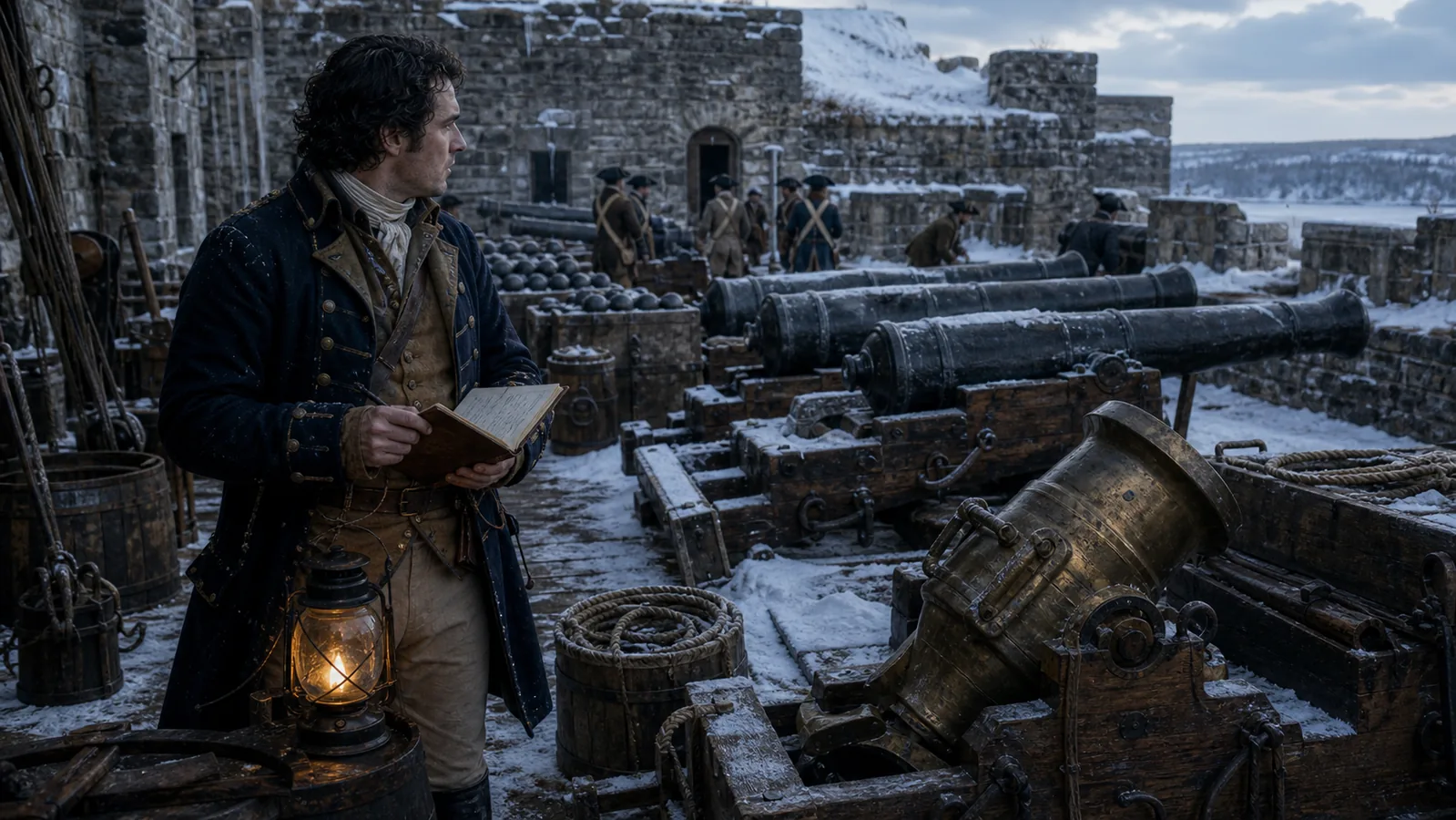
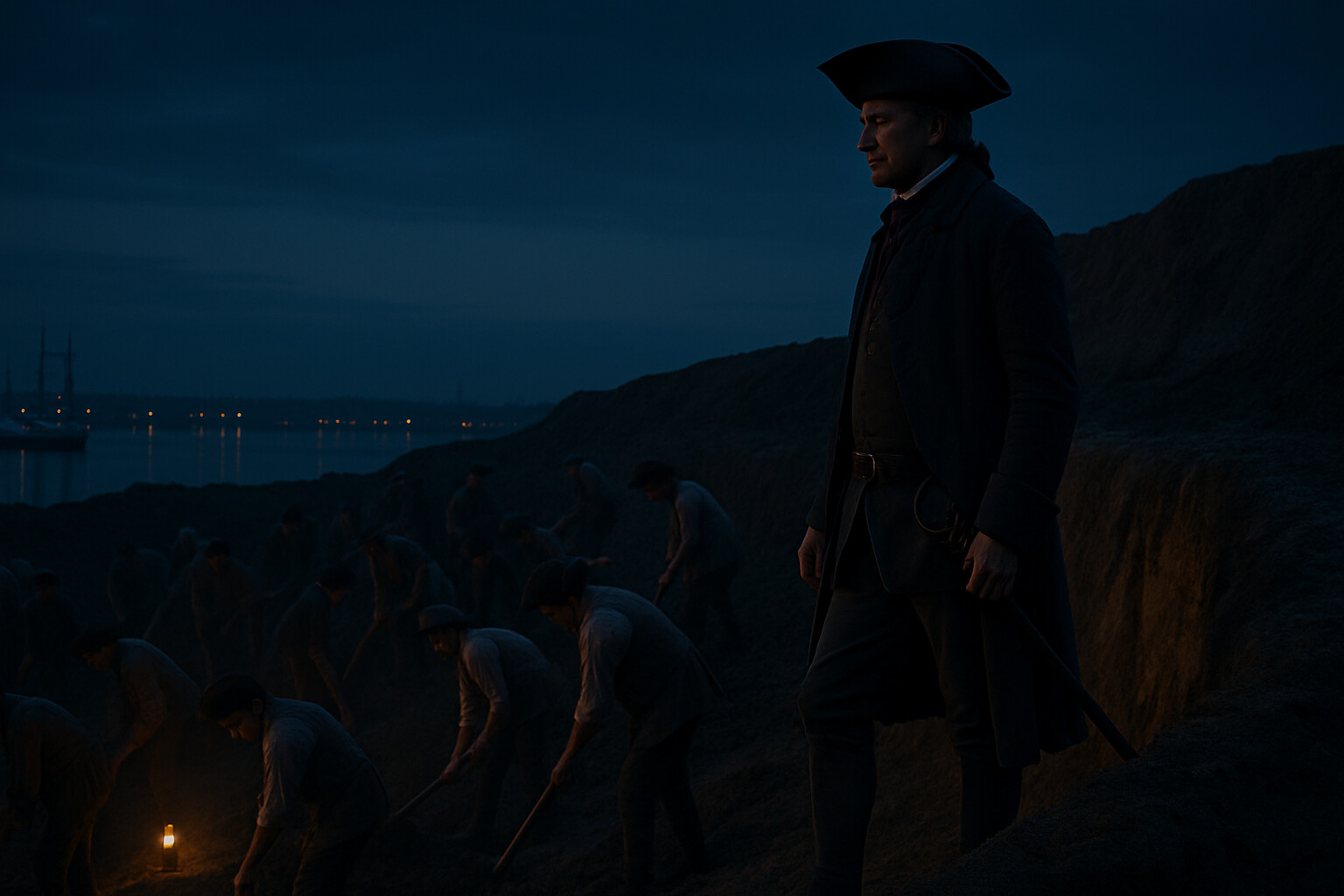
Knox reached Ticonderoga in early December. The fort was a prize, but it was not a ready-made delivery warehouse. Guns had to be inventoried, selected, dismounted, prepared, shifted to landings, and loaded. Some were useful. Some were too awkward. Some were too damaged. Knox had to make choices with Boston in mind: what could be moved, what would matter when it arrived, and what was worth risking men and animals to carry.
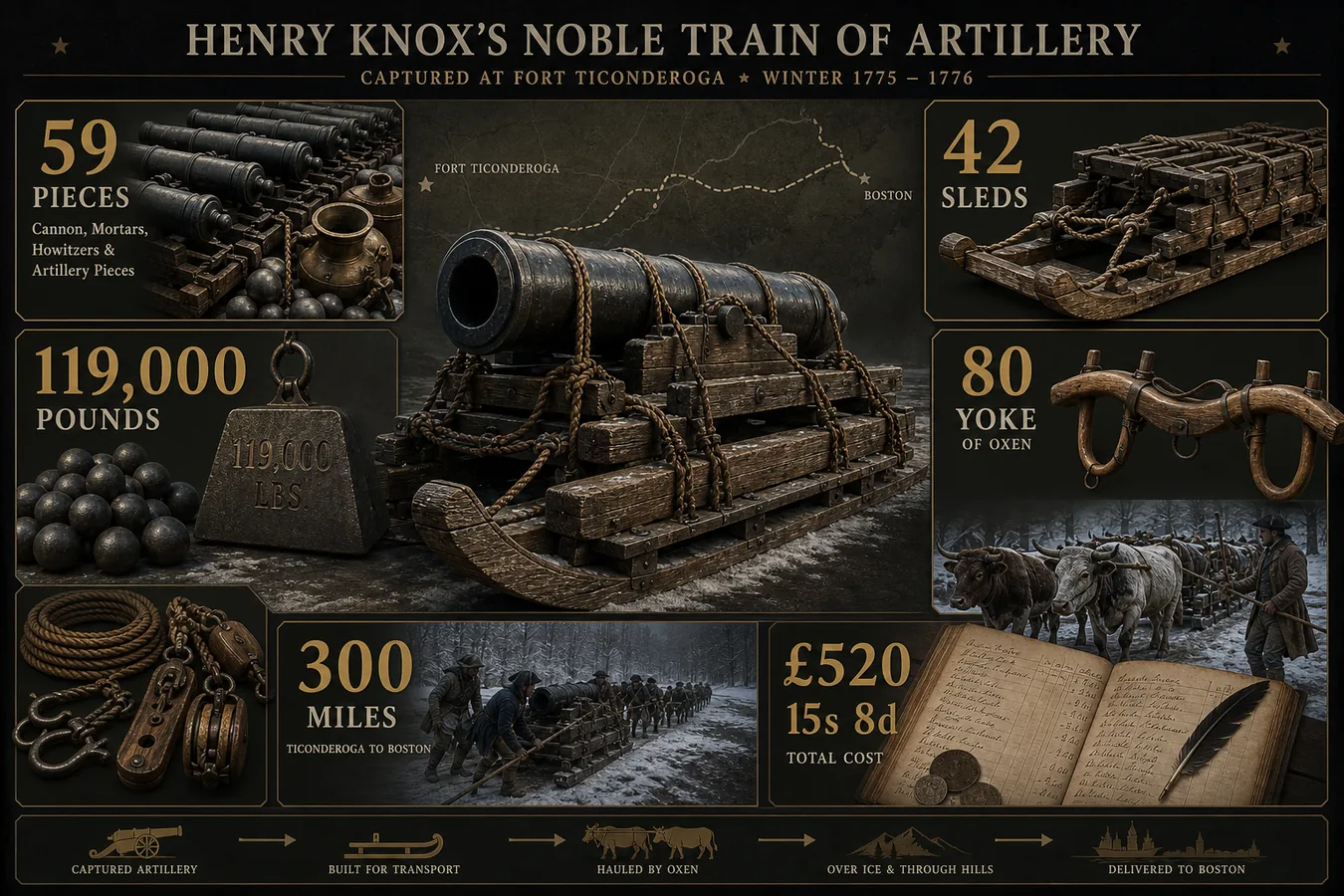
The final train is usually described as fifty-nine cannon, mortars, howitzers, and related artillery pieces, weighing roughly 119,000 pounds. These were not all the same kind of weapon. Field pieces could move with an army. Siege guns and mortars were slower, heavier, and more punishing to transport, but they could throw weight across distance and make fortifications meaningful. Boston needed that kind of metal.
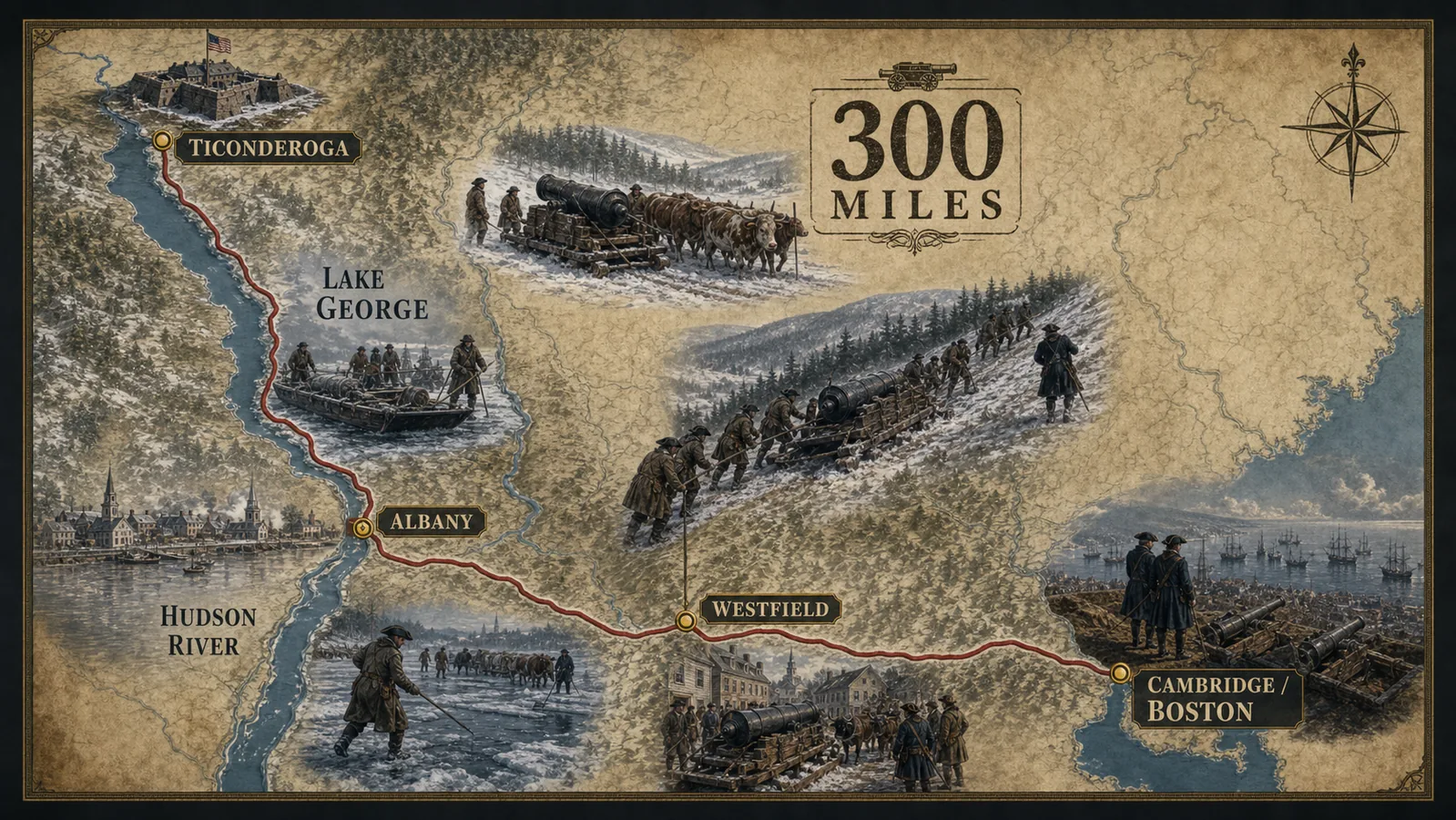
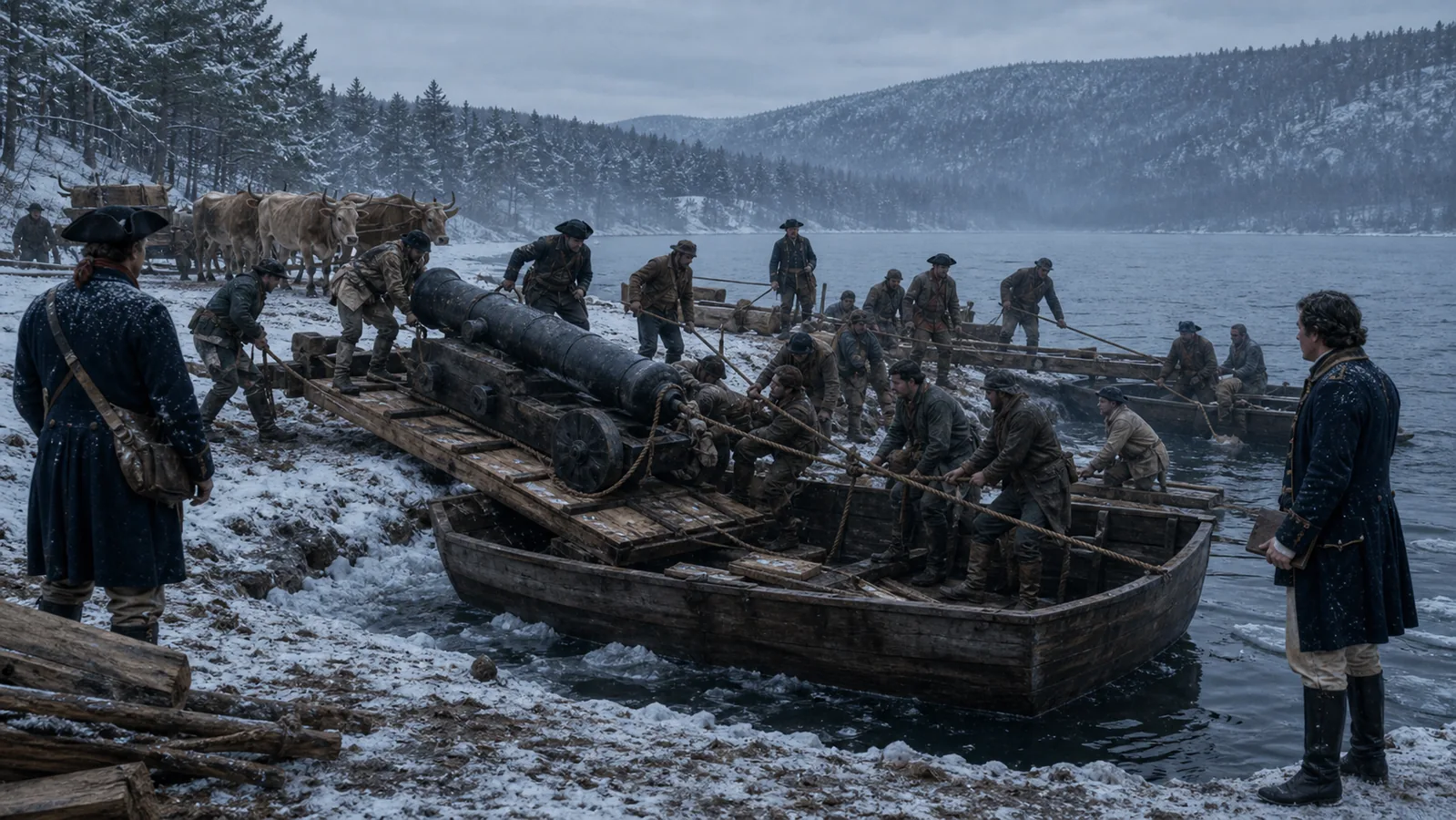
The first major obstacle was water. Knox had to move the guns through the Lake Champlain and Lake George corridor before the overland sled haul could truly begin. Flat-bottom boats, batteaux, pettyaugres, and scows were the practical answer. The water could carry what roads could not. But winter water was its own enemy.
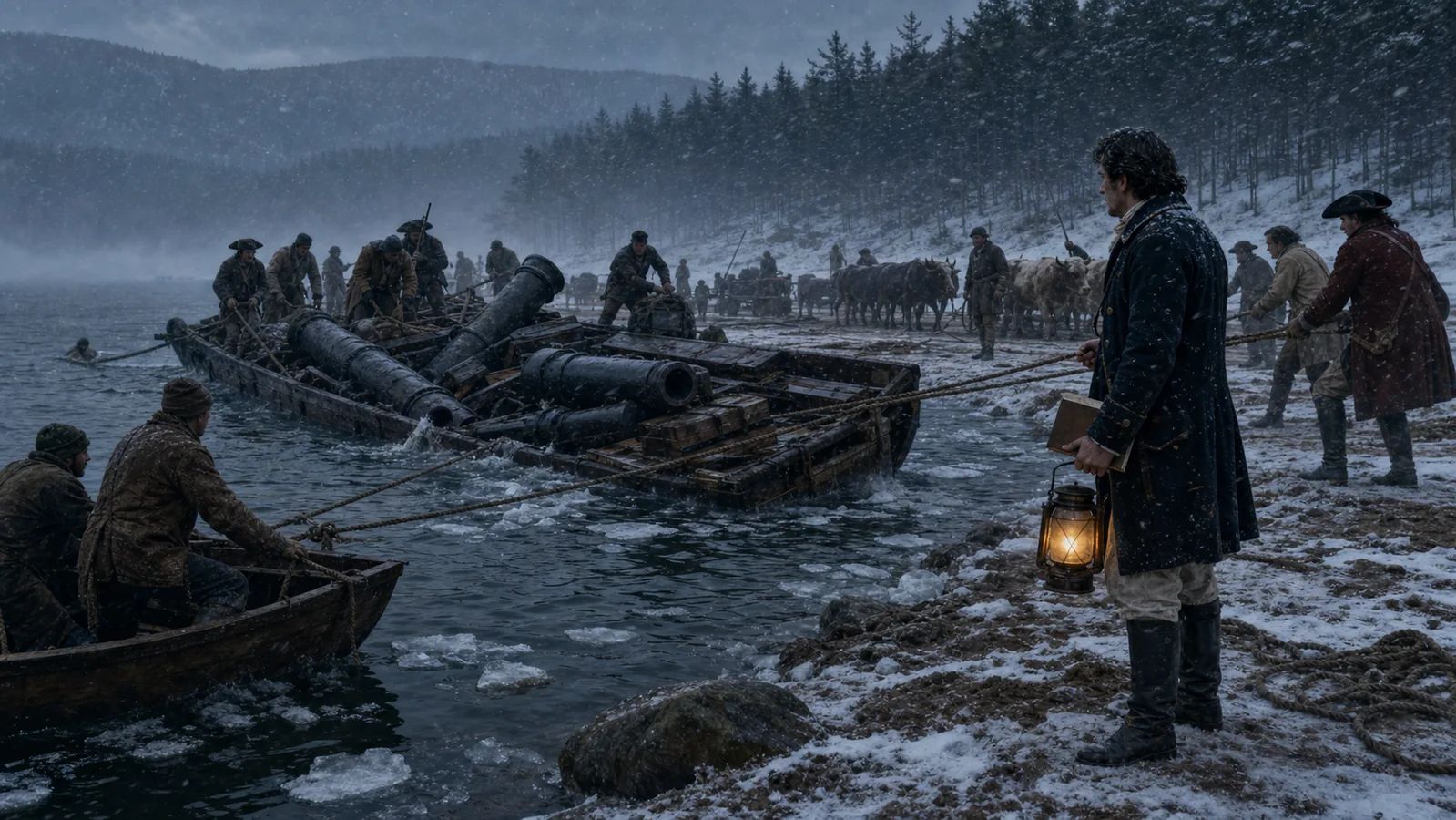
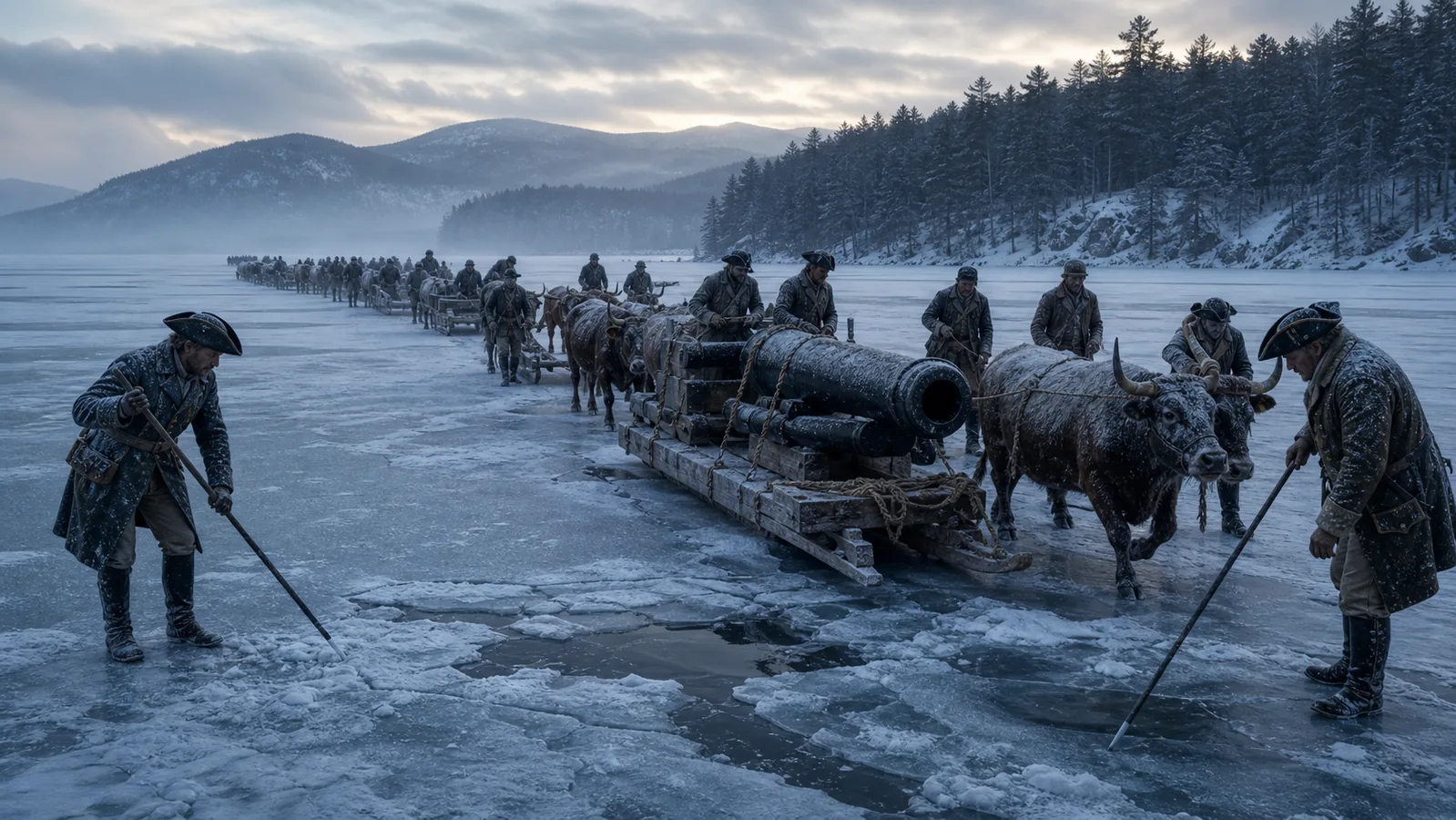
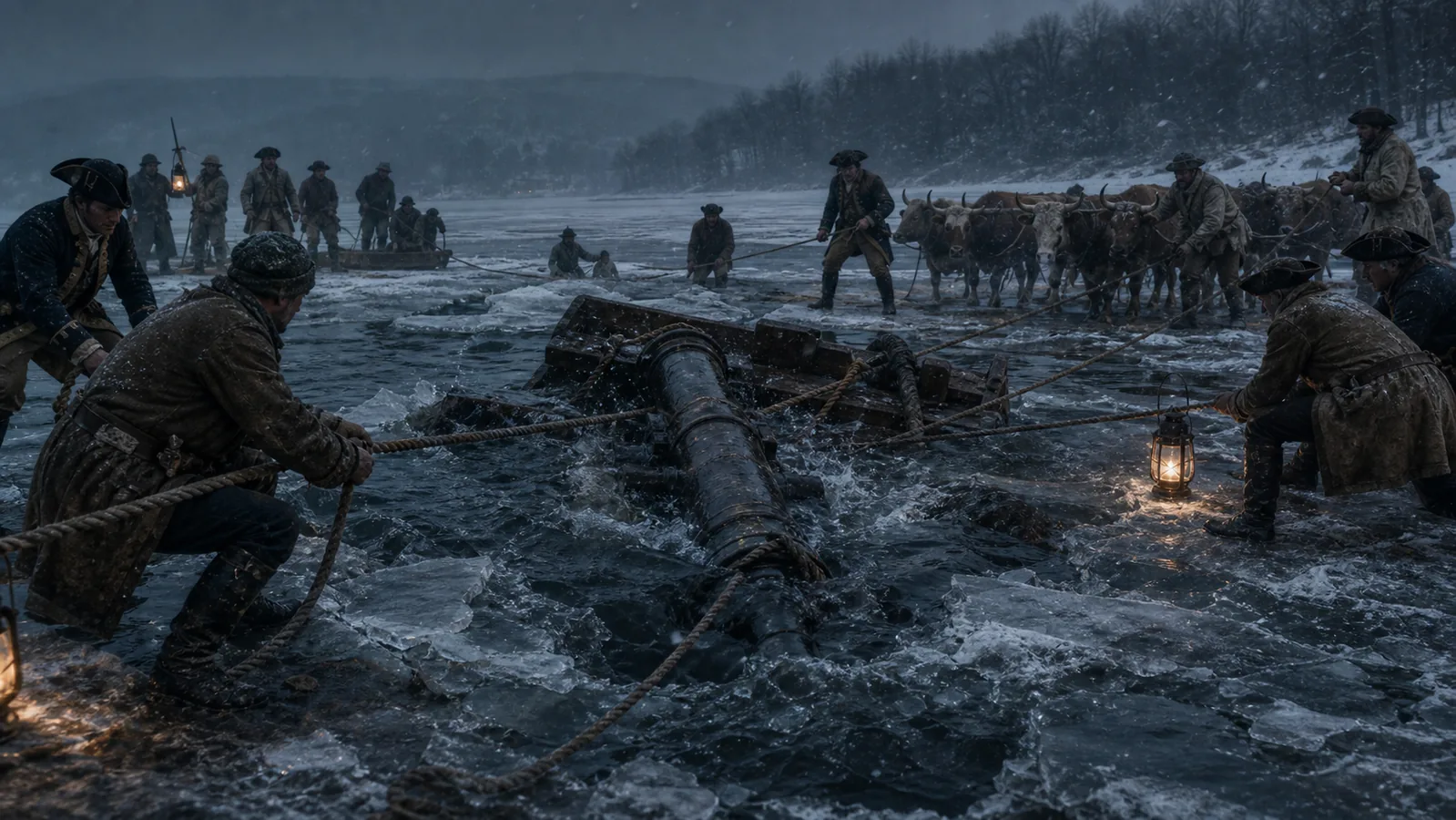
At Lake George, the operation nearly made the whole story a disaster before the sleds had even started. The artillery went onto boats and scows. One large scow carrying artillery became stuck on an underwater rock. Later it foundered and sank. That is the kind of detail that separates the real story from the clean schoolbook version. The noble train was not a smooth parade of cannon across snow. It was a chain of near-failures, recoveries, improvisations, and local fixes.
The lake scene deserves to be lingered on. A flat-bottomed transport craft is not a dramatic warship. It is a practical box for weight. That was exactly why Knox needed it. A cannon that could not be hauled fast over bad roads could be floated, if the lake cooperated. But a scow loaded with artillery has almost no forgiveness. If it grounds, the load cannot simply step out and walk. The craft becomes a problem of leverage, cold water, rope, and men working around metal that can crush them.
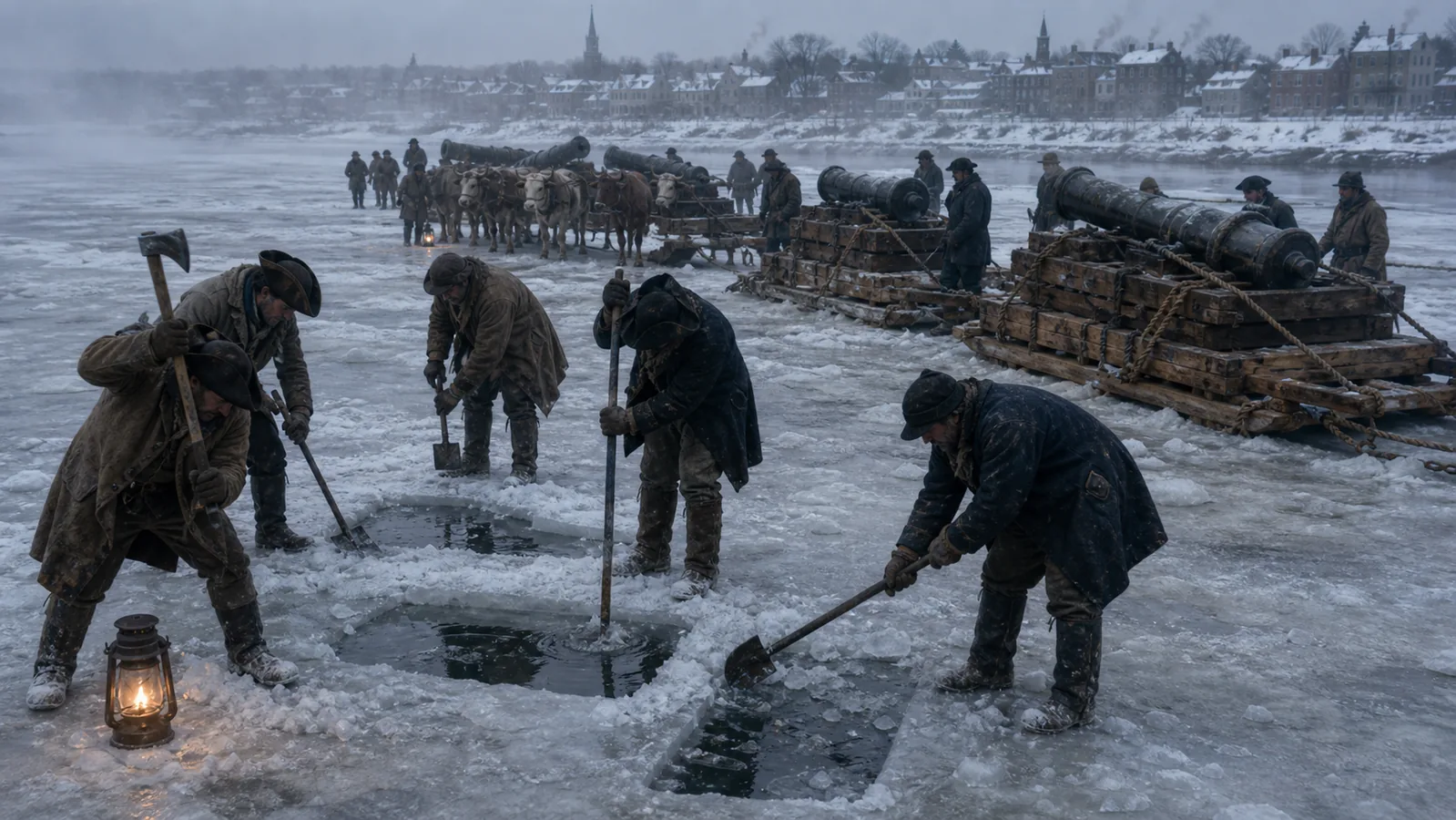
When the overloaded craft foundered, the expedition briefly became a salvage operation. The guns had already been won from the British once; now they had to be won back from Lake George. This is the first big visual set piece for the story: the lake surface dark under December weather, men on the shore hauling lines, the heavy gun half-lost, and Knox measuring the delay against Washington's need outside Boston.
The guns were recovered. That sentence is easy to write and hard to picture. Men working in freezing conditions had to deal with a loaded craft, heavy iron, cold water, ropes, leverage, and time pressure. Every hour mattered because the route depended on weather. Too little freeze and the sleds could not cross. Too much thaw and rivers became traps. Knox was racing winter and needing winter at the same time.
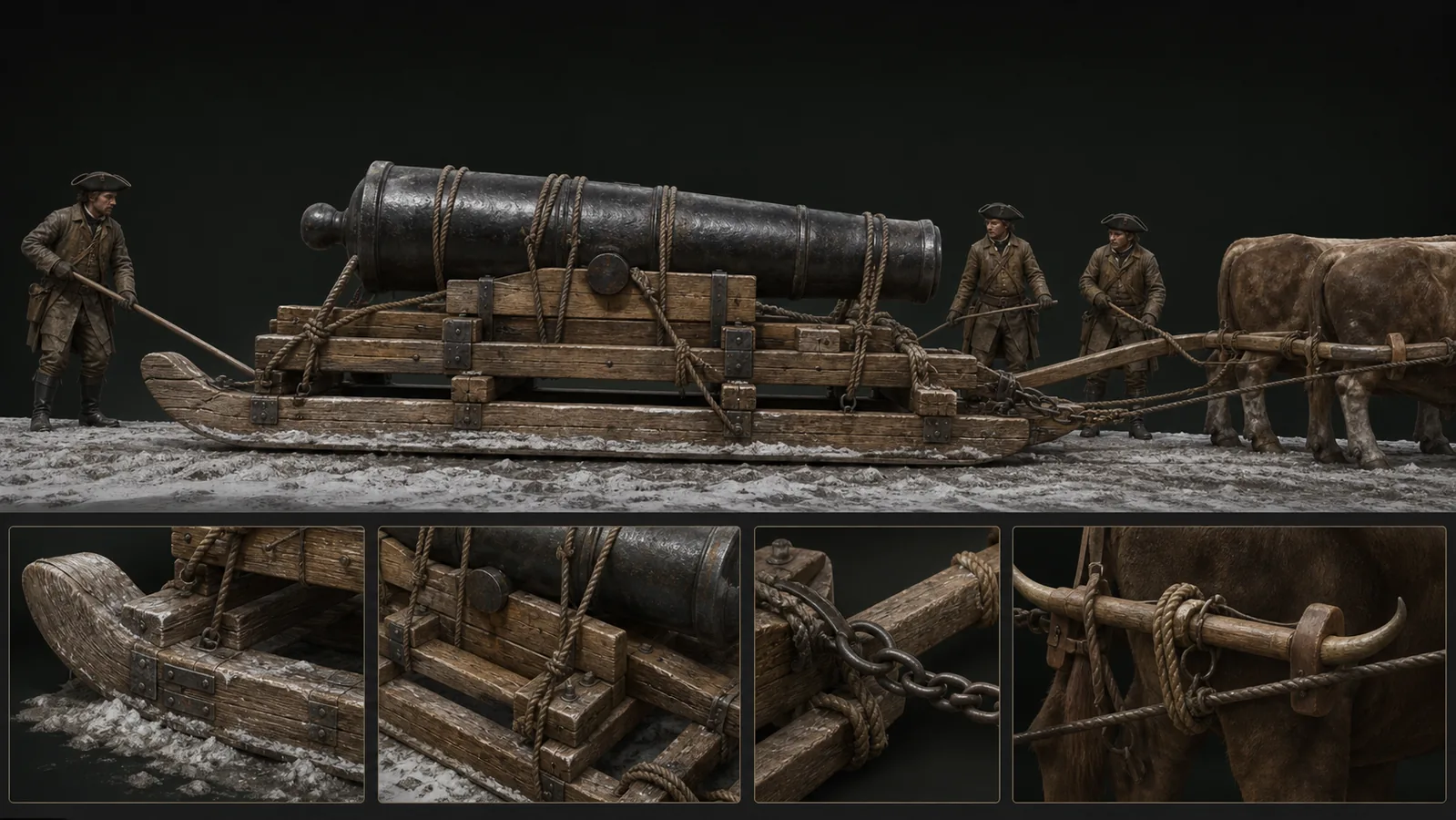
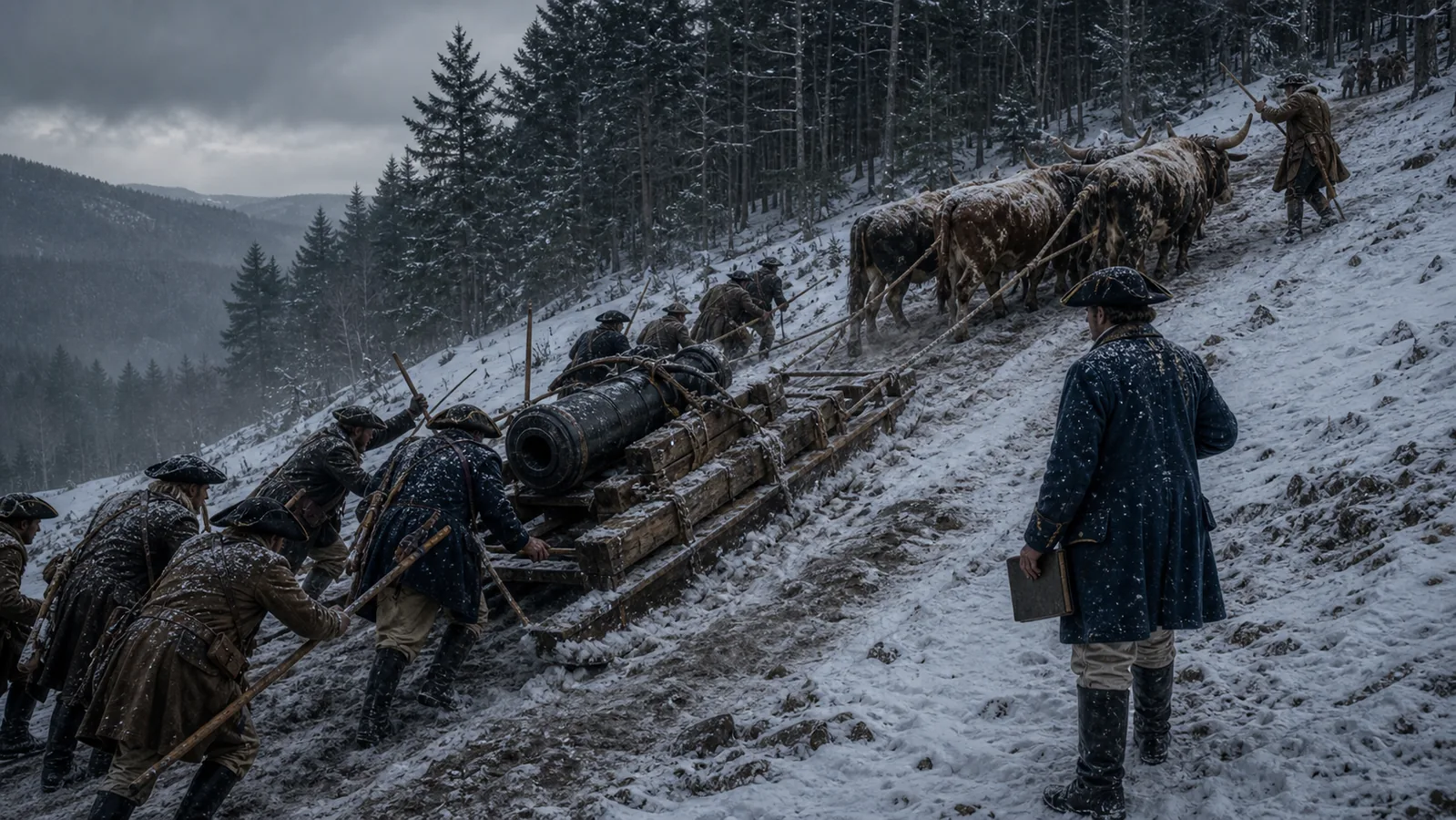
From the lake country the artillery had to be staged toward the Hudson Valley. Roads were rough, bridges questionable, and local help indispensable. This is where Knox's strength as an organizer begins to show. He was not simply a bold young officer. He was a coordinator of people: soldiers, teamsters, carpenters, boatmen, farmers, contractors, and local authorities. The guns moved because a network moved.