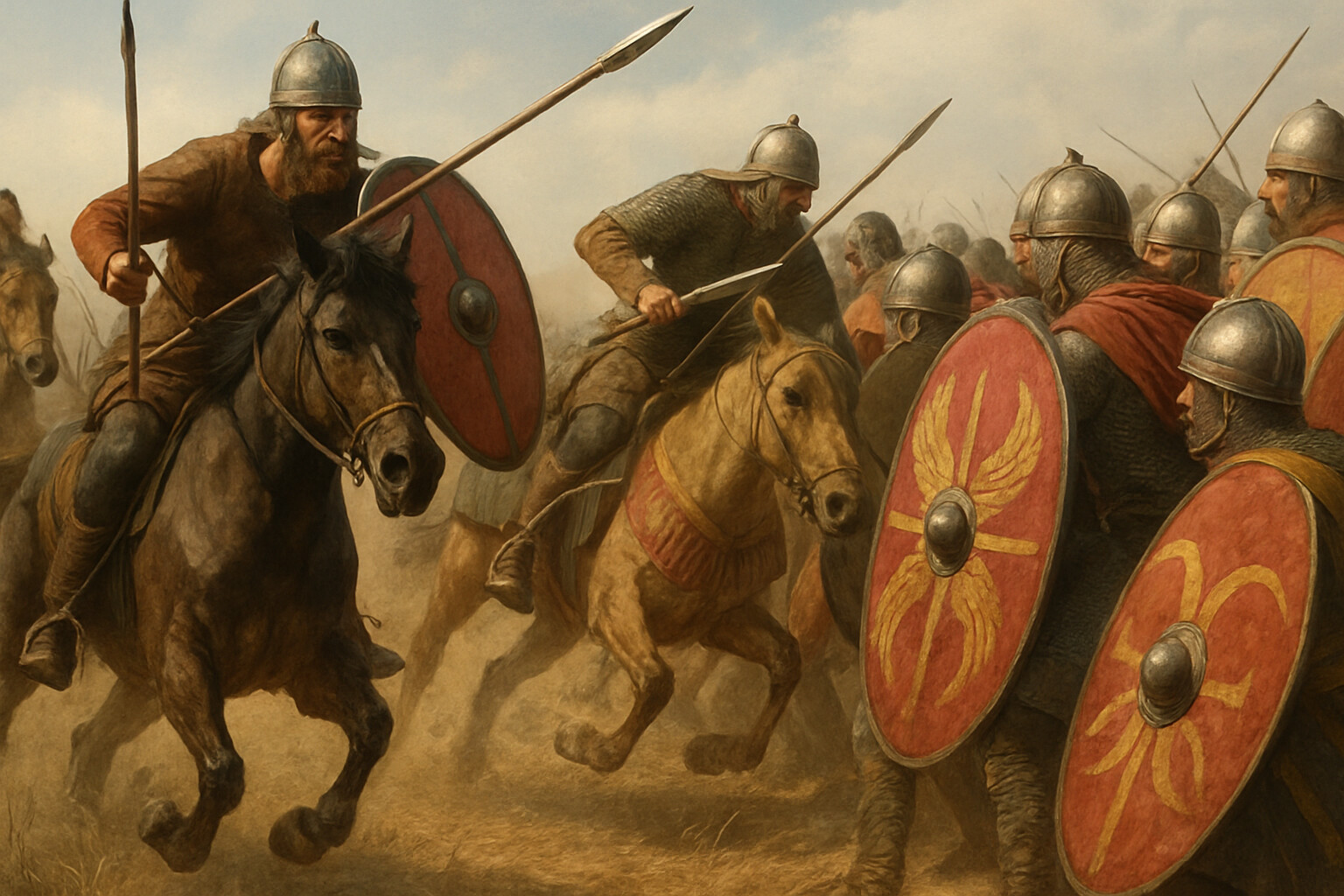
The last thing the Roman officers expected was cavalry on their left flank.
It was mid-afternoon on the ninth of August, 378 AD. The sun was past its zenith but the heat had not broken. The Roman infantry — legionaries, auxiliaries, and limitanei drawn from across the Eastern Empire — had been standing in formation since late morning, waiting in the dust while their emperor negotiated, or failed to negotiate, with the Gothic leadership camped somewhere to the north of Adrianople. The men had eaten poorly. They had marched hard. Their ranks had shifted and pressed during the long halt, so that when the order to advance finally came, the left wing had already pushed forward without coordination, pulling the line out of shape. The Roman army that stepped off toward the Gothic wagon-laager that afternoon was not the clean, disciplined instrument it had been that morning. It was tired, thirsty, and disordered.
Then the Greuthungian Gothic cavalry came back.
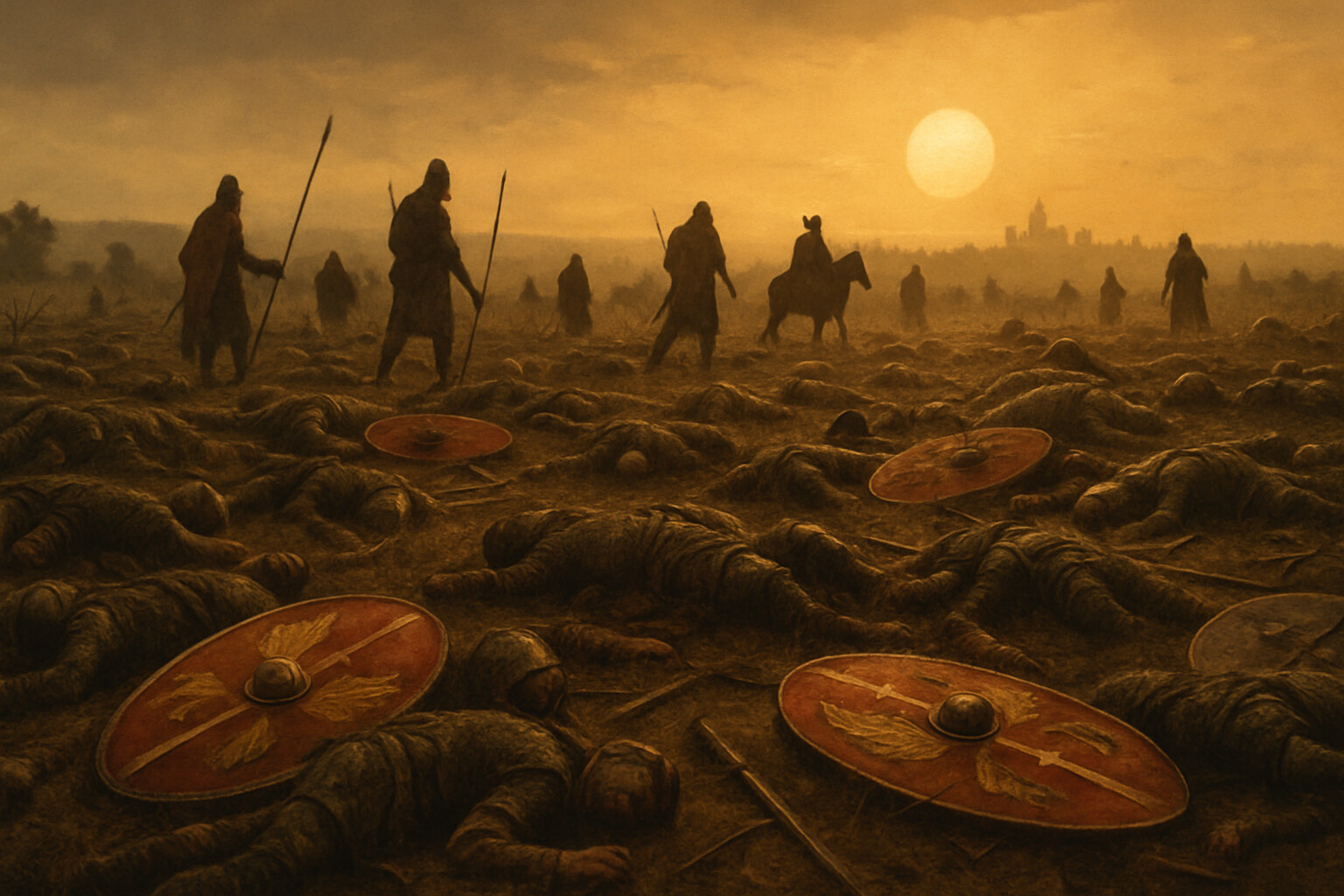
They came back from foraging — their precise location during the early fighting is not recorded in surviving sources — and they struck the Roman left wing and rear with a force that the disordered formation could not absorb. The Roman cavalry on the left, already under pressure from Gothic infantry pressing forward from the laager, broke. When the cavalry ran, the infantry had nowhere to go. The formations that had held Gothic foot warriors at bay began to compress inward under pressure from multiple directions at once. In the crush, soldiers could not raise their weapons. The discipline that made Roman infantry lethal — the ability to strike, step, pivot, and hold — required space. There was no space. There was only pressure, heat, bodies, and blades.
Valens died somewhere in that rout. The Romans could not find his body afterward.
---
To understand what happened at Adrianople, it is necessary to understand the four years that made it likely — or, at minimum, that made a Roman defeat in open battle against the Goths a serious possibility.
In 376 AD, the Gothic peoples living north of the Danube River faced a crisis that had nothing to do with Rome. The Huns, a steppe confederacy from central Asia, had swept westward with devastating speed and were pressing against the Greuthungi and the Tervingi, the two major Gothic groupings along the Roman frontier. The Tervingi, led by a chieftain named Fritigern, sent envoys to Valens requesting permission to cross the Danube and settle within Roman territory as foederati — allied peoples who would provide military service in exchange for land and protection.
Valens agreed. The Goths had fought as Roman allies before. They were potential soldiers. The arrangement had precedent. What followed was not his plan.
Roman officials managing the crossing — their names recorded by the historian Ammianus Marcellinus as Lupicinus and Maximus — allowed the crossing to proceed but administered it with what Ammianus describes as greed and incompetence. Gothic families were stripped of weapons. Food was denied or sold at exploitative prices. Ammianus records that Roman officials accepted Gothic children as slaves in exchange for dog meat, though this account, vivid as it is, represents one ancient witness's description and may carry rhetorical weight alongside factual content. The numbers crossing were larger than Rome had prepared for. Roman logistics failed. Gothic patience failed with it. By 377, Fritigern's Goths were in open rebellion, ranging across the provinces of Thrace and Moesia, defeating local Roman forces, and drawing other Gothic groups — including the Greuthungi under Alatheus and Saphrax — into the fighting.
For two years, the Goths raided, fought, and survived in the Balkans while Roman forces attempted to suppress them. The campaigns were inconclusive. The Goths were mobile, skilled, and operating on ground they had learned during two years of living on it. Roman armies scored tactical victories but could not destroy the Gothic host or prevent it from moving.
By the summer of 378, Valens had concluded that he needed to end this himself.
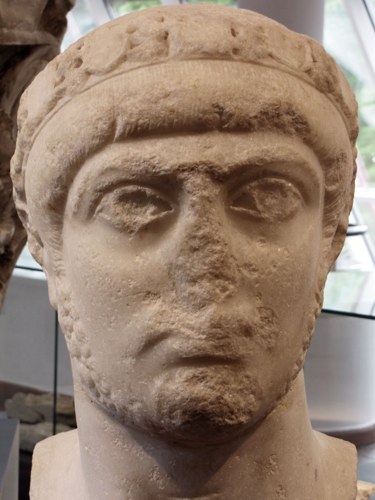
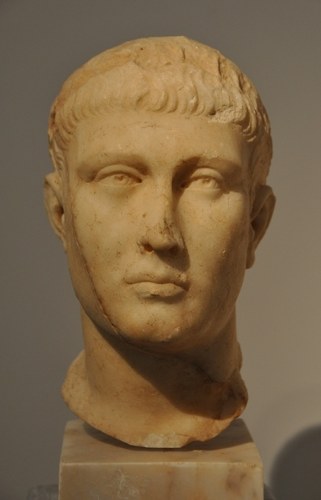
Flavius Julius Valens was born around 328 AD, the younger brother of Valentinian I, who had become Western Emperor in 364. When Valentinian divided the empire, Valens received the eastern half: a rich, complex, and persistently threatened domain stretching from the Balkans to the borders of Sasanian Persia. He was not considered a great military talent by contemporaries. Ammianus, whose account is the primary surviving narrative of this period, is often hostile to Valens. He portrays him as stubborn, prone to bad counsel, and insecure in his judgments. Later historians have been more balanced, noting that Valens successfully managed the eastern frontier against Persia, conducted campaigns in the Middle East, and was an active, if not inspired, field commander. He was Arian Christian in his theology, which created friction with the Nicene majority and colored how some sources portrayed him. Separating the man from his portrayers is now difficult.
What is clear is that in the summer of 378 he made several decisions that, in sequence, contributed to what happened on August 9.
He marched west from Constantinople toward Adrianople — the modern city of Edirne in northwestern Turkey, near the Greek and Bulgarian borders. His nephew Gratian, the Western Emperor, was bringing reinforcements north from Italy, a force that could materially strengthen the Roman position before any major engagement. Gratian sent word asking Valens to wait. The Gothic problem was serious but not immediately existential; patience was the conservative option. Valens did not wait. Ancient sources attribute this to jealousy — he did not want to share the victory's credit — though this motivation cannot be verified and may reflect hostile tradition rather than documented reasoning. Whatever the cause, he decided to attack before Gratian arrived.
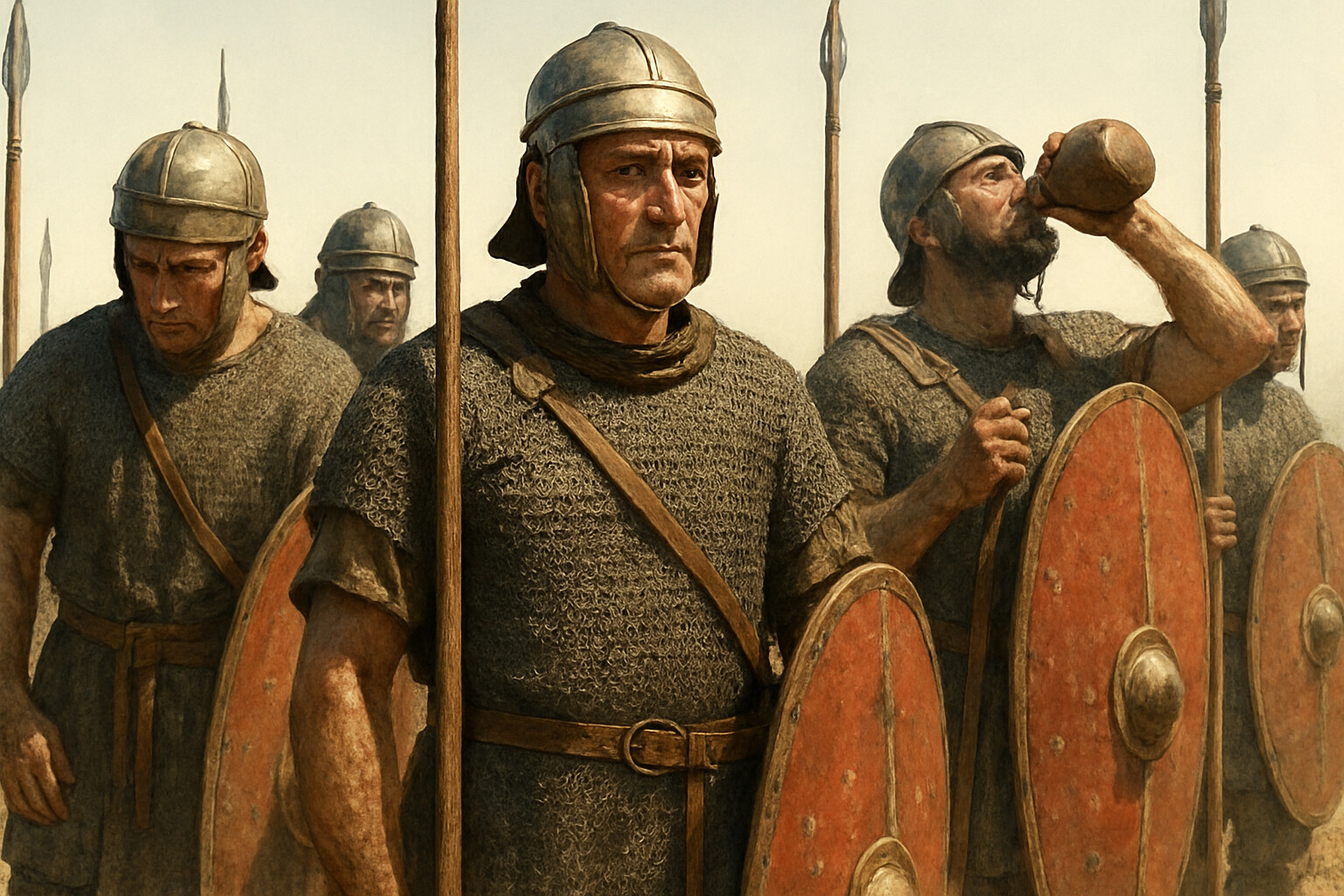
His army numbered, according to most scholarly estimates, somewhere between 15,000 and 20,000 soldiers. The exact figure is disputed; ancient sources are often unreliable on force sizes, and modern historians disagree on the order of battle. The army included heavy infantry legions, cavalry alae, auxiliary cohorts, and associated support troops — a substantial Roman field force, experienced and well-equipped, but not the entire Eastern Roman military establishment.
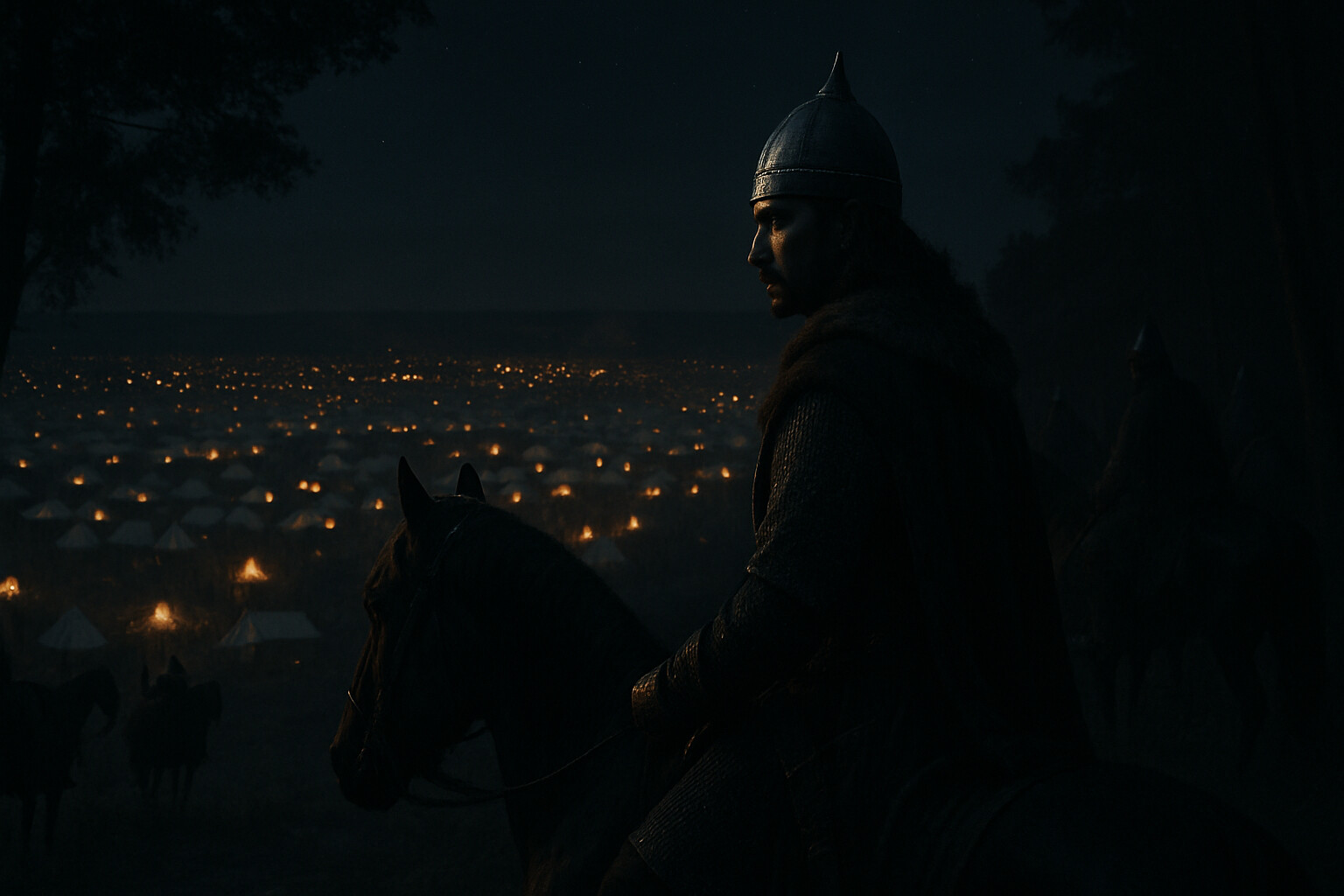
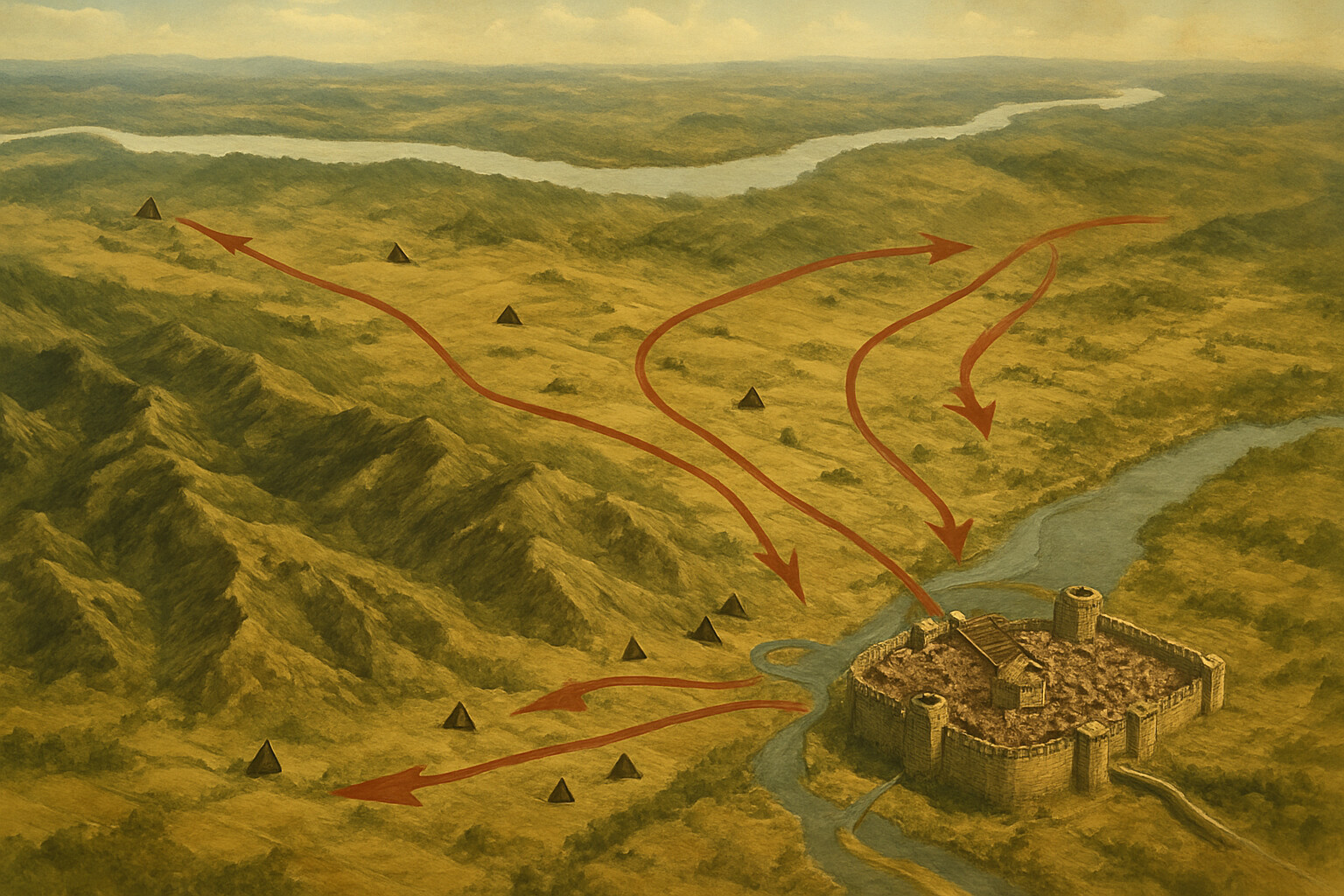
The Gothic force camped north of Adrianople was also substantial, and its size is similarly uncertain. Fritigern had gathered a large wagon-laager — the characteristic circular defensive camp of steppe and semi-steppe peoples, rings of wagons behind which women, children, and supplies sheltered while warriors operated from its perimeter or sortied outward. The number of Gothic warriors present is unknown. Ancient sources offer figures, but modern historians treat them as unreliable. What matters tactically is that the Goths had both foot warriors and a significant cavalry force — and that the cavalry was not present at the laager when the battle began.
The morning of August 9 began with the Roman column moving toward the Gothic camp through summer heat on roads not designed for rapid military movement. The men arrived at the deployment zone already fatigued. Negotiations opened — Fritigern, possibly to buy time for his cavalry to return, sent delegations requesting terms. The parleying extended through the morning, inconclusive and ultimately broken off, possibly by an unauthorized skirmishing attack from a Roman auxiliary unit, though the ancient sources differ on who initiated contact and why. Ammianus describes the opening of the battle as disordered, with Roman units attacking before the line was properly formed.
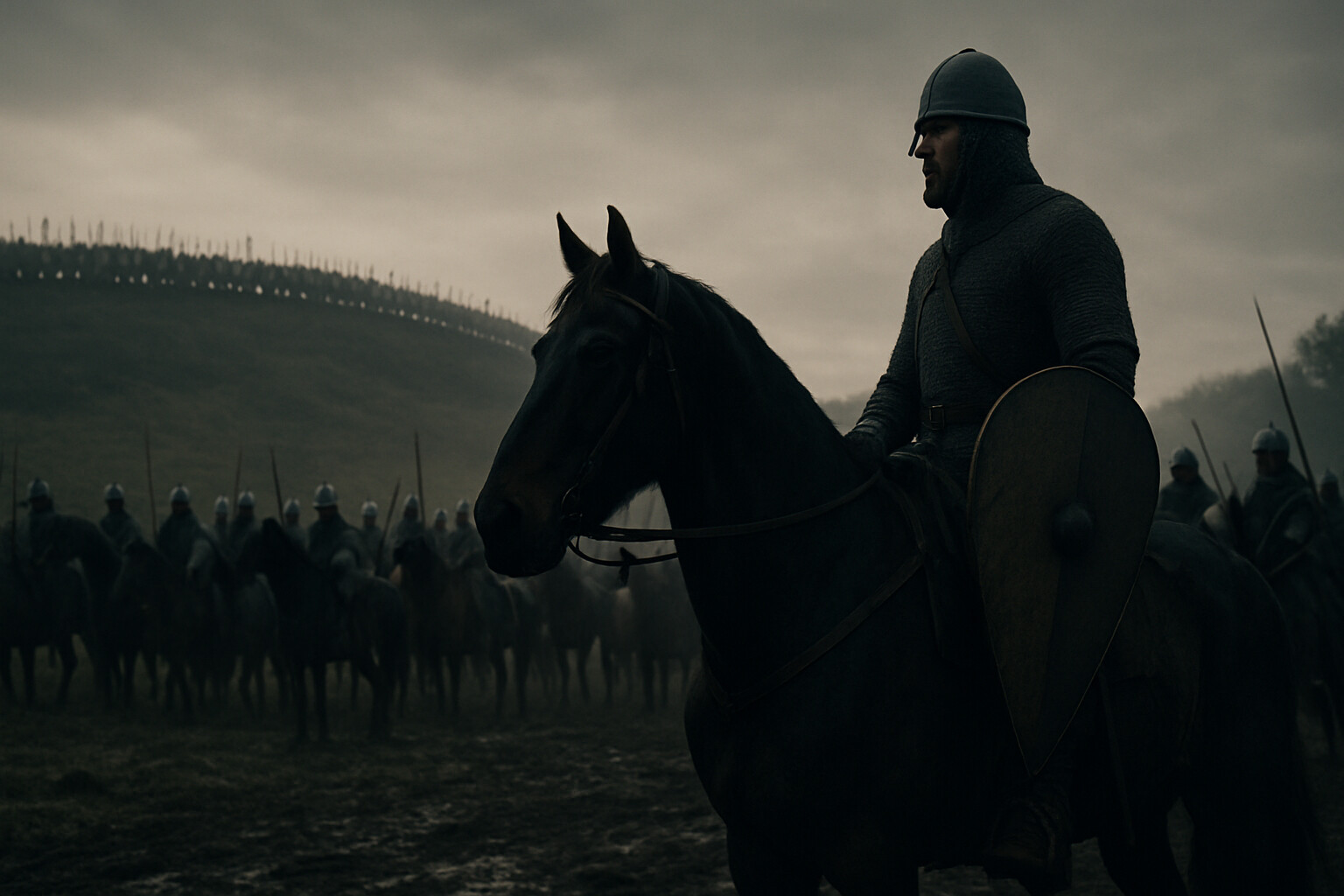
The fighting that followed is described in broad terms by Ammianus, who was not present at Adrianople — he had served as an officer earlier in his career but was in the west at this time — and who drew on survivor accounts, official reports, and his own military experience to reconstruct events. His narrative captures the texture of collapse without providing a precise tactical timeline. What the sources broadly agree on: Roman infantry engaged Gothic infantry near and around the wagon-laager. Roman cavalry on both flanks came under pressure. The left wing cavalry broke. Gothic cavalry — identified in Ammianus as belonging to the Greuthungi contingents of Alatheus and Saphrax — struck the Roman formation from the flank and rear. The Roman army lost cohesion. What had been a battle became a rout, and what became a rout became a slaughter.
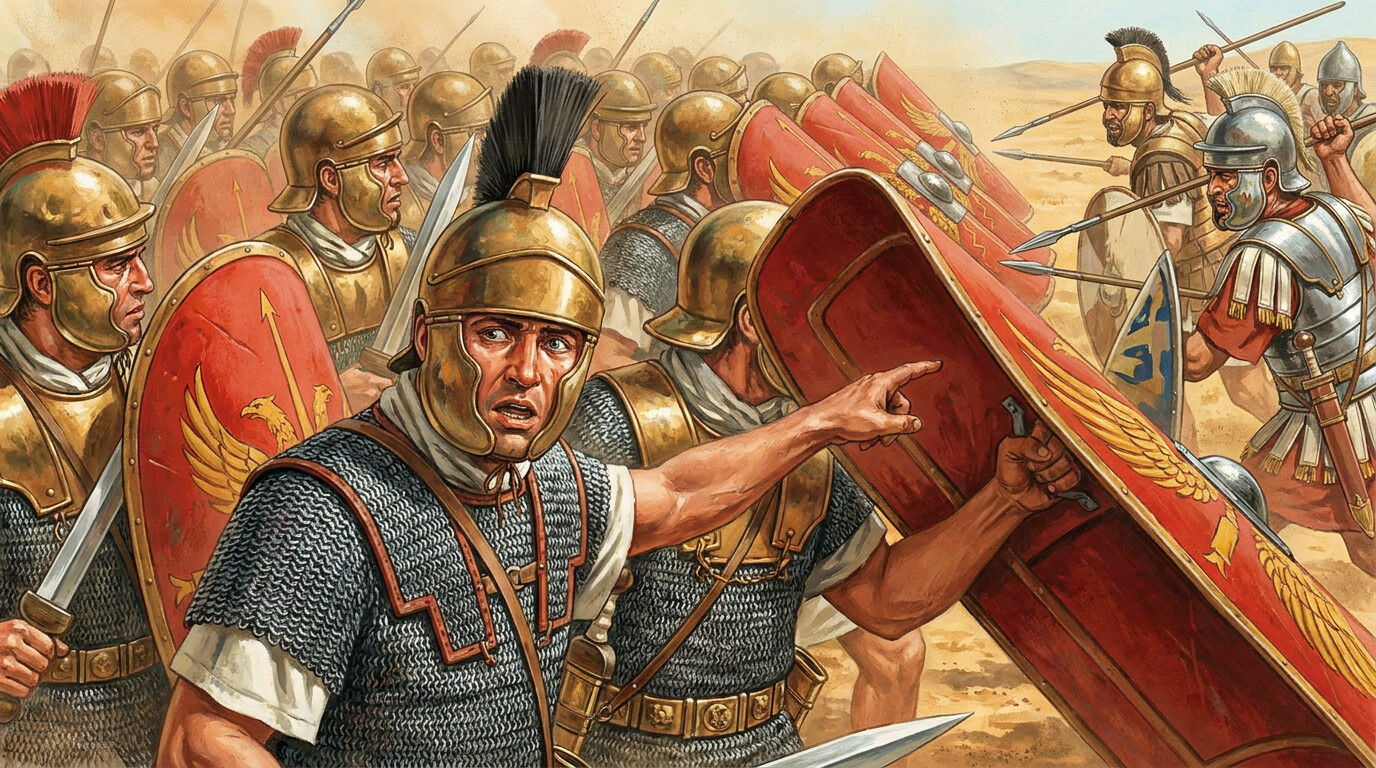
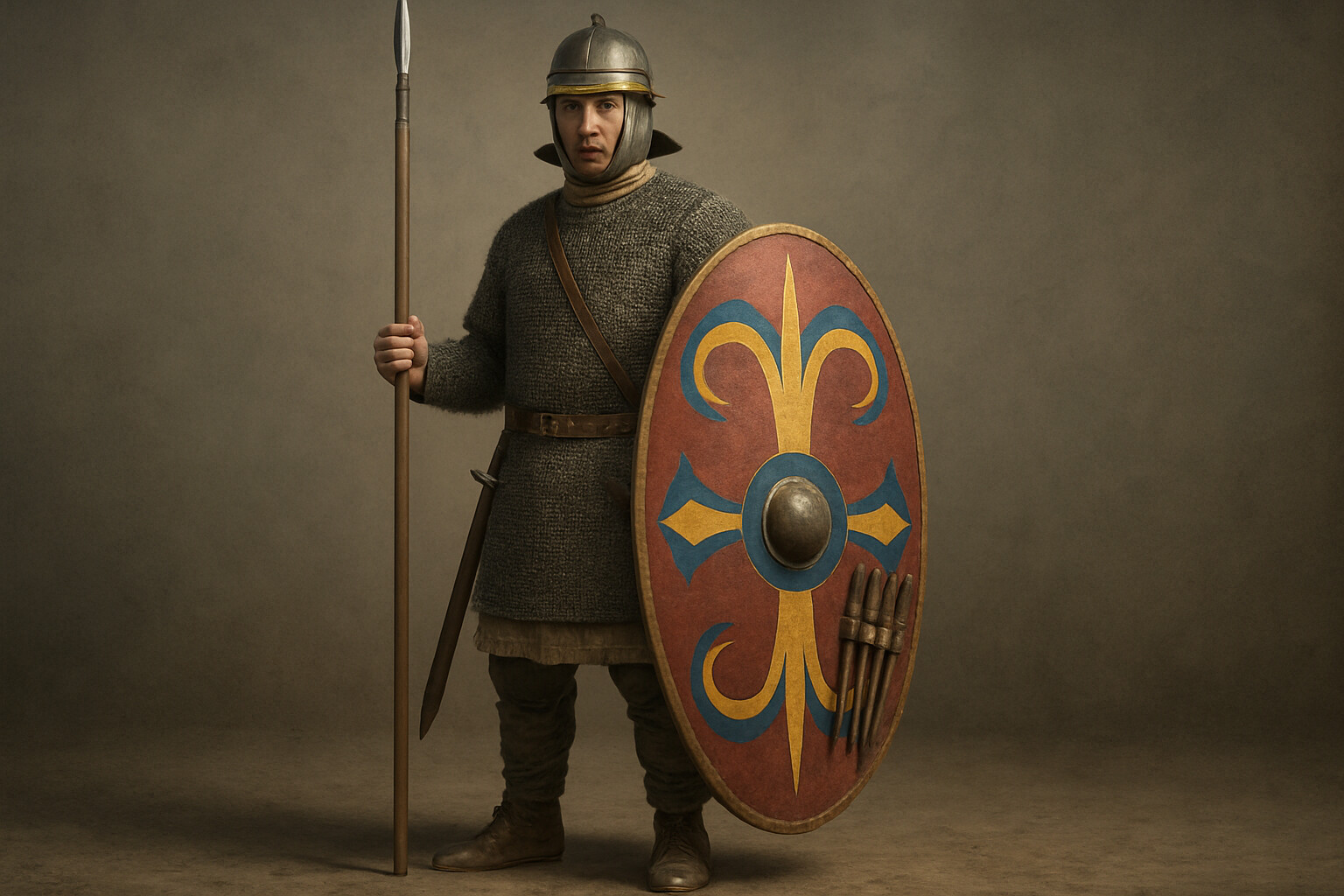
The mechanics of what made Roman infantry dangerous also made them vulnerable in this situation. The Roman legionary system in the late fourth century relied on disciplined formation fighting. The standard infantry equipment of the period had evolved considerably from the early imperial legionary: a large oval shield, a spear or lancea for thrusting and throwing, a long straight sword — the spatha, which by this period had largely replaced the earlier, shorter gladius — and body armor that varied by unit type and quality. Well-equipped regulars wore mail armor, helmets with cheek guards, and carried equipment totaling perhaps 40 to 50 pounds in total. Late Roman infantry also carried the plumbata — weighted lead darts held in a cluster behind the shield and thrown at short range before close engagement — giving each soldier a last-moment missile capability that supplemented archers and javelineers during the approach.
This equipment worked in formation. When the formation compressed past the point of function — when pressure from all sides meant that shield work and spear thrusting became impossible — the advantage inverted. Armored men who could not move freely were no longer a disciplined killing machine; they were trapped. Gothic warriors, many of whom fought with longer swords, axes, and spears suited to looser, more individual combat, could exploit gaps in a compressed mass more effectively than Romans whose system depended on coordinated movement.
The Gothic cavalry that shattered the Roman left wing rode horses bred for endurance rather than the heavy shock mounts of later medieval warfare. Gothic cavalry of this period likely used spears and swords in mounted close action, with some proportion of archers present, though the exact composition is uncertain from surviving sources. The mounted arm of the Goths was capable of decisive action against infantry that had already lost cohesion, and the timing — arriving when the Roman formation had already been disordered by fighting — was decisive regardless of whether it was deliberately coordinated or a product of opportune return. Ancient sources do not clearly establish whether Fritigern had planned for the cavalry to arrive at this moment or whether the outcome was partly accidental.
What is not disputed is the result.
The Roman army disintegrated. Men who ran were cut down by cavalry. Men who tried to hold formation were surrounded. The scale of the losses is staggering: ancient sources record approximately two-thirds of the Roman field army as killed. Among the dead were reportedly around thirty-five tribunes and senior commanders — the exact figure and their identities are not fully recorded in surviving sources — along with Sebastianus, a western officer recently arrived and considered capable, and Trajan, an experienced eastern general. The officer corps of the Eastern Roman field army was gutted in an afternoon.
And then there was the emperor.
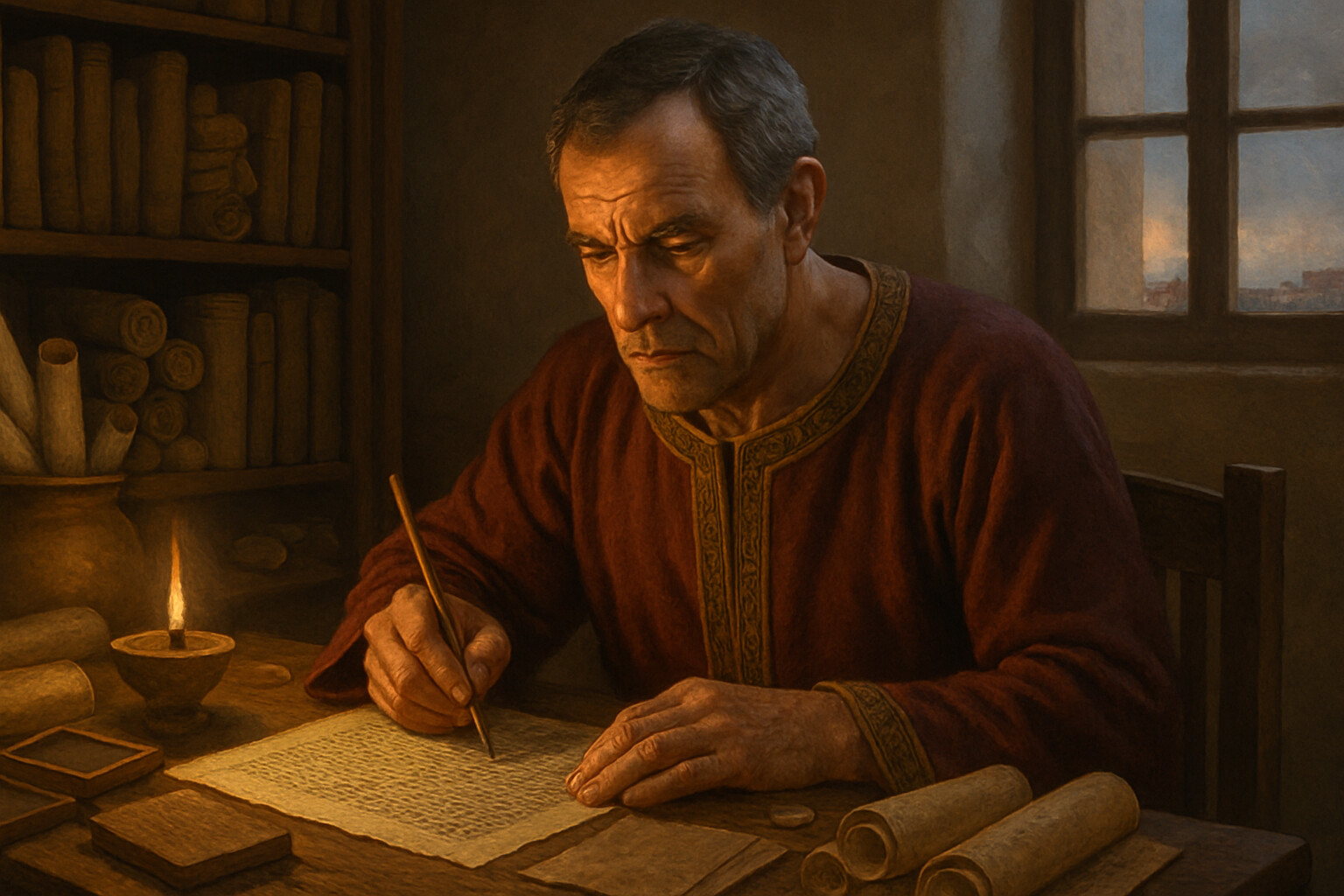
Valens was wounded during the fighting — the sources are consistent on this point, though the nature of his wound varies. He was carried or helped to a farmhouse some distance from the main fighting. Gothic warriors, apparently unaware of who he was, surrounded the structure and set fire to it. One account, cited by Ammianus on the basis of a guardsman's testimony, holds that Valens burned to death inside the building with his remaining attendants. Another tradition holds that he was killed in the fighting before reaching any shelter. Ammianus himself acknowledges that the accounts were contradictory and that the emperor's body was never recovered. The farmhouse fire account, specific and vivid as it is, should be understood as a strong tradition drawn from survivor testimony rather than a fully verified fact.
Rome did not recover his body. Rome did not give its emperor a funeral. The Goths reportedly did not realize until afterward that they had killed the man who held the Eastern Empire. It was not a triumphant execution. It was a battlefield death, anonymous in the moment, enormous in its consequences.
---
The casualties at Adrianople reverberated far beyond the immediate military loss.
The Eastern Roman field army could be rebuilt across years. Soldiers could be conscripted, recruited, and trained. Equipment could be manufactured and distributed. What could not be quickly replaced was the experienced command infrastructure — the tribunes, the generals, the staff officers who understood how Roman armies moved, supplied themselves, communicated, and fought. These were men who had spent careers accumulating operational knowledge. Their deaths created a vacuum that persisted for years and shaped how the Eastern Empire was able to respond to subsequent crises.
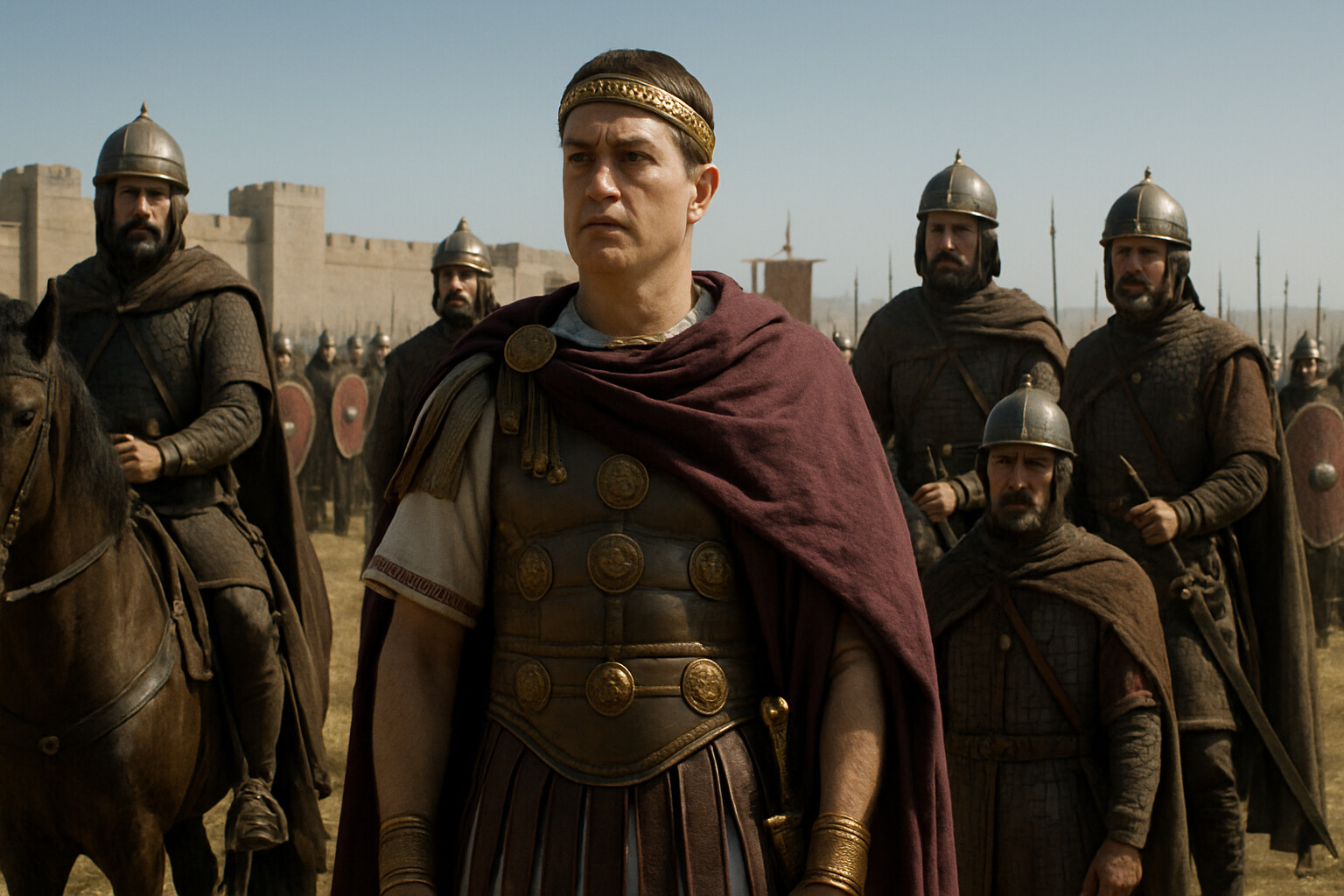
Gratian arrived too late. He was now the sole Augustus of a wounded empire — the Western portion intact, the Eastern portion militarily crippled and its throne vacant. The succession crisis was urgent. By the beginning of 379, Gratian had appointed Theodosius — a Spanish-born officer with a military background and an impressive lineage, his father having been a successful general before his politically motivated execution — as Eastern Augustus. Theodosius inherited an empire that desperately needed soldiers and had just demonstrated the limits of its existing military system against Gothic warfare.
The resolution Theodosius eventually reached was telling. Unable to destroy the Gothic force militarily — attempts in the early 380s were inconclusive — he negotiated a settlement in 382 that allowed the Goths to settle within Roman Thrace as an essentially autonomous community. They would provide soldiers to the Roman military but under their own leaders rather than integrated into Roman units in the traditional fashion. It was a pragmatic accommodation to a situation Rome could not fully reverse. It also established a precedent: large, armed, ethnically cohesive groups living inside the empire under their own command structures. Later historians have traced one root of the military transformations of the fifth century — including the increasing reliance on federate armies commanded by non-Roman generals — to the constraints that Adrianople placed on imperial options.
For scholars working in the long tradition of decline-and-fall historiography, Adrianople has served as a symbolic hinge point. Edward Gibbon, writing in the eighteenth century, treated it as a significant marker. Later and more careful historians have pushed back on clean-break narratives, noting that the Eastern Empire survived, adapted, and eventually became Byzantium — lasting another thousand years. Rome did not fall at Adrianople. But it absorbed a wound there that shaped the choices available to every emperor who came after.
Ammianus Marcellinus, the primary source for these events, is a complicated witness. He was a professional soldier and a careful historian by the standards of his time — his account is more reliable than many ancient military narratives because he wrote from personal military experience, consulted survivors and officials, and distinguished between what he knew directly and what he had been told. He was also a man with opinions: he admired older traditions of Roman military virtue, was suspicious of eastern court politics, and had views about Valens that color his narrative. Modern historians including Peter Heather, A.H.M. Jones, Thomas S. Burns, and Guy Halsall have worked with Ammianus's account alongside archaeological evidence, comparative Gothic and ecclesiastical sources, and numismatic and documentary material to reconstruct the period. The outlines of the battle are broadly agreed upon. The details — the exact size of forces, the precise sequence of events, the specific identity of the cavalry force that struck the Roman flank, and the manner of Valens's death — remain subjects of scholarly discussion.
The battlefield itself has not been definitively located. The general area north or northeast of Adrianople is accepted, but no archaeological site has been confirmed as the precise location of the engagement. This is not unusual for ancient battles; the physical signatures of a one-day engagement on open ground in the fourth century are difficult to identify conclusively across sixteen centuries. Without a confirmed battlefield site, terrain-based tactical reconstruction remains provisional.
What is not provisional is the aggregate count of the dead and their significance. The Romans who died at Adrianople on the ninth of August, 378, were not an abstraction. They were soldiers from across the eastern Mediterranean — Thracians and Isaurians, men from the Levant and Egypt, Armenians and Illyrians, veterans of frontier garrison duty and Persian campaign service. They died in the afternoon heat in a field they had expected to win, far from wherever they had been born, in an engagement their emperor had been advised to delay. Their names are not recorded in any source that survives. The emperor's name is in every history book. The soldiers who died with him have been anonymous for sixteen centuries.
Ammianus compared Adrianople to Cannae — the catastrophic defeat by Hannibal in 216 BC in which Rome lost thousands of soldiers and multiple senior commanders in a single afternoon. The comparison is his editorial judgment, not a neutral assessment, but the parallel has structural merit: both battles involved encirclement and the collapse of a numerically competitive force through the failure of a large formation to adapt to a changing tactical geometry. Cannae did not end Rome. Neither did Adrianople. But both forced the surviving empire to reckon seriously with the limits of its assumptions — about how battles worked, about how enemies fought, and about what kinds of armies were needed going forward.
For Valens, the reckoning came too late. He had crossed into Thrace in summer, commanded a large and capable army, and made a sequence of decisions — to fight without waiting for Gratian, to advance with men already fatigued, to allow negotiations to stretch the morning into afternoon — that placed his army in the worst possible position when the Gothic cavalry appeared on the left. Whether any single different decision would have changed the outcome is a question historians can explore but cannot answer. Battles are not deterministic machines. Different choices create different probability distributions; they do not guarantee different results.
What the record gives us is an afternoon in August, a Roman army pressed from all sides, and an emperor who died in a fire or a melee — the sources disagree — somewhere in a Thracian field, with no one able to bring his body home.
The Gothic victory at Adrianople was real, complete, and consequential. It was not the end of Rome. It was something more complicated: a demonstration that the system Rome had used to hold its frontiers for centuries was no longer reliably adequate against the peoples pressing against those frontiers from outside. The world that produced Adrianople was already changing. The battle accelerated that change, sharpened it, and made it undeniable.
The eagles fell. The empire adjusted. The adjustment took a hundred years, and ended in the west with no empire at all.