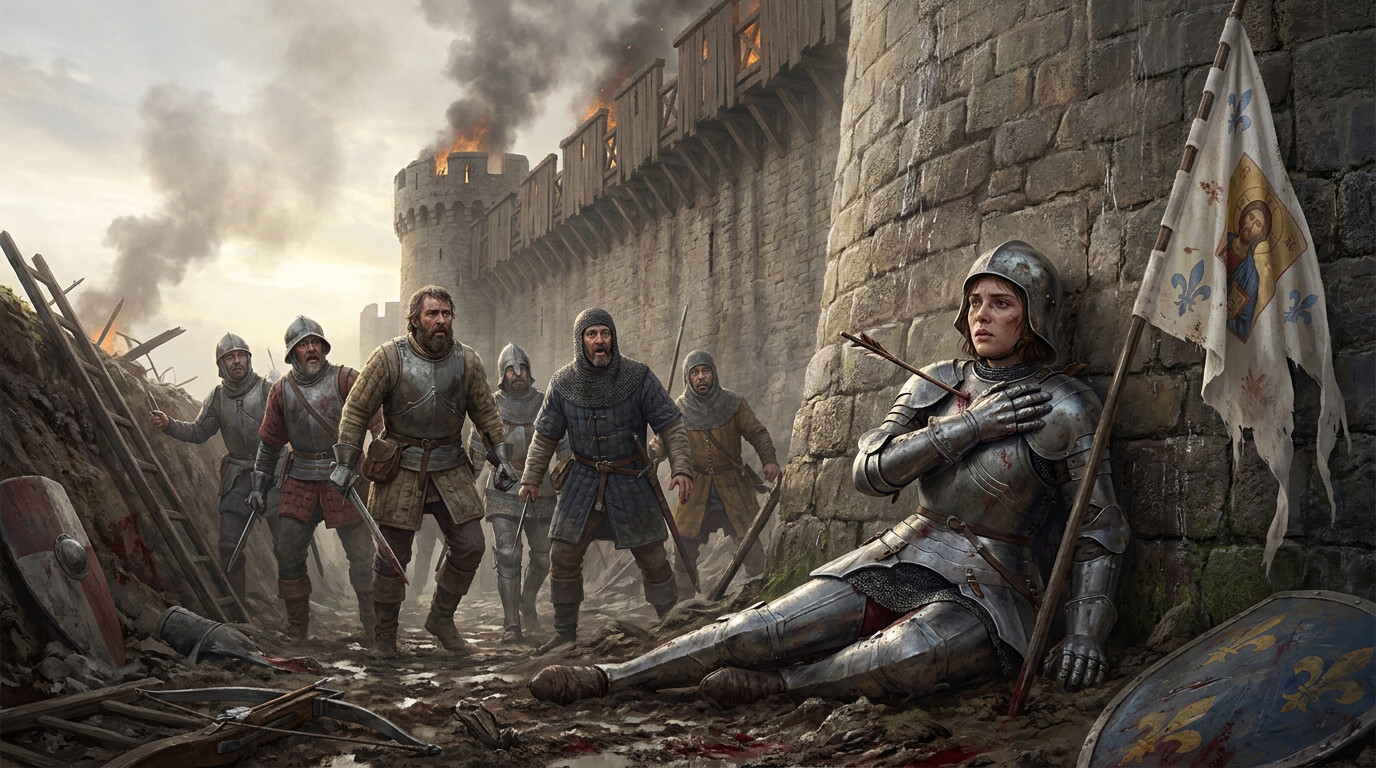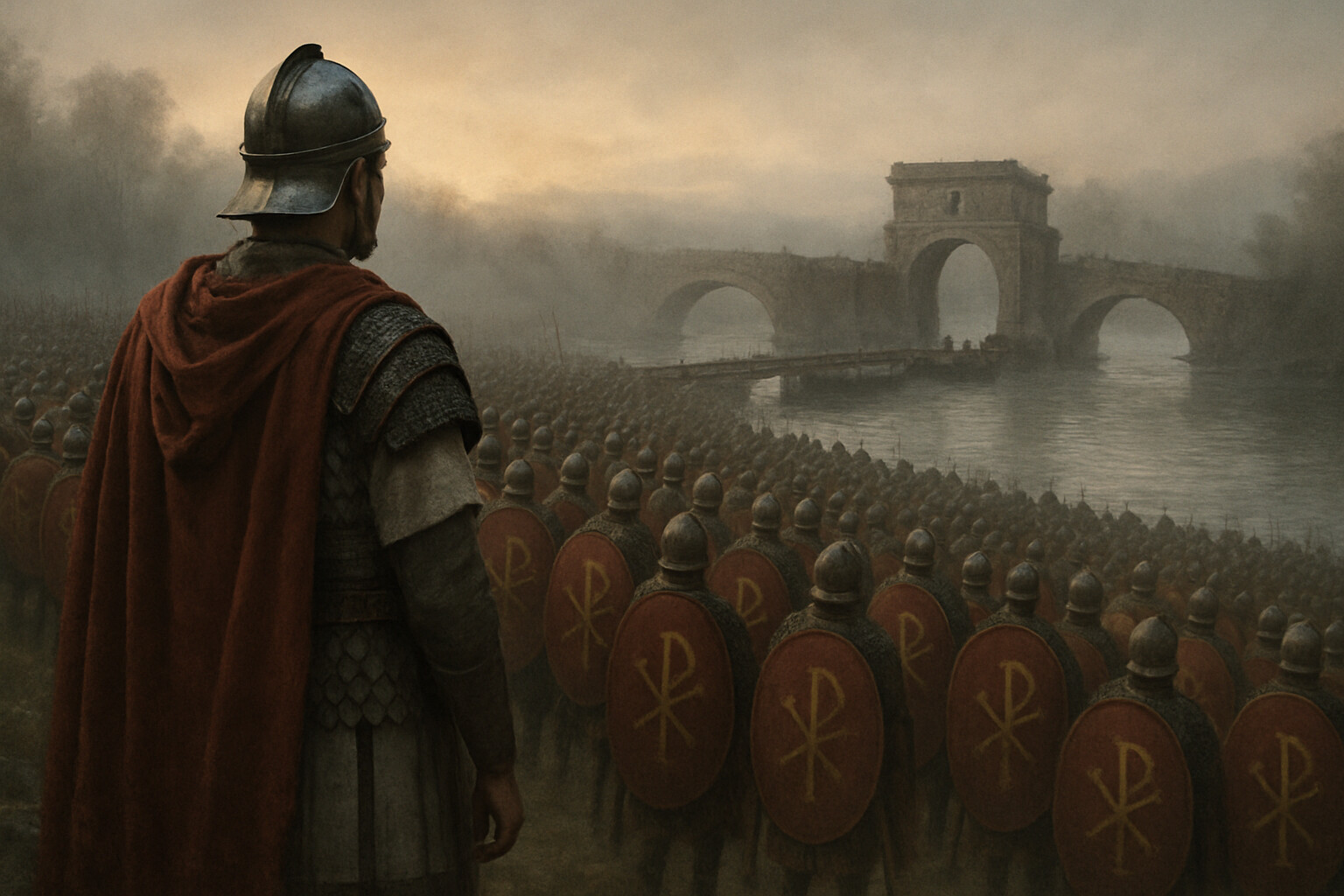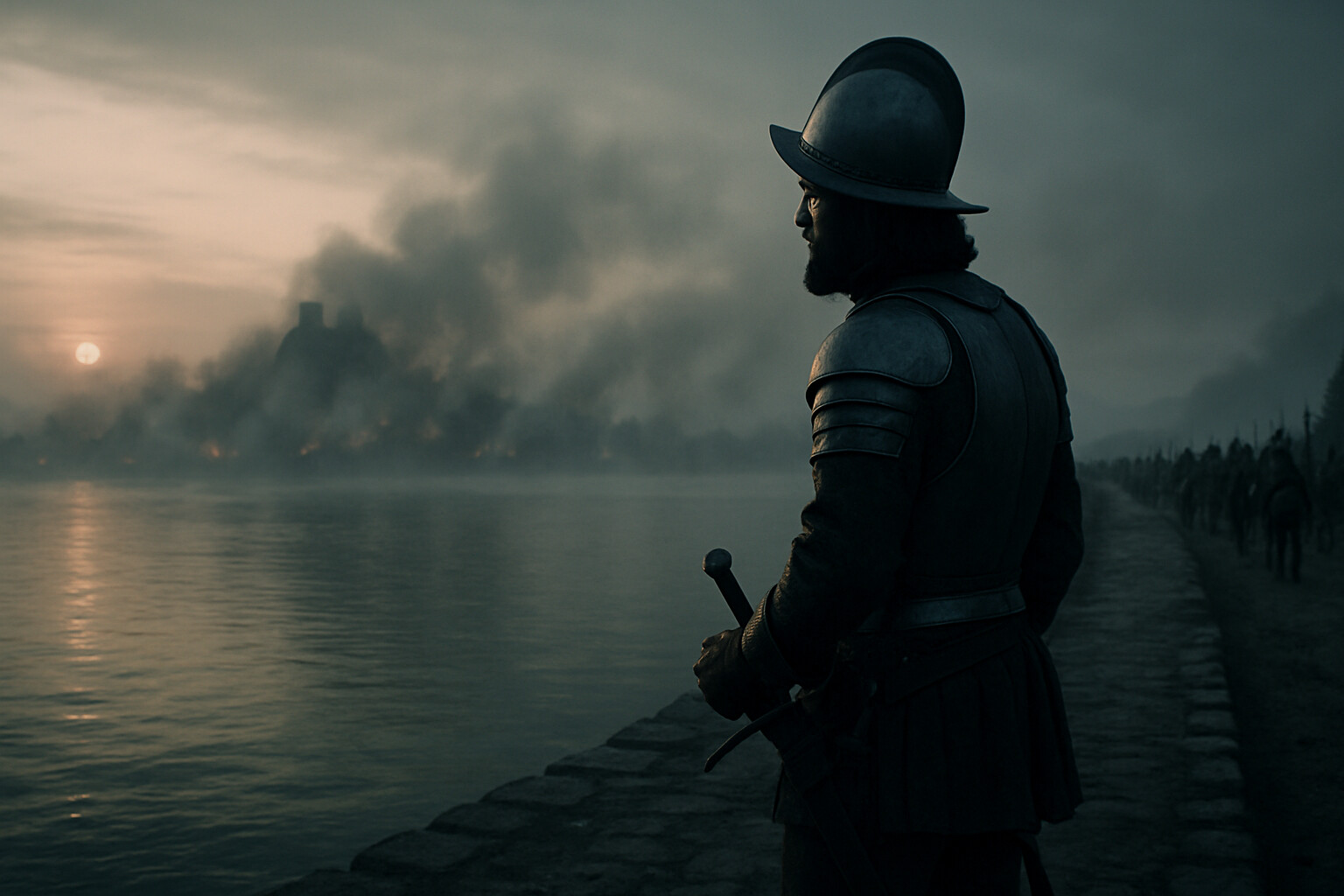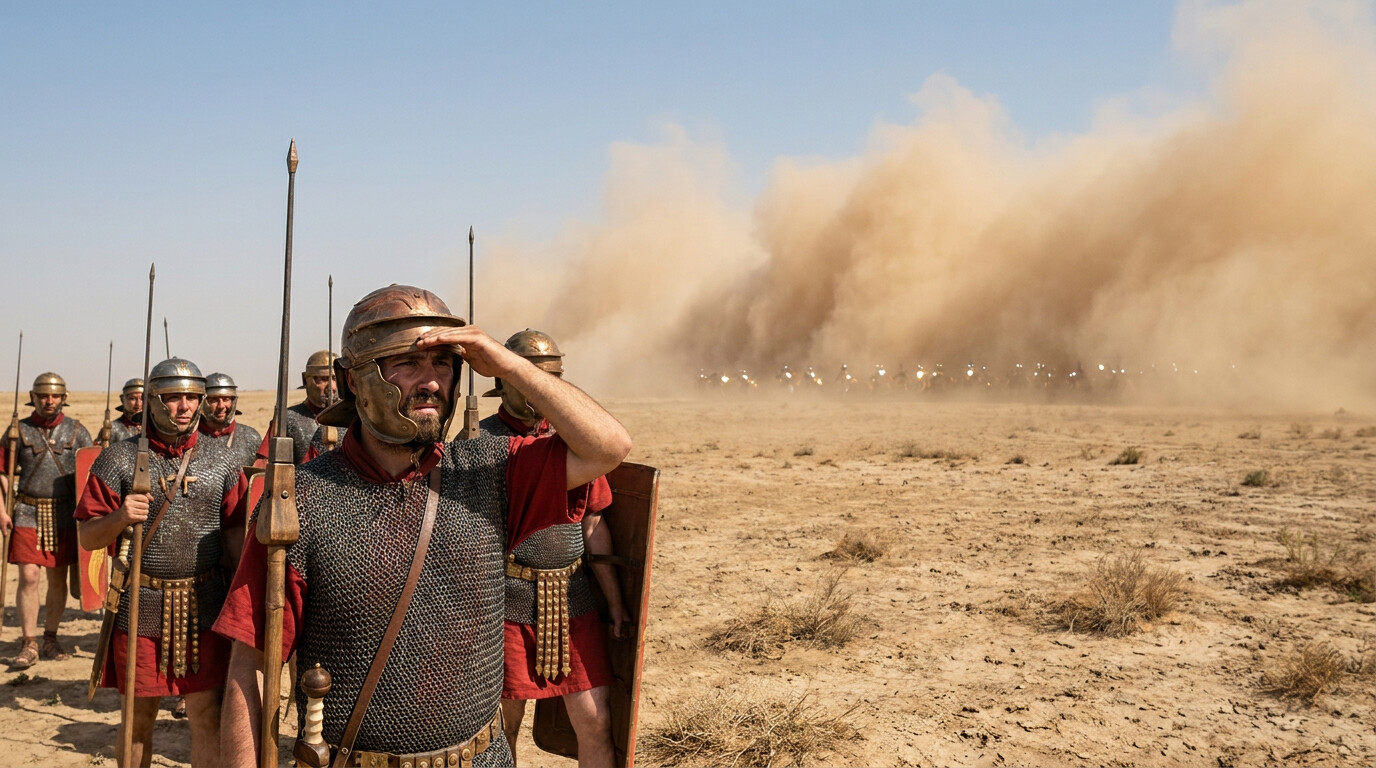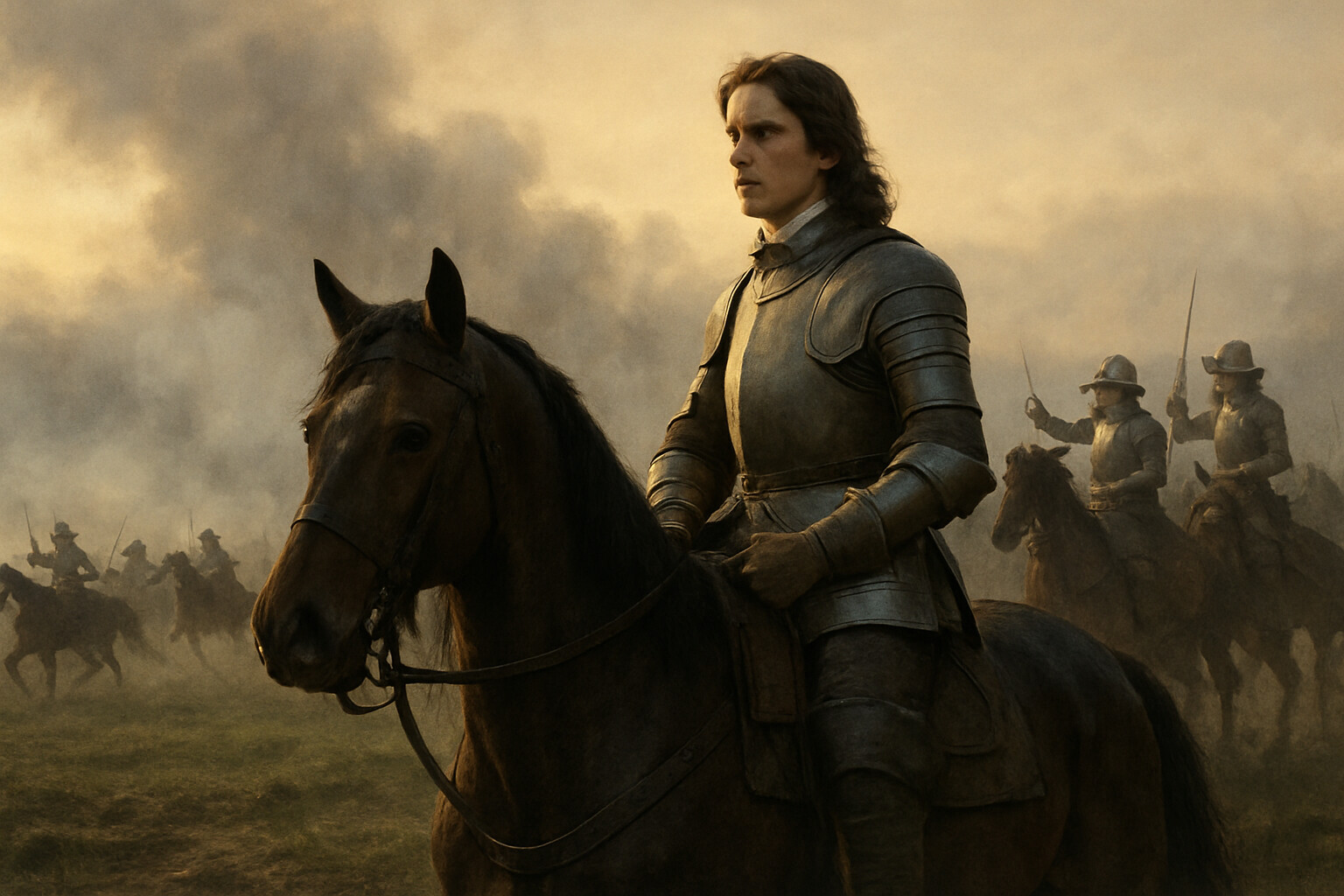
The sun had not yet cleared the tree line on the morning of May 19, 1643, when the French cavalry on the left wing broke and ran.
It was the worst possible moment. The battle for the Ardennes plateau near the small fortified town of Rocroi had begun less than twenty-four hours before. Now, in the pale gray light before full dawn, the tercio formations on the Spanish right—veteran soldiers who had fought in the Low Countries, in Germany, in Italy—were pressing through the gap the routing horsemen had left. If they wheeled inward and struck the French center from behind, the army of a five-day-old king could be destroyed before it had fought its first battle.
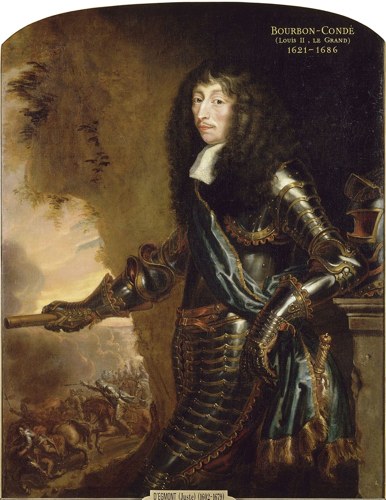
Louis II de Bourbon, Duke of Enghien, was twenty-one years old and commanding his first pitched battle. He was watching from the opposite side of the field.
—
To understand what happened at Rocroi, and why it mattered beyond the immediate campaign, you have to understand the institution standing on the other side of the meadow.
The Spanish tercio was not simply a large infantry unit. It was the organizational form that had defined European land warfare since the early sixteenth century. Developed under the Catholic Monarchs and refined through the Italian Wars, the tercio combined pikemen and arquebusiers—later musketeers—into a mutually supporting formation that was virtually unbreakable in frontal combat. At full strength a tercio fielded several thousand men arranged in dense blocks: the pikes provided protection while the firearms delivered killing fire at range. Cavalry could not simply charge into a formed tercio. Opposing infantry could not easily outmaneuver one. On field after field across a century of European war—Bicocca in 1522, Pavia in 1525, the campaigns of the Duke of Alba in the Netherlands—the tercios had proven their dominance.
By 1643, the formations at Rocroi were not at the theoretical maximums that appear in Spanish military ordinances. Decades of continuous campaigning, the financial strain on the Spanish Crown, and the grinding attrition of the Thirty Years' War had reduced individual tercio strengths considerably. Estimates from period sources and later scholarly analysis suggest the tercios present at Rocroi numbered perhaps 1,500 to 2,000 men each, not the 3,000 or more of earlier generations. But they were still professional soldiers of long experience, stiffened by a tradition of battlefield dominance that was itself a tactical asset. Formations with that kind of institutional confidence are harder to break.
The Army of Flanders, now under Francisco de Melo following the death of Cardinal-Infant Ferdinand in November 1641, had crossed into France in support of Flemish strategic objectives and was moving to relieve the siege of Rocroi when it encountered the French blocking force. De Melo's force is estimated by historians at somewhere between 18,000 and 27,000 men—the precise numbers remain a subject of scholarly debate—with a core of Spanish and Walloon tercios supported by German and Italian infantry, cavalry, and artillery. The artillery train was substantial, including both field guns and heavier pieces.
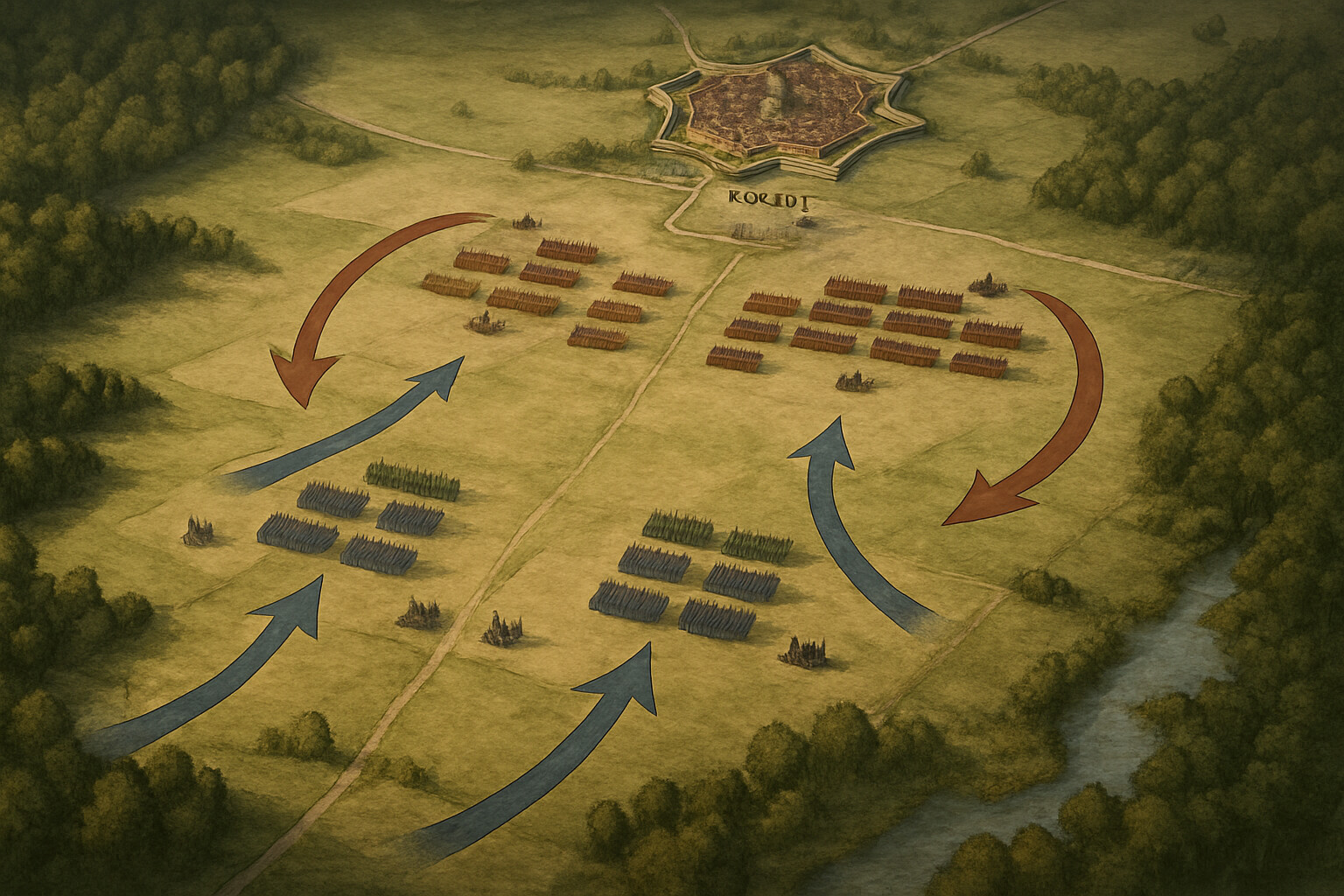
The French army opposing him is similarly estimated at between 15,000 and 23,000 men. The wide range in both figures reflects the difficulty of reconciling period muster rolls, French and Spanish accounts that each inflate enemy numbers, and the incomplete record-keeping of mid-seventeenth-century warfare. What the documents make clear is that the two forces were roughly comparable in size, that the Spanish held advantages in infantry experience and artillery weight, and that the French held advantages in cavalry quality on at least one wing.
—
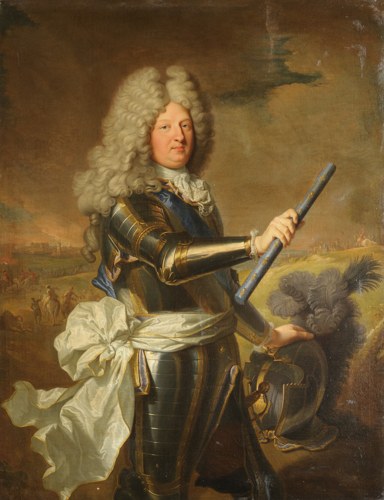
Louis de Bourbon had not been expected to command here. He held the appointment as a political choice—son of the Prince of Condé, a royal cousin, already marked by observers as a military talent despite his youth—but the expectation had been that veteran advisors would guide him. The senior cavalry commander accompanying the army, Jean de Gassion, had pressed for an immediate advance when the two armies first made contact on May 18. The Duke of Enghien agreed. By moving quickly rather than waiting, they denied the Spanish time to complete their deployment and fortify their artillery positions.
The battlefield was a roughly open plateau, partially bordered by woods and wetlands that constrained both armies' flanks. The French right wing, where de Gassion and the Duke of Enghien would ride, faced Spanish cavalry that most accounts describe as weaker and less experienced. The French left wing faced the better-quality Spanish cavalry. The French center faced the tercios. Artillery on both sides was positioned to support the respective infantry lines.
On the evening of May 18, cavalry skirmishing had already taken place as the armies probed each other's positions. By nightfall, the two forces were close enough that their outposts could hear each other move. The formal battle would begin at dawn.
The Duke of Enghien spent the night arranging his dispositions. He would command on the right wing himself, where the French cavalry was strongest. This was not accidental. The plan—insofar as any seventeenth-century battle plan survived first contact with the enemy—was to win quickly on the right, then use that mobile force to address whatever crisis developed elsewhere.
—
The battle opened with artillery on both sides. The Spanish guns were heavier and more numerous. The sound carried for miles across the Ardennes—a continuous rolling percussion that compressed the morning air and filled the plateau with drifting powder smoke. Infantry formations in this period could not advance quickly; they moved at the pace of the slowest pike block, maintaining close dress to preserve cohesion. The artillery exchange was therefore not a brief preliminary but a sustained contest that killed and wounded men in the formations before any infantry had closed to musket range.
On the French right, the Duke of Enghien led his cavalry forward. The Spanish horse opposing him was weaker. The French cavalry, trained to close rather than to fire and fall back, hit hard. The right wing broke through relatively quickly—period accounts suggest within the first hour of serious fighting—and the French cavalry pursued.
This was the moment of greatest danger for the French, because cavalry that pursues too far is cavalry that cannot help anywhere else.
The Duke of Enghien made the decision that later historians have consistently identified as the turning point of the day: he halted part of the pursuit, turned his victorious cavalry, and looked back across the field.
What he saw on the left was disaster in progress.
The French cavalry on the left wing had broken under the better-quality Spanish horse on that flank. More dangerously, the Spanish infantry—the tercios—were beginning to exploit the gap. Veteran formation commanders recognized a flank opportunity. Several tercio units were wheeling to press the advantage.
—
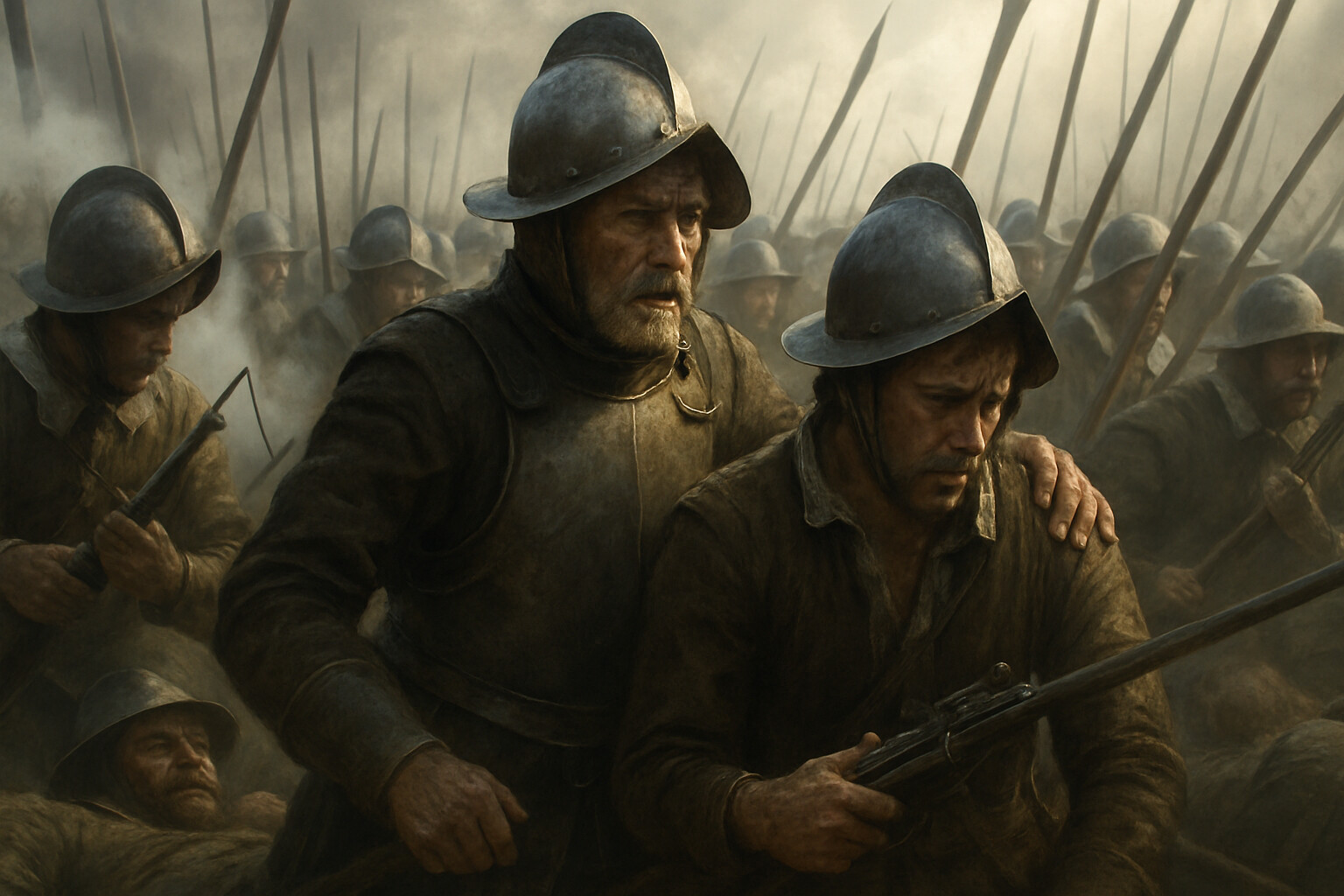
The French center had not broken. This is a fact worth holding, because the story of Rocroi is sometimes told as though the French infantry were passive witnesses to the cavalry action on either side. They were not. The French regiments in the center—the Guards, the Picardy, and other line units—were engaged with the tercio blocks throughout the morning, trading musket fire, pushing forward and being pushed back, losing officers and files to artillery and small-arms fire. The tercio system's defensive cohesion was working exactly as designed. No frontal assault was going to break those blocks quickly. The French center was holding, but it was not winning.
What won the battle was what happened next on the French right.
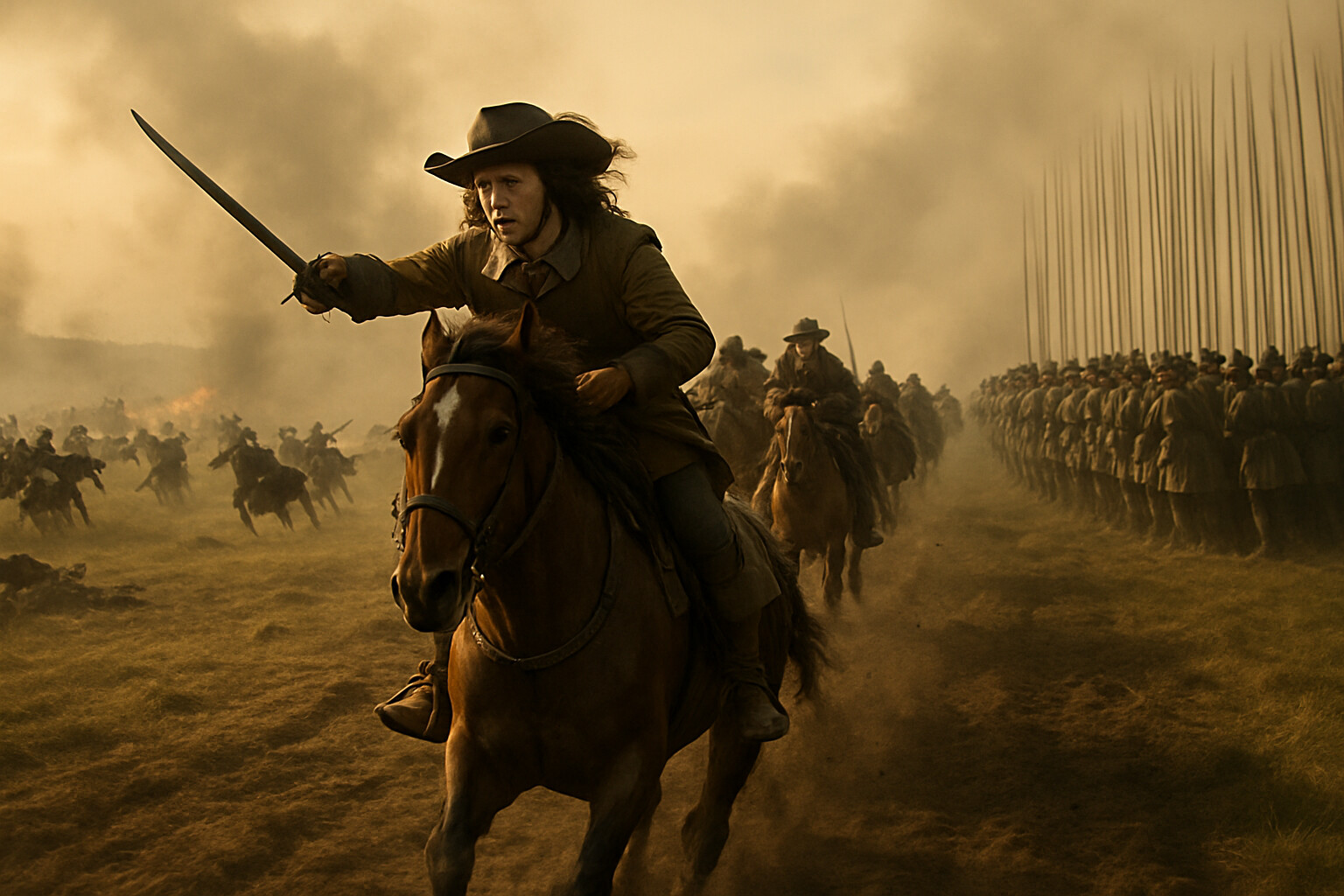
The Duke of Enghien led his cavalry around the back of his own infantry line. He was not retreating. He was conducting a deliberate mounted movement behind his own center to address the crisis on the left. This kind of maneuver—wheeling successful cavalry across the rear of the battle to reinforce a failing flank—required the riders to maintain cohesion and direction while their army fought on both sides of them. It required the commander to hold a working picture of a battlefield covered in powder smoke, to trust that his center would hold long enough for the movement to complete, and to commit before he could be certain the left wing had not already collapsed entirely.
The French cavalry struck the rear of the Spanish infantry that had been exploiting the broken left flank. The Spanish infantry turned—formed tercios could change front, though not quickly—but they were now fighting on two sides, their flanks unsupported, their cavalry no longer present to screen them. Some of the French cavalry that had broken earlier regrouped and returned to the action. The Spanish infantry in that sector, no longer the hunters, became the hunted.
By midmorning, the left crisis was resolved. The French cavalry had re-established something like a unified line. The breakthrough units on the Spanish right were destroyed or withdrawing.
—
Now the battle entered its final and most costly phase: the attack on the tercios themselves.
The veteran tercio blocks in the Spanish center had not been broken by any of this. They stood where they had stood at the start of the battle. Their flanks were now exposed. Their cavalry support had collapsed or been driven off. The army around them was dissolving. By every tactical logic available to them, they could have negotiated a capitulation that would have let the professional soldiers of both sides avoid further bloodshed in a situation that was now tactically hopeless for the Spanish.
Instead, multiple tercio blocks refused surrender. This fact—documented in both French and Spanish accounts—matters for understanding what follows. The final assault on the standing tercios was not, at least in its early stages, a massacre of men trying to yield. It was an attack on formations that chose to continue fighting despite encirclement.
The Duke of Enghien led the attacking force in person. The cavalry that had won on the right and resolved the left crisis now supported the French infantry pressing in on all sides of the remaining tercio blocks. French artillery, repositioned or newly able to fire without endangering their own troops, added to the pressure. The tercios took casualties that their discipline could no longer absorb. Some units broke. Some continued fighting until they were physically unable to continue.
Accounts from the period—French, Spanish, and later scholarly synthesis—agree on a general sequence but disagree significantly on detail. The Spanish account tradition holds that the tercios fought to near-annihilation with honor intact. French accounts emphasize the completeness of the victory. Later Spanish historiography elevated Rocroi into a national memory of honorable defeat, which shaped how the battle was described in subsequent centuries. What happened in the final hour, when the tercio blocks were dying, is not recoverable in exact detail from surviving records.
What is documented: the Spanish army at Rocroi suffered very heavy casualties. The French captured the Spanish artillery train—a concrete measure of battlefield dominance in this era, because guns are not abandoned by an army still fighting in good order. The senior Spanish commanders were killed or captured. Francisco de Melo escaped the field, but his force had been effectively destroyed as a coherent army.
—
The human cost on the French side is harder to state with confidence. French sources understate French losses; Spanish sources overstate them. Modern scholarly estimates typically place French casualties at several thousand dead and wounded, with some estimates running higher. The battle was not a clean victory. It was a bloody morning on a small plateau in the Ardennes, fought by men who could not see clearly through the powder smoke, who stepped over their comrades' bodies to press forward, who endured the specific violence of close-range seventeenth-century combat—the crash and recoil of matchlock fire, the splintering of pike shafts, the screams of horses and men caught in the artillery gaps.
The weather that morning is not precisely documented in reliable sources. The season—mid-May in northern France—and the time of engagement suggest cool morning air, thickening rapidly with the smoke of hundreds of muskets and cannon, the ground churned by thousands of feet and hooves. The plateau had been crossed by both armies in recent days. These are inferences from the terrain and the season, not documented conditions.
—
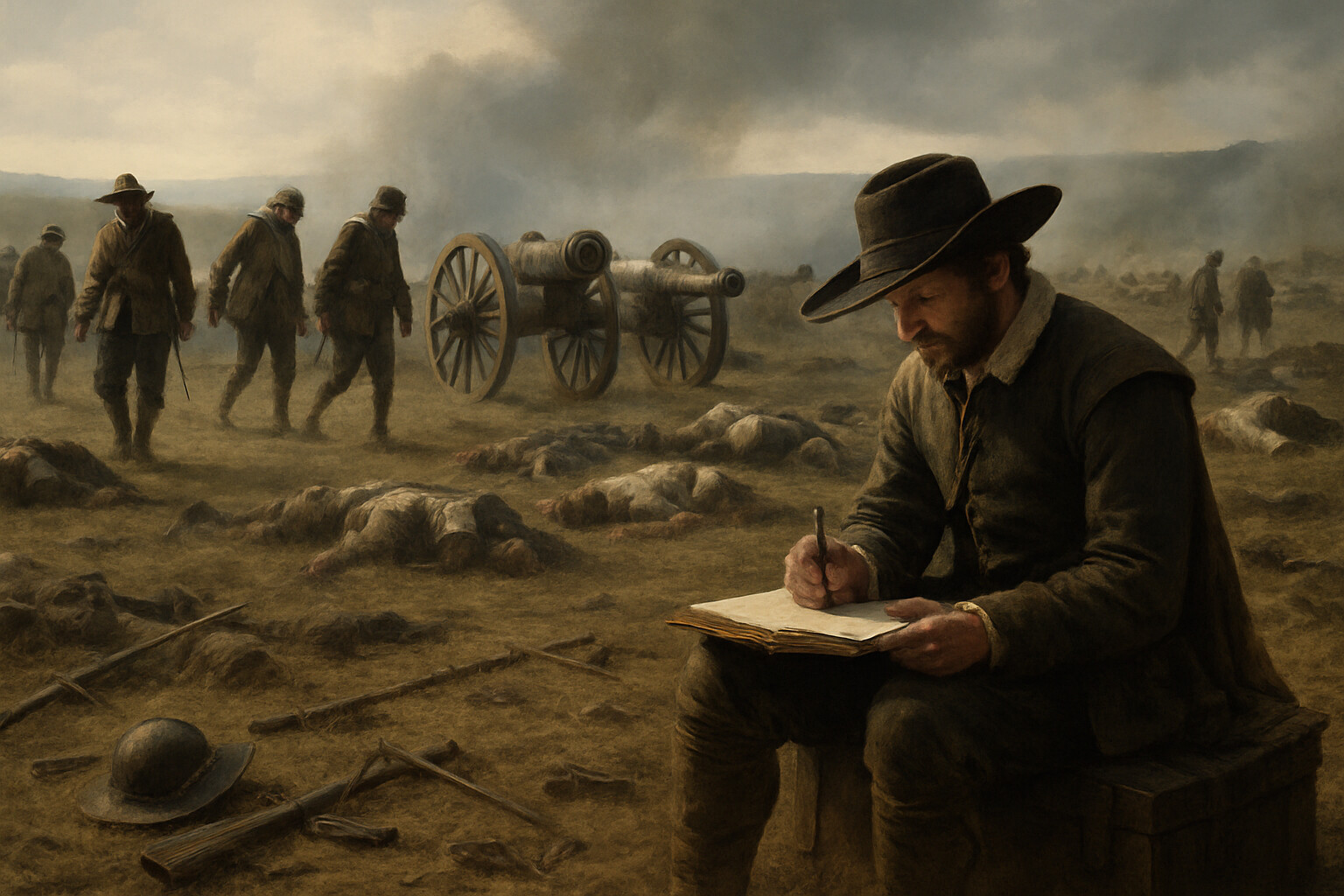
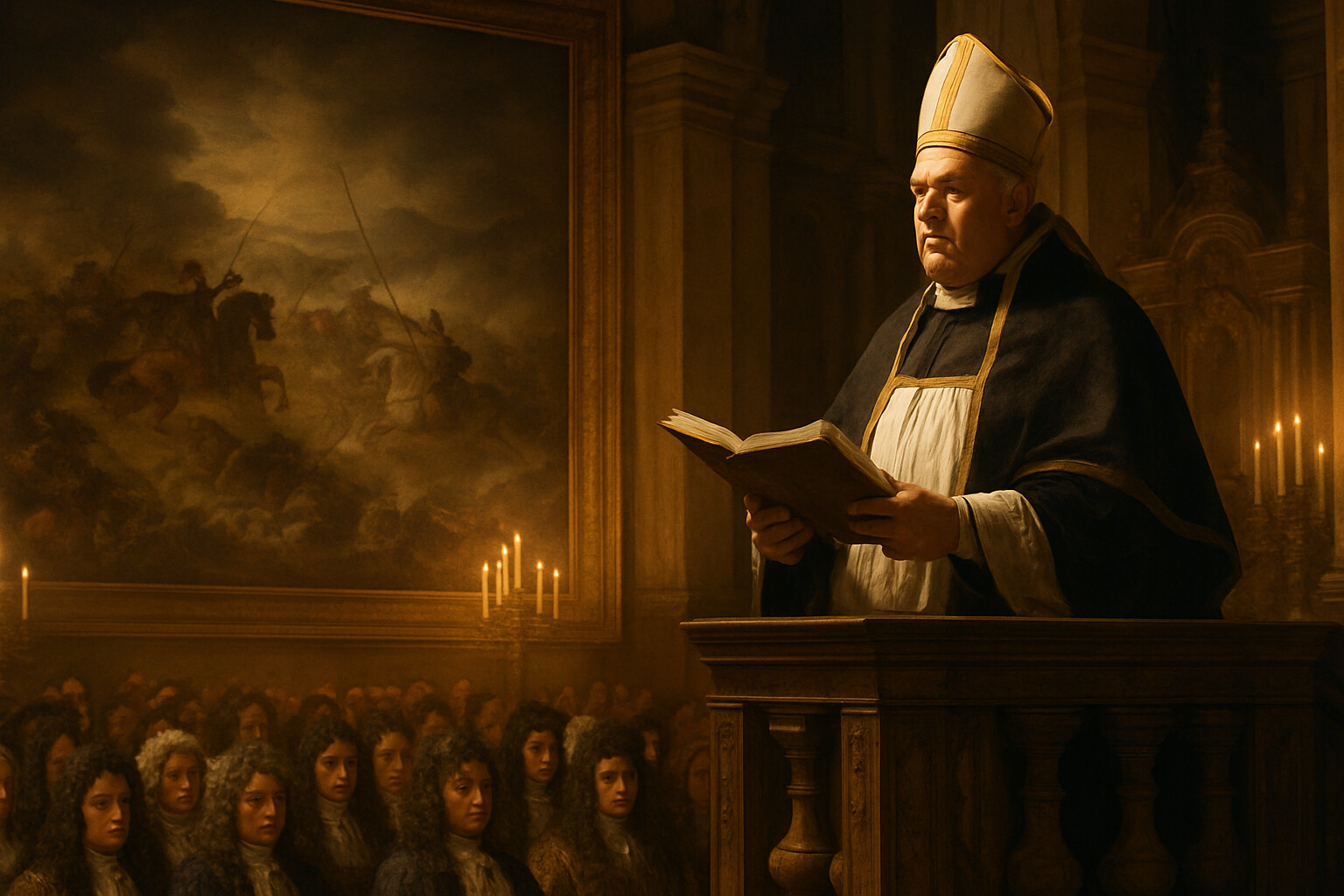
The Duke of Enghien rode the field after the battle. What he found among the Spanish dead became one of the most repeated images in French military memory: bodies of veteran soldiers lying in their formations, as if the tercio blocks had kept their dress even in death. Whether this detail derives from a reliable eyewitness account or from later literary reconstruction is not fully established. The image appears in Bossuet's funeral oration for Condé, delivered in 1687—more than forty years after the battle—and Bossuet's account, while drawn from sources available to him at the time, was a ceremonial oration designed to honor and elevate, not a battle report. Scholars use Bossuet with appropriate caution.
What can be said without that caution: the Spanish army was destroyed at Rocroi. The tercios that had defined European warfare for four generations did not leave the field intact. Some units were annihilated. Others surrendered. Very few escaped in organized formation.
—
The Thirty Years' War did not end at Rocroi. It continued for five more years, until the Peace of Westphalia in 1648. France had been at war with Spain separately since 1635, and that conflict—the Franco-Spanish War—would drag on until the Peace of the Pyrenees in 1659. The Duke of Enghien, who would succeed his father as Prince of Condé in 1646 and become known to history as the Great Condé, fought many more battles in the years that followed. He won at Freiburg in 1644, Nördlingen in 1645, and Lens in 1648. He also led a failed rebellion against the French Crown during the Fronde, was exiled, commanded Spanish armies against France through much of the 1650s, was eventually pardoned, and returned to French service. His life after Rocroi was far more complicated than the arc of a straightforward military hero, and any honest account of him must acknowledge the rebellion and its costs alongside the battlefield record.
But Rocroi was the event that opened his reputation, and that reputation was not entirely a later construction. The tactical problem he solved on May 19, 1643—a collapsing flank, a solid enemy center, a victory on the opposite wing that could become irrelevant if not exploited across the whole field—was solved correctly and quickly by a twenty-one-year-old who had never commanded a major action. The decision to halt the pursuit on the right, turn the cavalry, and ride around behind his own lines was operationally sound and physically dangerous. It required presence of mind under conditions that have broken more experienced commanders.
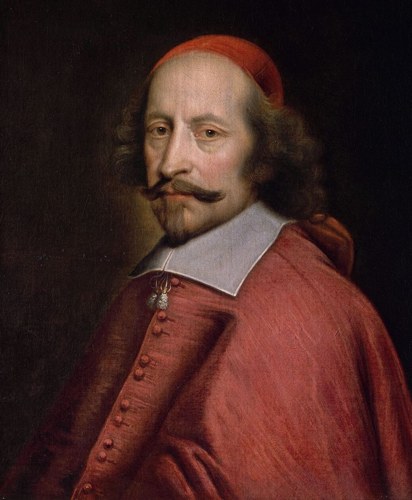
The news of Rocroi reached the French court while Louis XIV was still being presented to nobles and diplomats as the new five-day-old king. Cardinal Mazarin, who had succeeded Richelieu following Richelieu's death in December 1642 and was now the dominant political force in France, grasped the strategic significance immediately. A royal army, commanded by a Bourbon, had destroyed the best Spanish infantry on French soil. The political messaging was clear. Mazarin used it accordingly.
—
For Spain, Rocroi was not the end of military power but the beginning of an irreversible decline that those living through it could feel even if they could not yet measure its extent. The Crown of Castile had been financing continental warfare for over a century, stretching the empire's tax base, debasing the currency, relying on silver from the Americas, and sending the best of its military manpower to the Low Countries and the German theatres. The tercios that died at Rocroi could be replaced—and some were—but not with the same quality, at the same pace, for the same sustained effort. The military institution that had produced those veterans was already hollowing from within before Rocroi. The battle made the hollowing visible.
The broader trajectory of the Thirty Years' War was also shifting by 1643. Sweden, under its regency government following the death of Gustavus Adolphus in 1632, remained militarily effective. France, fully committed since 1635, was mobilizing resources that the Spanish Empire could not match over the long term. The Peace of Westphalia in 1648 reflected a Europe in which the Spanish position had deteriorated on every front. Rocroi was one moment in that deterioration—but a symbolically important one, a clear and decisive field engagement that stripped the tercios of the aura of invincibility they had carried for a century.
—
What the weapons can tell us that the orders of battle cannot:
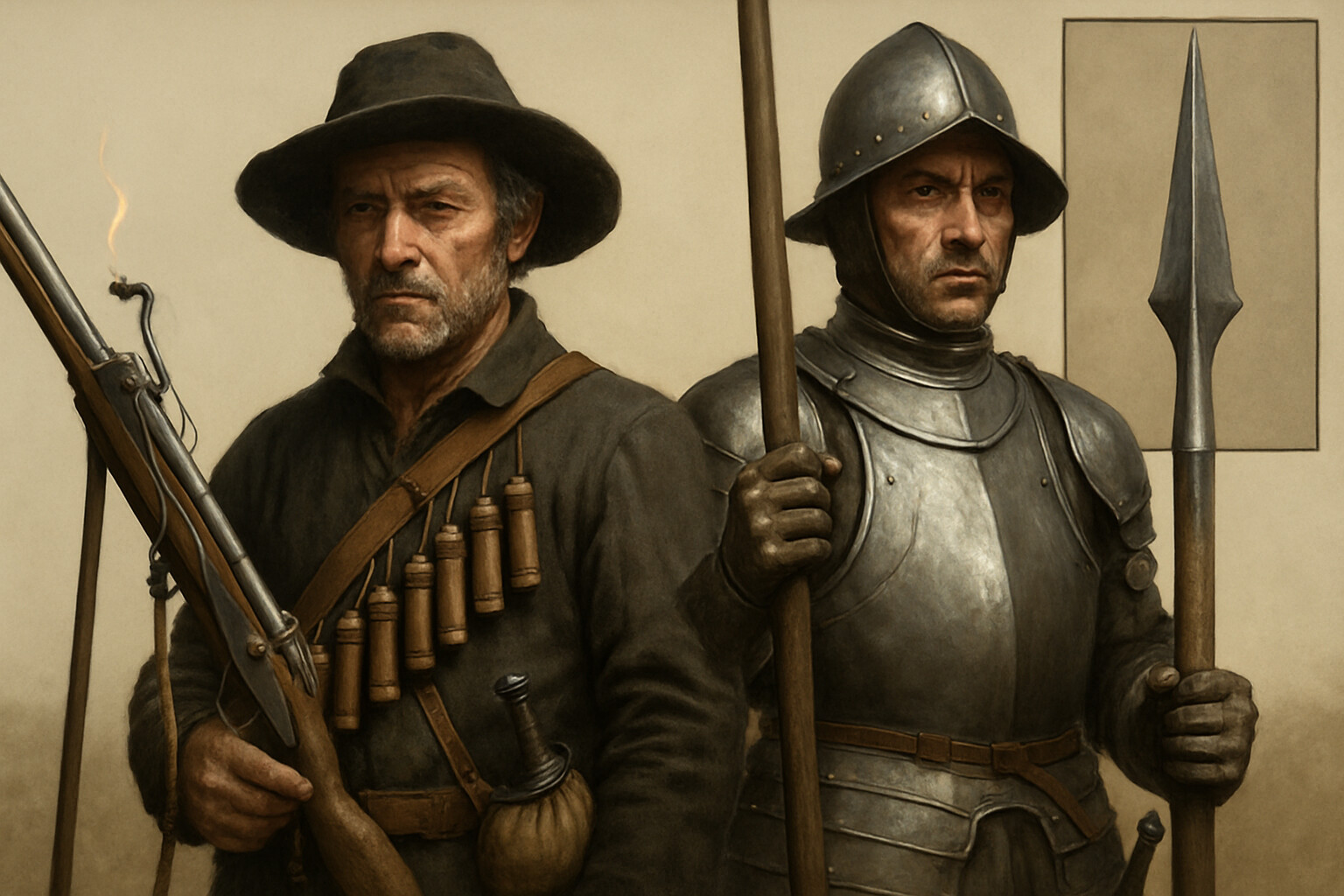
The Spanish musketeers at Rocroi carried matchlock firearms—the standard infantry shoulder arm of the era. A matchlock musket fired a lead ball roughly 17 to 20 millimeters across, propelled by black powder ignited by a slow-burning match cord clamped in the serpentine mechanism. The weapon was accurate at short range and unreliable in wet conditions, when the match might not hold its spark. A trained soldier might fire two or three shots per minute under good conditions, but in the stress of combat the practical rate dropped considerably. This is why the tercio system paired musketeers with pikemen: while the musketeers reloaded, the pikes protected them from cavalry and from opposing infantry closing the distance.
The pike itself—a shaft of ash or other hardwood, typically fourteen to eighteen feet long, with a steel head—gave the tercio its defensive solidity. A block of trained pikemen, dressed together, pikes leveled, was not something cavalry could easily break or infantry could push through without suffering severe casualties. Musketeer fire flanking the pike block inflicted damage at range. The pikes held the center. Together, the system had worked for a century.
Why did it fail at Rocroi?
Not because the weapons had changed significantly. The French infantry carried similar weapons. Not because the tactical principles of the tercio were suddenly obsolete. The tercio blocks at Rocroi functioned exactly as designed—they held their ground, maintained formation, and were not broken by frontal assault. They were destroyed because their cavalry protection was stripped away, because their flanks were enveloped, and because French cavalry was used in a way that prevented the tercios from doing what tercios were best at: choosing the ground and the angle of fight. The weapons were the same. The operational context had been changed around the men holding them.
The artillery on both sides—iron or bronze field cannon firing solid iron roundshot or canister depending on the piece—was the most lethal technology on the field but also the most static. Guns of this era were difficult to move once a battle was in progress. The French capture of the Spanish artillery train at the end of the battle was therefore significant not merely as a trophy but as evidence of complete operational collapse: an army that is still fighting does not abandon its guns.
—
The record of Rocroi survives in a collection of sources that includes French campaign dispatches, Spanish administrative records, later narrative histories, and Bossuet's 1687 oration. Each source type carries its own biases. French dispatches were written by commanders who had reason to emphasize victory and minimize French losses. Spanish records from this period are complicated by the administrative complexity of the Habsburg system and by the political sensitivity of a major defeat. Bossuet's oration is eloquent and detailed but is explicitly ceremonial rhetoric, not a campaign history. Later French historians writing in the seventeenth and eighteenth centuries had strong nationalist reasons to celebrate Rocroi as a founding moment of French military glory.
Modern scholarly treatments—including work by historians of the Thirty Years' War and of seventeenth-century French military history—have attempted to reconstruct the battle from multiple source types, with appropriate skepticism about numbers and about specific dramatic details that appear only in later accounts. The broad outline of the battle—the French right wing success, the left wing crisis, the cavalry envelopment, the destruction of the tercios—is not seriously disputed. The specific numbers, the exact sequence of events in the final tercio assault, and the precise casualty figures remain subjects of scholarly discussion.
This account has relied on the general scholarly consensus for its main narrative beats and has flagged specific details—Bossuet's description of the Spanish dead in formation, troop numbers, weather conditions—as inferred or uncertain where the primary source basis is weak.
—
The Great Condé died in 1686, at sixty-four, at Chantilly, after a military and political career that had taken him from the plateau at Rocroi to the upheaval of the Fronde, to the service of the Spanish king he had once defeated, and back to France under the amnesty extended by Louis XIV. He was, by any honest measure, a man of extraordinary military talent, considerable political imprudence, and a personal history that resists simple heroic framing. He commanded armies that committed atrocities. He changed sides in a war. He spent years fighting against the country whose uniform he wore at Rocroi.
None of that diminishes what he did on the morning of May 19, 1643. The tactical problem was real, the danger was real, the decision under pressure was correct, and the outcome changed the operational situation in the Ardennes in a single morning. The men who had stood in the tercio blocks and refused to break even when surrounded—whatever their experience of those final minutes—were professionals of the highest order. That their discipline could not save them from the operational trap they found themselves in is not a failure of courage. It is a demonstration of why courage alone has never been enough.
Rocroi was not the morning Spain ceased to be a great power. It was the morning when the limits of that power became impossible to ignore.