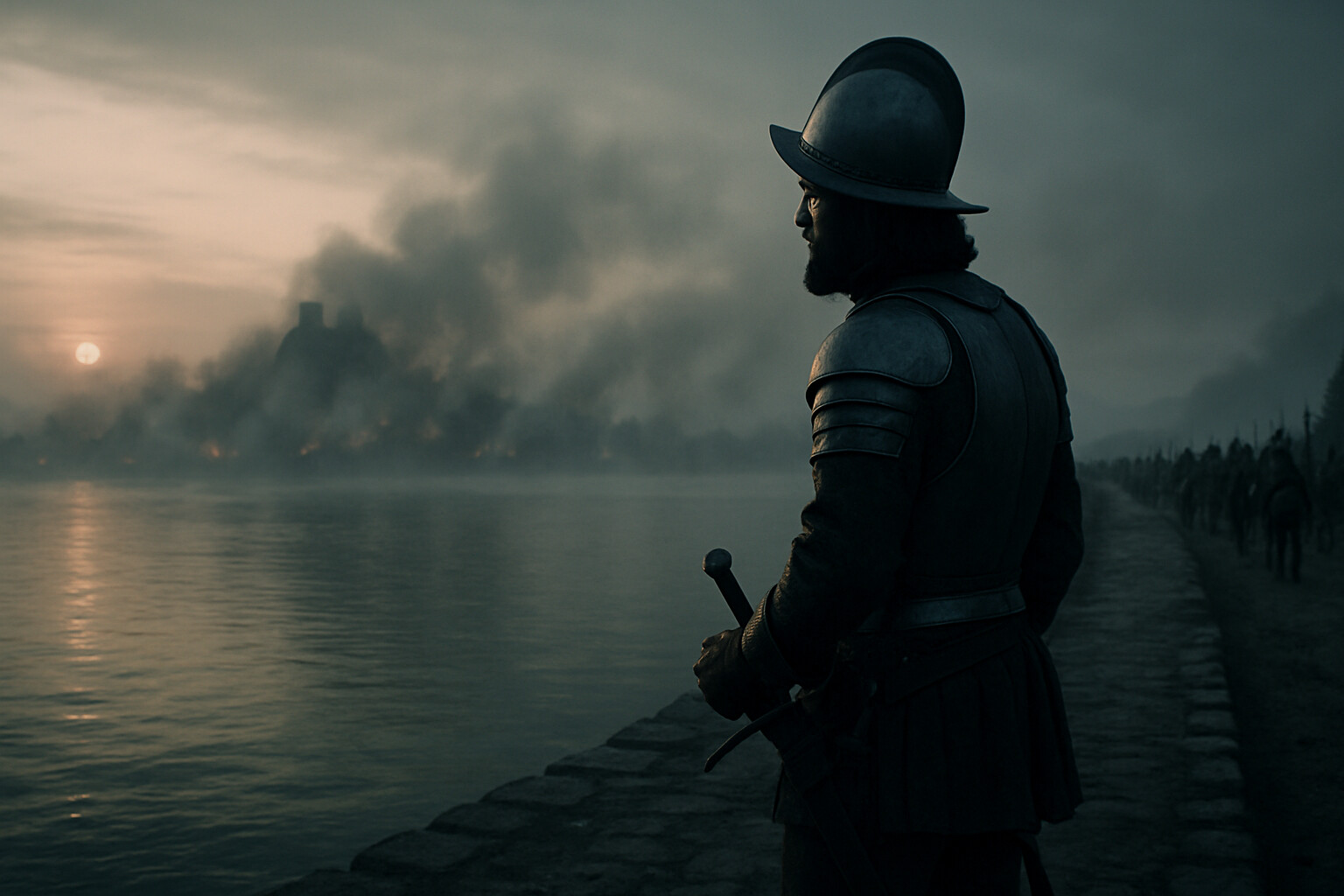
The causeway stretched ahead into haze and smoke. On either side, Lake Texcoco moved in slow gray swells. Somewhere beyond the treeline of rooftops and temples, the city of Tenochtitlan waited — its great pyramid still rising above the smog of burning reed beds, its population still numbering in the hundreds of thousands, its warriors still capable of killing.
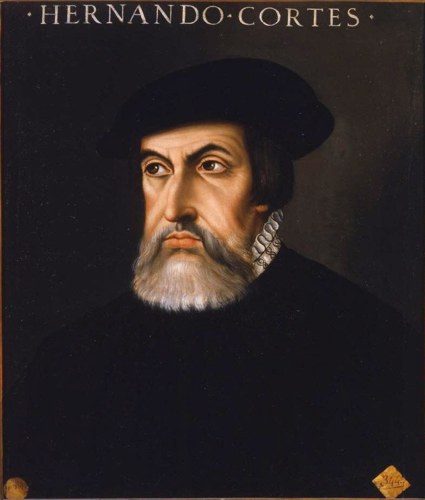
Hernán Cortés stood at the head of a column that should not, by any conventional military logic, have existed. He had been expelled from this city the year before. He had nearly died on this very causeway network in the catastrophe his men called the Noche Triste. He had lost artillery, powder, horses, and a third or more of his force in a single night of desperate retreat. And yet here he was again, with a rebuilt army, a fleet of purpose-built warships, and an alliance with indigenous peoples who despised Aztec power even more than the Spanish did. The final siege of Tenochtitlan was about to begin.
To understand what happened in the spring and summer of 1521, it is necessary to understand what Tenochtitlan actually was — and why it was so difficult to take.
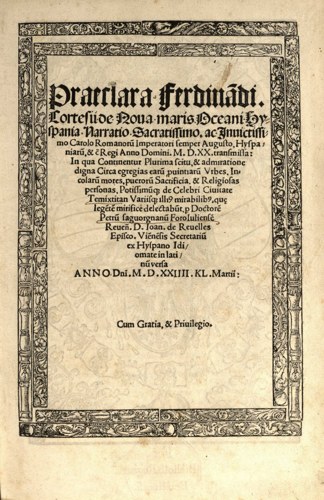
Founded, according to Aztec tradition, in 1325 on a marshy island in Lake Texcoco in the high plateau of central Mexico, the city had grown by the early sixteenth century into one of the largest urban centers on Earth. Contemporary Spanish accounts, including Cortés's own letters to the Spanish Crown — the Cartas de Relación — placed the population variously between 60,000 and 300,000 inhabitants. Modern historians working from archaeological and demographic evidence generally estimate the figure at between 200,000 and 300,000, though these estimates rest on contested methodologies and should be understood as ranges rather than counts. Either end of that range placed the city well above London, Paris, or any city in Spain at the time.
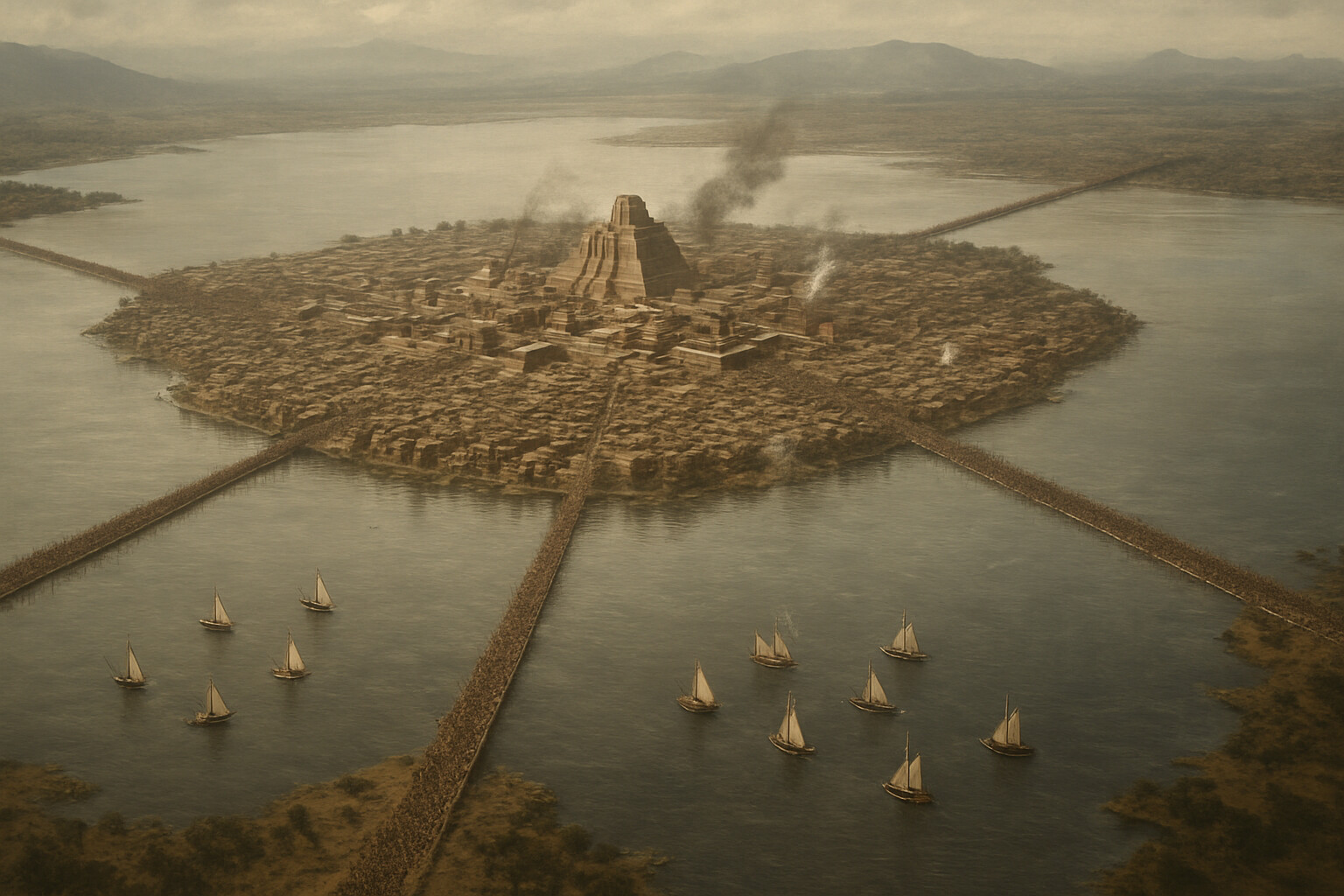
The city was built on an island. Three great causeways connected it to the surrounding lakeshore: one running north toward Tepeyac, one running south toward Iztapalapa, and one running west toward Tlacopan. Each causeway was interrupted by removable bridges that allowed canoe traffic to pass beneath and that could be pulled up to stop any army cold. The water around the island was broad, shallow in places but navigable throughout, and controlled by a war-canoe fleet that could concentrate defenders anywhere along the perimeter within hours.
The city itself was a feat of engineering. Its center was dominated by the Templo Mayor, a double pyramid rising some thirty meters above the main plaza, dedicated to the gods Huitzilopochtli and Tlaloc. Around it spread a dense grid of streets, canals, marketplaces, and neighborhoods. The great market of Tlatelolco, on the northern portion of the island, was described by Bernal Díaz del Castillo — a foot soldier with Cortés who later wrote one of the most detailed firsthand accounts of the conquest — as larger and better organized than any market in Spain. Tenochtitlan was not a village or a fortress. It was a metropolis, and sieging a metropolis built on water required tools and methods that no purely land-based force could provide.
Hernán Cortés was born in 1485 in Medellín, in the Extremadura region of Spain, into a minor noble family. He studied briefly at the University of Salamanca before abandoning his studies and sailing for the Caribbean in 1504. He spent years in Hispaniola and Cuba, accumulating property, earning the trust of the colonial governor, and developing the administrative and personal skills that would define his later career. By the time he was authorized to lead an exploratory expedition to the Mexican mainland in 1519, he was approximately thirty-three years old, experienced in the political mechanics of Spanish colonial life, and possessed of an ambition that made him willing to accept risks that cautious men would refuse.
His decision to beach or scuttle his own ships on arriving at the Mexican coast in 1519 — eliminating his force's option of retreat — is one of the most discussed command decisions in the history of the conquest. The details and exact intent vary across the sources, and historians continue to debate whether it was inspired ruthlessness, a calculated gamble, or something more improvised than legend suggests.
The expedition that reached the Valley of Mexico in November 1519 numbered roughly 500 soldiers, along with Cuban indigenous auxiliaries, horses, and a small number of artillery pieces. That force was entirely insufficient to conquer an empire by itself. What Cortés possessed, and exploited with considerable political skill, was the existence of deep grievances among the peoples the Aztec Triple Alliance had subjugated. The Aztec system of tribute extraction and, above all, the practice of capturing populations for ritual sacrifice had made enemies across central Mexico.
The Tlaxcalans — a confederacy in the high plateau east of Tenochtitlan that had resisted Aztec conquest and endured a state of near-permanent warfare with the Triple Alliance — became Cortés's most important indigenous allies after initial military confrontations in September 1519. Their commitment to the Spanish coalition was not naïve. Tlaxcalan leaders calculated that a Spanish-led alliance offered the best available means to break Aztec dominance, and they committed to it with substantial forces. Other groups followed: the Totonacs, the Texcocans, and eventually many former Aztec tributary states as the military situation shifted through 1520 and into 1521.
The Spanish force occupied Tenochtitlan peacefully in November 1519 and held the Aztec ruler Motecuhzoma II — rendered Moctezuma in older Spanish orthography — as a de facto hostage. The arrangement was unstable from the start. In the spring of 1520, while Cortés left the city to confront a rival Spanish expedition dispatched by the Cuban governor Diego Velázquez, his deputy Pedro de Alvarado ordered a massacre of Aztec nobles and warriors gathered for a religious festival. The killing triggered a general uprising. Cortés returned to a city in open revolt.
Motecuhzoma died in the days that followed, under circumstances that remain genuinely disputed. Spanish accounts claim he was killed by Aztec crowds; indigenous accounts point to the Spanish. The historical record does not resolve this clearly, and neither account should be treated as settled.
On the night of June 30 to July 1, 1520, the Spanish and their allies attempted to flee Tenochtitlan along the western causeway. They were caught in a devastating running battle. The Noche Triste — the Sorrowful Night — cost the Spanish several hundred soldiers, most of their artillery, and enormous quantities of gold they had accumulated. Cannon that had been laboriously brought across the Atlantic and carried inland were lost in the lake when the causeway bridges gave way under their weight. Days later, at the battle of Otumba, the retreating column fought through a surrounding Aztec force and reached Tlaxcalan territory.
The period from July 1520 to April 1521 was defined by Cortés systematically rebuilding his military position. He reorganized the Tlaxcalan alliance. Reinforcements arrived at the coastal settlement of Villa Rica de la Vera Cruz from the Caribbean — additional soldiers, horses, powder, and weapons. He incorporated soldiers from the rival Spanish force he had already neutralized. And he oversaw the construction of thirteen brigantines in Tlaxcalan territory.
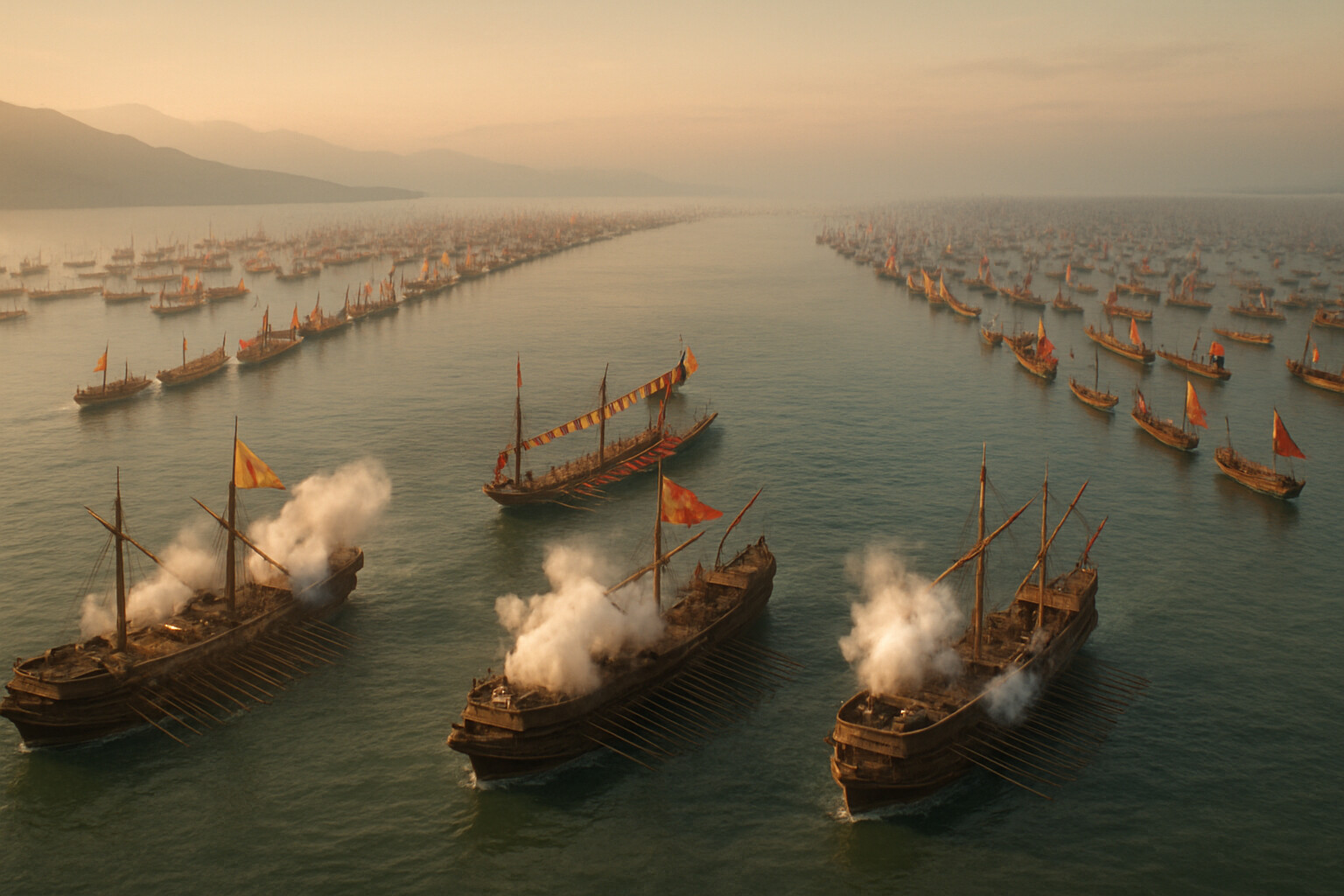
The brigantines were the strategic calculation that made everything else possible. Without control of the lake, any Spanish advance along the causeways would be exposed to constant flanking attacks by Aztec war canoes. The vessels were shallow-draft sailing and rowing craft, designed by shipwright Martín López and constructed in sections in the mountains above Tlaxcala from timber cut locally, with iron fittings carried overland from the coast. They were then transported in pieces through mountain passes by a large indigenous labor force — some accounts describe thousands of carriers, though precise figures are not reliably established — and reassembled on the shores of Lake Texcoco. Canal clearance work was required to allow the assembled ships access to open water. Each brigantine carried a small bronze falconet-class cannon at the bow, along with crossbowmen and arquebusiers. Against the Aztec war-canoe fleet, which relied on numbers and maneuvering but carried no artillery, the brigantines held a decisive technological advantage: standoff firepower, height above the waterline, and the ability to move under sail regardless of paddling effort.
López later pursued legal recognition from the Spanish Crown for his role, and his legal claims provide some of the documentary evidence for the construction details. They are, like Cortés's letters, a self-interested source that rewards careful reading.
The siege began in earnest in late April and May 1521. Cortés organized his combined force into three main Spanish-led columns, each supported by large formations of Tlaxcalan and other allied indigenous warriors. Estimates of the total indigenous allied force range from 75,000 to 200,000 warriors; exact figures cannot be confirmed from surviving records. The Spanish contingent numbered somewhere between 700 and 900 soldiers, based on available accounts, with some variation between sources. Pedro de Alvarado commanded the western approach along the Tlacopan causeway. Gonzalo de Sandoval, considered by contemporaries and later historians alike to be among Cortés's most capable field commanders, took the southern approach after Cristóbal de Olid was reassigned. Cortés himself moved between columns and directed operations on the lake.
On April 28, 1521, the brigantines were launched on Lake Texcoco. The fleet engaged the Aztec canoe forces in a series of engagements and achieved control of the open water. That control was decisive for logistics: it allowed resupply to reach the besieging forces and prevented the city from receiving significant food or water reinforcements by water.
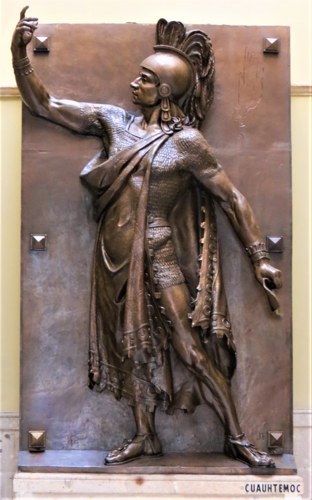
On approximately May 22, Spanish and allied forces cut the main aqueduct that carried freshwater from springs at Chapultepec to the island city. Lake Texcoco's water was brackish and undrinkable. With the aqueduct severed and the lake blockaded, the city's population — still numbering in the hundreds of thousands — faced progressive starvation and thirst. A smallpox epidemic had already struck Tenochtitlan in late 1520, killing enormous numbers of the population, including the ruler Cuitláhuac. Cuauhtémoc, Motecuhzoma's nephew, had assumed leadership of the Aztec resistance in early 1521, inheriting a city already weakened by epidemic before the siege walls closed around it.
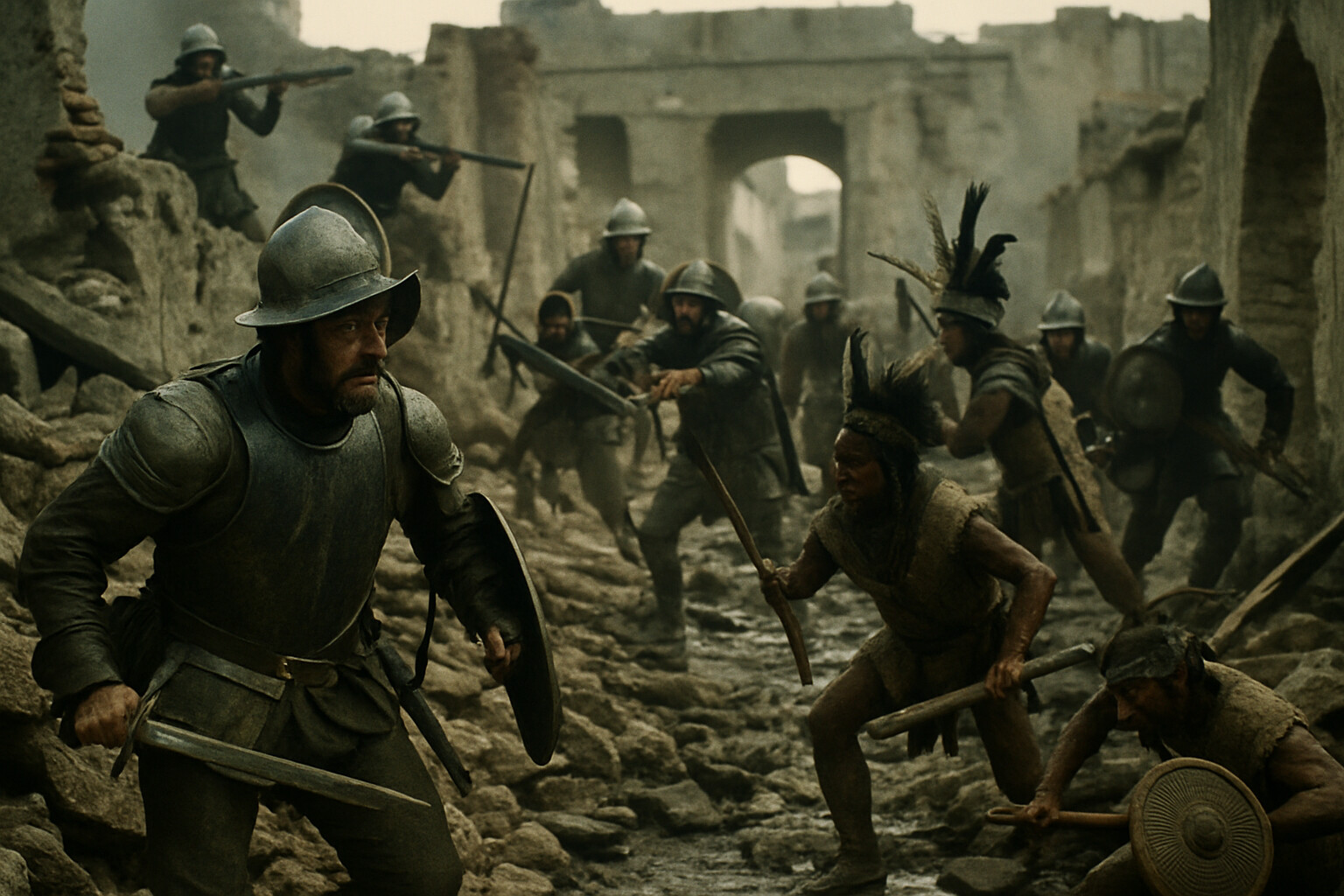
The fighting that followed was unlike anything the Spanish had encountered in the Americas. Tenochtitlan's defenders proved extraordinarily resilient. The streets and canals created a tactical environment that neutralized much of the Spanish advantage. Horses, which had been devastating in open-field engagements, were largely useless in the narrow lanes between buildings and along canal edges. Artillery could demolish structures, but rubble created new defensive positions. Aztec warriors drew Spanish and allied columns into enclosed areas and then counterattacked from rooftops and across canal bridges they controlled.
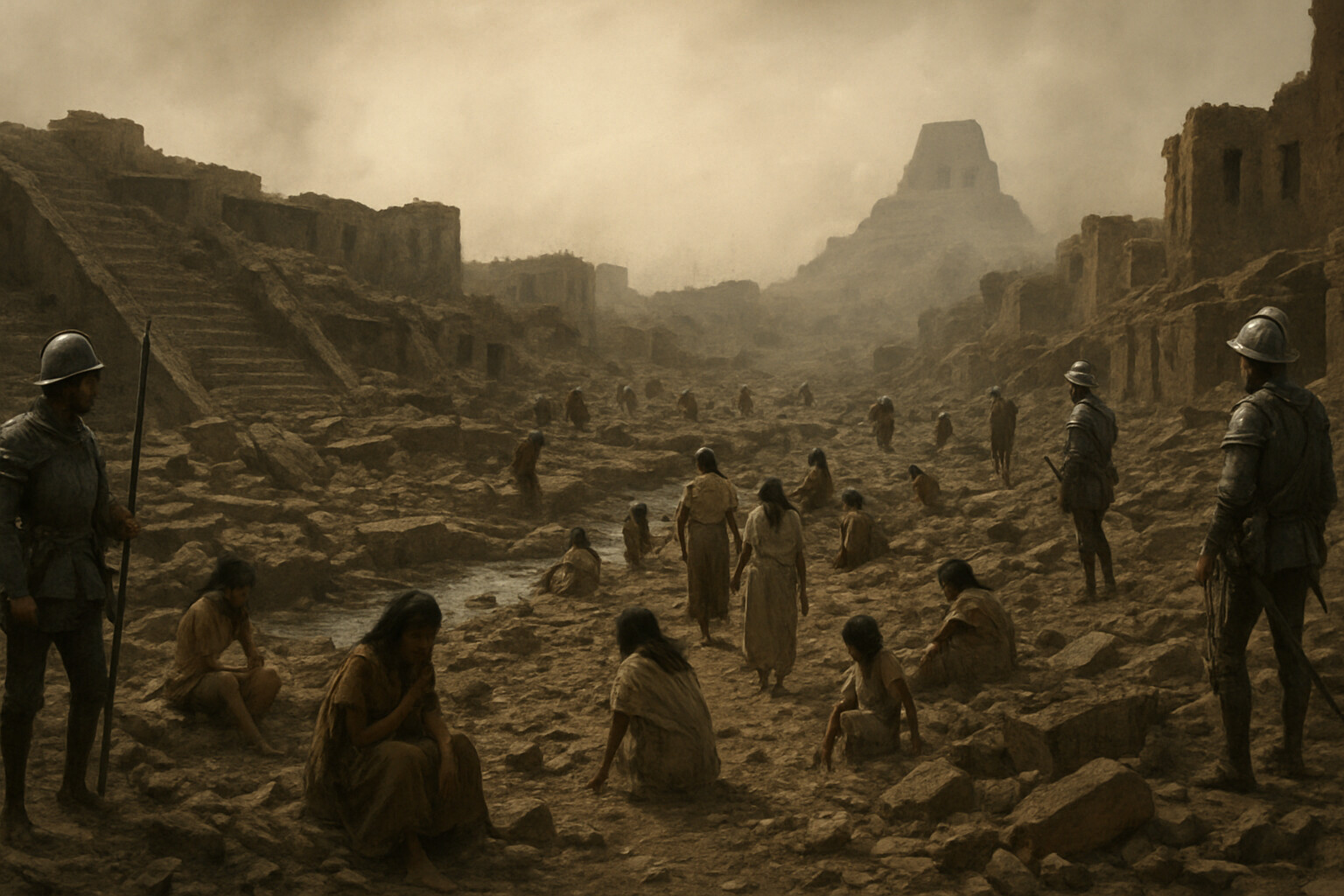
Cortés adopted a systematic, grinding approach: advance, demolish, fill. Spanish and allied forces would move into a city block, tear down structures to eliminate rooftop fighting positions, fill the canals with rubble to allow horses and artillery to move forward, and hold the ground before advancing again. The process was slow, costly, and destructive. It also meant the deliberate obliteration of one of the most remarkable cities in the world. Díaz del Castillo later wrote with evident ambivalence about watching Tenochtitlan's temples, aviaries, and palaces systematically reduced to rubble. The tactic was driven by tactical necessity: any ground left partially cleared and then abandoned overnight could be refortified by defenders before the next morning's advance.
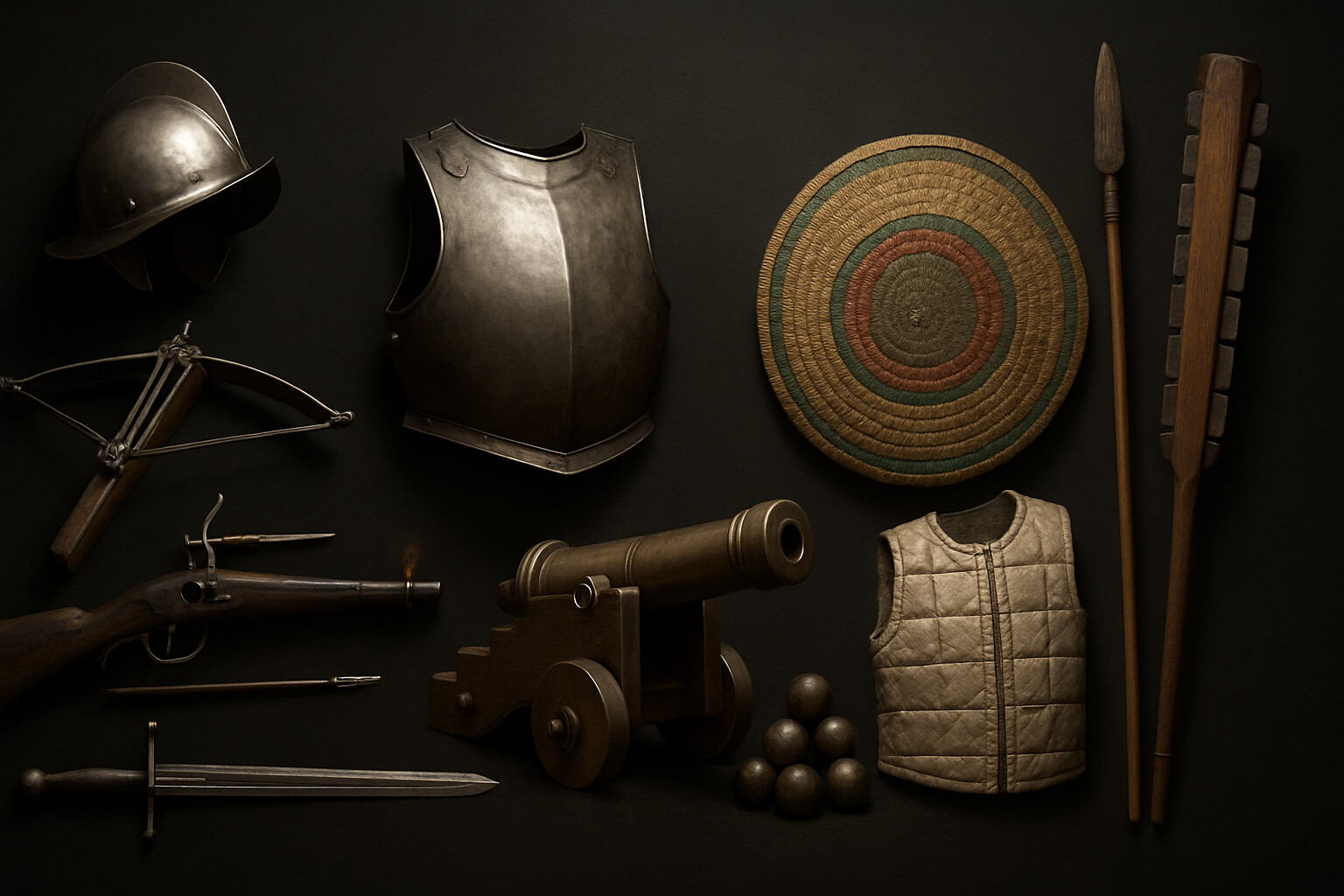
The crossbow and the arquebus were the two principal ranged weapons that made the street-by-street advance possible. Crossbowmen — deploying a weapon reliable in the humid lake environment, capable of two to four bolts per minute, and effective against the quilted cotton armor worn by Aztec warriors — provided sustained covering fire across exposed canal crossings and from broken walls while assault parties moved. Arquebusiers, with their matchlock mechanism and slower rate of fire, were deployed alongside crossbowmen; the noise, smoke, and projectile effect of the arquebus disrupted massed counterattacks at moderate range, but the slow reload time made men who had just fired dangerously vulnerable in close terrain. Spanish accounts record instances where soldiers who discharged their weapons in canal ambushes were overrun before they could reload.
The macuahuitl — a dense hardwood club with razor-sharp obsidian blades set along both edges — gave Aztec warriors an effective close-combat weapon in exactly the confined terrain the siege produced. Obsidian fractures to produce edges that, at the microscopic level, approach the sharpness of a fine surgical instrument, though they are brittle and chip against steel. In the narrow lanes and across the rubble-filled canal beds of the advancing siege line, where Spanish cavalry could not operate and artillery could not be easily repositioned, the fighting often came down to men in close contact on either side of a broken wall or a half-filled ditch. Spanish soldiers in steel armor had defensive advantages, but Díaz del Castillo and Cortés's own letters record repeated Spanish casualties from the intensity of the close-range fighting.
A major crisis came on June 30, 1521 — exactly one year after the Noche Triste. Cortés led a large column deep into the city toward the great temple district. The advance encountered a prepared ambush at a canal crossing that had not been properly filled and secured. Aztec warriors attacked from multiple directions. According to Díaz del Castillo and Cortés's own letters, Cortés was seized and nearly taken prisoner before being pulled free by his own soldiers. Other Spanish soldiers were captured. They were sacrificed on the Templo Mayor in public view of the besieging forces, their fate announced to the Spanish ranks by the sound of ritual drums and the sight of bodies displayed on temple platforms. The episode — sometimes called the disaster of the causeway — shocked the Spanish command and reinforced the tactical logic of the methodical approach over rapid advances. Cortés reorganized and the systematic destruction resumed.
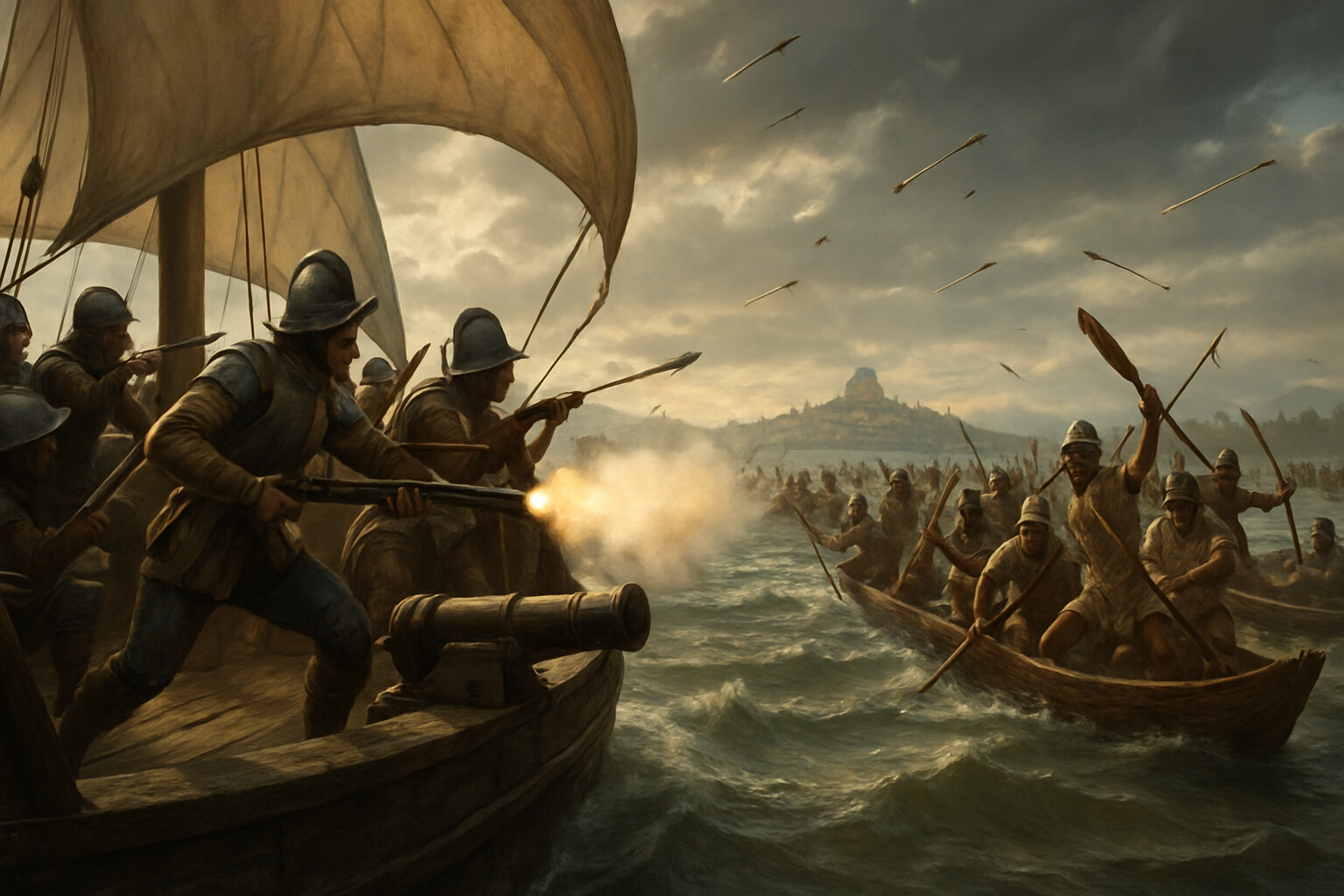
Throughout June and July, the brigantines enforced the blockade. The lake fleet cut off significant resupply by water. The severed aqueduct, combined with the blockade, meant that the city's population faced conditions of extreme thirst in addition to starvation and continuous assault. The smallpox epidemic that had struck in late 1520 had not run its course; the combination of disease, malnutrition, and siege created suffering inside the city that the surviving accounts, both Spanish and indigenous, record with unusual agreement on the scale of the dying.
By early August, the Aztec defensive perimeter had been compressed into the northern district of Tlatelolco. The great market fell. Spanish and allied forces controlled the vast majority of the island. The city that had taken two centuries to build had been reduced, block by block and canal by canal, to rubble.
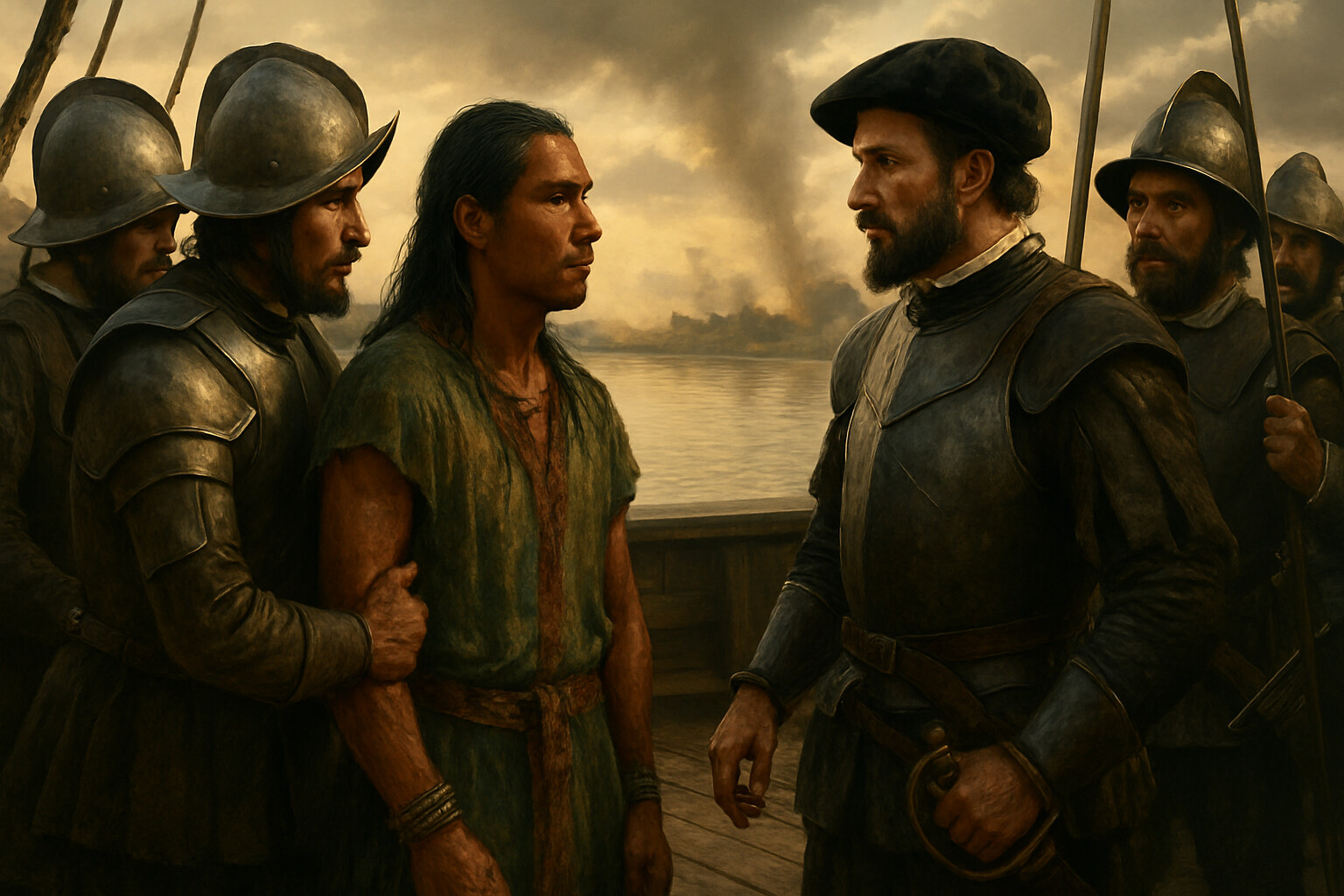
On August 13, 1521, the end came. Cuauhtémoc attempted to escape by canoe across the lake. He was intercepted by a brigantine commanded by García Holguín. Brought before Cortés, Cuauhtémoc — according to accounts including that of Díaz del Castillo, though these cannot be verified as verbatim records — reportedly asked to be killed with the dagger at Cortés's belt rather than face whatever came next. Cortés refused and, at least initially, treated him with formal respect. The city's resistance ended with the capture. The siege was over.
The cost was staggering. Aztec casualties from combat, epidemic, starvation, and the siege itself numbered in the tens of thousands at minimum. Modern historians and demographers have proposed figures ranging from 100,000 to 240,000 dead among the city's population during and immediately after the siege, though these estimates carry wide uncertainty and should not be read as precise counts. The city itself was almost entirely destroyed. Cortés wrote to the Spanish King Charles I — simultaneously Holy Roman Emperor Charles V — expressing regret at the destruction. Whether that regret was genuine or rhetorical cannot be determined at this distance. He had wanted an intact, productive capital for a new colonial order. What the siege produced was a ruin.
Cuauhtémoc was not executed immediately. He was held as a prisoner for several years, used by Cortés as a political tool to legitimize Spanish authority and to extract information about hidden Aztec treasure that was never found in the quantities the Spanish expected. In 1525, Cortés ordered his execution during the Honduras expedition, on the stated grounds of an alleged conspiracy. That claim was controversial even among Cortés's own officers and remains disputed by historians. Cuauhtémoc has since become one of the central figures of Mexican national memory — the last independent Aztec ruler, a symbol of indigenous resistance, commemorated by a statue on the Paseo de la Reforma in Mexico City.
For the Tlaxcalan and other indigenous allies, the outcome was complex and in many respects bitterly ironic. They had fought effectively and at enormous cost to break Aztec dominance. They succeeded. But the colonial system that followed replaced Aztec tribute and political control with Spanish tribute and political control. And the epidemic diseases that swept central Mexico in the decades after 1521 — smallpox, measles, and other Old World pathogens to which indigenous populations had no prior exposure — killed at a scale that made the battle deaths of the siege appear small by comparison. Modern demographic research estimates that the indigenous population of central Mexico fell by fifty to ninety percent over the century following the conquest. No participant in the siege of 1521 could have foreseen that consequence, but it is the largest single consequence of the events of that summer.
Hernán Cortés was rewarded with the title Marqués del Valle de Oaxaca and significant land grants. He was never given the political authority over New Spain that he sought. The Crown, wary of a conquistador with his own army and his own alliances, consistently limited his power. He spent his later years in legal disputes, political frustrations, and a second voyage of exploration. He died in Spain in 1547, near Seville, at approximately sixty-two years of age. His remains were moved multiple times over the centuries and are now interred at the Hospital de Jesús Nazareno in Mexico City.
The fall of Tenochtitlan was not the end of conquest. It was the beginning of three centuries of colonial rule over a vast region and, eventually, of a demographic catastrophe that reshaped an entire civilization. But as a military operation, it remains one of the most significant siege campaigns in the history of the Americas: a combined-arms effort that integrated naval power on a highland lake, artillery, infantry, a massive indigenous allied force, logistical strangulation, and systematic urban destruction to reduce a fortified island city whose defenders fought, by all accounts that survive, with extraordinary tenacity to the end.
The story of that siege belongs to all of its participants — the Spanish soldiers who endured the causeway ambushes, the Tlaxcalan warriors who committed to an alliance whose full consequences none of them could predict, the Aztec defenders who held the rubble of their city for seventy-five days, and the young ruler Cuauhtémoc, who faced the end of his world with enough composure that even his conquerors recorded it.