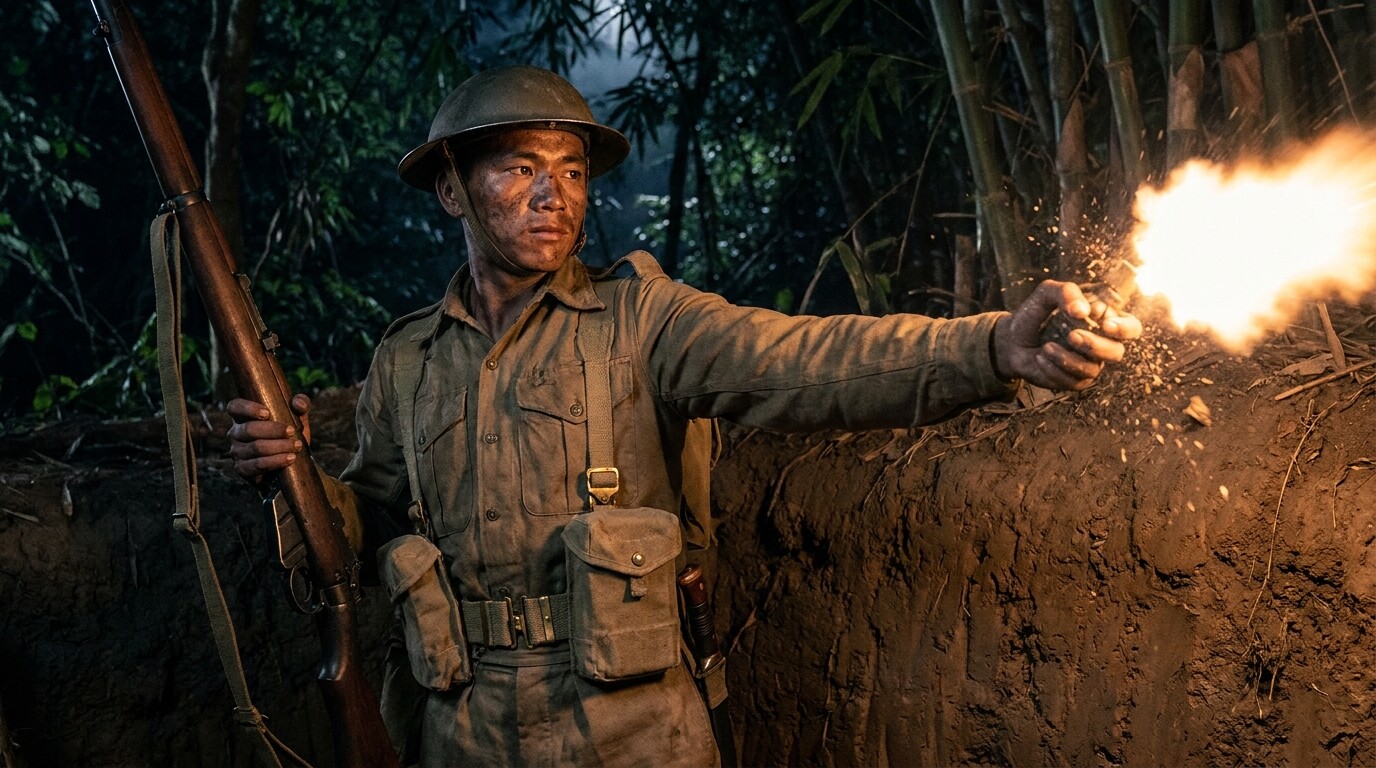
The grenade landed with a metallic thud in the foxhole beside Rifleman Lachhiman Gurung. In the pre-dawn darkness of the Burmese jungle, he had perhaps three seconds before the Type 97 hand grenade would detonate and tear apart his position on the forward slope overlooking Taungdaw village.
Gurung grabbed the grenade and hurled it back toward the Japanese lines threading through the bamboo thickets below. A second grenade clattered into his position. Again, he snatched it up and threw it back into the night. The third grenade came faster than the others. As Gurung reached for it, the Type 97's four-second fuse ran out.
The explosion shattered his right hand and tore away two fingers. Shrapnel peppered his face and arm. In the ringing silence that followed, Gurung could hear the rustle of equipment and whispered Japanese commands moving up the slope toward his position. The real attack was just beginning.
**The Last Push**
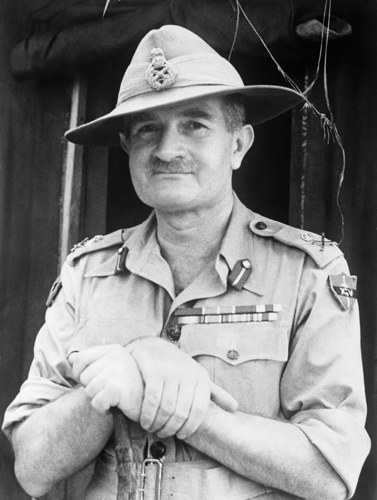
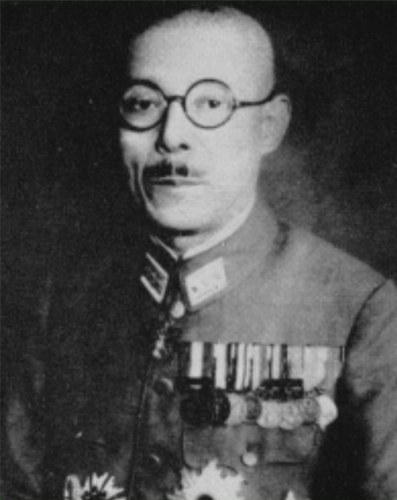
By May 1945, the war in Burma had reached its final phase. Lieutenant-General William Slim's Fourteenth Army had broken Japanese resistance at Meiktila and was driving south toward Rangoon in a desperate race against the approaching monsoon. The Japanese Burma Area Army, commanded by Lieutenant-General Heitaro Kimura, was conducting a fighting withdrawal through increasingly difficult terrain, but individual units continued to mount fierce local counterattacks.
The 4th Battalion, 8th Gurkha Rifles had been fighting in Burma for over two years. Originally raised in 1824, the 8th Gurkha Rifles had earned battle honors from the North-West Frontier to the Western Front. The 4th Battalion had been reconstituted in 1940 specifically for service in the Burma Campaign, drawing on the mountain warfare expertise that had made Gurkha units valuable throughout the British Indian Army.
Lachhiman Gurung was twenty-five years old, a veteran rifleman from the hills of western Nepal. He had joined the British Indian Army in 1940, following a tradition that stretched back generations in his family and village. Small in stature at five feet four inches, Gurung possessed the mountain endurance and steady nerves that had made Gurkha soldiers prized by British commanders for more than a century.
The position he now defended was a forward observation post on the high ground above Taungdaw, a village in the Arakan region of western Burma. The area was strategically important as part of the broader effort to clear Japanese forces from the approaches to Rangoon before the monsoon made movement impossible. Intelligence reports suggested that Japanese forces in the area were preparing to withdraw, but local commanders remained capable of mounting aggressive spoiling attacks.
**The Battlefield**
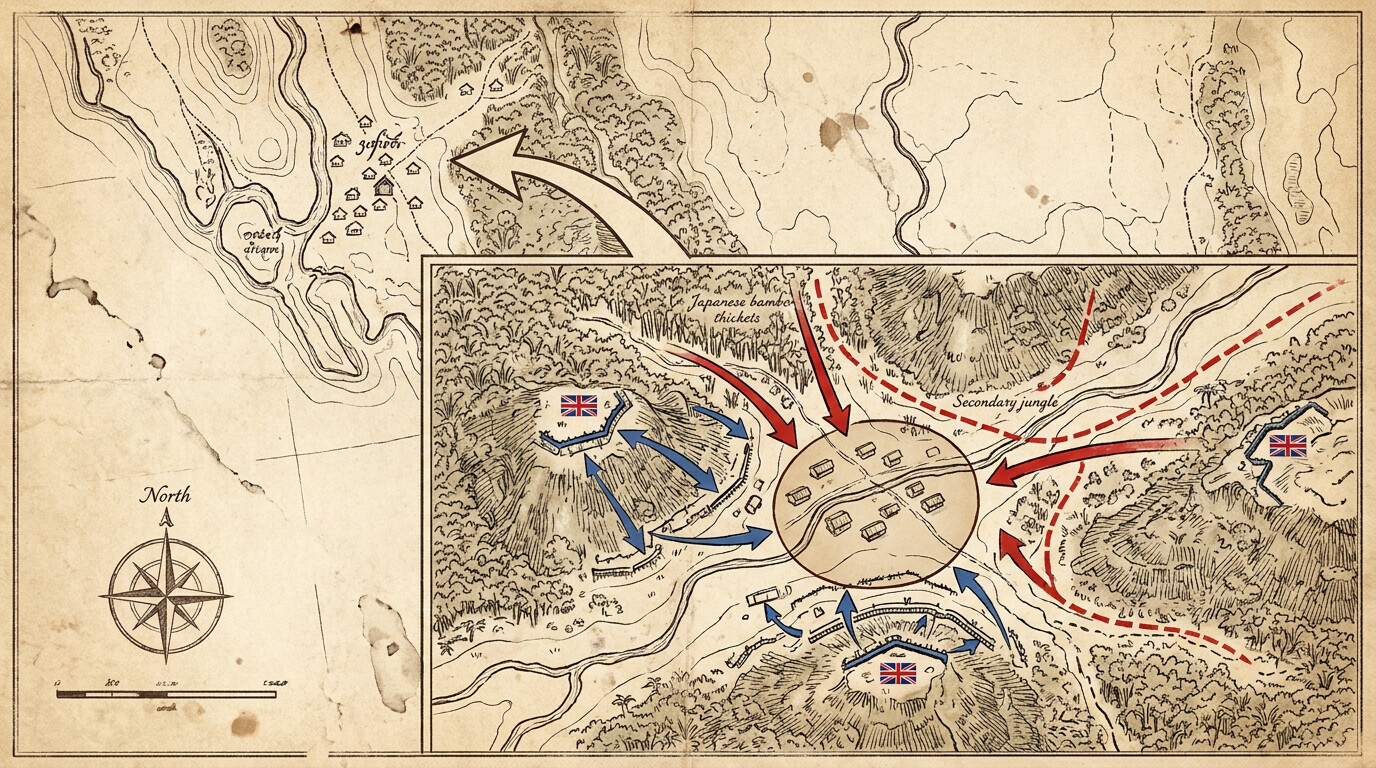
The terrain around Taungdaw was typical of the Arakan: steep hills covered in dense jungle, with narrow valleys containing small villages connected by dirt tracks that became impassable during the monsoon. The Japanese had spent months preparing defensive positions throughout the area, using the natural cover of bamboo thickets and secondary jungle to conceal their movements.
Gurung's position was part of a company-strength outpost established to monitor Japanese activity in the valley below. The foxhole had been dug into the forward slope of a low hill, providing clear observation over the approaches to the village but also making it visible to Japanese forces moving through the area. Two other positions flanked Gurung's foxhole, but they were far enough apart that each rifleman would have to hold his ground independently if attacked.
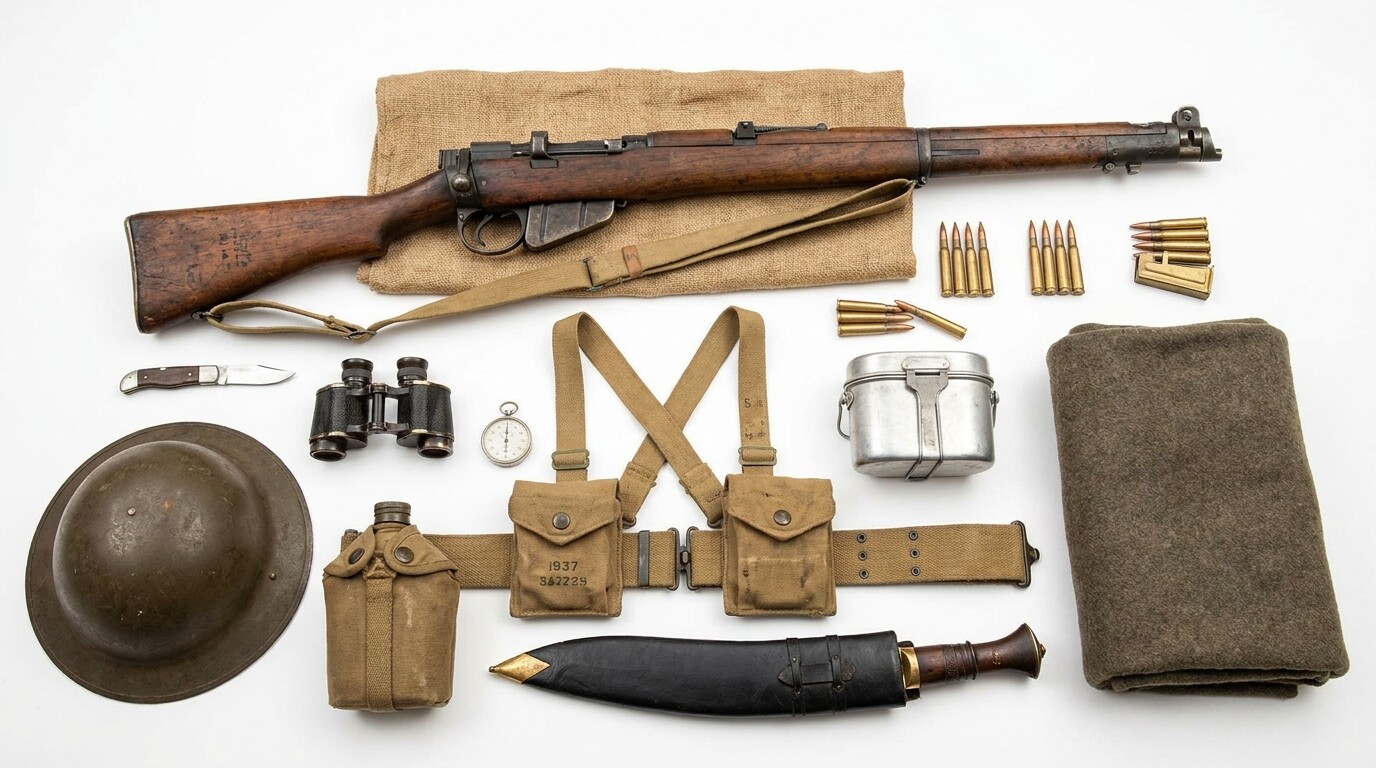
The Lee-Enfield No. 4 Mk I that Gurung carried was the standard rifle of British and Commonwealth forces by 1945. Weighing eight and three-quarter pounds and firing the powerful .303 British cartridge, the Lee-Enfield was renowned for its accuracy and the speed with which trained soldiers could work its bolt-action mechanism. The ten-round magazine could be loaded quickly using five-round charger clips, and an experienced rifleman could maintain a sustained rate of fire of fifteen aimed rounds per minute.
More importantly for Gurung's situation, the .303 cartridge delivered devastating stopping power at the ranges he would be fighting. The 174-grain Mark VII bullet could penetrate dense vegetation and still retain enough energy to stop an attacking soldier. In the close-quarters fighting typical of the Burma jungle, where engagements often took place at ranges under 100 yards, the Lee-Enfield's reliability and power made it an ideal defensive weapon.
The Japanese forces moving against Gurung's position were likely elements of a company or battalion conducting a reconnaissance in force or attempting to secure the high ground before withdrawing. Japanese infantry in Burma by 1945 were typically armed with the Type 38 Arisaka rifle, a bolt-action weapon firing the 6.5mm cartridge. While accurate, the Type 38 lacked the stopping power of the British .303, particularly important in jungle fighting where wounded attackers might continue advancing.
The Type 97 hand grenades that initiated the attack represented standard Japanese infantry tactics. These grenades had a four to five-second delay fuse activated by striking the percussion cap against a hard surface. Japanese doctrine emphasized aggressive use of grenades to clear defensive positions, followed immediately by close assault with bayonets and swords.
**Night Attack**
The Japanese attack began around 4:00 AM, during the darkest hour before dawn. This timing was deliberate: Japanese forces had developed night fighting to a fine art during their early victories in Southeast Asia, and they retained confidence in their ability to infiltrate and overwhelm isolated positions in darkness.
The first indication of the attack came when Gurung heard the soft thud of a grenade landing in his foxhole. In the split second available to him, he made a decision that likely saved his life and those of his nearby comrades. Rather than diving for cover, he grabbed the grenade and threw it back toward the Japanese positions.
The Type 97 hand grenade contained approximately 65 grams of explosive, enough to kill or severely wound anyone within a five-meter radius. By throwing it back, Gurung not only saved himself but probably killed or wounded several of the attacking Japanese soldiers. The second grenade followed quickly, suggesting that multiple Japanese soldiers were advancing on his position simultaneously.
When Gurung threw back the second grenade, the Japanese attackers likely realized they were facing an alert and aggressive defender. The third grenade came faster, probably thrown from a closer position, giving Gurung less time to react. When this grenade detonated in his hands, the explosion should have ended his ability to fight effectively.
The shrapnel wounds to his face and arm, combined with the traumatic amputation of two fingers on his right hand, would normally incapacitate a soldier. The Lee-Enfield required two hands to operate effectively: the right hand to grip the stock and operate the trigger, the left hand to support the weapon and work the bolt. With his right hand mangled, Gurung faced the prospect of defending his position against multiple attackers while barely able to hold his rifle.
What happened next demonstrates both Gurung's individual determination and the effectiveness of his training. Despite his wounds, he managed to continue operating his rifle for the remainder of the night. This likely required him to adapt his shooting position, possibly bracing the weapon against the rim of his foxhole while using his left hand to work the bolt. Such improvisation under extreme stress speaks to both physical courage and the muscle memory developed through years of weapons training.
**The Long Night**
The Japanese attack continued throughout the night, with multiple waves of soldiers attempting to overrun Gurung's position. Each assault followed a similar pattern: movement through the jungle below, followed by attempts to close with the defensive positions using grenades and small arms fire.
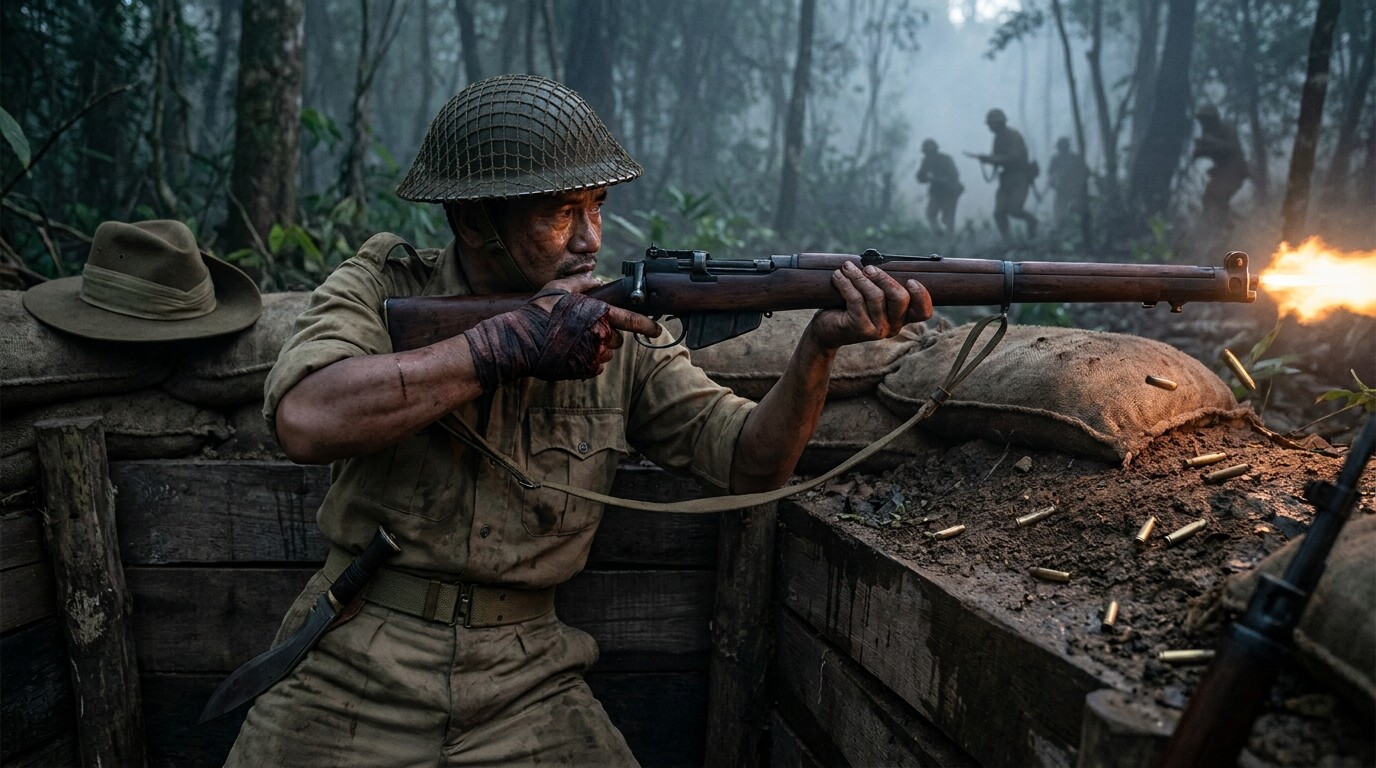
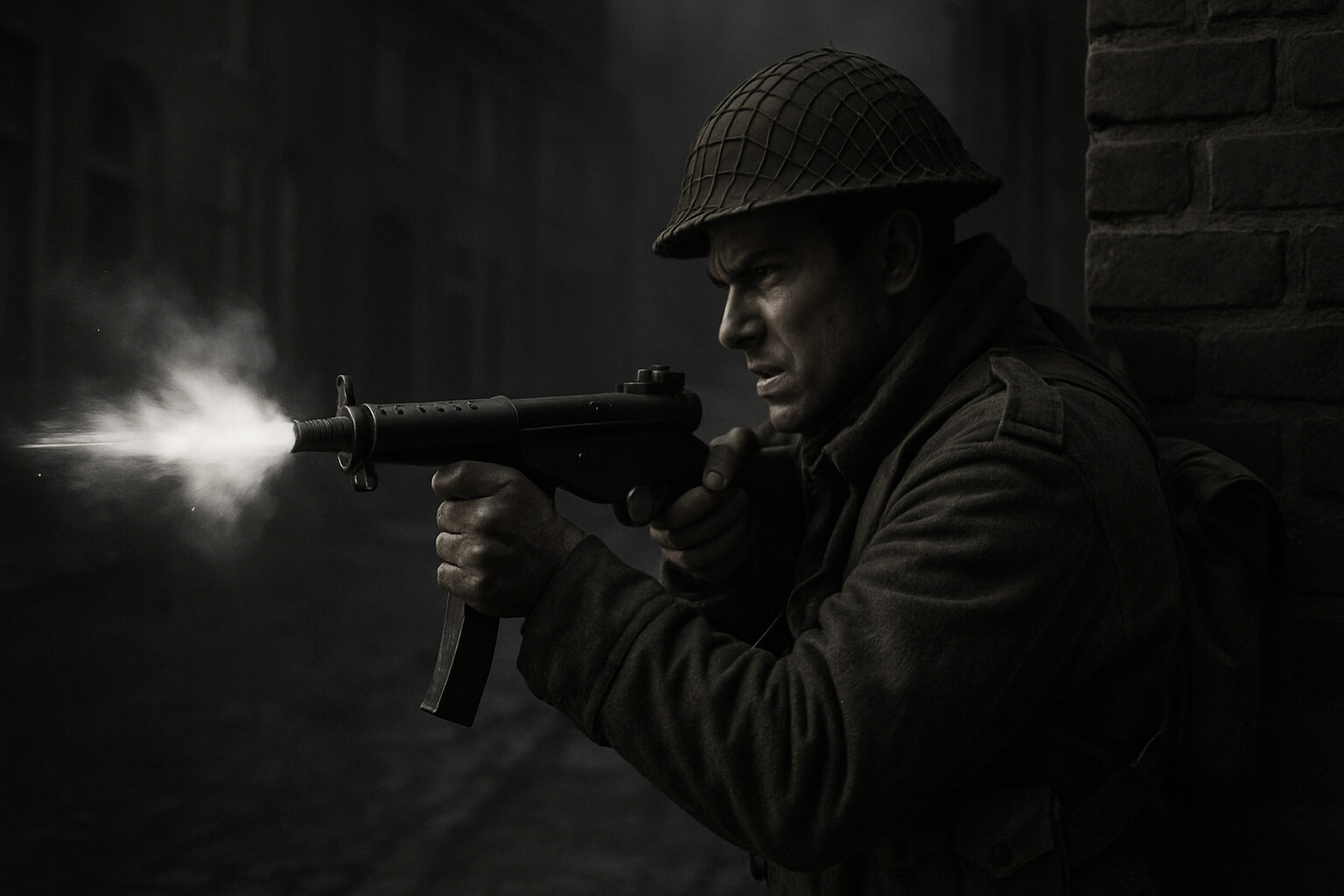
Gurung's position gave him several advantages that helped offset his wounds. The elevated location provided clear fields of fire down the slope, making it difficult for Japanese soldiers to approach without being detected. The muzzle flash of his Lee-Enfield would have been visible to the attackers, but it would also have provided Gurung with brief illumination of his targets.
More importantly, Gurung was fighting from a prepared position while his attackers had to advance over unfamiliar ground in darkness. Each time Japanese soldiers attempted to close with his foxhole, they would be silhouetted against the lighter sky as they crested the slope, making them visible targets even in the pre-dawn darkness.
The .303 cartridge proved devastatingly effective at the close ranges involved. Japanese soldiers advancing up the slope would typically be engaged at ranges between 50 and 100 yards, well within the Lee-Enfield's effective range. At these distances, the heavy British bullet would punch through the light cotton uniforms worn by Japanese infantry and deliver massive trauma.
Gurung's ammunition supply became critical as the night wore on. Each Lee-Enfield magazine held ten rounds, and he would have carried additional ammunition in bandoliers and pouches as part of his standard load. A typical rifleman's load in Burma included 50 rounds of ready ammunition, with additional supplies available from company stores. Managing this ammunition while wounded and under constant attack required careful fire discipline.
The sustained nature of the Japanese attacks suggests that Gurung was facing a significant force, possibly a reinforced platoon or small company. For Japanese commanders to continue pressing an attack against a single position throughout the night, they must have considered the objective important enough to justify heavy casualties.
As dawn approached, the character of the fighting changed. Japanese forces typically preferred to break contact before daylight, when British artillery and air support could be brought to bear. The fact that attacks continued until dawn suggests either that the Japanese force was trapped in position or that their commanders considered capturing Gurung's observation post essential to their broader tactical plan.
**The Cost**
When dawn finally broke over the Taungdaw position, the full scale of the night's fighting became apparent. According to official records, Gurung's rifle fire had killed thirty-one Japanese soldiers. Their bodies lay scattered across the slope below his foxhole, testimony to both the accuracy of his shooting and the determination of their attacks.
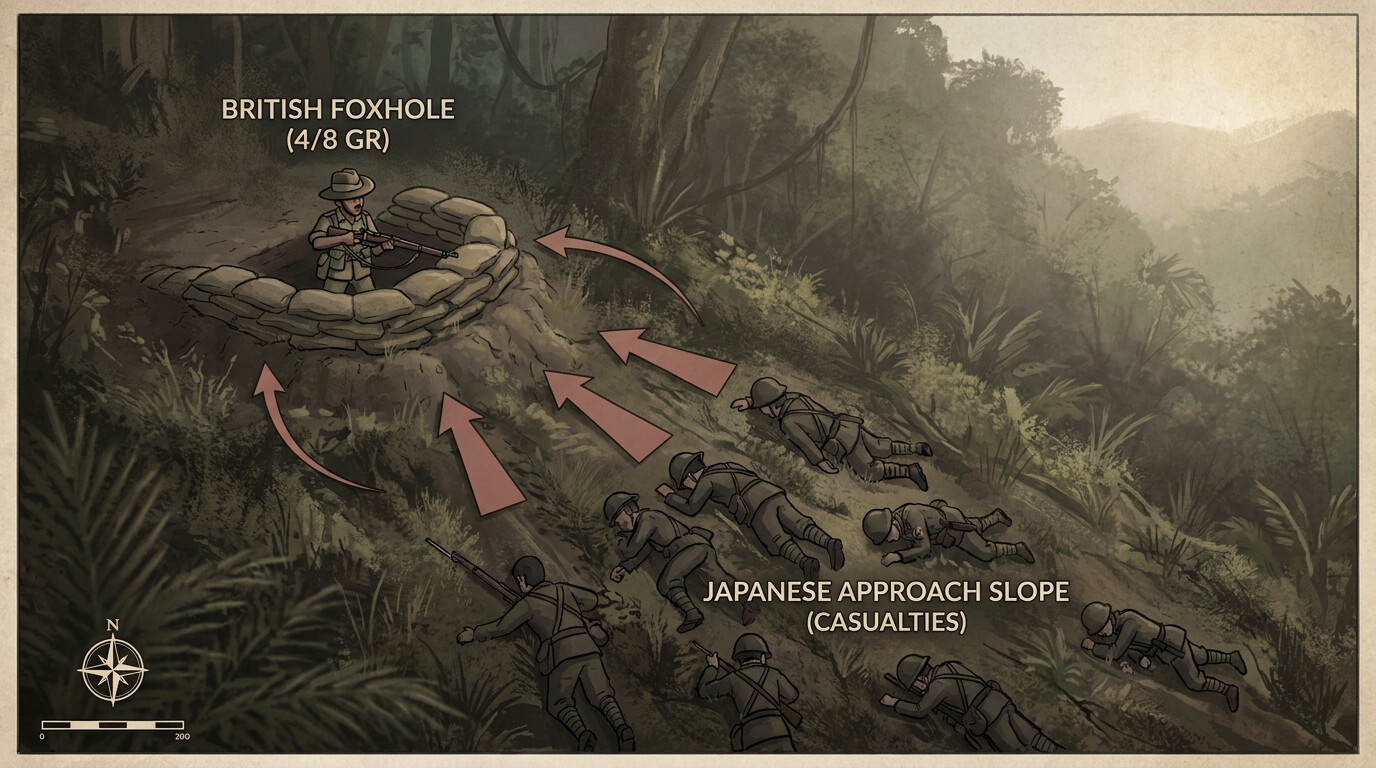
This casualty count, while extraordinary, becomes more understandable when considered in the context of the tactical situation. Japanese forces attacking up an exposed slope against a defender in a prepared position would suffer heavy losses, particularly when forced to advance repeatedly over the same ground. The Lee-Enfield's power at close range meant that most hits would be immediately fatal, and Gurung's elevated position gave him clear shots at each wave of attackers.
The psychological impact of the night's fighting extended beyond the immediate tactical situation. For the Japanese force conducting the attack, the failure to eliminate a single wounded defender despite overwhelming numerical superiority represented a significant defeat. Japanese military doctrine emphasized the spiritual power of aggressive attack, and the inability to overrun an isolated position challenged fundamental assumptions about Japanese tactical superiority.
For Gurung himself, the physical cost was severe. Beyond the immediate trauma of his wounds, he faced the prospect of permanent disability. The loss of fingers on his right hand would affect his ability to perform basic tasks, let alone continue as an effective soldier. The shrapnel wounds to his face and arm added to his medical complications.
The broader tactical consequences of Gurung's defense rippled through both British and Japanese planning. For British forces, the successful defense of the observation post maintained critical intelligence on Japanese movements in the area. The position allowed continued monitoring of enemy activity, supporting the broader advance toward Rangoon.
**Recognition and Record**
The official documentation of Gurung's action follows standard British military procedures for recognizing exceptional gallantry. Company commanders were required to submit detailed reports of significant actions, including casualty counts and tactical assessments. These reports formed the basis for recommendations for decorations and honors.
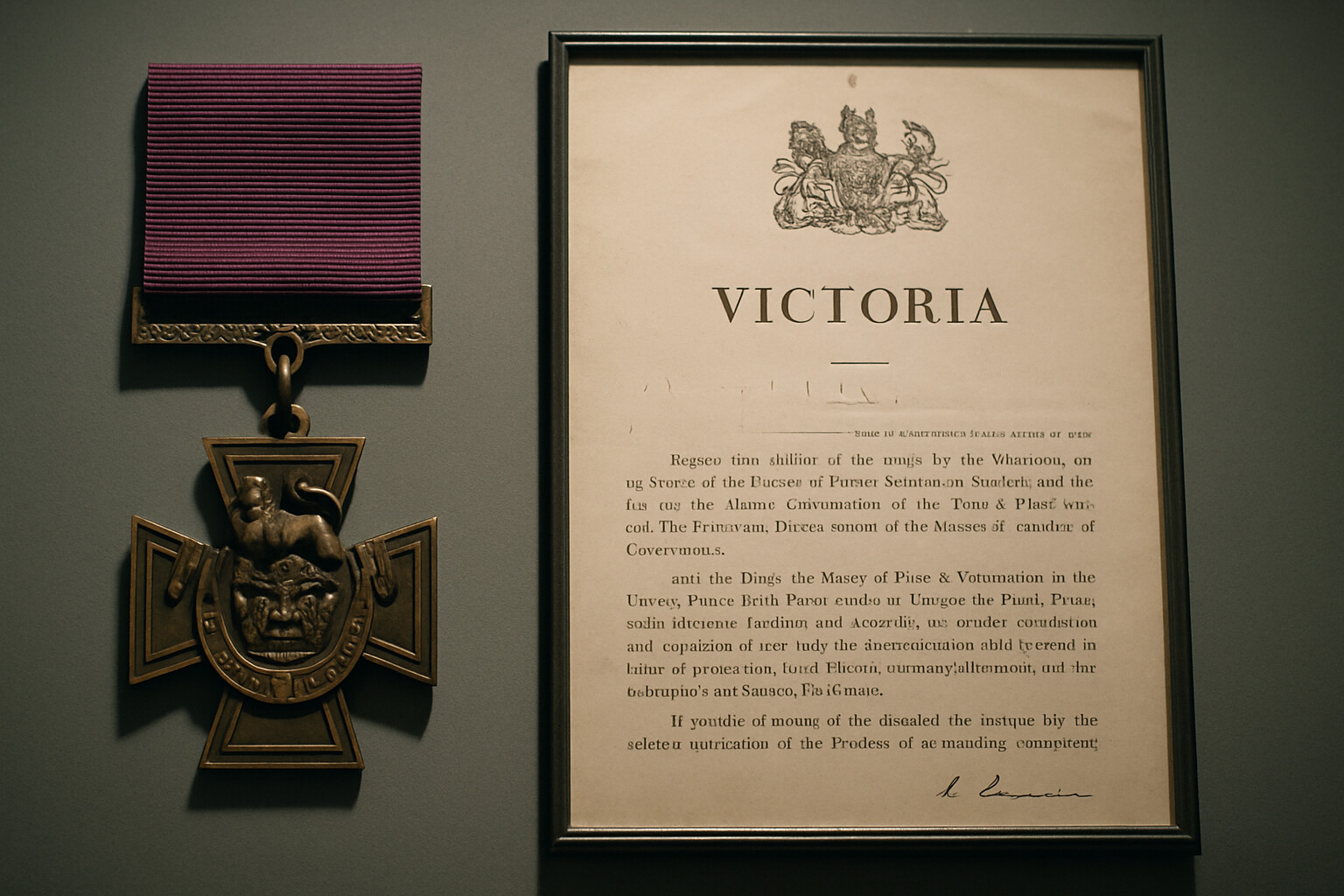
The Victoria Cross citation process required multiple levels of review and verification. Initial recommendations from company and battalion commanders were reviewed at brigade and divisional levels before submission to higher headquarters. Each level of review examined both the factual accuracy of the account and the level of gallantry displayed.
Gurung's action met the Victoria Cross criteria of "conspicuous gallantry in the presence of the enemy." The decision to continue fighting despite severe wounds, combined with the tactical significance of his defense, clearly demonstrated the exceptional courage required for Britain's highest military decoration.
The verification of casualty counts posed particular challenges in jungle warfare. Bodies could be scattered across difficult terrain, and Japanese forces typically attempted to recover their dead when possible. However, the concentrated nature of Gurung's defensive position meant that most Japanese casualties would have fallen within a relatively small area, making counting feasible when daylight allowed proper examination of the battlefield.
British Army medical records documented Gurung's wounds and treatment, providing additional verification of the action's severity. The extent of his injuries, combined with his continued effective resistance, supported claims about the exceptional nature of his defense.
Unit war diaries maintained by the 4th Battalion, 8th Gurkha Rifles provide the official context for the action at Taungdaw. These daily records, required by British Army regulations, documented unit movements, enemy contact, and significant events. The entry for the night of Gurung's action would have provided the immediate tactical context for higher headquarters.
**The Burma Context**
Gurung's action took place during the final phase of one of World War II's most challenging campaigns. The Burma Campaign had lasted nearly four years, involving British, Indian, Chinese, American, and Japanese forces across some of the world's most difficult terrain.
By May 1945, Lieutenant-General Slim's Fourteenth Army was conducting Operation Dracula, the final advance on Rangoon. Japanese forces under Lieutenant-General Kimura were conducting a fighting withdrawal, but individual units remained capable of aggressive local actions. The monsoon season was approaching, which would make further large-scale operations impossible until the rains ended.
The strategic importance of actions like Gurung's defense lay in maintaining pressure on withdrawing Japanese forces. Each successful defensive action forced Japanese commanders to commit additional resources to secure their withdrawal routes. This cumulative pressure contributed to the eventual collapse of organized Japanese resistance in Burma.
Gurkha units like the 4th Battalion, 8th Gurkha Rifles had played crucial roles throughout the Burma Campaign. Their mountain warfare experience, combined with their reputation for aggressive fighting, made them particularly valuable in the jungle conditions that characterized much of the campaign.
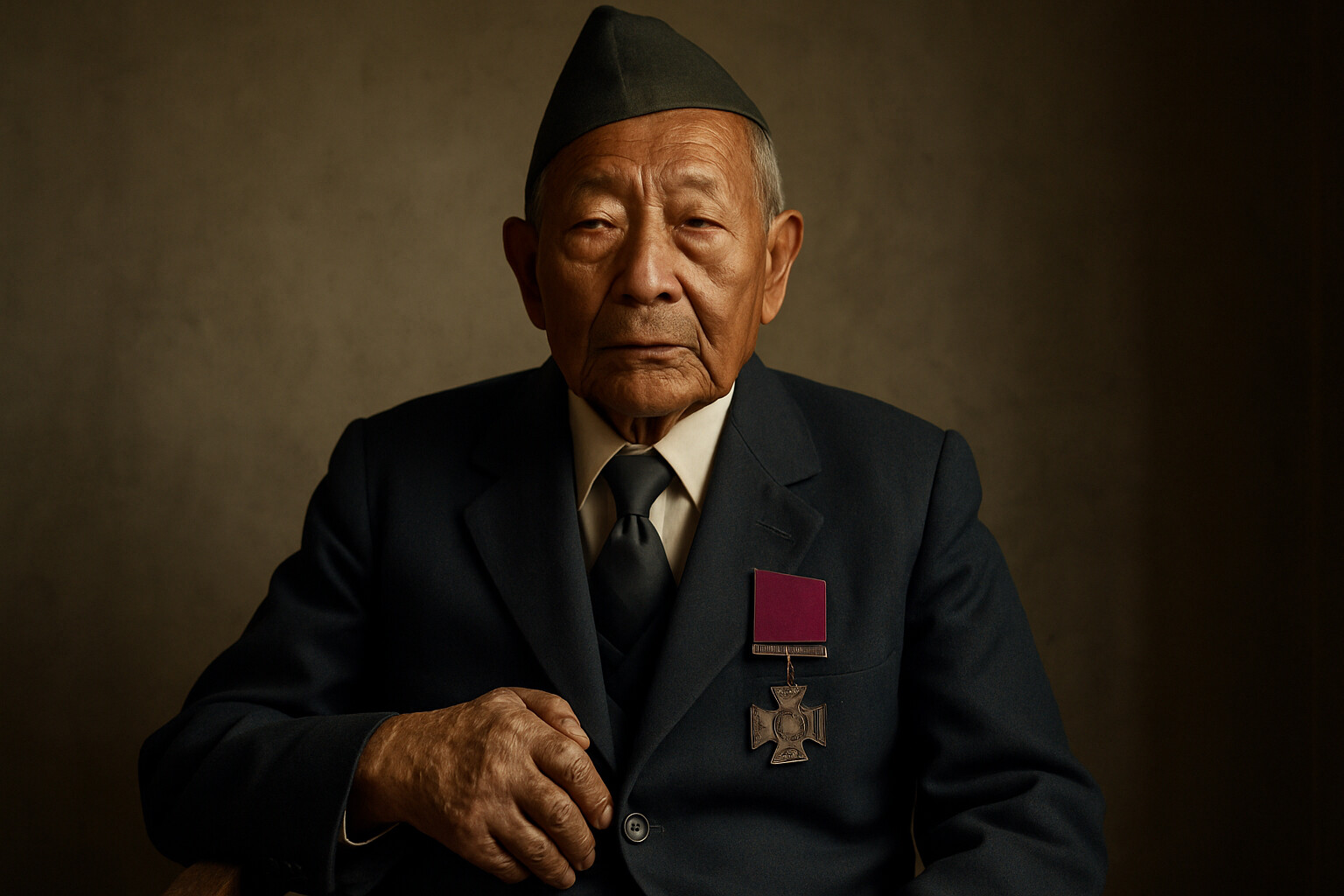
The recruitment of soldiers like Gurung from the hills of Nepal represented one of the most successful aspects of British colonial military policy. Gurkha soldiers combined physical toughness with professional competence, creating units that consistently performed above their numerical strength would suggest.
**Legacy and Meaning**
Lachhiman Gurung's defense at Taungdaw demonstrates more than individual heroism. It illustrates the tactical effectiveness of well-trained infantry fighting from prepared positions, even when severely outnumbered. The failure of repeated Japanese attacks against a single wounded defender revealed the changing balance of power in the Burma Campaign's final phase.
For the Gurkha regiments, Gurung's action added to a tradition of exceptional service that stretched back over a century. The Victoria Cross award recognized not only individual courage but the broader contribution of Nepalese soldiers to British military effectiveness.
The tactical lessons of Gurung's defense remained relevant long after the war's end. The importance of individual training, the effectiveness of defensive positions, and the psychological factors in small-unit actions all contributed to post-war military doctrine development.
Gurung's continued resistance despite severe wounds also demonstrated the importance of military medical training. His ability to function effectively with traumatic injuries reflected both individual determination and the practical first-aid training provided to British Army soldiers.
The verification and documentation of Gurung's action established important precedents for recognizing exceptional gallantry in subsequent conflicts. The detailed casualty counts and tactical assessments required for the Victoria Cross citation process became models for similar recognition in later wars.
The story stands as testimony to the decisive impact that individual soldiers could have even in the mechanized warfare of 1945. In a conflict increasingly dominated by artillery, aircraft, and armor, one rifleman with a bolt-action rifle could still determine the outcome of a tactical engagement. This reality shaped military thinking well into the postwar era, influencing everything from small-unit tactics to the selection and training of infantry soldiers.