The B-17 Flying Fortress shuddered as flak burst around its wings, black puffs of steel and fire blooming against the pale May sky. Inside the aircraft, Staff Sergeant Maynard Harrison Smith felt the bomber lurch hard to starboard as German fighters pressed their attack over the submarine pens of Saint-Nazaire. Then came the sound that turned his blood cold—the whoosh of igniting aviation fuel and the acrid smell of electrical fire spreading through the fuselage.
The date was May 1, 1943. Smith was the ball turret gunner aboard a B-17F of the 423rd Bombardment Squadron, part of the 306th Bomb Group's mission to destroy the German submarine facilities threatening Allied shipping in the Atlantic. At 25,000 feet over occupied France, his Flying Fortress had just become a flying torch.
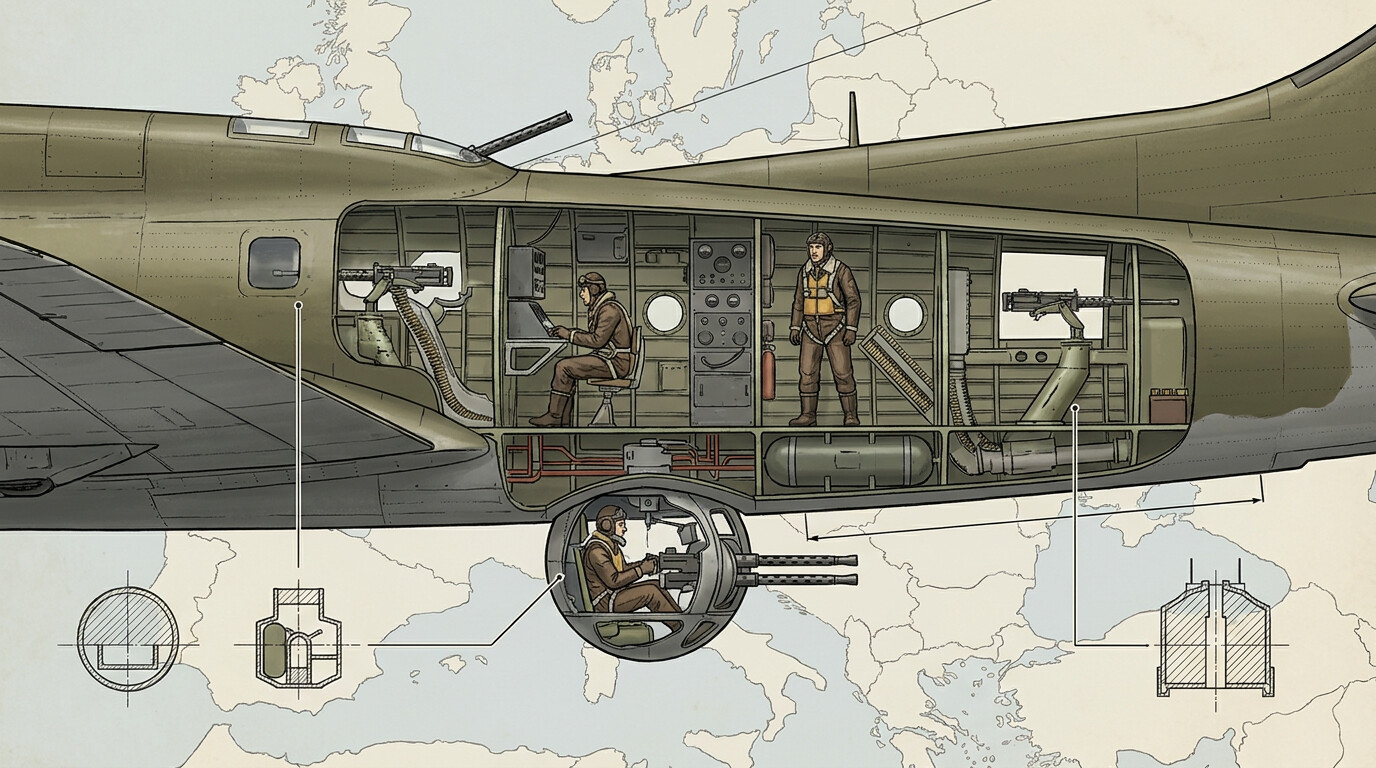
Maynard Smith was twenty-three years old, a farm boy from Caro, Michigan, who had volunteered for the Army Air Forces after Pearl Harbor. Short and stocky, he bore the callused hands of a man who had worked the land before he learned to work the skies. The other airmen called him "Snuffy"—a nickname that spoke to his unpretentious nature and the grime that seemed to follow mechanics and gunners no matter how often they scrubbed. Smith had trained as a ball turret gunner, learning to operate the Sperry spherical turret that hung beneath the B-17's belly like a glass and steel cocoon, armed with twin .50-caliber Browning machine guns.
The mission that morning had been part of the Eighth Air Force's relentless daylight bombing campaign against Nazi Germany's industrial and military targets. The 306th Bomb Group, based at Thurleigh in England, was among the veteran units spearheading this dangerous strategy. Unlike the Royal Air Force's night bombing raids, American doctrine called for precision daylight attacks that could hit specific military targets—but at the cost of exposing bombers to concentrated fighter and flak defenses.
Saint-Nazaire represented one of Germany's most vital strategic assets in Western Europe. The massive concrete submarine pens built by the Organization Todt housed U-boats that stalked Allied convoys across the Atlantic. These submarines had sunk millions of tons of Allied shipping, threatening Britain's survival and America's ability to supply the European war effort. The concrete bunkers were nearly impregnable—some with roofs sixteen feet thick—but the Eighth Air Force continued to hammer them, seeking to disrupt operations and force the Germans to divert resources to defense.
Smith's B-17F carried a crew of ten men and a bomb load of high-explosive ordnance destined for the submarine facilities. The Flying Fortress itself was a marvel of American industrial engineering—a four-engine heavy bomber with a wingspan of 103 feet and a gross weight of 65,500 pounds when fully loaded. Powered by four Wright R-1820 Cyclone engines, each producing 1,200 horsepower, the B-17 could reach altitudes above 35,000 feet and carry up to 8,000 pounds of bombs over long distances.
But the Flying Fortress earned its reputation not just for payload and range, but for its ability to absorb punishment and bring its crew home. The aircraft bristled with thirteen .50-caliber machine guns in powered turrets and flexible mounts, creating overlapping fields of fire against attacking fighters. The Browning M2 machine guns fired armor-piercing incendiary rounds at 750 rounds per minute, with an effective range of over 1,000 yards. Each gun weighed 84 pounds and required precise maintenance to function reliably in the sub-zero temperatures and thin air of high-altitude combat.
The ball turret where Smith normally fought was perhaps the most exposed position on the bomber. The Sperry ball turret hung below the aircraft's belly on a bearing ring, allowing the gunner to track targets through a full 360-degree rotation. Inside the cramped sphere, barely four feet in diameter, the gunner sat hunched with his knees drawn up, peering through an optical sight while controlling twin .50-caliber guns with hydraulic power. The position offered an unobstructed view of attacking fighters—and left the gunner completely dependent on his crewmates to retract the turret if the aircraft needed to make a belly landing.
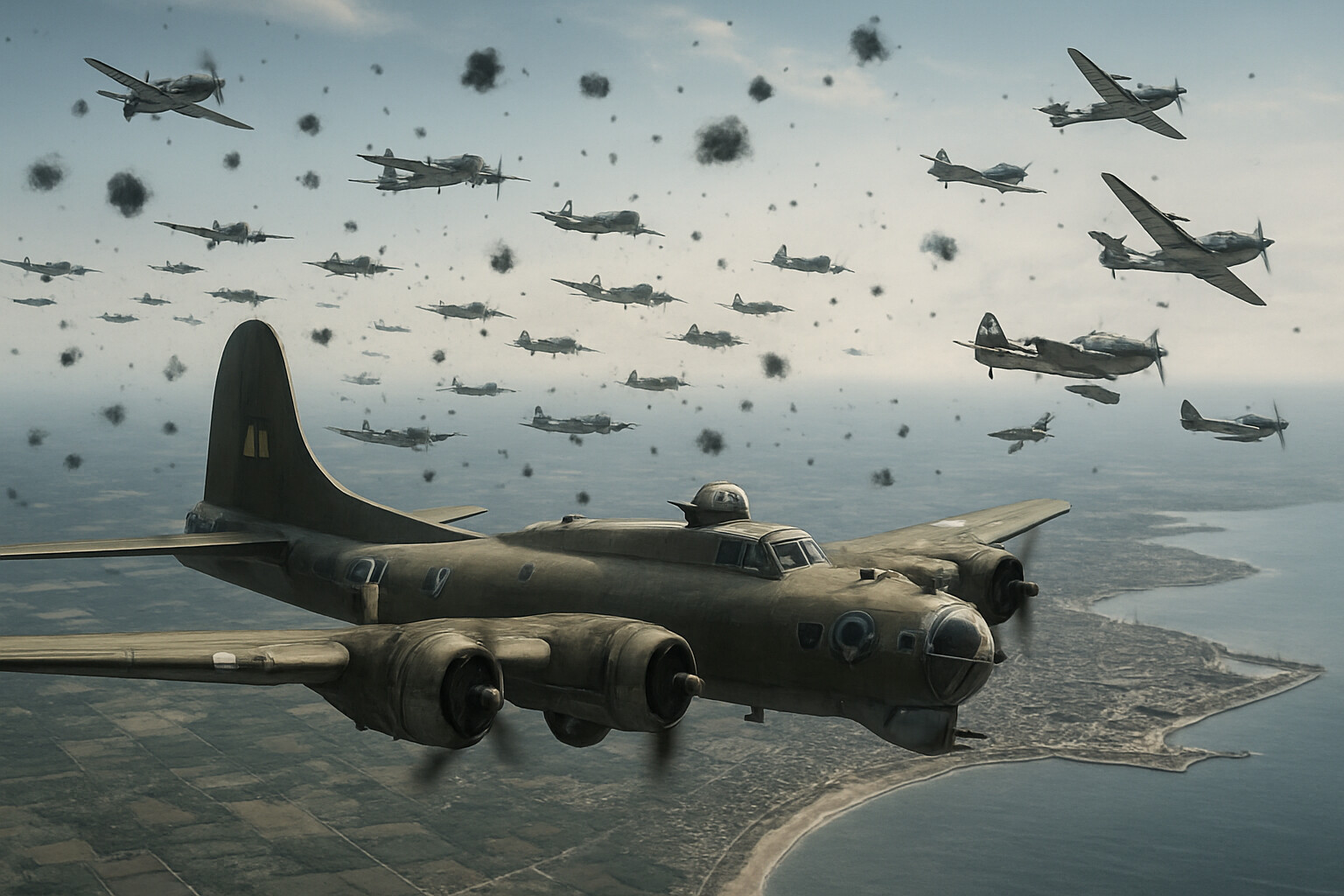
As the formation approached Saint-Nazaire that morning, German radar stations along the Atlantic Wall had tracked their approach. The Luftwaffe scrambled Focke-Wulf 190s and Messerschmitt 109s to intercept the bomber stream, while heavy flak batteries around the port prepared to fill the sky with deadly steel fragments.
The attack came with the sudden violence that characterized air combat over occupied Europe. German fighters dove through the bomber formation, their 20mm cannons and machine guns raking the B-17s. The pilots knew the Americans' weak spots—the nose, where only flexible machine guns provided defense, and the belly, where the ball turret offered limited coverage during high-speed attacks.
Smith's aircraft took multiple hits almost simultaneously. Cannon shells punctured the fuselage, starting fires in the radio compartment and near the bomb bay. The electrical system sparked and failed in sections, cutting power to critical systems. Worse, the intercom system went dead, leaving the crew unable to coordinate their response to the emergency.
Inside the ball turret, Smith felt the aircraft shudder and heard the distinctive sound of metal tearing. Then came the smell of smoke and the orange glow of flames spreading through the bomber's interior. The hydraulic system that powered his turret failed, leaving him unable to rotate the guns to engage the attacking fighters. With the electrical system damaged, the motors that retracted the ball turret into the fuselage were also inoperative.
Smith faced a terrible choice. He could remain in the ball turret, trapped and helpless as the aircraft burned around him, or he could abandon his assigned position and climb into the burning fuselage to help his crewmates. Military doctrine was clear—each man had a specific job, and maintaining defensive fire was critical to the bomber's survival. But doctrine had not anticipated conditions like these.
Without hesitation, Smith made his decision. Using the manual hand crank, he slowly rotated the ball turret until its entry hatch aligned with the fuselage opening. The process took precious minutes as fires spread through the aircraft's interior. Finally, he squeezed through the narrow opening and pulled himself into the bomber's belly—and into an inferno.
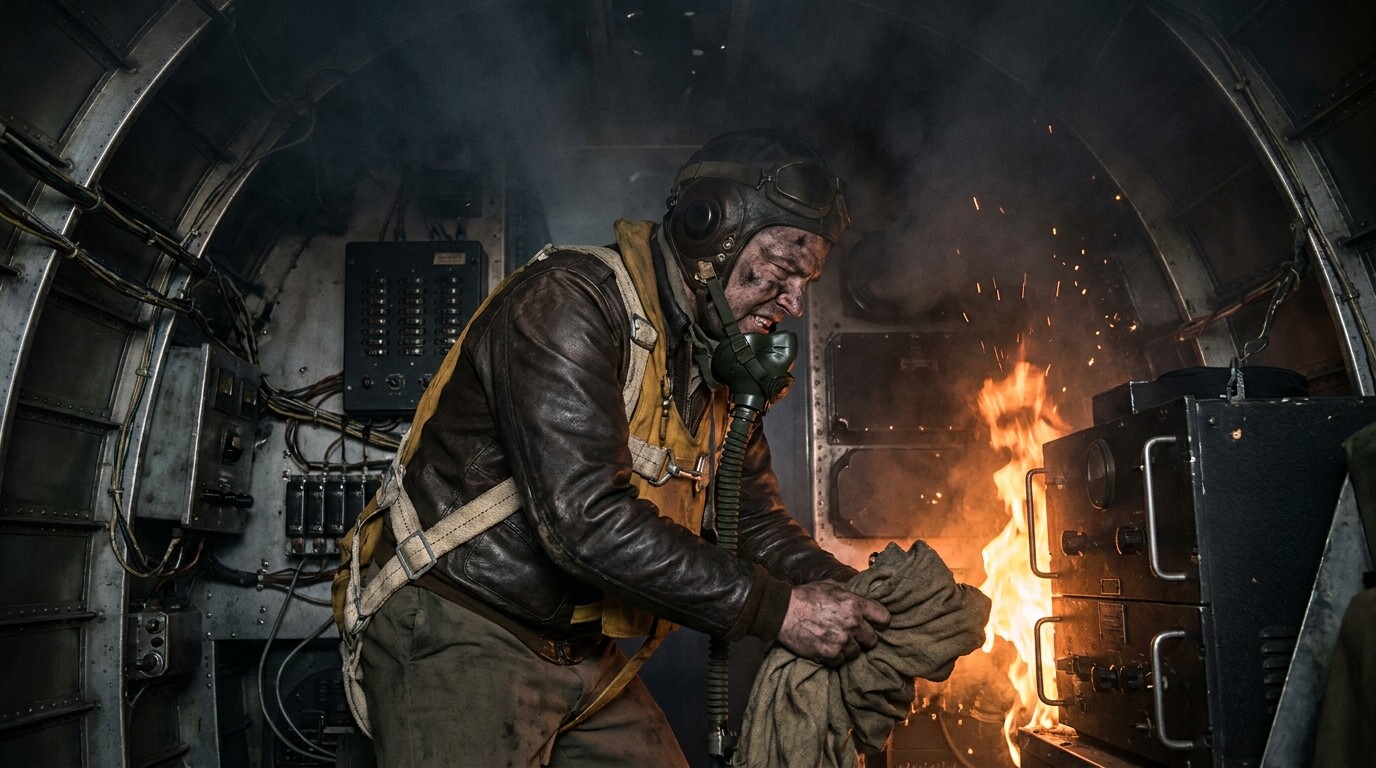
Flames had engulfed much of the radio compartment and were spreading toward the bomb bay. Oxygen bottles exploded from the heat, sending shrapnel ricocheting through the confined space. The ammunition for the aircraft's machine guns was cooking off in random bursts, adding to the chaos. Through the smoke and flame, Smith could see crewmen wounded and struggling to escape the spreading fire.
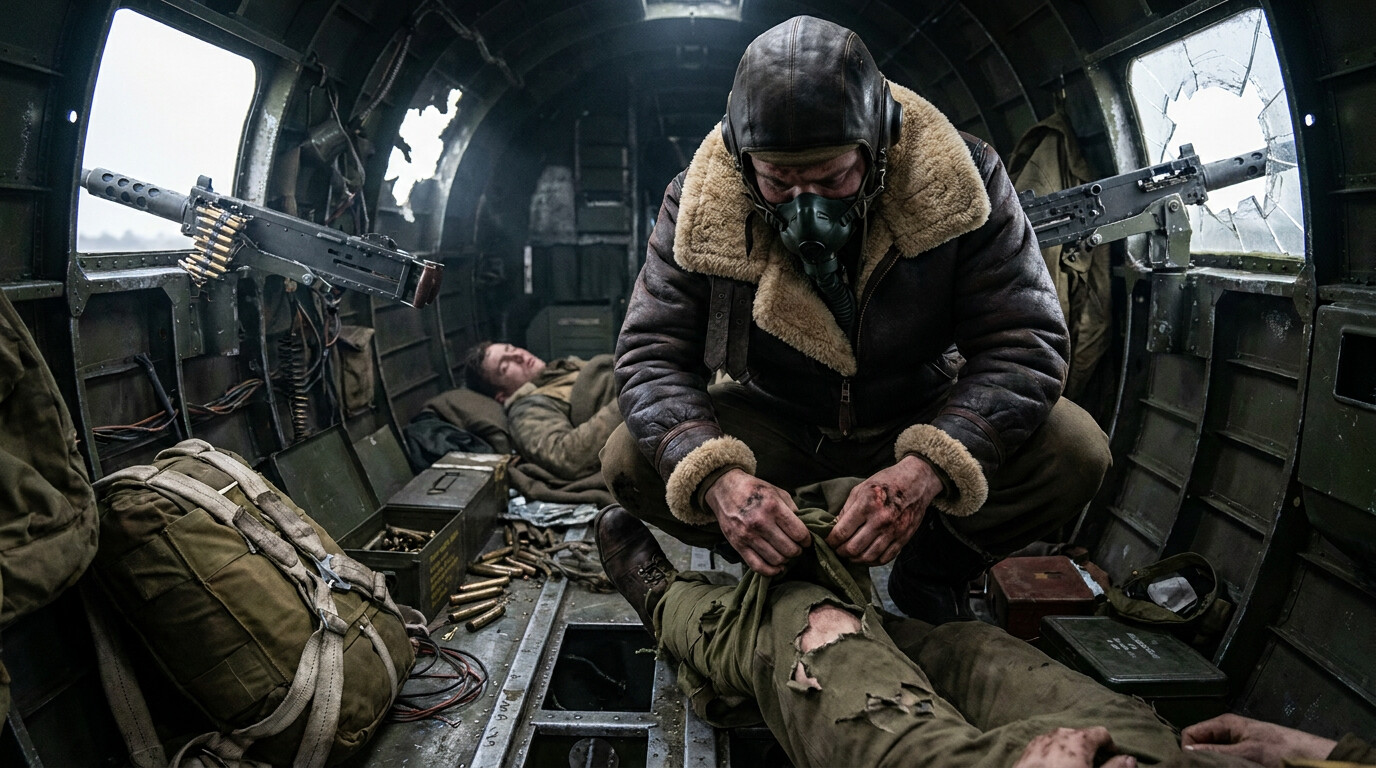
The waist gunners, positioned at flexible machine gun mounts on either side of the fuselage, had both been hit by fighter attacks. Through the smoke, Smith could see wounded men trapped near the flames.
Smith crawled through the burning aircraft, dragging his wounded crewmates away from the worst of the fire. The heat was so intense that his flight jacket began to smolder, and the smoke was so thick he could barely see or breathe. But he continued moving through the fuselage, pulling his fellow airmen to relative safety near the aircraft's tail section.
With the wounded men secured, Smith turned his attention to fighting the fire itself. Using a portable extinguisher, he attacked the flames in the radio compartment, but the chemical foam seemed inadequate against the aviation fuel that had ignited throughout the aircraft's structure. The fire had reached the bomb bay doors, threatening to spread to the high-explosive ordnance still carried in the aircraft's belly.
Realizing that conventional firefighting would not save the aircraft, Smith made another desperate decision. He threw his body across the burning areas, using his flight jacket and bare hands to smother the flames. The heat seared through his clothing and burned his skin, but he continued to beat down the fire wherever it threatened to spread to critical areas of the aircraft.
Meanwhile, German fighters continued to press their attacks on the crippled bomber. With several of the aircraft's gunners wounded or fighting fires, the Flying Fortress had lost much of its defensive capability. The ball turret remained unmanned, the waist guns were silent, and the radio compartment—which housed additional ammunition storage—was still smoldering.
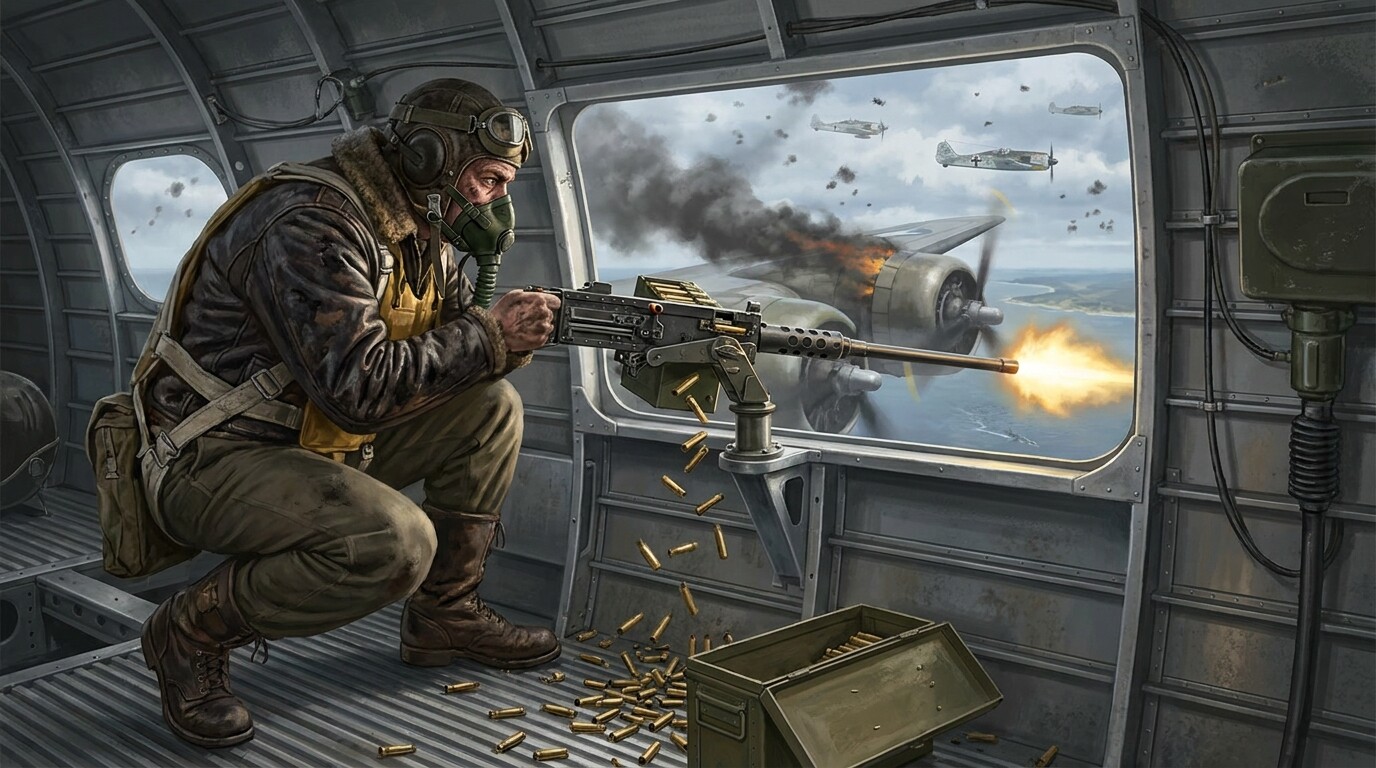
Smith realized that the aircraft's survival depended on maintaining defensive fire against the attacking fighters. Leaving the fire temporarily suppressed, he crawled to one of the unmanned waist gun positions and grabbed the .50-caliber Browning machine gun. The weapon was still functional, its ammunition belt intact.
Positioning himself at the flexible mount, Smith swung the heavy machine gun toward the attacking German fighters. The Browning M2 was a formidable weapon—a .50-caliber machine gun that fired armor-piercing incendiary rounds capable of downing enemy aircraft with a few well-placed hits. But operating the weapon effectively required skill, strength, and nerve, especially while the aircraft bucked and rolled under enemy attack.
Smith opened fire on a Focke-Wulf 190 that was lining up for another attack run. The German fighter was a deadly adversary—powered by a BMW 801 radial engine producing 1,700 horsepower, armed with four 20mm cannons and two 13mm machine guns. The Fw 190 was faster and more maneuverable than the lumbering B-17, but it was also vulnerable to the bomber's concentrated defensive fire.
The stream of .50-caliber rounds from Smith's gun forced the German pilot to break off his attack, pulling up sharply to avoid the accurate fire. Smith immediately swung the gun toward another fighter approaching from a different angle, maintaining a disciplined rate of fire to avoid overheating the weapon's barrel.
For the next several minutes, Smith fought a desperate single-handed battle against multiple German fighters while simultaneously monitoring the fire situation in the aircraft's interior. When flames threatened to reignite in the radio compartment, he would abandon the machine gun, crawl back through the fuselage, and beat down the fire with his hands and jacket. When fighters pressed their attacks, he would return to the waist gun and drive them off with accurate bursts of machine gun fire.
The physical demands were enormous. The waist gun position required the gunner to support the weapon's 84-pound weight while tracking fast-moving targets. At 25,000 feet, the air was thin and bitterly cold, making every movement exhausting. The smoke from the fires had reduced visibility inside the aircraft to just a few feet, and the constant threat of ammunition explosions meant that death could come from any direction.
Throughout this ordeal, Smith also continued to care for his wounded crewmates. During brief lulls in the fighter attacks, he checked their wounds and repositioned them away from areas where the fire might reignite. He used strips torn from his own clothing to create pressure bandages for their wounds.
The pilot and copilot, fighting to keep the damaged bomber in the air, were largely unaware of Smith's actions in the fuselage. The intercom system remained dead, cutting off communication between the flight deck and the defensive positions. They could hear the sound of machine gun fire and knew that someone was manning the waist guns, but the smoke and chaos made it impossible to see what was happening behind them.
The B-17's four Wright Cyclone engines continued to run, though one had been damaged by fighter attacks and was losing oil pressure. The pilot nursed the aircraft toward friendly territory, but the English Channel still lay hundreds of miles away, and German fighters continued to shadow the formation.
As the bomber stream passed beyond the heaviest concentration of Luftwaffe fighters, Smith finally gained control over the fires that had threatened to destroy his aircraft. The flames in the radio compartment were completely extinguished, though much of the equipment was destroyed. The ammunition explosions had ceased, and the immediate threat to the bomb bay had passed.
But Smith's ordeal was far from over. The aircraft had suffered severe structural damage from the fighter attacks, and several control systems were functioning only marginally. The hydraulic system that operated the landing gear and bomb bay doors had been punctured, meaning the crew would have to manually crank down the gear when they reached England—if they reached England.
The formation continued westward across occupied France, still under occasional attack from German fighters but gradually pulling beyond the range of the most aggressive interceptors. Smith remained at his post in the waist gun position, ready to engage any fighters that approached within range. His hands were severely burned from fighting the fire, his clothing was charred and torn, and he was exhausted from the physical and emotional strain of the past hour.
The wounded crewmen were stable but required immediate medical attention. Smith had done what he could with improvised bandages and pressure dressings, but both men had lost significant amounts of blood and were slipping in and out of consciousness.
As the bomber stream approached the English Channel, the immediate threat from German fighters diminished. But now Smith's aircraft faced a new challenge—landing safely with damaged control systems and wounded crew members. The pilot had managed to maintain altitude and formation position, but the approach to their home base at Thurleigh would test every system that had survived the German attacks.
The flight across the Channel passed without incident, though the crew remained alert for German fighters that sometimes pursued damaged bombers almost to the English coast. Smith continued to monitor both the gun position and the areas where fires had burned, ready to respond to any new emergency.
As the English countryside came into view, the pilot began his approach to Thurleigh. The landing would be particularly dangerous because the damaged hydraulic system meant the landing gear would have to be manually cranked into position—a process that required precise coordination between crew members.
Smith helped operate the manual gear extension system while maintaining watch over his wounded crewmates. The process required several men to operate hand cranks that slowly extended the massive landing gear assemblies. With several crew members wounded or exhausted, every available man was needed to complete the procedure.
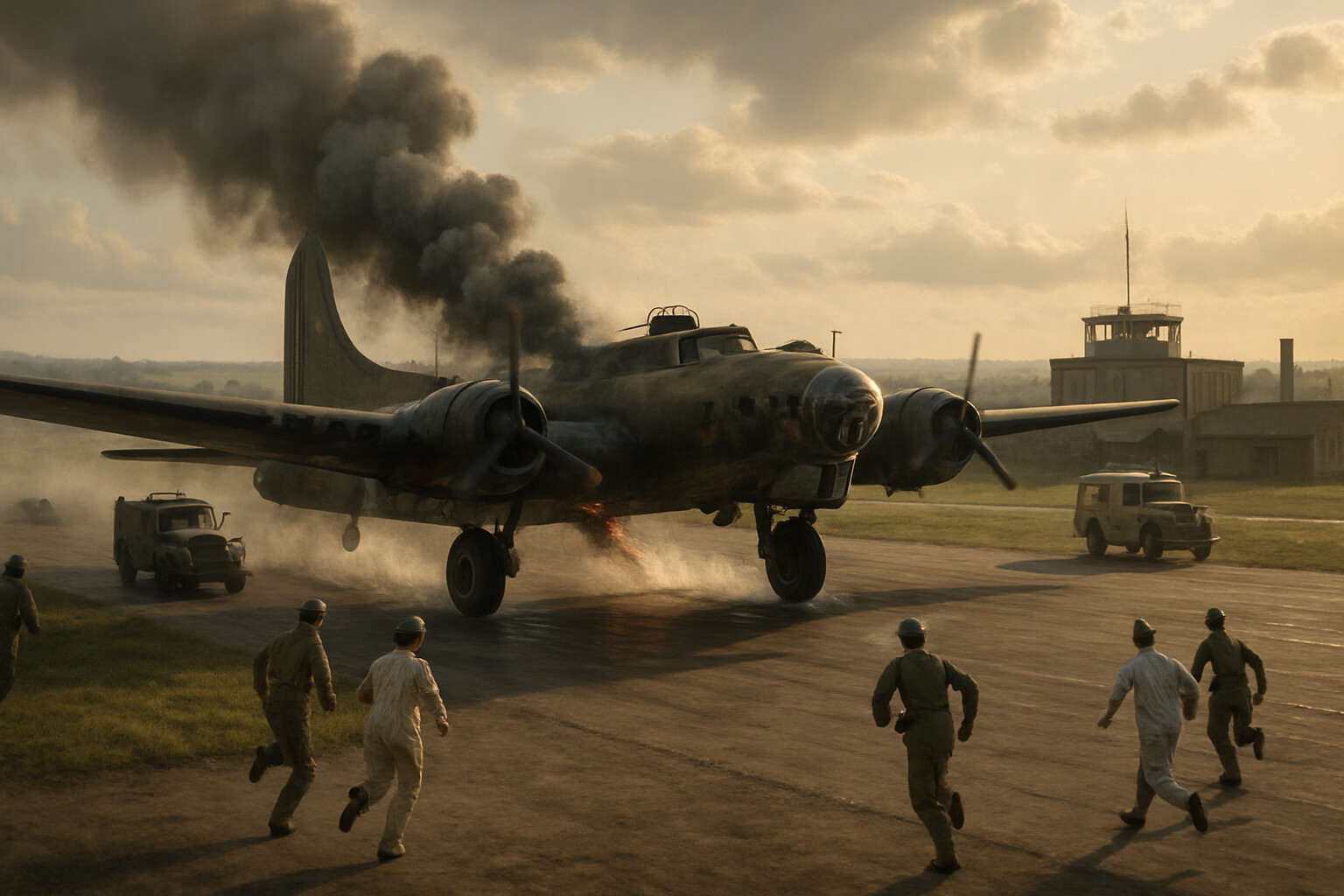
The B-17 touched down safely at Thurleigh, its tires smoking as the pilot applied maximum braking to stop the heavy aircraft. Fire trucks and ambulances were already racing toward the bomber as it rolled to a stop, alerted by radio calls from other aircraft in the formation that had witnessed the burning fortress continuing to fly.
Medical personnel immediately attended to the wounded crewmen, loading them onto stretchers and racing them to the base hospital. Smith, his hands wrapped in makeshift bandages, walked away from the aircraft under his own power, though base medical staff insisted on examining his burns and smoke inhalation.
The damage to Smith's B-17 was extensive. Investigation revealed multiple cannon shell and machine gun hits throughout the fuselage. The radio compartment was completely destroyed, with melted equipment and charred structural members showing how close the fire had come to consuming the entire aircraft. The areas where Smith had beaten down the flames with his bare hands showed clear evidence of his desperate firefighting efforts.
Most significantly, investigators found that the fire had come within inches of reaching the aircraft's bomb load. Had the flames spread to the high-explosive ordnance in the bomb bay, the aircraft and its entire crew would have been vaporized instantly. Smith's actions in suppressing the fire had literally saved the lives of all ten men aboard the bomber.
The mission against Saint-Nazaire was typical of the costly daylight bombing campaign that the Eighth Air Force was conducting against Nazi Germany in 1943. The submarine pens themselves proved largely immune to conventional bombing attacks, their massive concrete construction deflecting even direct hits from heavy bombs. But the raids disrupted German operations, forced the diversion of fighters from other fronts, and demonstrated American commitment to the strategic bombing campaign.
For the Eighth Air Force, missions like Saint-Nazaire represented both the promise and the peril of daylight precision bombing. The theoretical advantages of attacking specific military targets in daylight came at a terrible cost in aircrew casualties. German fighter defenses and flak artillery were taking a devastating toll on bomber crews, with some missions suffering loss rates approaching twenty percent.
Smith's actions aboard his burning B-17 exemplified the courage and determination that characterized American airmen during this crucial period of the war. But his story was also remarkable for the range of skills and responsibilities he assumed during the crisis. In the space of less than an hour, he had served as firefighter, medic, gunner, and aircraft maintenance specialist—whatever the situation required to save his aircraft and crew.
The recommendation for Smith's Medal of Honor was initiated by his squadron commander and quickly endorsed by higher authorities. The citation process moved with unusual speed, reflecting both the dramatic nature of Smith's actions and the Army Air Forces' need for heroes who could inspire other airmen facing similar dangers.
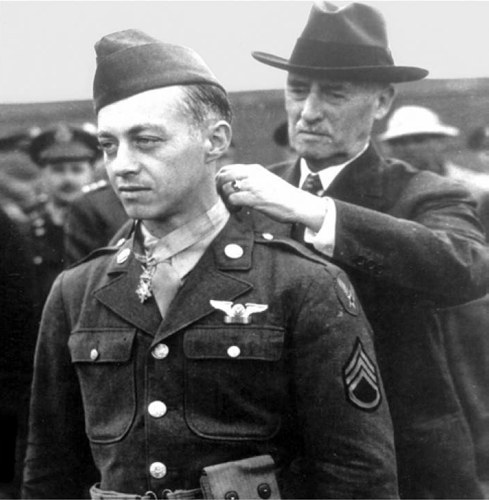
On July 15, 1943, just over two months after the mission over Saint-Nazaire, Staff Sergeant Maynard Smith received the Medal of Honor from Secretary of War Henry Stimson in a ceremony at the Pentagon. He was the first enlisted airman to receive the nation's highest decoration for valor, establishing a precedent that would be followed by many other air force personnel during the remainder of World War II.
Smith's Medal of Honor citation documented his heroic actions: extinguishing fires, treating wounded crew members, and maintaining defensive fire while his aircraft burned around him. The official citation noted some details that may not precisely match witness accounts—a common occurrence given the chaos of combat and the speed of wartime award processing. But the essential facts were clear: Smith had repeatedly risked his life to save his aircraft and crewmates.
Smith's Medal of Honor made him a celebrity within the Army Air Forces and brought him national attention as a symbol of American airmen's courage. He was featured in newspapers across the United States and appeared at war bond rallies to help fund the continued war effort. His story became part of the narrative that sustained American morale during the difficult years of 1943 and 1944, when Allied victory was far from certain.
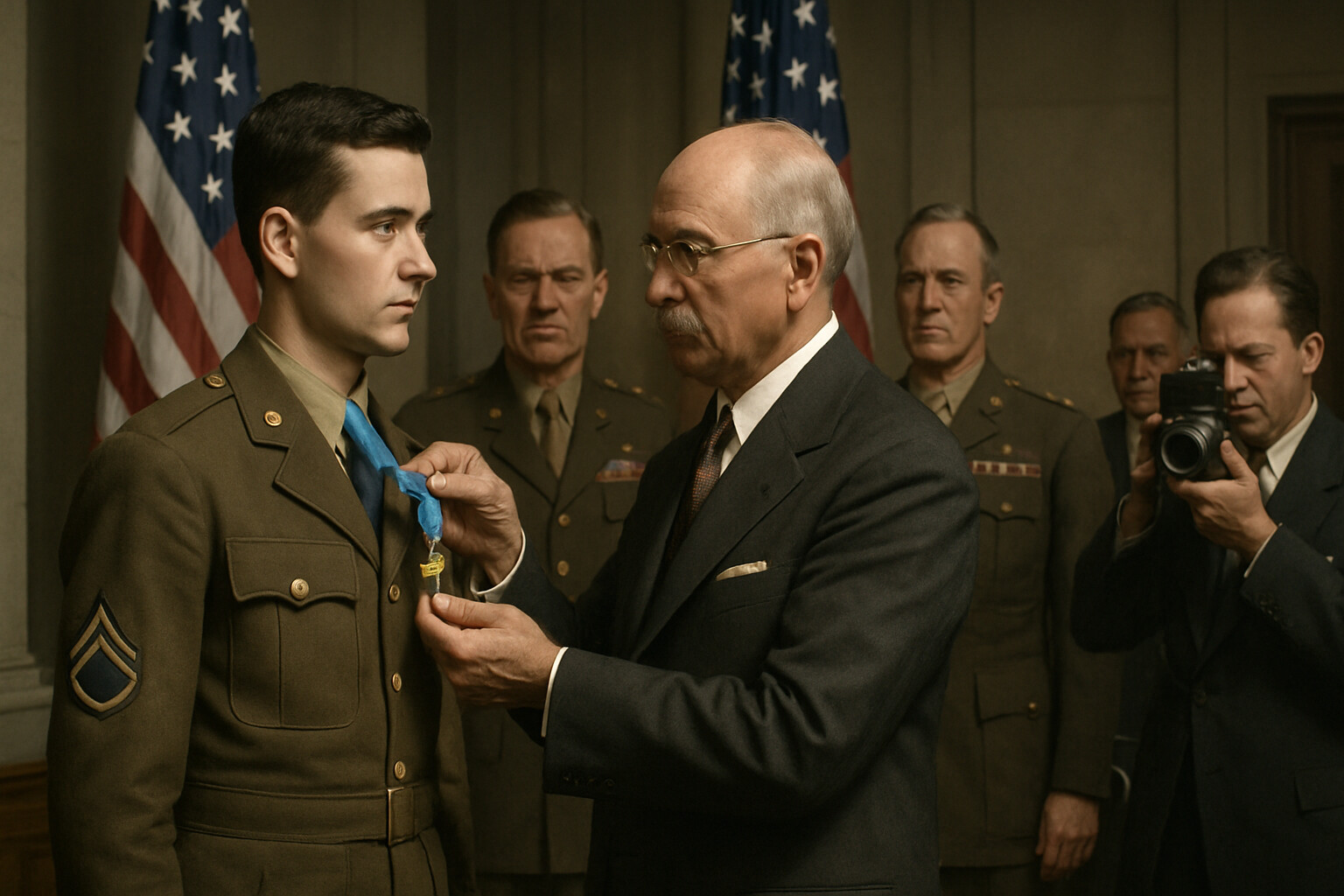
After receiving the Medal of Honor, Smith continued to serve in combat operations with the Eighth Air Force. He flew additional missions over occupied Europe, though he was eventually transferred to training duties in the United States. The Army Air Forces recognized that Medal of Honor recipients were valuable both for their combat experience and their ability to inspire new airmen entering the war.
The broader context of Smith's heroism was the Eighth Air Force's costly campaign to establish air superiority over Western Europe. The daylight bombing offensive that peaked in 1943 and 1944 was one of the most dangerous military operations of World War II. Bomber crews faced a statistical likelihood of being killed, wounded, or captured that exceeded the casualty rates of infantry units in active combat.
The B-17 Flying Fortress and its crews bore the brunt of this campaign. Despite its rugged construction and heavy armament, the Flying Fortress was vulnerable to concentrated fighter attacks and accurate flak fire. Many aircraft returned from missions with damage as severe as that suffered by Smith's bomber, and not all crews were as fortunate in their survival.
Smith's actions also highlighted the importance of individual initiative and cross-training in military operations. His ability to function effectively as a firefighter, medic, and gunner reflected both his personal character and the comprehensive training that the Army Air Forces provided to its personnel. In the chaos of aerial combat, rigid adherence to assigned roles could mean the difference between mission success and catastrophic failure.
The technical aspects of Smith's firefighting efforts were as remarkable as his courage. Aviation fuel fires at high altitude presented unique challenges—the thin air made breathing difficult while fighting flames, the extreme cold could freeze firefighting equipment, and the confined space of the aircraft limited movement and escape routes. Smith's success in suppressing the fires demonstrated both technical knowledge and physical courage of the highest order.
The defensive gunnery that Smith maintained during the crisis was equally impressive. Operating a .50-caliber machine gun effectively required considerable skill, especially when tracking fast-moving fighter aircraft while the bomber maneuvered evasively. Smith's ability to drive off German attacks while simultaneously fighting fires showed remarkable mental discipline under extreme stress.
Smith's Medal of Honor also represented the recognition of enlisted airmen's contributions to the air war. Early in World War II, most aviation medals had been awarded to officers, particularly pilots and bombardiers. Smith's award acknowledged that every member of a bomber crew faced equal danger and could demonstrate equal heroism in combat.
After the war, Smith returned to civilian life in Michigan, where he worked in various occupations and maintained a relatively low profile despite his wartime fame. He occasionally appeared at veterans' events and air shows, but generally avoided publicity and preferred to let his military record speak for itself.
The legacy of Smith's actions extends beyond his individual heroism to the broader story of American airmen in World War II. His Medal of Honor was the first of 464 Medals of Honor awarded during the conflict, and his status as the first airman recipient established important precedents for recognizing valor in aerial combat.
The mission over Saint-Nazaire on May 1, 1943, represented one day in a campaign that ultimately helped secure Allied victory in Europe. The submarine pens that Smith's formation had attacked continued to shelter German U-boats, but the cumulative effect of hundreds of similar missions gradually degraded German military capability and forced the diversion of resources from other fronts.
Modern military historians continue to study Smith's actions as an example of heroism under extreme conditions. His story is taught in military leadership schools and used to illustrate the principles of initiative, self-sacrifice, and technical competence under fire. The specific details of his firefighting and medical treatment of wounded crew members provide lessons that remain relevant to contemporary military operations.
Smith's Medal of Honor also serves as a reminder of the human cost of the strategic bombing campaign. The young sergeant from Michigan who fought fire and death at 25,000 feet represented thousands of airmen who faced similar dangers with equal courage. Many of them did not survive to receive recognition, but their contributions were equally vital to the ultimate Allied victory.
The B-17 Flying Fortress that Smith helped save that day over Saint-Nazaire went on to fly additional missions before being retired from combat operations. The aircraft served as a testament to both American industrial capability and the skill of the men who flew and maintained these complex machines under the most dangerous conditions imaginable.
Today, Staff Sergeant Maynard Smith's Medal of Honor reminds us that heroism often emerges from ordinary people faced with extraordinary circumstances. His actions aboard a burning bomber over Nazi-occupied France demonstrated that courage, skill, and determination could triumph over seemingly impossible odds—and that one person's refusal to surrender could mean the difference between life and death for an entire crew.