Home Stories The Edge Weapons Battles People Warbirds About
All Warbirds

Boeing B-29 Superfortress “Enola Gay� • Long-Range Strategic Bomber

The Aircraft That Changed Warfare Forever

The B-29 Superfortress was the most advanced operational bomber of the Second World War, a pressurized, remote-gunned, intercontinental-scale machine built to carry war farther than any bomber before it. In August 1945, Colonel Paul W. Tibbets Jr. flew one named Enola Gay on a mission that cannot be discussed honestly in triumphant language. The aircraft performed exactly as designed. Humanity crossed a threshold anyway.

B-29-45-MO Superfortress “Enola Gay� • 509th Composite Group • Tinian
TypeStrategic Bomber
TheaterPacific, late WWII
ManufacturerBoeing
Distinction★ Pressurized, remote turrets, atomic missions
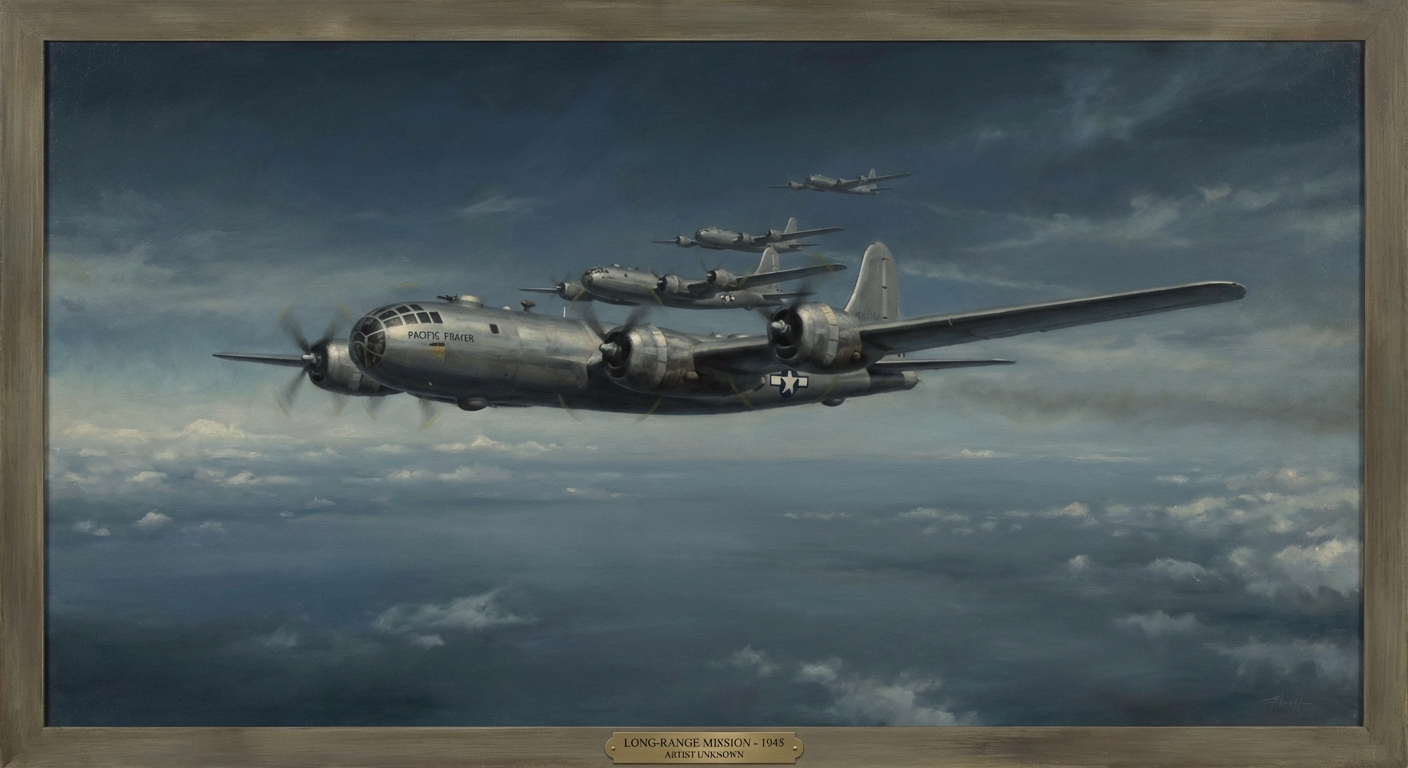
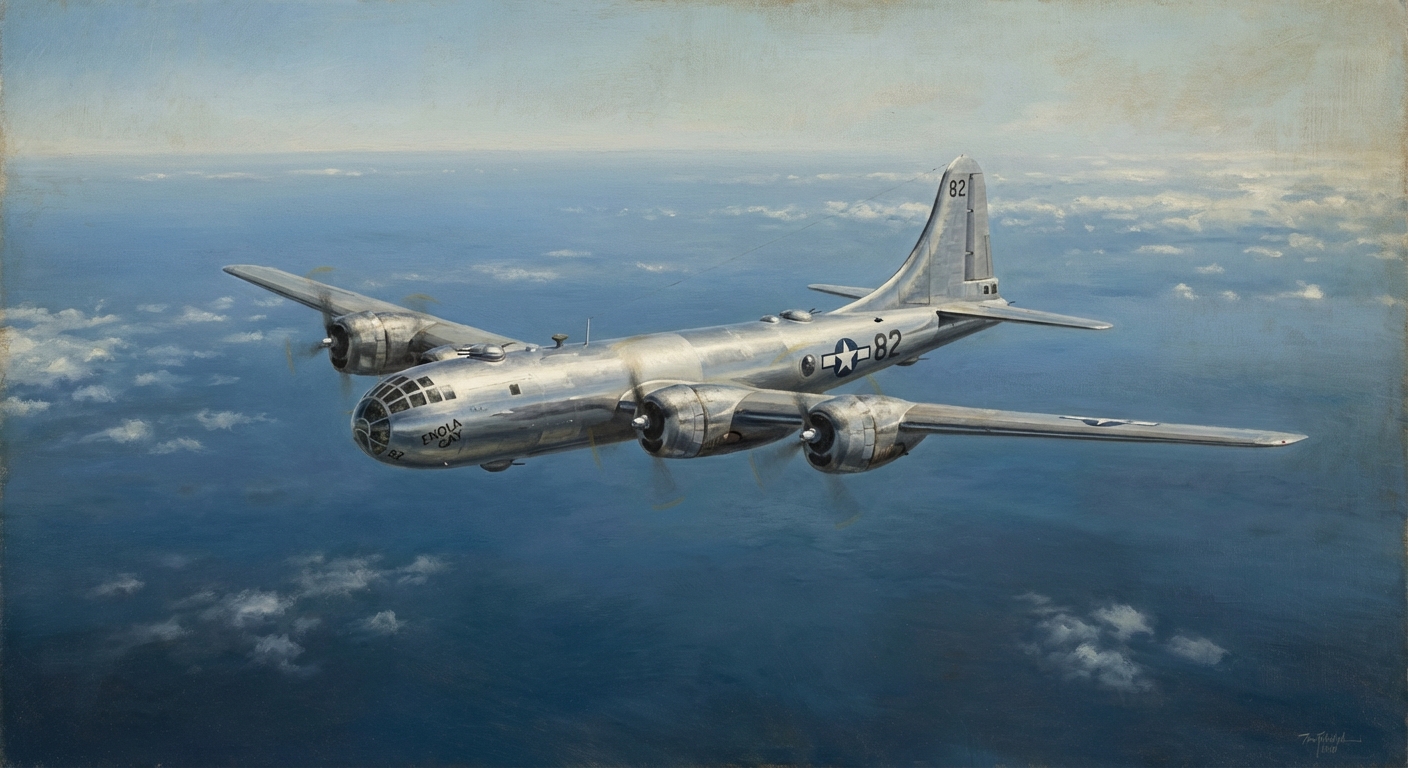
B-29 Superfortress in flight over the Pacific

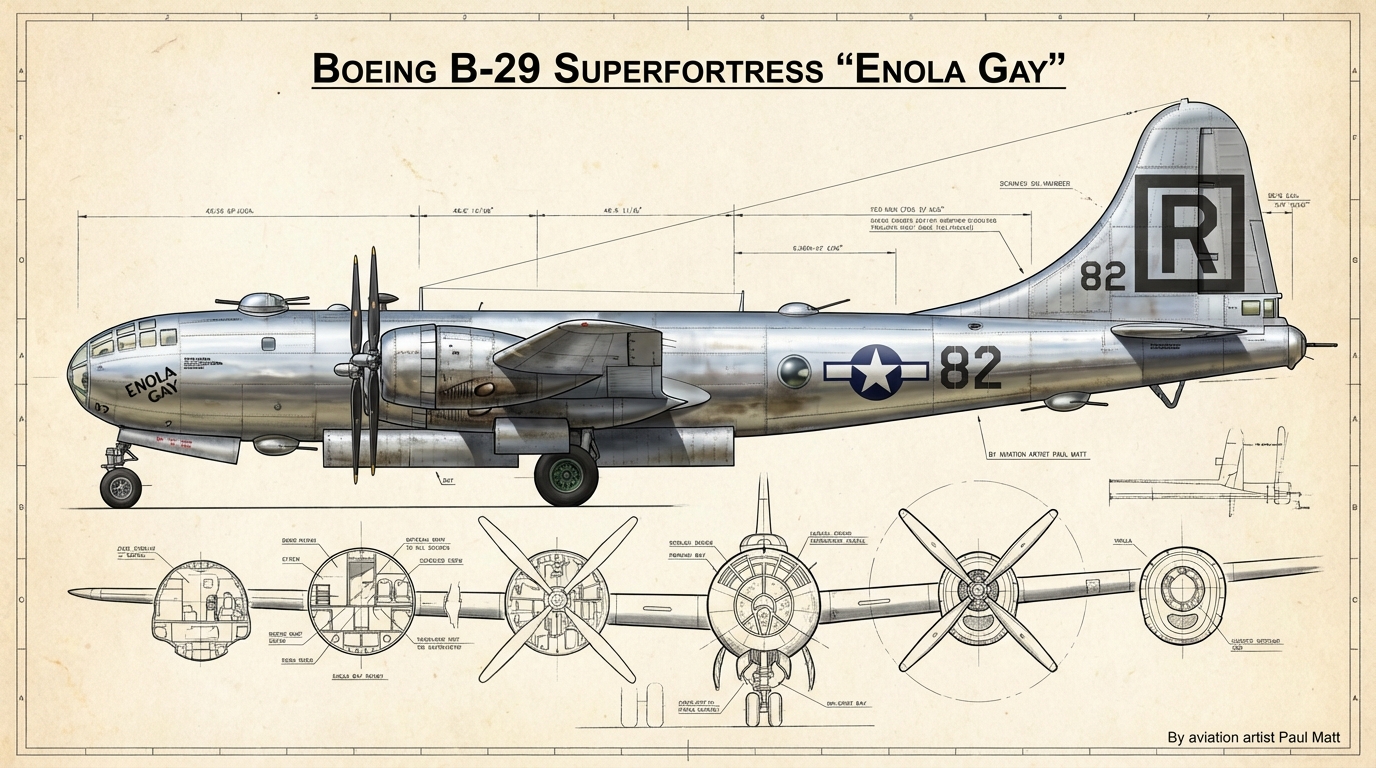
Boeing B-29 Superfortress “Enola Gay�

B-29 Superfortress profile view
Top Speed

357 mph

Range

3,250 miles

Bomb Load

44,619 lbs max

Built

3,970

Boeing B-29 Superfortress

Performance

EnginesFour Wright R-3350 Duplex-Cyclone radials, about 2,200 hp each
Max Speed357 mph
Cruise SpeedAround 220 mph
RangeAbout 3,250 miles
Service Ceiling31,850 ft
Rate of ClimbAround 900 ft/min
First FlightSeptember 21, 1942

Dimensions & Armament

Defensive ArmamentRemote-controlled turrets with .50-cal machine guns, tail guns, varied by block and mission
Bomb LoadUp to 20,000 lbs normal, 44,619 lbs maximum ferry / overload figures cited
Wingspan141 ft 3 in
Length99 ft 0 in
Height27 ft 9 in
Empty WeightAbout 74,500 lbs
CrewTypically 10 to 11

Technology, Distance, Consequence

Built3,970
Top Speed357 mph
Combat RadiusLong-range Pacific
Crew10–11
Atomic Missions2 combat drops
LegacyNuclear age begins

Notable Actions

  • June 1944: B-29s began combat operations from China and later from the Marianas, extending American bombing reach dramatically.
  • The aircraft introduced pressurized crew compartments and one of the most sophisticated remote defensive gun systems of the war.
  • August 6, 1945: Enola Gay dropped the uranium bomb “Little Boy� on Hiroshima.
  • August 9, 1945: another B-29, Bockscar, dropped the plutonium bomb “Fat Man� on Nagasaki, further confirming the new and terrifying scale of destruction.

The Most Advanced Bomber of the War

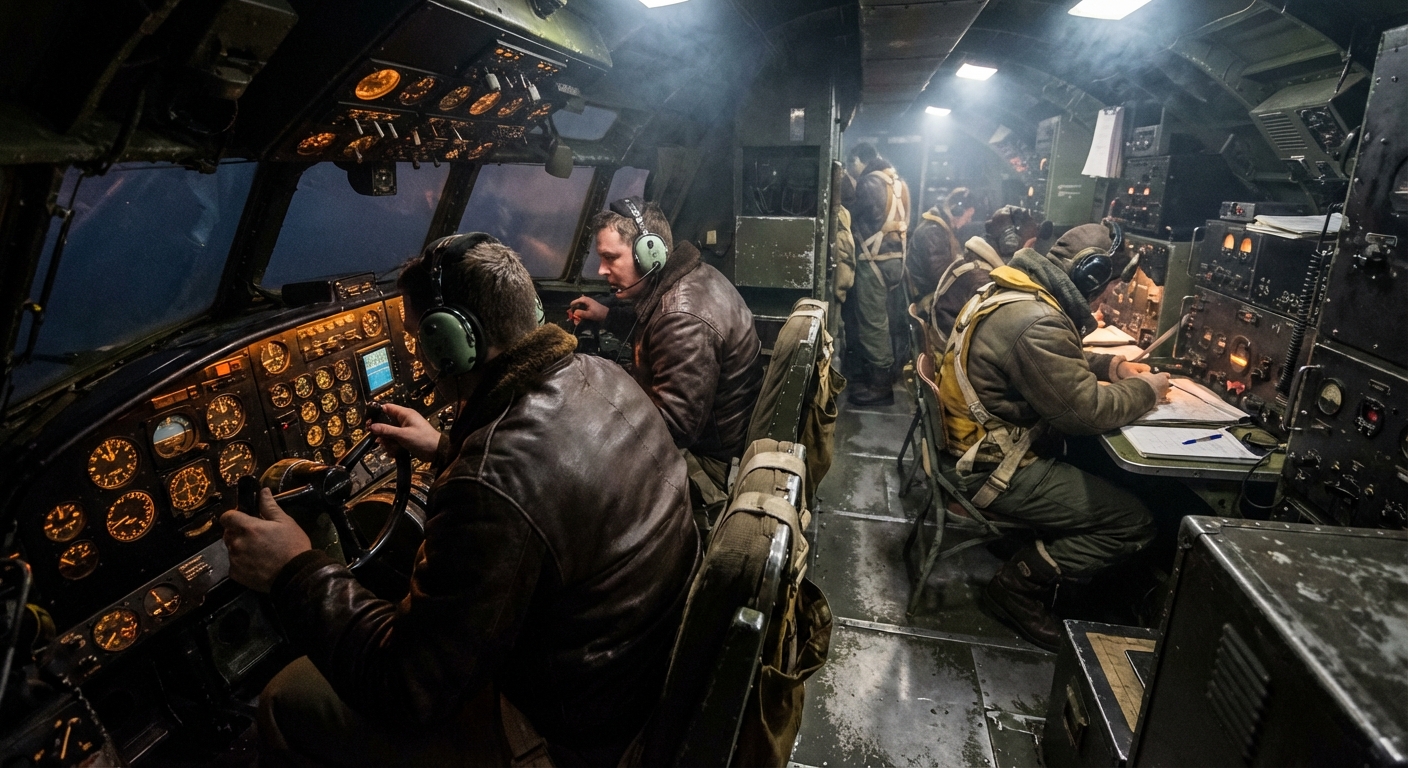
The Boeing B-29 Superfortress was a technological leap disguised as a bomber. Pressurized crew compartments allowed high-altitude operations without every man wearing an oxygen mask for the entire mission. Analog computers coordinated remote-controlled gun turrets. A central fire-control system let gunners hand off targets across stations. The aircraft had range, payload, altitude, and engineering ambition far beyond the B-17 or B-24.

It was also expensive, troublesome, and difficult. The Wright R-3350 engines were powerful but temperamental, especially early on. The aircraft required enormous resources to build, maintain, and base. Runways in the Marianas had to be carved from coral at huge logistical effort. Nothing about the B-29 was simple except the strategic logic behind it: if the United States wanted to strike Japan consistently and at scale, it needed an aircraft that could make distance irrelevant.

Once B-29 operations shifted to the Marianas, that logic worked. Japan was within reach. The bomber helped enable both high-altitude precision attempts and, later, the devastating low-altitude incendiary campaign directed against Japanese cities. Those raids killed civilians on a horrific scale even before atomic weapons entered the war. The B-29 therefore belongs not just to technological history but to the history of escalation.

The atomic missions made the type inseparable from moral catastrophe. The aircraft did not decide policy, and crews executed missions assigned by civilian and military leadership, but that does not make the results abstract. Hiroshima and Nagasaki were not mere “targets.� They were cities full of human beings. The B-29 became the delivery system through which scientific achievement, military necessity arguments, geopolitics, and mass death fused into the opening chapter of the nuclear age.

That is the B-29 story in full: extraordinary engineering, immense operational impact, and an enduring warning about what happens when industrial capacity, strategic air power, and apocalyptic weapons converge.
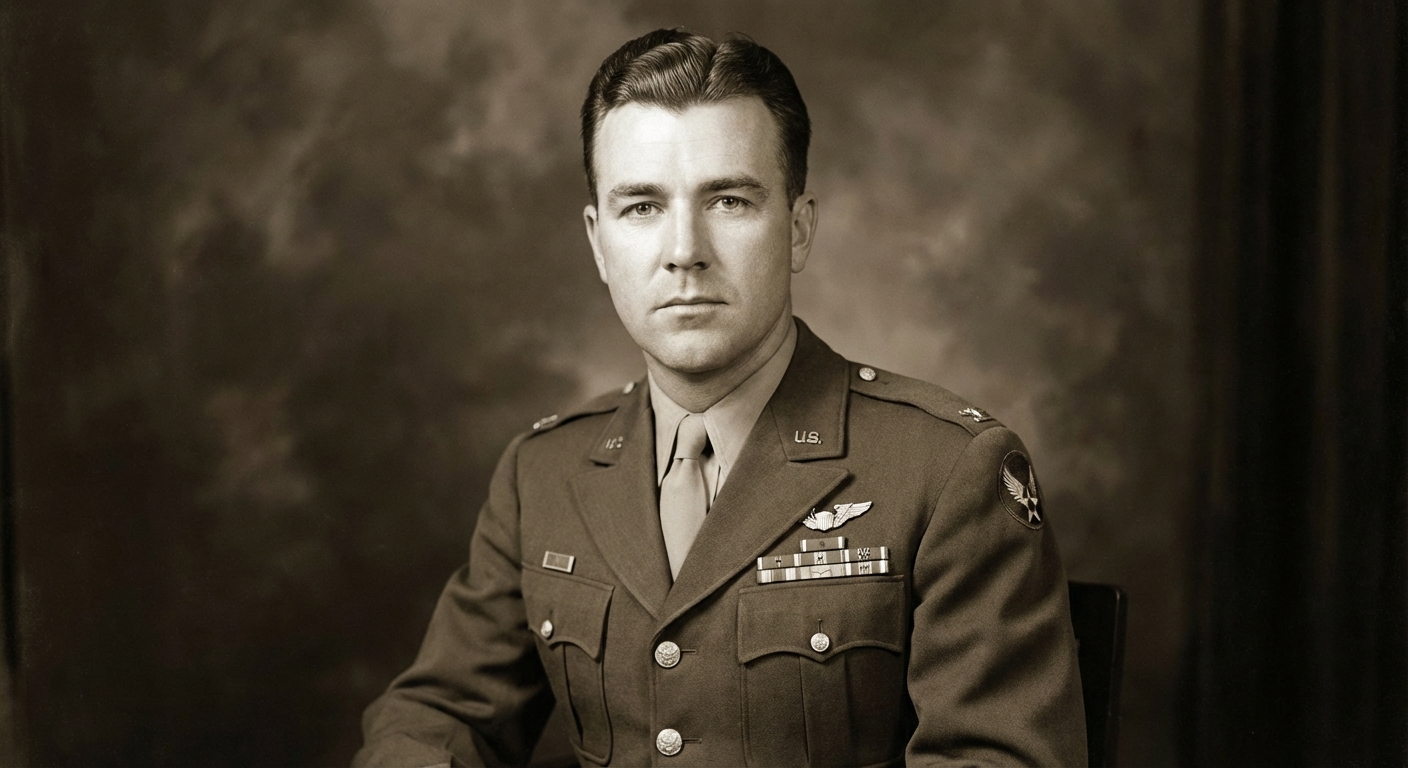
Colonel Paul W. Tibbets Jr.

Colonel Paul W. Tibbets Jr.
509thComposite Group
6 Aug 1945Hiroshima Mission

Paul Warfield Tibbets Jr.

Colonel, United States Army Air Forces

Commander, 509th Composite Group

Distinguished Service Cross Distinguished Service Medal Silver Star Distinguished Flying Cross Air Medal

Paul Tibbets was one of the Army Air Forces’ most trusted bomber officers long before he became permanently associated with Enola Gay. He had flown anti-submarine patrols, ferried senior leaders, and commanded B-17 and B-29 formations. He was technically skilled, disciplined, and unusually good at the organizational side of air warfare, which is one reason he was chosen to command the specially created 509th Composite Group.

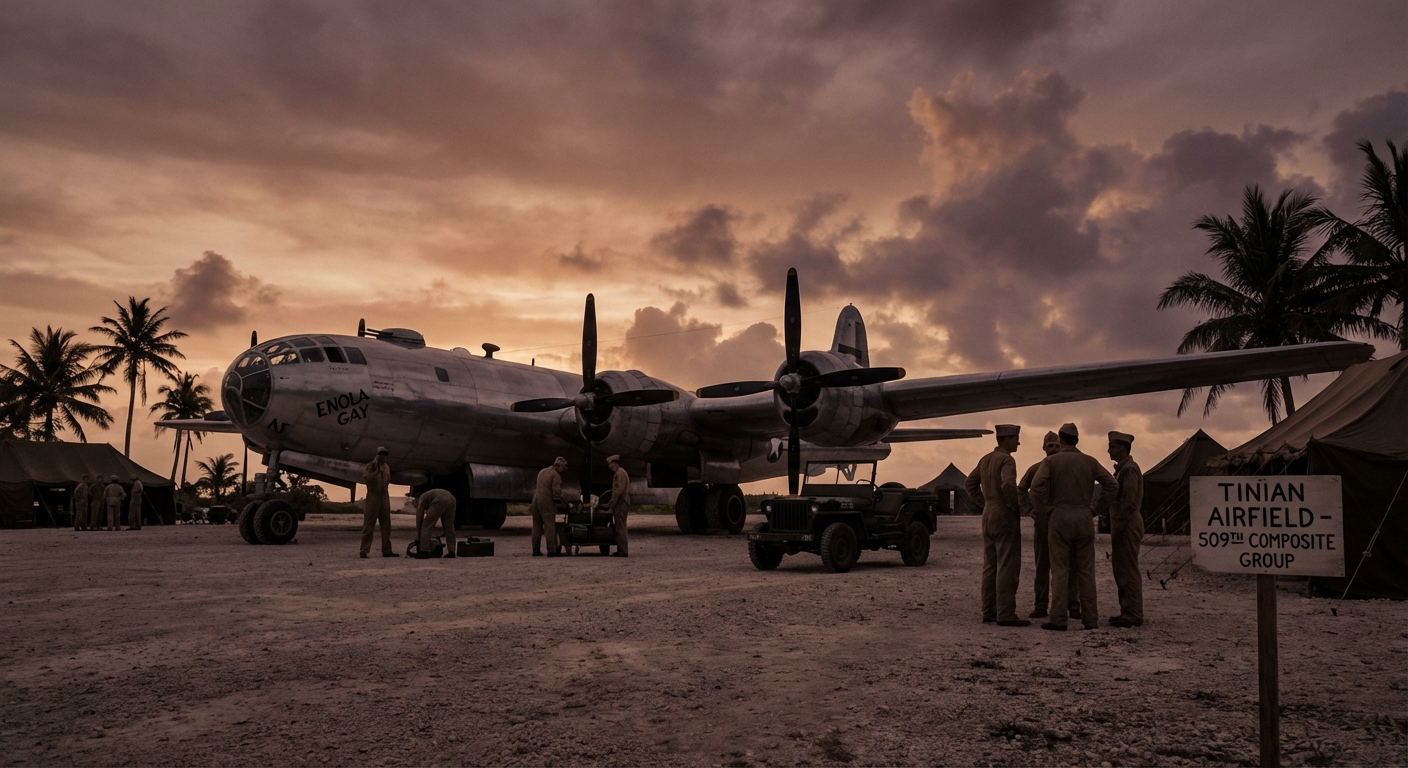
The 509th was trained in secrecy for a mission almost no one else in uniform fully understood. Tibbets oversaw aircraft modification, crew standards, operational discipline, and the strange mix of ordinary bomber procedures with extraordinary security that the atomic program demanded. He named Enola Gay after his mother and personally flew the Hiroshima mission from Tinian on August 6, 1945.

His role in history is impossible to separate from the results of that flight. Tibbets always defended the mission as necessary to end the war and save lives that would have been lost in an invasion. Many historians, ethicists, survivors, and citizens have contested or qualified that claim ever since. Both things can be true at once: he believed his duty was clear, and the event remains morally devastating.

The sober way to remember Tibbets is neither demon caricature nor easy hero worship. He was a highly capable officer at the point where modern military professionalism met the first practical use of nuclear weapons. That is enough weight for any one life.

509th Composite Group

Unit509th Composite Group
BaseNorth Field, Tinian
MissionDelivery of special weapons
AircraftSilverplate-modified B-29s
Higher CommandTwentieth Air Force
Historical RoleAtomic strike operations

The 509th Composite Group was built for a singular purpose. Its aircraft were modified under the Silverplate program to carry oversized weapons and shed unnecessary weight. Its crews trained in long overwater navigation, precise bombing procedures, and strict operational secrecy.

Unlike ordinary bomber groups, the 509th existed at the junction of strategic air power and the Manhattan Project. Scientists, ordnance specialists, and aircrew all depended on one another. This was not just another bombardment unit. It was a prototype for a new kind of military organization built around weapons whose significance exceeded the war that produced them.

The group’s success in technical and operational terms is beyond dispute. The deeper question is what exactly success meant once the weapon worked. History has been arguing about that ever since.

Aircraft Illustrations

B-29 Superfortress at altitude above the Pacific

Pressurized giant over the Pacific

Generated

Enola Gay on Tinian before mission launch

North Field, Tinian

Generated

Remote-gunned Superfortress in strategic mission profile

The machine and its burden

Generated

Sources & Further Reading

BOOK

Campbell, Richard H. Silverplate Bombers. Schiffer Military History.

BOOK

Craven and Cate, eds. The Army Air Forces in World War II. Official history volumes on B-29 operations.

OFFICIAL

National Air and Space Museum materials on Enola Gay and B-29 development.

BOOK

Rhodes, Richard. The Making of the Atomic Bomb. Simon & Schuster.

WIKI

Wikipedia: Boeing B-29 Superfortress, Enola Gay, Paul Tibbets, 509th Composite Group.