The Aircraft That Changed Everything
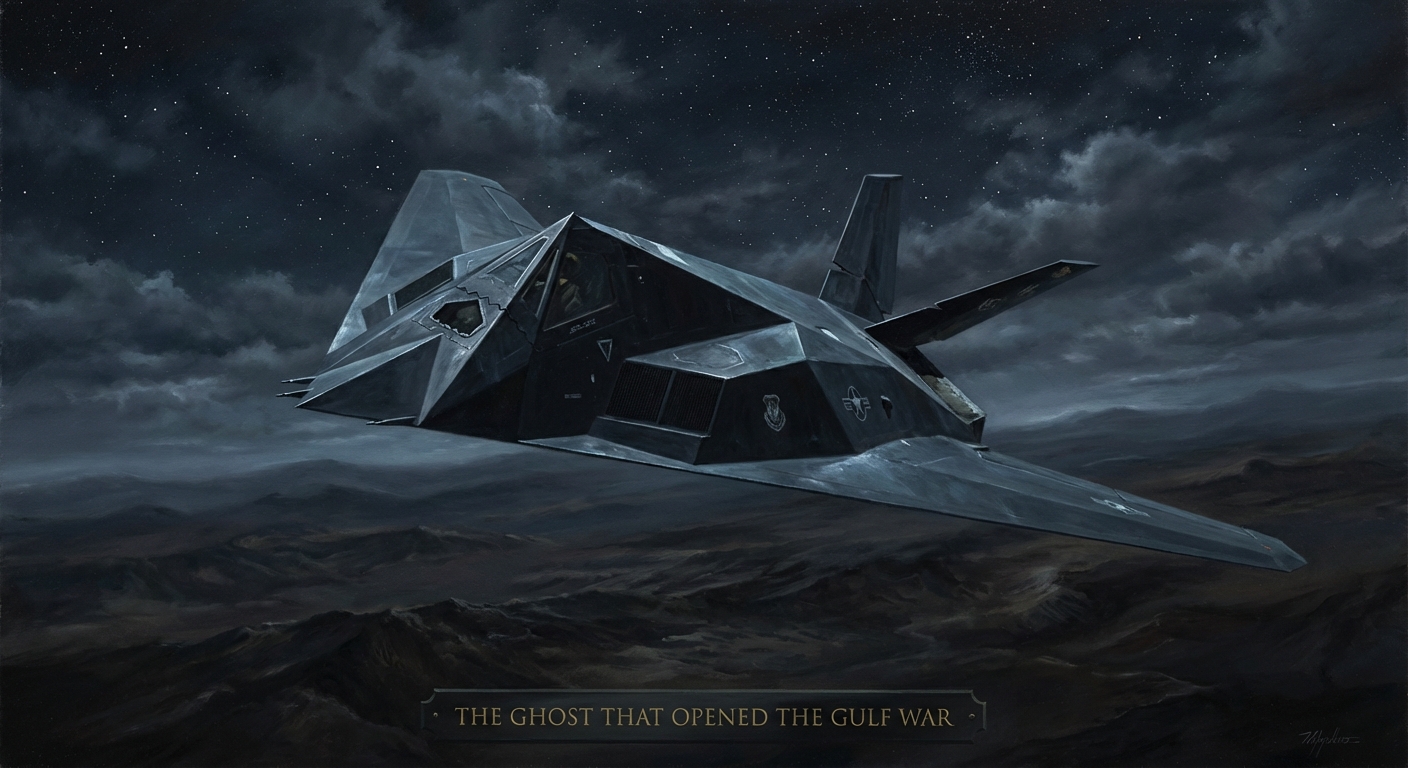
When the F-117A Nighthawk was publicly acknowledged in 1988 — seven years after its first flight, having been operational since 1983 — it confirmed what aviation watchers had suspected and military officials had refused to confirm: the United States had developed and deployed an aircraft that was essentially invisible to radar. Not reduced-signature. Not low-observable. Effectively invisible at combat-relevant ranges. The world's most sophisticated air defense networks couldn't track it. They couldn't see it. For all practical purposes of surface-to-air missile targeting, it did not exist.
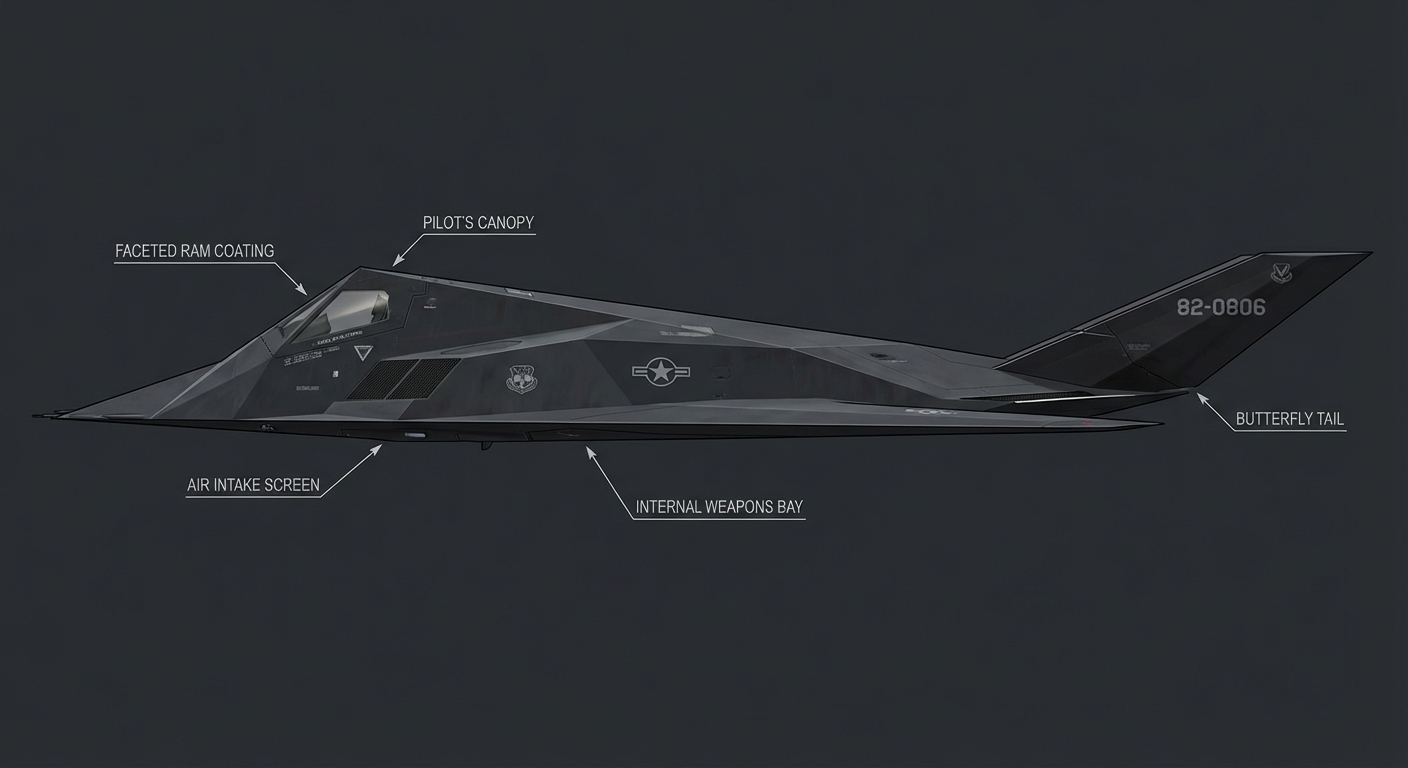
The airframe accomplished this through a design philosophy called faceting — covering the entire surface in flat, angled panels that deflect incoming radar energy away from its source at angles that preclude return. Unlike the smooth curves of the B-2 Spirit, which used a different stealth approach, the F-117 looked like something assembled from a geometry textbook. Diamond-faceted surfaces. V-shaped engine inlets. A W-shaped wing. Every line was a radar-defeat calculation, not an aerodynamic one. The aircraft was inherently unstable and required quadruple-redundant fly-by-wire computers to remain in controlled flight at any moment.
Baghdad, January 17, 1991 — Opening Night
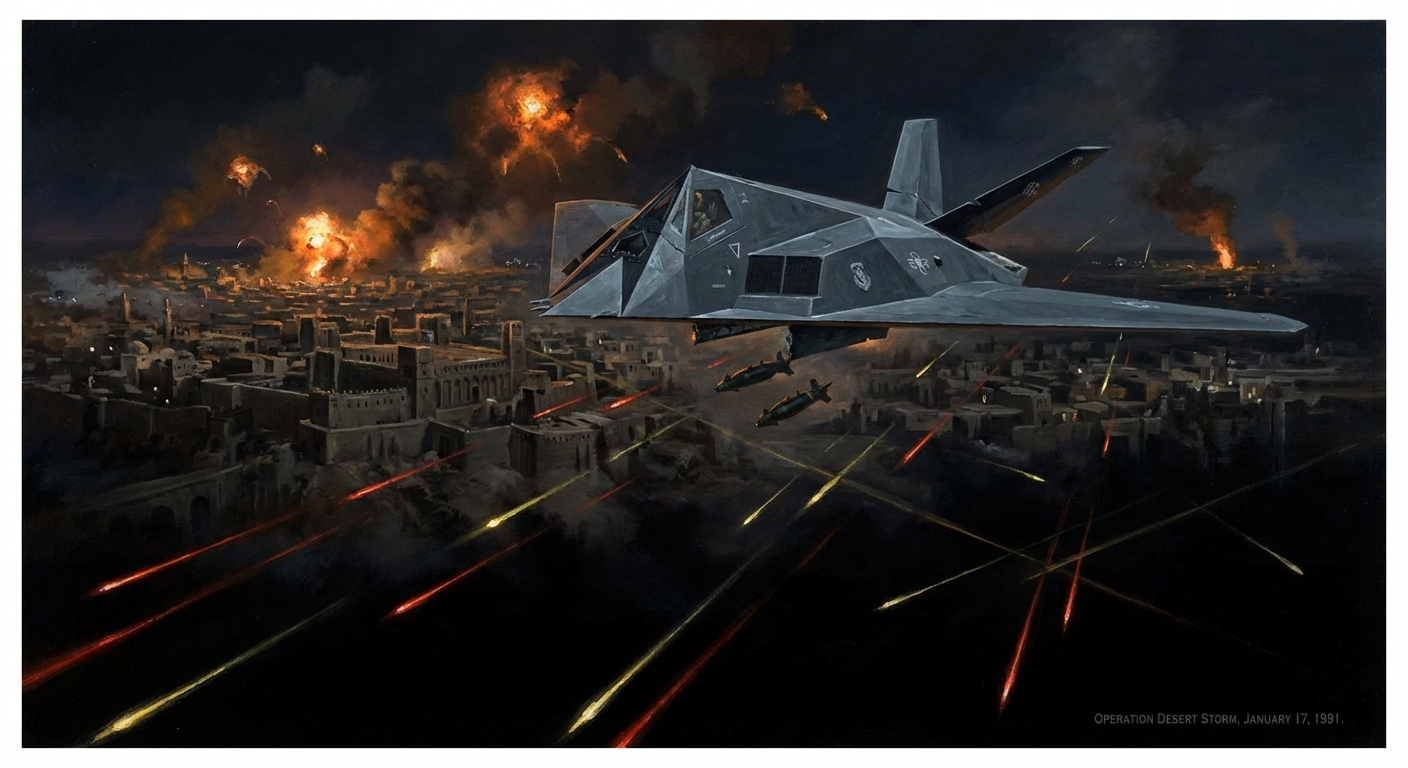
The Gulf War began at 2:30 AM Baghdad time on January 17, 1991, when F-117As of the 415th and 416th Tactical Fighter Squadrons struck Baghdad's integrated air defense headquarters, communications infrastructure, and command nodes. It was the first night of the war, and the F-117 flew directly over Baghdad — one of the most heavily defended cities in the world, ringed with Soviet-supplied surface-to-air missile batteries, radar networks, and anti-aircraft artillery — and struck its targets with laser-guided GBU-27 bombs while the air defenses fired blindly at nothing in particular.
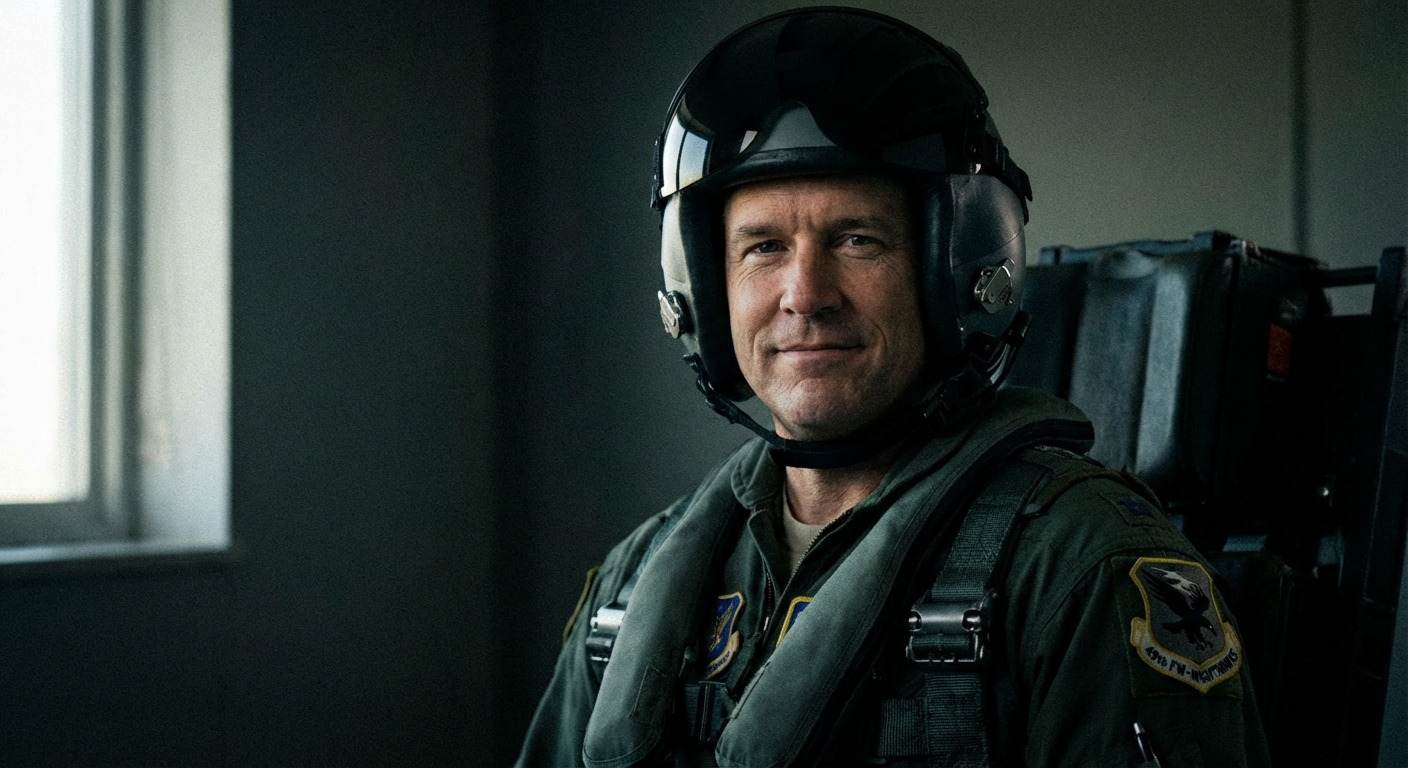
Dale Zelko flew that night. He struck his target, reversed course, and flew home through a sky filled with unguided AAA fire that had no idea where he was. Television cameras caught the spectacle: Baghdad lit up like a fireworks display, tracers and missiles arcing into an empty sky. Somewhere in that sky, invisible, were the aircraft that had just dismantled Iraq's ability to fight a coordinated air war. The campaign effectively destroyed Iraq's air defense infrastructure in the first hours. F-117s flew 1.7 percent of total sorties in the Gulf War and struck 40 percent of strategic targets.
Kosovo, March 27, 1999 — The Night the Invisible Became Visible
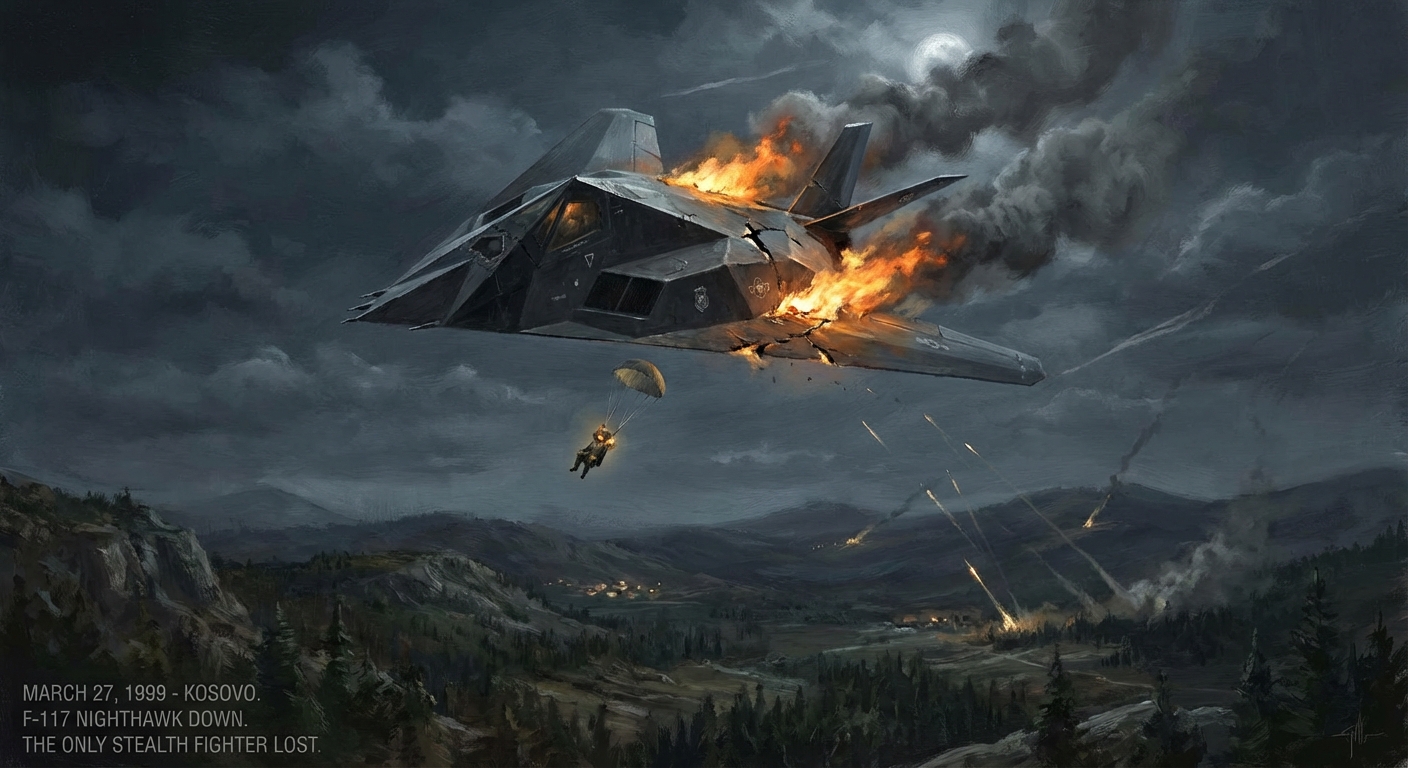
Eight years later, Zelko was flying combat operations over Yugoslavia during Operation Allied Force — the NATO air campaign against Serbian forces following the Kosovo crisis. The F-117 had by this point accumulated an unbroken record: in every conflict in which it had been deployed, not one had been detected, tracked, or threatened. The assumption in the U.S. Air Force, understandably, was that the Nighthawk was invulnerable to conventional air defenses.
Colonel Zoltán Dani was the commander of the 3rd Battalion, 250th Air Defense Missile Brigade of the Army of Yugoslavia. He commanded a battery of Soviet-designed SA-3 Neva/Pechora surface-to-air missiles — a system that had been in service since the 1960s and was widely considered obsolete against modern aircraft. Dani was also one of the most analytically rigorous air defense commanders in the Yugoslav military. He had been thinking carefully about the F-117 for years.
His insight was simple and devastating: the F-117's stealth coating was optimized against high-frequency radar — the short-wavelength radars used for targeting and fire control. Long-wavelength radar, which operated at frequencies that made precise targeting impossible, was a different matter. The F-117's flat surfaces reflected long-wavelength energy differently. You couldn't get a missile-guidance lock. But you could detect the aircraft's presence. Dani had modified his targeting procedure to use his P-18 long-wavelength early warning radar for detection, then hand-off targeting data to his SA-3 guidance radar at the last possible moment — minimizing the time the F-117 had to detect that it was being painted.
He also knew, from careful observation of NATO's flight patterns, roughly when and where the F-117 would fly. And he knew something else: on missions lasting many hours, pilots develop routines. The aircraft might fly the same corridor multiple times. The Nighthawk had been flying the same general route over Serbia repeatedly.
On March 27, 1999, at approximately 8:15 PM local time, Dani's battery detected Zelko's F-117 on the P-18 radar. He waited until the aircraft was within range, activated his targeting radar, and fired two SA-3 missiles. Both detonated close to the F-117. The blast destroyed the aircraft's control surfaces. Zelko had no option. He ejected.
Eight Hours in Serbia
Zelko landed in Serbian farmland. He knew immediately that he was in trouble. NATO rescue assets were not pre-positioned for the possibility that an F-117 would go down — because the F-117 was not supposed to go down. He activated his survival radio and began evading. Serbian forces fanned out across the countryside looking for him. He moved carefully, carefully, in the dark, away from the search patterns he could infer from the vehicle lights and the voices.
The rescue took eight hours. A combat search-and-rescue team eventually reached him — a CH-53 helicopter with fighter escort — and extracted him from Serbian territory. He was uninjured, except for a back injury from the ejection. He was debriefed, rested, and within weeks was flying again.
The wreckage of his aircraft was photographed by Serbian military and broadcast worldwide. The images were striking: the angular remnants of the world's most secret aircraft, scattered across a Serbian field, being photographed by civilians. Chinese officials, it was later reported, had access to the wreckage. The F-117's stealth technology, in compromised form, had been offered to every intelligence service interested enough to pay attention.
The Friendship That Defies Easy Categories
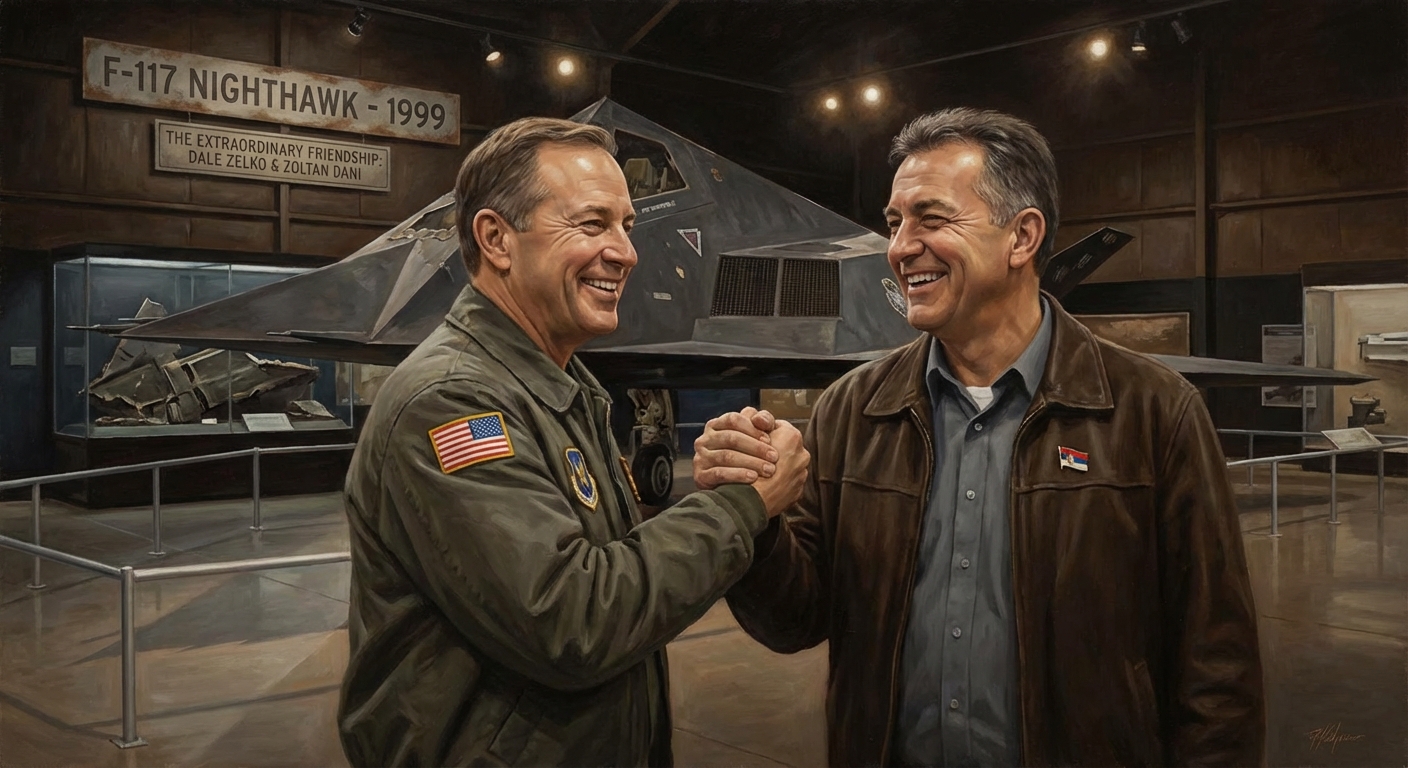
In the years after the war, Dale Zelko and Zoltán Dani sought each other out. What began as curiosity — each man wanted to understand what the other had experienced on that night — became genuine friendship. They met in person. They visited each other's homes. They shared meals. They appeared together in the 2011 documentary The Hunters and the Hunted and discussed the engagement with a candor and mutual respect that military historians found remarkable.
Zelko described Dani as a professional of the highest order who had done exactly what a skilled air defender should do — studied his opponent, identified his vulnerabilities, and exploited them with patience and precision. Dani described Zelko with equal respect. Neither man harbored animosity. They had been doing their jobs on opposite sides of a conflict, and when the conflict ended, the shared experience of that particular night created a bond between them that neither had expected and neither could fully explain.
“He was doing his job, and I was doing mine,” Zelko said. It is as clean and honest a summary as any from which to approach the question of what the relationship between adversaries looks like when both sides are acting in accordance with their professional obligations and their human decency. The F-117 is retired now. Both men continue to speak publicly about that night and what it meant. The story of the invisible aircraft that became visible — and of the two men on opposite sides of the moment — is one of the stranger and more moving footnotes to the post-Cold War era.