McDonnell Douglas F-4C / F-4D Phantom II • Supersonic Fighter-Bomber
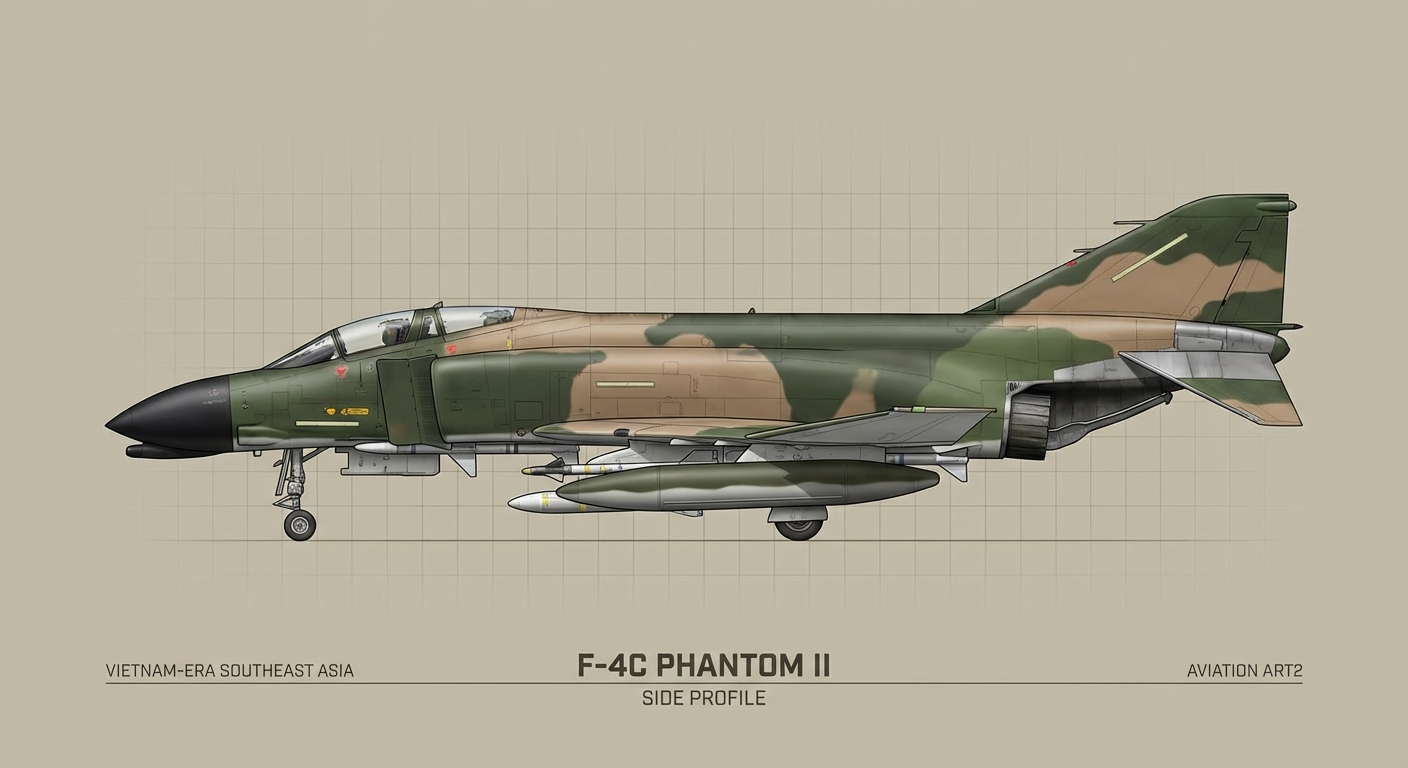
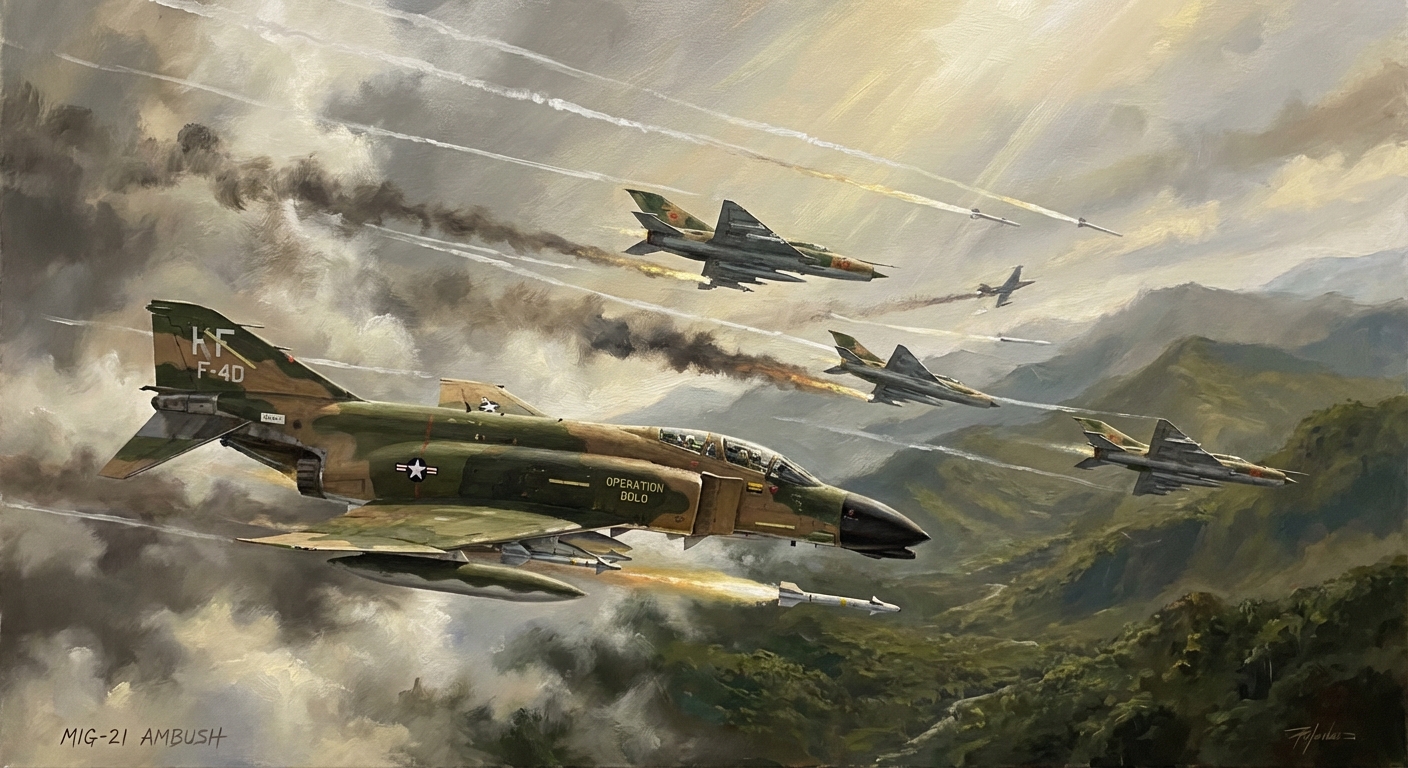
The F-4 Phantom II was brute force in aluminum form, a twin-J79 sledgehammer that could go past Mach 2 while hauling Sparrows, Sidewinders, bombs, and enough fuel to reach the fight and stay there. In the hands of Brigadier General Robin Olds, it became the aircraft of Operation Bolo, the January 1967 deception strike that baited North Vietnamese MiG-21s into a trap and reset the air war over Hanoi.
F-4C / F-4D Phantom II • 8th Tactical Fighter Wing • Ubon Royal Thai AFB
Aircraft Profile
Mach 2.2
Twin J79s
16,000+ all variants
Sparrow, Sidewinder, bombs
Technical Specifications
Performance
| Engines | Two General Electric J79-GE turbojets, about 17,000 lbf thrust each with afterburner |
| Max Speed | Mach 2.2 at altitude |
| Combat Radius | Roughly 420 to 680 miles depending on loadout |
| Ferry Range | Over 1,600 miles with tanks |
| Service Ceiling | Around 60,000 ft |
| Rate of Climb | More than 41,000 ft/min |
| First Flight | May 27, 1958 |
Dimensions & Armament
| Armament | AIM-7 Sparrow, AIM-9 Sidewinder, bombs, rockets, gun pods, later internal gun on some variants |
| Length | 63 ft 0 in |
| Wingspan | 38 ft 5 in |
| Height | 16 ft 5 in |
| Empty Weight | About 30,300 lbs |
| Max Takeoff | Up to roughly 58,000 lbs |
| Crew | 2, pilot and weapon systems officer |
Combat Record
Aircraft History
The F-4 Phantom II did not look elegant. It looked expensive, fast, and vaguely offended that anything else was sharing its airspace. Designed originally for the U.S. Navy, the Phantom entered service as a fleet defense interceptor, but Vietnam turned it into something broader and harsher: a fighter, bomber, escort, wild weasel partner, reconnaissance platform, and morale machine all at once.
Its virtues were velocity, climb, radar, payload, and raw resilience. Twin J79 engines pushed the jet through the sound barrier with ease, and the aircraft could carry combinations of AIM-7 Sparrows, AIM-9 Sidewinders, bombs, rockets, and external tanks that made it one of the most versatile combat aircraft of the Cold War. Its weaknesses were equally famous: heavy smoke, high wing loading, and early missile doctrine that assumed dogfights were obsolete right before dogfights came roaring back.
Over North Vietnam, the Phantom found itself fighting in one of the most restrictive and lethal air combat environments in history. Rules of engagement often forced visual identification. Missile reliability was uneven. Surface-to-air missiles and anti-aircraft artillery filled the sky. North Vietnamese controllers carefully chose when to commit MiG-17s and MiG-21s, trying to slash at U.S. strike formations and disappear before escorts could react.
That was the environment Robin Olds inherited at the 8th Tactical Fighter Wing. He did not believe the answer was passivity or paperwork. He rebuilt training, discipline, and tactical aggression, then helped design a deception mission that exploited North Vietnamese expectations. Operation Bolo was not just a clever trick. It was a demonstration that the Phantom, flown well and employed intelligently, could seize the initiative even in the most dangerous airspace on earth.
Across all variants more than 16,000 Phantoms were built, and the aircraft served with a list of nations long enough to feel absurd. The jet fought in Southeast Asia, the Middle East, and beyond. For the United States Air Force in Vietnam, though, the Phantom remains tied above all to a very specific image: black smoke, afterburners lit, missile rails loaded, and Robin Olds going hunting.
The Pilot
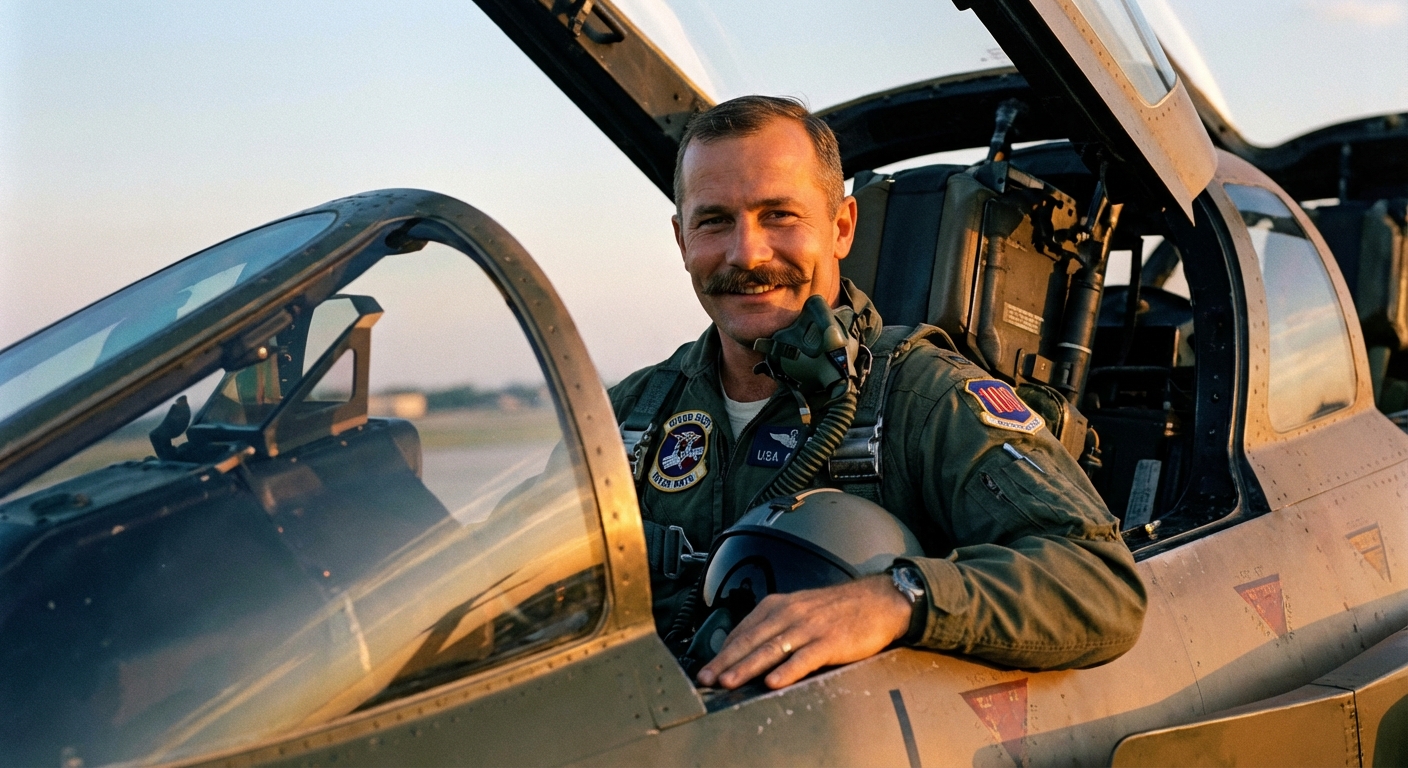
Brigadier General, United States Air Force
Commander, 8th Tactical Fighter Wing, Ubon Royal Thai AFB
Robin Olds was already famous before Vietnam. A West Point graduate and son of a pioneer Army Air Corps officer, he became a double ace in Europe flying P-38s and then P-51s with the 479th Fighter Group. By the end of the Second World War he had 12 aerial victories. He had movie-star looks, a professional wrestler's confidence, and absolutely no patience for timid leadership.
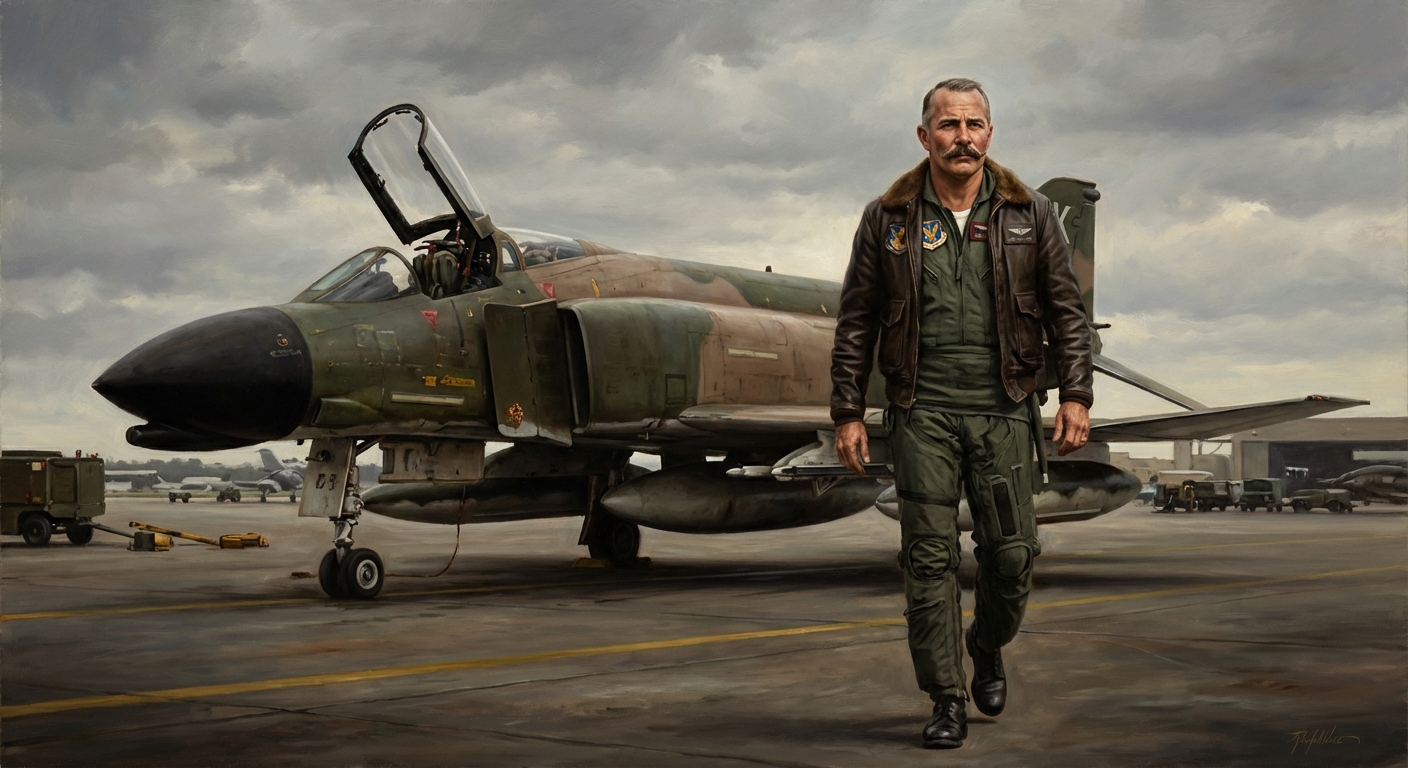
In 1966 he took command of the 8th Tactical Fighter Wing in Thailand, a unit that had aircraft and courage but needed sharper tactics and a stronger identity. Olds gave it both. He imposed high standards, fought bureaucracy when he had to, and became legendary among younger pilots for leading from the front instead of from a desk. The famous mustache he grew in theater was part morale weapon, part act of rebellion, and part Robin Olds being Robin Olds.
Operation Bolo was his masterpiece. Olds and his planners studied how North Vietnamese controllers reacted to American packages, then made Phantoms look like F-105 strike aircraft in route, altitude, timing, callsigns, formations, and electronic signatures. The MiG-21s rose expecting bomb-laden Thunderchiefs. They found clean F-4s waiting for them. The result was a textbook ambush and one of the most successful air-to-air operations of the war.
Olds finished Vietnam with four MiG kills, bringing his lifetime total to 16 and making him one of the rare American aces in two wars. He retired in 1973, but his legend only grew afterward because fighter pilots recognized the real thing when they saw it: a combat leader who understood that morale, discipline, swagger, and tactical imagination are not separate things. They are the same thing, if you want to win.
Unit History
The 8th Tactical Fighter Wing arrived in Thailand as one more hard-worked USAF organization in a war that ate aircraft and confidence at an alarming rate. Under Olds, it became something far sharper. Training intensified. Standards tightened. The wing learned to think offensively again.
Its F-4 crews flew strike escort, combat air patrol, armed reconnaissance, and deep missions into the densest air defenses in the world. They faced MiG-17s that could out-turn them, MiG-21s that could accelerate and escape quickly, and missile belts around Hanoi and Haiphong that made every mission a gamble.
What made the Wolfpack famous was not just victory count. It was attitude. Olds built a command climate that rewarded preparation and aggression without tolerating sloppiness. That culture outlived his tour and became part of USAF fighter mythology, which is not something that happens by accident.
Artwork Gallery

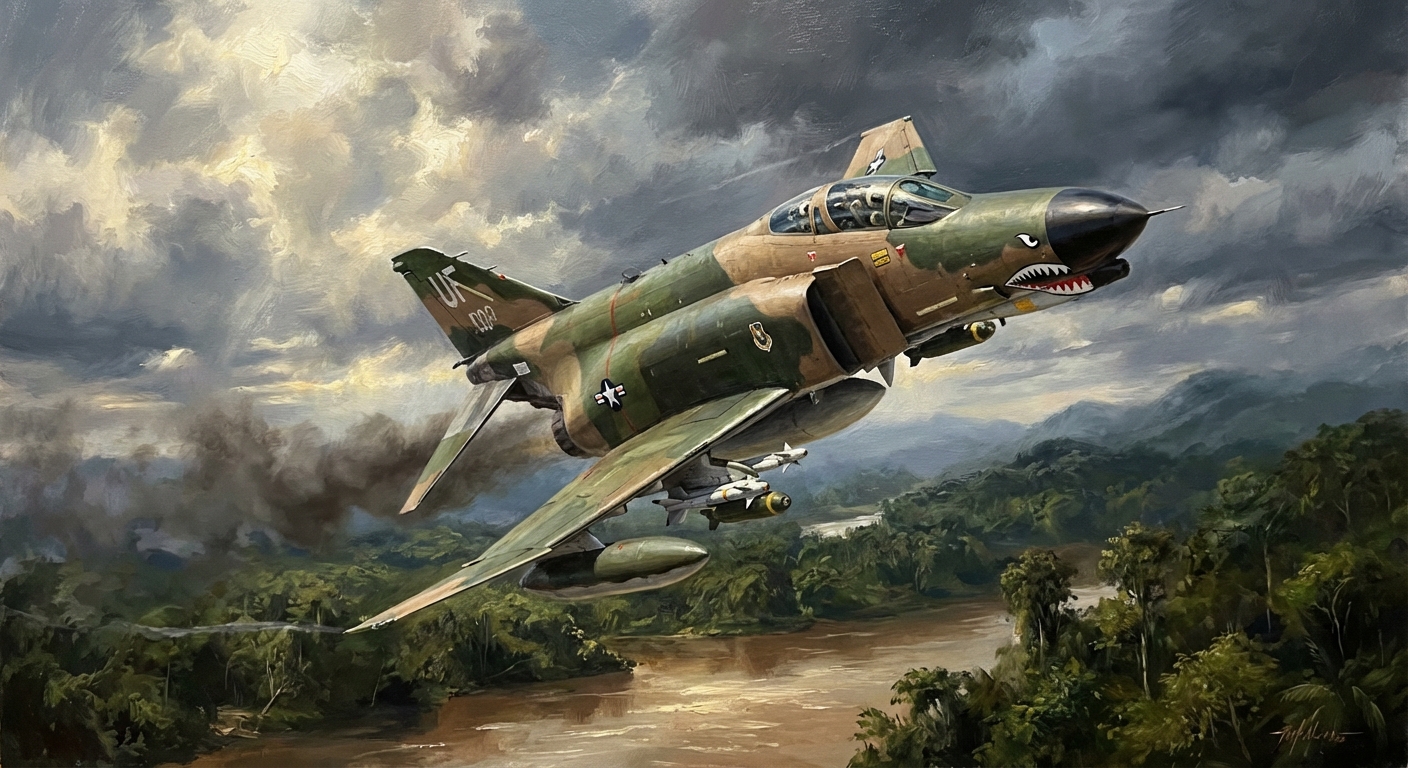
Operation Bolo over the north
Generated

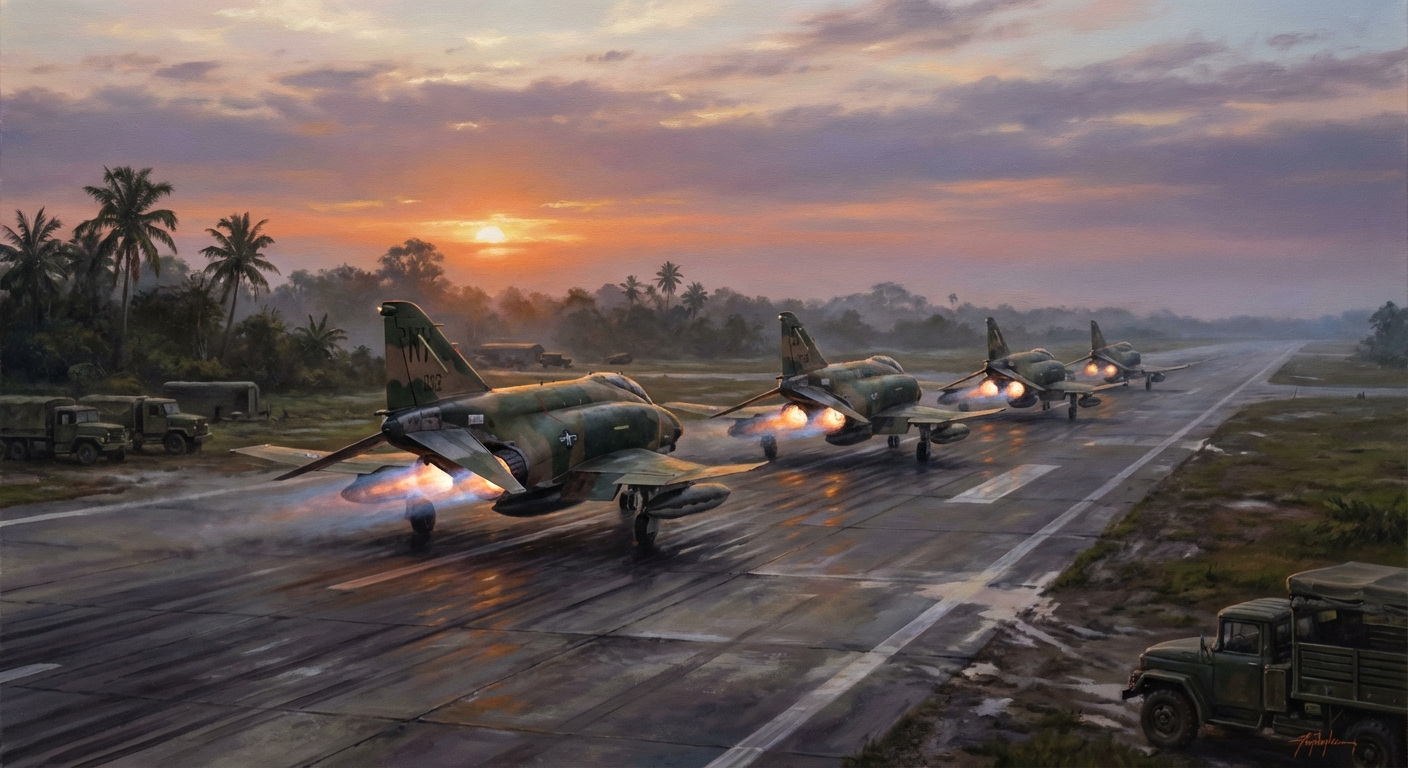
Wolfpack Phantoms at Ubon
Generated

Twin-J79 climb to the fight
Generated
Michel, Marshall L. Clashes: Air Combat Over North Vietnam, 1965–1972. Naval Institute Press.
Olds, Robin, with Christina Olds and Ed Rasimus. Fighter Pilot. St. Martin's Press.
U.S. Air Force historical materials on the 8th Tactical Fighter Wing and Operation Bolo.
Boyne, Walter J. Phantom in Combat. Smithsonian / military aviation reference editions.
Wikipedia: McDonnell Douglas F-4 Phantom II, Robin Olds, Operation Bolo.