Junkers Ju 87G Stuka • Dive Bomber / Anti-Tank Attack Aircraft
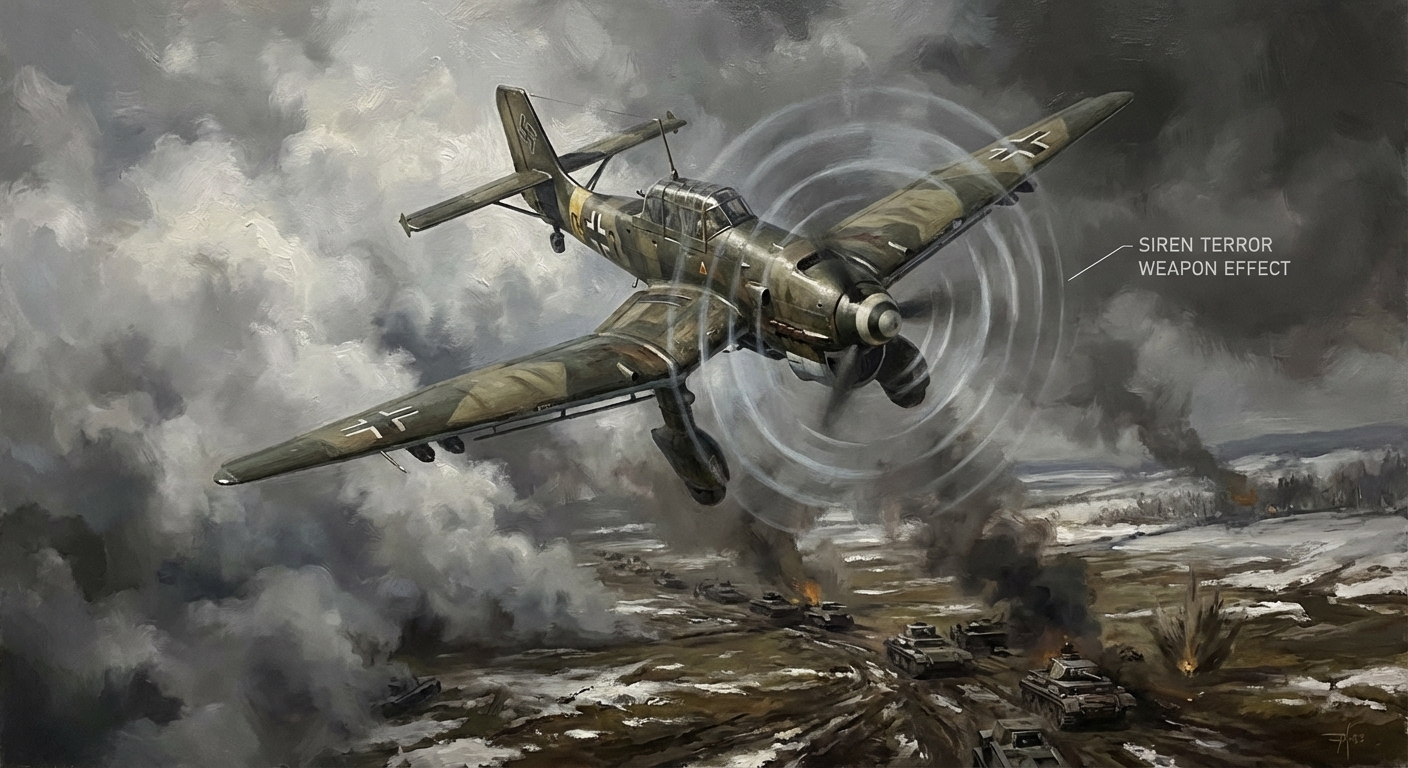
The Ju 87 Stuka was one of the most psychologically effective aircraft of the early war, a dive bomber whose screaming sirens announced precision attack and terror in equal measure. On the Eastern Front, later Ju 87G variants traded some of that dive-bombing identity for anti-tank work with underwing 37 mm cannon. Hans-Ulrich Rudel became the type’s most famous pilot, and his combat record was extraordinary. His postwar Nazi extremism was disgraceful, and any honest history has to say that plainly.
Ju 87G Stuka • Schlachtgeschwader 2 “Immelmann� • Eastern Front
Aircraft Profile
37 mm BK cannon
Jericho-Trompete sirens
Dive bomber to tank hunter
2,500+
Technical Specifications
Performance
| Engine | One Junkers Jumo 211 series inverted V-12, about 1,400 hp |
| Max Speed | About 240 mph for late anti-tank variants |
| Combat Radius | Roughly 300 miles depending on mission |
| Service Ceiling | Around 26,000 ft |
| Rate of Climb | Modest, variant dependent |
| Operational Strength | Low-speed precision attack and battlefield loiter |
| First Flight | September 17, 1935 |
Dimensions & Armament
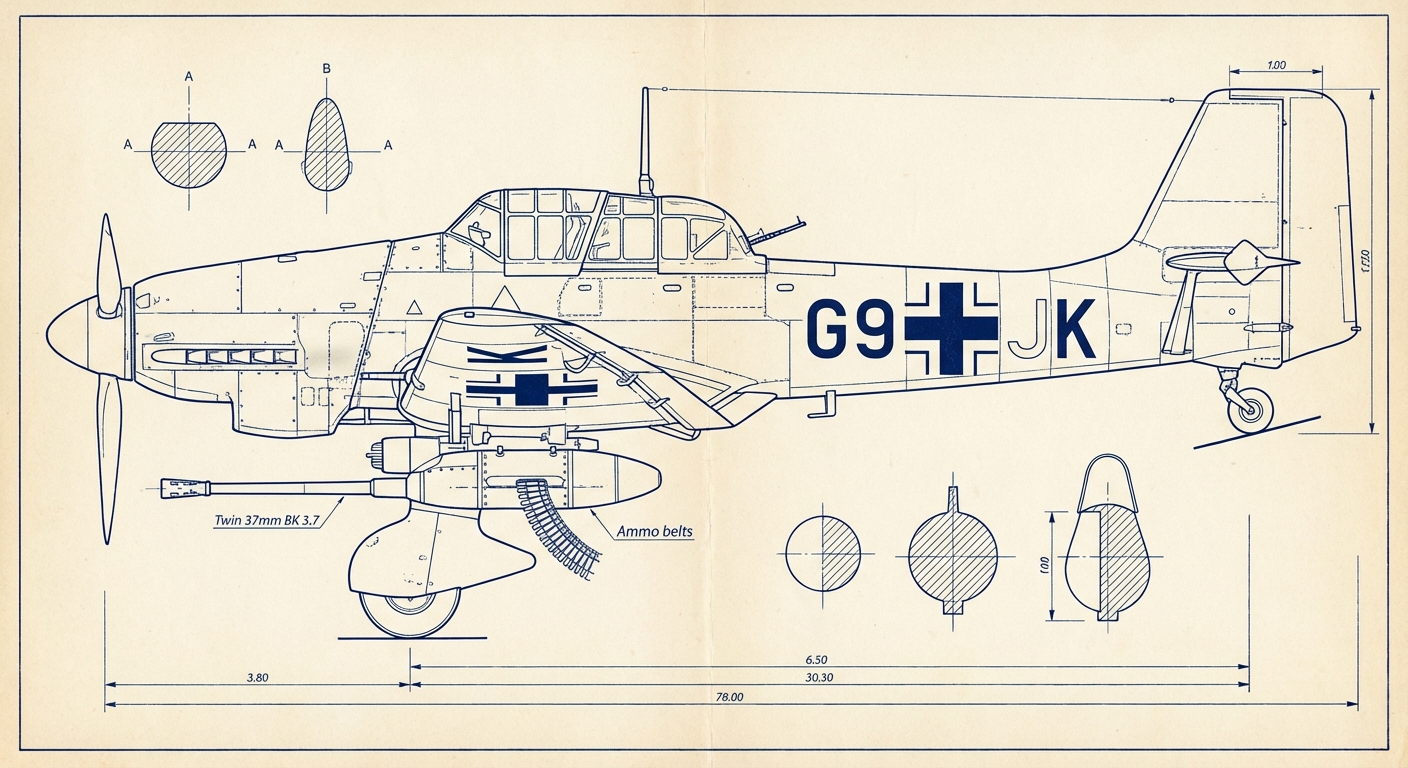
| Armament | Two 37 mm BK cannon in Ju 87G anti-tank form, plus rear defensive MG; earlier bomb-carrying variants used centerline and wing bombs |
| Wingspan | 45 ft 3 in |
| Length | 36 ft 8 in |
| Height | 12 ft 8 in |
| Empty Weight | Around 9,500 lbs |
| Loaded Weight | About 14,000 lbs |
| Crew | 2, pilot and rear gunner/radio operator |
Combat Record
Aircraft History
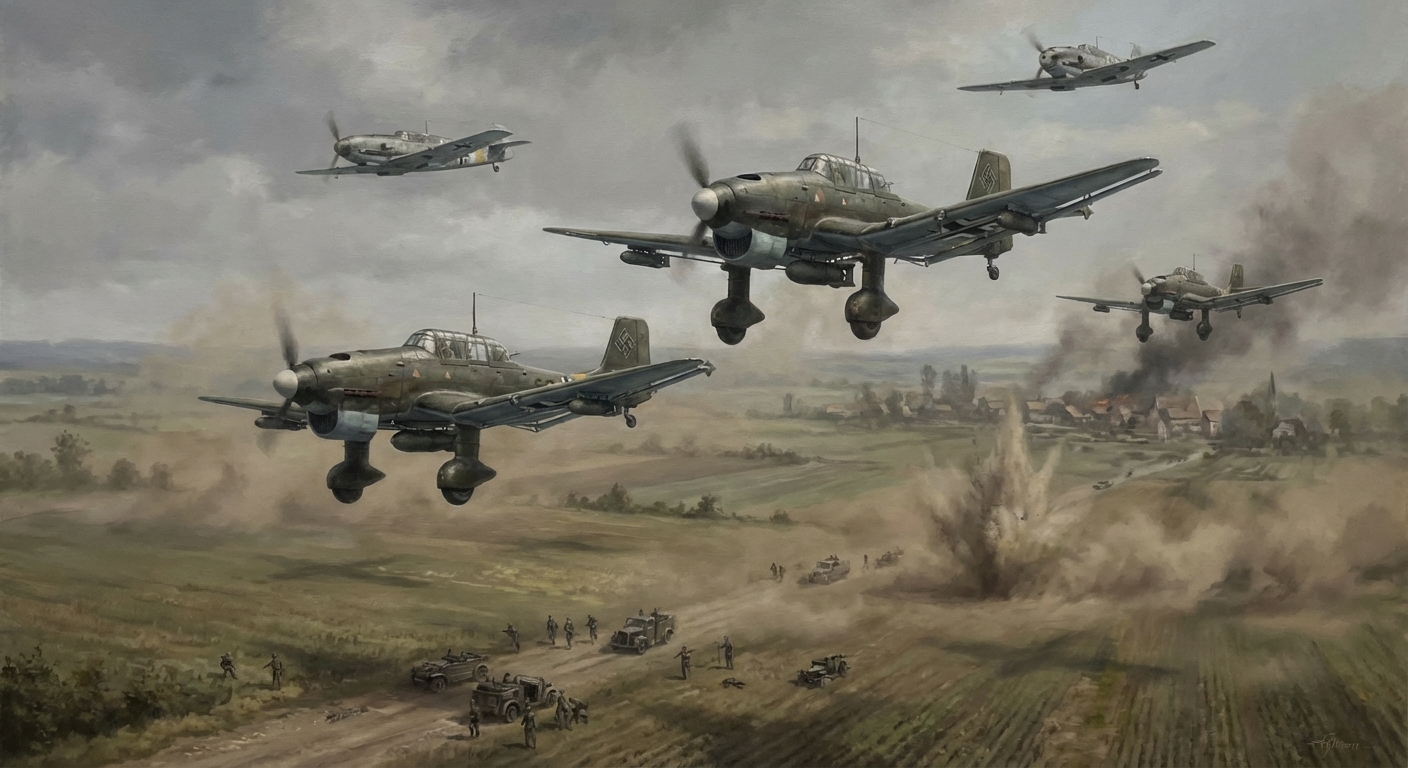
The Junkers Ju 87 Stuka is one of the most recognizable aircraft ever built, largely because its design advertised its purpose. Fixed landing gear in spats. Cranked gull wing. Heavy dive brakes. A shape that looked like it was already descending toward the target. It was not elegant, but it was memorable, and memory is part of warfare.
Early in the war the Stuka seemed terrifyingly modern. Against opponents with weak air defenses and collapsing command structures, it delivered accurate bombs directly in front of advancing German ground forces. Bridges, columns, strongpoints, and troop concentrations could be hit with a precision level uncommon for the period. Add the notorious sirens and the effect on morale became enormous.
But the aircraft had a hard ceiling imposed by physics and enemy fighters. The Stuka was slow. It depended on air superiority or at least local fighter protection. When that protection disappeared, as it did over Britain in 1940, the type became an easy victim. A weapon that looked unstoppable in one campaign looked obsolete in the next.
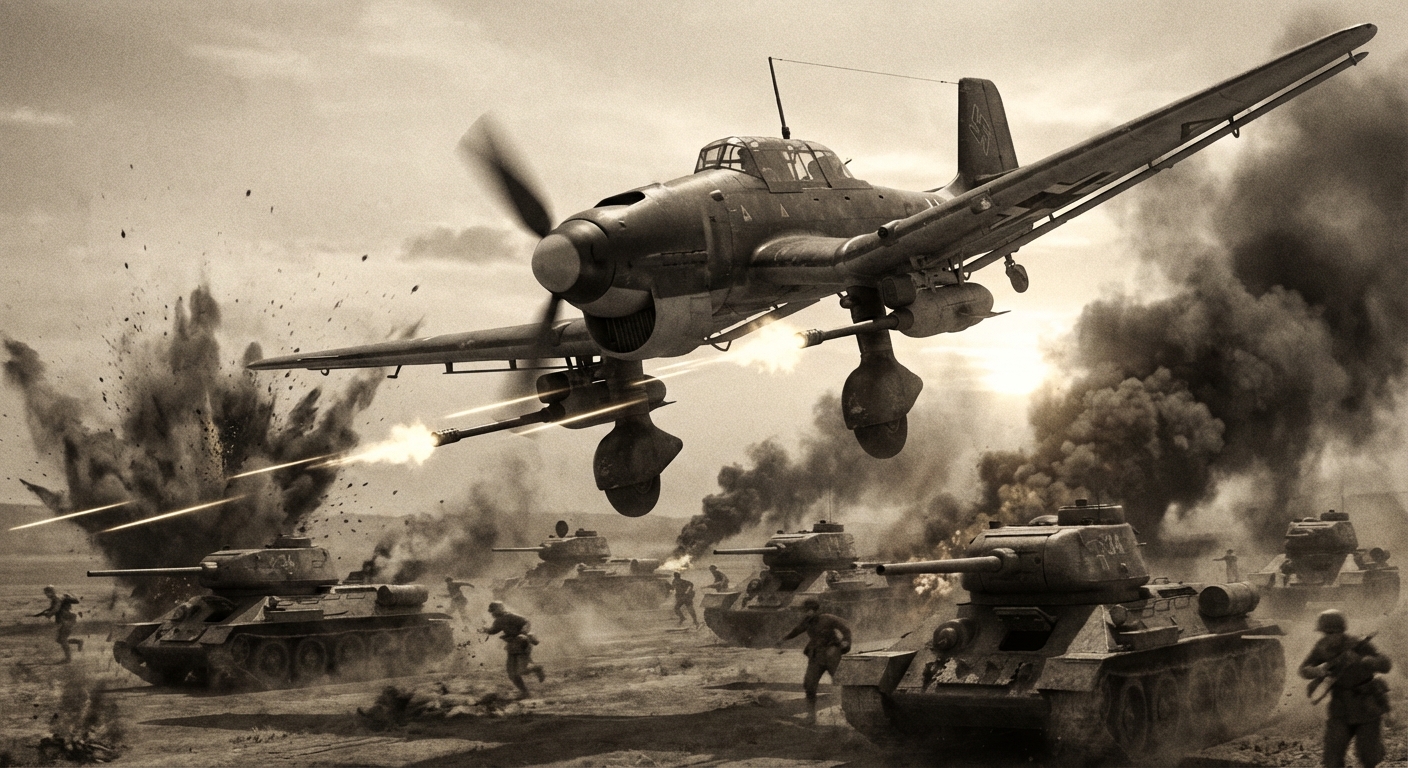
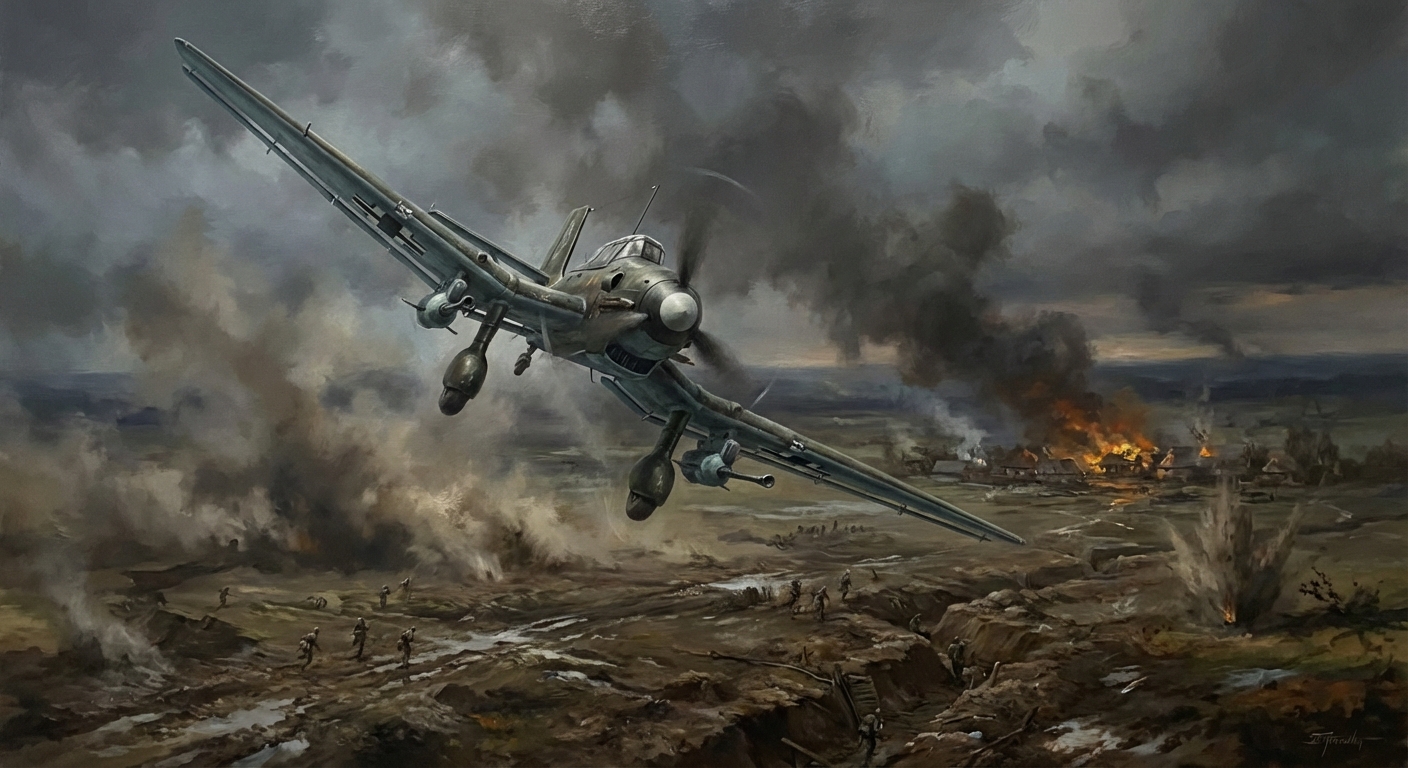
Germany adapted by pushing surviving Stuka units toward battlefields where immediate front-line support mattered more than speed. The Ju 87G anti-tank version fitted with underwing 37 mm cannon was part of that adaptation. In the right hands, against exposed armor or transport, it could be effective. In the wrong air situation, it remained what it always was: slow, vulnerable, and in danger if any competent fighter pilot noticed it.
That tension is the real Stuka story. It was neither superweapon nor joke. It was a highly specialized attack aircraft that excelled under favorable conditions and paid brutally when those conditions disappeared.
The Pilot
Oberst, Luftwaffe
Schlachtgeschwader 2 “Immelmann�
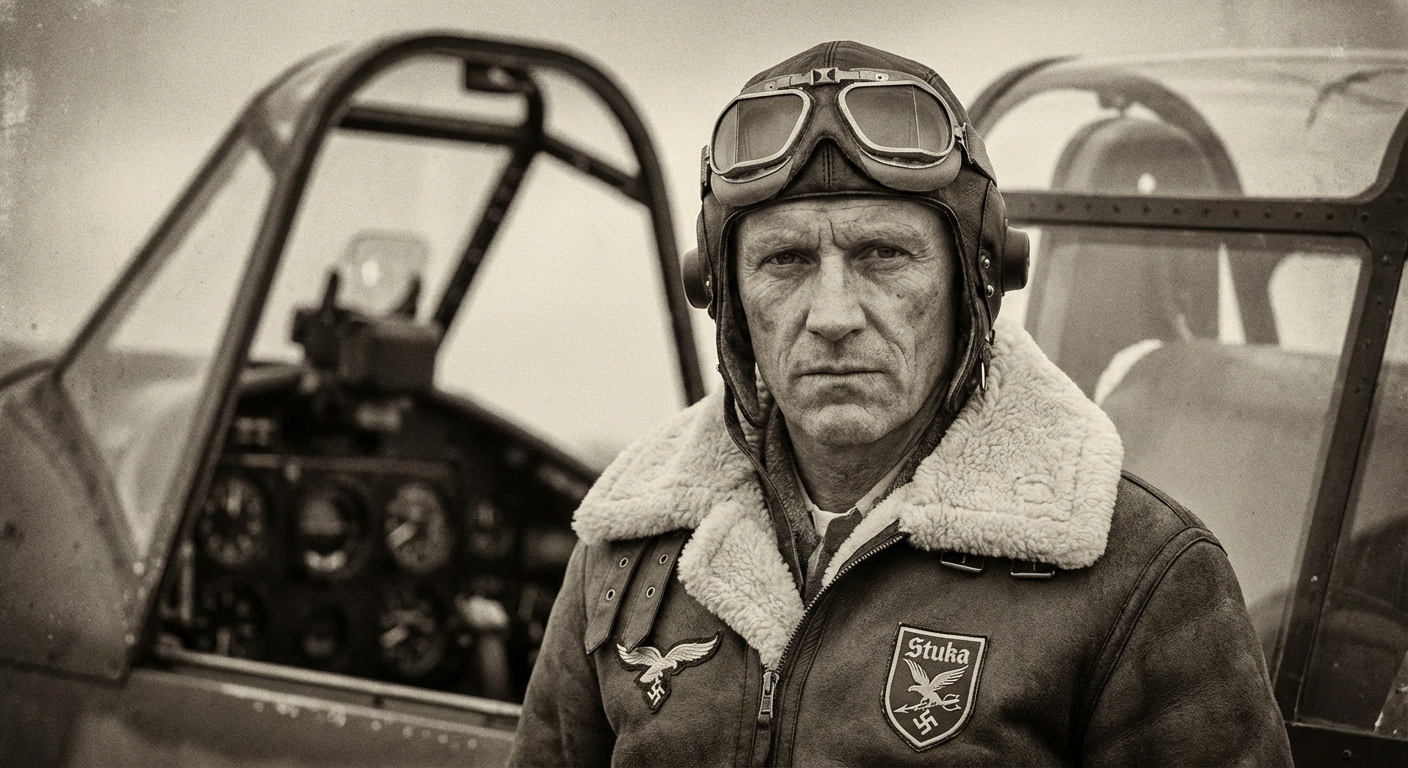
Hans-Ulrich Rudel became the most famous Stuka pilot of the war because he flew an enormous number of sorties, survived repeated wounds, and built a combat legend around anti-shipping and anti-tank attacks on the Eastern Front. German propaganda elevated him aggressively, and postwar popular writing often repeated claims around his record with too little skepticism.
There is no need to mythologize him to say he was an extraordinarily persistent and dangerous combat aviator. He flew in punishing conditions, kept returning to the front, and became closely associated with the Ju 87’s late-war tank-busting role. That much is real.
What also needs saying, clearly and without evasive language, is that Rudel remained an unreconstructed Nazi after the war. He associated with neo-Nazi circles, aided far-right networks, and spent his postwar life defending indefensible politics. That behavior was disgraceful. It should not be minimized because he was brave in combat or technically skilled as a pilot.
So the responsible historical treatment is narrow and disciplined. Rudel matters because he helps explain what the Stuka could do tactically on the Eastern Front and how Third Reich propaganda manufactured martial icons. He does not deserve ideological admiration, and the aircraft does not need his politics attached to it to remain historically important.
Unit History
Schlachtgeschwader 2 was one of the Luftwaffe’s best-known Stuka formations and served across multiple campaigns before becoming heavily tied to the Eastern Front. Like all Stuka units, its usefulness depended on front conditions and enemy air resistance.
Where Soviet fighters and anti-air defenses were weak or surprised, Ju 87 formations could provide precise and immediate support to German ground forces. Where defenses stiffened, losses rose quickly. This was not a forgiving aircraft to employ badly.
By the later war years, units like SG 2 increasingly represented Germany’s attempt to wring tactical effect from a deteriorating strategic situation. Individual crews could still inflict damage. They could not reverse the war’s direction.
Artwork Gallery

Dive-bombing terror weapon
Generated

Late-war anti-tank variant
Generated

Battlefield effect, not ideology
Generated
Smith, Peter C. Junkers Ju 87 Stuka. Crowood / military aviation reference editions.
Weal, John. Junkers Ju 87 Stukageschwader 1937–41 and related Osprey volumes.
Scholarly histories of the Eastern Front and Luftwaffe close air support operations.
Mitcham, Samuel W. and other historians on German air-ground doctrine, used critically.
Wikipedia: Junkers Ju 87, Hans-Ulrich Rudel, Schlachtgeschwader 2.