de Havilland Mosquito FB Mk VI / B Mk IV • Fast Twin-Engine Strike Aircraft
The Mosquito looked like an engineering joke until it started outrunning fighters, bombing Gestapo prisons, pathfinding for heavy bomber streams, hunting U-boats, and serving as one of the cleverest aircraft designs of the war. Group Captain Percy Pickard flew it on Operation Jericho, the low-level February 1944 raid against Amiens Prison that remains one of the RAF’s most dramatic precision strikes.
Mosquito FB Mk VI / B Mk IV • RAF 140 Wing • 2nd Tactical Air Force
Aircraft Profile
400+ mph
Plywood monocoque
Twin Merlin V-12s
Everything that mattered
Technical Specifications
Performance
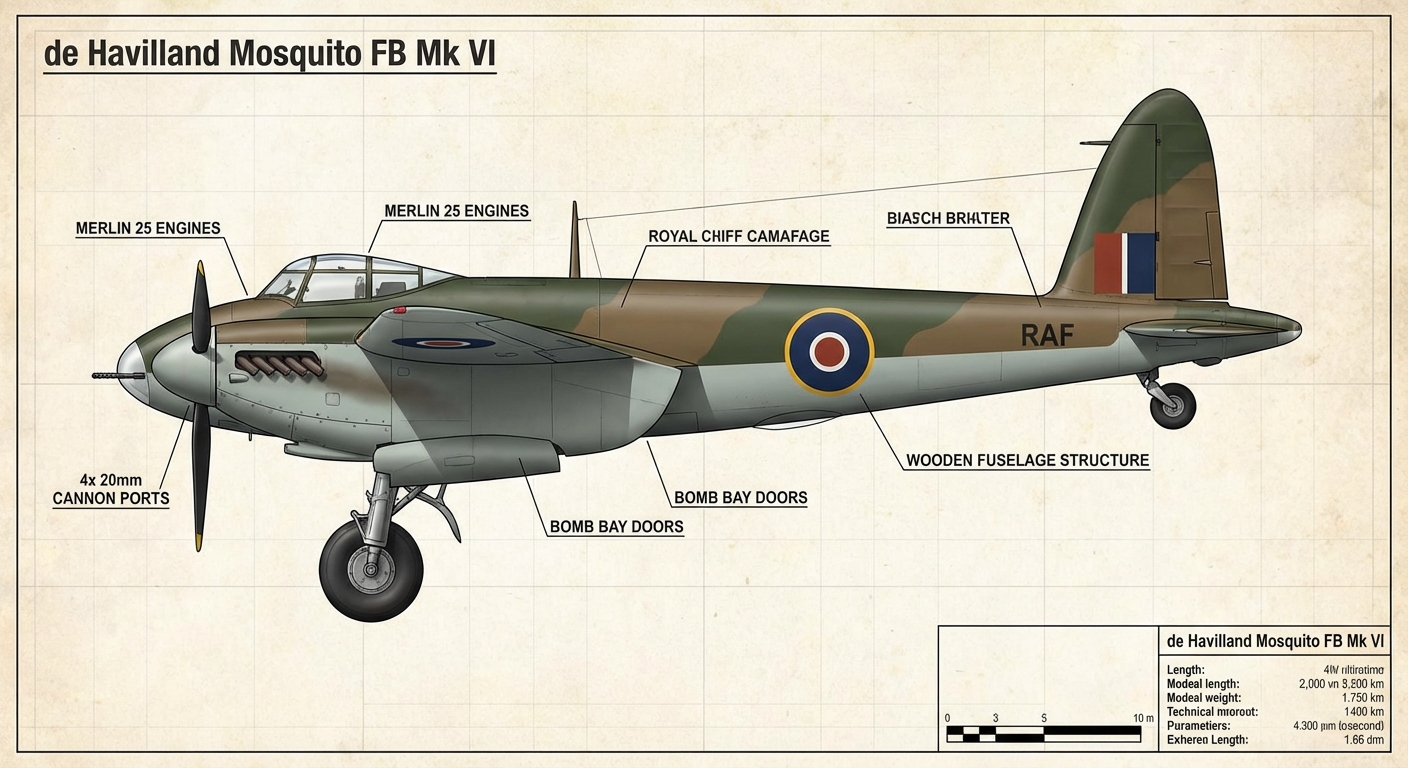
| Engines | Two Rolls-Royce Merlin engines, roughly 1,460 to 1,710 hp each depending on mark |
| Max Speed | Around 378 to 415 mph depending on variant and altitude |
| Cruise Speed | About 265 to 300 mph |
| Range | Approximately 1,500 miles, more with ferry tanks |
| Service Ceiling | Around 34,000 ft |
| Rate of Climb | About 2,500 ft/min |
| First Flight | November 25, 1940 |
Dimensions & Armament
| Armament | FB Mk VI: four 20mm cannon, four .303 MGs, bombs or rockets; B Mk IV: internal bomb load |
| Wingspan | 54 ft 2 in |
| Length | 40 ft 10 in |
| Height | 15 ft 3 in |
| Empty Weight | Around 14,300 lbs |
| Max Takeoff | Around 25,000 lbs depending on mark |
| Crew | 2, pilot and navigator |
Combat Record
Aircraft History
The de Havilland Mosquito was one of those rare aircraft that seems obvious only after somebody else had the nerve to build it. Britain in 1939 was preparing for a brutal industrial war. The orthodox answer was a metal bomber with gun turrets. Geoffrey de Havilland offered something borderline heretical instead: a fast unarmed bomber made largely of wood.
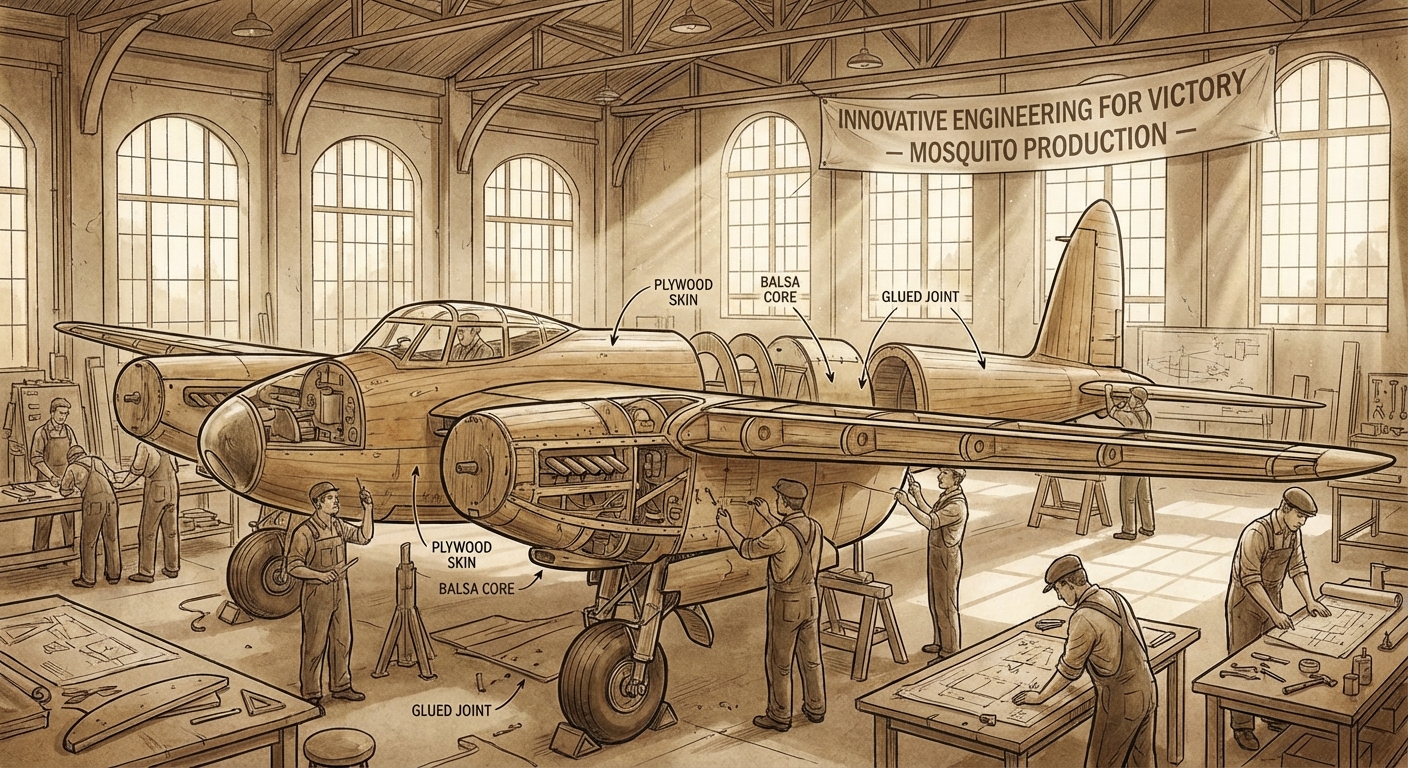
Wood was not a romantic choice. It was strategic. Britain’s metalworking industry was stretched and vulnerable, while furniture makers, piano builders, and other woodworking firms had skilled labor and factory capacity that could be repurposed. The Mosquito’s plywood-balsa-plywood sandwich structure was light, strong, smooth, and fast to build once the process matured. It also produced an aircraft with exceptional aerodynamic cleanliness.
Speed became its armor. Early Mosquitos could outrun many fighters while carrying useful bomb loads, which meant the type evolved quickly into a whole family of aircraft: bombers, fighter-bombers, intruders, night fighters, reconnaissance platforms, anti-shipping strike aircraft, and pathfinders. Most designs can do one of those things well. The Mosquito did all of them, often better than aircraft supposedly built for the job.
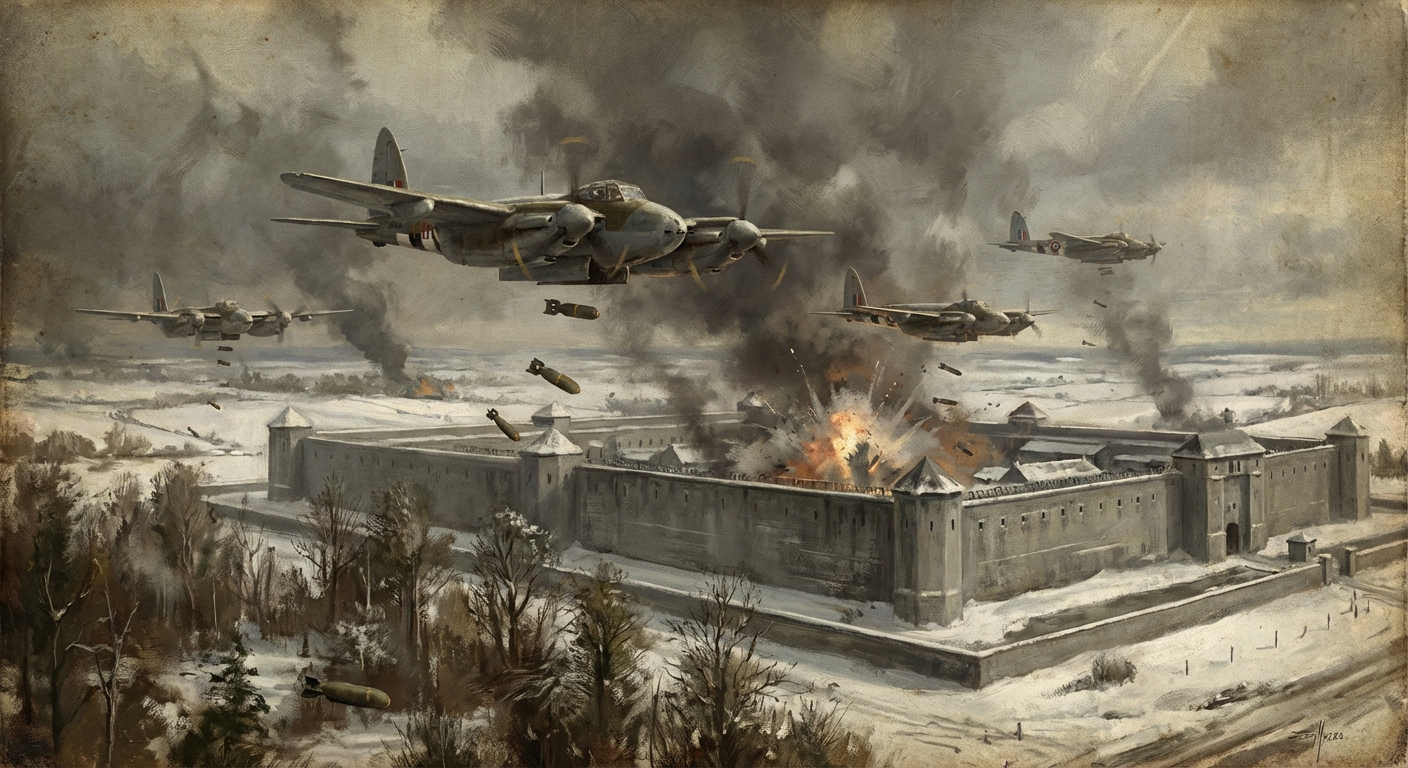
Operation Jericho showed the type at its most dramatic. The raid on Amiens Prison required accuracy measured not in city blocks but in walls, corners, and timing. Crews came in at low level through winter weather and blasted breaches into the prison perimeter so French Resistance prisoners could escape before execution. The mission also showed the moral ambiguity of precision attack. It was courageous and effective, but it still killed guards, prisoners, and aircrew. War remains war, even when the aircraft is beautiful.
The Mosquito mattered because it proved that design intelligence could beat brute force. It made old assumptions look foolish, and it did so repeatedly. It was faster than bombers, cleverer than bureaucracy, and versatile to a degree that still feels slightly rude.
The Pilot
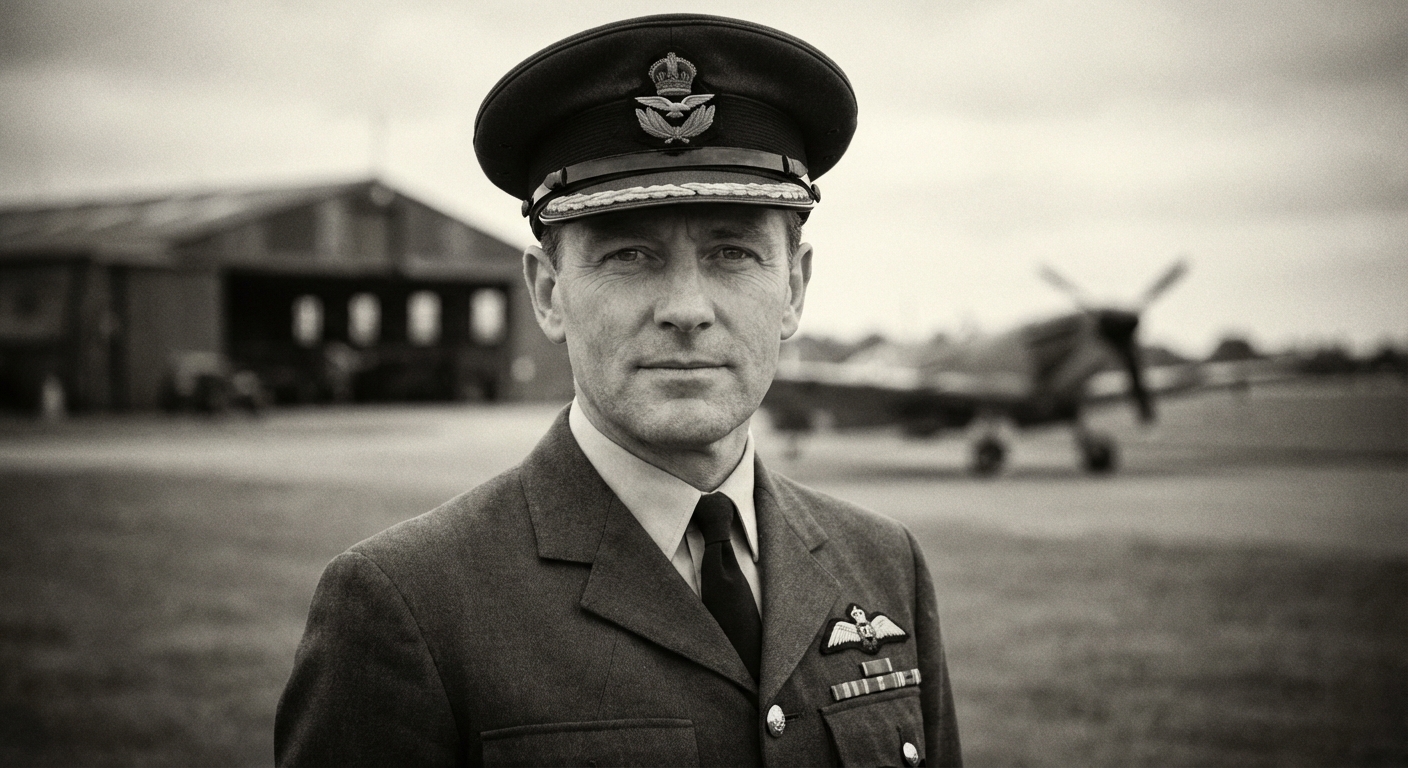
Group Captain, Royal Air Force
Commander associated with No. 140 Wing and famed for precision strike operations
Percy Pickard had the kind of face that looked as though casting directors had designed it and the sort of war record that made everyone forget the film cameras. Before becoming one of the RAF’s most admired combat leaders, he became publicly recognizable through the wartime documentary Target for Tonight, which turned him into a national symbol of bomber-command cool under pressure.
That fame never insulated him from risk. Pickard flew Whitleys early in the war, then moved into more specialized operations where judgment and nerve mattered as much as airmanship. He became deeply associated with low-level precision attack and with the growing RAF understanding that selected missions required speed, surprise, and exact navigation rather than mass alone.
On Operation Jericho he led the Mosquito strike against Amiens Prison. The attacking force flew in atrocious winter conditions at very low altitude, hit the prison walls with remarkable precision, and opened breaches that allowed many inmates to escape. As the aircraft pulled away after the attack, Pickard’s Mosquito was hit, almost certainly by German flak or a defending fighter, and crashed. He was killed at 31.
His death fixed his reputation in a way he probably would have hated, because it risked turning a working combat leader into a romantic legend. The real Pickard seems better than that anyway: skilled, calm, willing to lead from the front, and trusted on missions where errors of seconds or yards could kill everyone involved.
Unit History
The Mosquito units that executed pinpoint strikes in northwest Europe formed a very particular culture. Navigation had to be exact. Timing had to be disciplined. Crews had to trust both their own nerve and everybody else’s because the whole plan could collapse if one section wandered high, early, or wide.
No. 140 Wing combined British, Australian, and New Zealand squadrons under the 2nd Tactical Air Force. Its job was not merely to hit targets. It was to hit the correct piece of target, sometimes in urban areas, often in poor weather, and frequently at mast-height.
That kind of warfare was an expression of Mosquito logic. Give a skilled crew a very fast aircraft, strip away unnecessary drag, and let precision do the work of mass. It did not make war clean. It did make some impossible missions barely achievable.
Artwork Gallery

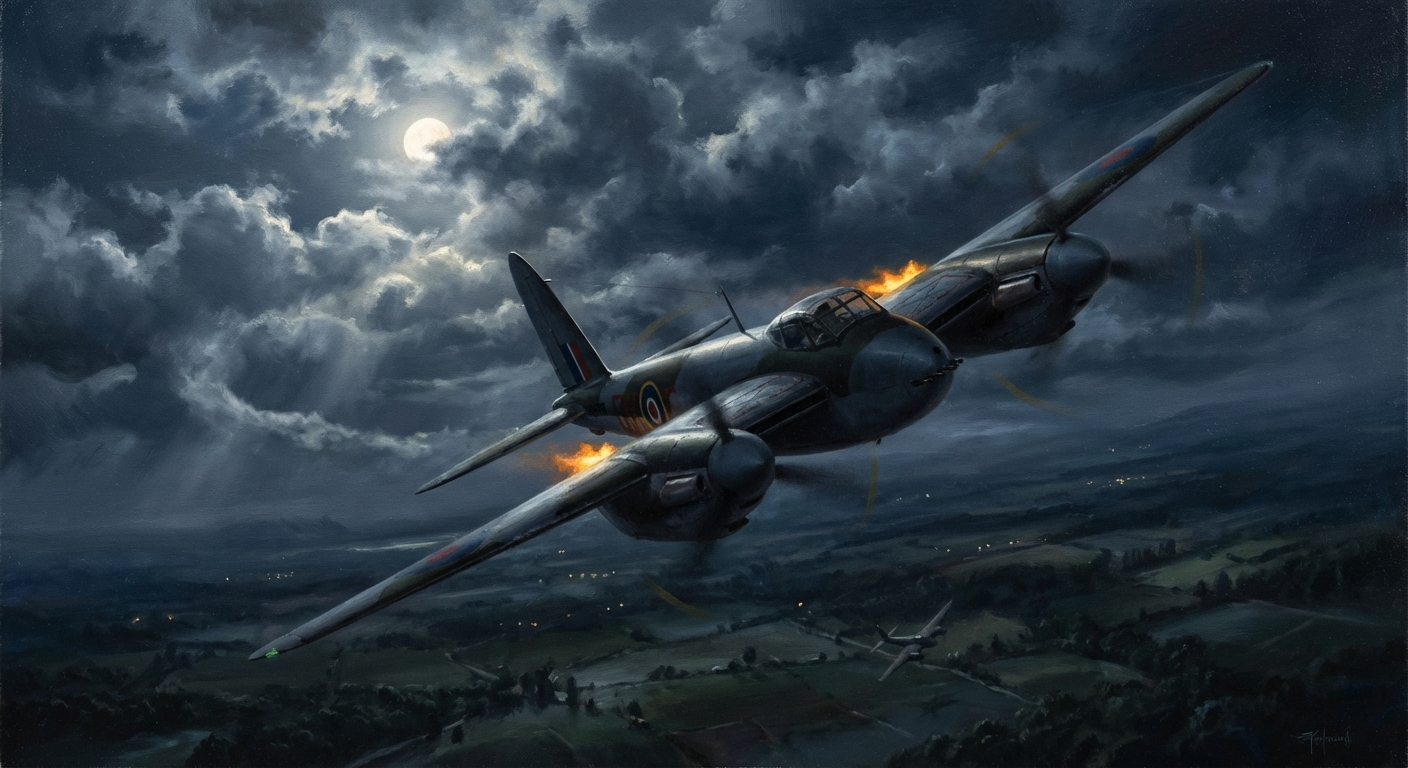
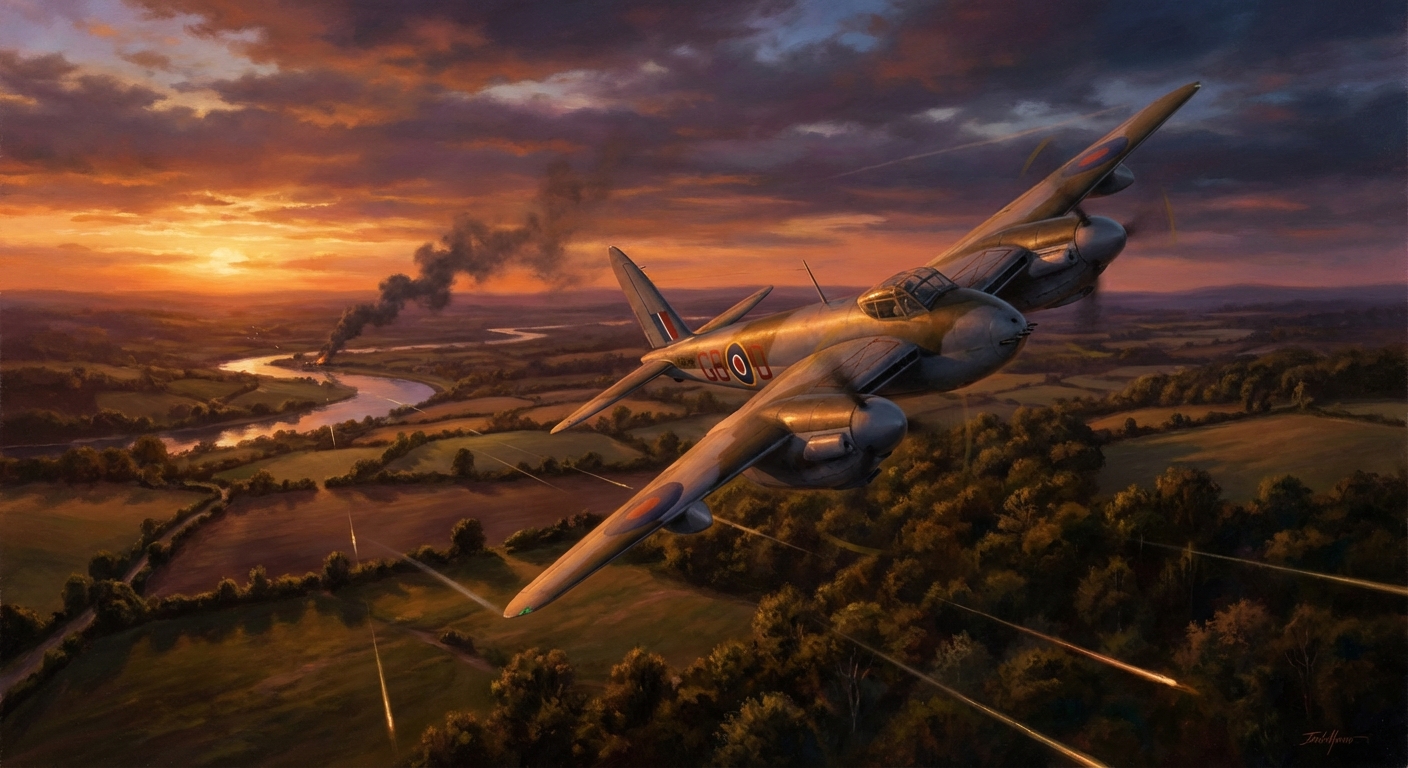
Low-level strike run
Generated

The wooden wonder on the line
Generated

Operation Jericho impression
Generated
Bishop, Chris. Mosquito: The Wooden Wonder. Aerospace reference editions.
Bowman, Martin W. de Havilland Mosquito at War. Pen & Sword.
RAF historical summaries of Operation Jericho and No. 140 Wing operations.
Sweetman, John. The Mosquito. Jane’s / military aviation history editions.
Wikipedia: de Havilland Mosquito, Percy Pickard, Operation Jericho.