The Kid From Hamlin
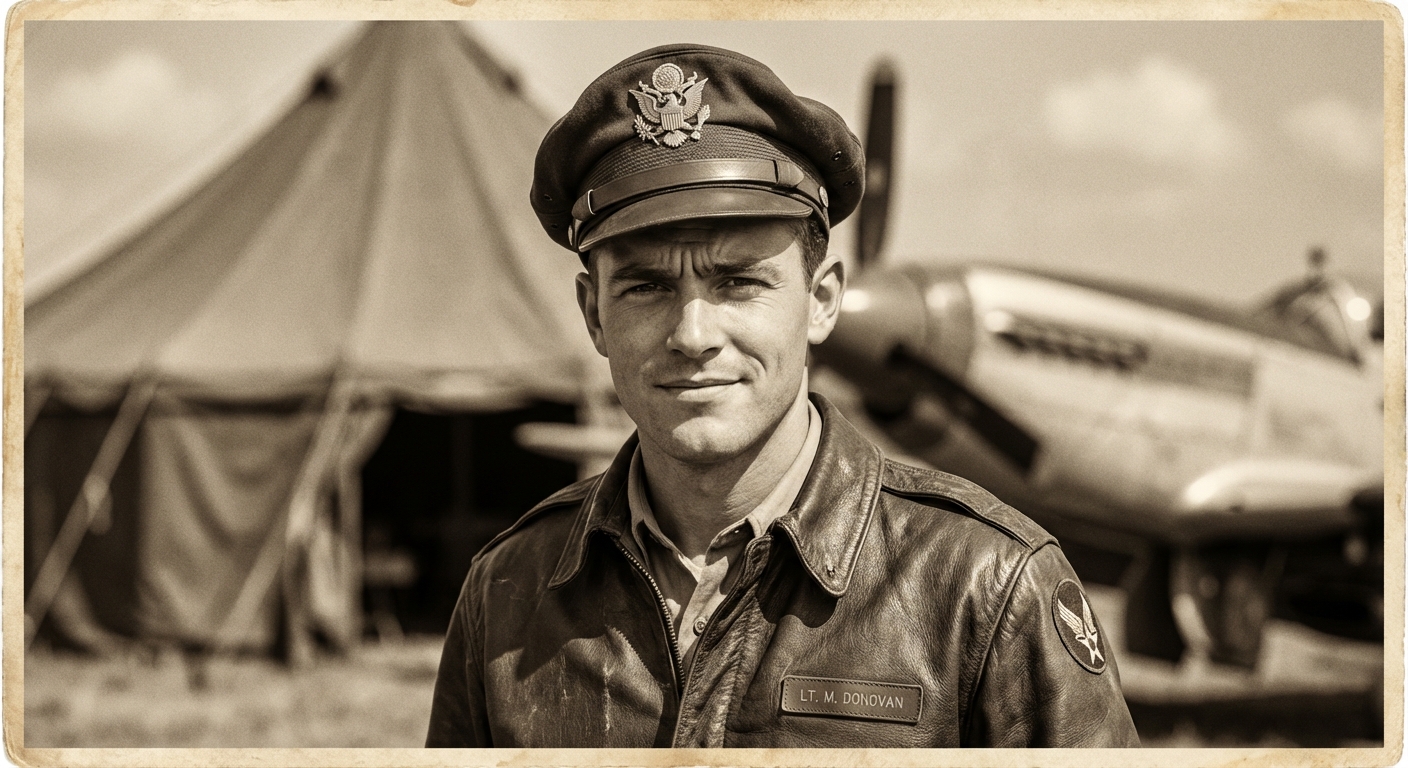
Charles Elwood Yeager grew up poor in the coalfields of Lincoln County, West Virginia, hunting squirrels with a .22 to put food on the table. He had extraordinary eyesight — the kind that could spot a man at distances that seemed impossible — and hands that never shook. When he enlisted in the Army Air Corps in September 1941, just three months before Pearl Harbor, he signed up as an aircraft mechanic, not a pilot. The Air Corps needed mechanics. But Chuck Yeager had a gift for flight that nobody yet knew about.
He was selected for pilot training in 1942. By the time he finished at Luke Field, his instructors agreed: this was not an ordinary student. Yeager flew with a relaxed confidence that most people never develop in years of flying. He processed spatial information differently from other pilots. He was never lost. He was never surprised. He saw everything.
Over France — Shot Down, March 1944
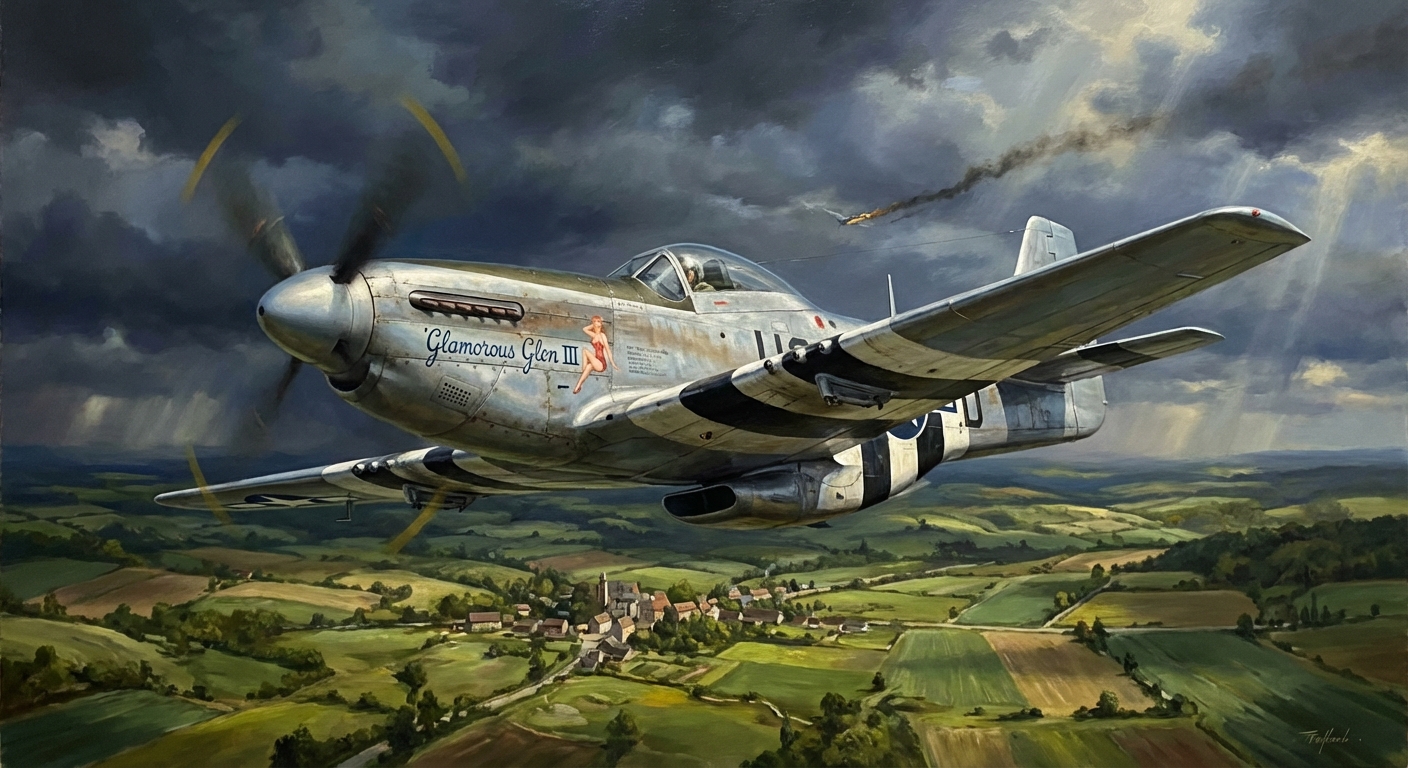
On March 5, 1944, on his eighth combat mission, Yeager's P-51B was hit by enemy fire over German-occupied France. He bailed out at 17,000 feet and landed in the Gascony region of southwestern France — directly into the hands of the French Maquis, the resistance fighters who were slowly strangling the German occupation from within the hills and forests.
For the next month, Yeager moved through the underground network, sleeping in farmhouses, hiding in barns, and learning that survival was a specific skill with specific rules. In late March, he was almost captured near a checkpoint. He shot two German soldiers with a pistol borrowed from his guide. He crossed the Pyrenees into Spain on foot in late March — a brutal three-day climb through snow and ice — and made his way to Gibraltar and then back to England.
By rights, he should have been grounded. USAAF regulations prohibited pilots who had been helped by resistance networks from returning to combat — if captured, they could betray those networks under interrogation. Yeager went straight to General Dwight D. Eisenhower and argued his case personally. He convinced Eisenhower. He was back in a Mustang before April was out.
Ace-in-a-Day — October 12, 1944
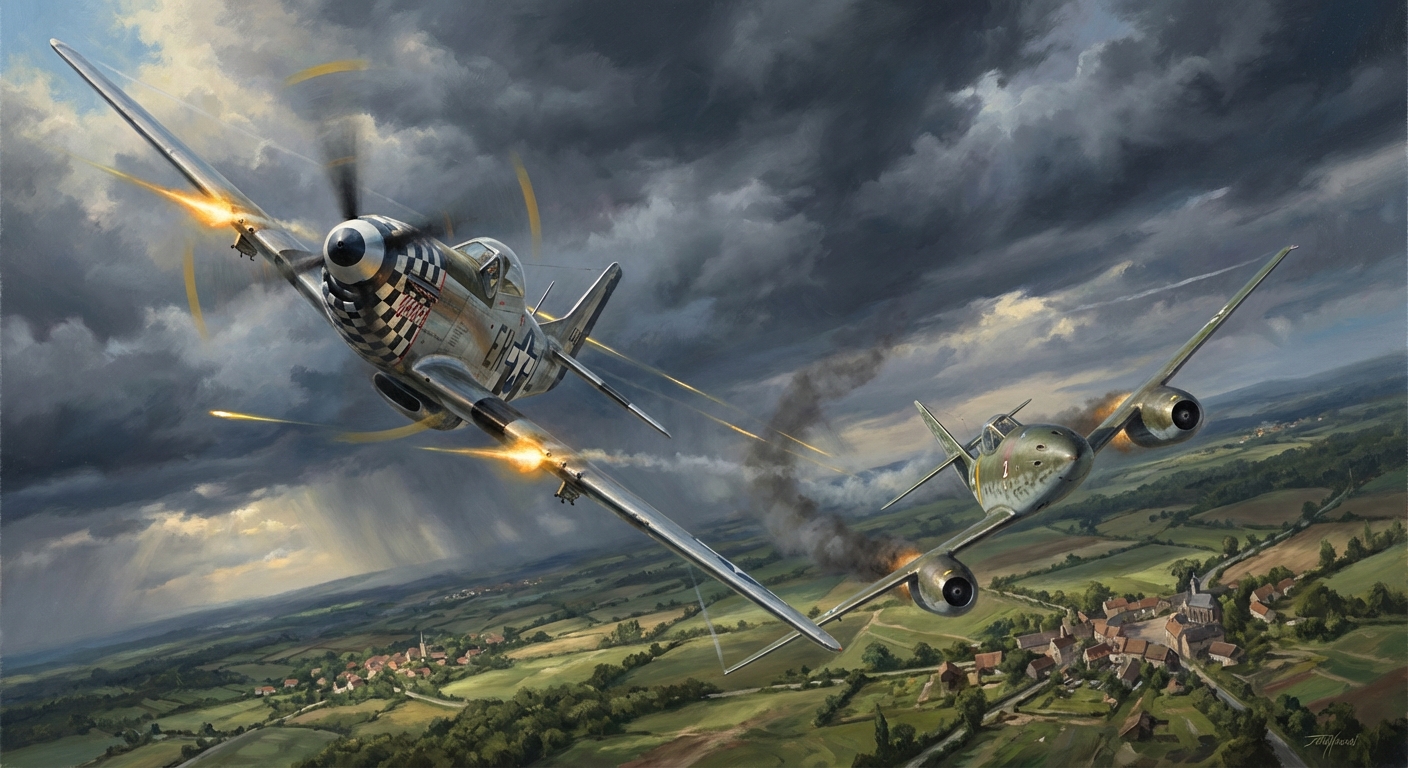
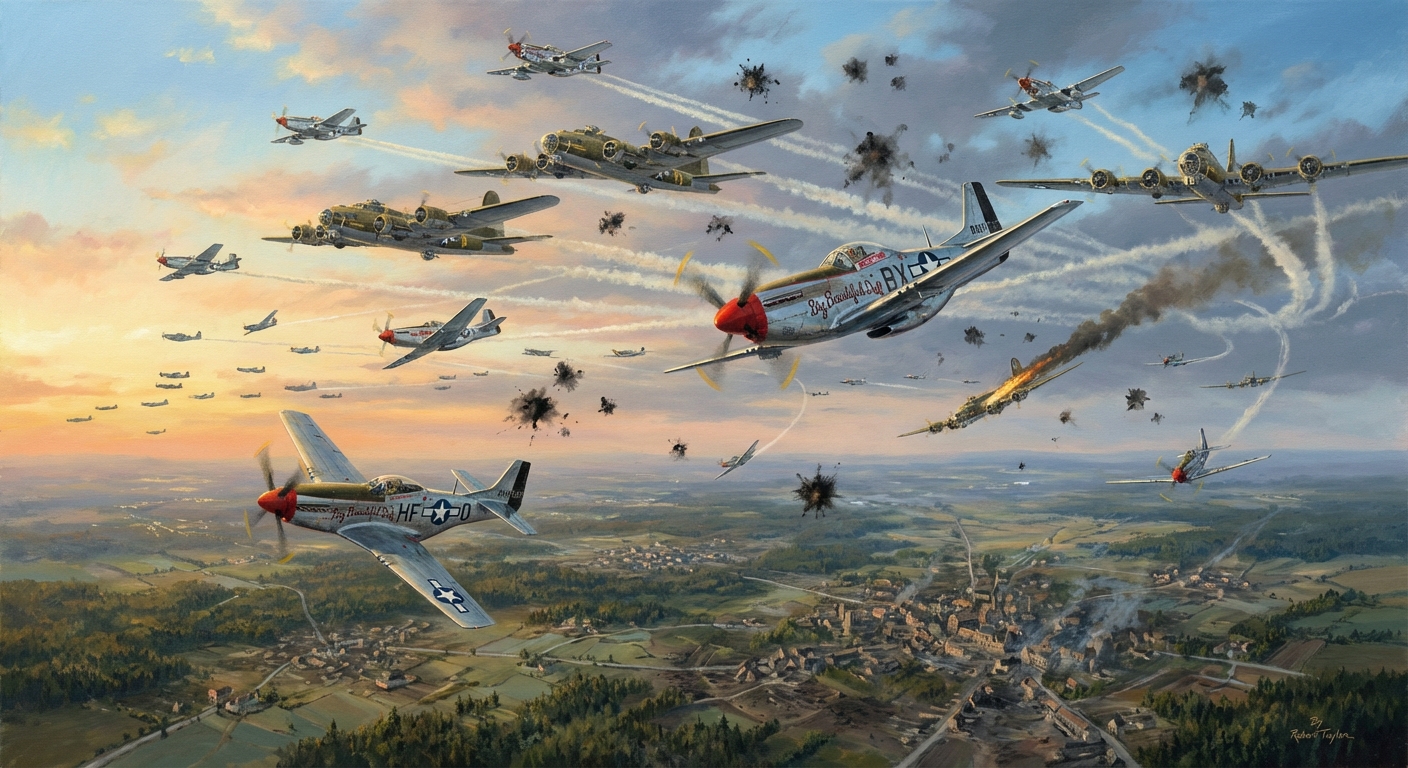
Yeager had already become an ace — five confirmed kills — by early October. But October 12, 1944 was different. On a single mission escorting B-17 bombers deep into Germany, Yeager intercepted a large formation of Messerschmitt Bf 109s. In the furious fighting that followed, he shot down five German aircraft in one engagement. Five kills in a single mission. He became the first ace-in-a-day in the history of the 357th Fighter Group.
The same month, he encountered something no American fighter pilot had faced before: a Messerschmitt Me 262, the world's first operational jet fighter. The Me 262 was faster than anything the Allies had. Yeager caught one on approach to its airfield — the only time the jet was vulnerable — and shot it down. He understood immediately that the future of air combat had just shown its face.
The Sound Barrier — October 14, 1947
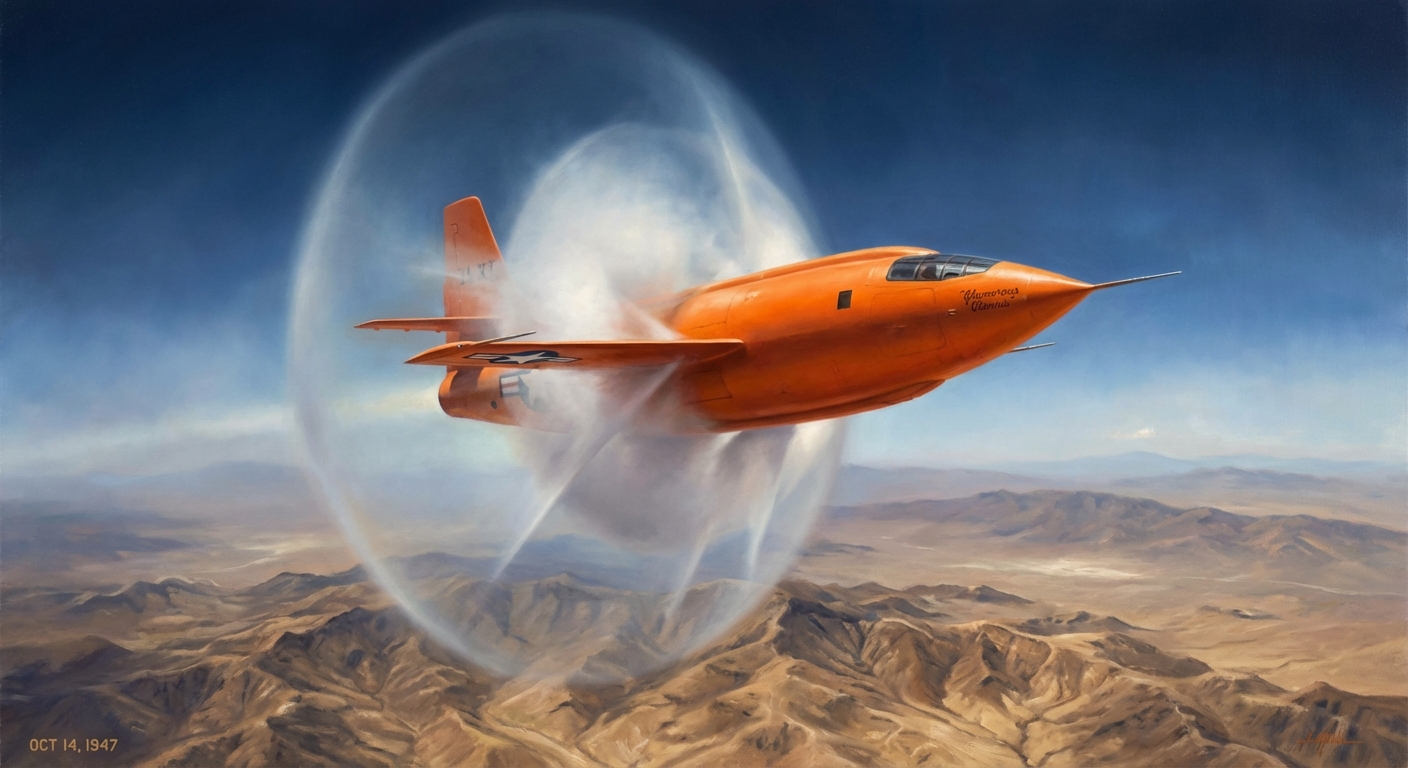
The war ended with Yeager as a double ace with 11.5 confirmed victories (the half-kill shared with his wingman). But his greatest achievement was still ahead. On October 14, 1947, Yeager climbed into the Bell X-1 experimental rocket plane at Muroc Army Air Field in California — with two broken ribs from a horseback riding accident two days before, ribs so painful he couldn't seal the cockpit hatch with his right arm alone and had to use a broomstick to do it. Nobody at the base knew he was injured. He didn't tell them.
At 43,000 feet, released from the belly of a B-29 mother ship, Yeager ignited the X-1's rocket chambers and accelerated through Mach 0.85, 0.90, 0.95 — where every previous attempt had ended in violent buffeting and loss of control. The needle swung past 1.0. The expected shock wave never came. He was past it. Moving faster than sound. The needle read Mach 1.07 — approximately 700 mph at altitude. The sonic boom rolled across the Mojave Desert. Nobody on the ground knew exactly what had just happened until Yeager landed and walked up to the officers' club for breakfast.
The achievement was classified. The public wouldn't know for more than a year. Chuck Yeager shrugged it off as another day at work.