The Crash That Should Have Ended Everything
On December 14, 1931, Flying Officer Douglas Bader attempted a low-level aerobatic manoeuvre at Woodley Aerodrome near Reading that he had been warned not to attempt — a slow roll at low altitude, the kind of display that had cost other pilots their lives. His wingtip caught the ground. The Bristol Bulldog disintegrated. When they pulled him from the wreckage, both his legs were so severely damaged that there was no alternative: his right leg was amputated above the knee that evening. His left leg, initially preserved, had to be amputated below the knee two days later.
He was twenty-one years old. He had been in the Royal Air Force for four years. He had been considered one of the most naturally gifted aerobatic pilots in the service. And now he lay in a hospital bed with two stumps where his legs had been, aware — as any rational person would be — that his flying career was finished before it had properly started.
Bader's response to this information was to refuse to accept it.
The Tin Legs — Back in the Cockpit
Within months of his amputations, Bader had been fitted with prosthetic legs — “tin legs,” as he called them — and was teaching himself to walk again with the same bloody-minded stubbornness he had shown in every other aspect of his life. He also got back in an aircraft. Not because anyone gave him permission. Because nobody stopped him when he climbed into the cockpit, and once he demonstrated he could still fly — really fly, not just go up and come back — the argument against him became considerably harder to make.
The RAF invalided him out anyway in 1933, citing his prosthetics. He spent seven years working for the Shell Oil Company, playing golf to scratch handicap — without legs — and apparently finding some form of life tolerable in civilian clothes. Then Germany invaded Poland, and Britain was at war, and the RAF discovered it was desperately short of experienced pilots.
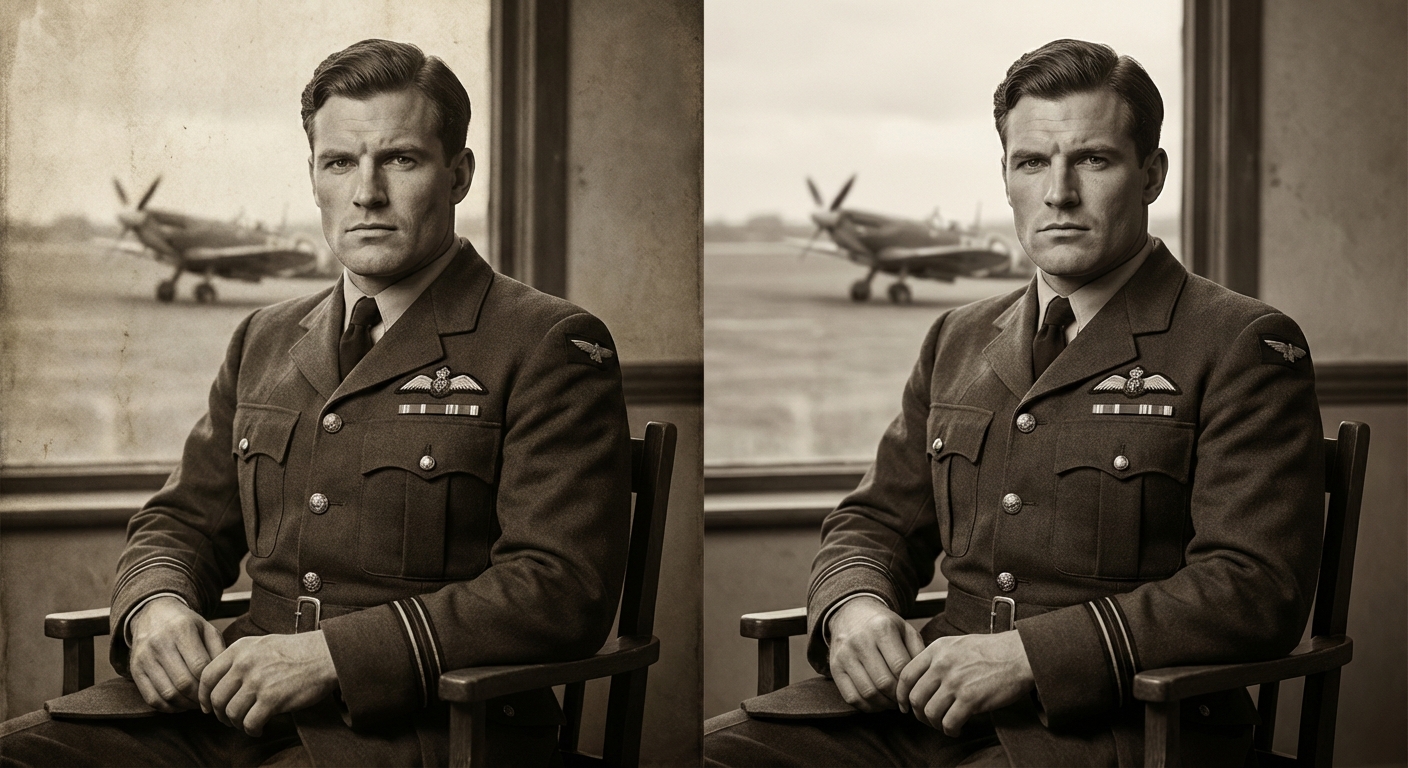
Bader presented himself for re-evaluation in November 1939. He passed his medical. He passed his flying test. He was back in the RAF and heading for operational service. He was twenty-nine years old and had been waiting almost a decade for this moment.
Battle of Britain — The Big Wing
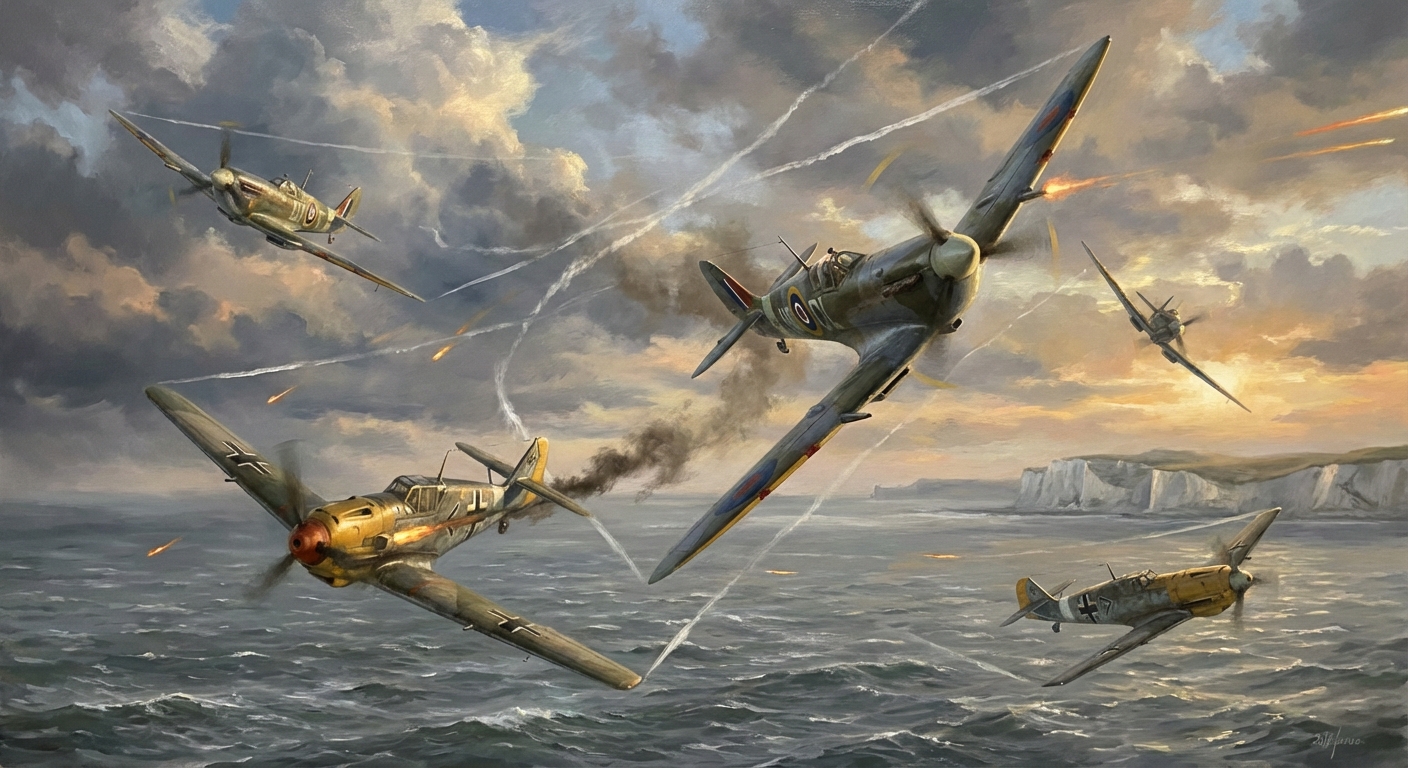
By the summer of 1940, Squadron Leader Douglas Bader was commanding No. 242 Squadron — a Canadian unit that had been shattered by the Fall of France and was in dire need of leadership and morale. Bader provided both in quantity. He flew constantly, fought aggressively, and led by example in a way that was impossible to ignore. His victories mounted. His reputation spread.
Bader's most significant contribution to the Battle of Britain was tactical rather than personal: he championed the “Big Wing” concept, arguing that multiple squadrons should assemble and attack German formations en masse rather than scrambling individual squadrons piecemeal. The debate between Bader (and his commander Leigh-Mallory at No. 12 Group) and Keith Park's No. 11 Group — which bore the brunt of the fighting and had no time for complex assembly — became one of the most contentious tactical arguments of the battle. History has not definitively settled it. But the debate itself showed something about Bader: he argued loudly with superior officers about strategy, because he believed he was right, and he didn't much care about rank as a reason to be wrong.
Wing Commander — The Tangmere Wing
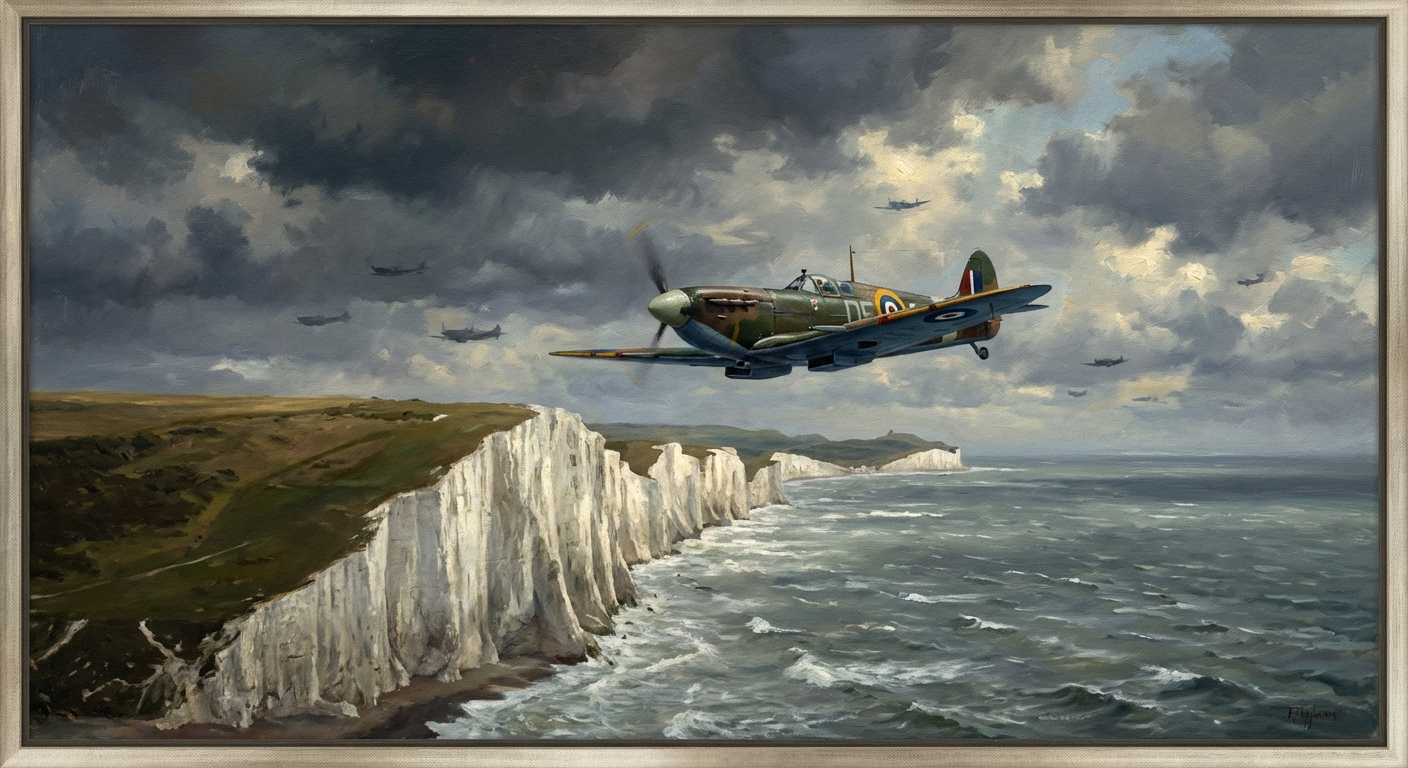
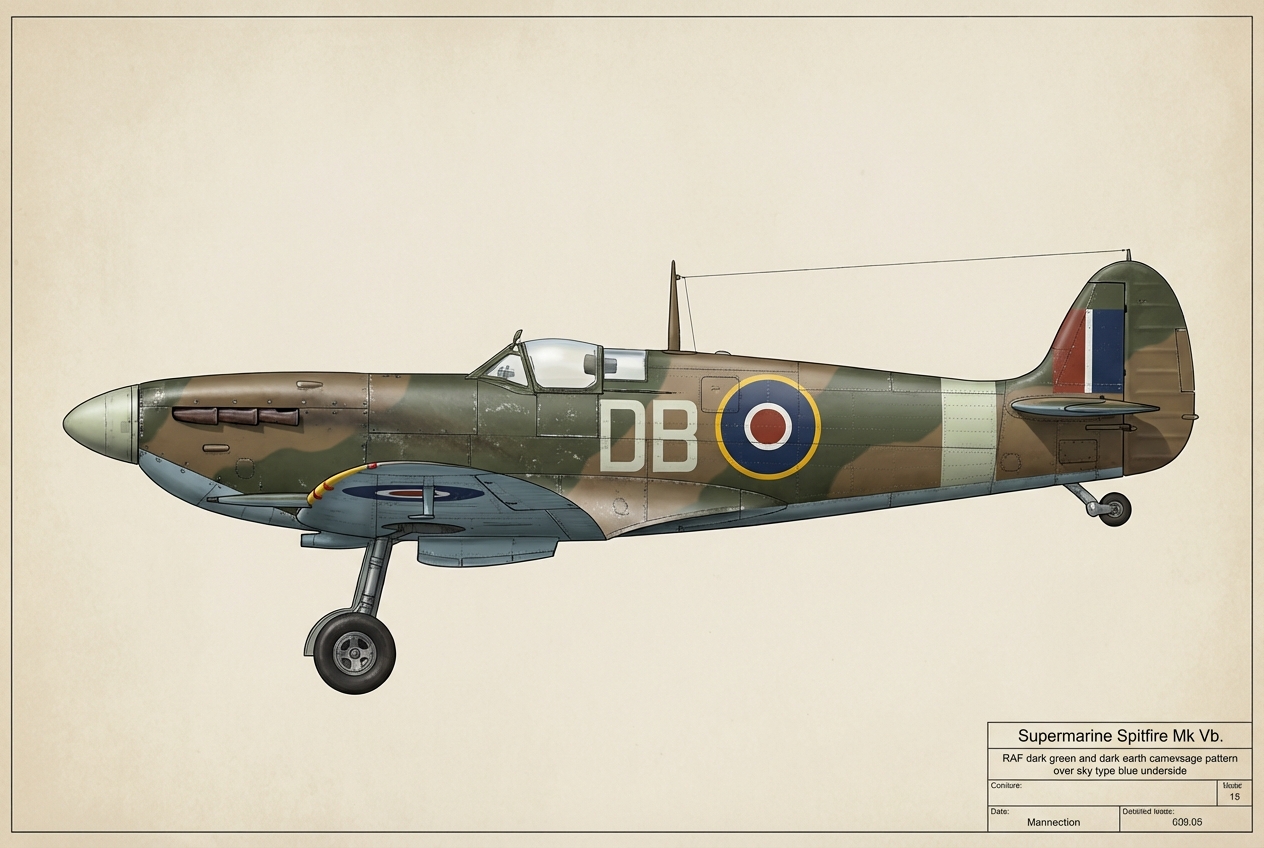
In 1941, promoted to Wing Commander and given command of the Tangmere Wing — three Spitfire squadrons operating out of RAF Tangmere on the Channel coast — Bader reached the peak of his fighting career. The wing flew offensive sweeps over occupied France, escorting bombers and looking for fights. It was aggressive, visible, and costly. The Spitfire Mk Vb he flew gave him the performance to engage on equal or better terms with the Luftwaffe's Bf 109F and Fw 190A.
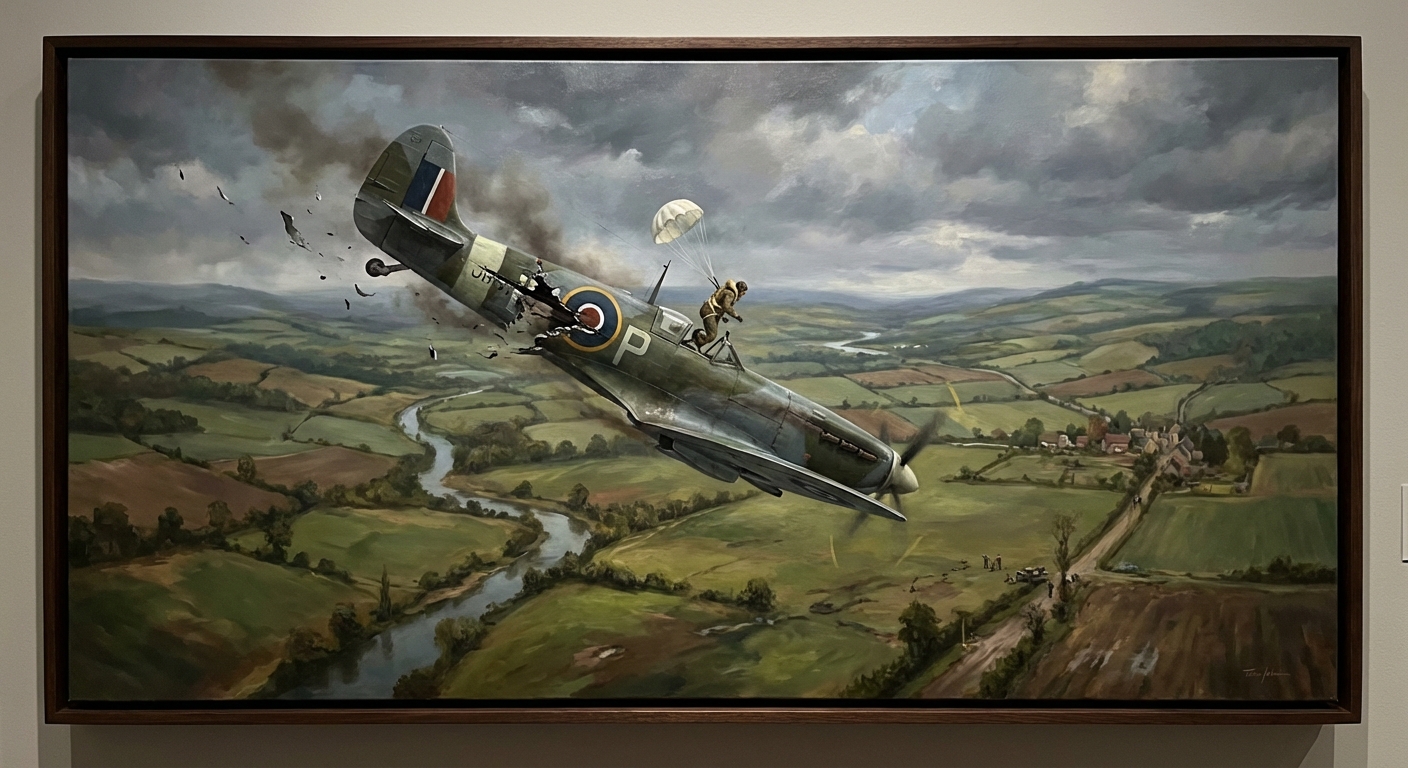
On August 9, 1941, over the town of St. Omer in northern France, something went wrong. Exactly what has never been fully established — a collision with a German fighter, or possibly friendly fire from his own formation. Bader's Spitfire broke apart. He managed to bail out, but one of his prosthetic legs was trapped in the cockpit. He freed himself — tearing the leg free as the aircraft's tail was in danger of striking him — and parachuted down into France. He was taken prisoner by the Wehrmacht.
Prisoner — And the Germans Airdrop His Legs
Bader's prosthetic right leg had been damaged and lost in the bailout. His left leg remained intact but the right stump was without its prosthetic. When the Germans realized who they had — an RAF Wing Commander who had been flying without legs — the story spread rapidly through both sides. The German pilot responsible for his capture, Adolf Galland, personally arranged for Bader to be treated well.
The RAF, in an extraordinary gesture, arranged for a replacement prosthetic leg to be delivered during a bombing raid on St. Omer. A Blenheim dropped the replacement leg in a container during a raid that the Germans were given advance notice of — specifically so they would not shoot down the delivery aircraft. The leg was delivered. It was one of the more remarkable moments of chivalry in twentieth century warfare.
Bader spent the war as a prisoner. This did not mean he was a compliant prisoner. He escaped from Stalag Luft III. He escaped from other camps. He was transferred repeatedly as he demonstrated that no standard prisoner-of-war facility could hold him. The Germans eventually removed one of his prosthetic legs and kept it locked away at night, on the reasoning that a legless man could not escape. Bader disagreed with this assessment and continued making trouble regardless. He was eventually sent to Colditz Castle — the special prison for persistent escapers, officers deemed impossible to hold by conventional means. He was there when American forces liberated the castle in April 1945.
Victory — 300 Aircraft over London
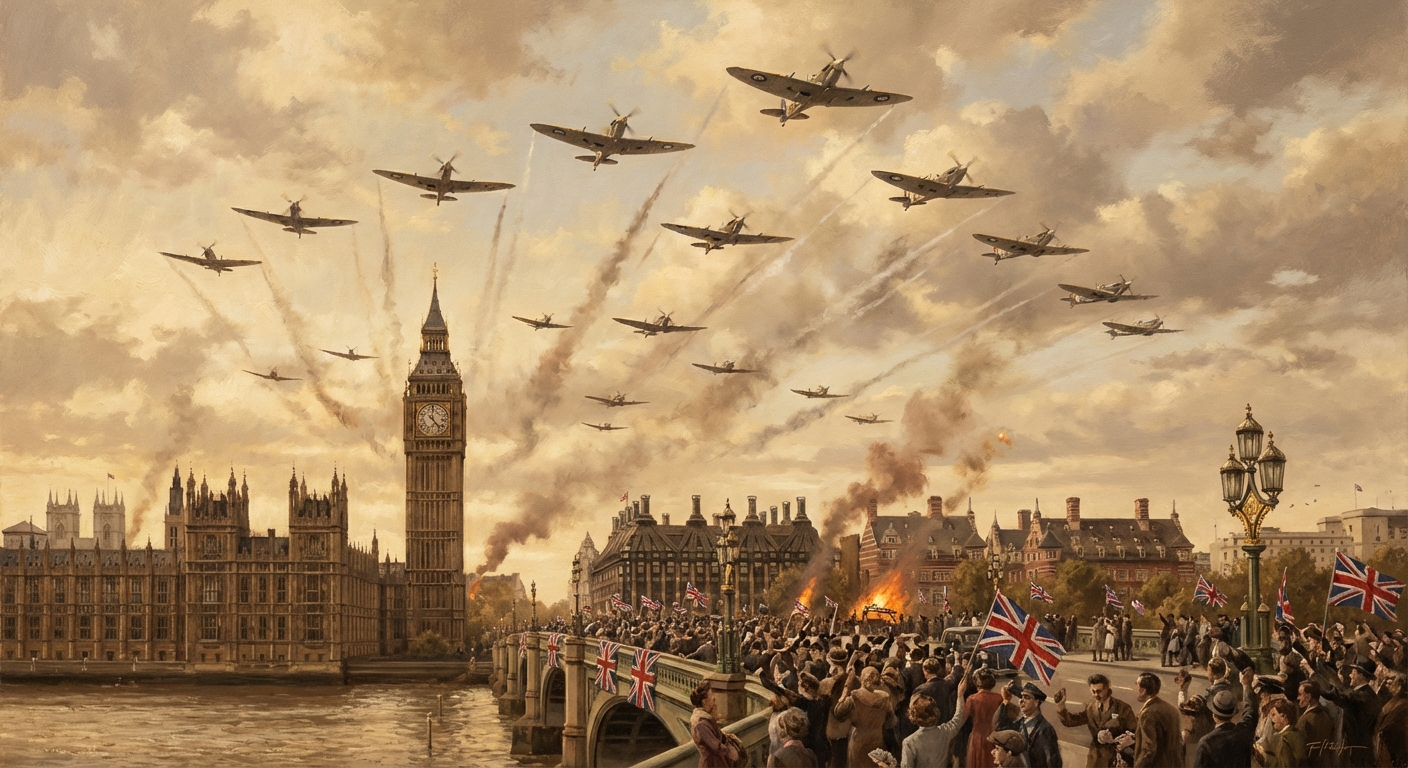
On September 15, 1945 — Battle of Britain Day — Wing Commander Douglas Bader led a victory flypast of 300 aircraft over London. He flew at the head of the formation in a Spitfire. He had no legs. He was forty-five years old. He had been a prisoner for four of the war's six years. He had started the war with approximately zero legitimate claim to be in an RAF cockpit at all.
He retired from the RAF in 1946 and returned to Shell Oil, rising to become a director of the company. He devoted much of his post-war life to supporting and advocating for disabled people, visiting hospitals and rehabilitation centers, making the case — with himself as walking evidence — that physical disability was not the end of anything. He was knighted in 1976. He died in 1982 after a dinner at which he had been the principal speaker. He was seated on the dais, talking, and then he was gone. An appropriately undramatic ending for a man who had survived everything that should have killed him.