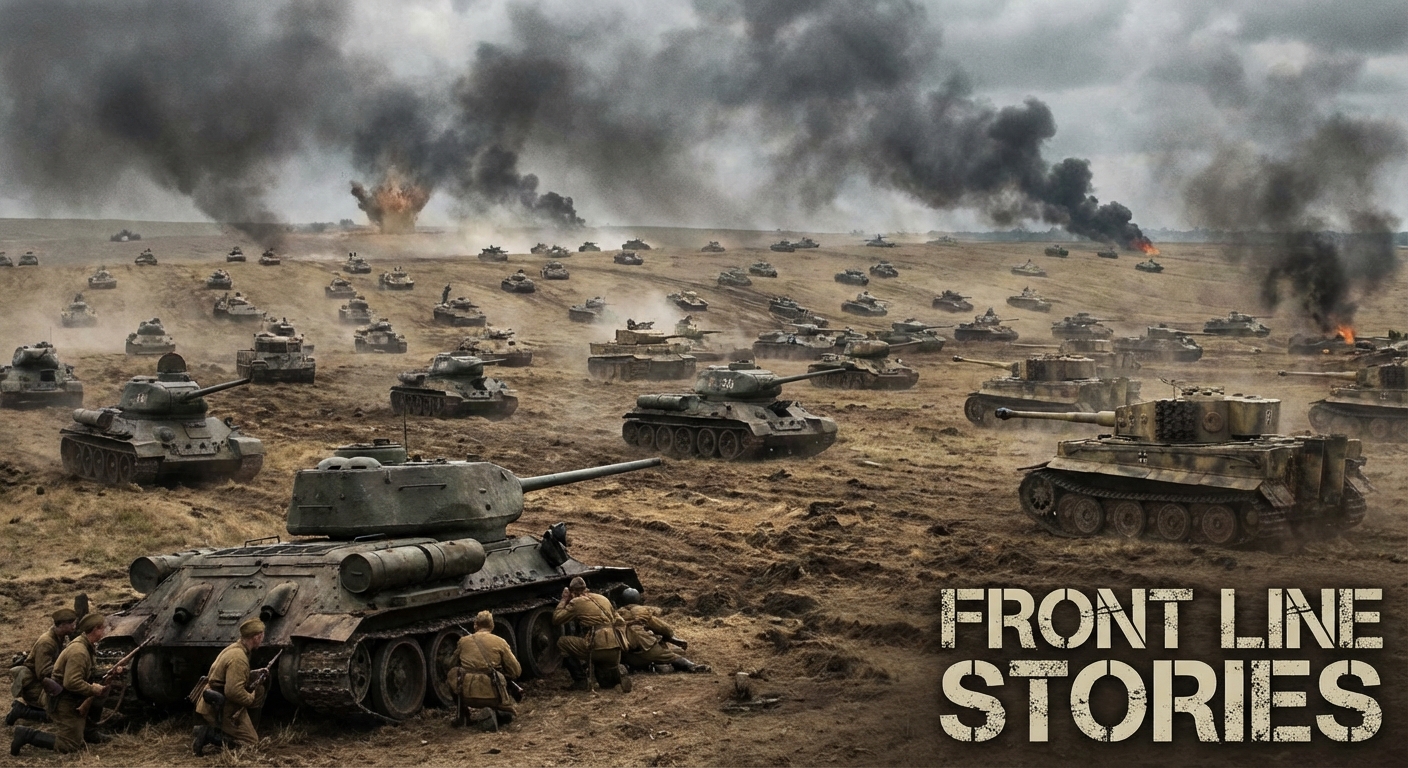
Battle of Kursk
Kursk is often pictured as one giant tank brawl, but its real story is deeper and colder: a prepared Soviet defensive system absorbing Germany's last major eastern offensive until the attack lost momentum and the counteroffensives began.
How the battle was set up
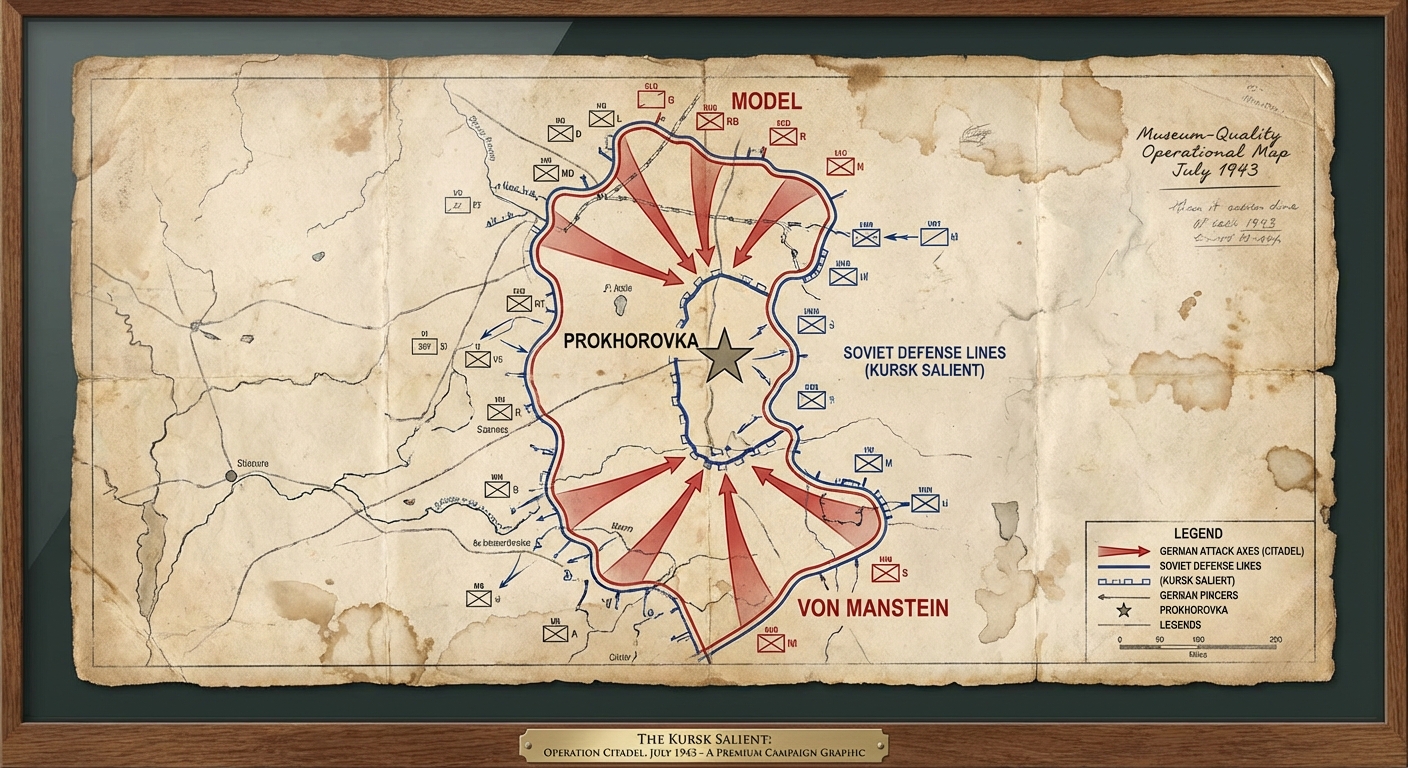
After the winter fighting of 1942-43, the front around Kursk bulged westward into a salient. German planners saw a chance to pinch it off from north and south, destroy Soviet reserves, and restore the initiative after Stalingrad.
The Soviets saw it too. Thanks to intelligence, reconnaissance, and the predictability of German intent, they turned the salient into a layered defensive machine: minefields, trenches, anti-tank belts, artillery zones, mobile reserves, and planned counteroffensives waiting behind the first shock.
Operation Citadel therefore began against a battlefield the defenders had spent months engineering. The question was not whether the Germans could make local gains, they could, but whether they could penetrate deeply enough before strength, time, and enemy reserves ran out.
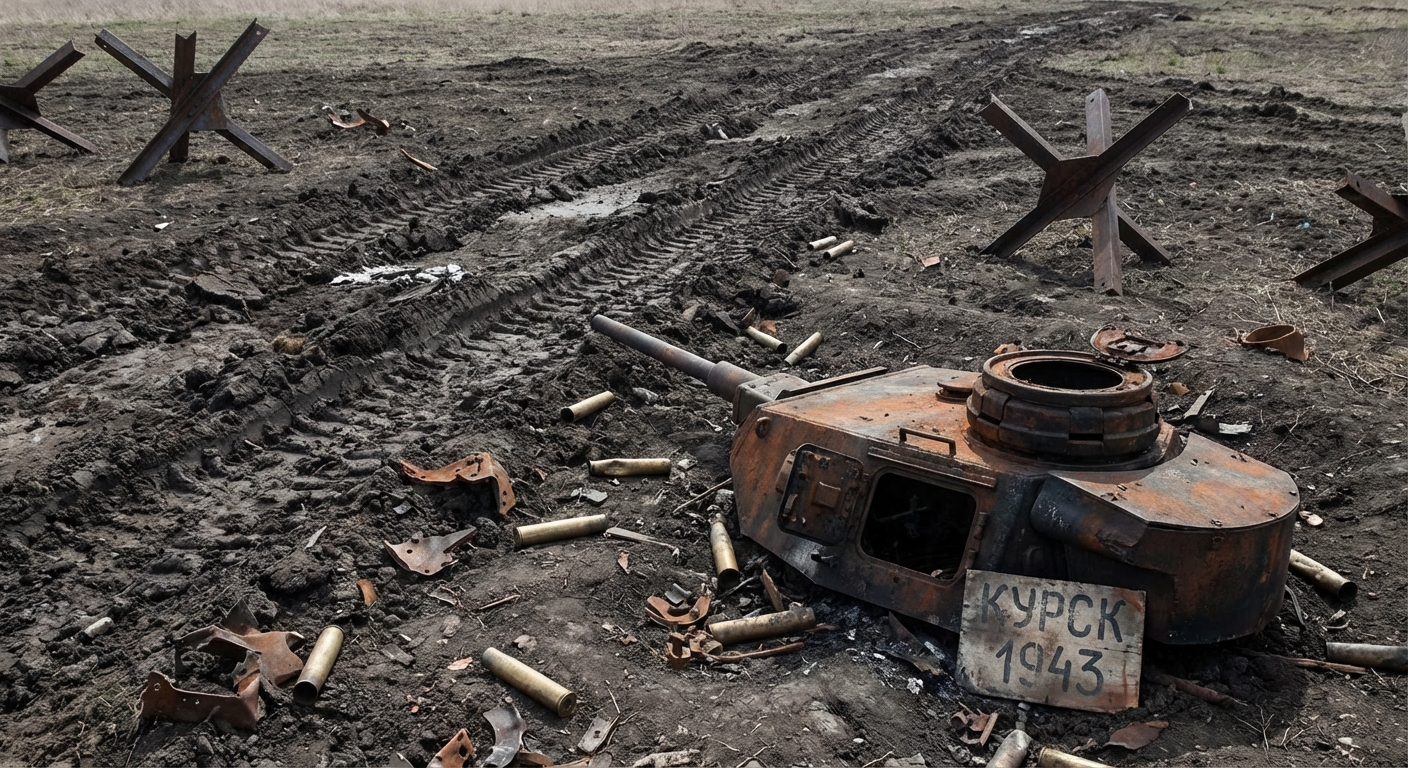
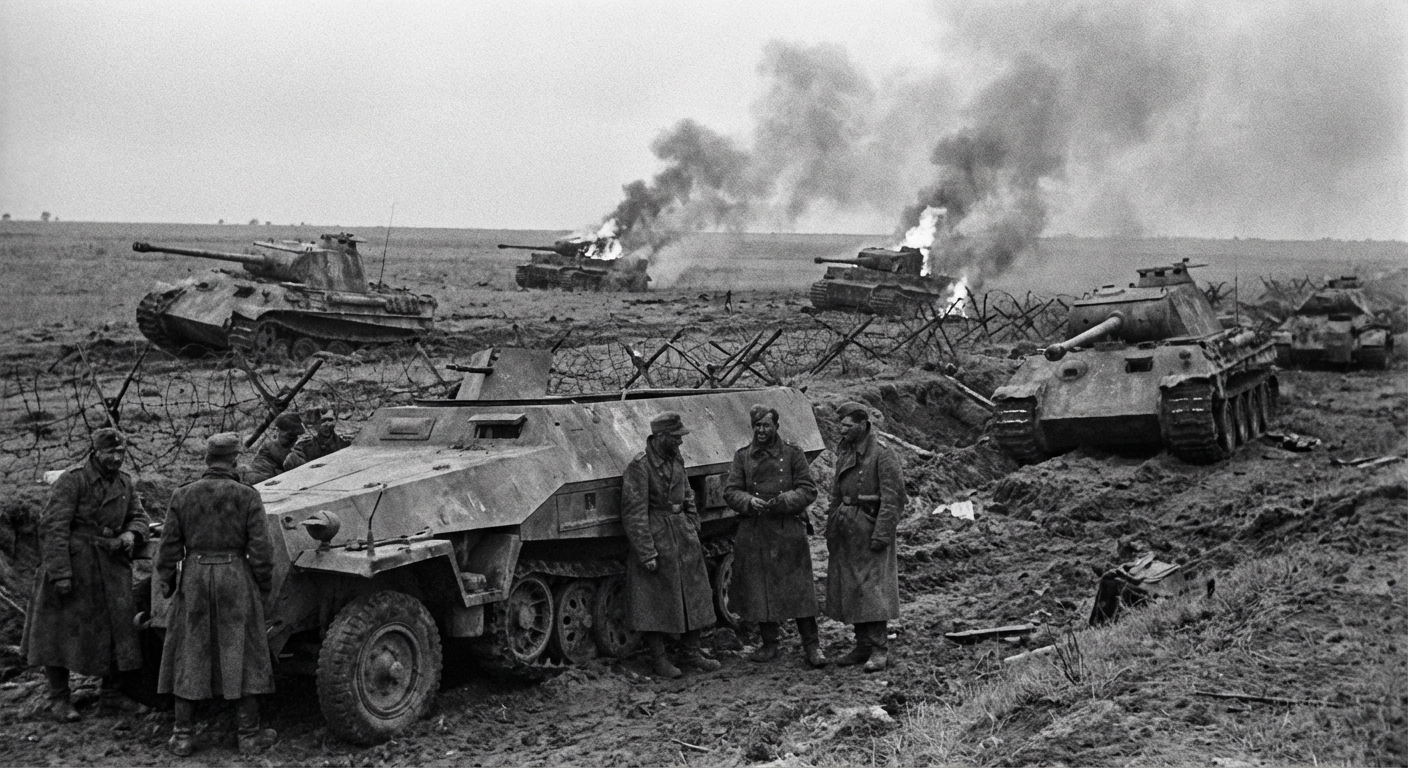
Rolling steppe, wheat fields, villages, and open approaches favored armor, but the land was heavily prepared. Mines, dug-in guns, anti-tank strongpoints, and mapped artillery fire transformed open country into a killing architecture that blunted speed and canalized attack routes.
Who fought, with what, and why it mattered
German assault forces
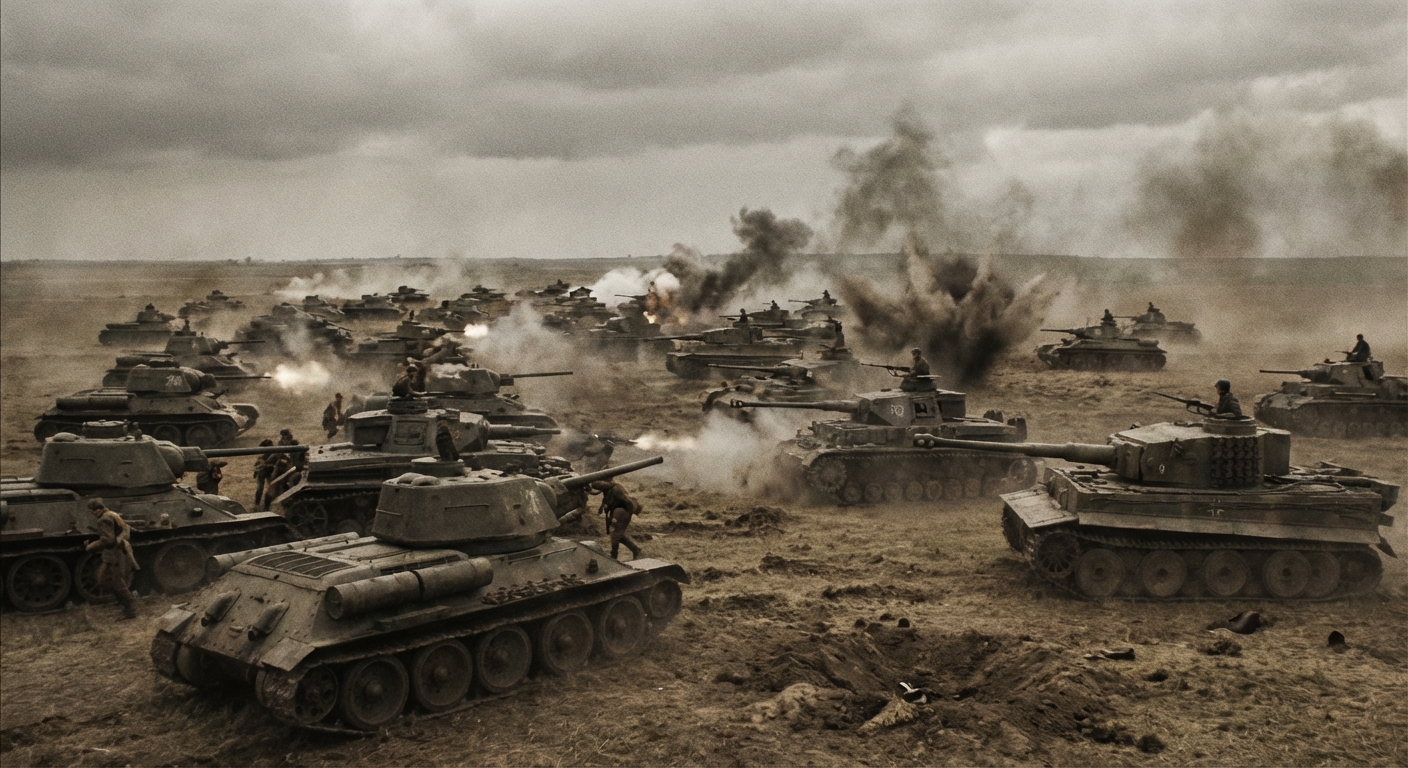
Model attacked from the north while Hoth and Army Detachment Kempf attacked from the south, using panzer and panzergrenadier formations, Tigers, Panthers, assault guns, engineers, and powerful local artillery support.
Soviet defense and reserves
The Red Army deployed multiple defensive belts with Front-level reserves behind them, then prepared major counterstrokes including Operations Kutuzov and Rumyantsev to exploit German exhaustion.
Combat system
German doctrine emphasized breakthrough and mobile exploitation. Soviet doctrine at Kursk emphasized depth, absorption, anti-tank density, and timed commitment of reserves to turn defense into offense.
The fighting system behind the headlines
Kursk shows that a defense can be operationally aggressive. Soviet commanders did not merely wait behind trenches. They shaped the approach, identified likely axes, and prepared a sequence of obstacles that steadily degraded German armor and infantry cohesion before the decisive reserve fights even began.
German forces still achieved dangerous penetrations in the south. At Prokhorovka, later memory simplified the battle into a single dramatic tank collision, but the broader reality was a series of attacks and counterattacks within an already attritional campaign. The issue was not one charge. It was cumulative German inability to secure operational breakthrough.
As losses mounted and strategic pressures grew, including Allied action in Sicily and Soviet attacks elsewhere, Germany could not keep feeding the offensive. Once Citadel halted, the initiative passed decisively to the Red Army.
Phases of the fight
Phase I, preparation of the salient
During spring 1943, both sides build for the coming battle, but the Soviets turn the salient into a fortified system rather than a mere protrusion.
Phase II, Operation Citadel begins
On 5 July, German attacks strike from north and south. They gain ground, especially in the south, but every kilometer costs time, armor, and infantry.
Phase III, Prokhorovka and culmination
Mid-July sees intense fighting around Prokhorovka and elsewhere as German attacks reach culmination without decisive rupture.
Phase IV, Soviet counteroffensives
Operations Kutuzov and Rumyantsev roll back German positions, liberate key territory, and transform defense into sustained Soviet advance through August.
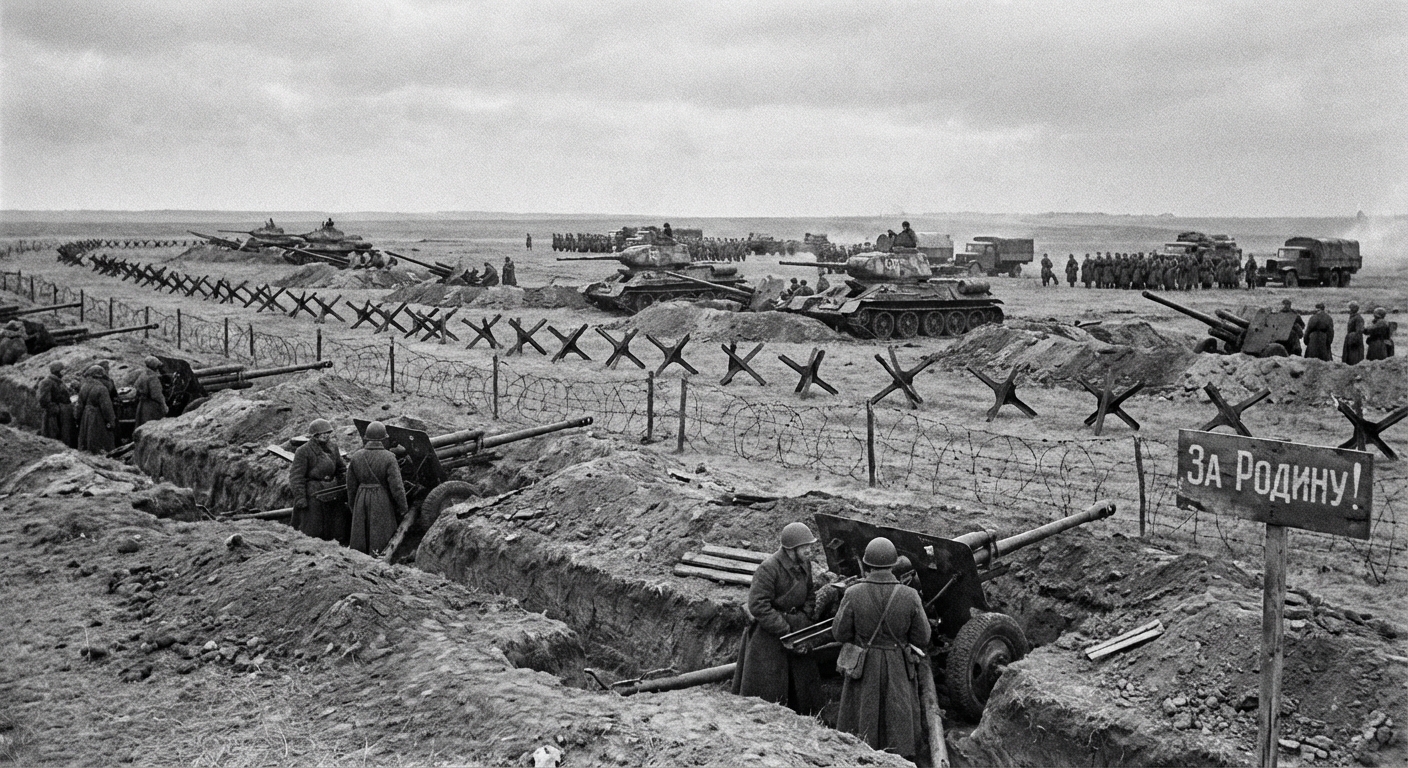
Citadel culminates short of breakthrough
The turning point came when German penetrations no longer translated into operational freedom. Soviet depth held, reserves entered at planned moments, and the attackers discovered that even local success could not outrun attrition, mines, artillery, and strategic distraction.
Kursk ended Germany's ability to launch major strategic offensives in the east with any realistic hope of reversing the war. After summer 1943, the Red Army increasingly drove the campaign. Germany still fought hard, but it did so from a narrowing set of options.
Casualties, losses, and the price of decision
Both sides lost heavily in men, tanks, guns, and aircraft, though exact figures depend on the battle boundaries used. Soviet losses were substantial, but their defensive preparation and reserve depth made those losses bearable in a way German losses were not.
Kursk also imposed an opportunity cost on Germany. Elite armored formations were worn down in an offensive that failed, leaving fewer resources to answer Soviet counteroffensives and wider strategic crises.
Myth: Kursk was decided at Prokhorovka alone.
Reality: Prokhorovka was dramatic, but Kursk was a campaign of depth, logistics, engineering, and multiple operational phases, not a single duel.
Myth: More German tanks would have guaranteed success.
Reality: The decisive problem was not simply numbers but the prepared depth of Soviet defenses and the time required to break through them.
Myth: The Soviets only defended passively.
Reality: They defended in order to counterattack. The defensive belts were designed to prepare the battlefield for later offensive action.
What remained after the shooting stopped
Kursk stands as one of the clearest examples of a prepared defense integrated with operational reserve doctrine. It is studied not because tanks fought there, but because planners turned intelligence, engineering, and depth into strategic transition.
In memory, Kursk became the emblem of the eastern front's mechanized scale. In analysis, it is the demonstration that by 1943 Germany could still deliver hard blows, but no longer reshape the war faster than the Soviet system could absorb and answer them.
- David M. Glantz and Jonathan House, The Battle of Kursk
- Roman Töppel, Kursk 1943
- Dennis Showalter, Armor and Blood
- Primary angle: German Army Group Center/South records paired with Soviet Front engineering and reserve plans.