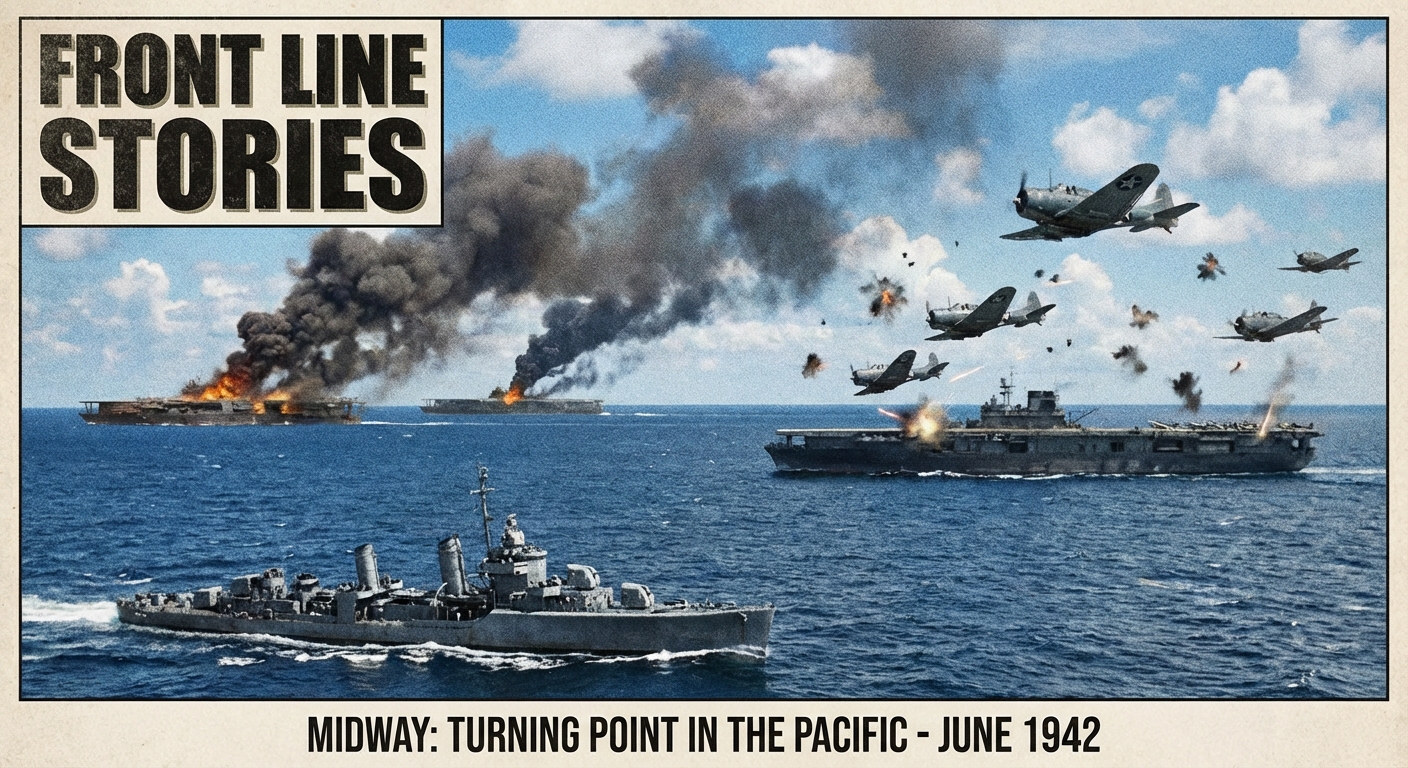
Battle of Midway
Midway was four days of uncertainty compressed into minutes of catastrophic decision. It was not a miracle strike from nowhere, but a battle prepared by codebreaking, risk acceptance, and the unforgiving geometry of carrier warfare.
How the battle was set up
After Pearl Harbor and the rapid Japanese advance, Admiral Yamamoto sought to lure and destroy the remaining American carriers. Midway, lying northwest of Hawaii, was meant to bait the U.S. Navy into a decisive fleet action under conditions favorable to Japan.
But U.S. cryptanalysts had already identified Midway as the target. That changed everything. Nimitz could place his outnumbered carriers northeast of the island and wait, turning Japanese surprise into American ambush.
The resulting clash was a duel of reconnaissance, deck cycles, and minutes. Carrier battles were not line-of-battle engagements. They were contests in locating first, launching first, recovering aircraft, rearming under pressure, and surviving the one strike that slipped through.
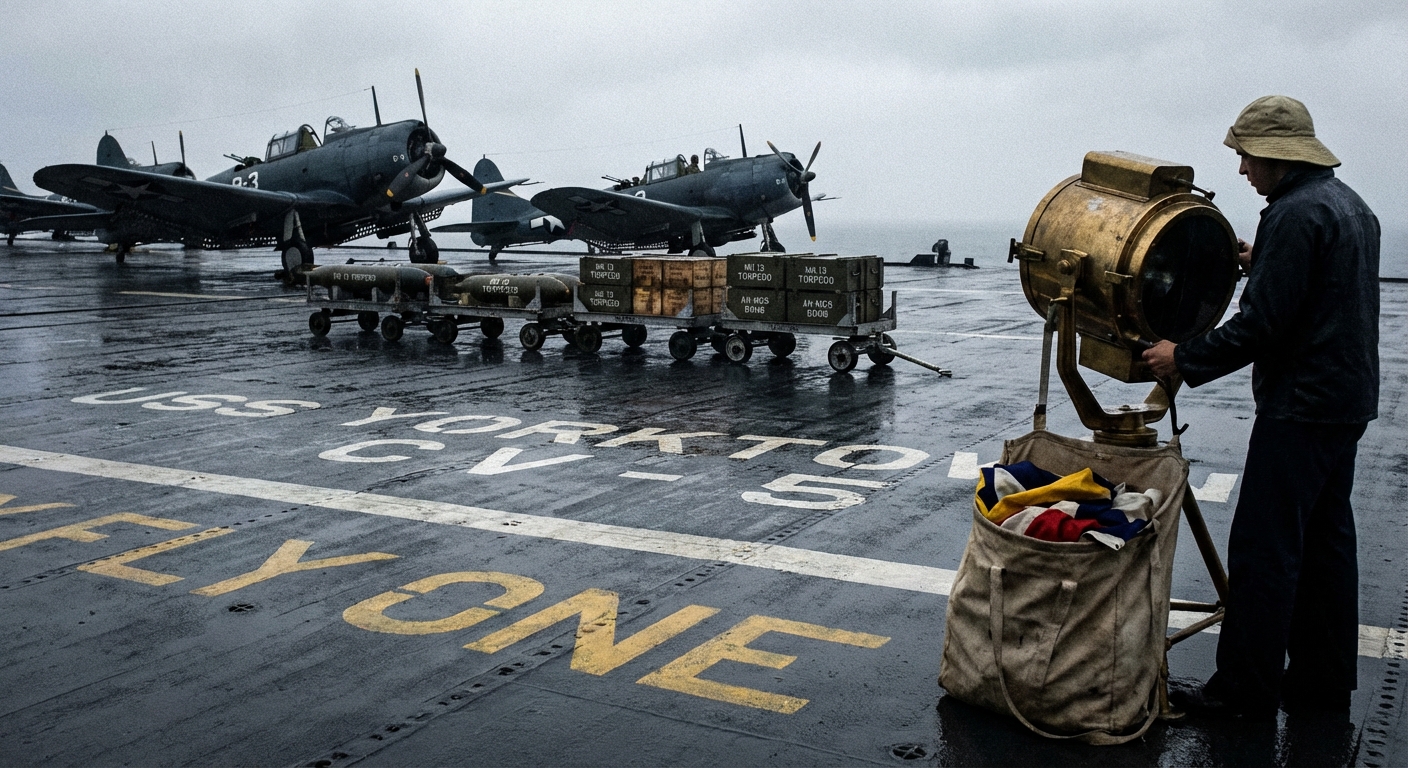
Midway offered almost no terrain in the land sense. The battlefield was oceanic distance, cloud cover, search arcs, and the finite deck space of carriers. The side that misread time and location could lose a fleet without ever seeing the enemy hulls directly.
Who fought, with what, and why it mattered
Japanese strike force
Vice Admiral Nagumo led Akagi, Kaga, Soryu, and Hiryu, supported by cruisers, destroyers, and a broader Japanese plan spread across multiple task groupings. Japanese naval aviation was elite, but the force structure was dispersed and operationally complicated.
American carrier force
Enterprise, Hornet, and the hastily repaired Yorktown formed the U.S. core. They were fewer in aircraft quality and pilot experience overall, but they benefited from foreknowledge, aggressive command decisions, and Midway-based air support.
Combat system
Success hinged on scouting discipline, deck handling, command flexibility, and whether strike aircraft arrived over enemy carriers while decks were crowded with fueled planes and munitions.
The fighting system behind the headlines
Midway is often remembered as a lucky dive-bomber strike. Luck mattered, but so did the chain that made the opportunity possible. American codebreaking produced the setup. Midway-based attacks and torpedo squadrons forced Nagumo to keep maneuvering, delayed coherent response, and pulled Japanese fighter cover down to low altitude.
The fatal Japanese problem was tempo disruption. Nagumo wrestled with whether to rearm reserve aircraft for ship attack or finish preparing another strike against Midway. That indecision, driven by changing reports and incomplete reconnaissance, left Japanese carriers exposed at the worst possible moment.
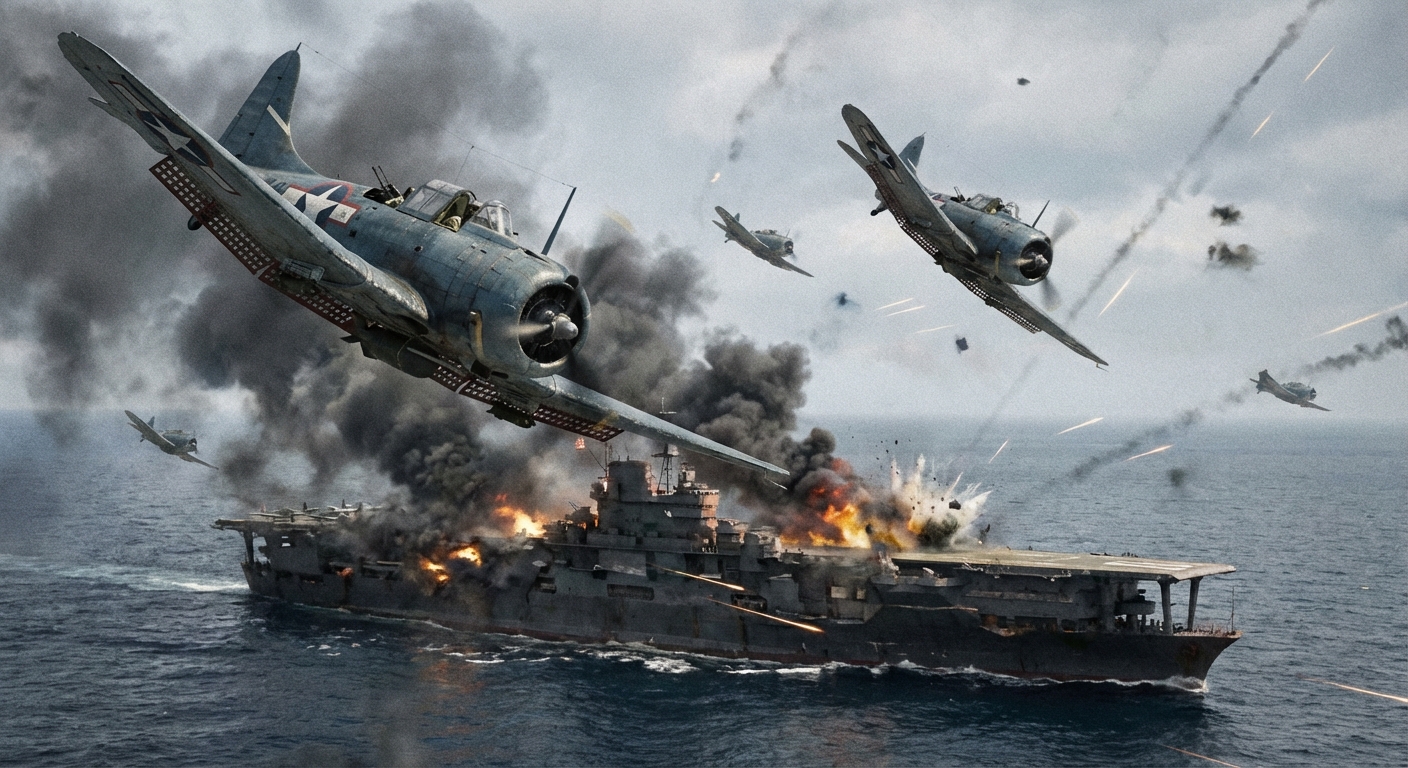
When American dive bombers from Enterprise and Yorktown arrived high and nearly unopposed, they hit carriers crowded with volatile fuel lines, bombs, and aircraft. Tactical destruction followed operational friction.
Phases of the fight
Phase I, deception and deployment
U.S. intelligence identifies Midway as the target, and Nimitz positions carriers to the northeast while Midway itself is reinforced.
Phase II, first morning strikes
Japanese aircraft attack Midway on 4 June, while both sides launch searches. Conflicting contact reports begin to shape command decisions.
Phase III, the carrier catastrophe
American torpedo squadrons attack piecemeal and suffer heavily, but their pressure contributes to the opening that allows dive bombers to mortally hit Akagi, Kaga, and Soryu within minutes.
Phase IV, Hiryu fights back and is lost
Hiryu launches counterstrikes that damage Yorktown, but U.S. aircraft later locate and fatally strike Hiryu, ending Japan's offensive punch.
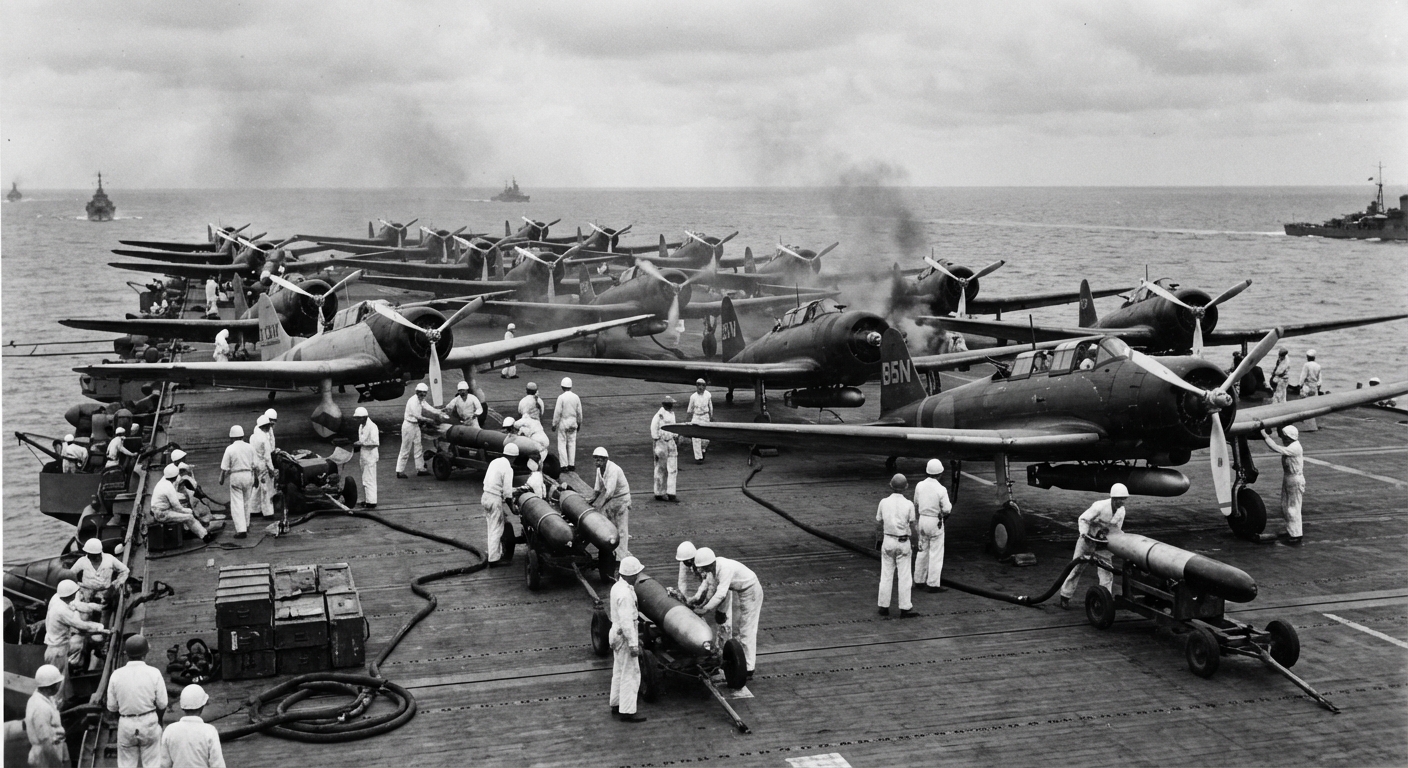
Five minutes over Nagumo
The battle turned when American dive bombers arrived during a Japanese deck cycle crisis. Three carriers were effectively destroyed in a brief window, and with them the core of Japan's elite first-line carrier striking power.
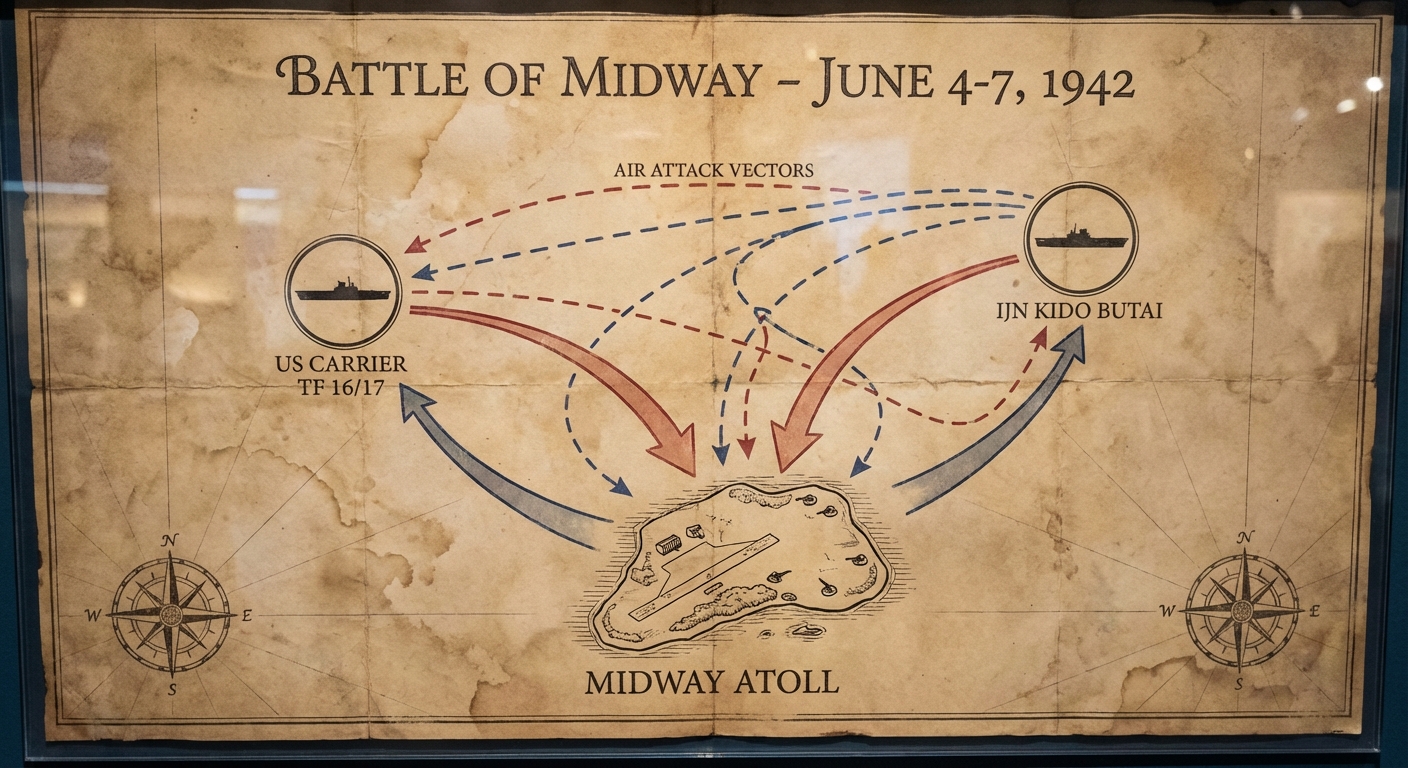
Midway did not end Japanese strength overnight, but it halted strategic expansion and shifted the initiative. Japan lost four fleet carriers, veteran aircrew, and offensive freedom at a pace it could not replace. The U.S. Navy gained time, confidence, and the opening to move toward Guadalcanal and sustained counteroffensive war.
Casualties, losses, and the price of decision
Japan lost four carriers, a heavy cruiser, hundreds of aircraft, and a precious cadre of trained naval aviators and maintainers. The United States lost Yorktown and destroyer Hammann, plus aircraft and aircrews, but the exchange ratio transformed the Pacific balance.
Carrier warfare magnified qualitative losses. Ships could theoretically be rebuilt; combat-experienced aviators, deck crews, and the institutional rhythm of elite naval air groups were much harder to regenerate under wartime pressure.
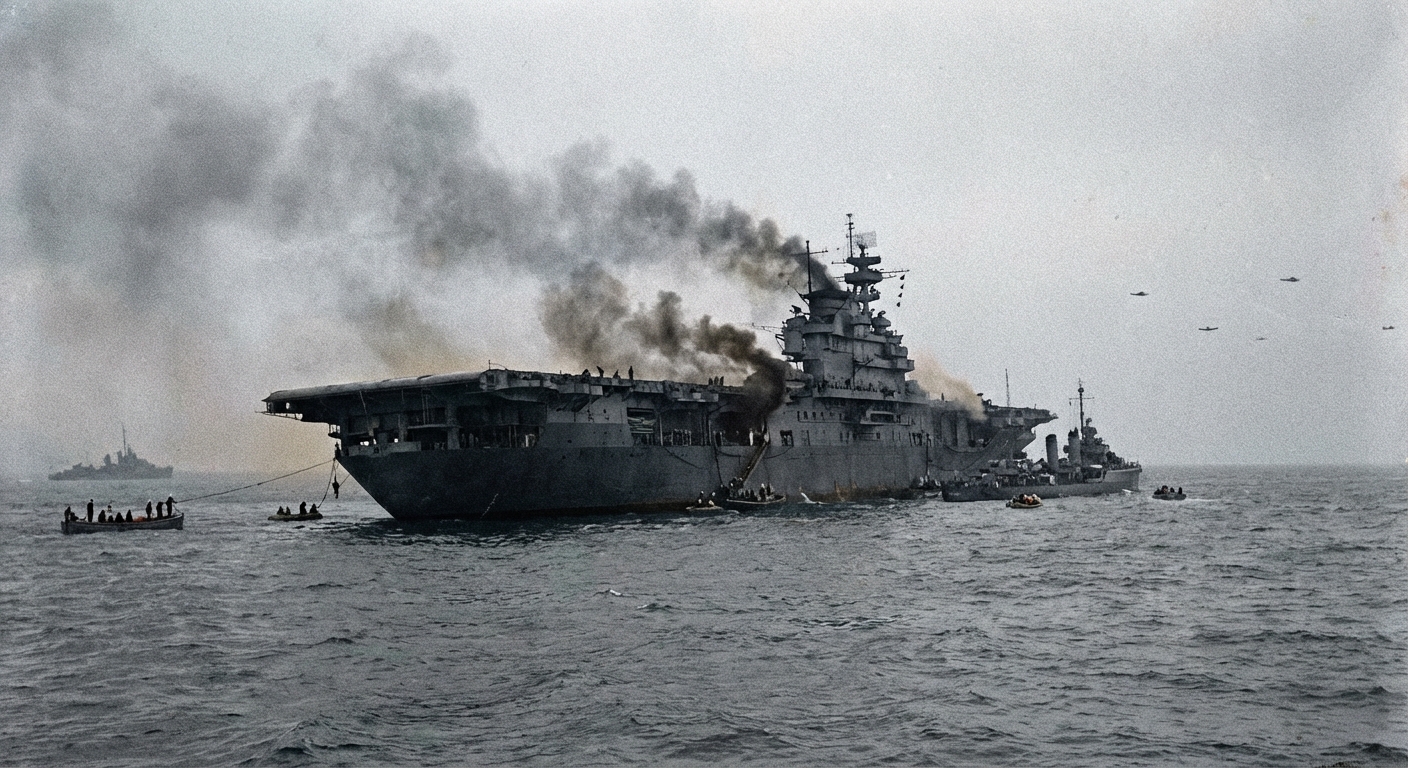
Myth: Midway was pure luck.
Reality: Chance influenced the exact minute of contact, but American success rested on intelligence preparation, risk concentration, and persistent, if costly, attacks that bent the battle toward that moment.
Myth: Japan simply had more ships and should have won easily.
Reality: Japanese strength was fragmented across a complex plan, while the Americans concentrated what mattered at the decisive point.
Myth: The torpedo squadrons failed completely.
Reality: They were devastated, but their sacrifice helped disorganize Japanese defenses and alter the aerial picture that the dive bombers exploited.
What remained after the shooting stopped
Midway became the classic demonstration that information can be combat power. The side that better understood enemy intent could shape a battle before weapons were even in range.
It also exposed the cruelty of carrier warfare, where command uncertainty, search errors, and minutes of deck handling could outweigh months of strategic planning. Modern analysts still study Midway as a benchmark in operational intelligence, naval aviation timing, and force concentration.
- Craig L. Symonds, The Battle of Midway
- Jonathan Parshall and Anthony Tully, Shattered Sword
- Samuel Eliot Morison, Coral Sea, Midway and Submarine Actions
- Primary angle: U.S. Fleet Radio Unit assessments and Japanese carrier action reports.