Battle of Stalingrad
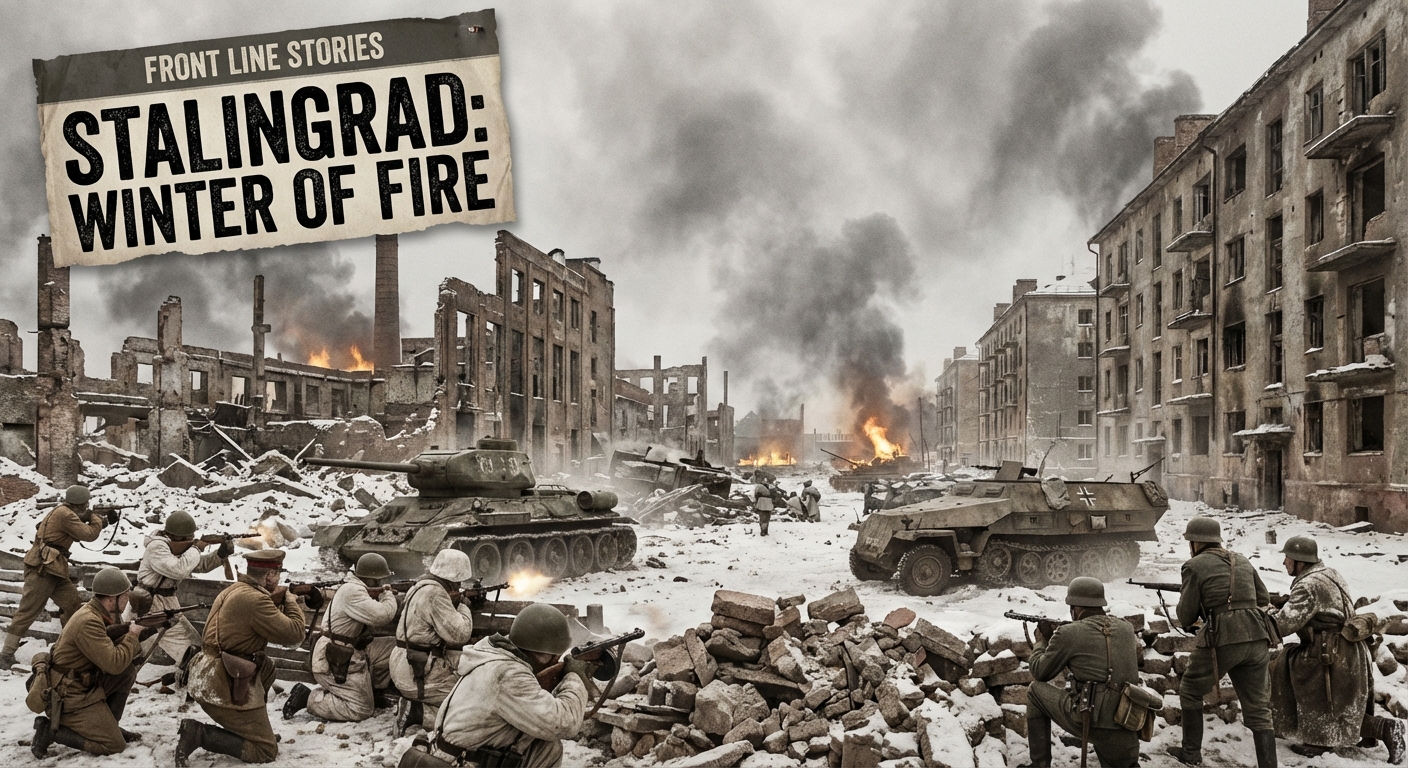
A city of factories and river docks became the hinge of the eastern war. Stalingrad was not won by one dramatic encirclement alone, but by attrition, logistics, urban combat, and the patient destruction of an army that could no longer move.
How the battle was set up
Hitler wanted the Volga cut and the Caucasus oil fields secured. The German summer offensive in 1942 stretched southward on a vast front, and Stalingrad became both a practical transport objective and a symbolic obsession.
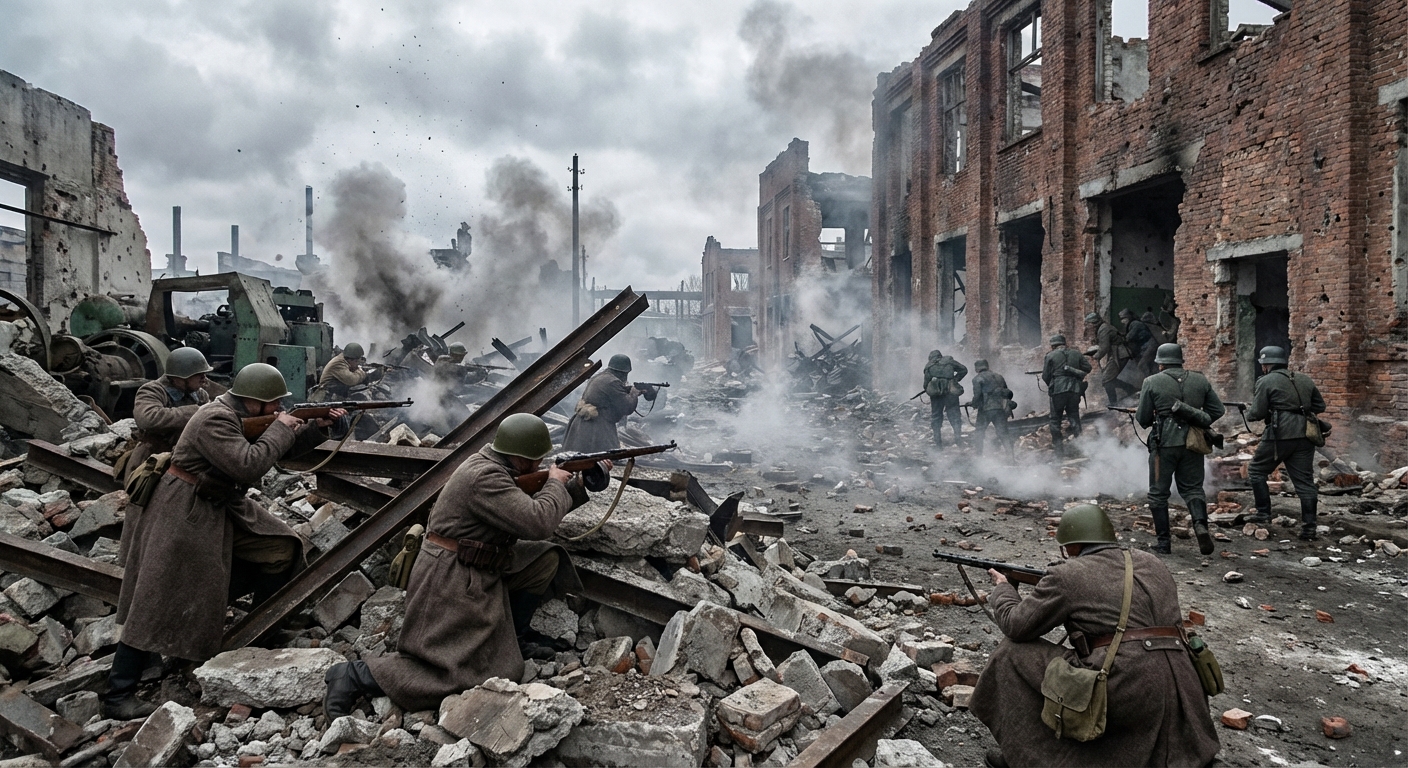
Once the Sixth Army entered the city, operational logic began to collapse into street-by-street slaughter. The Germans were excellent at reducing conventional positions, but the city itself consumed their advantages. Soviet forces hugged the enemy at close range, turning every warehouse, apartment block, and rail embankment into a firing point.
The battle only makes full sense when viewed beyond the ruins. While the German spearheads bled inside the city, weaker Axis allied armies held the exposed flanks on the steppe. That mismatch created the opening Soviet planners had been waiting for.
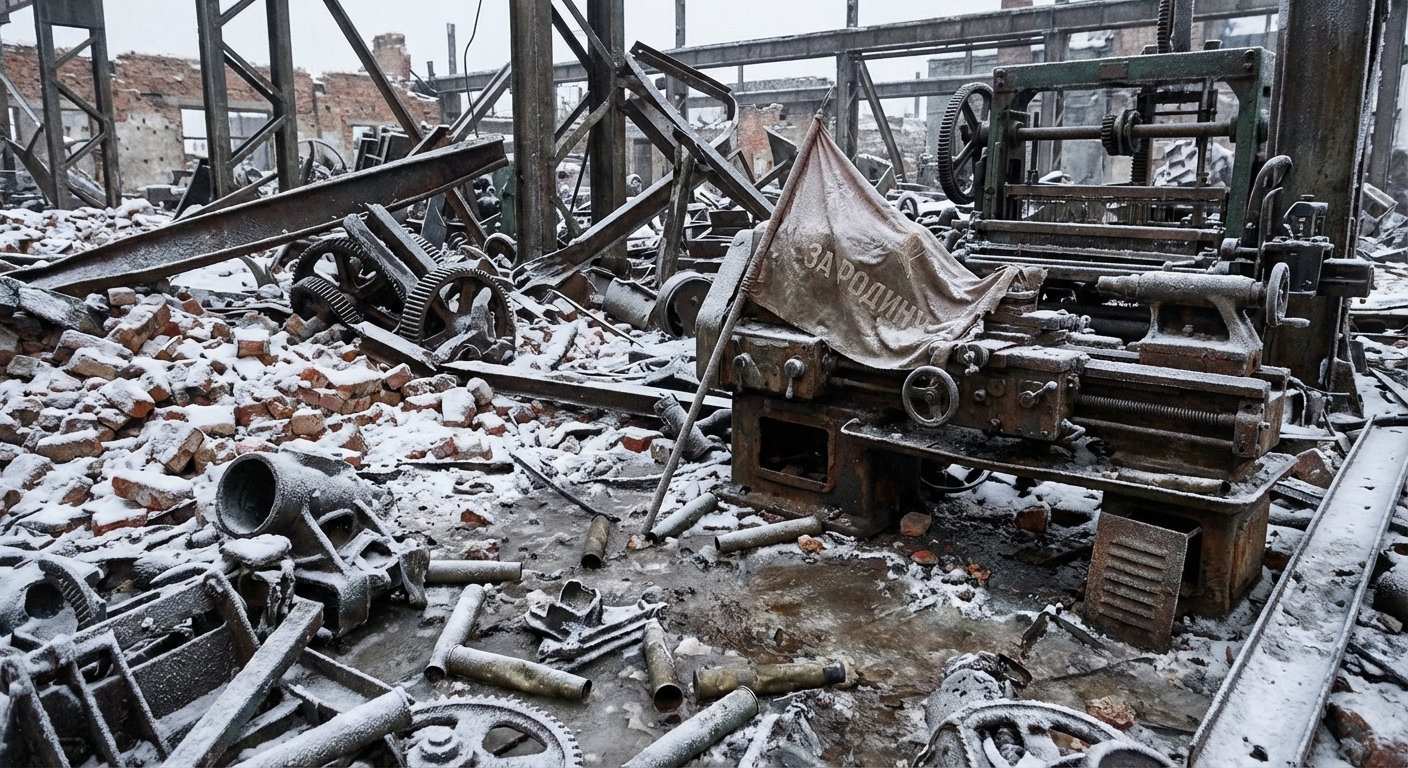
The Volga anchored the Soviet rear but also trapped troops under artillery and air attack while they crossed. Inside the city, smashed factories, grain elevators, cellars, sewer lines, and rubble piles broke sight lines and dissolved front lines. West of the city, open winter steppe punished any force that lacked fuel, mobility, and reserves.
Who fought, with what, and why it mattered
Axis assault grouping
The German Sixth Army under Friedrich Paulus, supported by Fourth Panzer Army elements, relied on artillery, Stukas, engineers, and seasoned infantry divisions. But its flanks were guarded largely by Romanian, Italian, and Hungarian formations with fewer anti-tank weapons and less mobility.
Soviet defense and counterstroke
The Soviets fed the 62nd Army and other formations across the Volga to keep a foothold inside the city while Stavka assembled large mechanized and infantry reserves beyond the battle zone. Defense in the city and offensive preparation outside it were parts of the same design.
Combat system
German combined arms was strongest in open maneuver. Soviet resilience grew strongest in compressed terrain and in large-scale operational deception, reserve building, and timed multi-front offensives.
The fighting system behind the headlines
At Stalingrad, tactical excellence could not compensate for operational overextension. German units repeatedly captured dominant-looking positions only to discover that control of a building did not mean control of the district, and control of the district did not mean control of the riverbank.
Soviet commanders deliberately accepted horrifying losses to deny the Germans clean fire plans. "Hugging" tactics, constant local counterattacks, and night movement reduced the effect of German airpower and artillery. Then, when the moment came, Operation Uranus ignored the strongest urban knot and smashed the weaker outer shoulders.
The battle is a classic lesson in nested levels of war. Tactically, the Germans were often formidable. Operationally, they had placed their main striking army into a cul-de-sac with brittle flanks and inadequate winter sustainment.
Phases of the fight
Phase I, approach and bombardment
The Luftwaffe and German ground columns blasted Stalingrad in late August 1942, reducing much of the city to ruins while driving defenders back toward the Volga.
Phase II, the city fight
From September into November, fighting centered on landmarks like the Tractor Factory, Red October, and Mamayev Kurgan. Local gains were measured in floors, stairwells, and courtyard walls.
Phase III, Operation Uranus
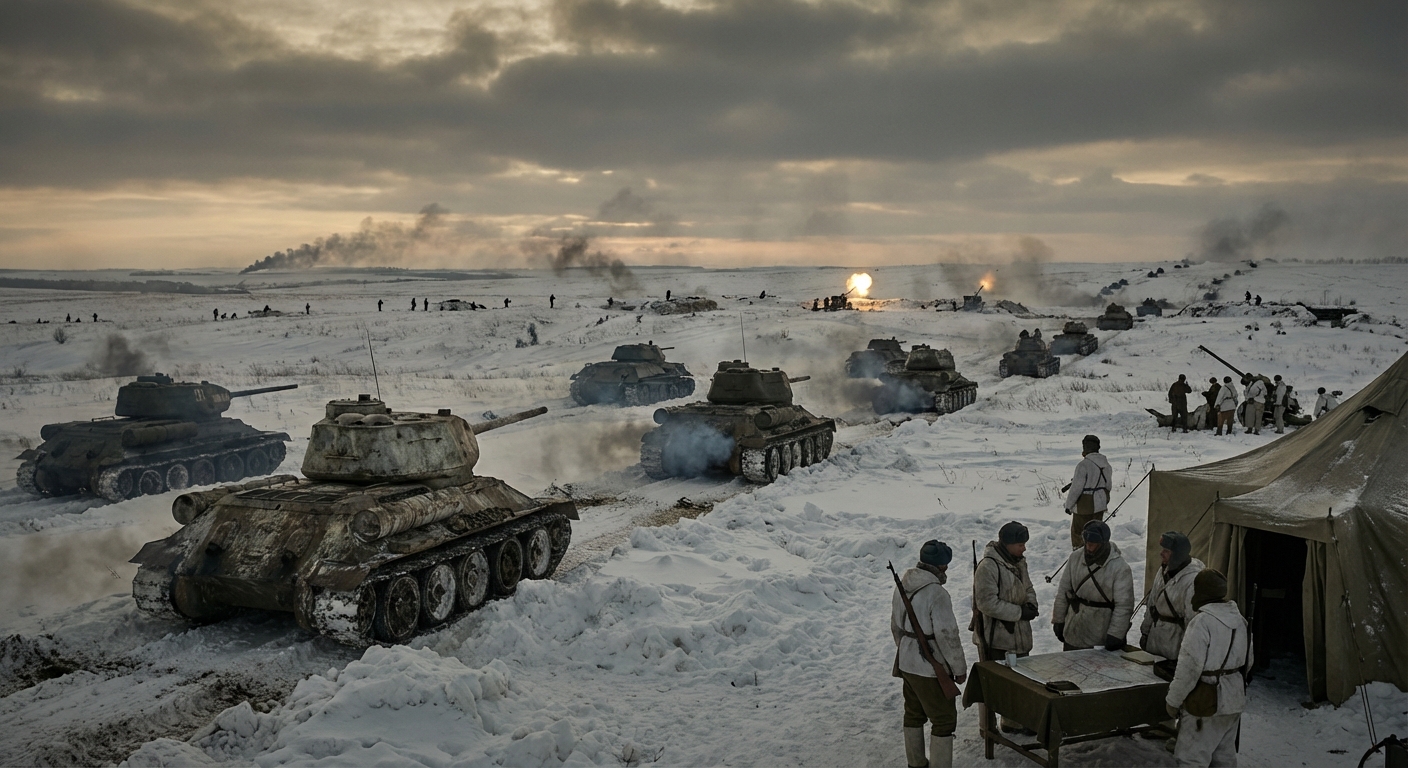
On 19 November 1942, Soviet fronts struck the Romanian-held flanks north and south of Stalingrad, tearing open the encirclement corridors and trapping the Sixth Army.
Phase IV, collapse of the pocket
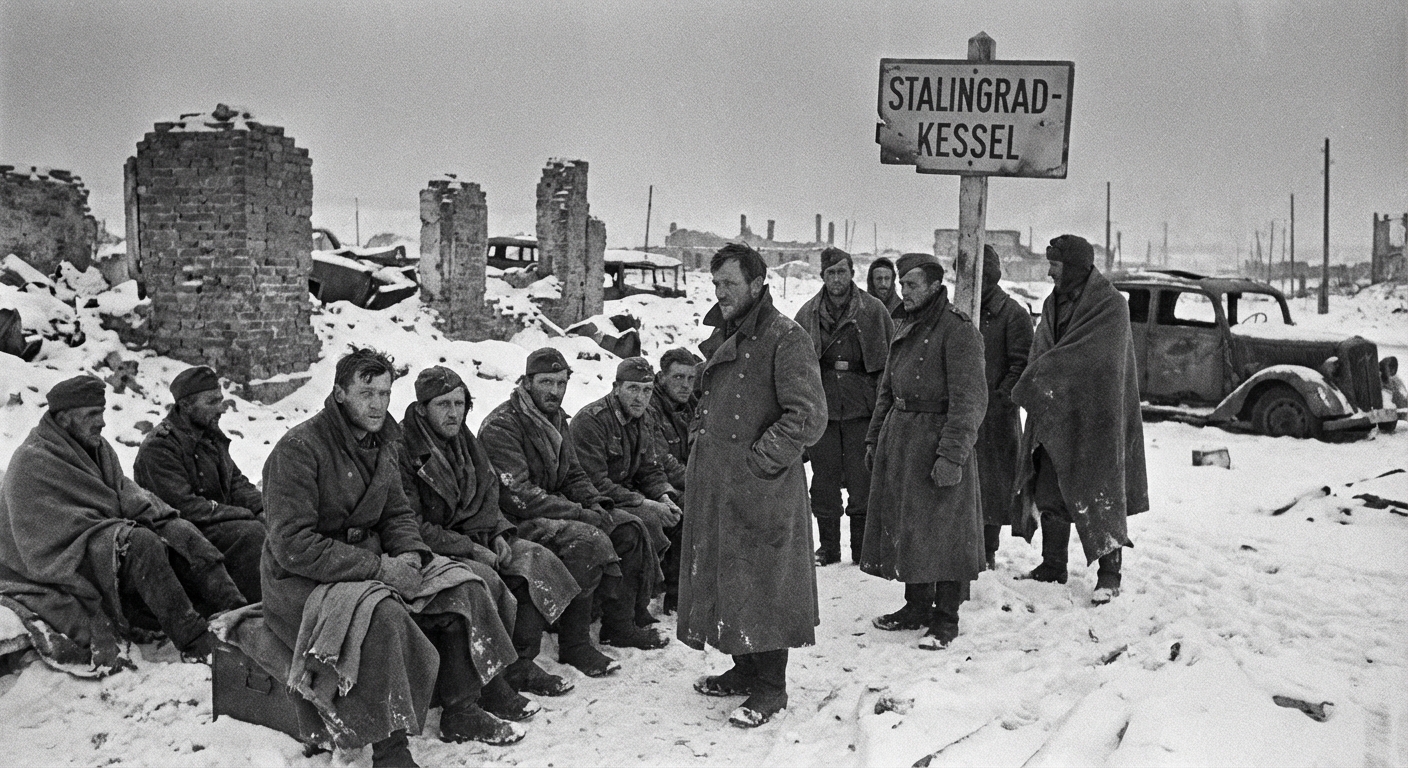
German relief failed, air supply proved grossly insufficient, and Soviet pressure steadily crushed the encircled force until organized resistance ended in February 1943.
Uranus closes the ring
The turning point came when the Soviets refused to keep trading only for burnt-out blocks and instead attacked the weak operational architecture behind the city battle. Once the armored pincers met at Kalach, the Sixth Army stopped being a spearhead and became a stranded liability.
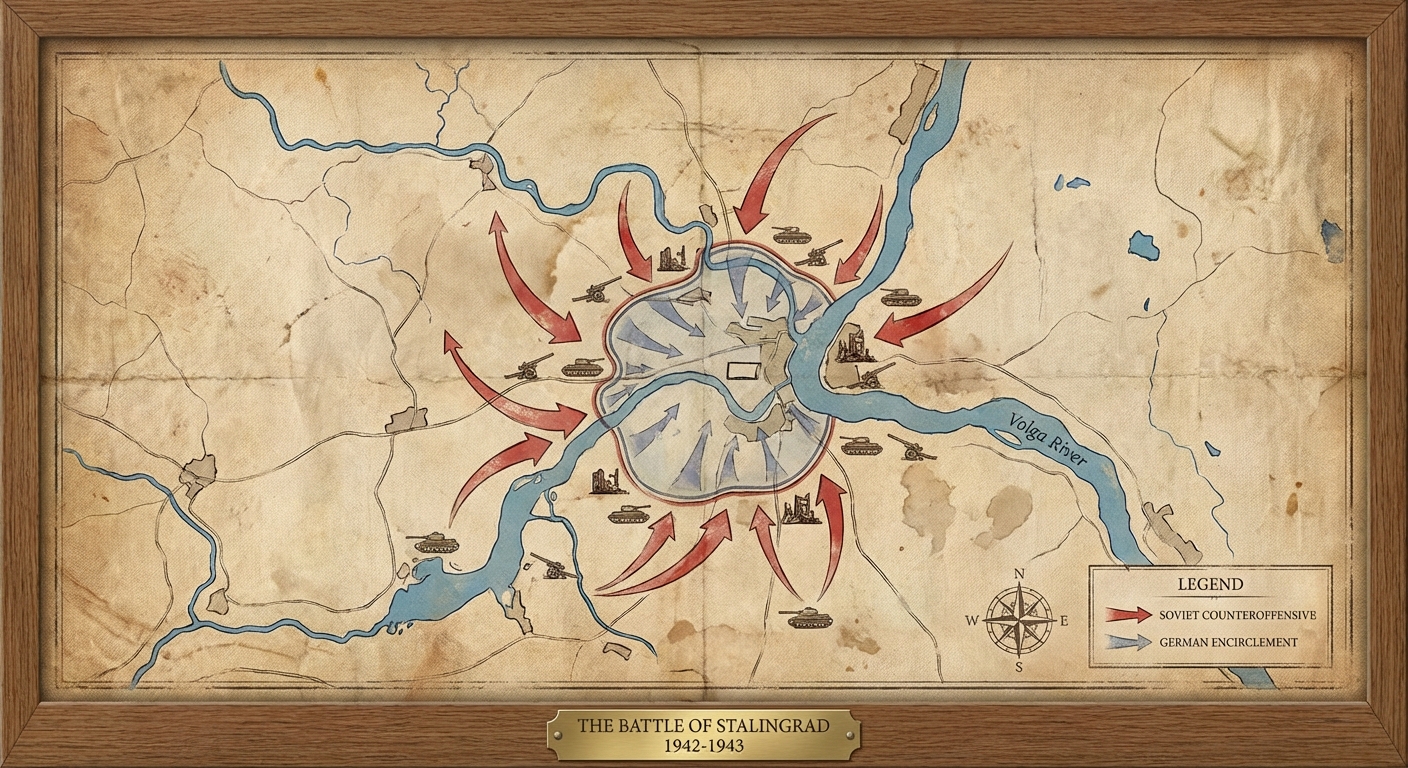
Stalingrad destroyed the myth that Germany could always recover the initiative in the east. It cost the Axis an entire field army, weakened allied confidence, strengthened Soviet prestige, and marked the point where the Red Army increasingly dictated the tempo of the war on the Eastern Front.
Casualties, losses, and the price of decision
Casualty estimates vary by definition and date range, but the campaign consumed well over a million men on both sides. Axis losses included killed, wounded, captured, and large quantities of irreplaceable equipment. The Soviet Union also paid an appalling price in manpower and devastated urban infrastructure.
The most decisive cost was not only numerical. Germany lost trained cadres, operational freedom, and the ability to treat southern Russia as a recoverable theater. The Soviets, despite immense losses, emerged with political and military momentum that would shape every major eastern campaign that followed.
Myth: Stalingrad was won only by winter.
Reality: Winter accelerated German collapse, but the decisive mechanism was Soviet operational encirclement against weak flanks combined with failed relief and impossible air sustainment.
Myth: The battle was purely symbolic.
Reality: The city had symbolic value, but it also sat on the Volga transport artery and within the larger southern campaign tied to oil, movement, and strategic positioning.
Myth: Urban fighting alone defeated the Sixth Army.
Reality: Urban attrition fixed and weakened the Germans; the pocket destroyed them.
What remained after the shooting stopped
Stalingrad entered military memory as the archetype of the no-step-back urban battle, but its deeper legacy is about command stubbornness and logistical reality. Armies can survive tactical punishment longer than they can survive strategic misdesign.
For the Soviet Union, the victory became a foundational story of endurance and national sacrifice. For professional soldiers, it remains a case study in how tactical success can be nullified by exposed flanks, political interference, and a refusal to break contact while escape is still possible.
- Antony Beevor, Stalingrad
- David M. Glantz and Jonathan House, To the Gates of Stalingrad and Armageddon in Stalingrad
- William Craig, Enemy at the Gates
- Primary angle: Soviet operational orders for Operations Uranus and Saturn, paired with German Sixth Army logs.