Technical Board
British Airborne Weapons At Arnhem
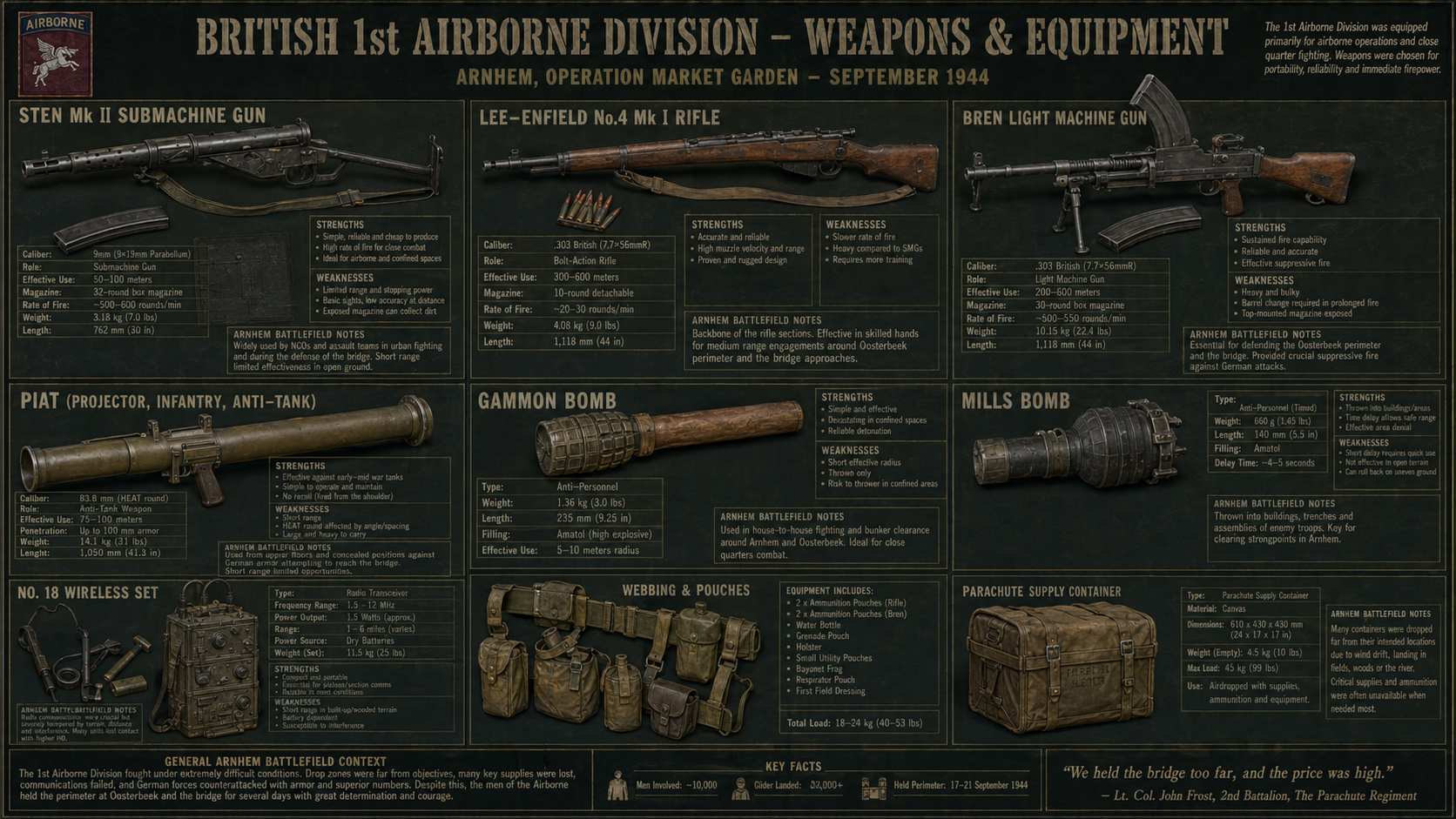
The 1st Airborne Division had to fight light. A paratrooper could not bring heavy artillery or tanks in his kit. The force relied on section weapons, hand grenades, PIATs, radios, and supply drops. Those tools were enough for ambushes, strongpoints, and close urban fighting. They were not enough to make the whole operation independent of relief.
Weapon Roles
What Each Piece Did
Battlefield Fit
Good Tools, Bad Equation
The equipment made sense for airborne assault. It was portable, familiar, and deadly at short range. But Arnhem forced those weapons into a heavier fight than they were designed to solve. The British could hold houses, block streets, and break up infantry attacks. They could knock out armor when conditions were right. They could not replace tanks, artillery, reliable communications, or a relief column.
That is why the kit belongs in the weapons database. It shows the difference between a weapon being good and a situation being winnable. At Arnhem, the paratroopers had courageous men and useful weapons. The operation asked those weapons to carry too much.
Sources
Reference checks used museum and military-history summaries of Operation Market Garden and British airborne operations, plus the Arnhem story page context.
Imperial War Museums - Operation Market Garden • National Army Museum - Market Garden • Front Line Stories - Arnhem